
I started noticing it in the salon chair next to mine. Women my age, women older, women just tired of the every-six-week root dance, all asking for something that didn’t look like a cover-up. They wanted the gray to stay, just with company.
So I collected 24 ways to do exactly that. Gray Blending Highlights across every length, every texture, every amount of upkeep you can handle. Some take a full afternoon in the chair. Others are a single gloss and done. For anyone with fine hair that goes flat by 4 pm or a grow-out line that shows at week five, this is the roundup that stops the fight with your own roots.
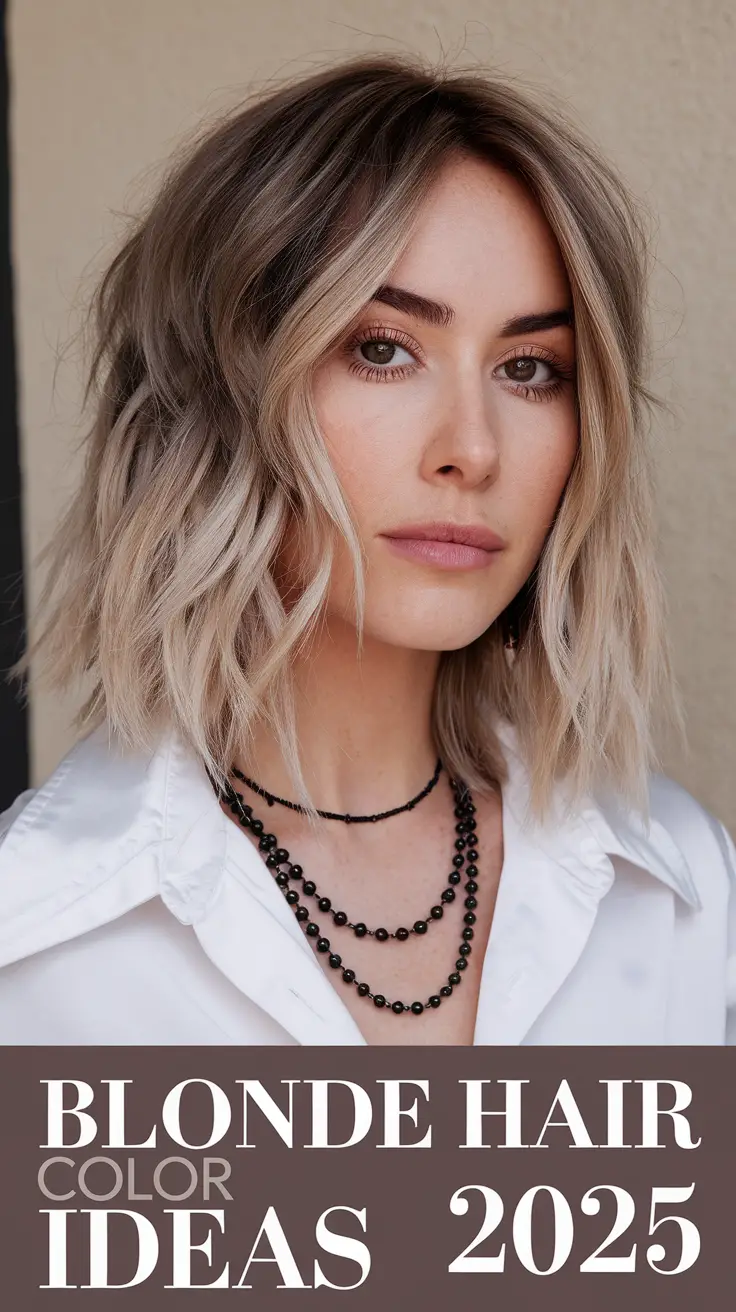
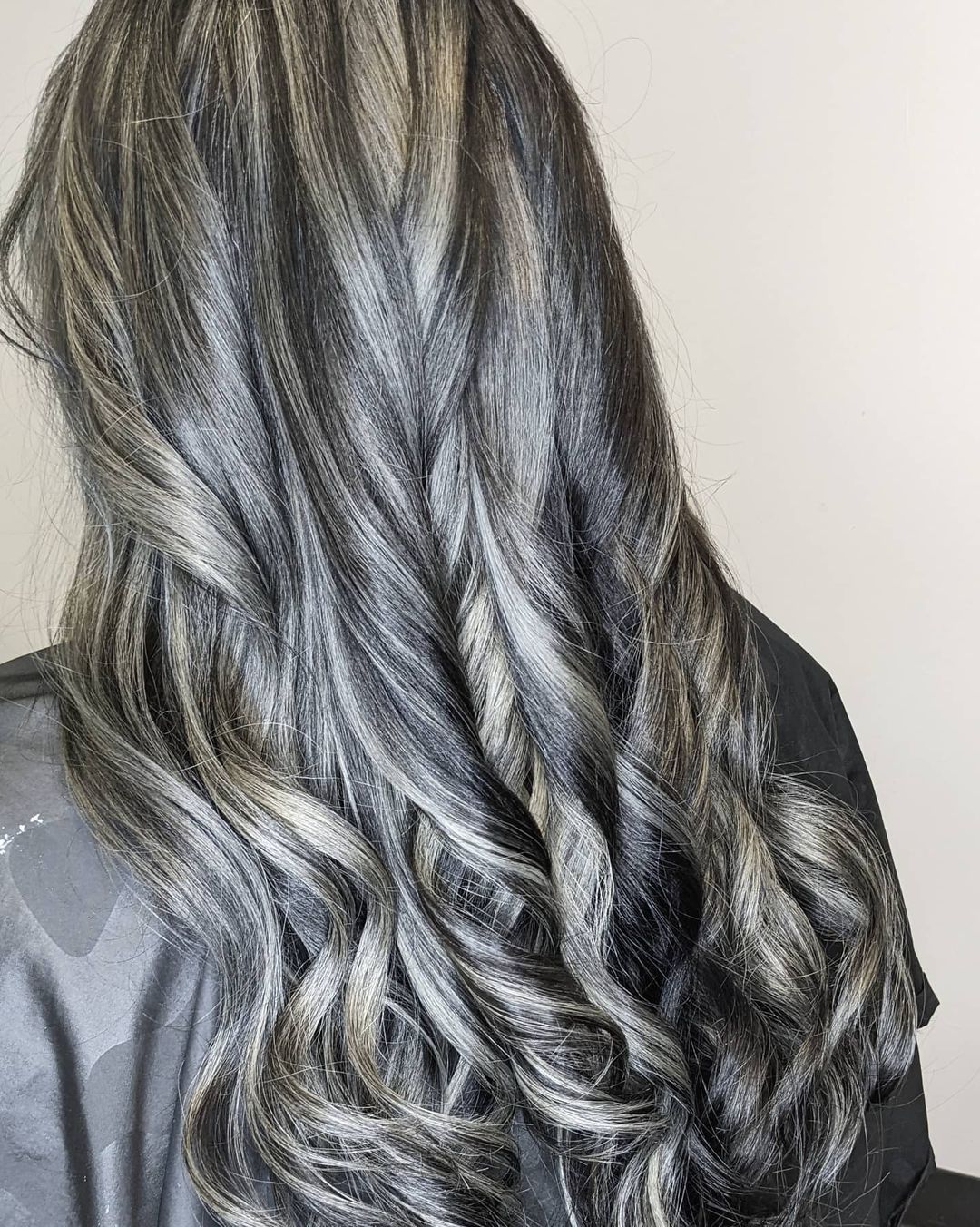
Mid-Back Waves With Gray and Ash Blonde Highlights
The dark base keeps this from reading as full silver, which is exactly the point. Gray and ash blonde highlights land in a blended application that follows the wave pattern, so the contrast never looks painted on. Mid-back length gives the colour room to breathe, and on medium-thick wavy texture those lighter pieces catch light instead of disappearing into the underlayer. The tone sits cool but not icy, which means it does not fight a warm skin undertone the way a platinum might. When did brown start looking this expensive?
Chin-Length Bob With Gray and Ash Tones
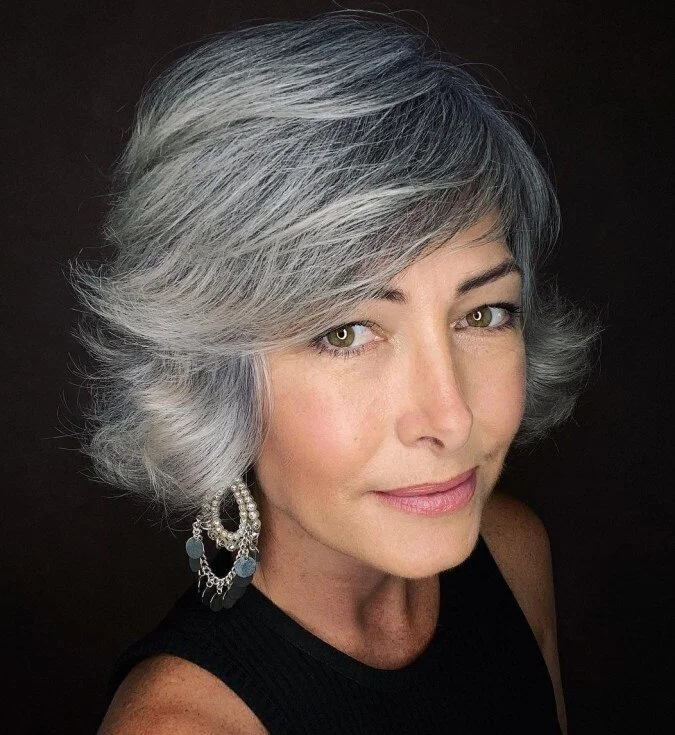
Ever wonder how some gray blending looks like it grew that way and other versions look like a dye job that went wrong? The difference is in the placement. Gray and ash toned highlights on this chin-length bob are woven through the interior, not painted on the surface, so the blended effect reads as natural dimension rather than stripes. Asymmetrical bangs and a side part break up the solid line a blunt bob would make. Thick, wavy texture holds the volume without product, and the cool tone softens a strong jawline instead of sharpening it.
Collarbone Lob With Loose Curls and Highlights
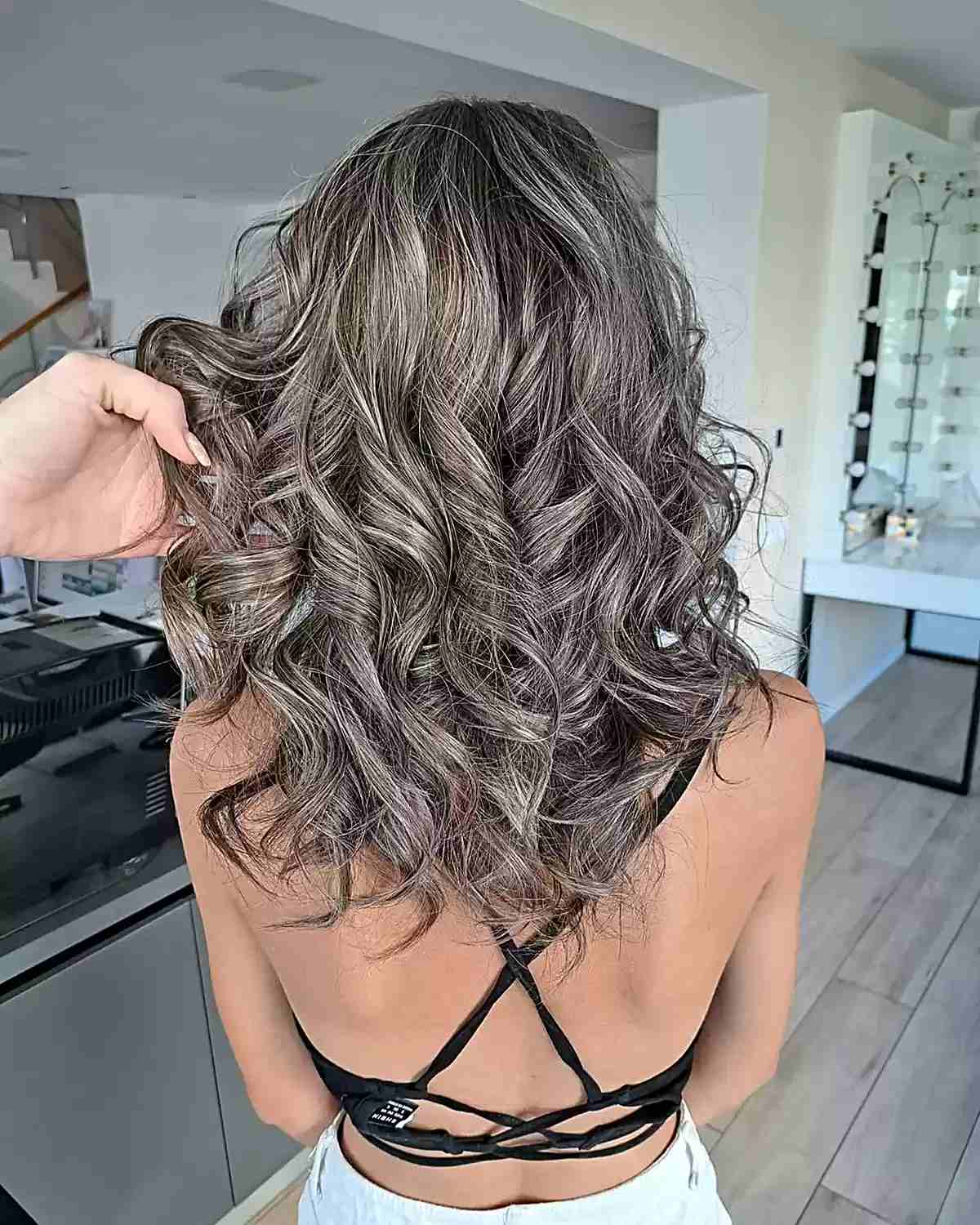
Chunky highlights are not coming back. Ash blonde and gray highlights on this collarbone lob prove why. The blended effect comes from painting the colour into the wave pattern, not on top of it, so the lighter pieces move with the curl instead of sitting on it like a helmet. Thick, wavy texture needs that movement, otherwise the colour looks heavy. The dark brown base anchors the ash tones, which keeps the overall result from washing out a warm complexion. A middle part and no bangs keep the shape simple, because the colour is doing the work. It is not a statement colour. It is a smarter version of one.
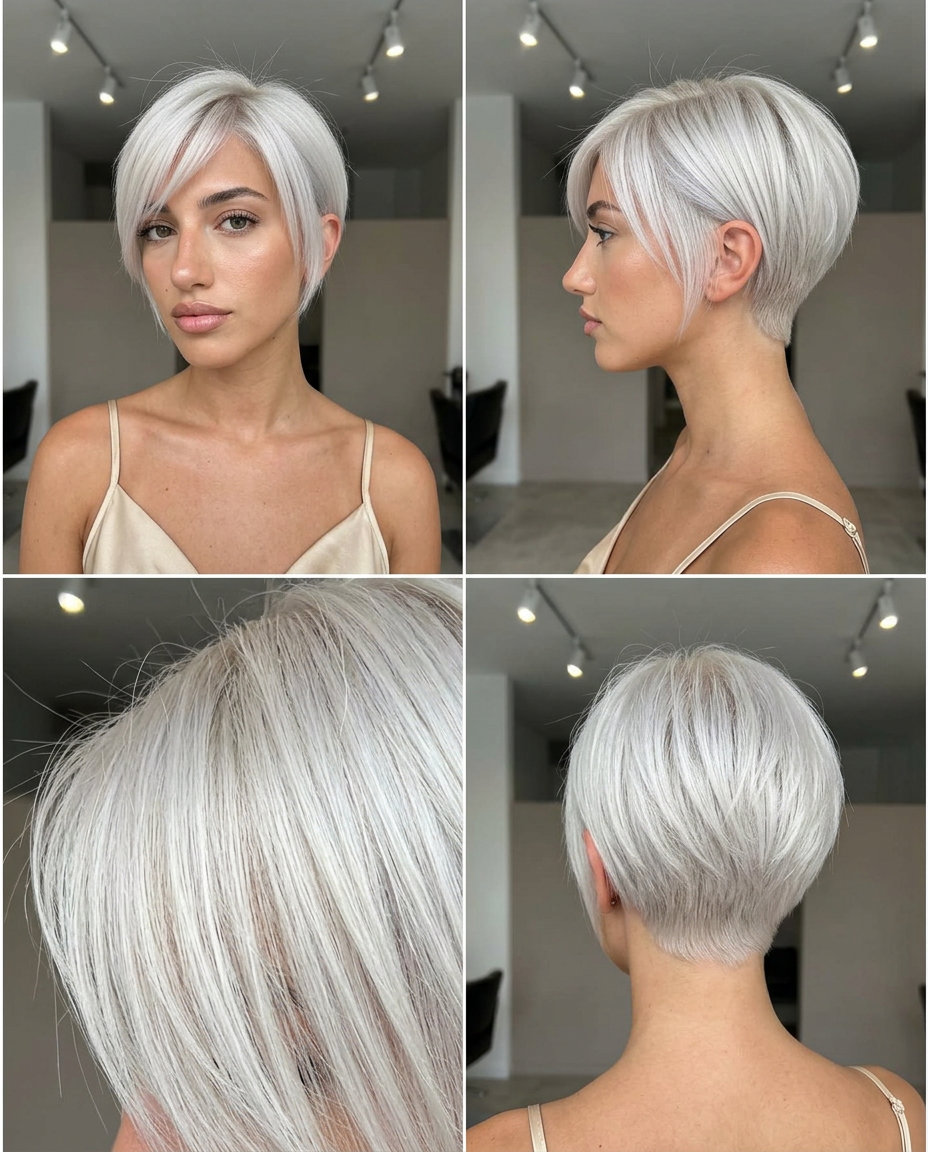
Textured Pixie With Gray and Silver Highlights
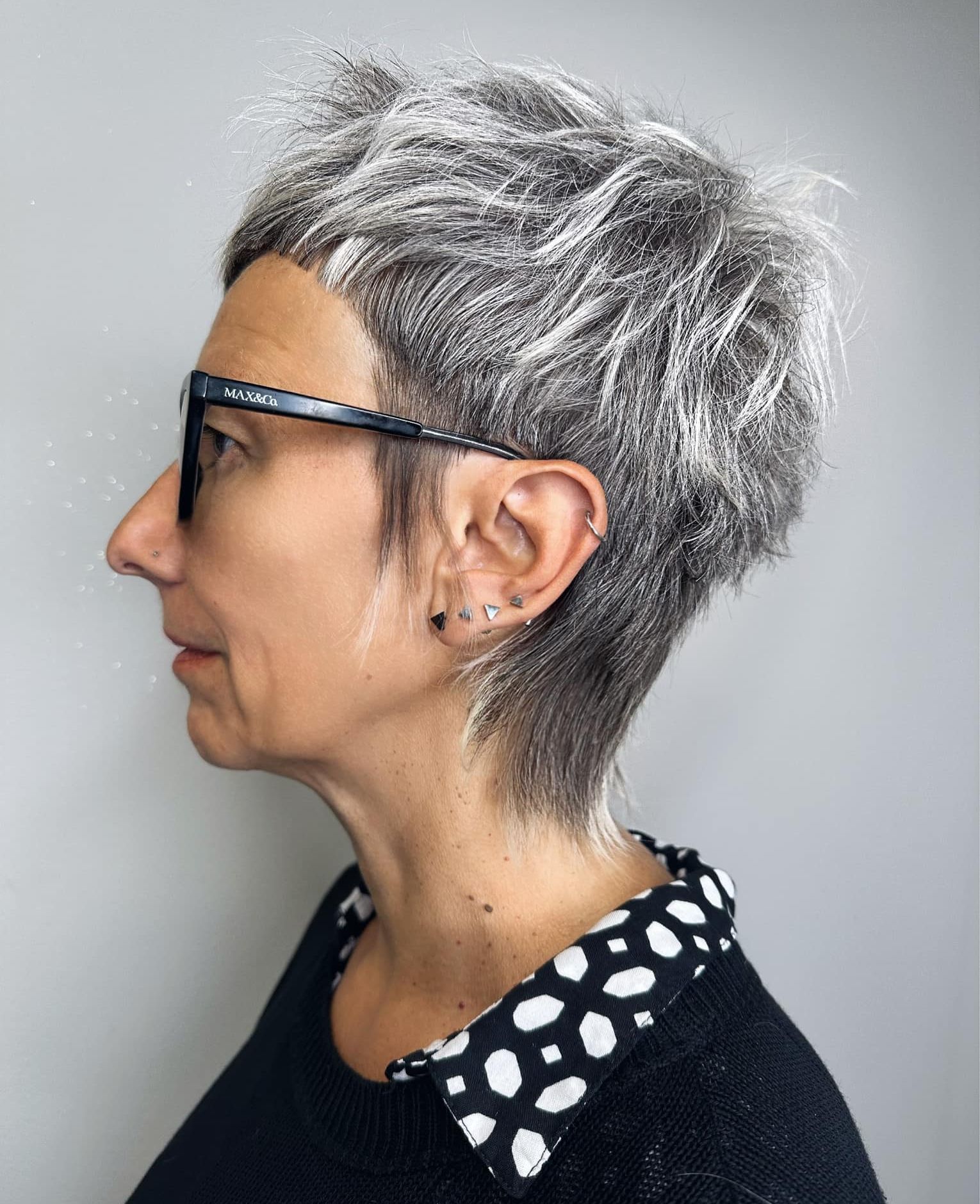
Can a pixie look soft when the colour is high-contrast? Gray and silver highlights on this textured cut say yes. The contrast comes from the silver strands sitting against the gray base, but the pixie shape keeps it from reading as severe. Ear-length, straight, medium-density hair works because the texture gives the silver pieces somewhere to land. No bangs and no parting means the colour placement does the shaping. This is a bold move for a round face: the height on top and the shorter sides lengthen the silhouette. The silver will need a toner every few weeks to stay bright, but the cut itself takes two minutes to tousle.
Long Layered Hair With Gray and Ash Tones
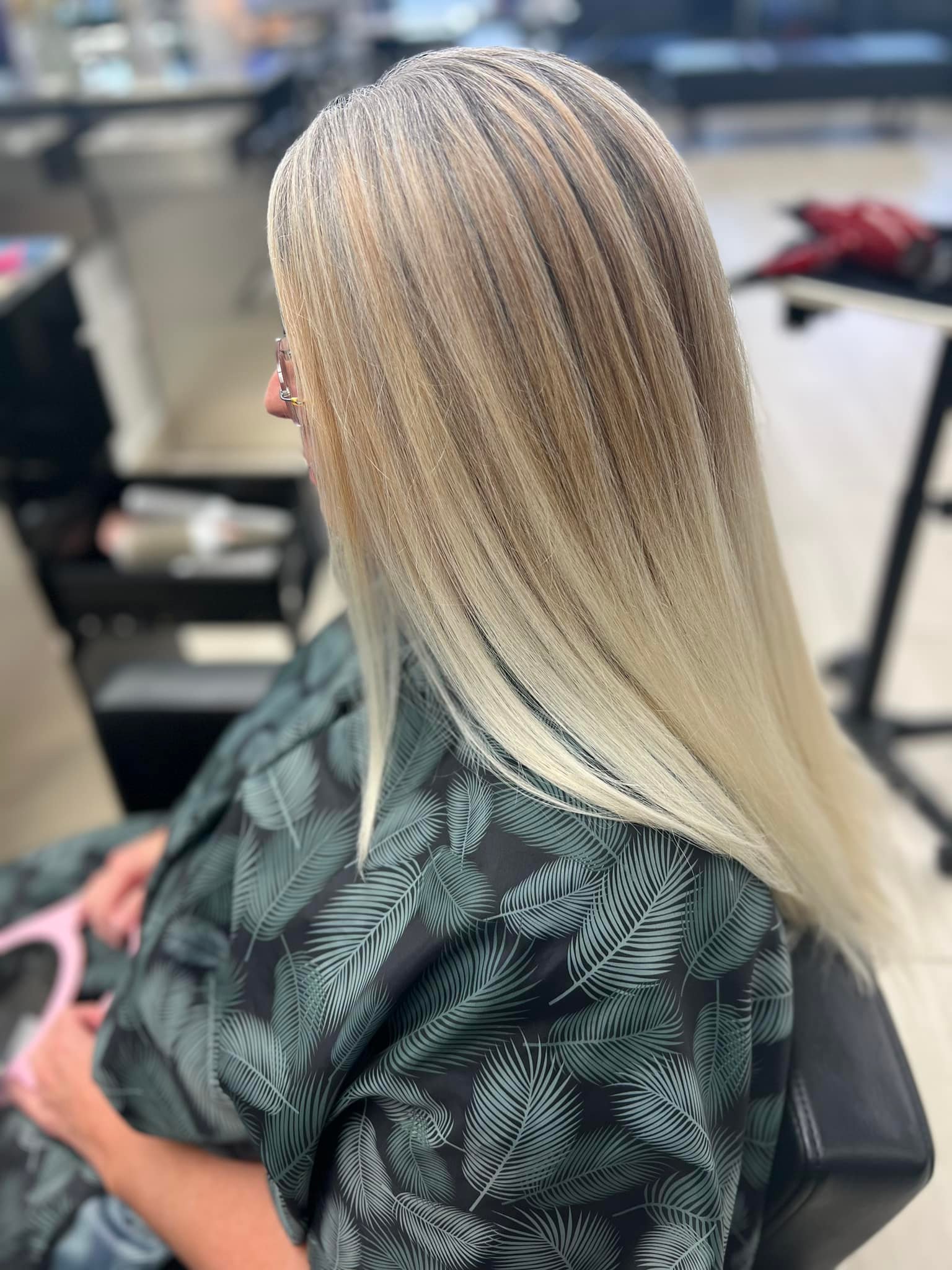
The trick with long hair and gray blending highlights is that the grow-out line never announces itself. The natural blend of gray and ash tones means the roots fade into the length without a hard border, and the wavy texture scatters the light so every strand looks like it belongs. The technique is a soft, hand-painted application that avoids any stripe or demarcation, which is why this color works so well on longer lengths where regrowth is usually the first thing you notice.
I’ve watched this color go eight weeks without a touch-up and still look intentional. The waves take about fifteen minutes with a diffuser, and a trim every ten to twelve weeks keeps the ends from looking tired. A leave-in conditioner helps the waves hold their shape without getting crunchy. On day three, the ash tone might dull slightly, but the gray blending highlights keep the dimension alive because the lighter pieces are woven through the mid-lengths and ends. That’s the real win: the color does the work so you don’t have to.
Pixie Cut With Gray Base and Ash Blonde Highlights
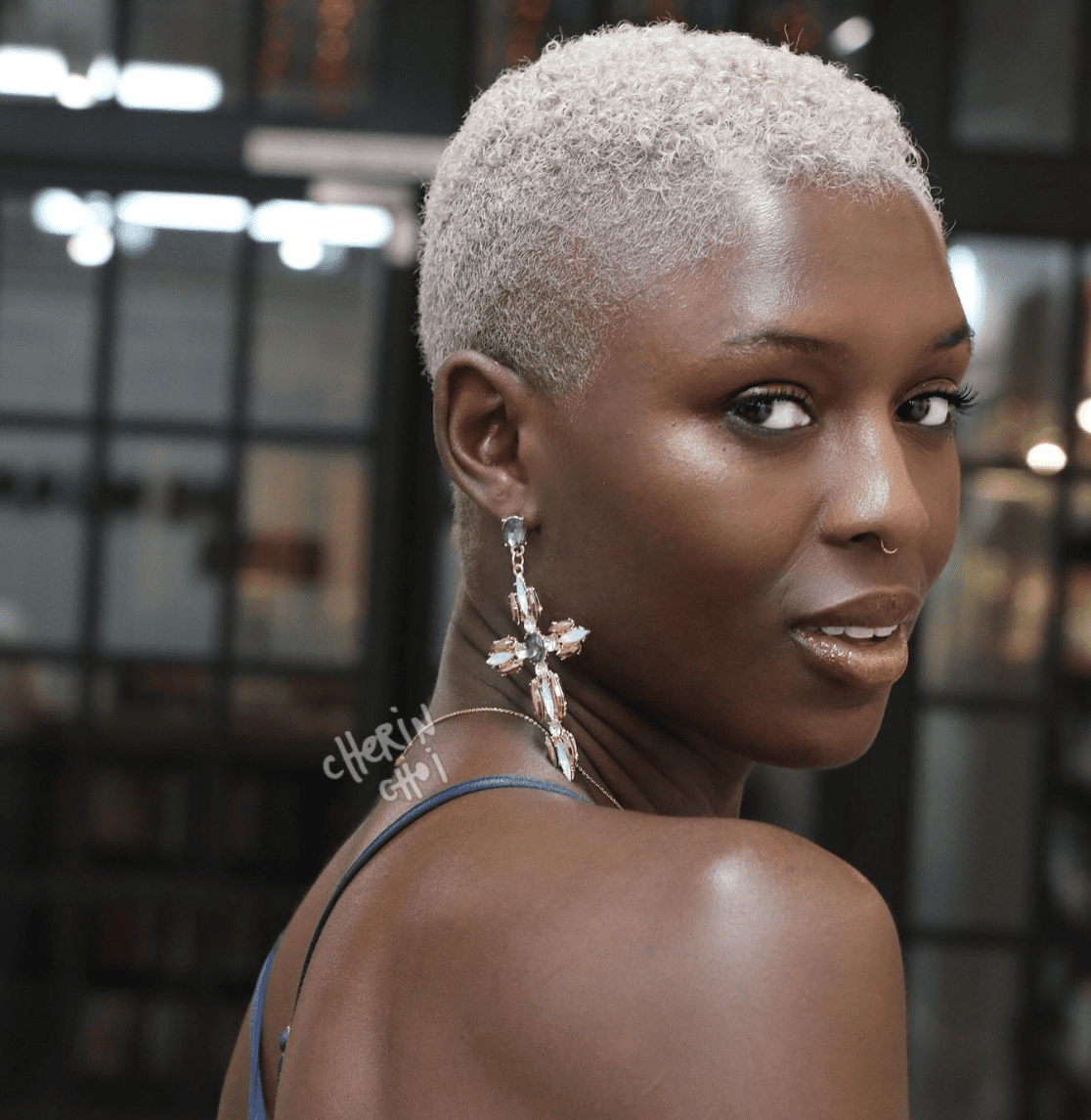
The first time I saw this done I thought it was a single process. It’s not. The gray base ash blonde highlights technique requires painting fine slices of ash blonde onto a gray base, and on fine, straight texture, any mistake shows immediately. The tone is cool and clean, the length is ear-grazing, and the texture is straight and fine. This is a salon job. The precision needed for the placement and the toning afterward means you should book it, not attempt it at home.
Collarbone Lob With Blended Gray and Blonde Highlights
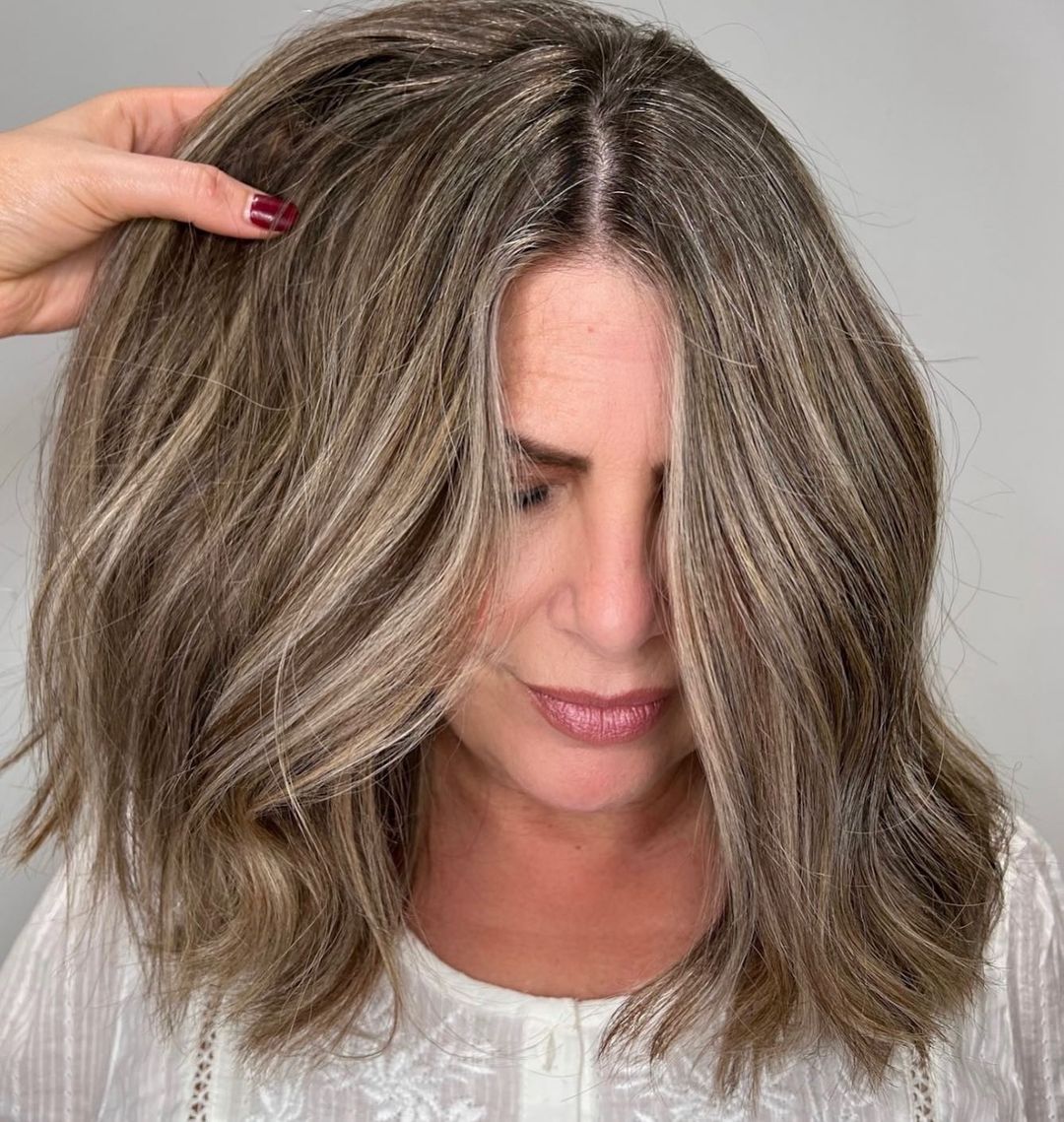
Does a collarbone lob actually suit every face shape, or is that just salon marketing? This version, with curtain bangs and a dark brown base blended with gray and blonde highlights, comes close. The middle part and soft waves create a flattering frame that works for round, square, and oval faces. The blended gray and blonde highlights add dimension without harsh contrast, so the grow-out line stays invisible for weeks. The wavy texture and medium density keep the shape from falling flat by afternoon. The tone is neutral, not too warm and not stark silver, which means it reads natural against most skin tones. It’s the kind of low-commitment colour that delivers a lot of lift without asking you to sit in the chair every six weeks.
Layers Mid-Back Wavy Blowout With Gray and Ash Blonde
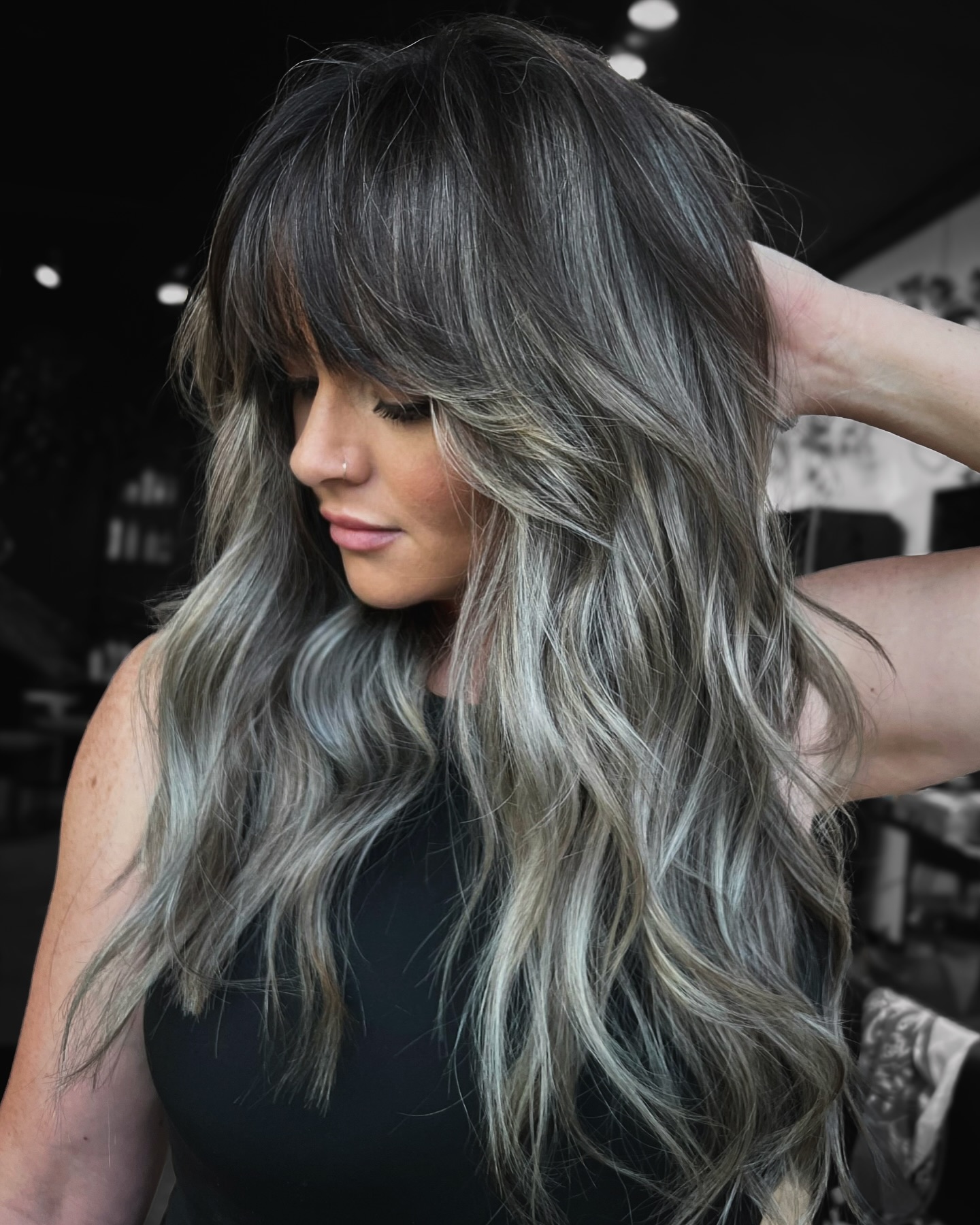
Here’s a precise observation: a mid-back wavy blowout with side bangs looks great on day one, but the real test is day five. This version uses a dark brown base with ash blonde and gray highlights, blended so softly that the gray and ash blonde blended tones never read stripey. The cool ash tone keeps brassiness at bay, and the thick, wavy texture holds the wave pattern for three days if you sleep on a silk pillowcase.
The styling process takes 20 minutes: start with a heat protectant on damp hair, alternate wave direction for volume, and finish with a light-hold spray. For wear, a dry texture spray refreshes roots on day two. Upkeep means a toner refresh every 8 weeks to keep the ash tone from warming, and trims at 10 weeks since the mid-back length holds shape longer than shorter cuts.
Straight Bob With Gray Blending Highlights
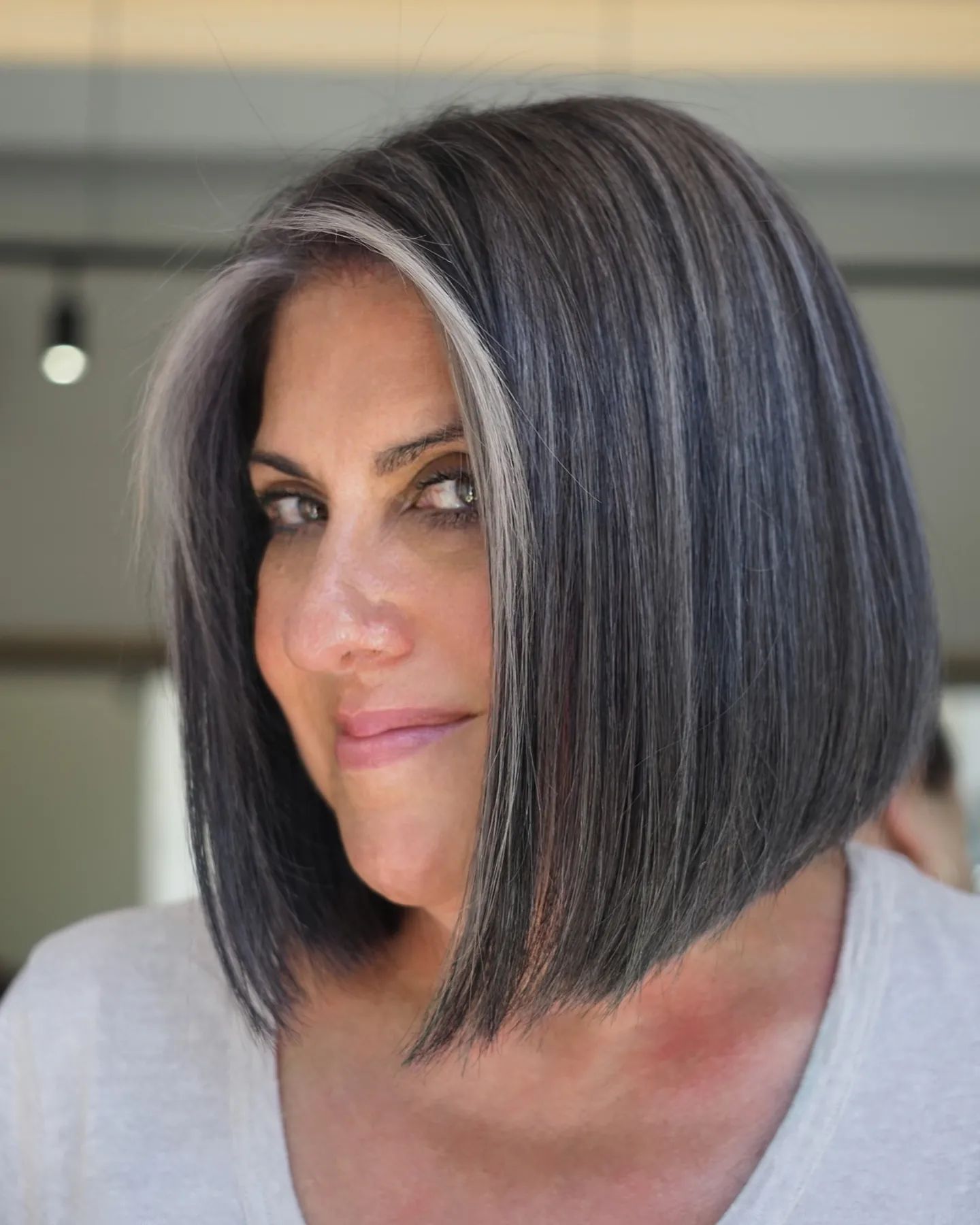
Have you ever watched a bob go from dated to modern in one colour appointment? That is what a gray blending bob does for straight, fine hair. The technique weaves prominent gray streaks through a darker base, so the silver reads as deliberate shine instead of a root emergency. On my fine strands, the contrast adds the illusion of density, which a blunt bob alone never managed. This is a salon job, not a bathroom mirror experiment. The placement needs a stylist’s eye to keep the gray from pooling at the ends. Five minutes to straighten, and you are out the door.
Collarbone Layers With Gray and Silver Highlights
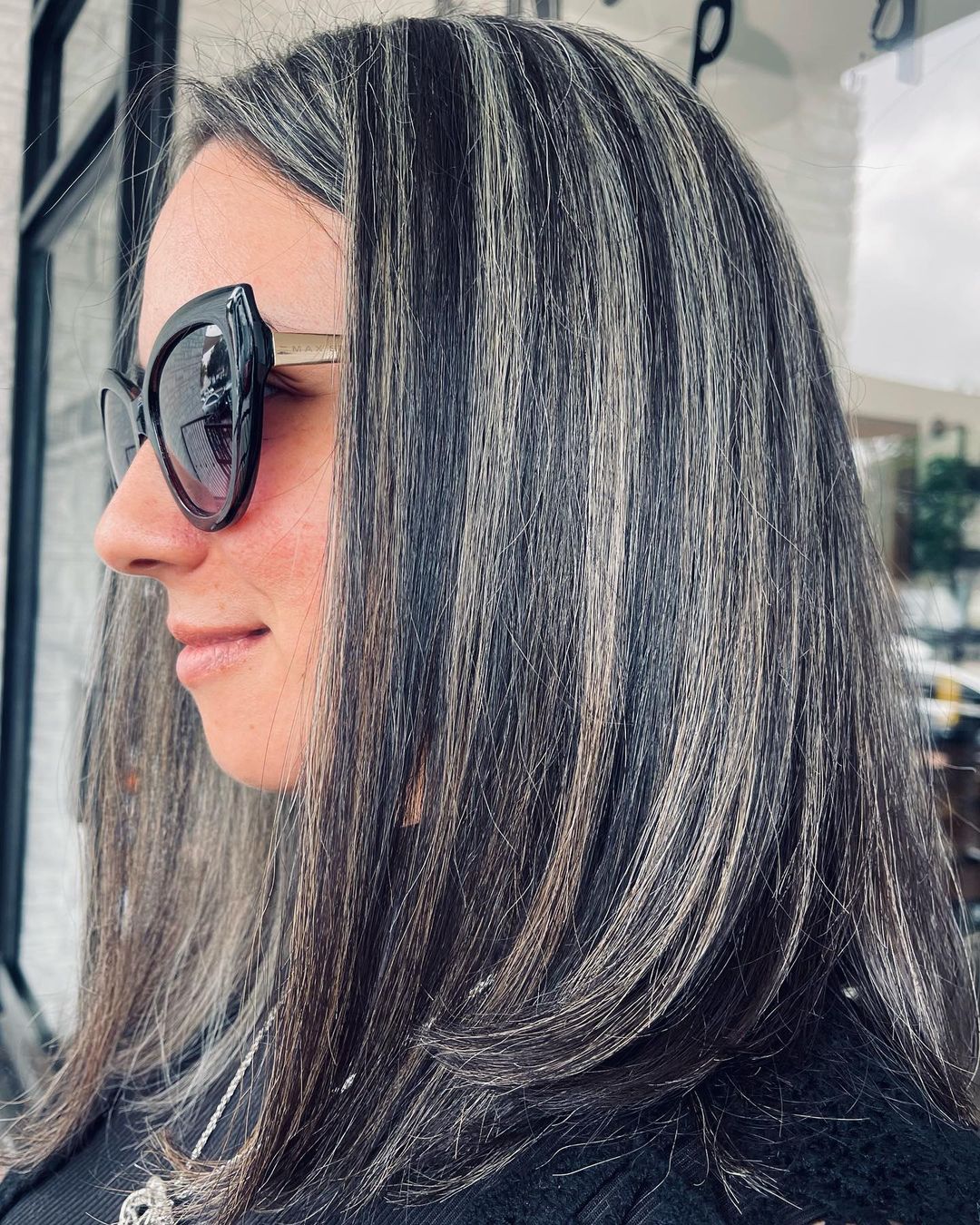
Skip the full head of gray, this is the version that flatters. Gray and silver highlights on a dark base give you the dimension without the commitment of going fully silver. The striking contrast lands somewhere between salt-and-pepper and something you paid a lot for, and it suits medium-density wavy hair best. Full gray flattens a face; these highlights catch the light and move with the layers. I have seen this on a friend with a round face, and the vertical streaks lengthened everything. The dark base keeps regrowth soft, so you are not chasing a line every three weeks. This is the compromise that actually works.
Stacked Bob With Layered Gray Highlights
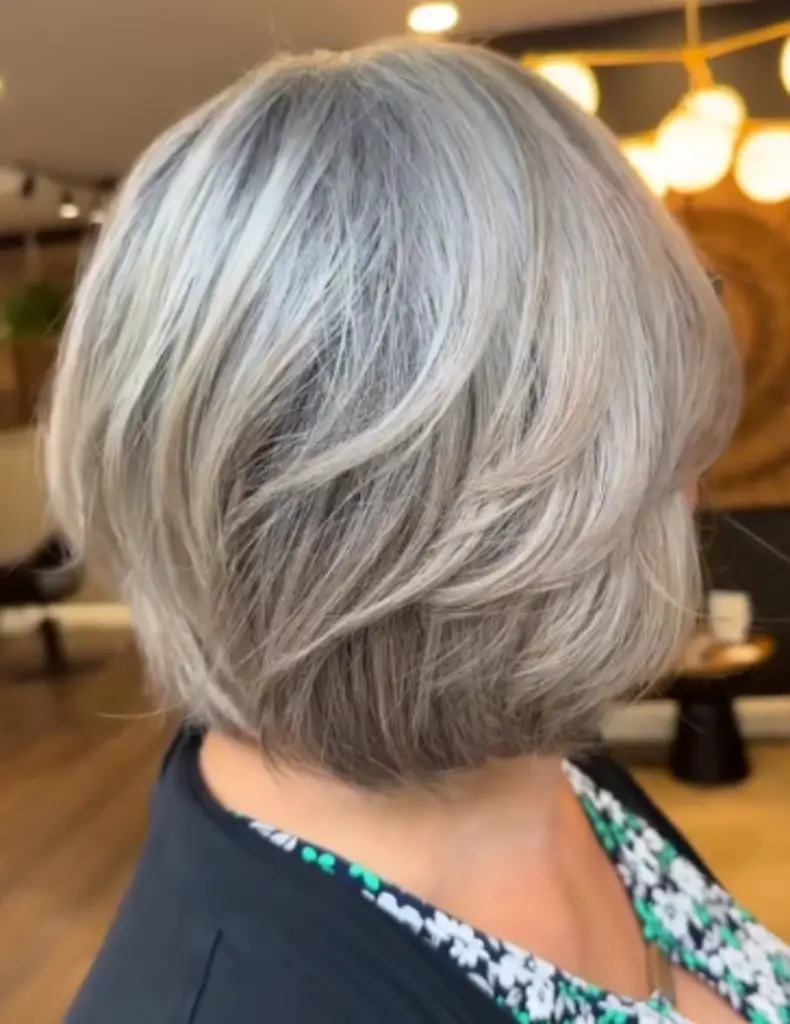
Who does a stacked bob actually flatter? The graduated back cinches the nape, and the layered gray highlights fan forward, which balances a wider jaw or rounder cheek. On wavy hair of medium density, the subtle gray blending adds depth without bulk. At chin length, the colour lifts the eye upward. Straight or coarser textures can bow out — the soft waves here anchor the weight. The gray reads softly, not stark, which keeps the shape from looking severe.
No Bangs Chin-Length Bob With Ash Blonde and Gray Tones
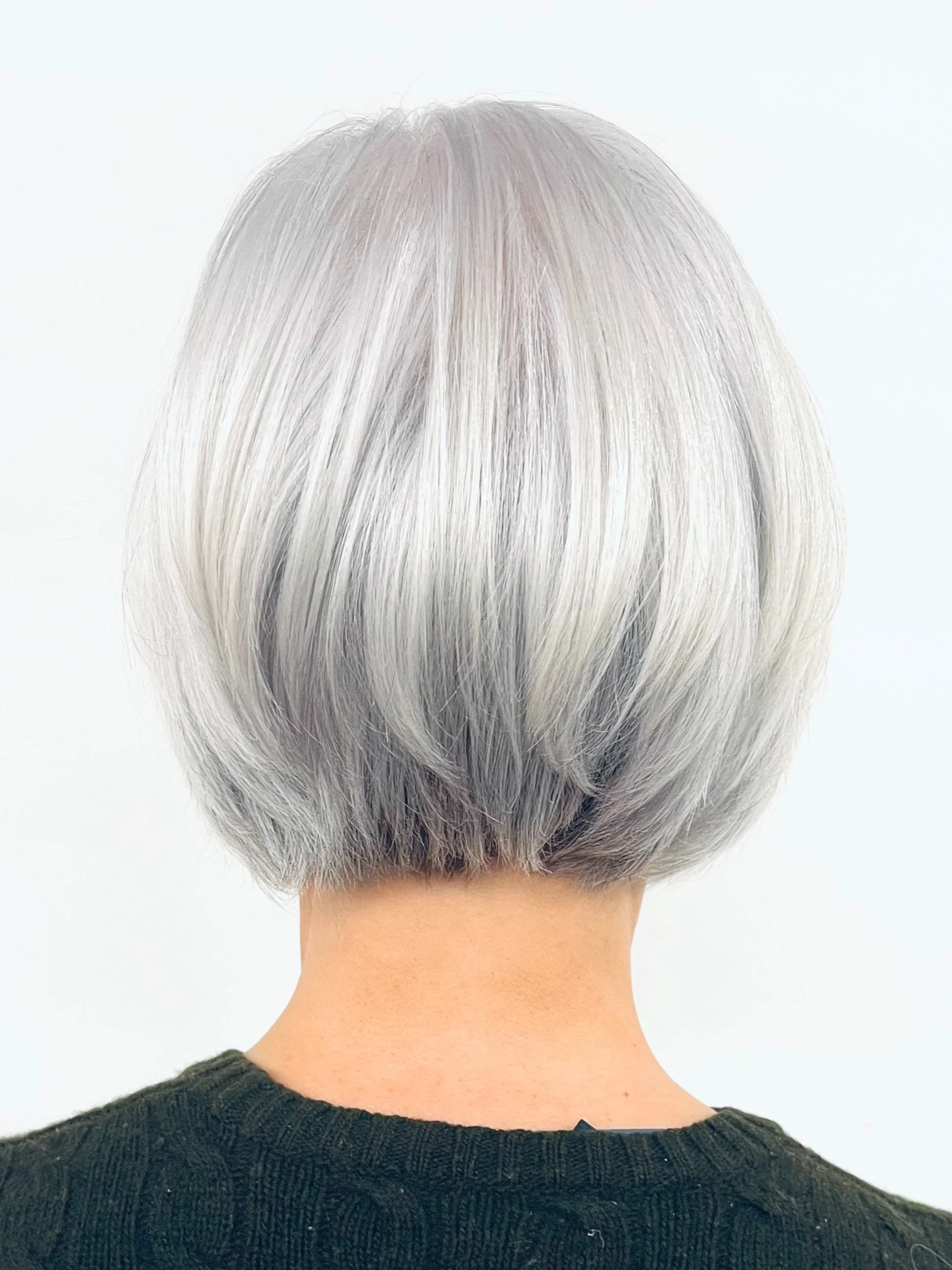
Strip out the silver and the ash reads almost like a neutral. A full silver bob can look stark; the ash blonde gray undertones here keep the colour blended and natural. The straight, fine texture at chin length skims the jaw without bulk. Middle part, no bangs, clean line. It is a shade that says ‘I went gray on purpose’ without shouting.
Shoulder-Length With Medium Brown and Gray Highlights
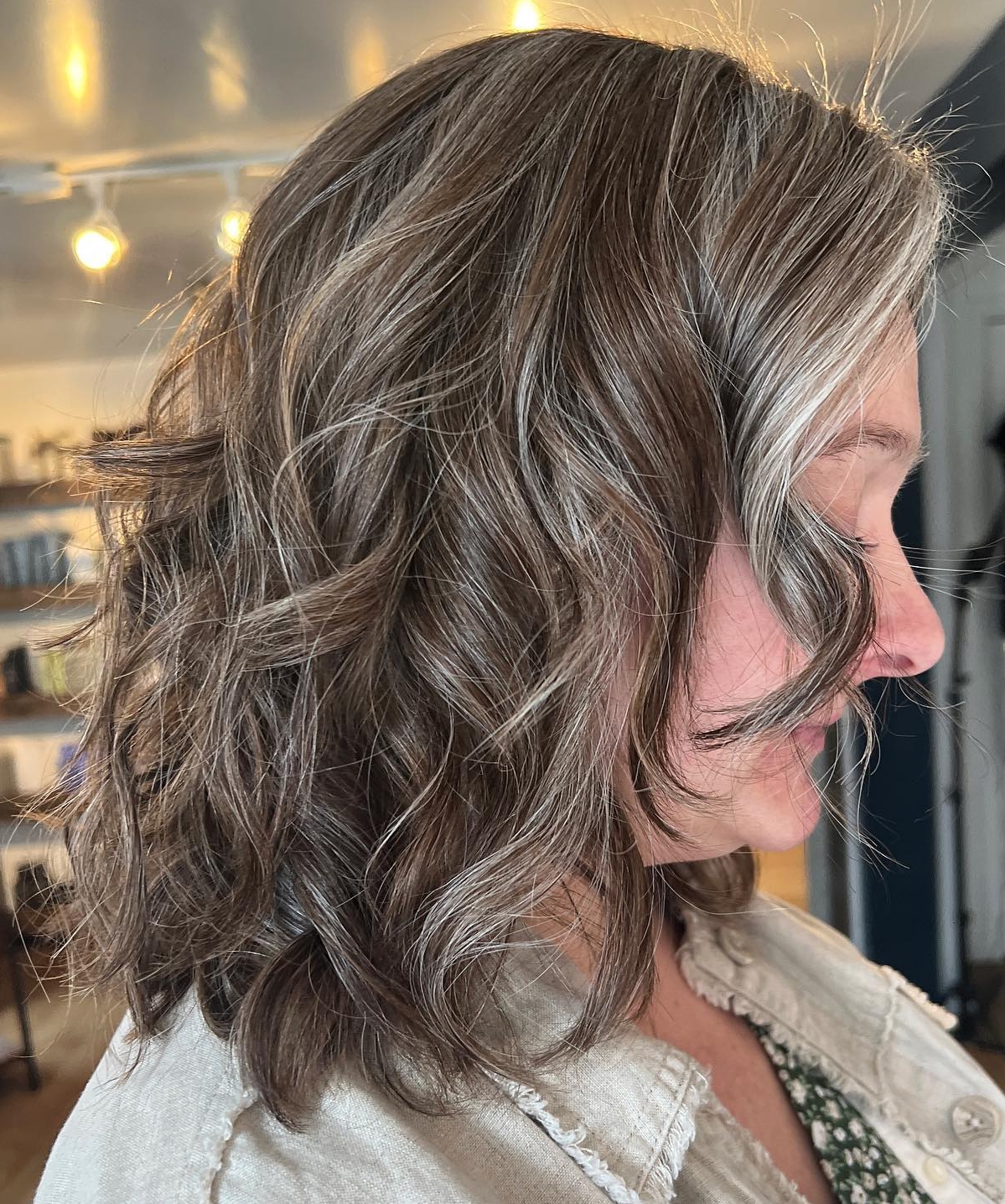
How do you add gray highlights without going full salt-and-pepper? The stylist paints fine gray blending highlights into a medium brown base, stopping an inch from the root to keep a natural dimension. The tone sits between cool and neutral, so the gray does not veer blue or brassy. At shoulder length with wavy layers of medium density, the highlights land midshaft to ends. This is a salon technique, not a box dye job — the placement needs a skilled eye. The result is a brown that looks lived-in, not dyed.
Back View Chin-Length Bob With Blended Gray Tones
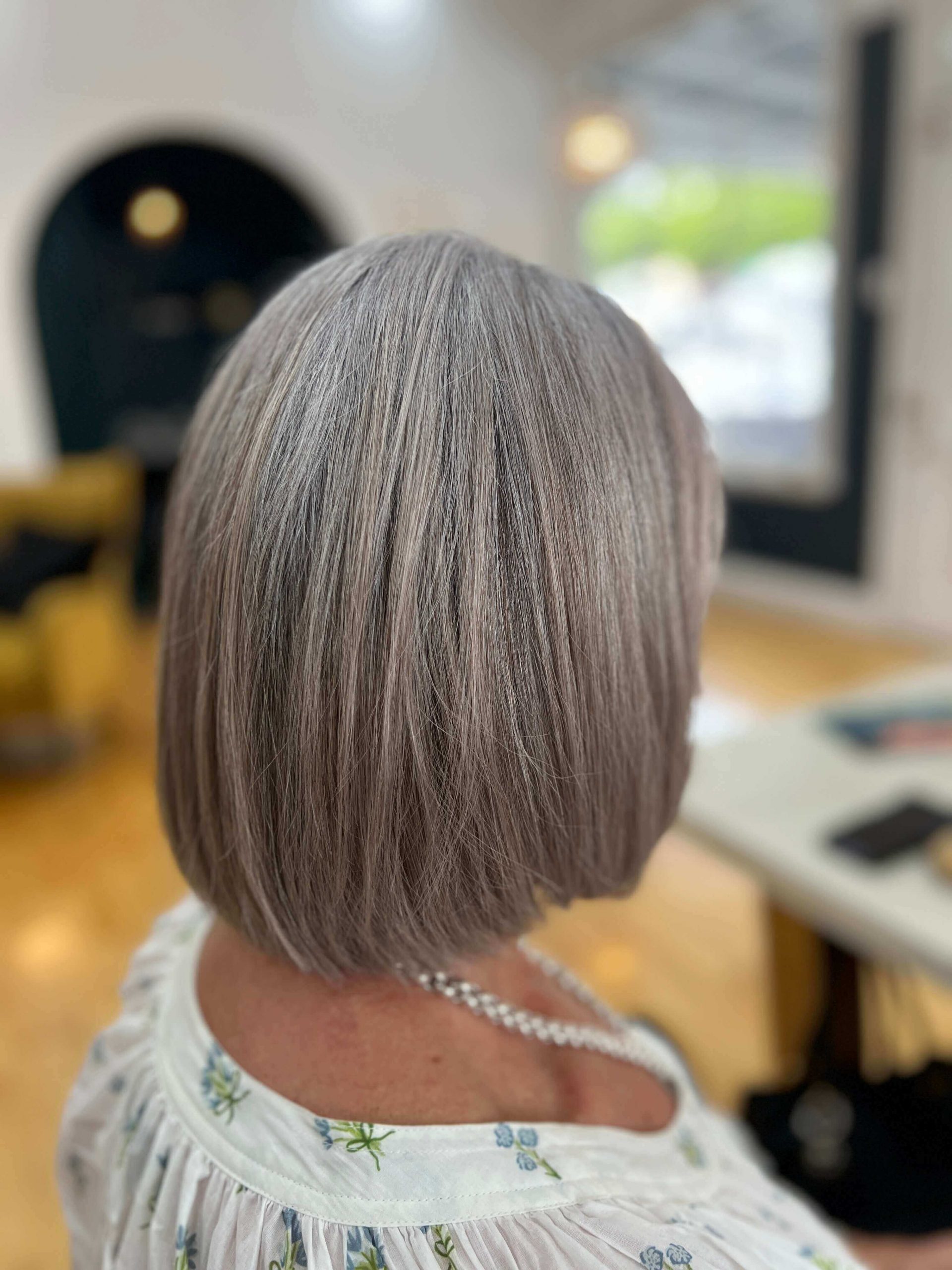
Best for cool undertones. The chin-length bob, cut with no bangs and a middle part, keeps the shape sleek. Straight, medium-density hair holds the blowout well. The technique here uses blended gray tones with lighter gray highlights, creating a cool, soft dimension. If your natural base is dark, this blend will read more prominently. A smooth blowout takes about five minutes. This is a salon-only colour application.
Shoulder-Length With Dark Base and Gray Streaks
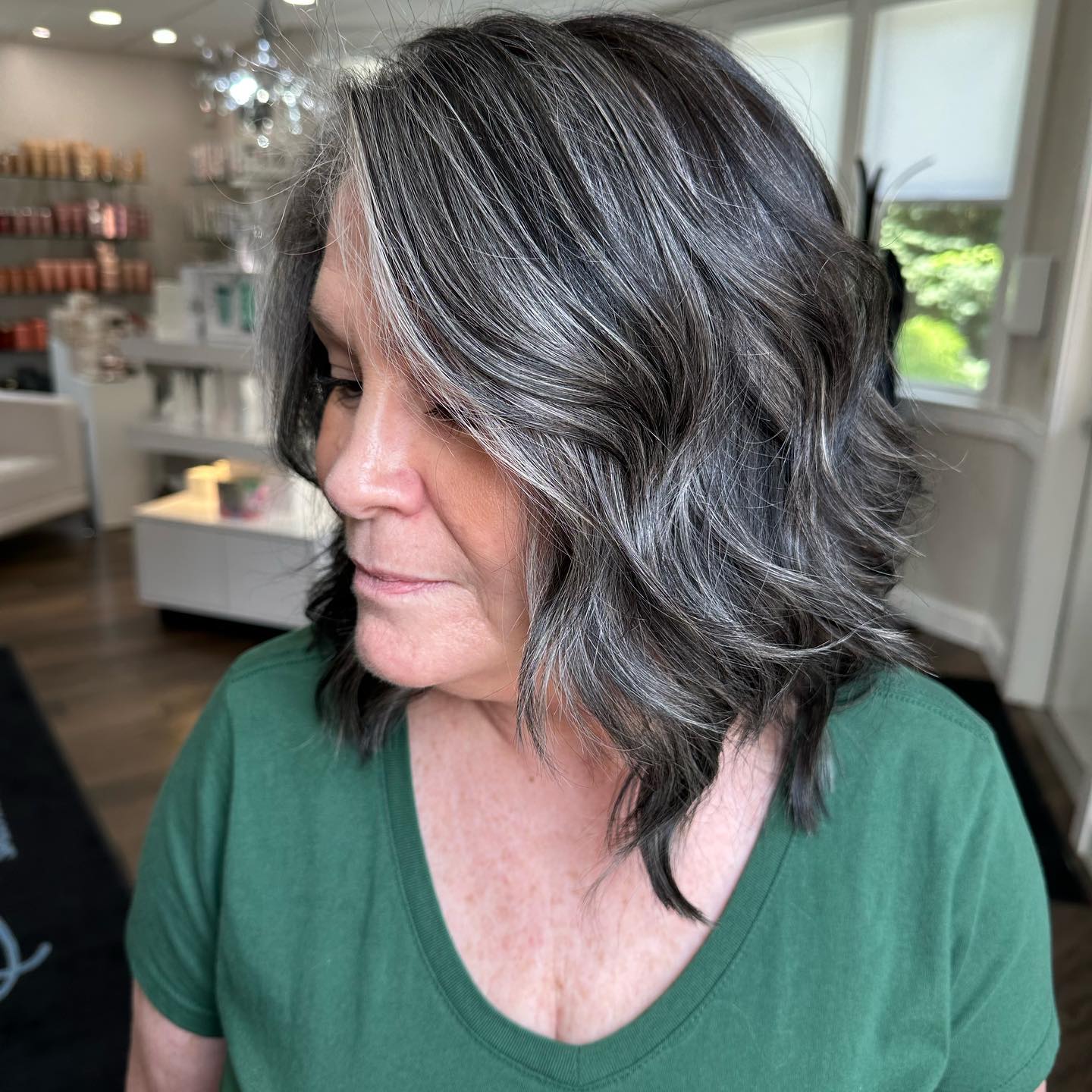
The gray streaks here are not shy. They sit right on the surface of this dark base, which means they show up fast and stay visible. Over a week, the wavy texture holds the integration well; the medium density keeps the streaks from getting lost. At shoulder length with layers, the color placement reads dimensional. The tone is cool silver, which can go brassy if you skip a purple shampoo. Upkeep: color refresh every 6-8 weeks, trims every 8. A texturizing spray helps the waves hold. This technique demands salon precision, but the grow-out is forgiving because the streaks are intentional.
Layered Slightly Flipped Ends Layered Bob With Natural Gray and Lighter Highlights
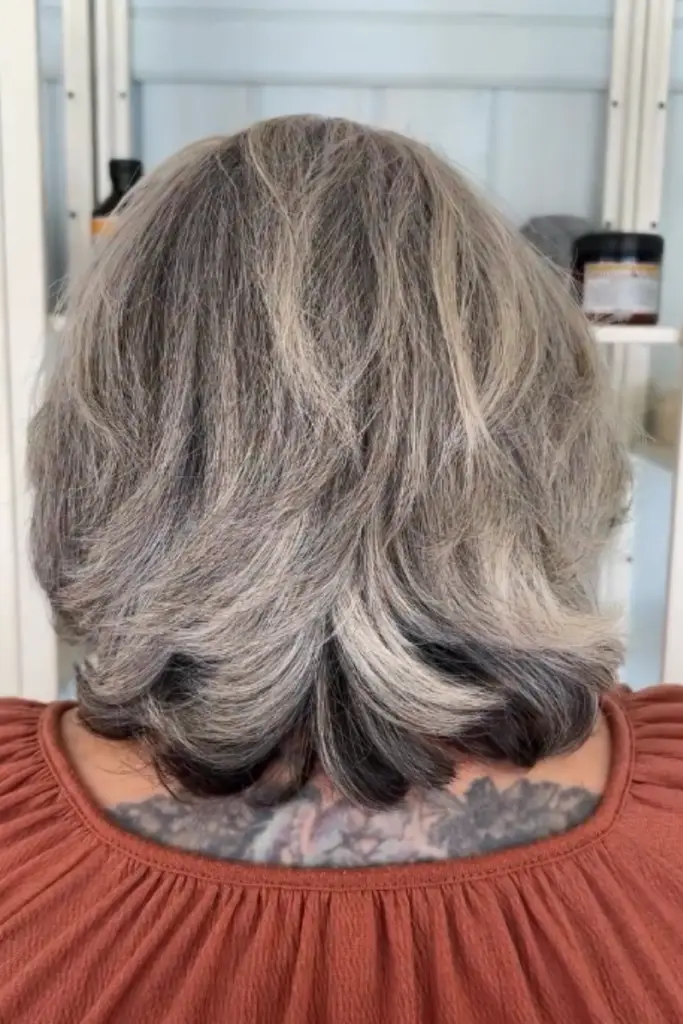
I was ready to dismiss this. But the layered cut with slightly flipped ends changes everything. The natural gray lighter highlights here are blended through thick, straight hair, so the movement is obvious. Compared to a solid gray application, this has breathing room. The chin length with no bangs keeps it tidy. The warm undertone is missing, it’s cool through and through. I prefer that. The salon technique is key; don’t try at home.
No Bangs Collarbone Layers With Blended Gray and Silver
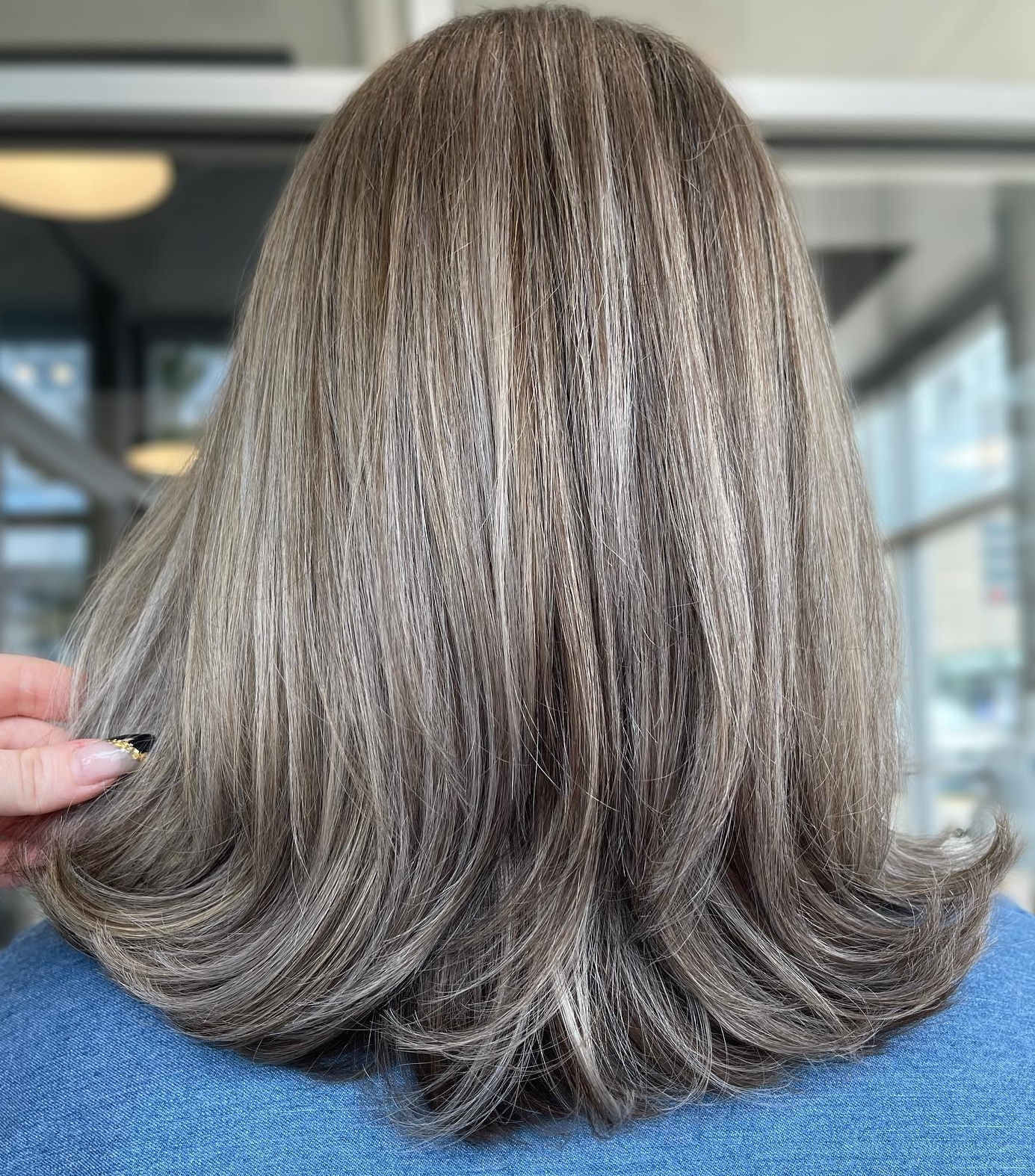
Worried about stripes? This technique avoids that. On a collarbone-length layered cut, the dark base gets fine blended gray silver highlights woven through the top and sides. The hair is sectioned into thin slices, painted with a lightener that lifts to pale silver, then toned in a cool silver shade. Placement is deliberate: heavier near the face for brightness, softer at the back. The wavy texture, medium density, and cool silver tone create noticeable contrast without harsh lines. This is a salon technique. The shade selection alone requires a stylist who understands depth. At home? Skip it. The grow-out is soft because the highlights start a few inches from the root.
Chin-Length Bob With Gray Blending Highlights
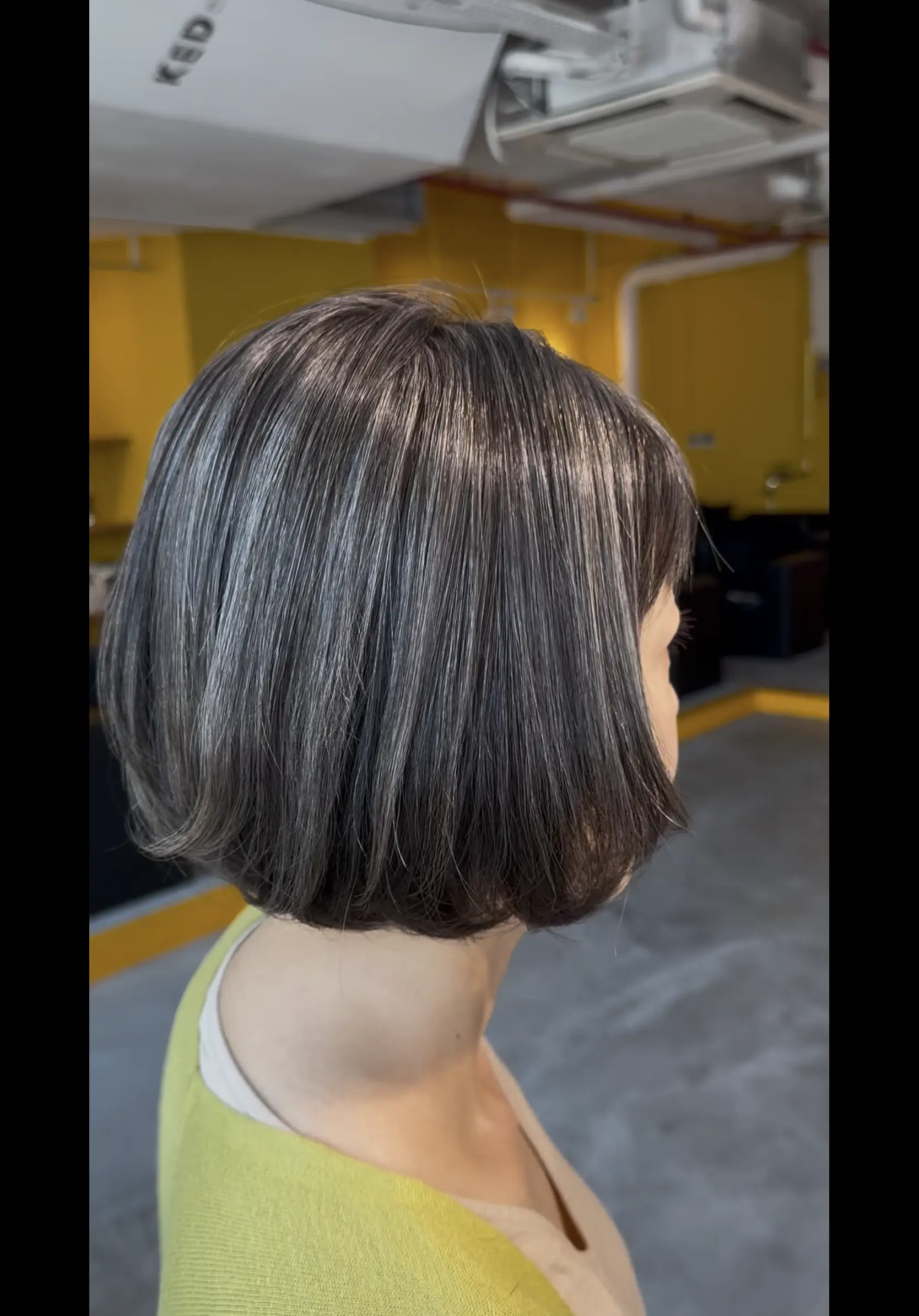
I underestimated the root. The gray blending chin bob here works because the blend of gray and darker strands is subtle, not stark. The mistake people make is asking for high contrast, then every eighth week you see a line. On a chin-length bob with no bangs, straight medium density, the grow-out is brutally obvious. Dodge it by asking your stylist for a softer, blended application, where the gray is woven deeper into the base. Air-dried styling also helps blur the line.
No Bangs Lob With Gray Base and Ash Blonde Highlights
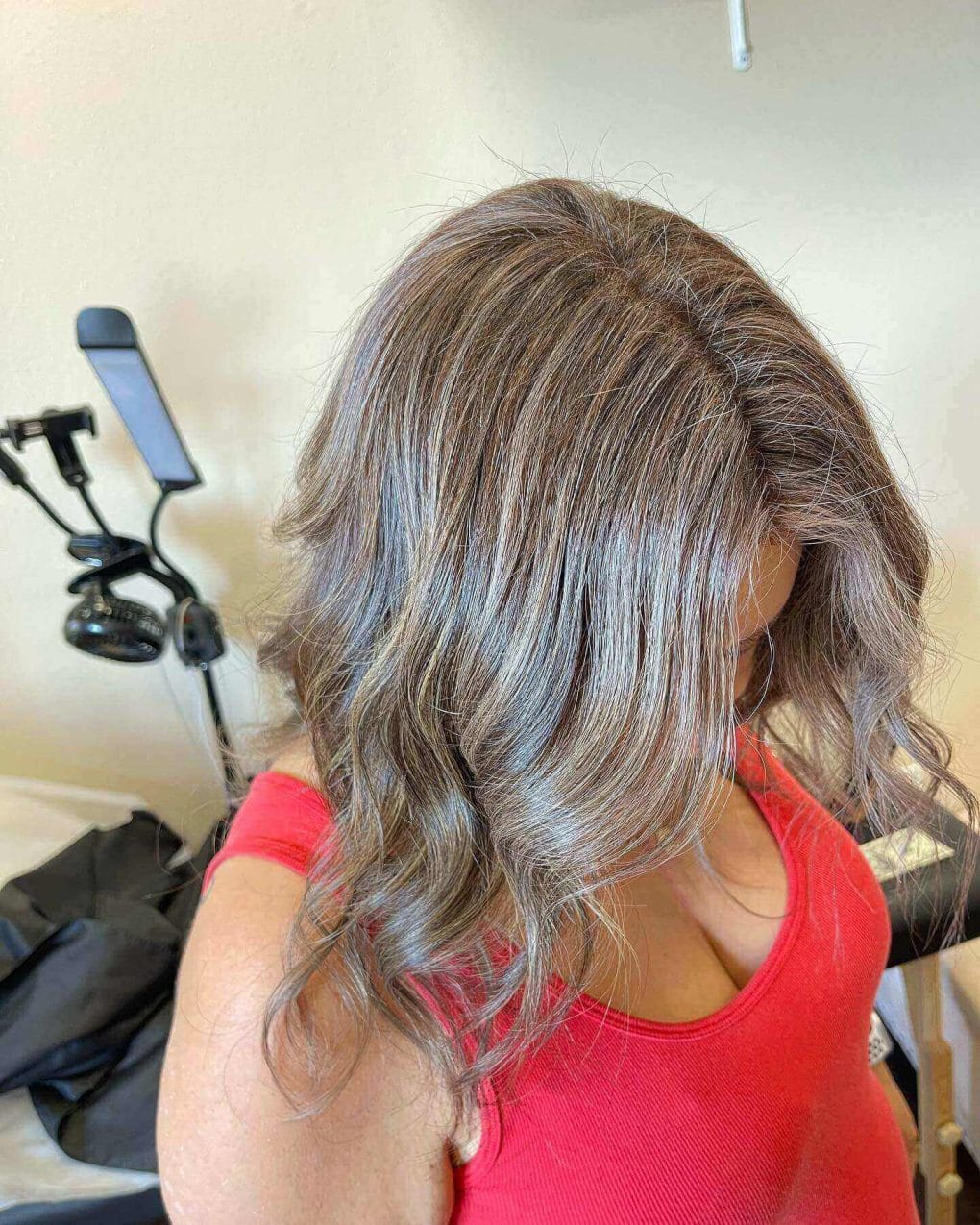
A lob with a side part and soft waves needs the right foundation. The gray base ash blonde highlights work best on medium to thick hair, where the blended effect can read as dimensional instead of streaky. Fine hair might lose the separation, making the highlights look too sparse. Collarbone length keeps the weight low, which helps the waves hold their shape. The ash tone cools down any warmth, so if your skin runs pink, this will sit nicely. A side part adds volume on top, which balances a round face by creating height. Straight parts can widen the look — skip those if that’s not your goal.
Lob With Blue-Toned and Silver Highlights
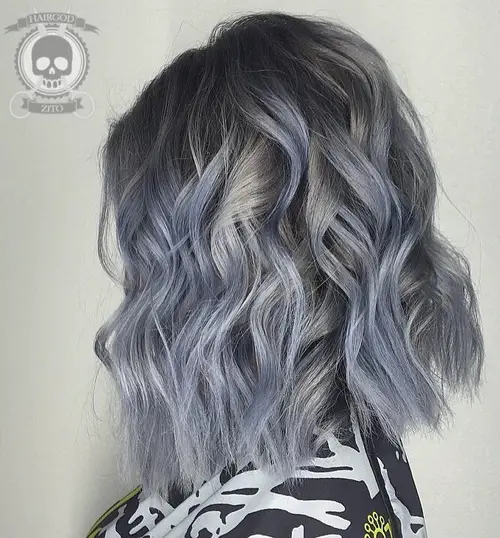
How long do blue toned silver highlights actually stay cool? About five weeks before the blue fades into a softer silver, which still looks good but loses the icy blue-toned punch. The gray base keeps the blend from going brassy, but you will need a toner every six to eight weeks if you want that frosty edge. Wavy collarbone length hides the grow-out well — the waves break up any visible line. This is a winter and early spring color; it reads sharp against heavy coats and muted light. Middle part keeps things symmetrical, and medium density carries the highlights without looking see-through.
Collarbone Wavy Blowout With Natural Gray Blend
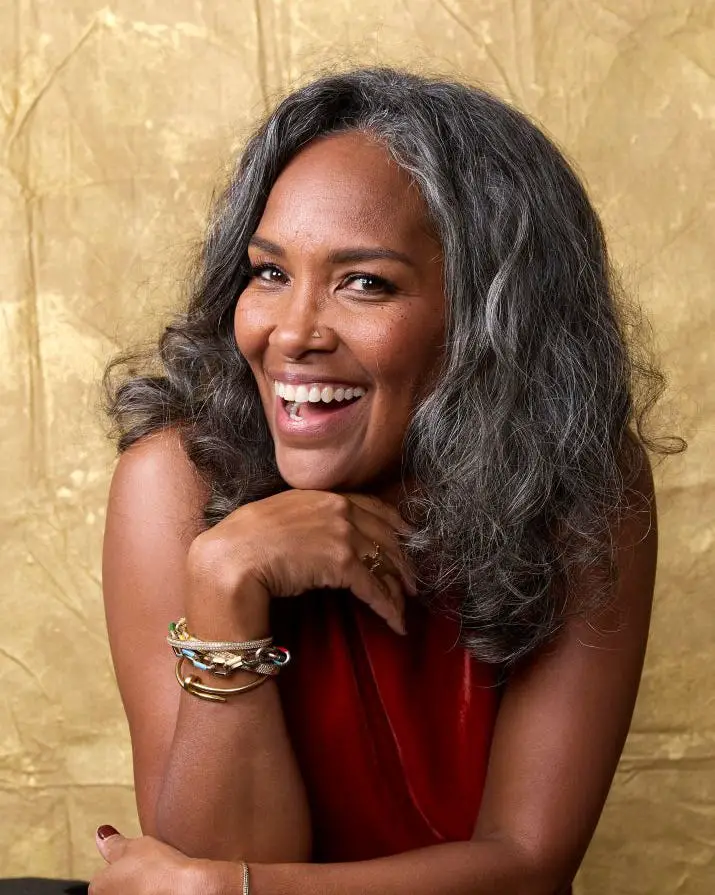
This works because the stylist does not paint every strand. Instead, the natural gray blend highlights are woven in at the roots and carried through midshaft, leaving the ends slightly lighter. The technique creates a softer dimensional effect — no harsh lines, no obvious regrowth. Collarbone length with layers lets the waves bend around the face, and the side part adds lift at the crown. Texture matters: wavy hair grabs the color and diffuses it naturally, while pin-straight hair might show every transition. Book a salon for this one. A DIY kit will give you stripes, not seamless blending.
No Bangs Shoulder-Length With Dark Base and Gray Highlights
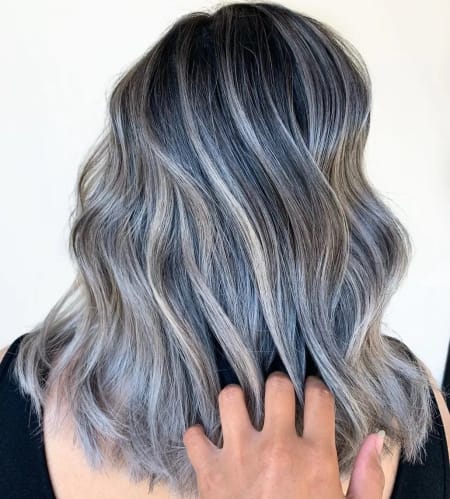
I used to think all-over gray was the only honest way to go. Then I saw this: a dark base gray silver highlights combination that reads like old money, not surrender. The dark base anchors the whole thing, while the prominent gray and silver highlights run through the top layers and around the face. That contrast keeps the color from going flat — all-over gray can wash out medium skin, especially when it turns silver-grey without any depth. Shoulder length with loose waves shows the highlights off in a slow spiral instead of a hard line.
The back view makes the case. From behind, you see the dark base peeking through the waves, and the gray highlights trace the movement. It is not uniform, and that is the point. Uniform gray sits still. This one travels with you.
Collarbone Hair With Dark Base and Gray Highlights
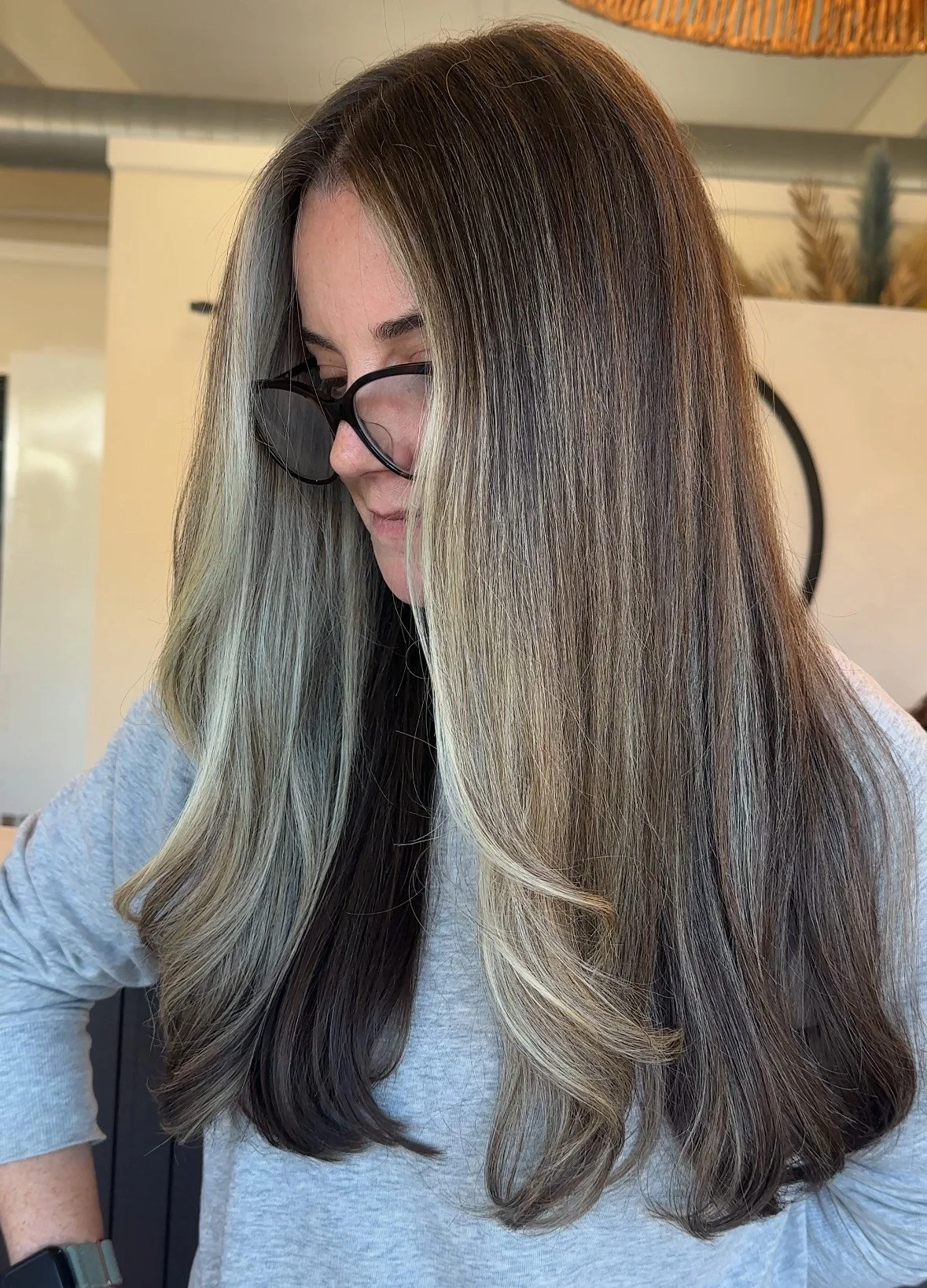
Dark brown gray highlights against a deep base — that’s the premise here, and it works because the contrast is deliberate. On thick, wavy collarbone-length hair with a cool tone, the blended gray highlights read as intentional, not accidental.
The catch: this look does not wait for you. The dark base means every quarter inch of regrowth announces itself. You are reaching for the texturizing spray three times a week to revive the waves, booking colour refreshes every six to eight weeks and trims every eight to ten. The wavy texture helps blur the grow-out line slightly, but only slightly. It is a striking look if you are ready for the schedule. A middle part and a quick blowout with a round brush give it the shape it needs.
Collarbone Hair With Distinct Gray Highlights
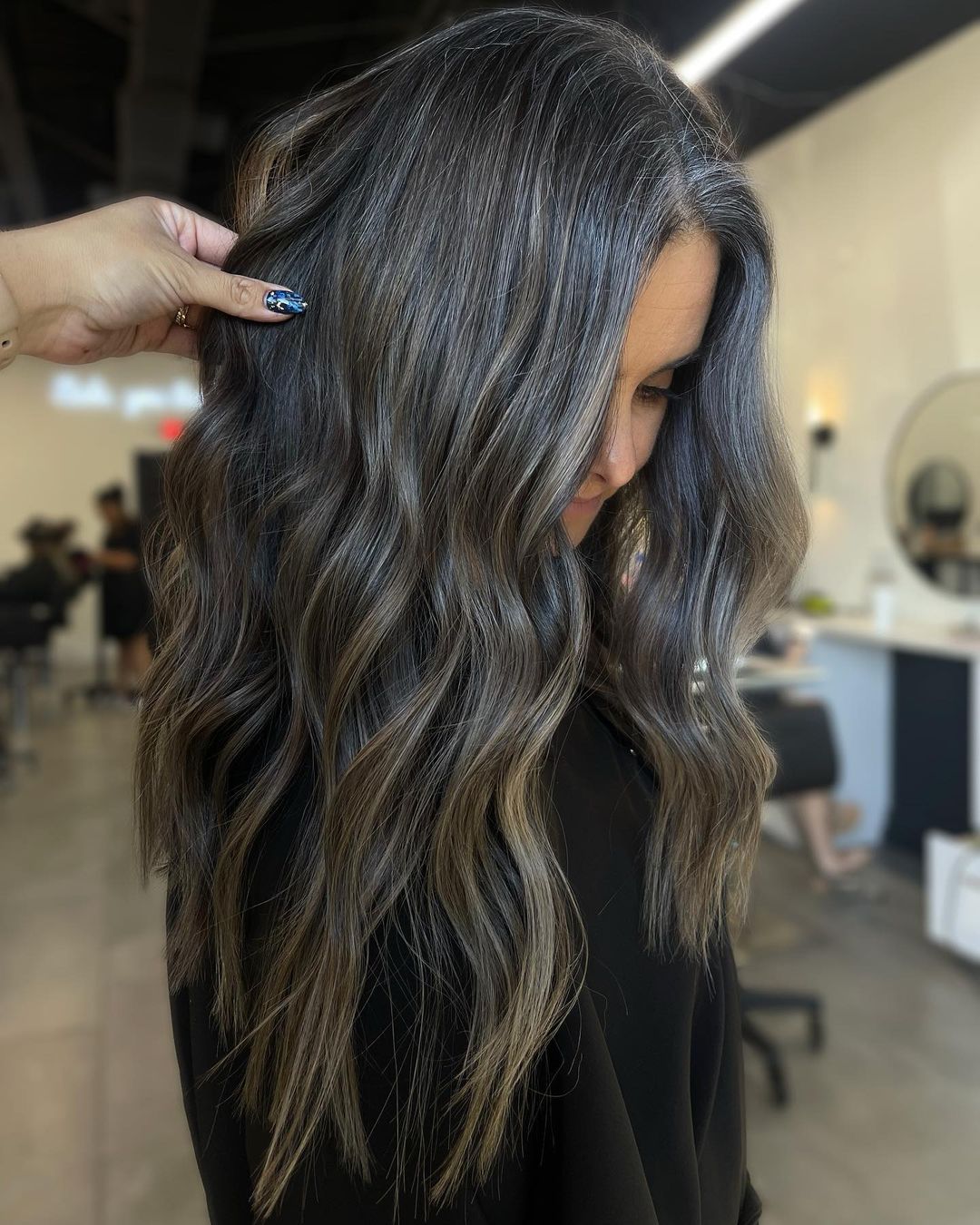
What makes these distinct gray highlights look so deliberate rather than accidental? It is the spacing and the contrast. On thick, wavy collarbone-length hair, each gray strand is placed with a clear gap from the next, creating a striped but soft effect that shifts with the waves. The dark base underneath keeps the gray from blending into a uniform silver — it stays bold and readable. The side part adds asymmetry, so the highlights fall at different angles.
This is a salon technique, not a bathroom-mirror job. Creating distinct gray highlights against dark hair requires control: the stylist uses fine sections and a careful placement to avoid a muddy blend. The tone has to be an ashy gray, not warm, or the contrast turns murky. That precision is the whole point. If you try to do this at home with a cap or a brush, you risk patchiness or a gray that reads as faded brown. The striking contrast only works if every highlight lands exactly where it should. Book the consultation first.
Final Thoughts
I went into this thinking I’d land on one or two favorites. Came out the other side with a list of six I want to try. The one I keep coming back to is the chin-length bob with gray and ash tones. Low enough maintenance that my flat-by-4 pm hair can handle it, interesting enough that I don’t feel like I’m hiding.
- Trim the baseline every eight weeks
- Tone at week six, not week ten
- Purple shampoo once a week, not every wash
- Ask for a root shadow, not a full highlight