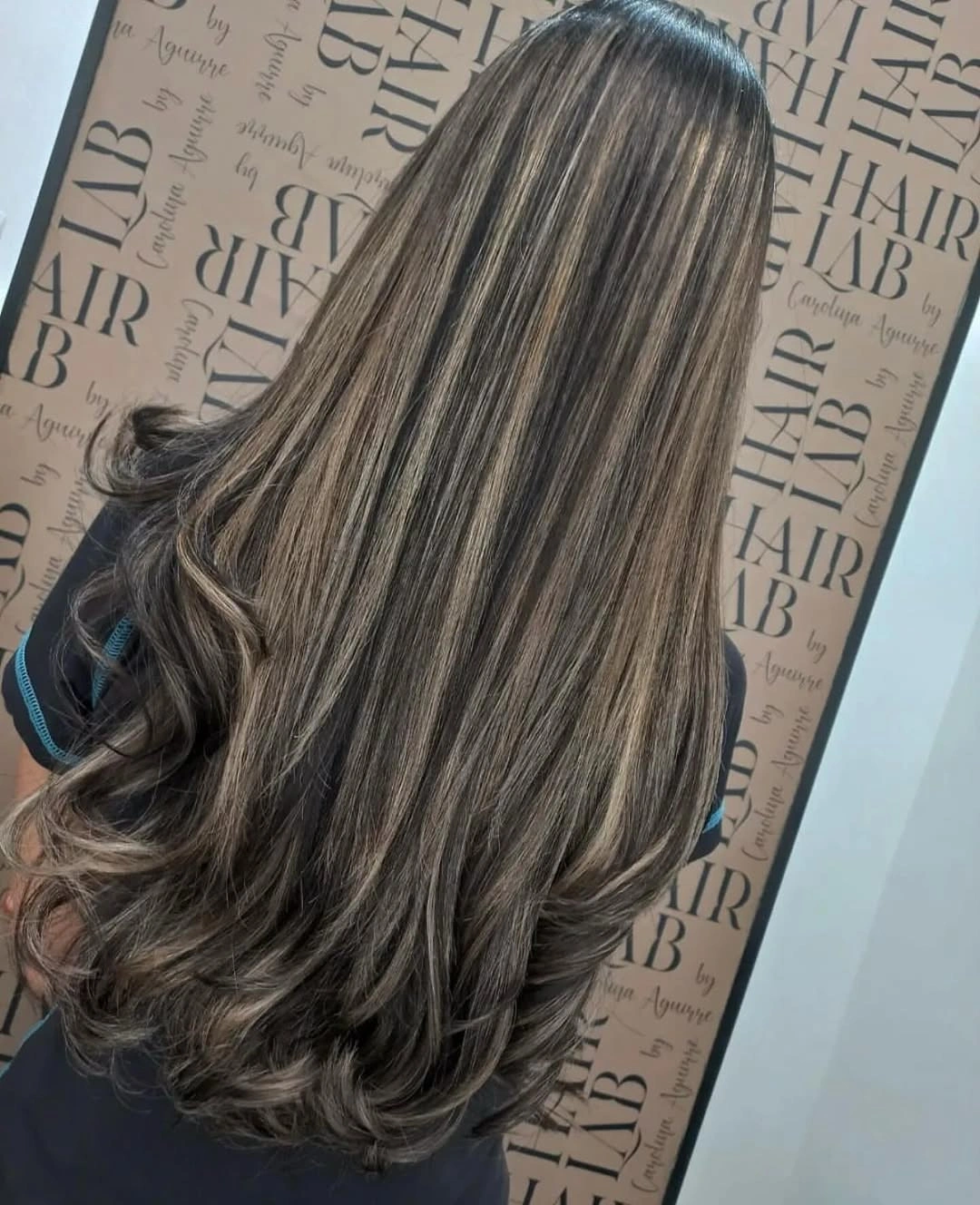

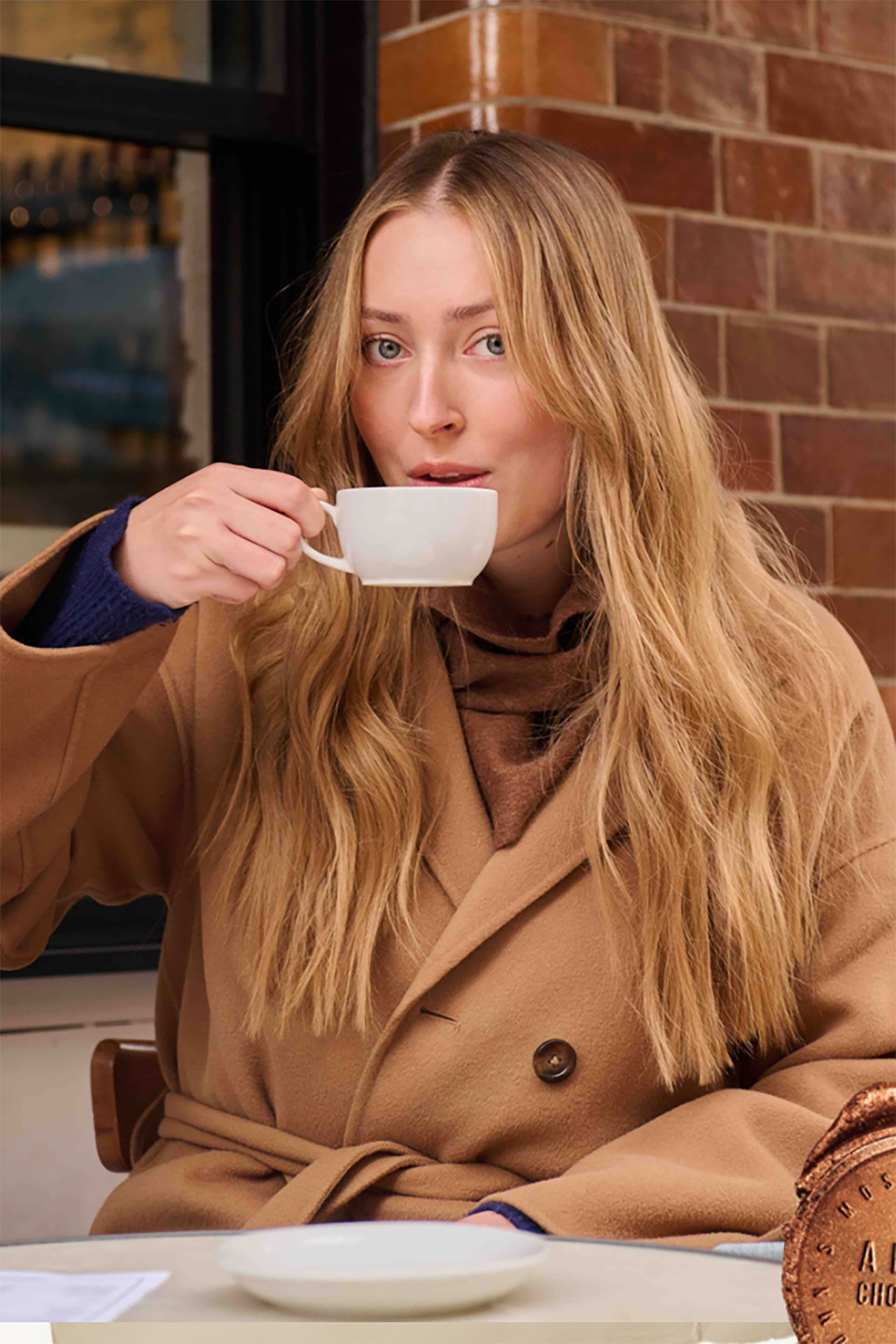
I spent three winters hiding my roots under beanies. Then I realized the beanies were the problem, not the roots. This season, the color world finally caught up: dark bases, grown-out shadows, and tones that fade gracefully instead of announcing themselves at week five.
These 26 Low Maintenance Winter Hair Colors are the ones I’d actually book. Ash blondes with root shadows, deep wines that stain rather than stripe, browns with copper that land somewhere between intentional and accidental. For fine hair that goes flat by 4 pm, for coarse hair that eats toner, for anyone who wants to stretch a salon visit past eight weeks. No six-hour appointments. No panic at the regrowth line.
Air-Dried Dark Blonde With Subtle Highlights
Dark blonde with highlights reads different in winter than summer. The base is a soft, warm dark blonde, light enough to catch light but dark enough to hide a root for six weeks. The highlights are subtle, painted close to the base so the tone stays neutral, not too ashy, not too golden. Collarbone length, wavy, medium density. This shade works on fair and olive skin equally because the tone sits neutral. I air-dried mine with a leave-in and combed through once. It’s not a zero-effort color, but the grow-out is soft, no harsh line. A trim every ten weeks keeps the ends fresh. That’s the reality.
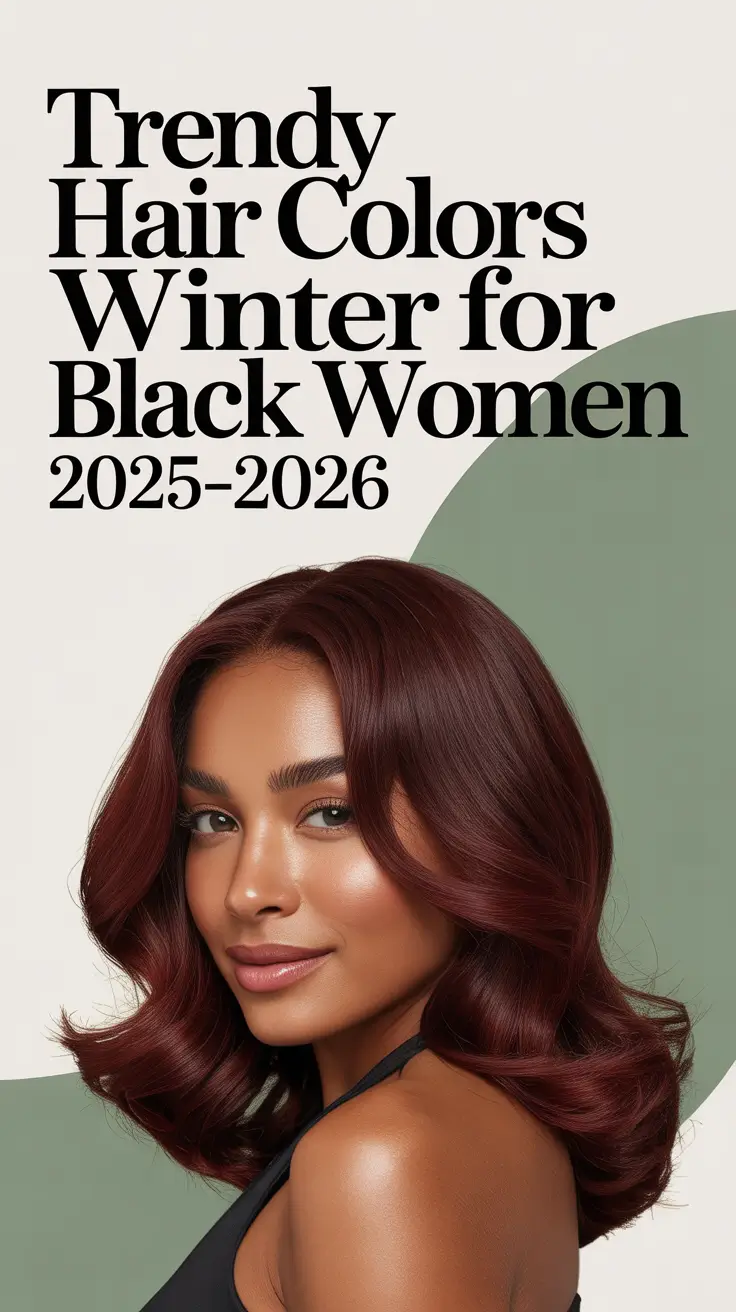
Deep Wine Red With Violet Undertones
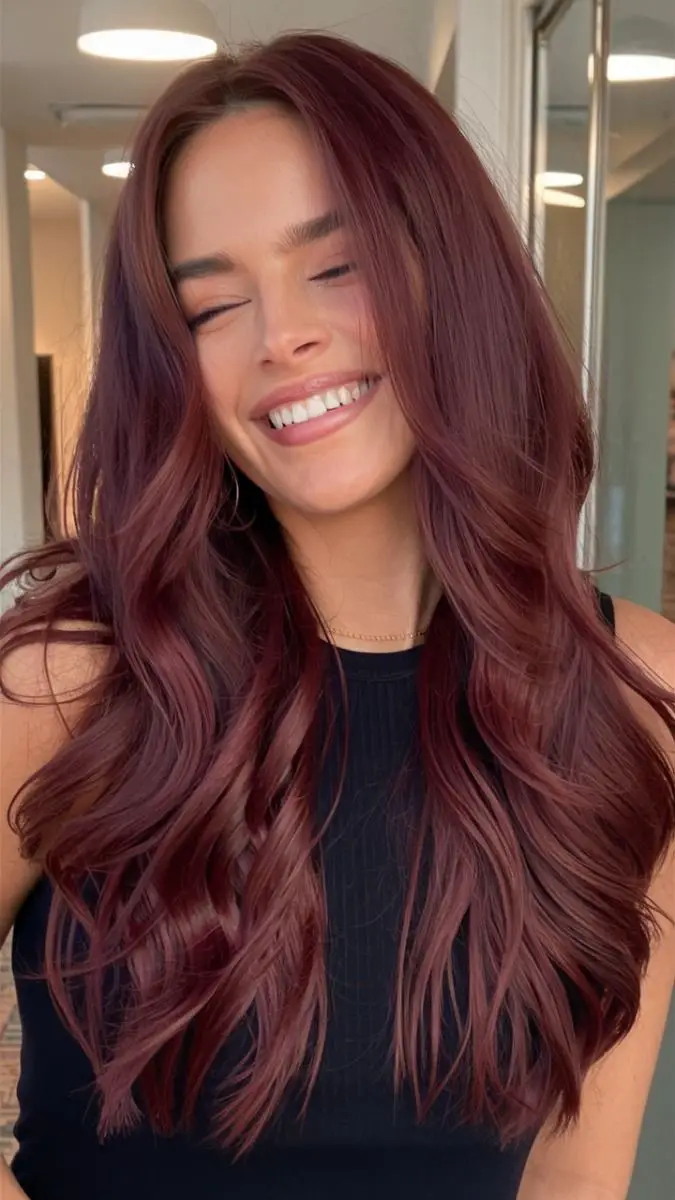
I’ll admit, I was skeptical about deep wine red hair for winter. But this shade, with its violet undertones, works because the dark base keeps it from looking costume-y. The color is a rich wine red, applied all over, not painted. On mid-back length waves with medium density, the violet catches the light and avoids flatness. The tone leans cool, so it reads jewel-toned, not brassy.
The upkeep is real. By week four, the vibrancy starts to settle into a dusty burgundy. A color-depositing conditioner in the shower every third wash buys another two weeks. The honest downside: roots show at the part, and touch-ups are needed every six to eight weeks. It’s not a set-it-and-forget-it color. But when the tone is fresh, the hair looks expensive. I keep a purple shampoo on hand and book toning appointments between full colors.
Shoulder-Length Dark Blonde With Caramel Highlights and Curtain Bangs
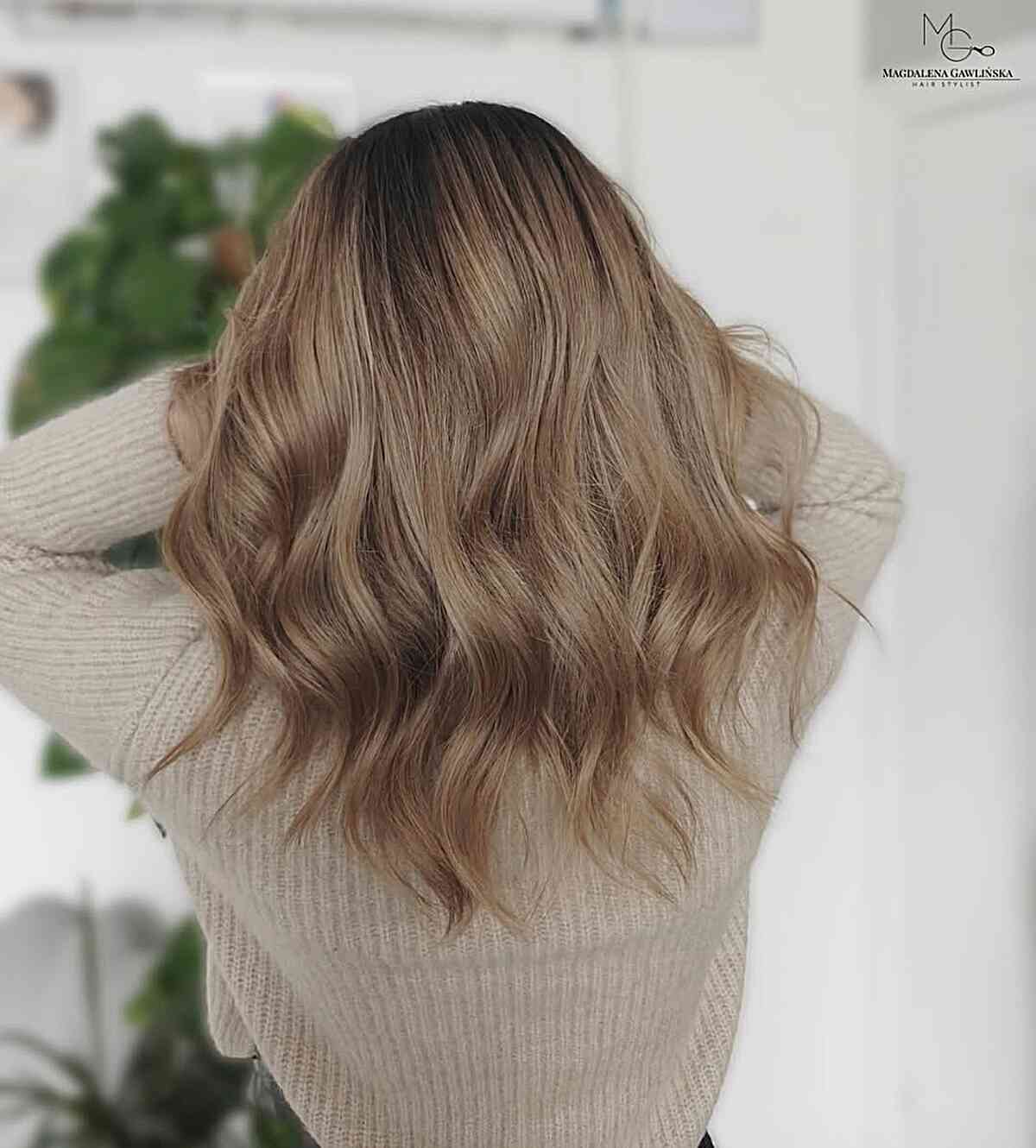
There is a specific warmth to dark blonde with caramel highlights that reads expensive without trying. The shoulder length is a sweet spot, short enough to feel tidy, long enough to pull back. Curtain bangs frame the face without making you commit to daily styling, they part naturally with the middle part and blend right into the layers. The caramel highlights hit the light in a way that softens round features, and the texture of wavy medium density hair responds well to a blowout that takes about 15 minutes. It works for fair skin with warm undertones and for olive skin that wants a lift without going full blonde. Trim every 8 weeks, the bangs every 4 to 5.
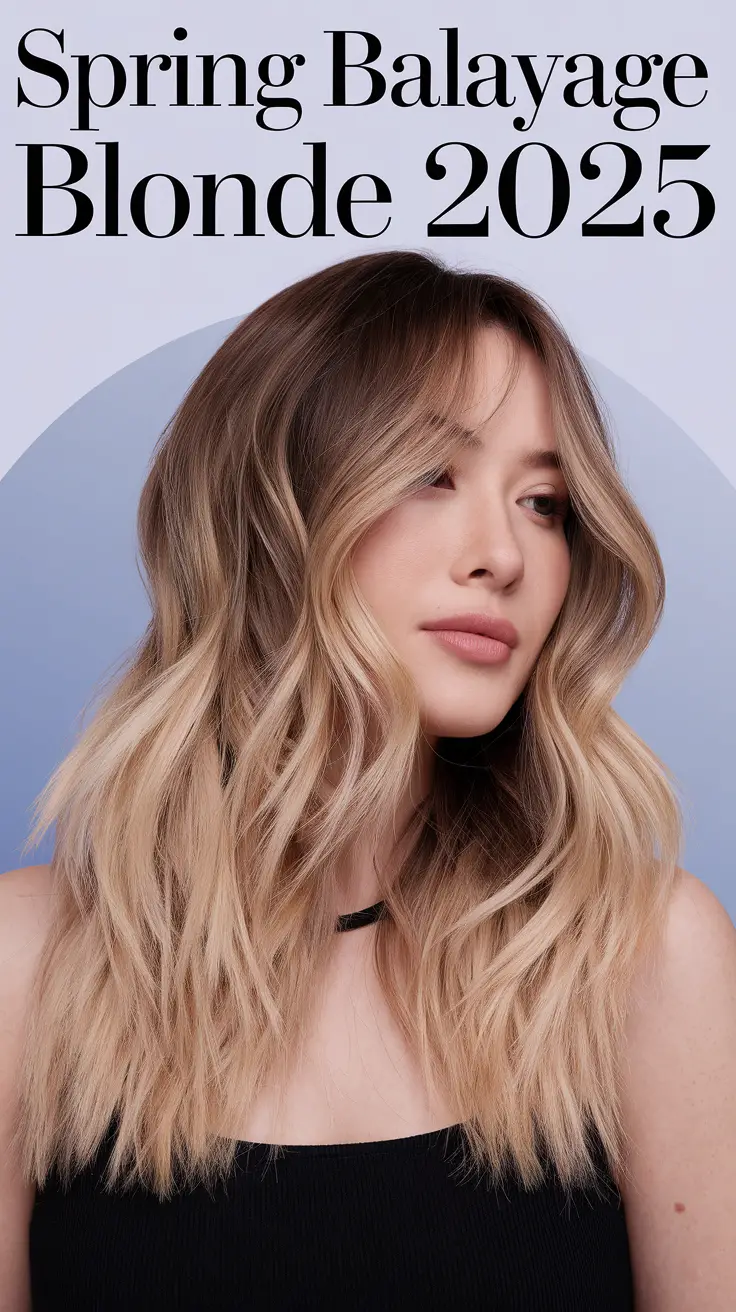
Ash Blonde With Beige Highlights and Side-Swept Bangs
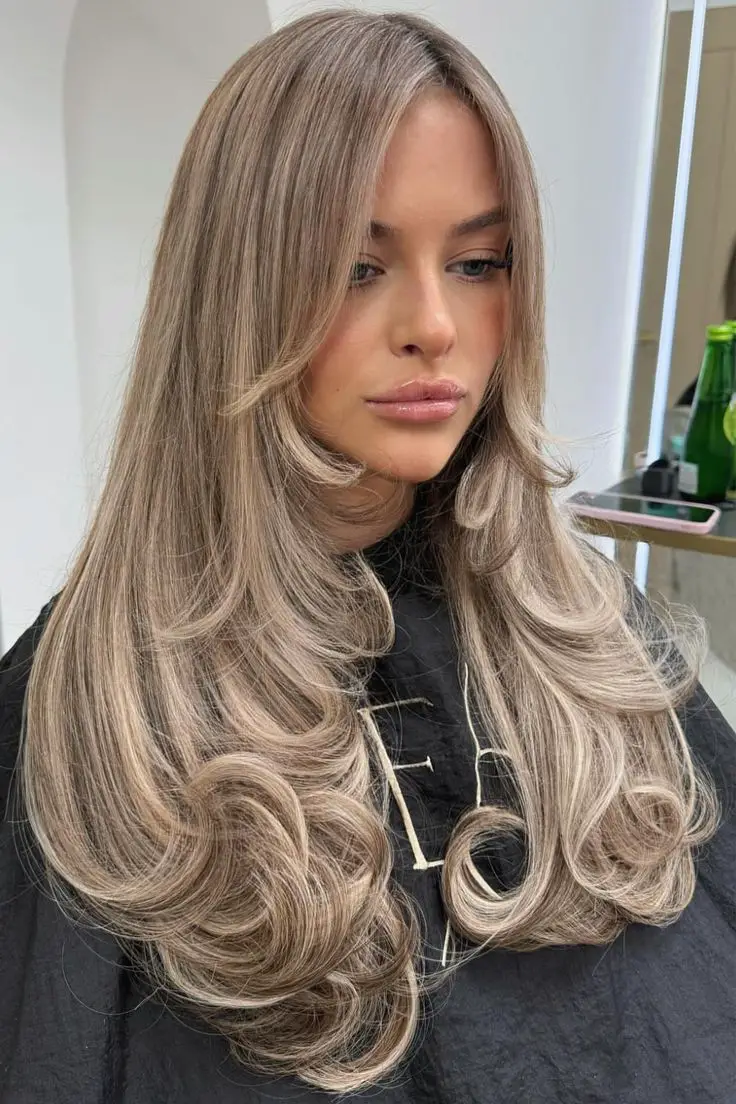
How do you keep ash blonde with beige highlights from going yellow before your next toner? Start with a cool base at the roots, then paint the highlights in a fine, face-framing placement. The side-swept bangs hide the transition line while the length blends naturally.
Styling is a 20-minute blowout with a round brush and a cool shot at the end. Curl the ends under for volume, sweep the bangs across, and spray a dry texture mist to hold the shape. The ash tone reads silver in low light and cream in sun, no brass in sight.
Medium Brown Shag With Curtain Bangs
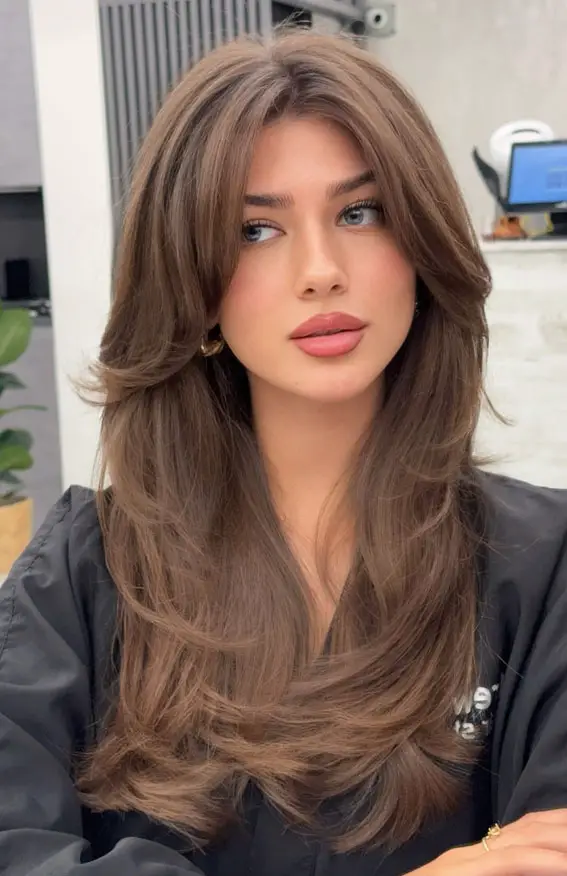
The medium brown shag haircut with curtain bangs is the winter uniform I didn’t know I needed. It lands in that sweet spot between messy and deliberate, perfect for holiday parties where you want to look put together without a curling iron. The shag layers frame the face and the curtain bangs sweep back for an instant shape shift. Come January, it still reads fresh without a trim.
Ash Brown With Cool Blonde Highlights
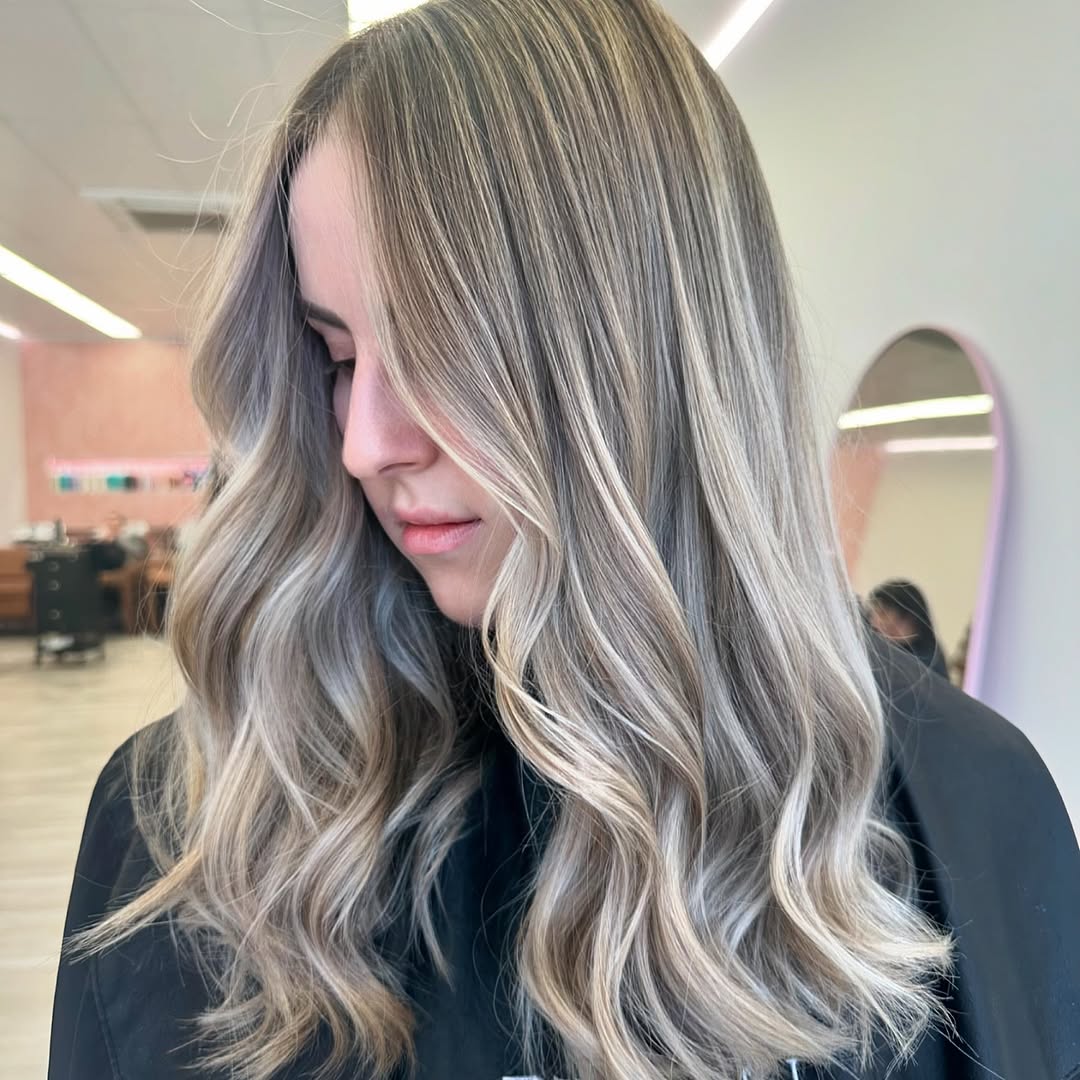
Can an ash tone actually stay cool through a winter of dry air and indoor heating? I was skeptical until I saw this collarbone-length, side-parted cut on wavy, medium-density hair. The base is ash brown, and the cool blonde highlights sit in the top layers, catching light without screaming for attention. The layers keep the waves from collapsing into a triangle by 4 pm, which is more than I can say for most of my experiments.
The technique is what saves this from brassiness. The highlights are painted fine and close to the root, so when they fade, they fade into the ash brown rather than against it. This is a salon job, not a bathroom-mirror situation. The cool blonde highlights need a toning appointment every 4-6 weeks. The ash brown base buys you grace in between.
Ash Blonde With Grey Tones and Darker Roots
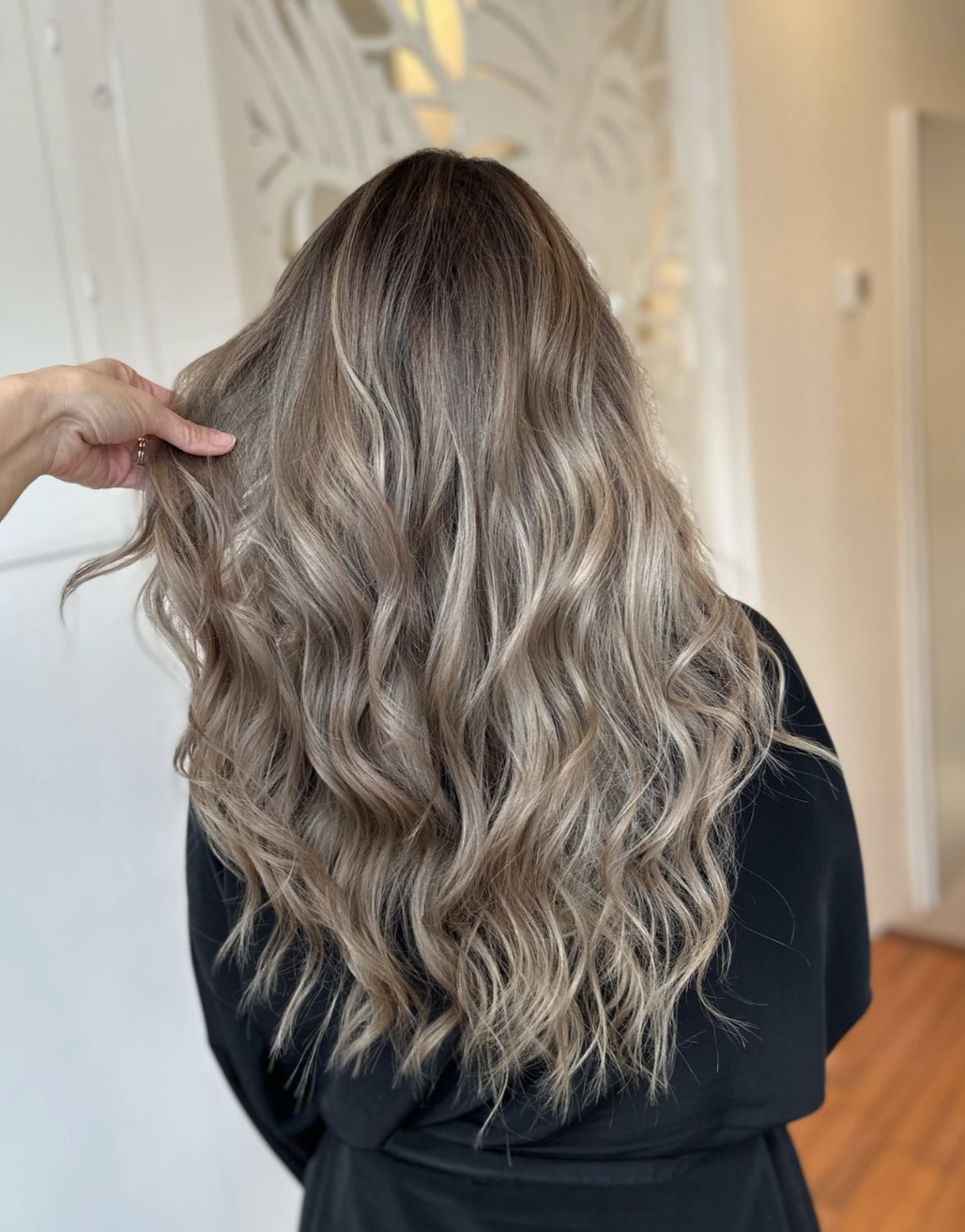
Ash blonde with grey tones reads cool and muted, which is exactly what mid-back, wavy, thick hair needs to avoid looking heavy. The middle part and back view show the colour moving through layers, not sitting flat. The darker roots at the crown are not an accident. They are the low-maintenance trick. A root shadow blurs the grow-out line for about six weeks, which means you are not booking a touch-up every month.
This flatters fine to medium density best. Thick hair can handle the grey tones without washing out, but low-density hair might look thinner. The wavy texture holds the shape through a week of dry shampoo and quick refreshes. Trim every 10-12 weeks. Toning every 4-6 weeks is crucial for maintaining the grey tones. Skip this if you hate salon visits, because the toner is non-negotiable.
Warm Copper With Red Undertones and Curtain Bangs
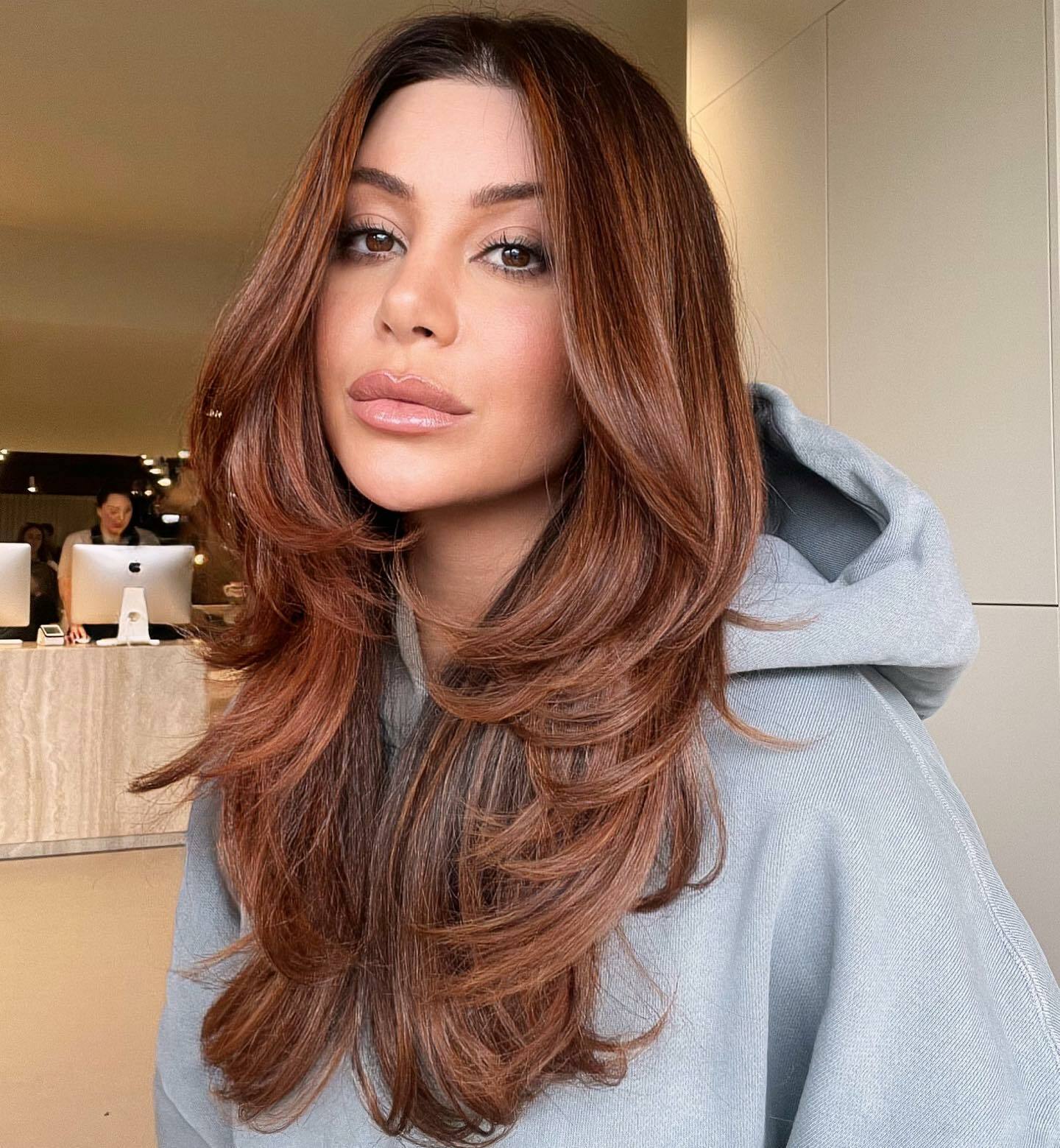
I saw this collarbone-length cut with curtain bangs and warm copper with red undertones and thought, that is winter. The side part and front view show the red catching light, the copper sitting underneath. It is vibrant without being neon. The curtain bangs frame without demanding a daily round-brush commitment. But here is the honest downside: copper tones fade faster than any other shade in this roundup. Expect to refresh colour every 6-8 weeks. The thick, wavy texture holds the blowout volume for about a day. After that, it settles into something softer. Still good. Just less dramatic.
Dark Brown With Ash Blonde Balayage
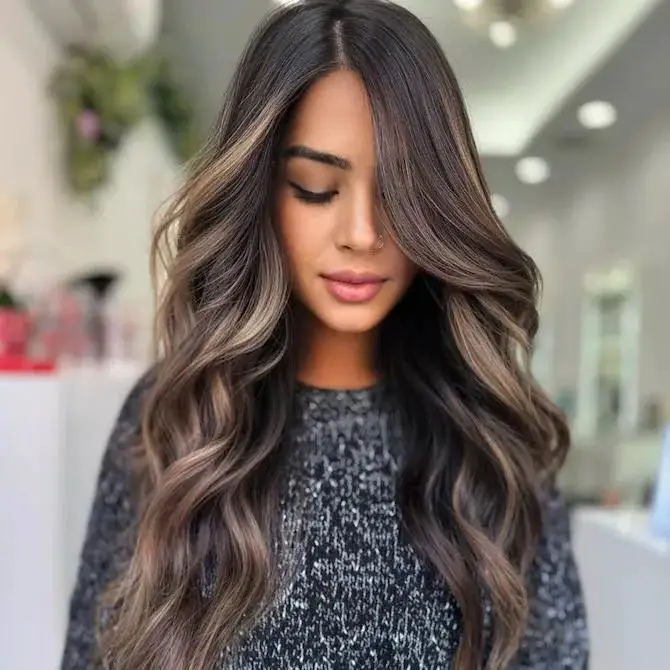
Best blend in this roundup. Dark brown with ash blonde balayage works because the technique is smarter than the average highlight. The ash blonde is painted mid-shaft to ends, not at the root, so the dark brown stays dominant at the crown. The middle part and front view show the colour moving through thick, wavy, mid-back layers without a harsh line.
The low-maintenance promise is real. The grow-out is invisible for 10-12 weeks because the dark brown is your natural root colour. The ash blonde balayage may need toning every 4-6 weeks if you want to keep the cool tone. Skip the toner and it fades to a soft beige, which still reads intentional against the dark brown. Loose waves take 10-15 minutes with a flat iron. That is it.
Dirty Blonde With Highlights and Root Shadow
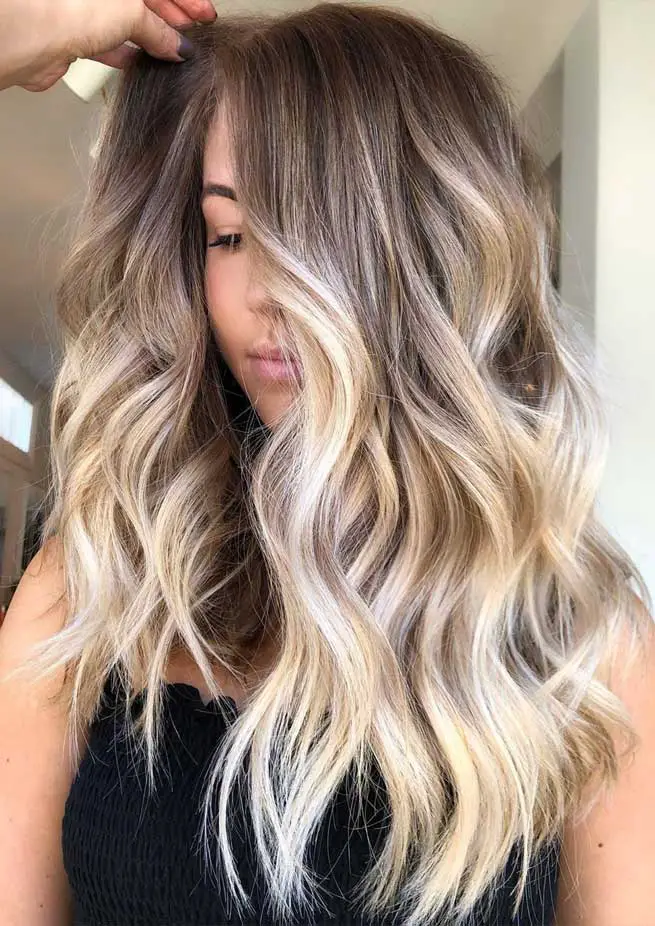
Does a root shadow actually buy you time, or is it salon marketing? I have tested this one. Dirty blonde with root shadow means the darker base at the crown blends with your natural grow-out, so the line is soft, not sharp. The collarbone length and side-swept bangs on thick, wavy hair hold a blowout for a solid day. The blonde highlights sit in the mid-lengths and ends, catching light without screaming for a touch-up. Trim every 8 weeks, bangs every 4-5 weeks. The root shadow is low maintenance by design. It is the one colour trick that delivers exactly what it promises.
Rich Dark Brown With Mahogany Undertones
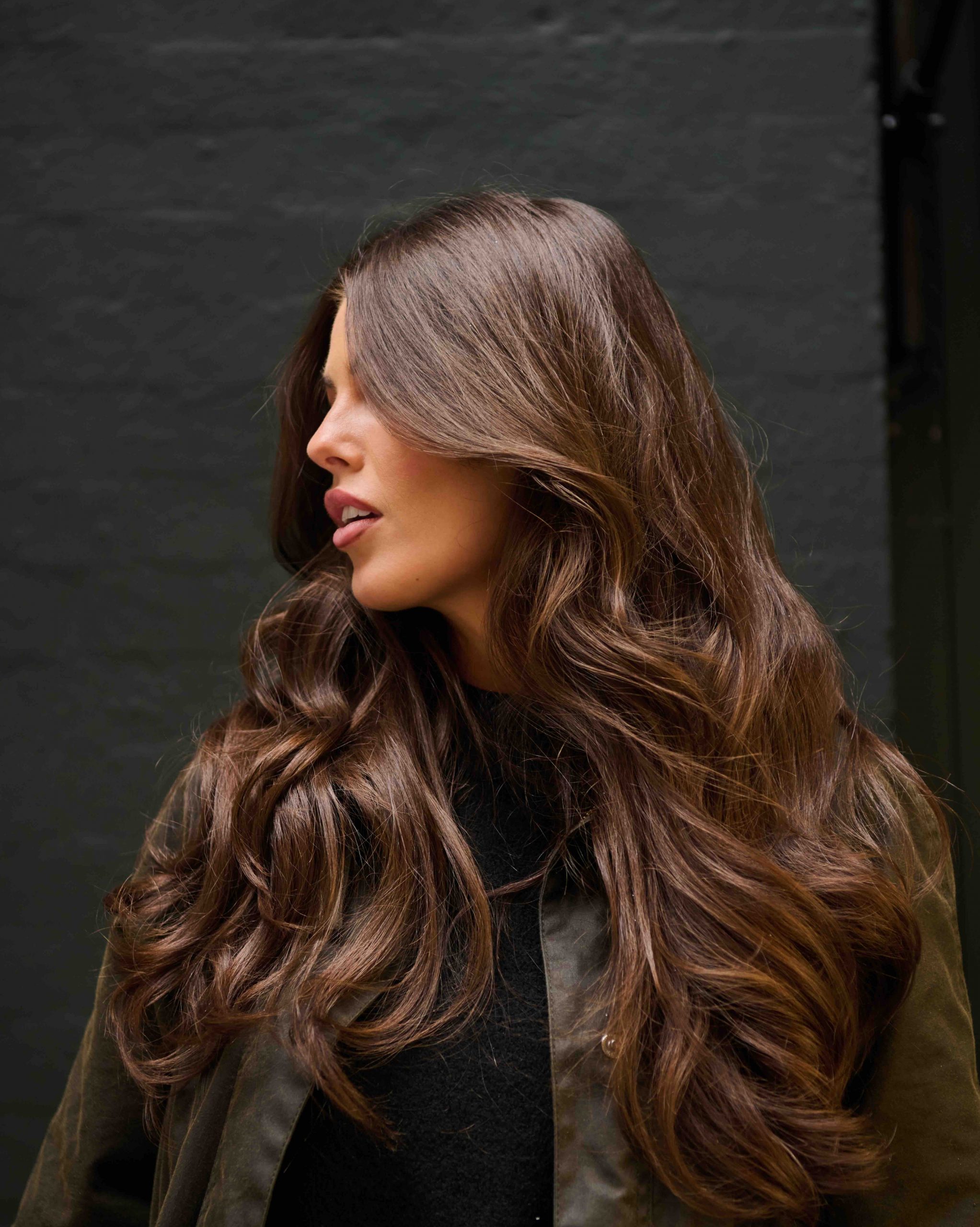
This deep, rich shade with subtle mahogany undertones is the kind of colour that reads as expensive without trying to announce itself. It flatters a wide range of skin tones, especially those with fair to medium complexions and warm undertones, because the brown stays grounded while the mahogany adds a hint of warmth that stops it from falling flat. The mid-back length and voluminous waves here help show off the dimension, but even on shorter cuts the undertone reads as a soft glow rather than a statement.
Here is the honest part. This is a salon colour, not a box-from-the-drugstore situation. Getting that precise mahogany undertone without veering into burgundy or copper requires a stylist who knows how to mix a custom shade. That said, once it is done, the grow-out is forgiving because the base is close to natural. You can go ten weeks between appointments without looking like you are avoiding the mirror. Is it low maintenance? Yes, if you let a professional do the hard part first.
Dark Blonde With Lighter Blonde Balayage
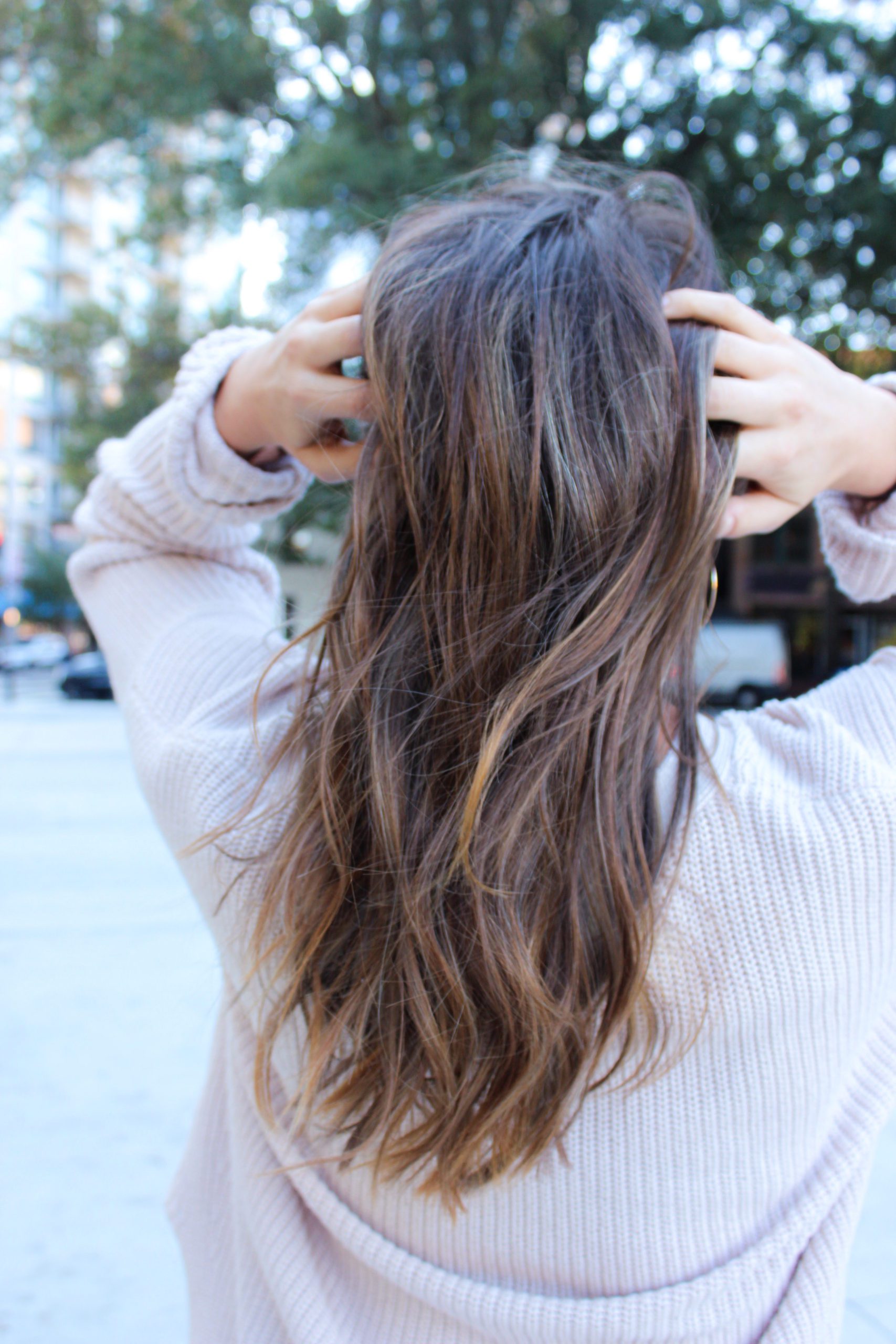
I wasn’t planning to love a dark blonde with lighter blonde balayage this much, but here we are. The base is a warm dark blonde, not quite brown, and the balayage lifts the mid-lengths and ends to a softer honey tone. The technique is subtle — no harsh lines, just a gradual lightening that catches the light in a way that feels made for the transition between winter and spring. Mid-back length with wavy texture, and the air-dried finish in the photo gives it a natural, unforced look. It’s the kind of color that works for a casual lunch or a day at the office without feeling like you tried too hard.
Now the honest downside: balayage is salon work, not a box dye job. The lift needs to be placed by someone who understands how to keep the dark blonde base rich while still giving the lighter pieces enough separation. And because the contrast is gentle, it can read as grown-out if the toner fades. A toning shampoo every few weeks helps, but you’ll want to book a refresh around the 12-week mark to keep the dimension alive.
Dark Brown With Ash Blonde Highlights and Curtain Bangs
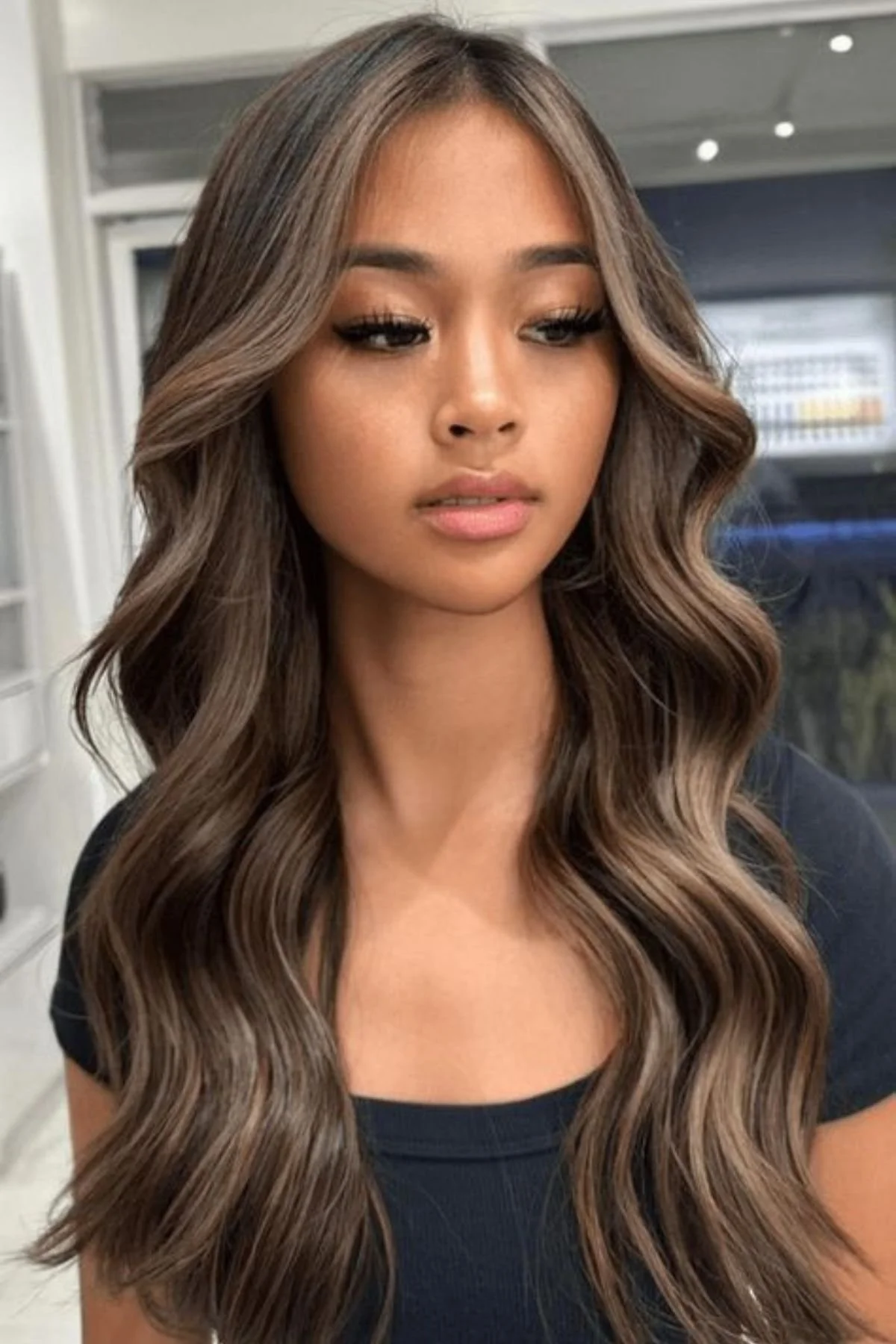
This is a classic dark brown with ash blonde highlights. The technique is to weave fine slices of ash blonde diagonally from the mid-lengths to the ends, leaving the root area dark. The curtain bangs soften the face and require minimal styling, especially on thick wavy hair at mid-back length. When you book, ask for diagonal highlights and a root melt that keeps the dark brown base rich. The result is a cool, dimensional color that grows out without a harsh line.
Medium Brown With Warm Copper Highlights and Face-Framing Bangs
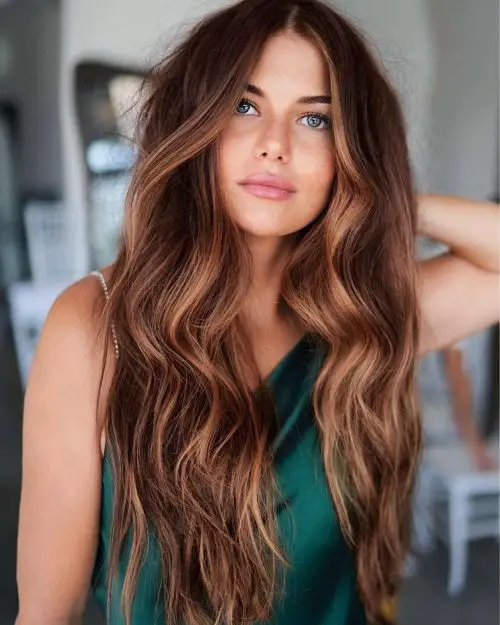
The copper here is not a statement, it is a nudge. Medium brown with copper highlights lands somewhere between a full dye job and a single gloss, warm enough to catch winter light, subtle enough that a four-inch root line still reads as intentional. The face-framing bangs do the work a highlight pack would normally do, lifting around the eyes without asking the colorist to paint near the scalp. This is a DIY maintenance situation: a gloss at home every six weeks keeps the copper from pulling orange, and the bangs need scissors every four weeks. Book the initial application, then take over from there.
Bright Platinum Blonde With Ash Undertones
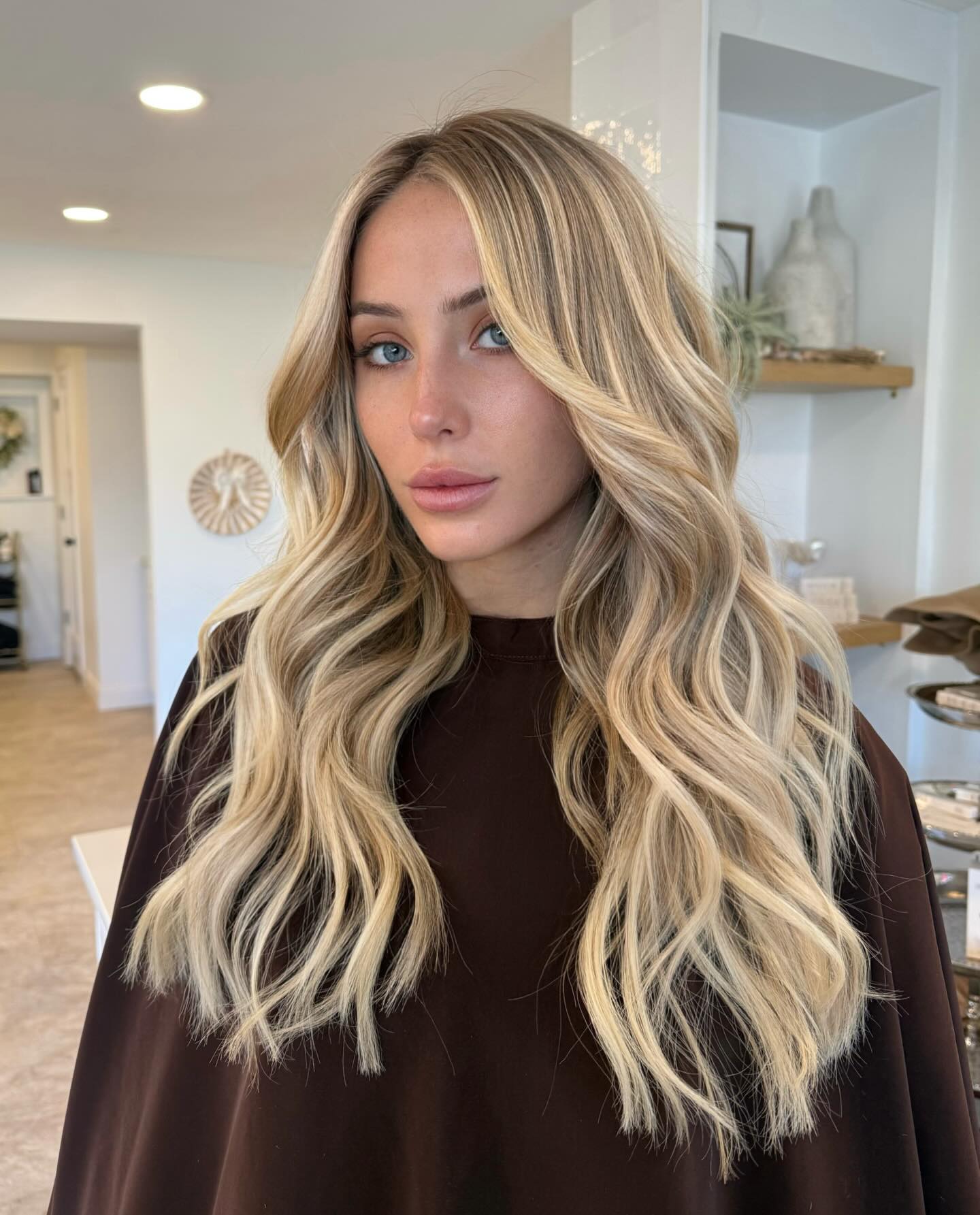
A bright platinum blonde with ash undertones walked in next to a soft beige blonde, and I had a gut reaction: the ash side looked expensive, the beige looked washed. That is the difference an undertone makes. Beige warms toward yellow by week three; ash holds its cool ground through week four. But let me be honest about the downside. Platinum at this level demands a salon chair every four weeks for root touch-ups and a toner refresh every two to three visits or the shine flattens to dishwater. The season matters too.
Winter is the only time this colour works without fighting humidity or UV brassiness. Come June, the ash shifts green if you skip a single purple shampoo wash. I will take the cold months for it and book my trims early.
Dark Brown With Caramel Balayage
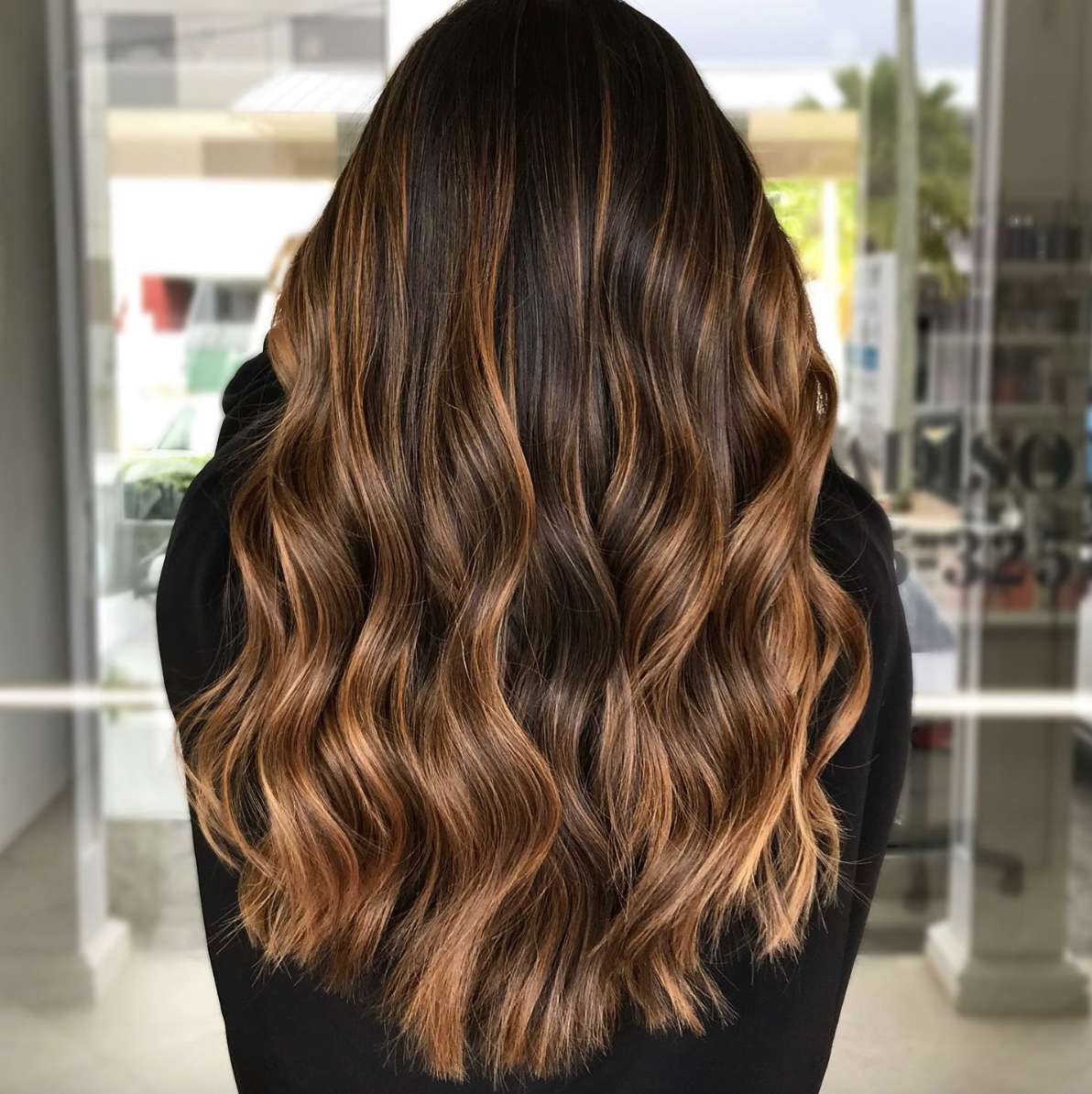
This colour earns its place in a low-maintenance roundup because of how the balayage is built. Dark brown with caramel balayage means the lightest pieces sit midshaft to ends, never near the root, so the grow-out is a soft blur rather than a harsh line. The technique here lets the caramel highlights drift from a warm brown base without a defined starting point. Short list of what makes it work: the base is deep enough to hide regrowth for ten weeks, the caramel stays on the warmer side to avoid ashy banding, and the mid-back length gives enough canvas for the colour to graduate naturally. The stylist paints by hand, no foils touching the scalp. Book this one. A bathroom-mirror balayage is how you end up with three brown stripes.
Icy Ash Blonde With Silvery Undertones
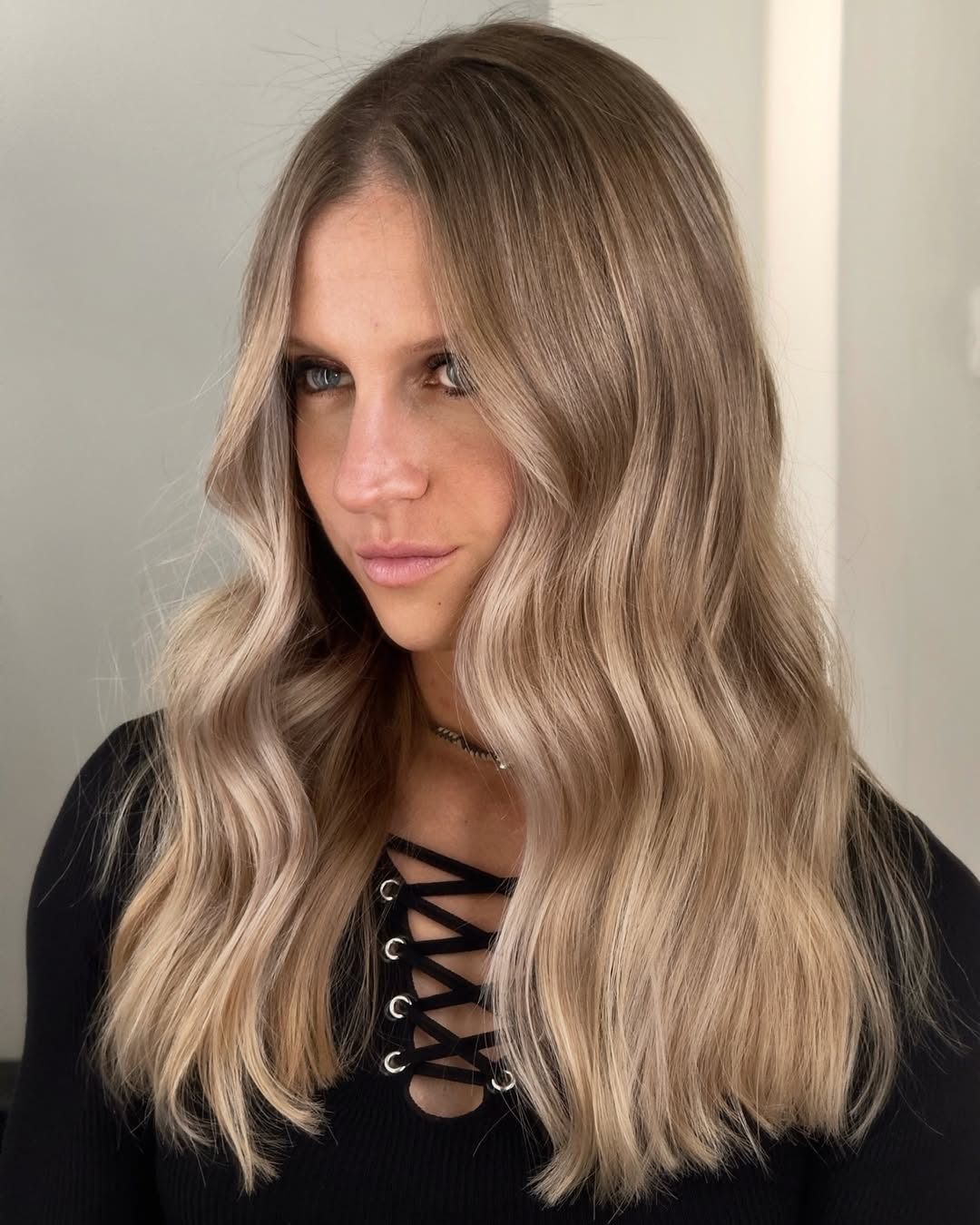
How long does that icy ash blonde with silvery undertones actually stay icy? If your last toner appointment is more than three weeks ago, the answer is “not very.” The colour is applied with a balayage technique that lets the cool silvery undertones sit close to the roots for a seamless grow-out, but the tone itself fades fast, especially if your water is hard or you heat-style often. At mid-back length with loose waves, the silvery undertones catch the light well, but only if you keep up with a purple shampoo every wash and a toner refresh every three weeks.
The texture here is wavy and medium density, which helps the colour read dimensional. Straight fine hair would show every fading patch. So while this shade is low maintenance in terms of root grow-out (the ash base blends decently), it is not low maintenance in colour upkeep. You can stretch the salon visits to six weeks with a gloss, but your mirror will disagree by week four. That is the honest trade-off: low effort on the roots, high effort on the tone.
Side View Dark Brown Lob With Ash Blonde Highlights
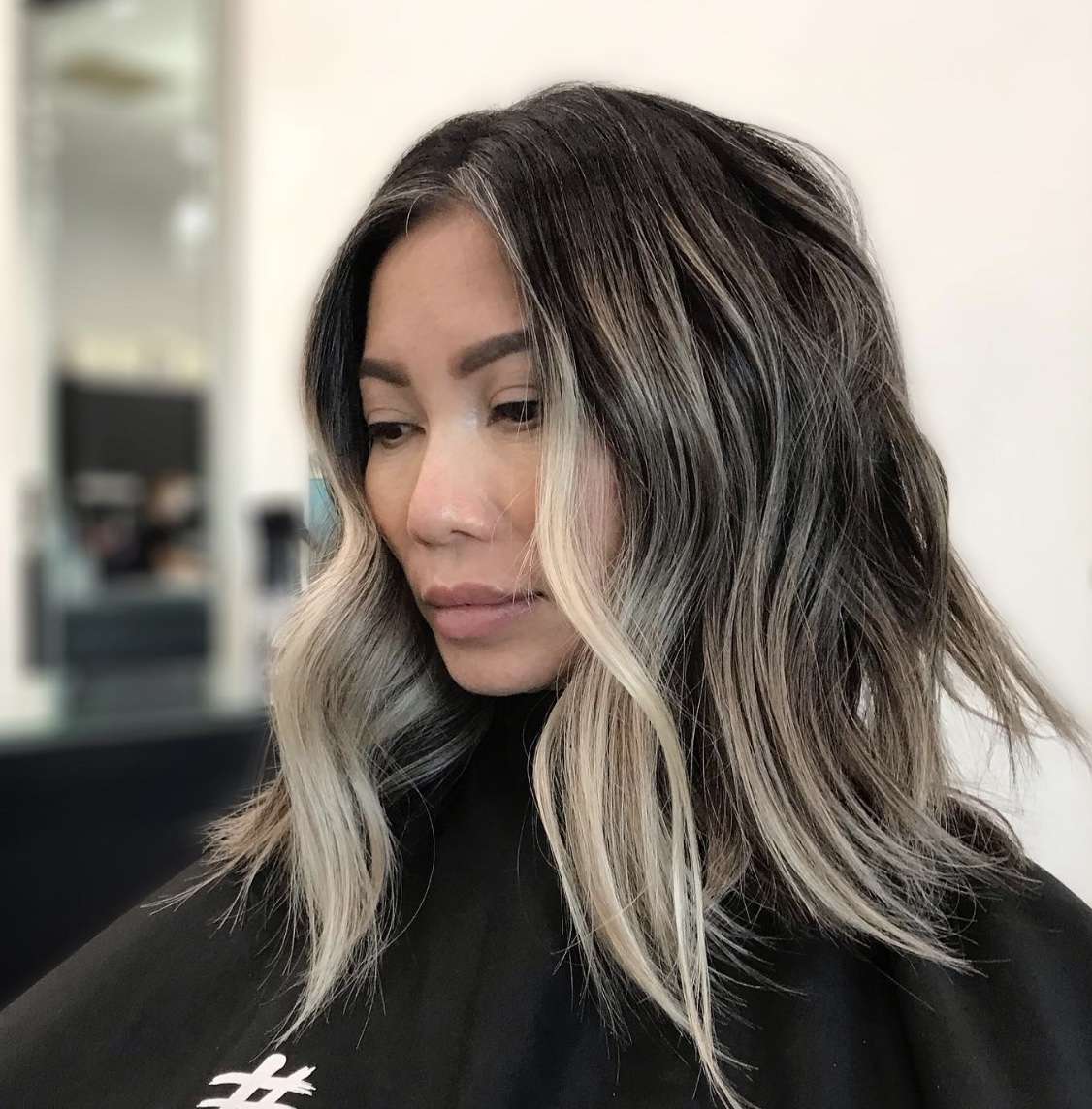
A lob that hits the collarbone has a bias: it widens a round face and sharpens a long one. But the dark brown lob with ash blonde highlights does something different. The contrast between dark base and blonde highlights pulls attention outward, flattering both oval and heart-shaped faces without adding width. This is a salon colour — the highlights need a balayage technique to avoid a stripe. On wavy, medium-density hair, the contrast looks natural. Fine hair works too, but skip if your texture is very coarse; the blonde tends to sink into the darker base.
Honey Blonde With Balayage Highlights
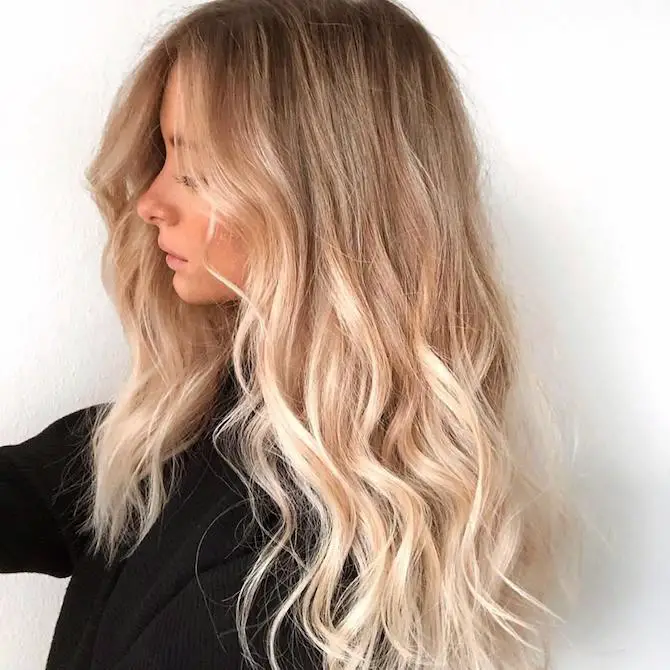
I wanted to hate honey blonde with balayage highlights. It feels so last summer. But in winter, with a tan gone and natural paleness back, this warm shade actually makes sense. It is the indoor version of a sun-kissed effect — the kind of colour that reads as natural even when it is not your natural one. The balayage technique keeps the roots darker, so the grow-out is low maintenance: no harsh line, no panic at week five.
The honest downside is that honey blonde with balayage highlights fades fast. The warm tone turns brassy within six weeks without a gloss, especially if you wash more than twice a week. At mid-back length with thick, wavy texture, the colour needs moisturizing masks to keep the shine intact. Season-wise, this shade works year-round but leans into winter because it counteracts the gray light. Book it at the salon — this is not a bathroom-mirror job. And prepare for a toner visit every eight weeks.
Medium Brown With Ash Blonde Highlights and Balayage
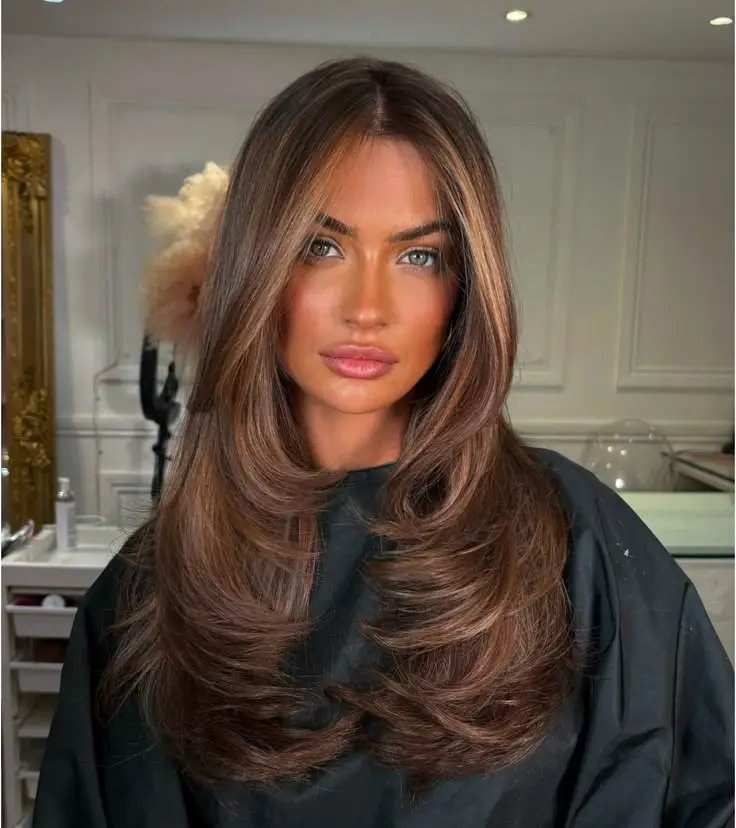
This is the technical winner of this roundup. A medium brown with ash blonde balayage uses a hand-painted technique that skips the foil and skips the harsh root line. The colour is painted freehand onto sections of hair, so the ash blonde highlights and balayage melt into the brown base with no visible start point. On thick, wavy hair at mid-back length, the soft transition means you can let it grow for four months before anyone notices. The face-framing layers catch the lightest pieces, which makes the whole thing read as dimensional without looking streaky. Ask your stylist for a root shadow that matches your natural depth and a balayage that stays two shades lighter than the base. That one instruction buys you six calm months.
The voluminous blowout with curled ends takes about 20 minutes with a round brush. The real time-saver is the grow-out. There is no line to chase.
Collarbone Dark Blonde With Lighter Blonde Highlights
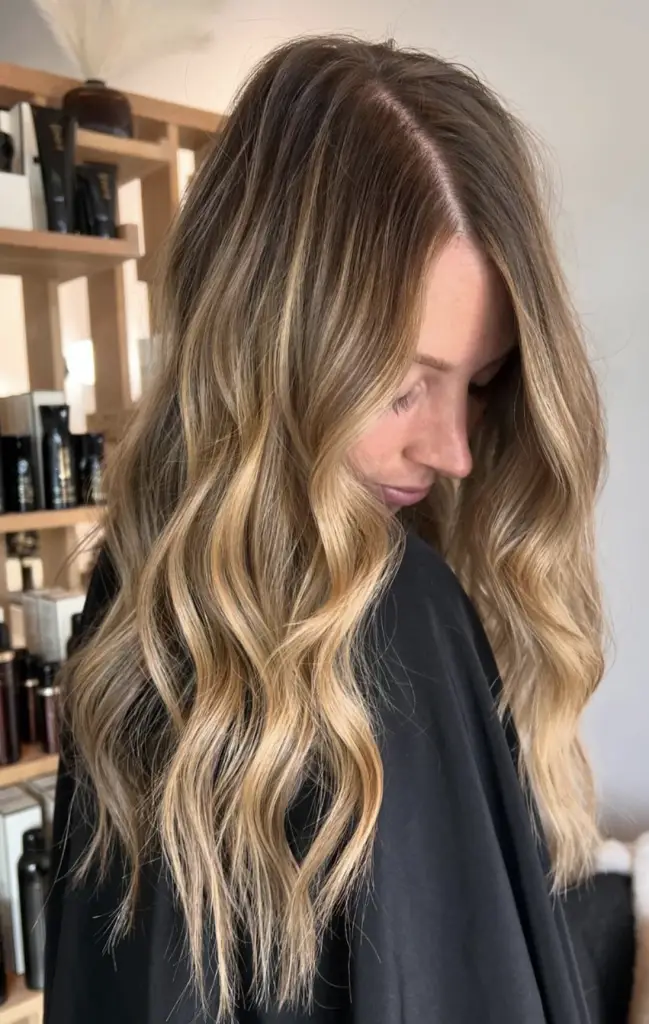
Have you ever wanted a hair colour that looks like you just came back from a beach vacation without actually going anywhere? That is what a dark blonde with blended lighter blonde highlights does. The collarbone length keeps the waves from pulling the colour flat, and on thick hair the lighter blonde highlights sit on top like natural sun streaks. The grow-out is the quietest in this roundup because the dark blonde base matches most natural roots. You can let it go ten weeks before the line shows. The side view catches the highlights wrapping around the layers, which is the angle that reads most natural. A 10-minute wave with a flat iron is all the styling it needs. Trim every eight weeks to keep the ends from dragging the colour down.
Shoulder-Length Ash Blonde With Cool Highlights
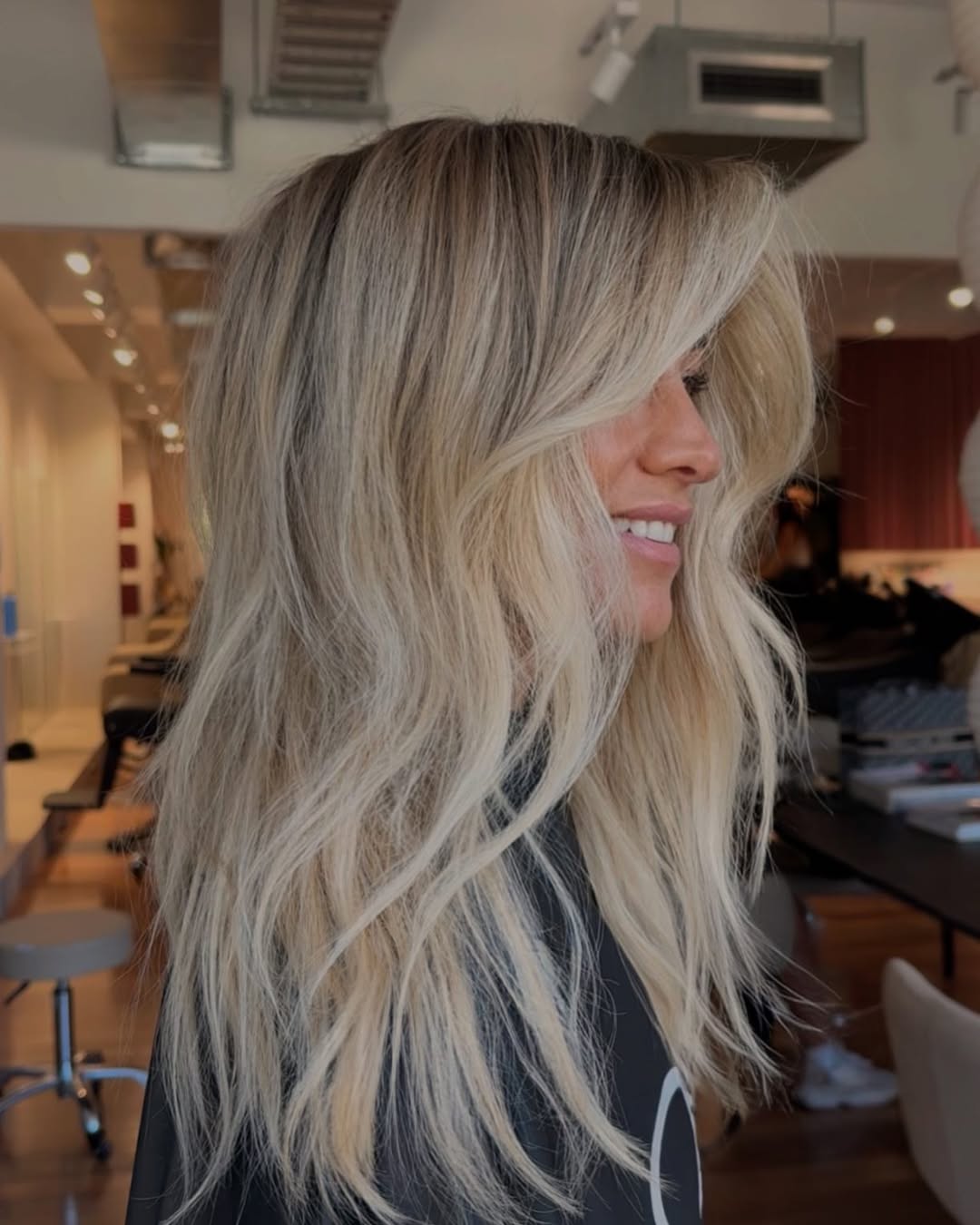
Winter light does something strange to warm blonde: it turns golden into yellow. So give me ash blonde with cool toned highlights every time, the kind that reads silver-grey in December rather than brass by February. The technique is placement, fine wisps of cool-toned highlights through shoulder-length layers so the colour moves instead of sitting flat, and wavy, medium-density texture holds that movement. Honest downside: ash fades muddy, not warm. Warmer browns are cozier. They’re also yellower under grey skies.
Medium Brown With Copper and Auburn Highlights
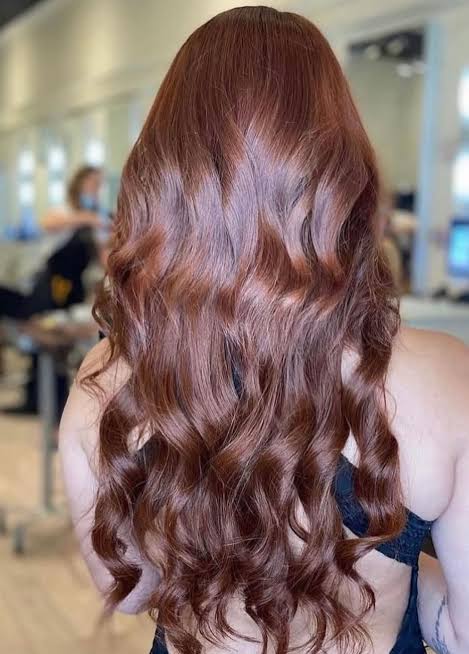
Verdict first: this is a colour that works because of how it’s built, not what shade sits on top. The base is a true medium brown with copper auburn highlights painted in deliberate sections, and the order matters. The stylist lays down the medium brown all over, then weaves the copper and auburn highlights only where the hair naturally catches light, face-framing pieces and the crown, never the full head and never the ends first, which keeps the base from getting bottom-heavy. That selectivity stops the streaks.
The tone does most of the heavy lifting after that. Copper reads bright and auburn drops deeper, which together create real dimension without any chunking. On wavy, thick texture down to mid-back, the colour catches the movement of each wave and shows a different shade with every bend. That’s the trick: two warm tones in one base, but each one earns its spot. The technique isn’t complicated, it’s disciplined.
Ash Blonde With Subtle Highlights
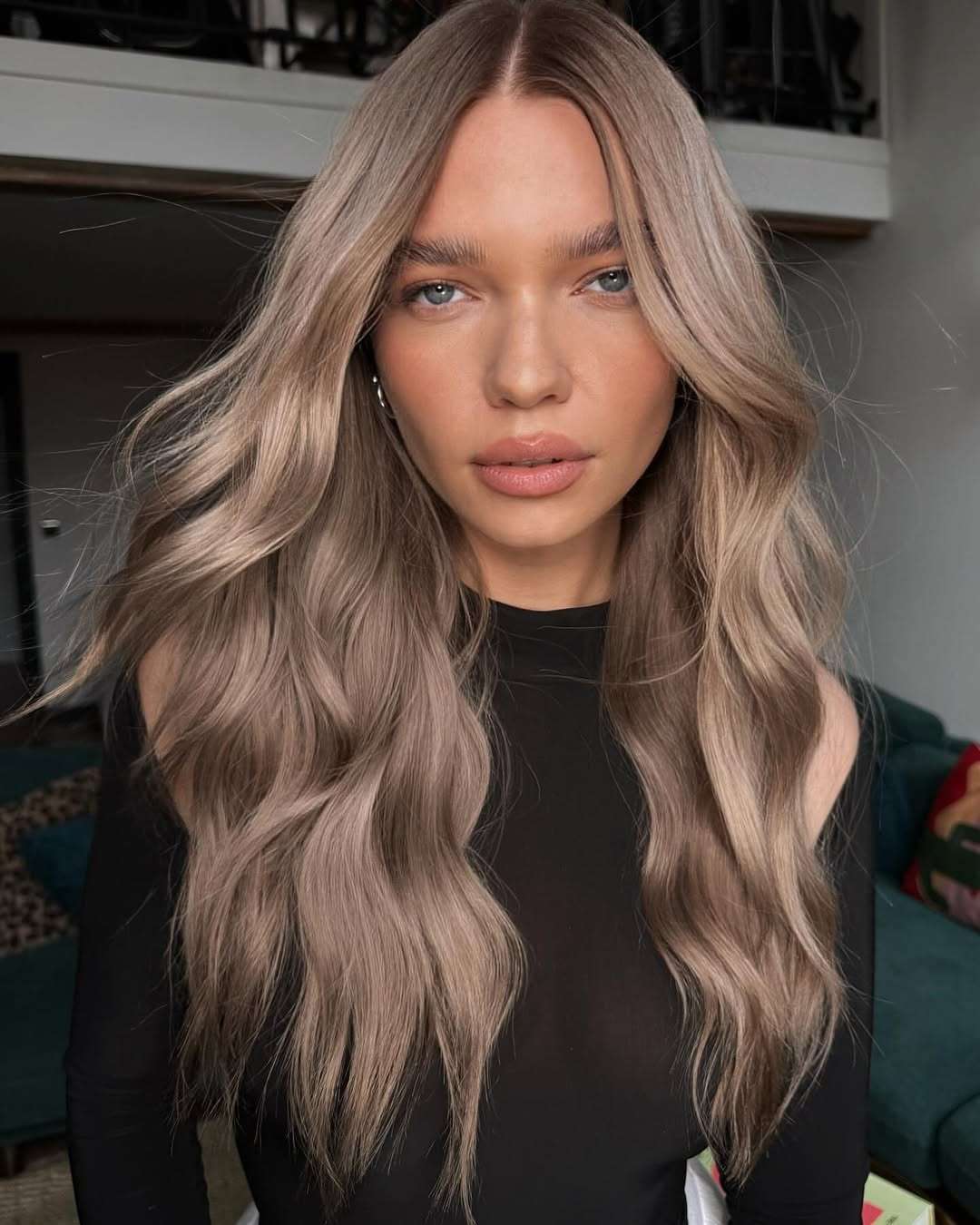
Remember when highlights meant a visible stripe at week three? That is not what ash blonde with subtle highlights does. The tone sits cool, almost smoky, and the mid-back length here waves over thick hair without looking brassy. Because the highlights are subtle—barely lifted—the root line fades into the ash base instead of shouting for a touch-up. I go about six weeks before I even wonder where the toner went. A salon toner every four to six weeks keeps the cool tone honest, but honestly, winter sweaters make a soft regrowth look like an intentional shadow. Trim every ten weeks keeps the ends from dragging.
Mushroom Blonde Shade
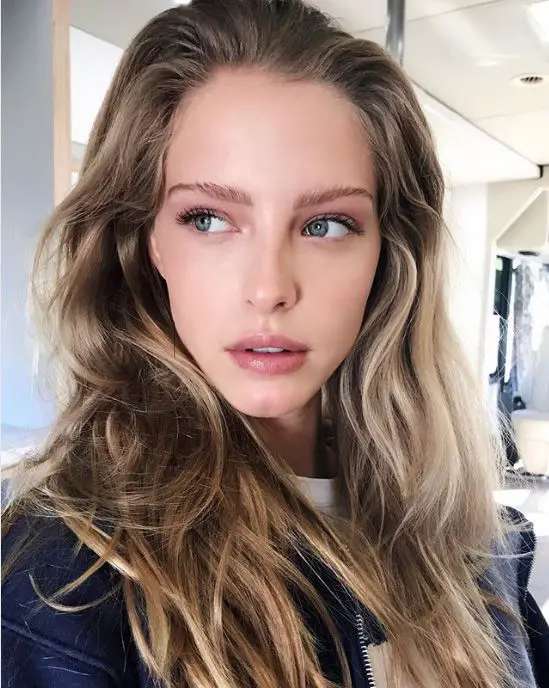
I thought mushroom blonde would look muddy. I was wrong. This mushroom blonde shade lands as a single-process color: ash with a brown pulse, cool-toned without being lifeless. The mid-back length here with thick, wavy texture shows how the shade catches light without screaming “I dyed my hair gray.”
Winter is its time because grey daylight cancels the warmth that turns mushroom to straw. Low maintenance? Sort of. The base blends with natural regrowth better than platinum, so you can stretch roots a week or two. But the honest downside is toner: every four to six weeks, or the cool tone leaks. Still, compared to a full blonde, this is a bargain in chair time. A few loose waves and it reads intentional.
Dark Chocolate Brown With Ash Brown Highlights
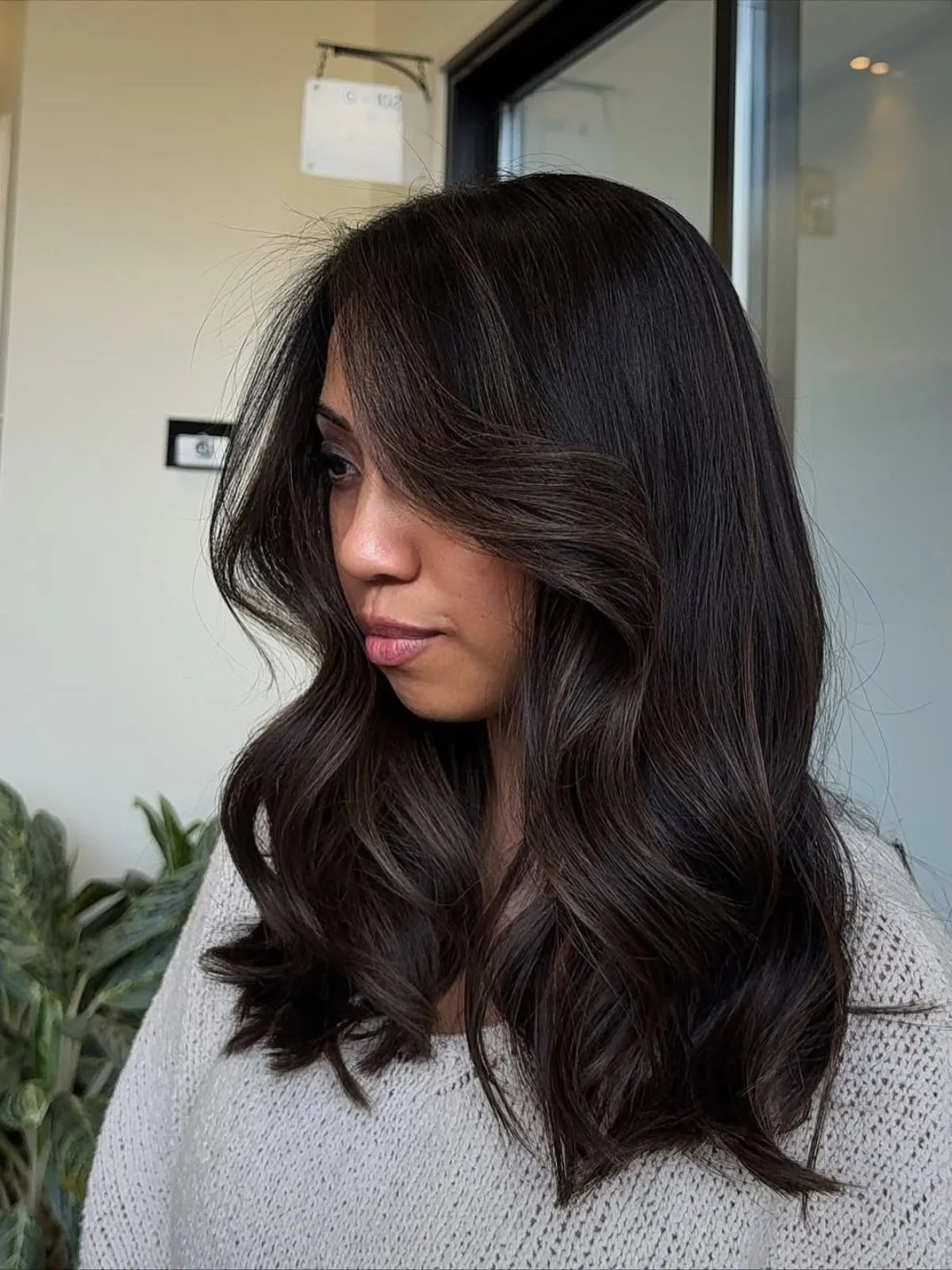
This is the color that made me stop chasing blonde. Dark chocolate brown with ash brown highlights that never read as stripes. The ash is barely there—a whisper of cooler tone that adds depth without shouting dimension.
I sat in the chair and asked for “the darkest you can go without it being black, and then a few cool ribbons.” The result: mid-back waves with a side part, medium density hair, and a color that lasted four months before I even thought about a gloss. The ash brown highlights sit low, so grow-out is just a softer brown. No harsh line. No panic at week six.
Final Thoughts
After writing all of these, I noticed something. The colors I kept coming back to were the ones that looked slightly lived-in from day one. A root shadow. A balayage that starts mid-shaft. A wine that reads brown in dim light and red in sun.
- Trim the baseline every eight weeks
- Tone at week six, not week ten
- Root shadow buys six calm weeks
- Purple shampoo once a week, not three
I am booking the mushroom blonde next. It is the color equivalent of a good winter coat: quiet, warm, and nobody notices when it gets a little dirty.