
Short coffin nails sit in an interesting middle ground: they have enough width for a deliberate color decision, but not so much space that decoration can hide a weak shape. That makes contrast more important than quantity. A narrow edge, a quiet base, or one darker accent can change the whole impression, especially when the proportions stay compact and the finish remains visually even.
Before choosing a fall short nails idea, decide what you want the color to do for the silhouette. A lighter base can open the nail visually, a deeper tone can give the edge more authority, and a small high-contrast detail can create focus without taking over. That decision is more useful than chasing a shade simply because it is currently popular.
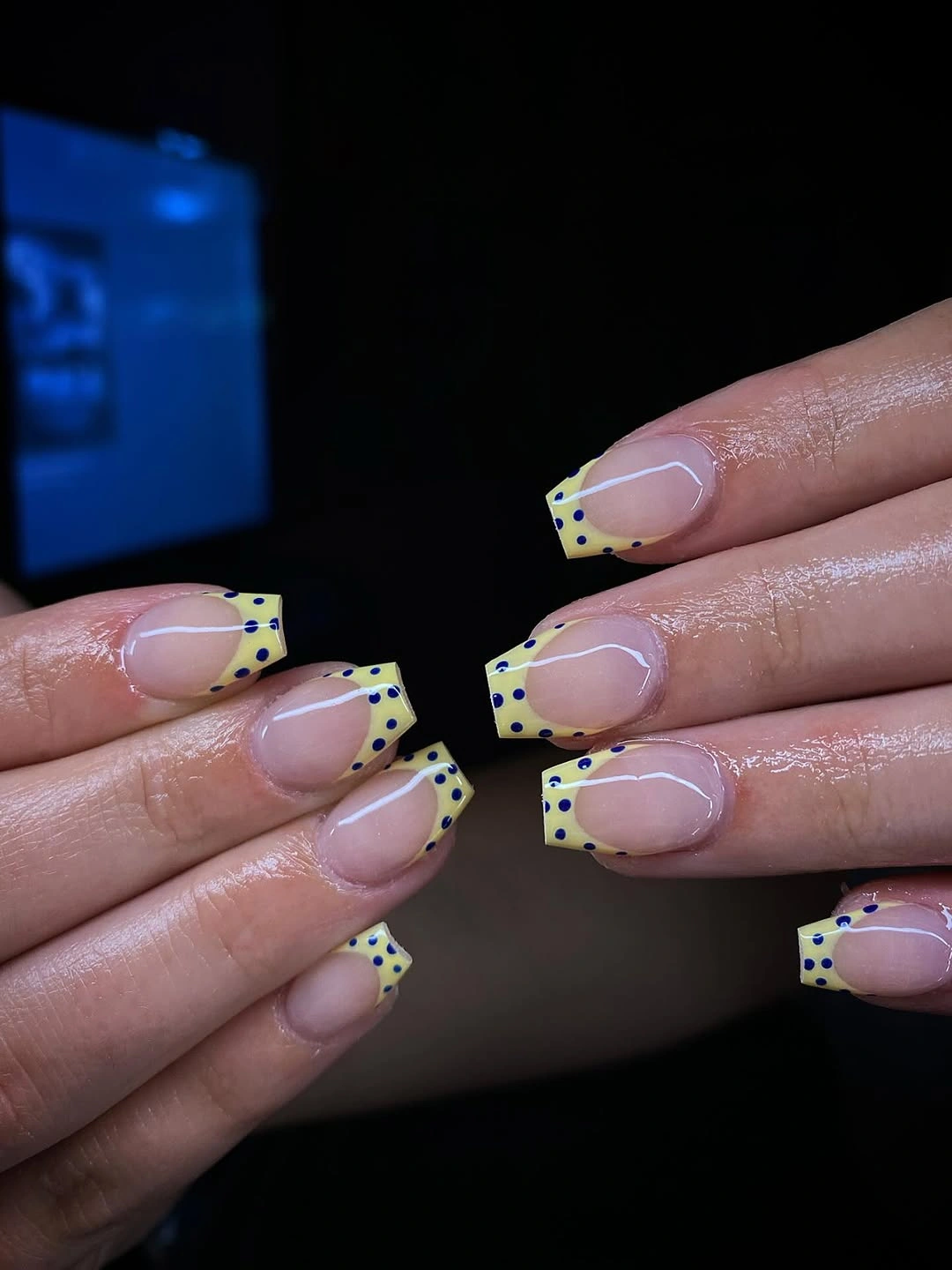
Dotted Lime Tips Over a Blush Base
Pale pink gives these short soft coffin nails a quiet starting point, while the yellow-green tips add a clear jump in saturation. Small dark dots sit around the bright edge, so the eye reads a defined border before it notices the playful color. That balance keeps the design lively without hiding the compact shape or turning every surface into a competing accent.
Photo credit by: https://www.instagram.com/p/DZNungKRtyQ/The useful color lesson is that the brightest shade occupies the smallest area. A similar fall short coffin nails designs idea can work with muted olive or moss if neon feels too sharp, but keep the dark dots because they separate the tip from the pale base and preserve the same graphic rhythm. That keeps the bright edge readable from a normal distance.
On a very short plate, make the green band narrow and use fewer dots rather than shrinking every mark until it blurs together. The look is cheerful beside dark denim or a neutral sweater, while the limitation is visible upkeep at the free edge: once that small border grows out or chips, the contrast will show sooner than a plain nude color.
Navy Details Against Muted Nude
A taupe-pink nude base softens the deeper blue accents in this set, creating a value contrast that feels quieter than black against white. Tiny star-like marks and dots add repetition, but the blue nails are spaced across the hands instead of grouped into one loud cluster. That distribution makes the manicure feel edited even though several small ideas are present.
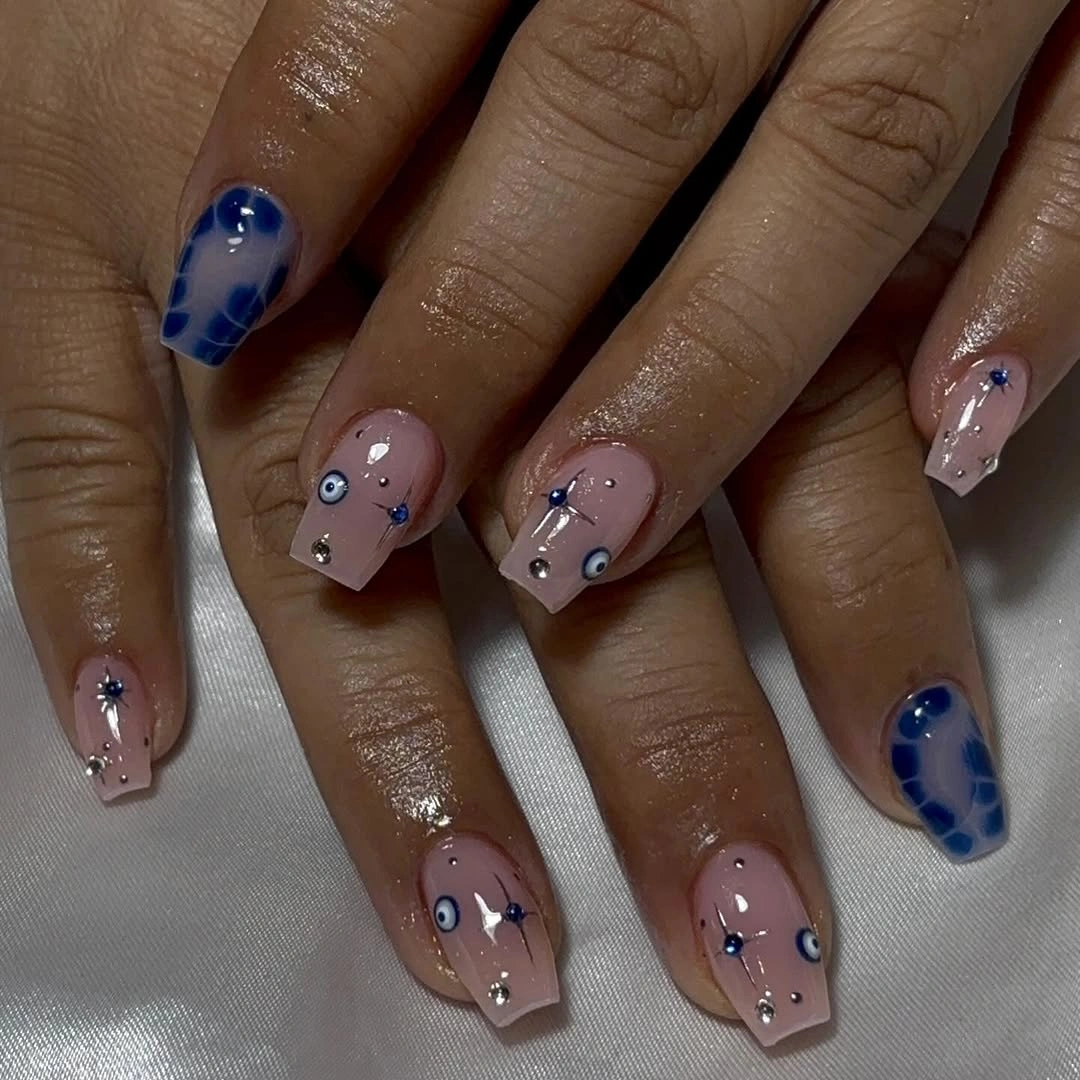 Photo credit by: https://www.instagram.com/p/DWZQQabjkdP/
Rather than copying every mark, choose one dark blue for two accent nails and repeat a single small dot or star elsewhere. The cooler accent will look cleaner against a warm nude, while a dusty denim blue can lower the saturation for a softer fall palette without changing the pattern scale or the short coffin nails designs structure.
The short length helps here because the scattered details stay close to the center of each nail and never need a long canvas. A realistic tradeoff is that tiny marks demand a steady hand and can lose their shape as the manicure wears, so leave generous space around them instead of filling every available corner.
Blush Pink Lets the Shape Speak
With a glossy blush-pink color and almost no visible contrast, this manicure shifts attention from decoration to proportion. The softly extended coffin outline is the main decision, and the reflective surface gives the pale shade enough depth to avoid looking flat. Because nothing interrupts the color, the edge, sidewalls, and even spacing become more noticeable than they would under dense art.
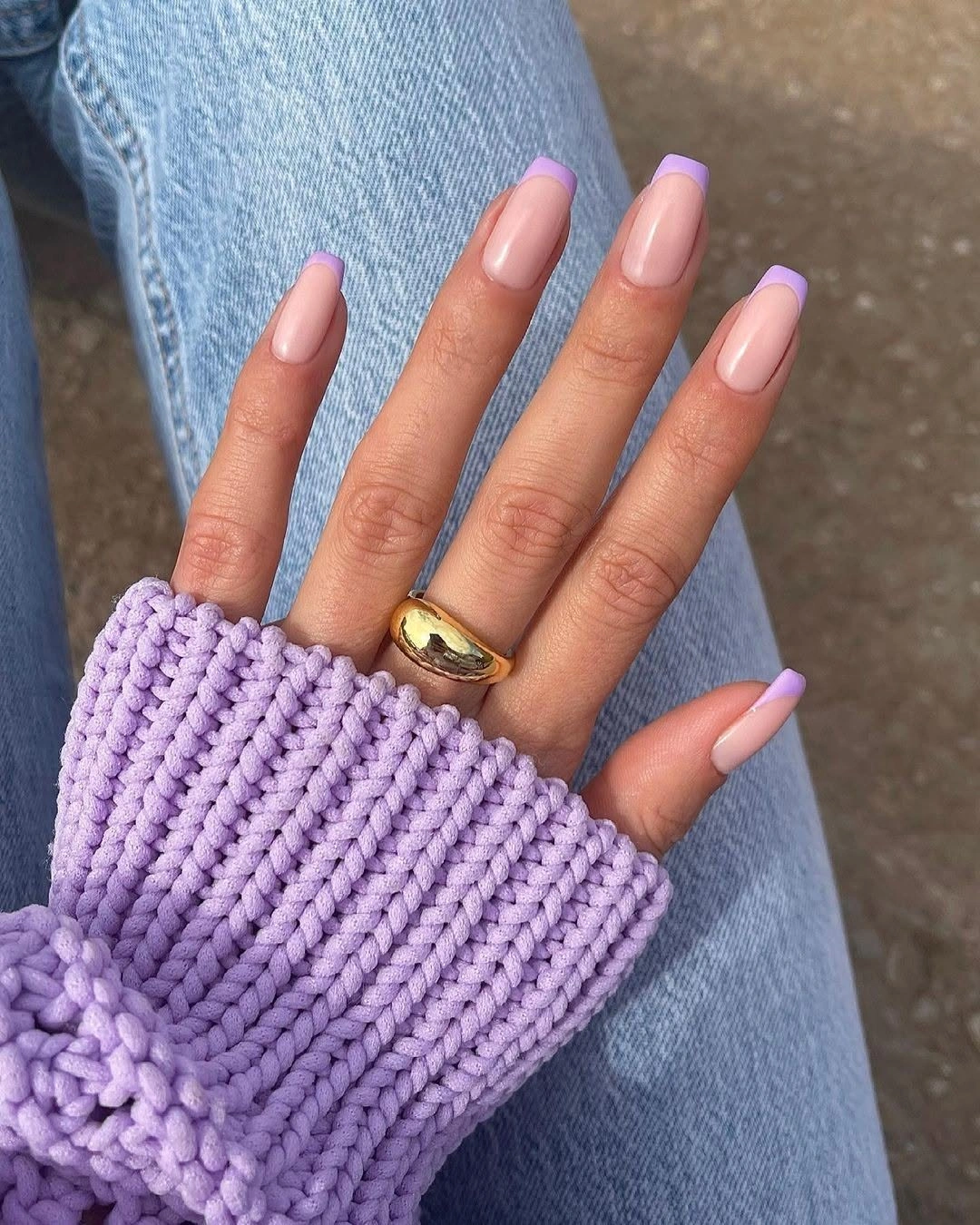 Photo credit by: https://www.instagram.com/p/CM7npZBJEz4/
This is the useful plain option in a collection of fall short coffin nails designs: the same shape can look intentional without a motif when the color sits close to the skin and the finish stays even. If you want a little more seasonal weight, move from blush toward muted rose or add one deeper accent, but change only one color variable.
Simple does not mean maintenance-free, because a solid glossy surface shows dents, uneven opacity, and a rough free edge quickly. The benefit is flexibility with clothing and jewelry, while the limitation is that there is no pattern to disguise a small imbalance; a careful, consistent shape will do more here than another decorative detail.
Open Abstract Lines Keep Color Light
These short square-coffin nails use a sheer peach base as breathing room for slim strokes in teal, coral, yellow, and black. The colors are bright, but each line occupies a small path and leaves the rest of the plate open, so the design reads as airy abstraction rather than a filled pattern. The dark touches help the lighter accents stay visible against the warm nude.
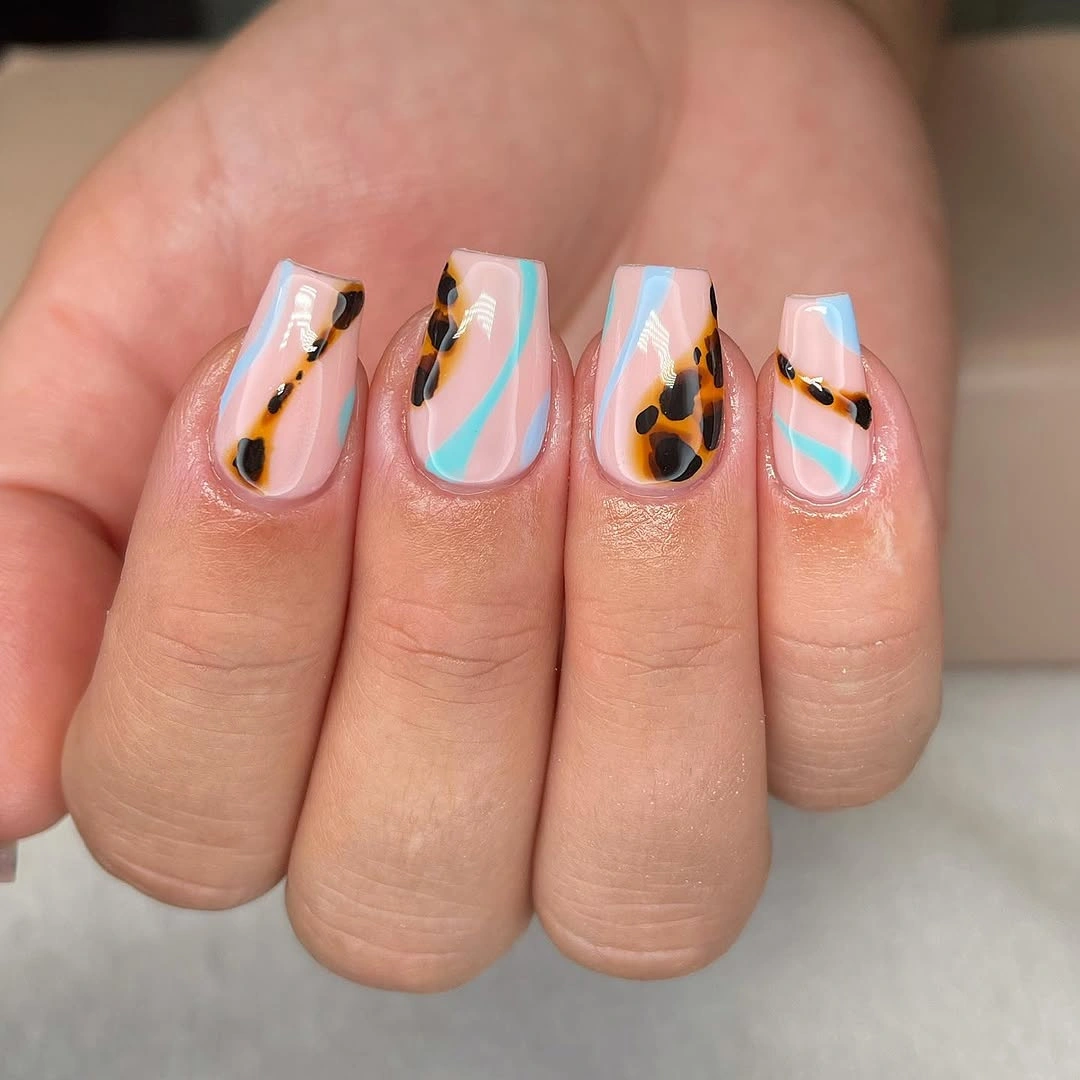 Photo credit by: https://www.instagram.com/p/CRR15ZbhHA9/
The strongest relationship is between a low-value base and small saturated marks, not between all four accent colors equally. For an easier version, keep the peach foundation, choose one bright color, and use a single dark outline on two nails; the result will still have the same contrast logic without requiring identical line work.
Short nails benefit from this open placement because a filled design could visually shorten them, while the scattered curves leave the silhouette clear. The tradeoff is that irregular lines need enough space to look intentional, so avoid adding extra strokes when a nail is smaller; one confident curve often gives more clarity than several cramped ones.
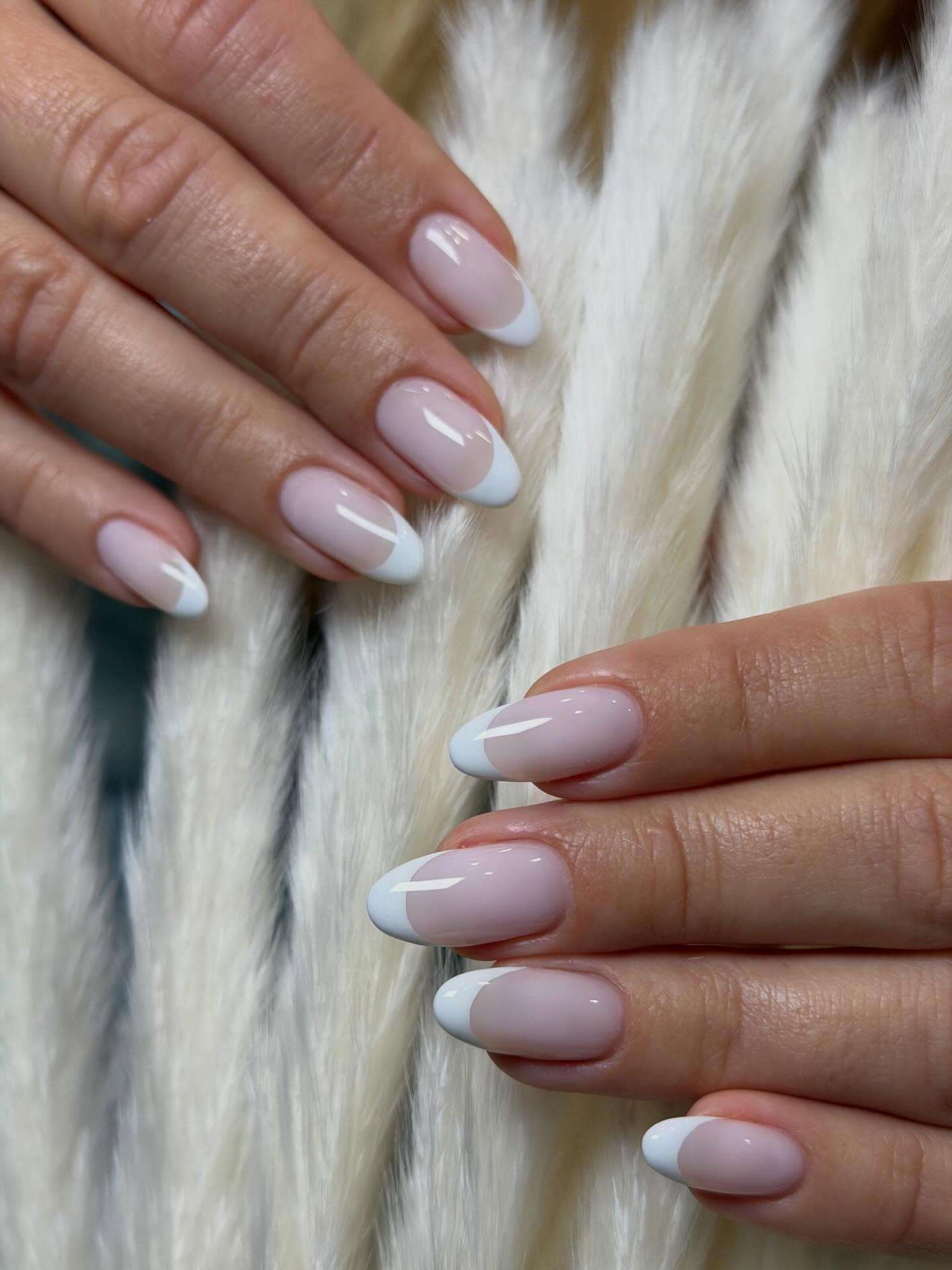
Milky Pink-White With Quiet Reflection
A pale pink-white surface brings the value up and removes most color competition, so the softly tapered short shape becomes the visible focus. The finish reflects light gently rather than relying on a strong pattern, and the cool blue clothing around the hands makes the nails appear even brighter by comparison. It is a calm palette choice with a clean visual temperature.
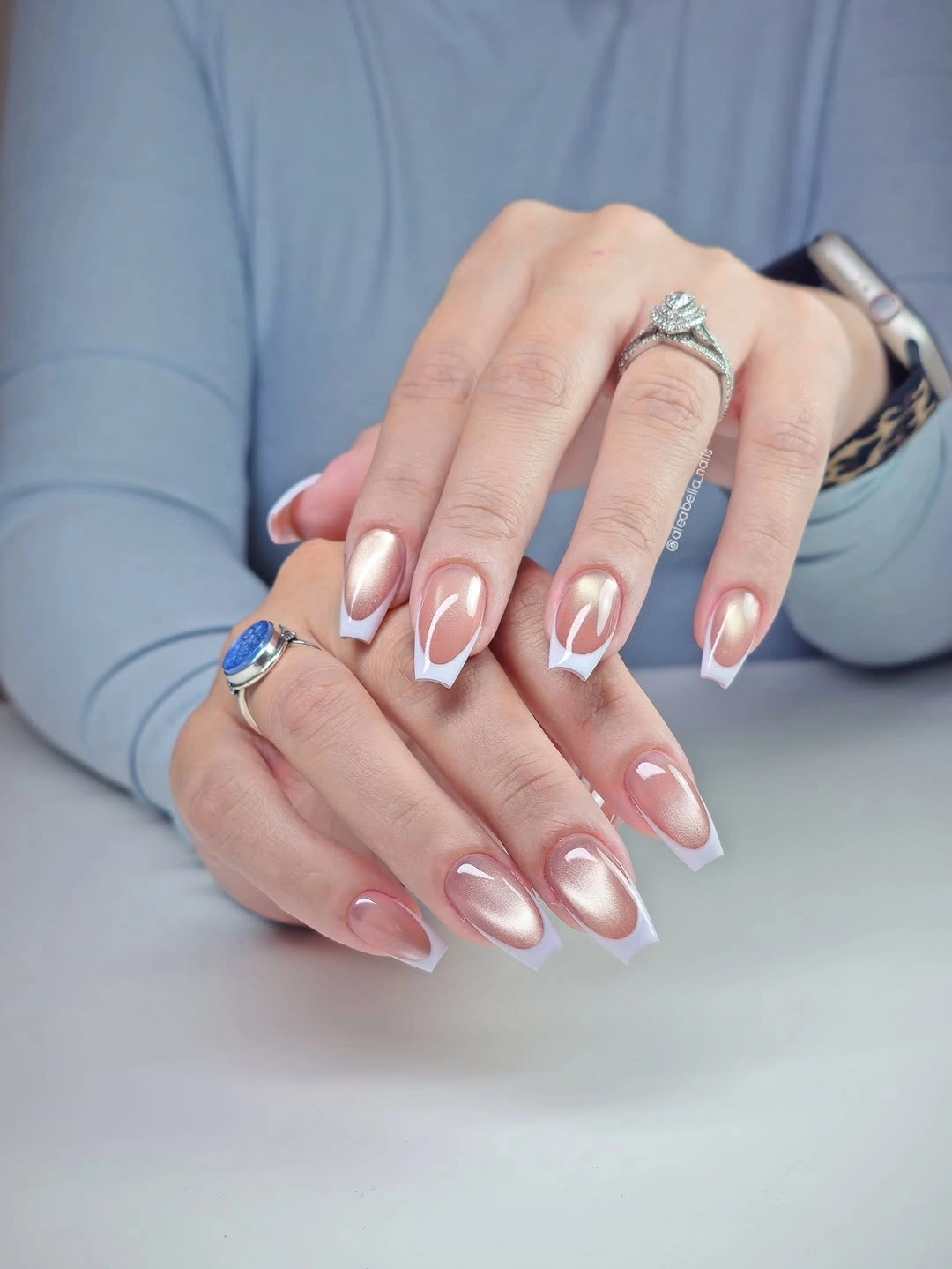 Photo credit by: https://www.instagram.com/p/DTRw-bEDeBG/
If stark white feels too hard, a milky pink base creates the same light effect with more warmth against the skin. That small undertone change is enough to move the look from crisp to soft without adding art, which makes it a useful answer for someone searching fall short coffin nails designs but preferring quiet color and easy outfit pairing.
The plain surface leaves little room to hide an uneven edge, yet it also makes the manicure easy to adapt to a shorter length. Keep the reflective finish even and avoid overloading it with accents unless the base truly needs contrast; the strength of this idea is the pale value and the uncluttered outline working together.
Blush Texture With Small Points of Shine
Soft pink remains the dominant color here, but pale raised-looking lines and tiny reflective points add a second layer of interest. Because the details stay close to the base value, the manicure feels tactile before it feels colorful. The compact square-coffin shape prevents the texture from becoming overly ornate, giving the design a gentle balance between surface and silhouette.
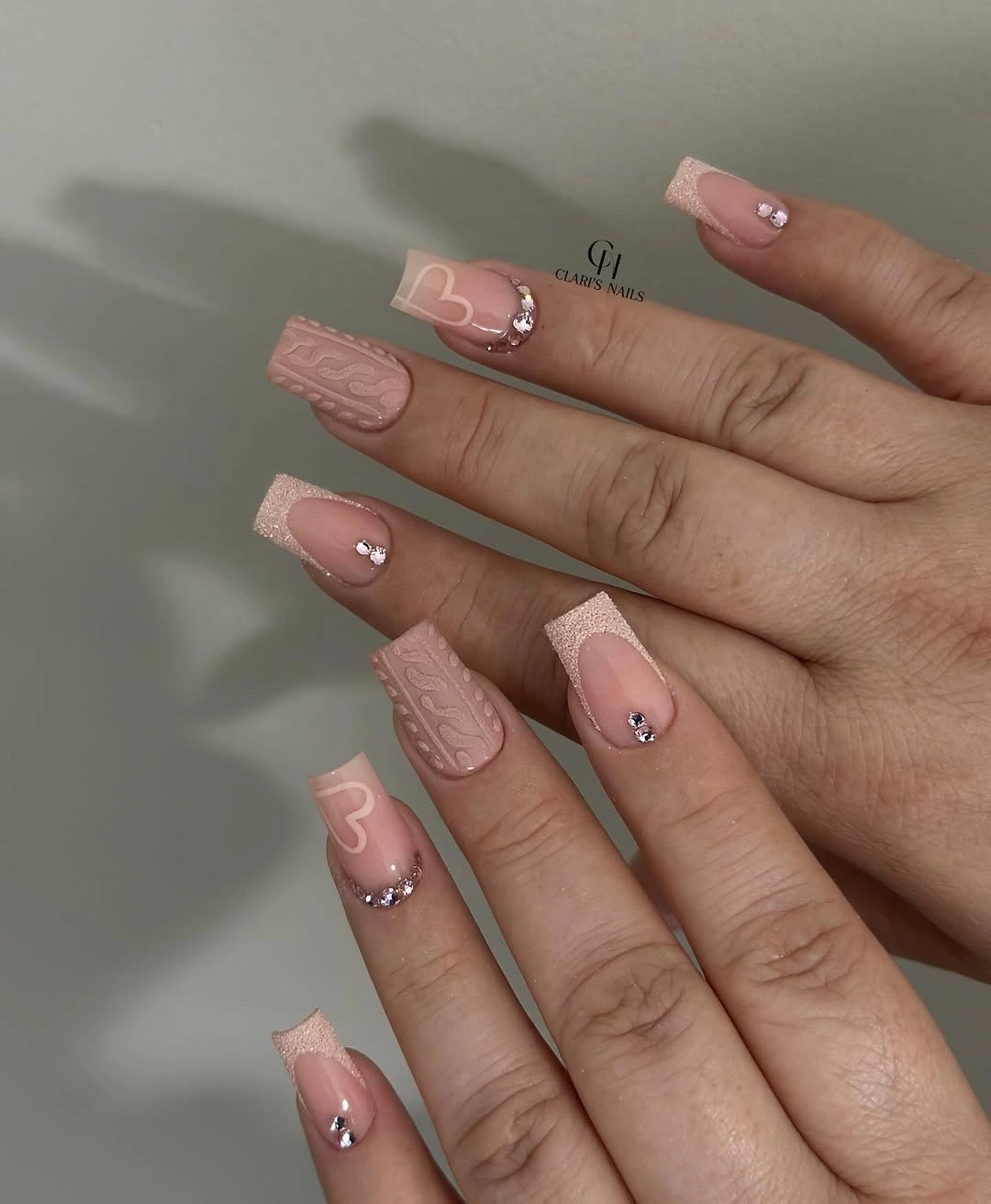 Photo credit by: https://www.instagram.com/p/DLWPGwvM3VK/
Use the texture on two or three nails and leave the remaining fingers in the same pink if you want the color relationship to stay clear. A cream-toned line can make the detail softer, while a silver-looking point raises contrast slightly; change one variable at a time so the base remains the visual anchor.
Fine texture can catch on clothing or lose definition as the edge grows, so a shorter, simpler version may be more comfortable for everyday wear. The visible advantage is that the design adds dimension without needing a dark accent, while the honest limitation is that tiny surface details require more consistent upkeep than a smooth color.
Black Geometry Sharpens Nude Space
Black French tips and fine crossing marks create the strongest value contrast in this nude set, but the pale base occupies more space than the dark detail. That ratio matters: the short coffin edge remains visible because the dark color frames it rather than covering the whole plate. The geometric accents also give repetition without forcing every nail into the same exact block.
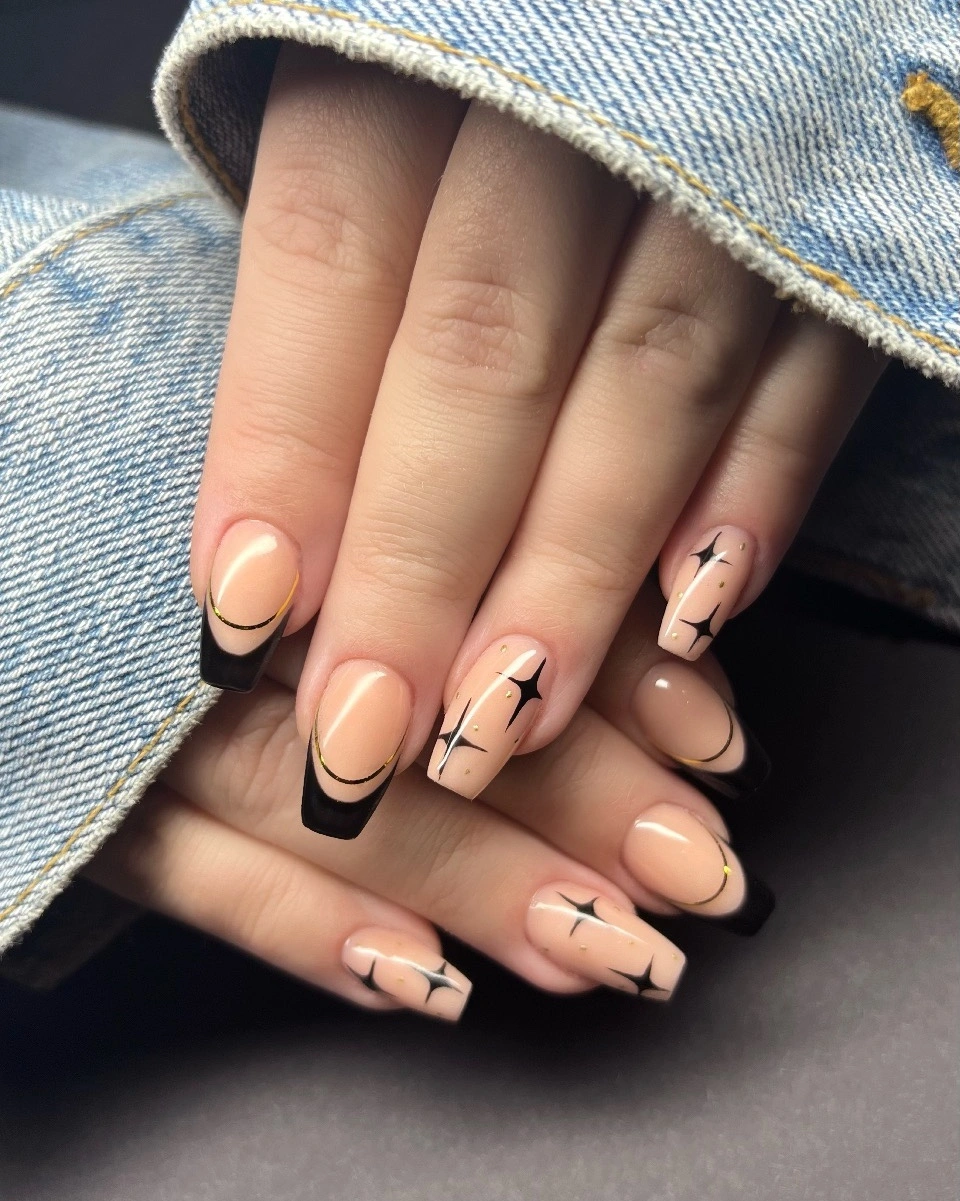 Photo credit by: https://www.instagram.com/p/CoZqGWsjlKc/
For a controlled variation, keep black only at the free edge and repeat one thin crossing line on an accent nail, a useful approach for fall square nail designs. A softened charcoal will lower the contrast while keeping the structure, whereas a warmer brown will connect the design to fall neutrals; the shape can stay unchanged because the color is doing the editing.
Graphic lines show uneven spacing quickly, especially on a compact plate, so leave more nude around the mark than you first expect. The look pairs easily with tailored clothing and dark accessories, but it has a clear limit: if too many intersections are added, the short nails lose the open negative space that makes the black accents feel clean.
Layered Magenta Bands Need More Length
Vivid magenta carries most of the saturation in this longer coffin design, while pale inner bands curve along the sides and tips. The contrast is not only light against dark; it is also saturated color against a softer pink-lavender support, which gives the elongated shape a strong sense of movement. The extra length allows each curve to remain separate.
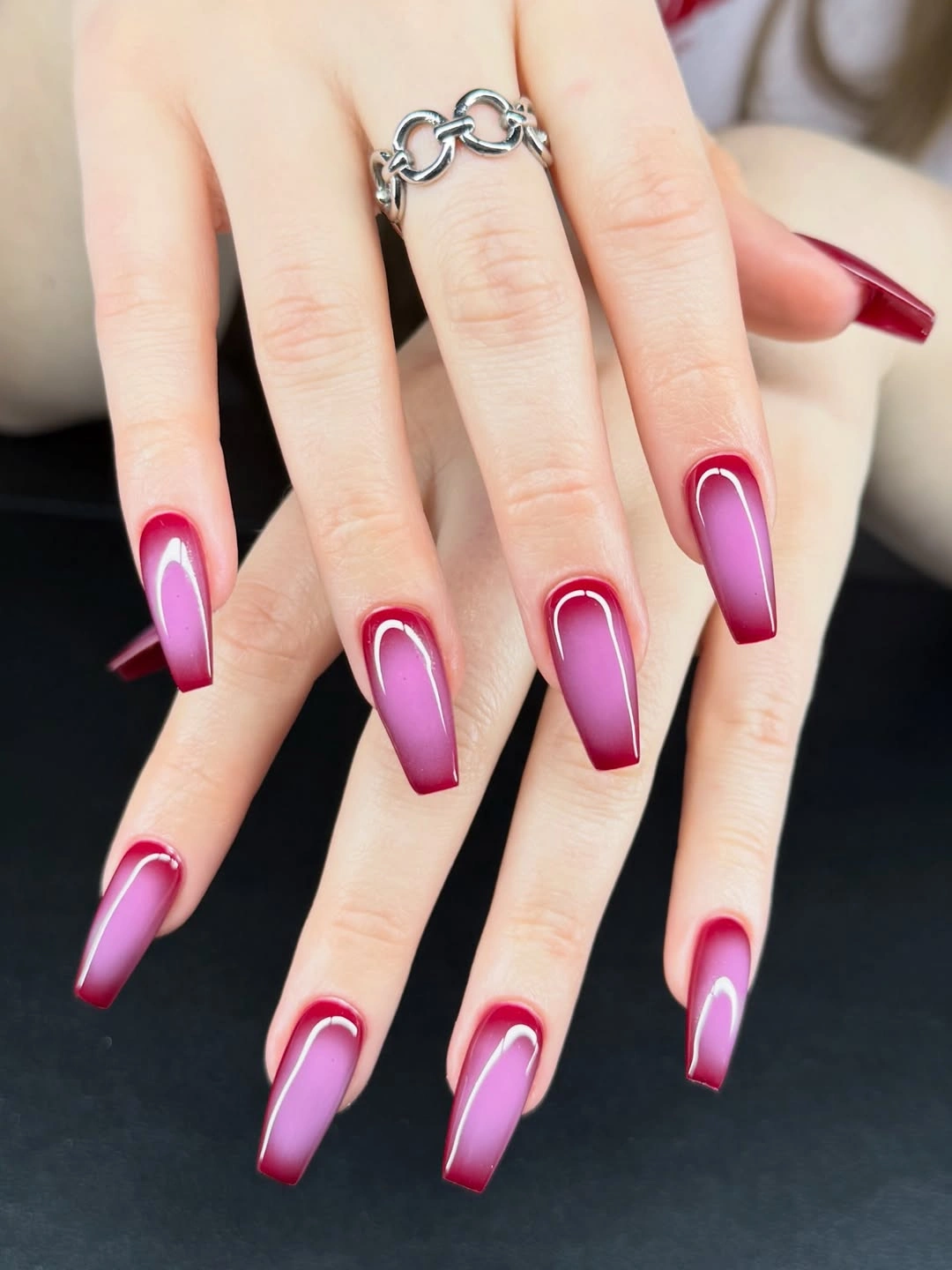 Photo credit by: https://www.instagram.com/p/DUwpSLMEcY8/
On a shorter coffin, keep one broad pale curve rather than trying to reproduce every narrow band. That adjustment preserves the color relationship and reduces crowding, while a dusty berry or muted plum can lower the saturation if vivid magenta feels too bold for daily wear or for a neutral fall wardrobe.
Longer free edges make the design dramatic, but they also create a practical tradeoff in handling and grow-out. The visual payoff is clear color movement down the nail, while the realistic limitation is that the bands need consistent spacing to look intentional; shortening the shape is usually more helpful than adding another accent.
Curved Lines Soften a Dark Accent
Sheer nude, white, and a deep berry-brown accent share this manicure without letting any one color dominate. The fine curved lines move along the short edge, and tiny metallic-looking points add just enough light to interrupt the darker marks. Because the curves are softer than a straight block, the compact coffin silhouette keeps a gentle rather than rigid character.
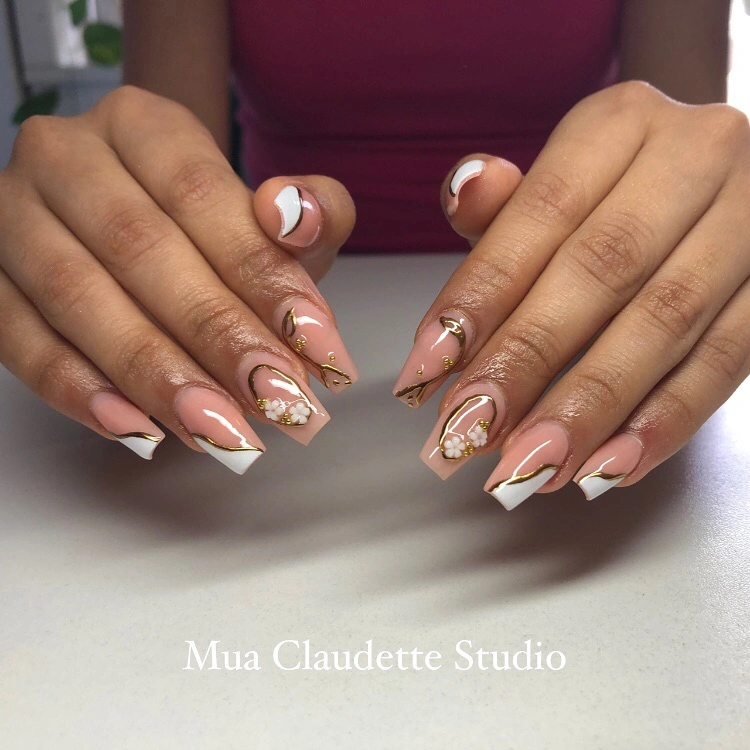 Photo credit by: https://www.instagram.com/p/DMdMwoJgKHj/
Choose one dark accent and let the white line repeat on only a few fingers for a more coherent fall short coffin nails designs adaptation. If the dark tone is changed to burgundy, the value relationship remains the same but the warmth increases; if it becomes navy, the manicure will read cooler and more graphic.
Small metallic-looking details work best when they support the curve instead of competing with it. They may need attention as the manicure grows, and the dark accent will show wear earlier than the nude base, but the open space makes this design easier to simplify than a full patterned nail. The pale base remains the quiet frame for that small contrast.
Brown and Glitter Warm a Nude Base
Translucent nude provides a neutral field for warm chocolate accents and one pale glitter panel, so the palette feels seasonal through temperature rather than through a large motif. The brown has enough depth to define selected coffin nails, while the light sparkle prevents the group from becoming visually heavy. The balance depends on keeping the strongest accents separated.
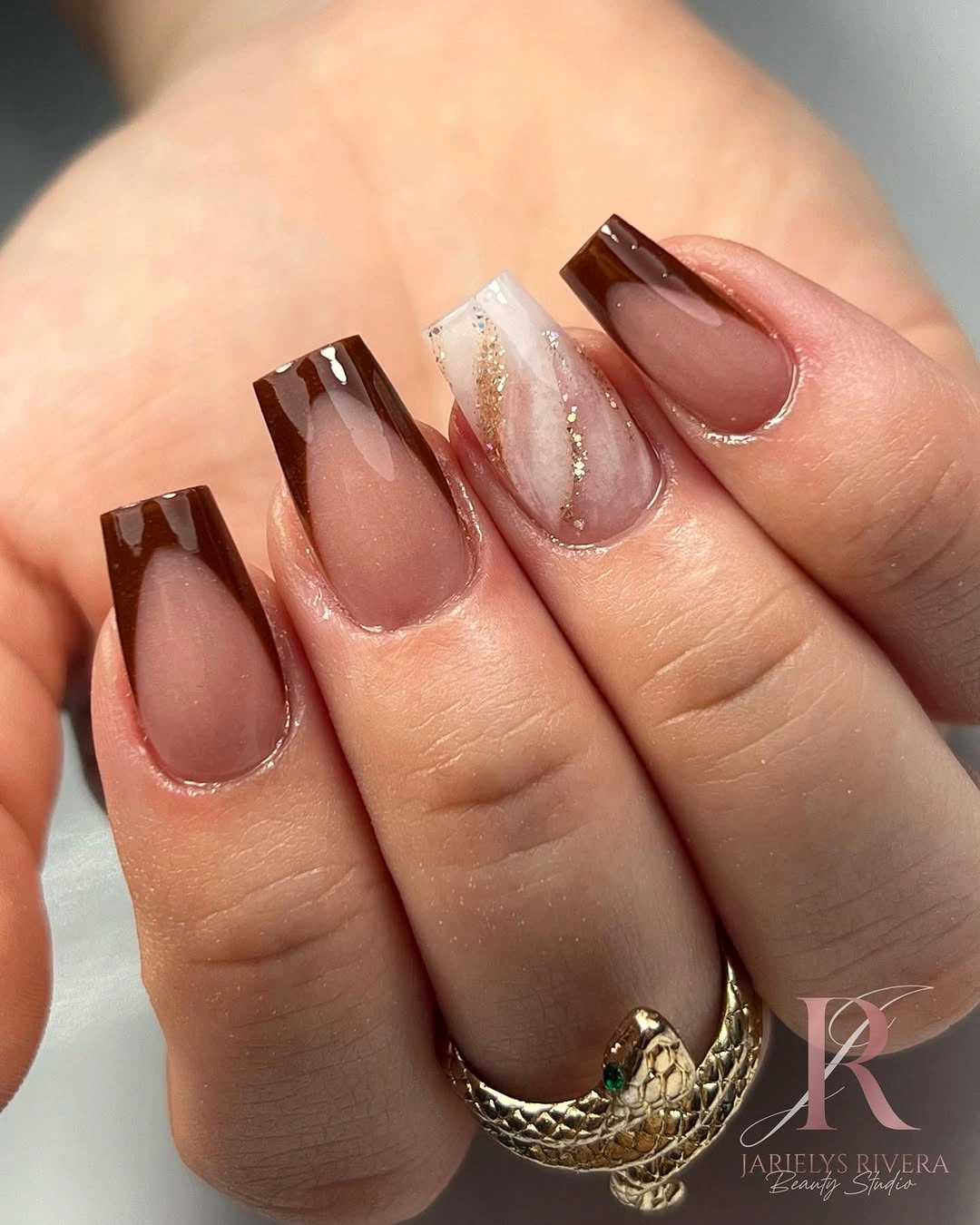 Photo credit by: https://www.instagram.com/p/CuvVifxrQ05/
For a more controlled version, use brown on two nails and reserve the glitter for one finger, leaving the other nails nude. A muted olive could replace the brown for a cooler fall direction, but that would change the emotional weight; keeping the warm neutral maintains the grounded contrast that makes the design easy to pair.
Patterned brown surfaces can vary from nail to nail, which is part of their charm but also a realistic limitation. If the accent becomes too dark or dense, the short coffin silhouette may disappear inside it, so preserve at least one clean nude area and let the light glitter act as a pause rather than another full statement.
White Loops Float Over Blush Pink
Blush pink and white sit close enough in value to feel delicate, yet the looping outlines create visible repetition across the short square-coffin nails. Tiny reflective points add a restrained highlight instead of introducing another strong color. The design works because the white marks remain open and curved, allowing the pale base to keep most of the visual space.
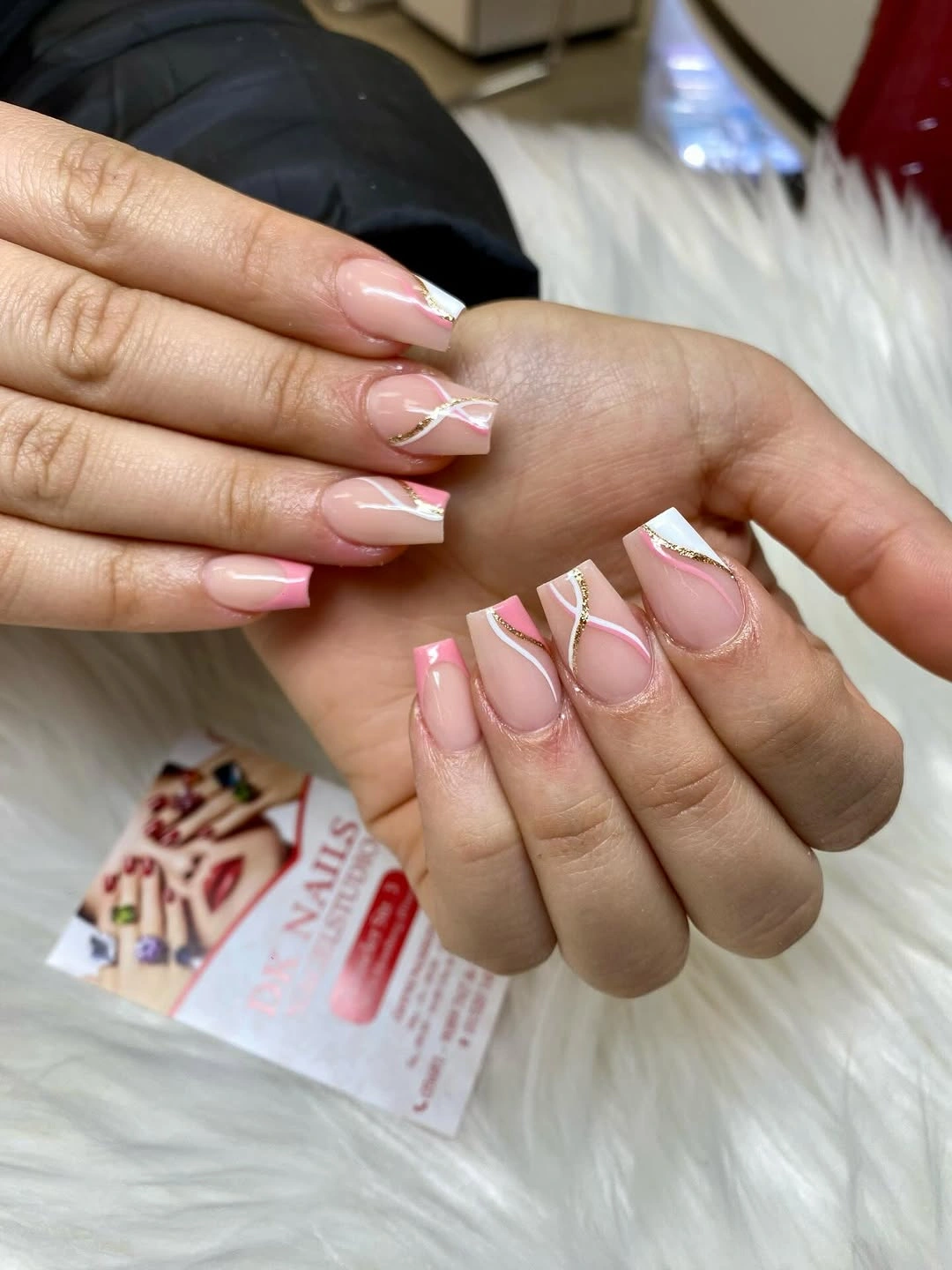 Photo credit by: https://www.instagram.com/p/DUobskGDlhf/
Use one looped outline on an accent nail and a shorter curved fragment on another when the plate is very small. Changing the base to a muted beige will make the white slightly more noticeable, while a dusty rose will deepen the palette; either adjustment preserves the same low-contrast relationship and airy spacing.
The light palette is easy to coordinate, but delicate white lines can blur if they are too close together or if the glossy surface catches glare. Keep the accent count low and accept that the design is more about clean placement than concealment; any uneven curve will remain part of the visible story.
Chocolate Brown Gets One Floral Pause
Deep chocolate acts as the value anchor in this mixed set, while nude pink, white, and a small soft floral accent keep the group from becoming one dark block. Fine pale lines on selected nails connect the different colors, and the isolated flower gives the eye a clear stopping point. The palette feels rich because the accents are lighter, not because every nail is decorated.
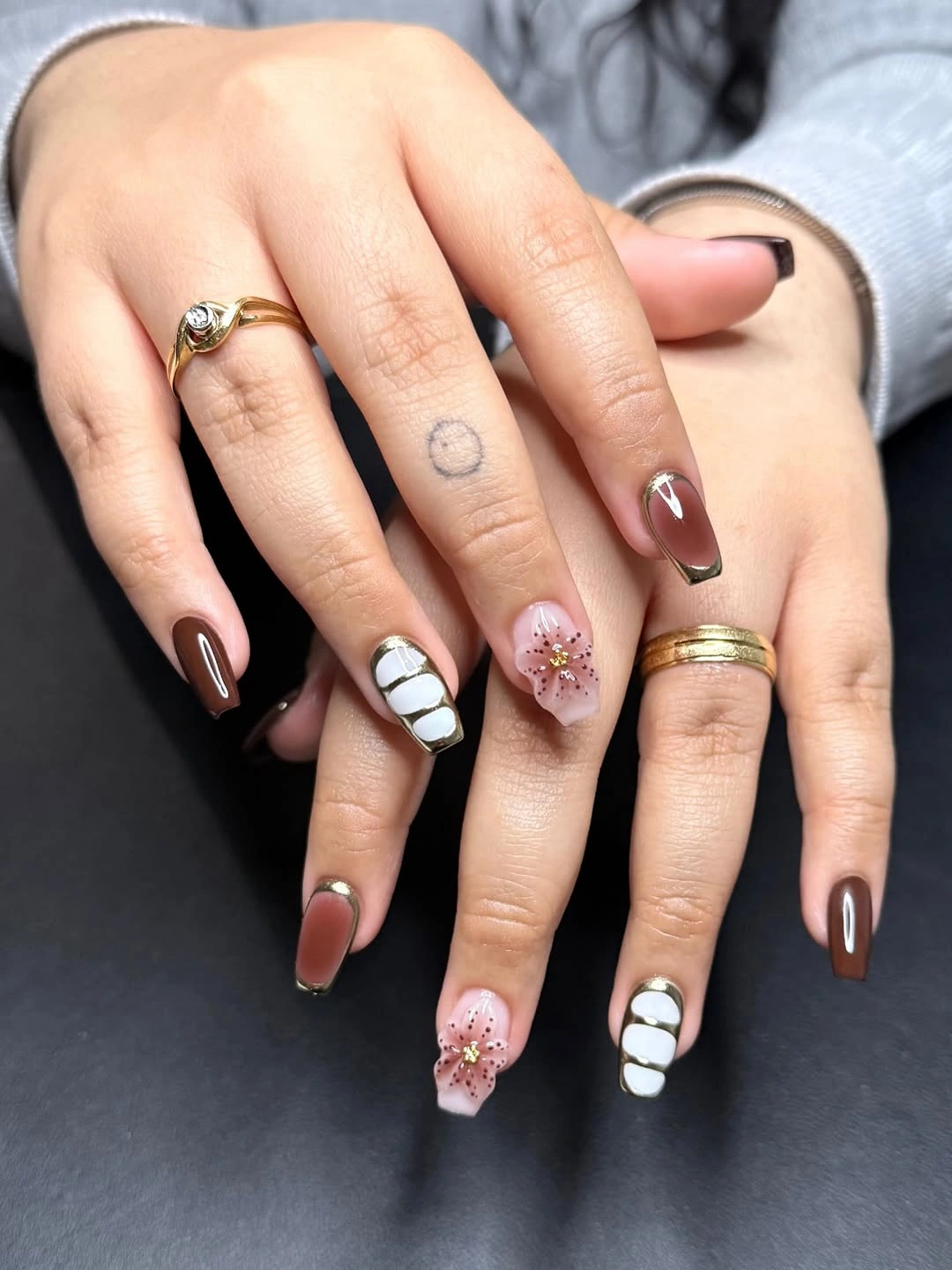 Photo credit by: https://www.instagram.com/p/DOZC21Kkd8S/
Place the flower on one nail, repeat the light line detail on another, and let the remaining fingers stay brown or nude. A burgundy substitute will push the collection warmer and more wine-toned, while taupe will soften it; the important relationship is one deep anchor balanced by small pale interruptions.
Mixed accents ask for more decisions than a solid color, so the practical limit is detail density. Keep the decorative nail away from several other high-contrast patterns, and shorten the flower or line if the nail plate is smaller; the design remains useful when the hierarchy is preserved even if the exact marks change.
Mustard Tips Make Nude Feel Seasonal
A sheer nude base leaves most of the nail light, while saturated mustard yellow occupies the tips in a clean two-tone division. The warm accent is strong enough to suggest fall without needing a leaf or sweater motif, and the glossy finish keeps the color transition crisp. Because the tip width is consistent, the medium coffin shape still looks orderly.
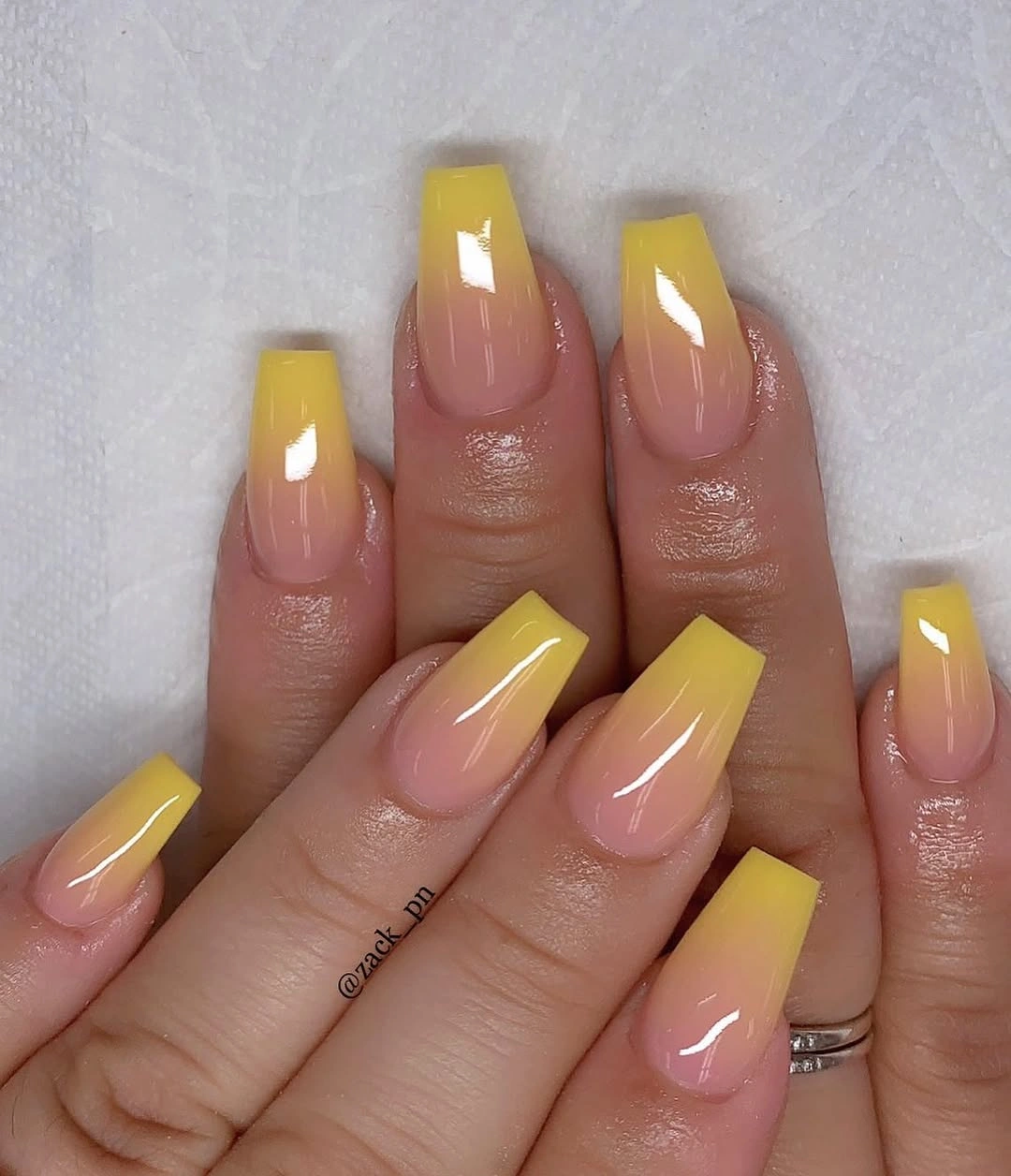 Photo credit by: https://www.instagram.com/p/Bxidv3EAXGE/
Keep the yellow on the last quarter of the nail and let the base remain close to the skin if you want a simple fall short coffin nails designs interpretation. Olive or ochre can lower the saturation, but avoid adding a second bright color unless the tip becomes too quiet; the clean boundary is the main visual event.
Bright tips make uneven edges and grow-out visible sooner than an all-over nude, which is the main upkeep tradeoff. The advantage is an easy palette match with denim, cream, or brown clothing, and the design can be shortened without losing its logic as long as the yellow remains a clear, narrow edge.
Colorful Tip Motifs Leave the Base Open
These short square-coffin nails start with a nude base and place small teal, yellow, orange, and pink marks near the free edge. The color variety is noticeable, but the placement is concentrated, so the light base provides enough breathing room for each tiny motif. The result is more detailed than a solid French tip while still preserving the short outline.
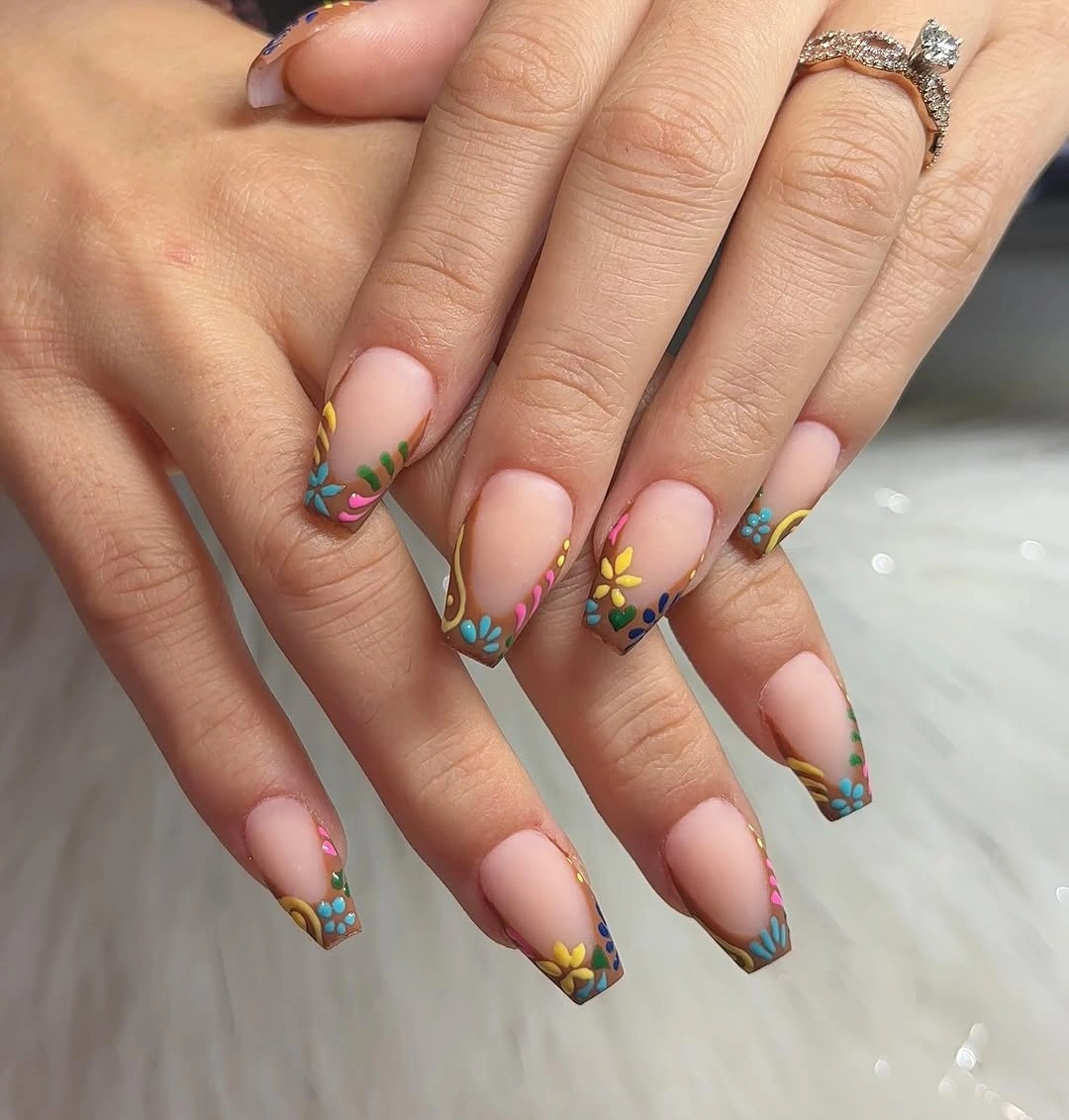 Photo credit by: https://www.instagram.com/p/DQhkXmhkhPV/
Choose two or three colors instead of all four when adapting the idea, and keep the marks at the edge rather than spreading them toward the cuticle. Teal and yellow will read brighter against the nude, while pink and orange make the relationship warmer; changing the palette is easy because the placement stays constant.
The small motifs may look different from finger to finger, which keeps the design lively but means symmetry should not be forced. Leave enough open base to avoid a crowded tip, and remember that a short nail has a limited canvas; a few readable marks will age better than a dense cluster of tiny details.
Pale Pink Shimmer Keeps Decoration Minimal
A compact square-coffin shape and pale pink color carry this manicure, with a fine luminous quality providing the only visible variation. The low-saturation base reflects enough light to feel finished but does not compete with rings, sleeves, or other accessories. That restraint makes the silhouette and surface evenness more important than any additional motif.
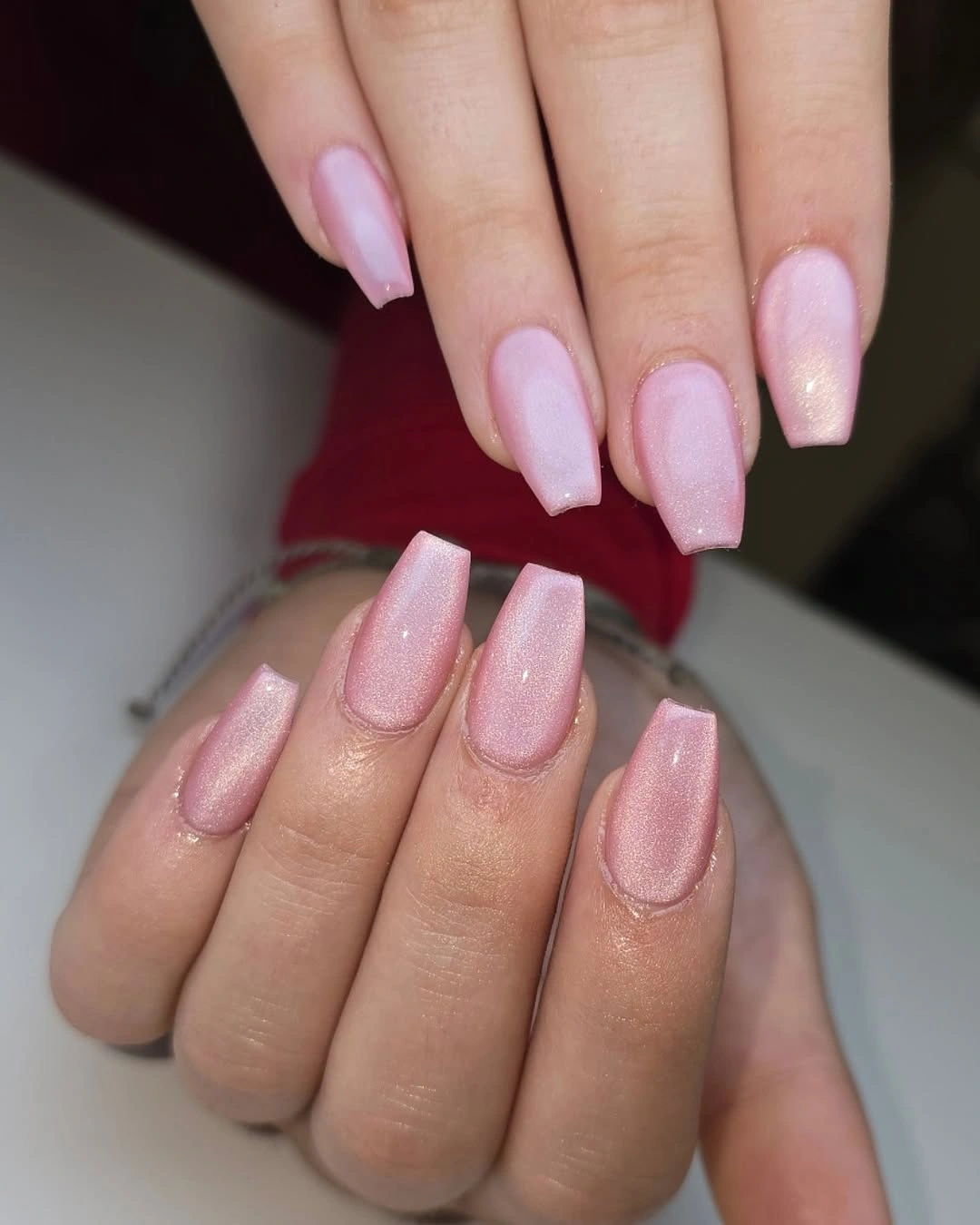 Photo credit by: https://www.instagram.com/p/DJ7ZJ0AxdRD/
Use this as the quiet anchor in a group of fall short coffin nails designs, or add a single darker accent if the plain finish feels too soft. A muted mauve will deepen the value slightly, while a creamy pink will keep the brightness; both changes are more coherent than layering several unrelated decorations onto the shimmer.
Subtle finishes can be forgiving from a distance but show streaks or uneven edges in close light. Keep the application visually even and let the small amount of shimmer remain the point; the main tradeoff is that this option offers less camouflage for a rough surface than a patterned design. The understated glow works only when the outline stays equally quiet.
Chocolate Pattern Adds Depth to Nude
Nude pink supports warm chocolate accents in this short square-coffin design, creating a value contrast that is deeper than the pale base but softer than black. Some nails carry brown patterned tips or blocks, so the eye moves between an open neutral surface and a darker fall note. The palette feels grounded because the colors share warmth.
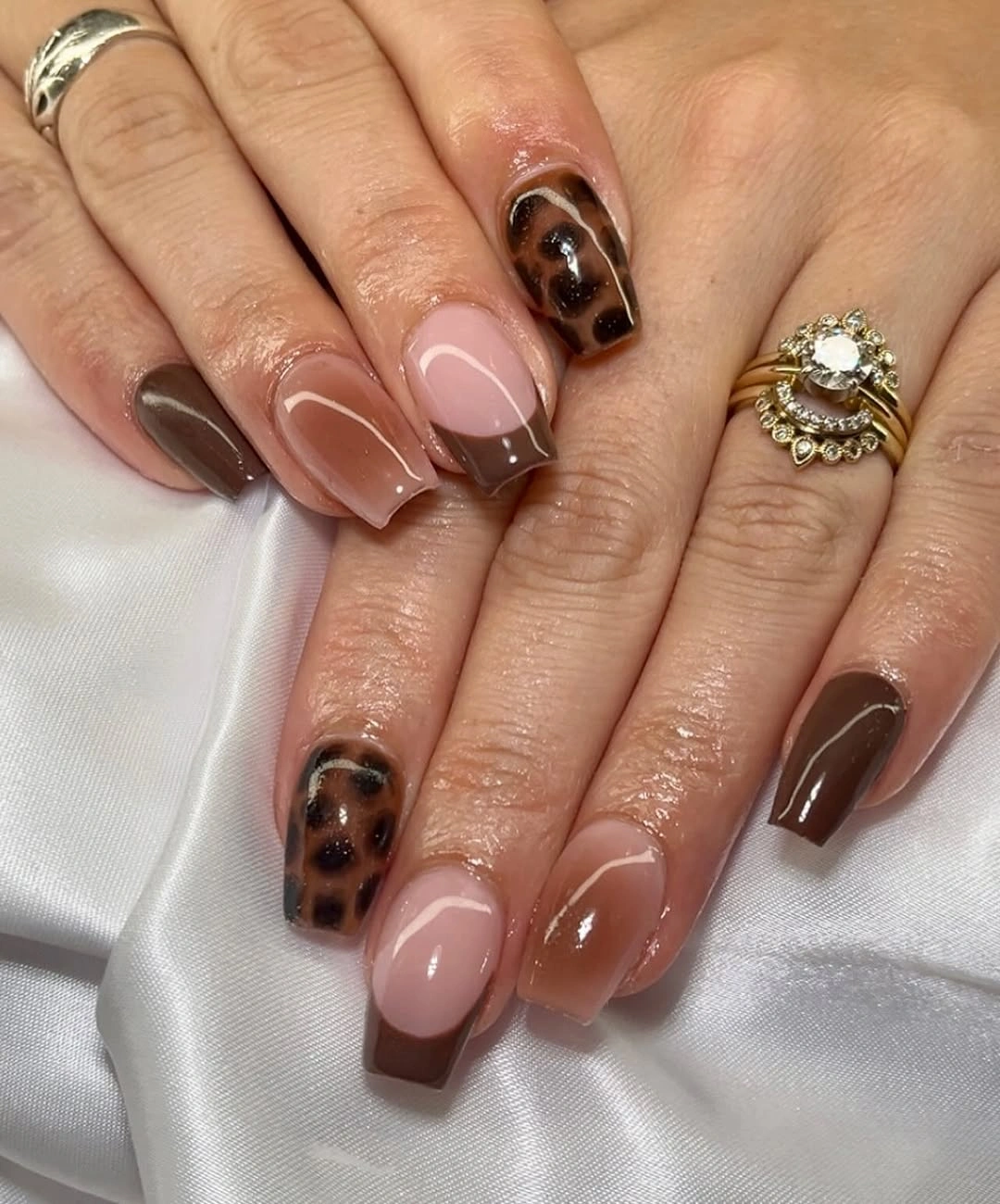 Photo credit by: https://www.instagram.com/p/DNO5gavsm_i/
Try a solid chocolate tip on one nail and reserve the more irregular brown pattern for another. That change keeps the contrast readable and reduces repetition, while replacing chocolate with burgundy would make the set more dramatic; retaining brown keeps it closer to a neutral autumn wardrobe and the original visual balance.
Warm patterned accents can expand or contract visually depending on their density, so keep at least half of the nails calm. The short shape is wearable, but the darker details may show chips and uneven boundaries quickly; a simpler block is easier to maintain than a dense pattern while still carrying the same color relationship.
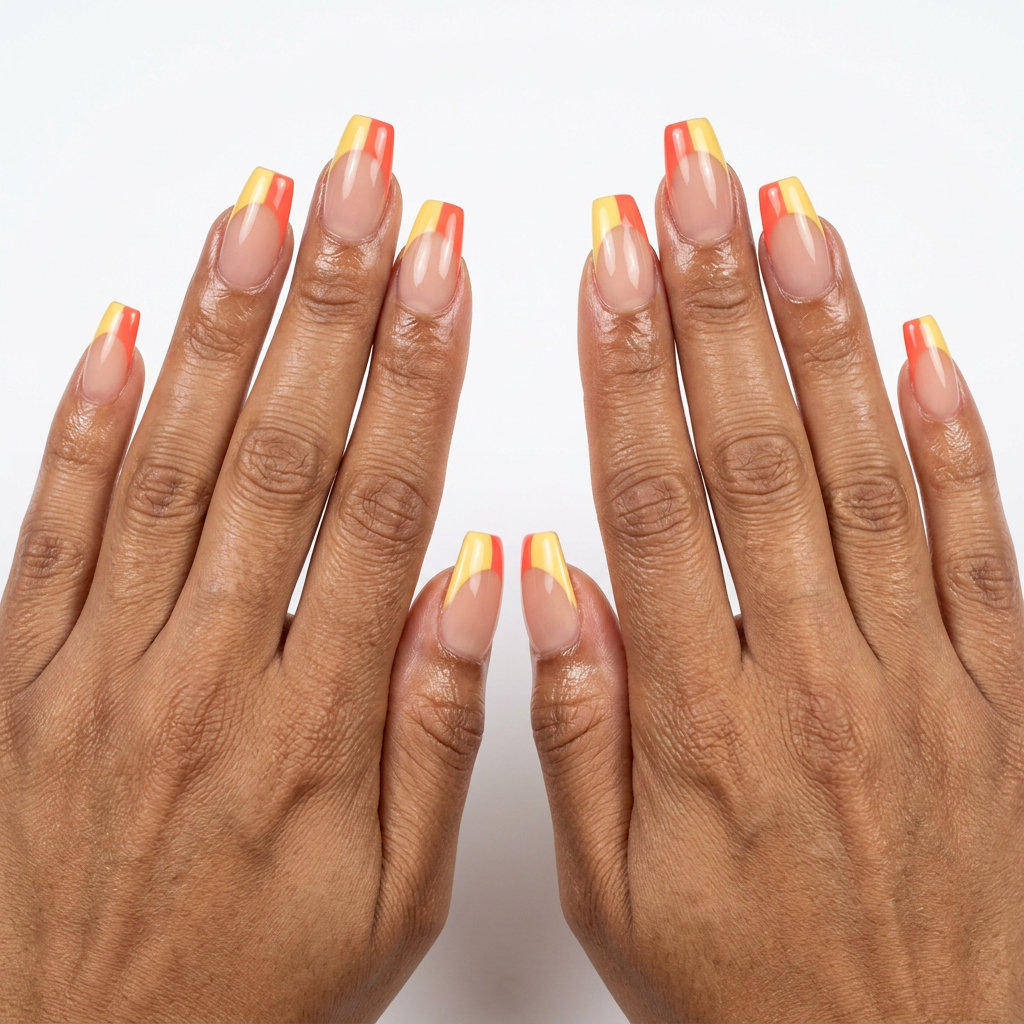
Neon Lime Creates Strongest Contrast
Deep nude and neon lime sit far apart in saturation and value, which is why the bright edge immediately draws attention. The green appears at the tips and sides rather than covering every surface, so the short square-coffin shape remains visible even against the dark skin tone. Small white marks inside the green add a secondary rhythm without changing the palette.
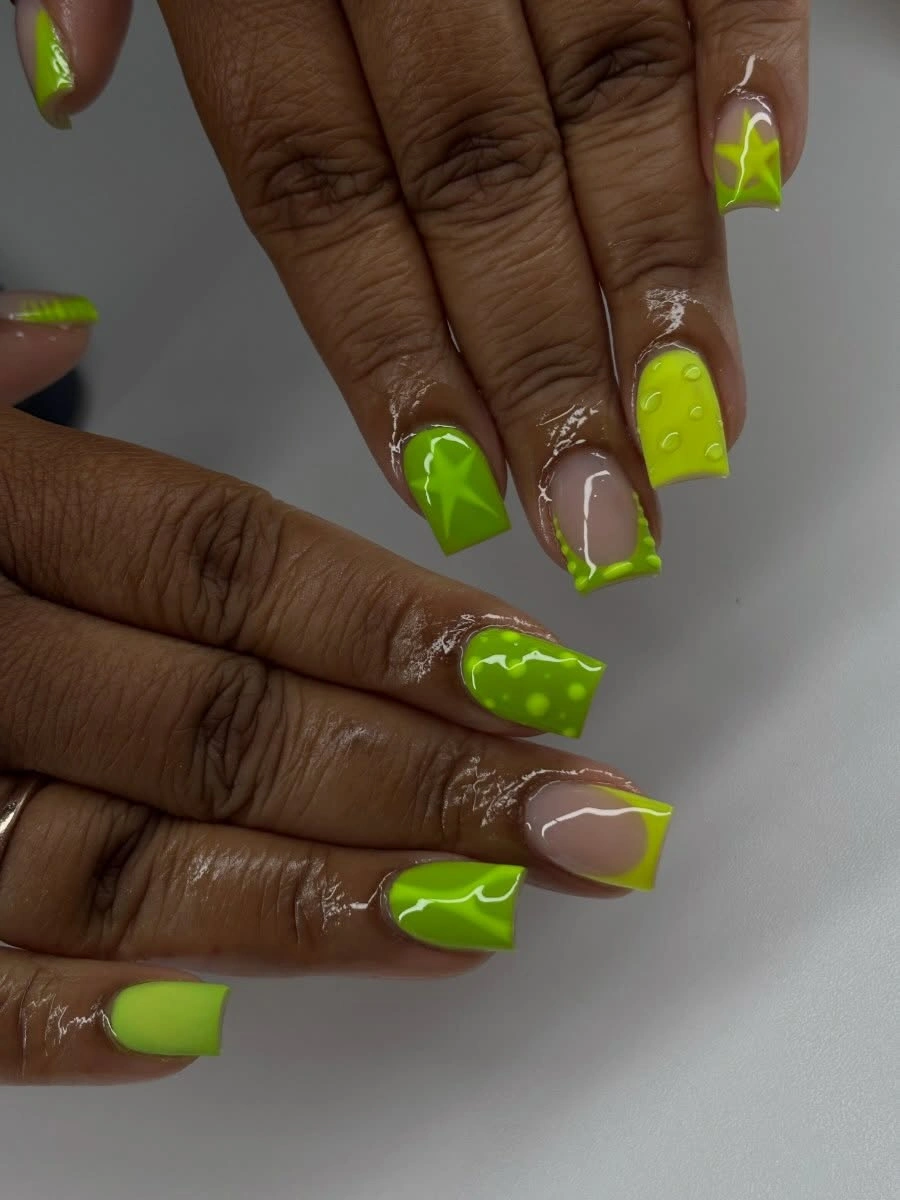 Photo credit by: https://www.instagram.com/p/DaBJE8kwYfp/
Use lime on the free edge and repeat one fine white line if you want the same high-contrast idea with less visual weight. A muted chartreuse or olive will lower the saturation and make the look easier to wear, but it will also soften the sharp contrast; decide whether brightness or restraint matters more before changing the color.
Strong neon makes edge wear obvious and can look crowded if the accent spreads across the whole plate. Keep the base open, accept that the color may dominate accessories, and simplify the white marks first if the design needs editing; the vivid lime is already enough to create emphasis. Leaving the dark base visible keeps that emphasis from becoming visual noise.
Burgundy Blocks Use Nude as a Divider
Deep burgundy blocks sit against sheer nude and cream sections, producing an autumn contrast while keeping some of the nail transparent-looking. Thin pale separators interrupt the dark areas and help each block read as a deliberate shape. Because the contrast is placed to one side or near the tip, the short coffin outline is not swallowed by the wine color.
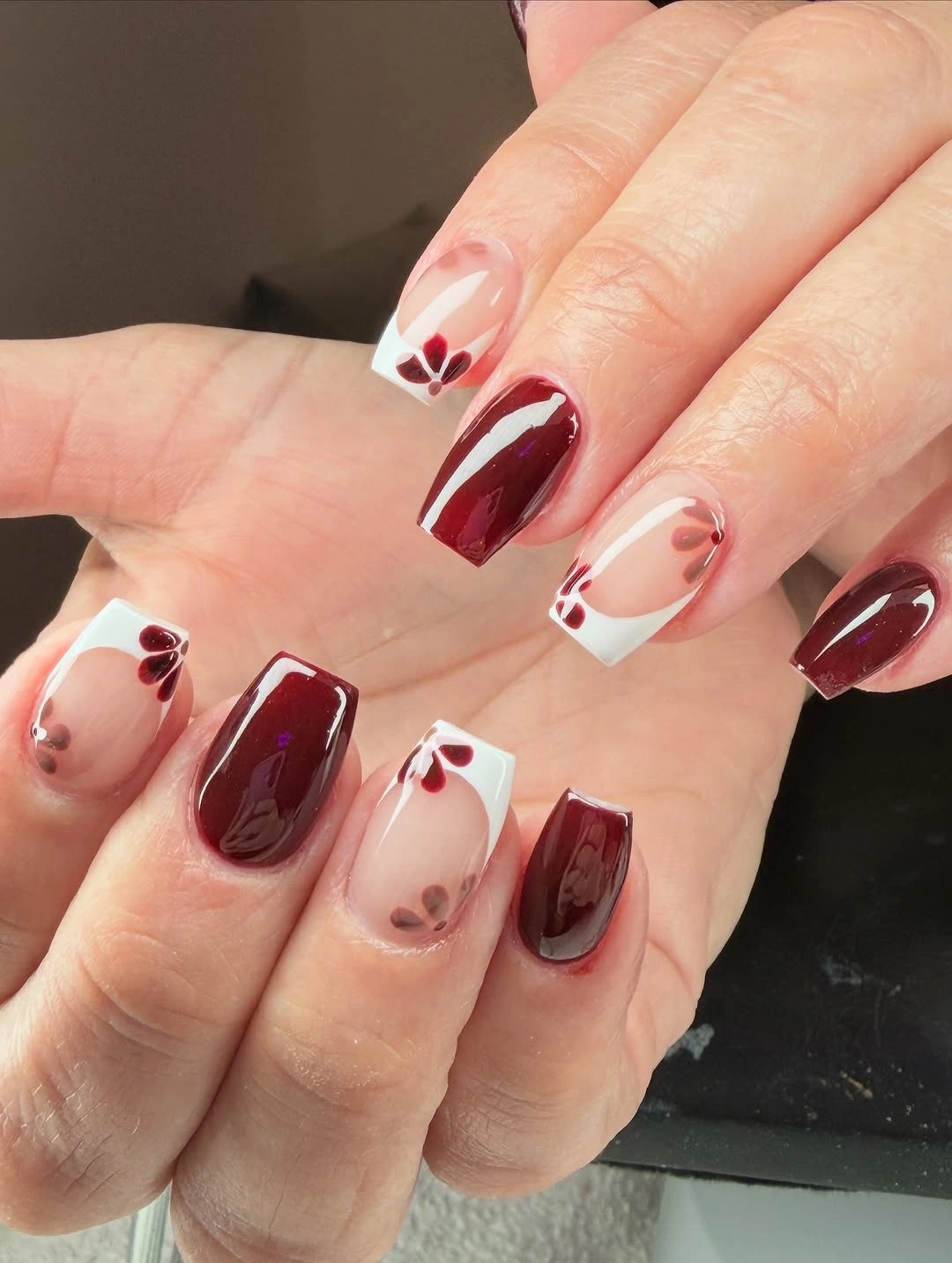 Photo credit by: https://www.instagram.com/p/DP-KvdNjp9a/
Keep one burgundy side block and one narrow light divider when adapting the design to a shorter plate. The color can shift toward berry for a softer result or toward brown for a more muted one, but the useful principle is unchanged: let nude space separate the dark accent instead of adding another competing hue.
Sharp blocks require cleaner boundaries than a blended pattern, and grow-out will create a visible line at the nude section. The benefit is a clear graphic shape with very little decoration, while the tradeoff is that adding more blocks can quickly make a short nail look busy; one strong division is usually enough.
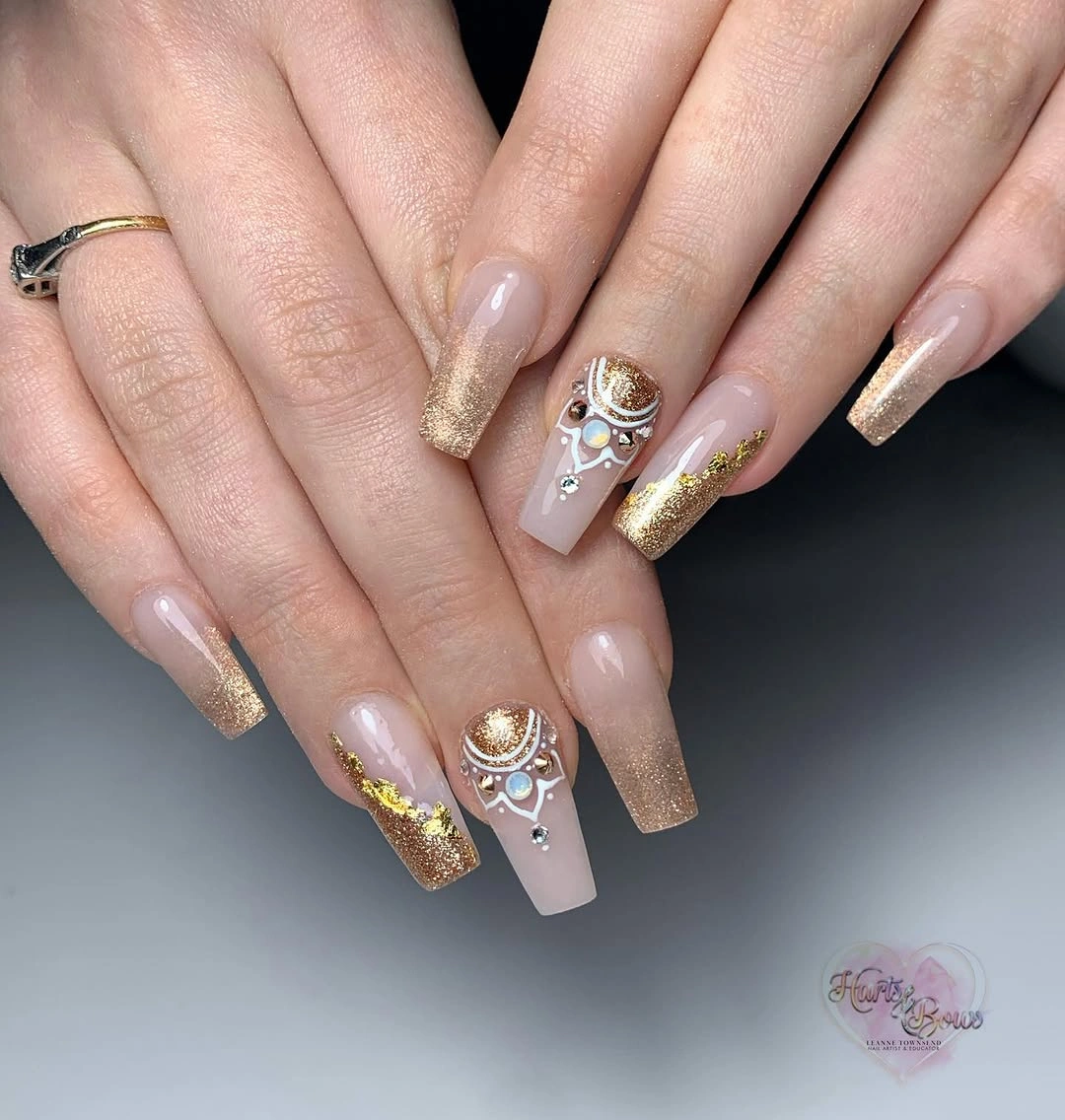
Fine Gold Edges Warm Up Nude
Warm nude and narrow gold-looking tips form a low-contrast partnership, so the design reads as a soft glow rather than a bright metallic statement. The short square-coffin shape stays central because the shimmer is confined to the free edge. With no extra motif, the precise tip width and the relationship between beige and gold carry the entire look.
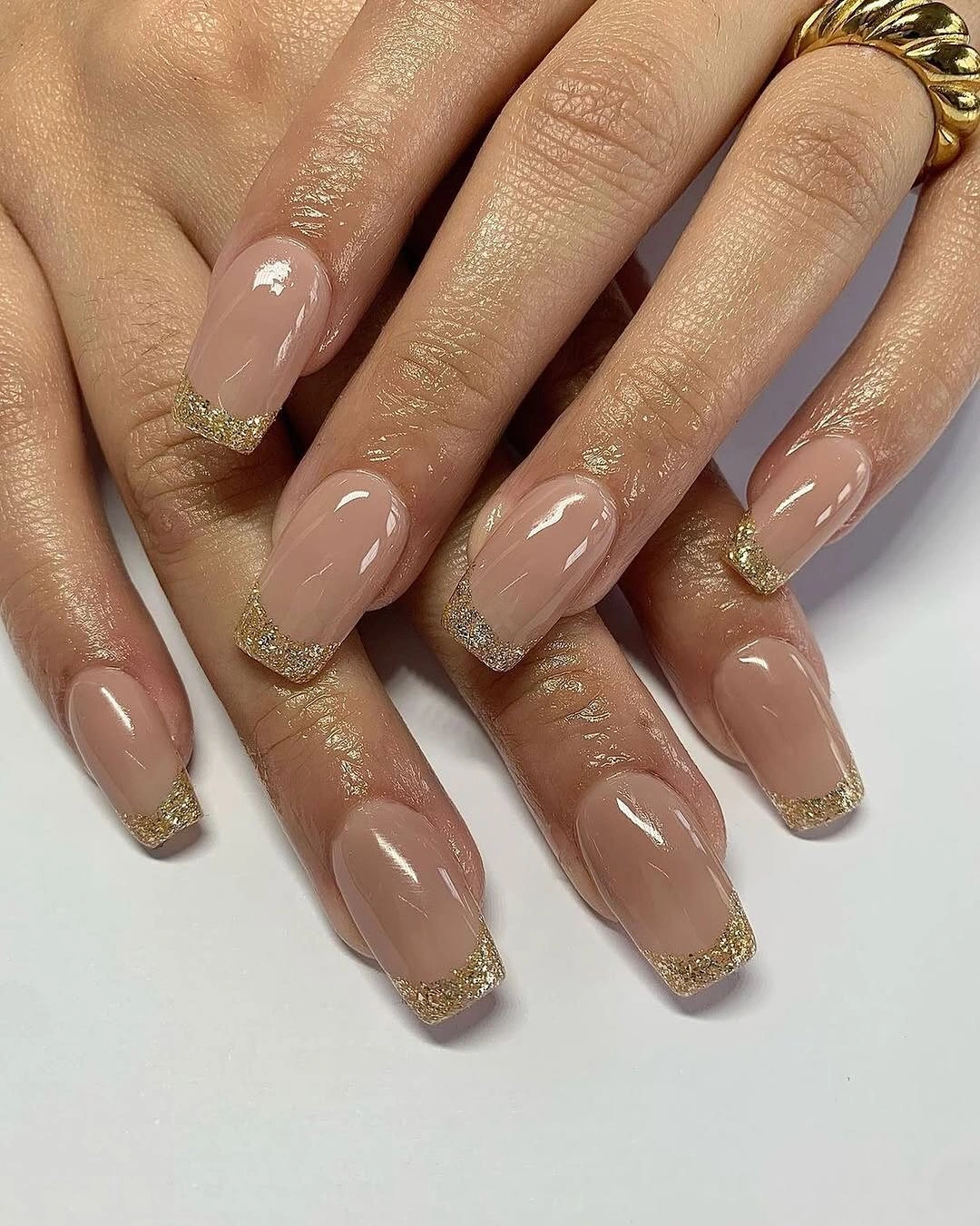 Photo credit by: https://www.instagram.com/p/CN0G1lahtPL/
Choose a muted champagne edge if bright yellow gold feels too strong, or use a deeper caramel nude to increase the value contrast. Keep the line slim and repeat it consistently; that controlled change will preserve the same fall short coffin nails designs logic without turning a quiet set into a glitter manicure.
Minimal metallic tips are easy to pair with jewelry, but their narrowness makes uneven spacing noticeable. The edge may need refreshing sooner than a solid nude, yet the design remains practical because it can be shortened without changing the color relationship; the warm neutral base simply gains a smaller light accent.
Brown Grid Lines Build an Open Pattern
A pale nude base leaves space for thin chocolate-brown lines arranged in small grid-like intersections, creating an architectural finish on a short square-coffin shape. Tiny dark points appear at some crossings, but the pattern stays open rather than becoming a solid brown field. The visual contrast comes from line direction and spacing as much as from color.
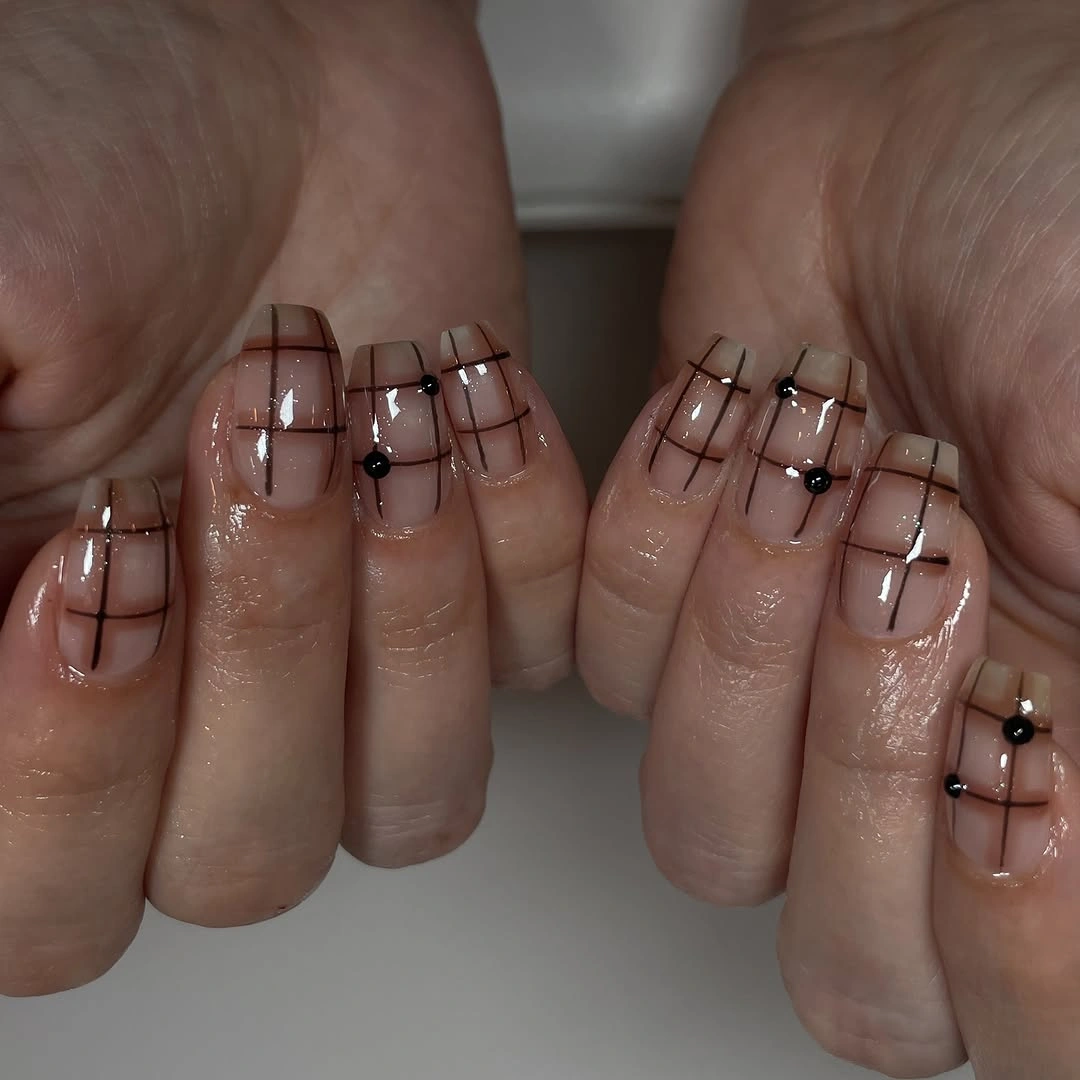 Photo credit by: https://www.instagram.com/p/Db7TBSFFJpD/
Use two crossing lines on one accent nail and a single short line on another when the plate cannot support a full grid. A warmer burgundy would raise the color intensity, while taupe would soften the structure; either way, leave enough nude around the lines so the pattern remains legible. The open background is what makes the small geometry feel intentional.
Open geometry is easier to simplify than to repair after too many marks have been added. The short silhouette stays clear when the grid is sparse, but close spacing can turn the design muddy and make grow-out more visible; treat negative space as part of the pattern rather than as empty room to fill.