
Natural hair twists have moved beyond a single texture or length. The shift is toward glossy, defined styles that hold their shape without constant fuss, from chin-length mini twists to mid-back passion twists.
This collection of 29 simple natural hair twists covers the full range: low-upkeep options for fine hair that tends to fall flat, styles that hide a visible grow-out line, and cuts where a fringe actually stays put. Each one works with a specific hair density and face shape, so you can pick the one that fits your routine.
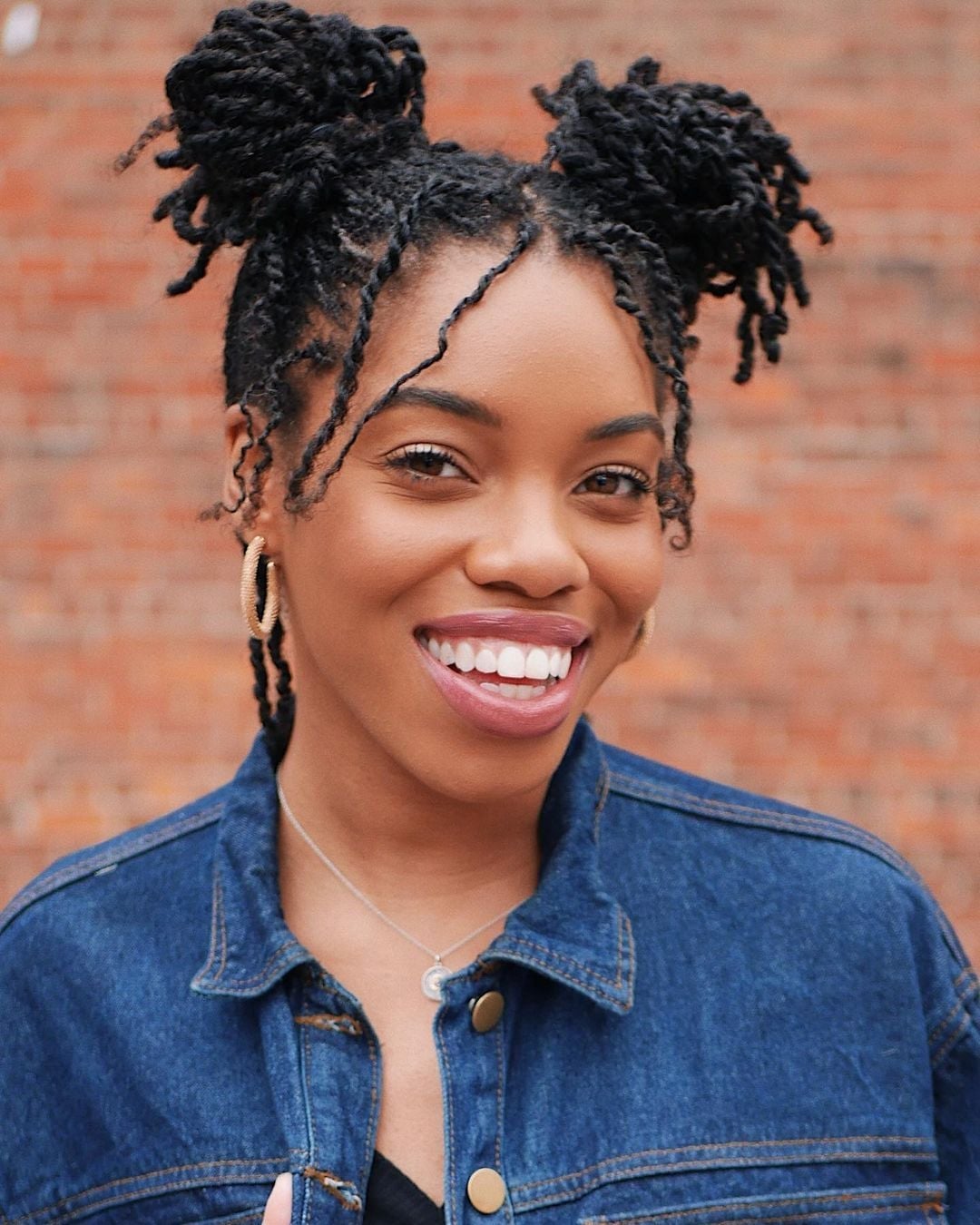
Playful Double Buns With Short Curly Twists
Two buns on top of the head turn short curly twists into something that reads as more deliberate than a standard updo. The black base color keeps the focus on the shape, and the loose tendrils and wispy bangs stop it from feeling too precious. This works best for fine to medium textures that can hold a twist without slipping. Ask your stylist for: short twists in two playful buns with wispy bangs. A light hold gel defines the twists before you pin the buns in place; bobby pins or small hair ties keep them secure for the day. It is a casual, youthful look that takes under twenty minutes once the twists are in.
Uniform Mini Twists With Defined Ends
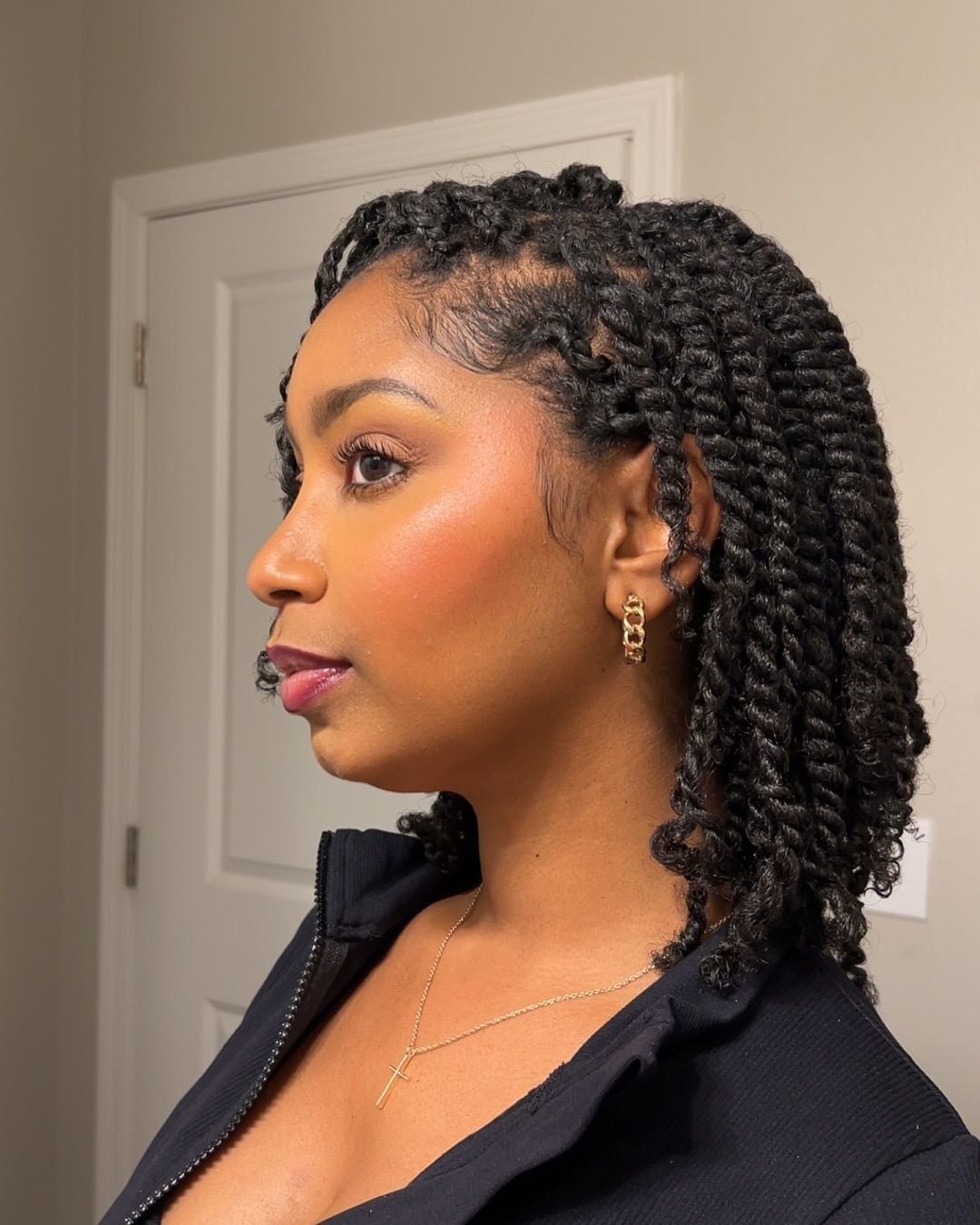
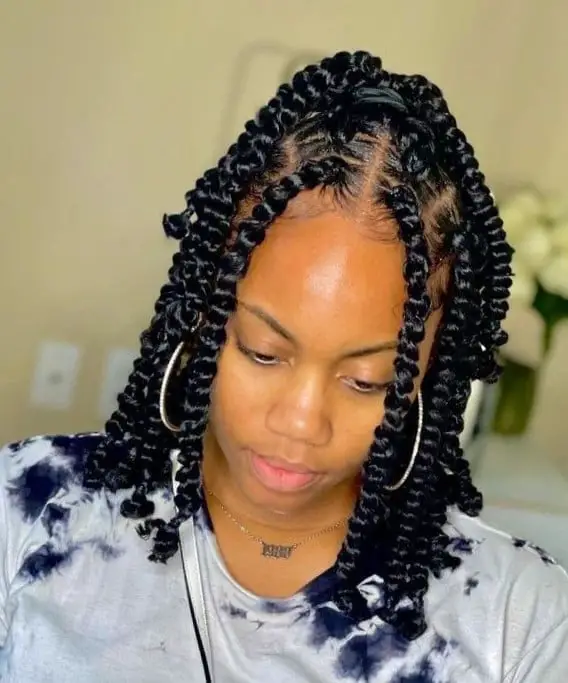
Uniform mini twists rely on consistent partings and even tension from root to tip. The defined ends here are slightly looser than the shaft, which gives the chin-length shape a softer line than a blunt cut would. Fine to medium hair benefits from the density these twists create. Ask your stylist for: uniform mini twists, chin length, defined ends. A lightweight oil adds shine without weighing the twists down, and the roots need retwisting every four to six weeks to keep the partings crisp. The middle parting frames the face evenly, making this a neat option for work or everyday wear.
Chin Length Mini Twists With Playful Bangs
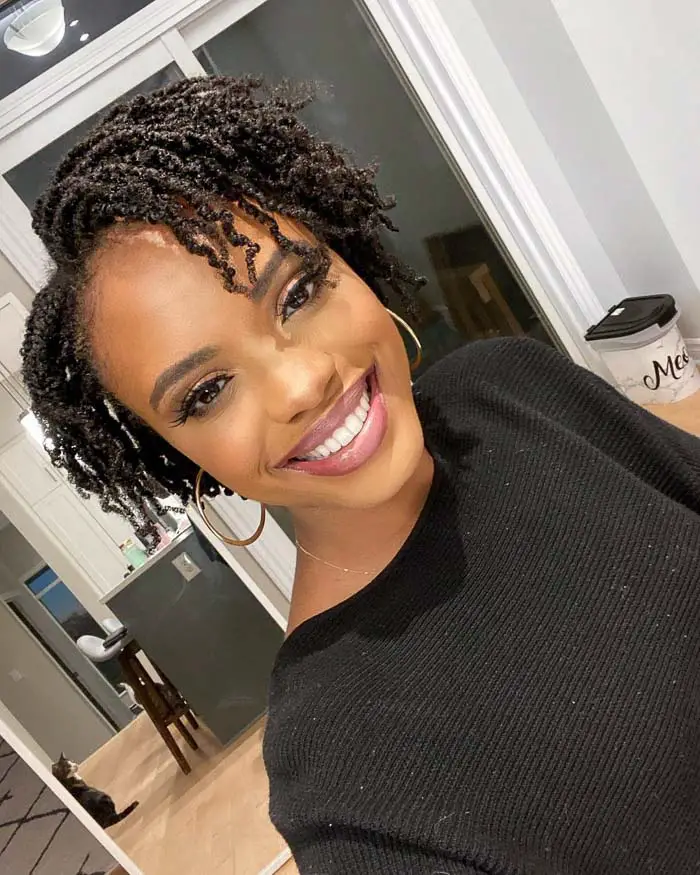
How do you add movement to a short twist style without losing the structure? Short, wispy bangs. The fine, curly texture here keeps the bangs light enough to sweep across the forehead. The middle parting anchors the mini twists at chin length. This approach softens angular face shapes without requiring extra length. Ask your stylist for: chin length mini twists, short wispy bangs. A light mousse on the bangs gives separation and hold. The twist ends stay neat with a trim every eight weeks, and the bangs will need a touch-up at the same interval.
Defined Passion Twists With Short Bangs
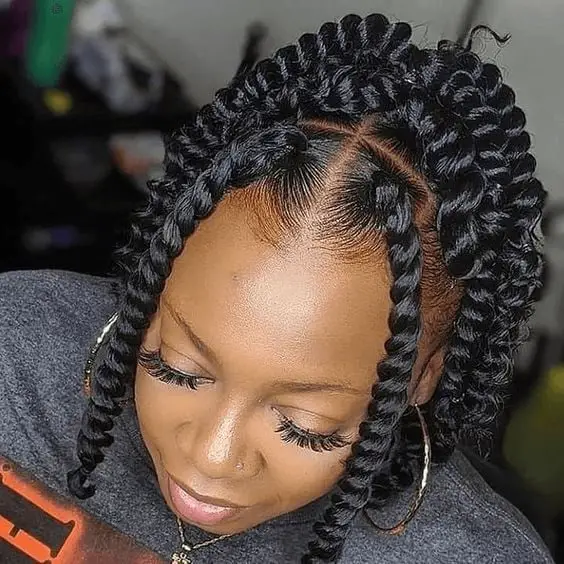
Passion twists sit between a flat twist and a two-strand twist in structure. They have more body than mini twists, which makes them a better match for thick, wavy hair that can carry the weight. The short bangs here prevent the chin length shape from feeling too heavy. Ask your stylist for: chin length passion twists with short bangs. A sealing spray maintains the definition between salon visits. Root retwisting every six to eight weeks keeps the install fresh. This is a salon leaning style that holds its shape well for daily wear.
Dense Mini Twists With Wispy Bangs
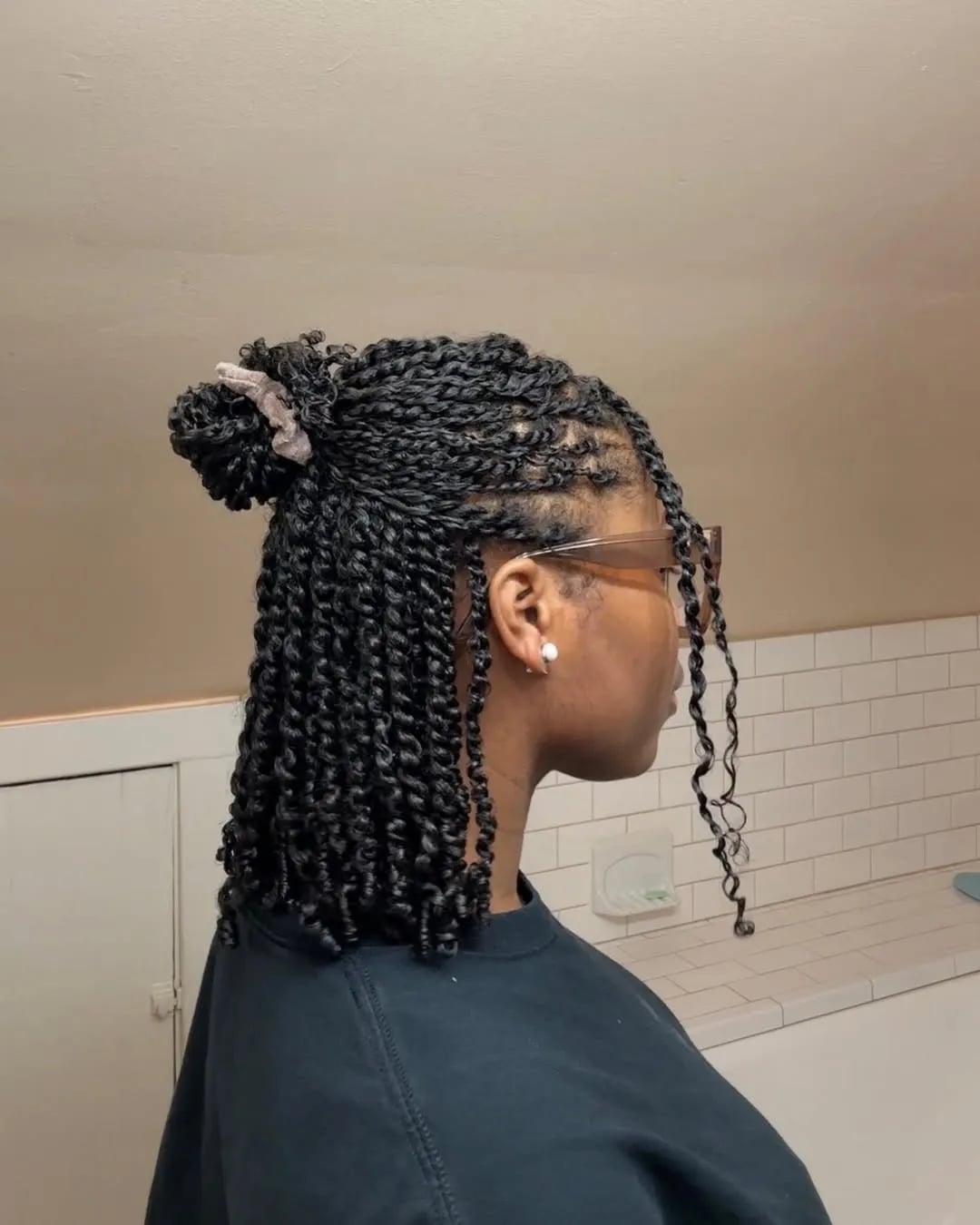
Dense mini twists on fine, coily hair create the illusion of thicker texture without adding bulk. The chin length keeps the style manageable, and the wispy bangs break up what could otherwise feel like a solid block of twist. This is a strong option for framing round or square face shapes, as the soft bangs draw the eye upward. Ask your stylist for: dense mini twists, chin length, wispy bangs. A light serum on the ends prevents dryness and frizz. The roots will need retwisting every four to six weeks, and the bangs benefit from a quick trim at the same appointment.
Uniform Mini Twists With Defined Texture, Chin
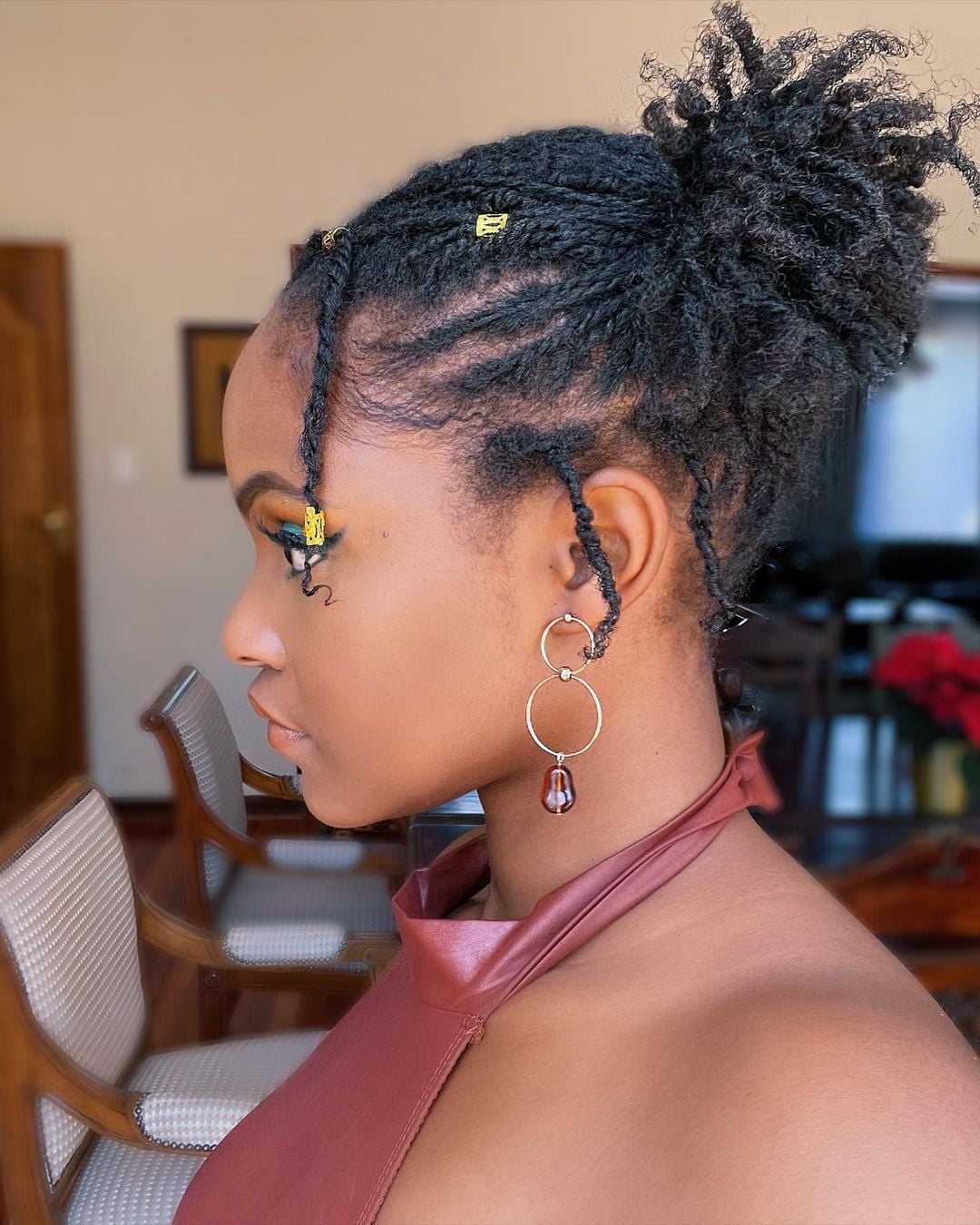
Uniform mini twists at chin length rely on consistent sectioning to keep the pattern neat and the volume even. The tight, defined texture holds its shape well, with slightly looser ends that soften the line. A clear middle parting frames the face without needing bangs. Ask your stylist for: uniform mini twists, chin length, defined ends. Use a lightweight oil every few days to add shine and keep the ends from drying out. Plan to re-twist the roots every four to six weeks to maintain the crisp, uniform look.
Neat Bob Twists With Curled Ends
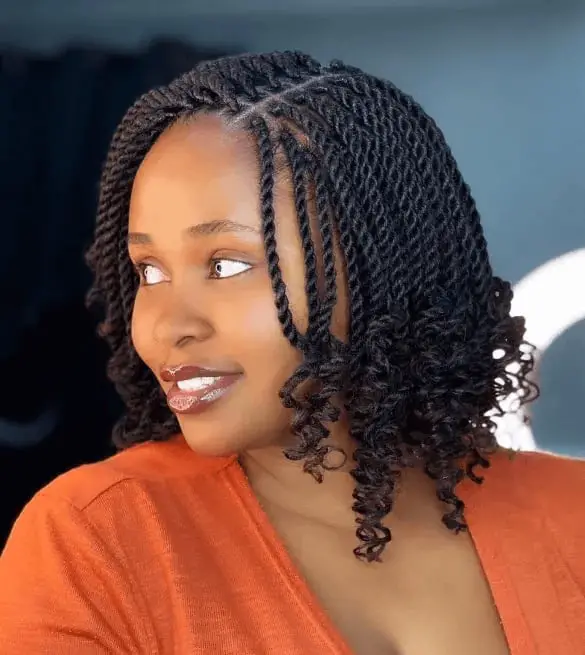
A chin-length bob built from thick, coily twists reads as structured but not severe. The key is the middle part: each twist is sectioned cleanly from the crown to the hairline, which gives the bob its weight and symmetry. Curled ends add a soft finish that keeps the silhouette from feeling too boxy. Ask your stylist for: chin length bob twists with curled ends. Apply a curl-defining cream to the ends before twisting to encourage that bend, then let the style dry completely before handling it.
Short Mini Twists With Braided Accents
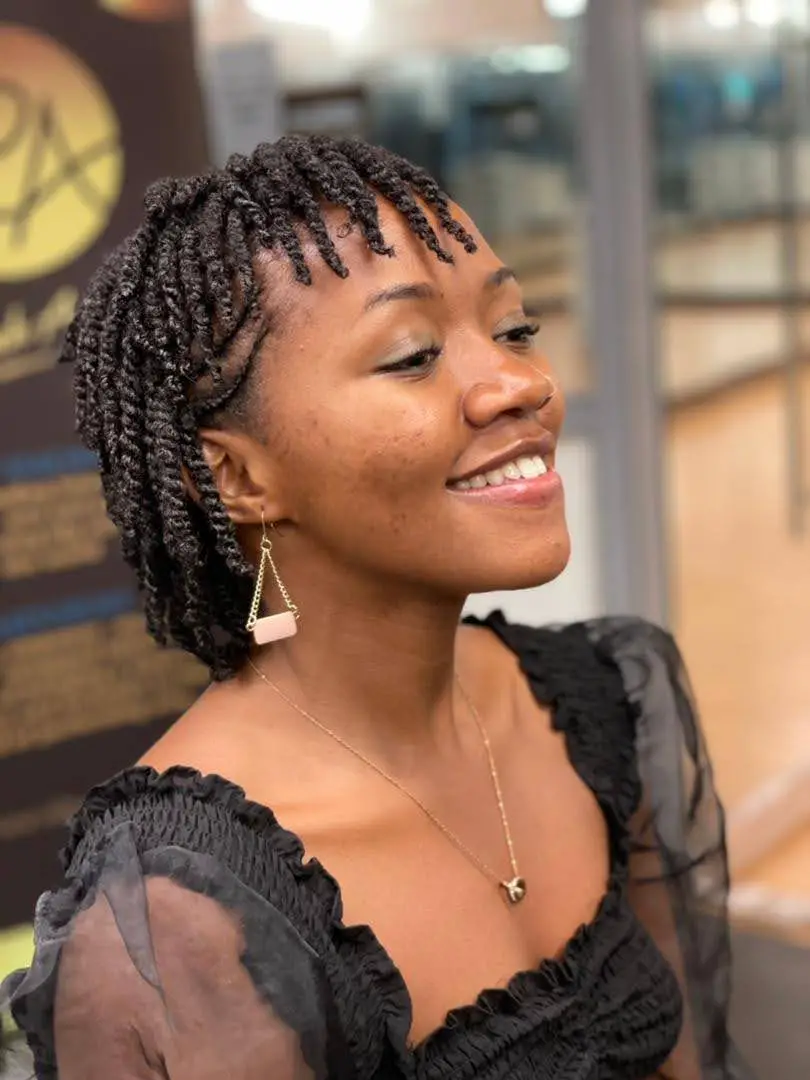
Want a twist style that looks polished rather than just practical? Ask for short mini twists with braided accents worked into the hairline. The braids break up the uniformity of the twists and add a subtle structural detail that draws the eye. This ear-length look relies on a clean middle part to keep the styling neat and the texture visible. Ask your stylist for: short mini twists with braided hairline accents. The braids also help anchor the style, so it holds its shape well between washes.
Chin Length Mini Twists With Side Swept Bangs
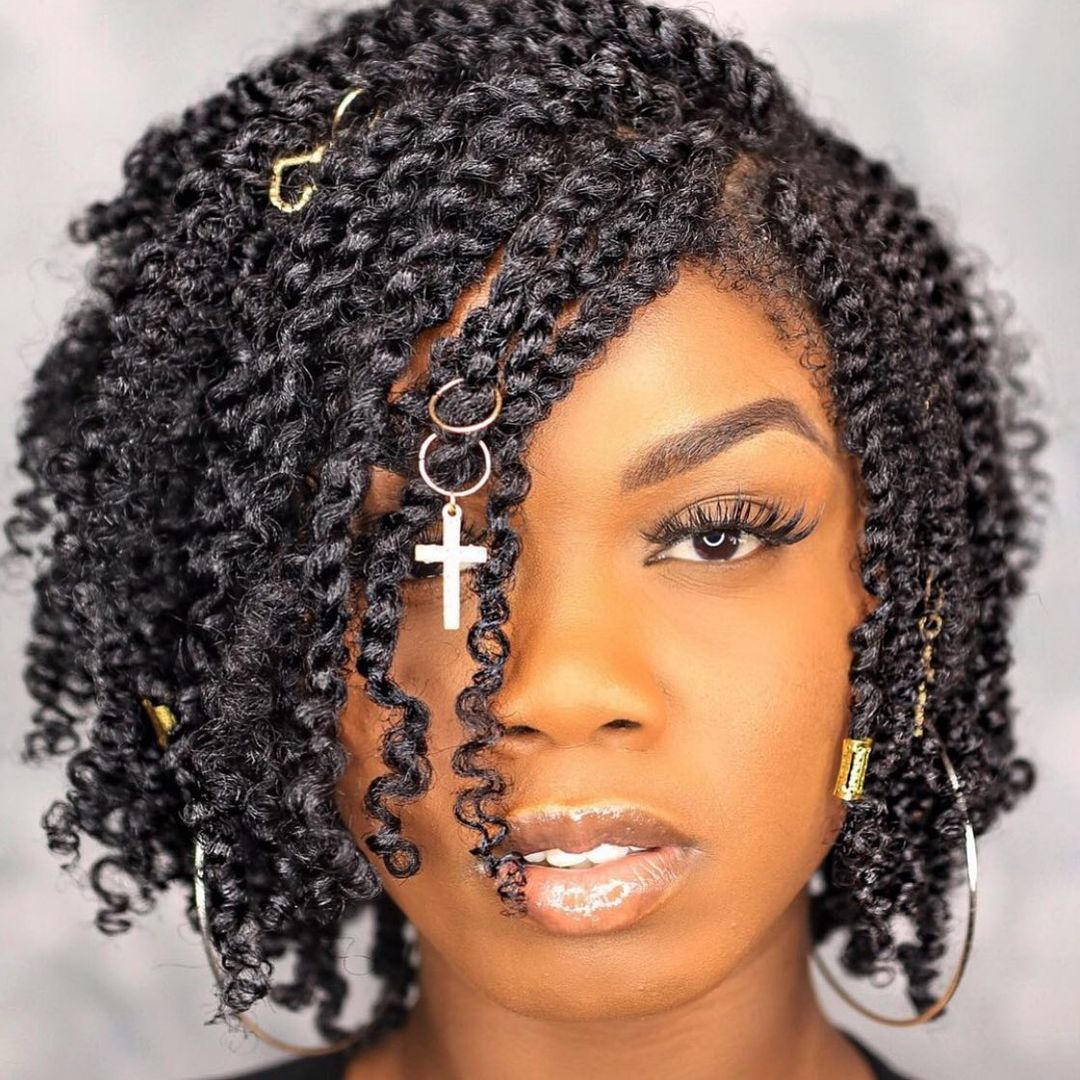
Chin length mini twists with side swept bangs soften the face without adding bulk. The fine, curly texture here gives the twists a lighter feel, and the bangs break up what could otherwise be a solid curtain of hair. Decorative rings and charms threaded onto individual twists add personality without extra styling effort. Ask your stylist for: chin length mini twists, side swept bangs, with accessories. To keep the accessories in place, secure each ring with a dab of hairspray before sliding it on.
Collarbone Twists With Silver Highlights
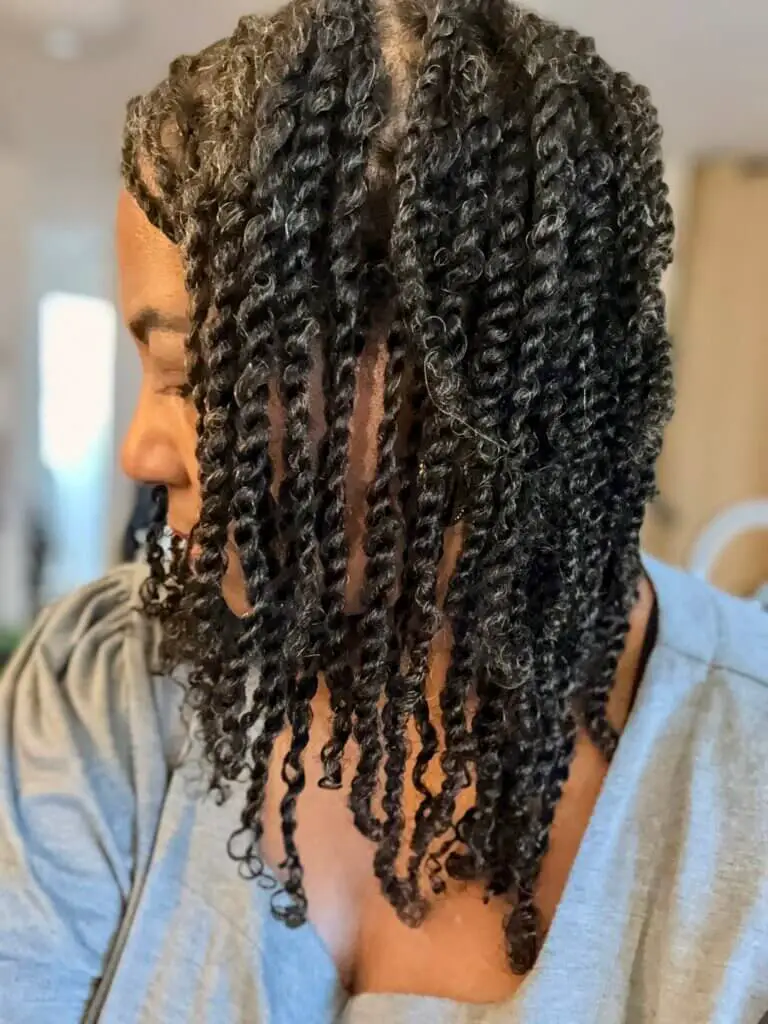
Dark gray two-strand twists with subtle silver highlights offer a sophisticated alternative to solid black. The fine, wavy texture takes the color well, and the collarbone length keeps the style from feeling heavy. Unlike a full silver dye, the highlights here are spaced sparingly, so the grow-out is less demanding. Ask your colorist for: collarbone length two-strand twists with silver highlights. A color-depositing conditioner every second wash prevents the silver from turning brassy, and root touch-ups can stretch to six or eight weeks.
Collarbone Twists With Defined Curly Ends
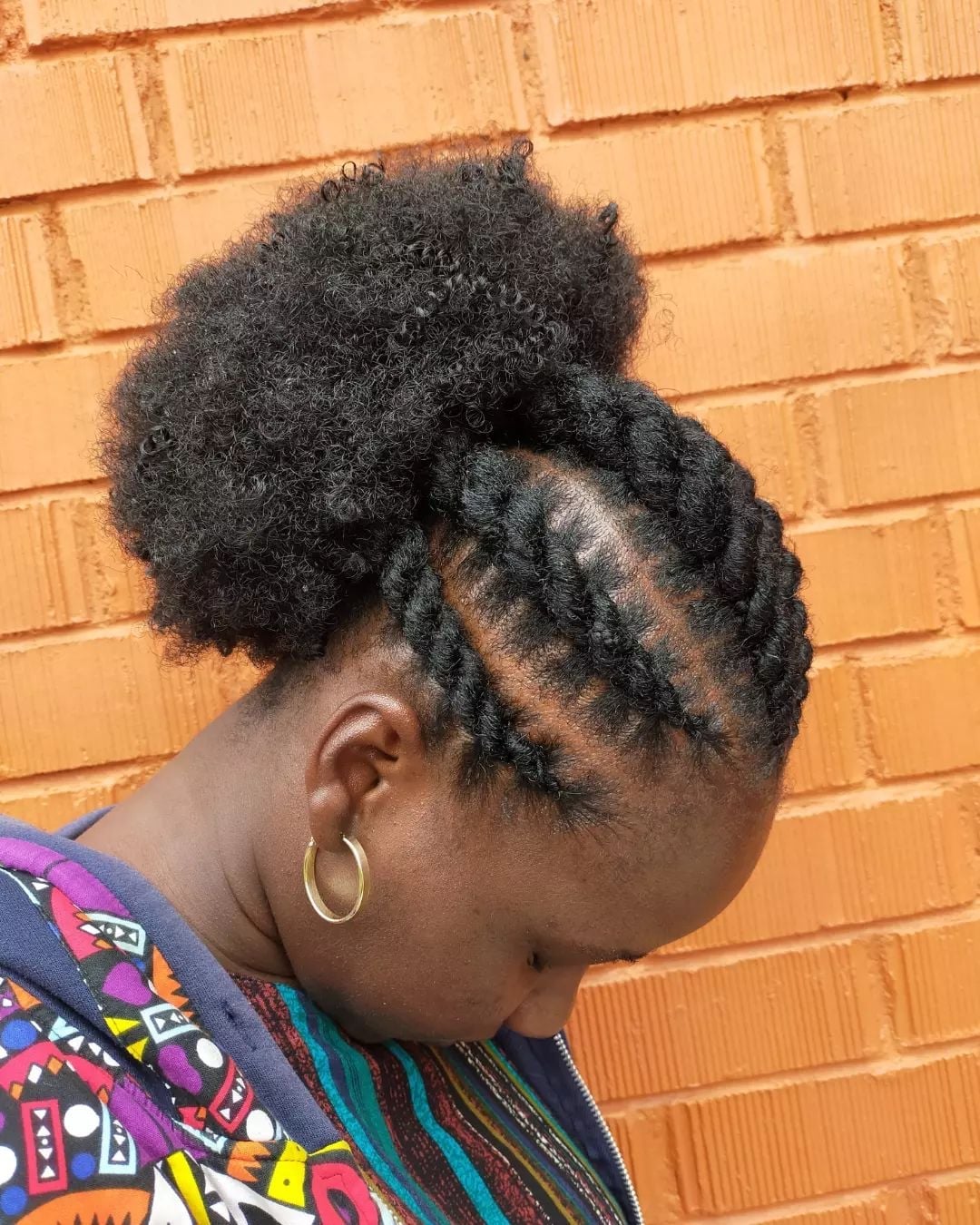
Two-strand twists at collarbone length gain extra polish when the ends are set into defined curls. The black base with subtle brown undertones keeps the texture readable rather than flat. Ask your stylist for: collarbone length two-strand twists with defined curly ends. A curl-enhancing cream applied to the ends before twisting locks in the shape, while the middle part keeps the pattern symmetrical. Re-twisting the roots every 6 to 8 weeks maintains the lift at the crown.
Shoulder Length Short Twists With Volume
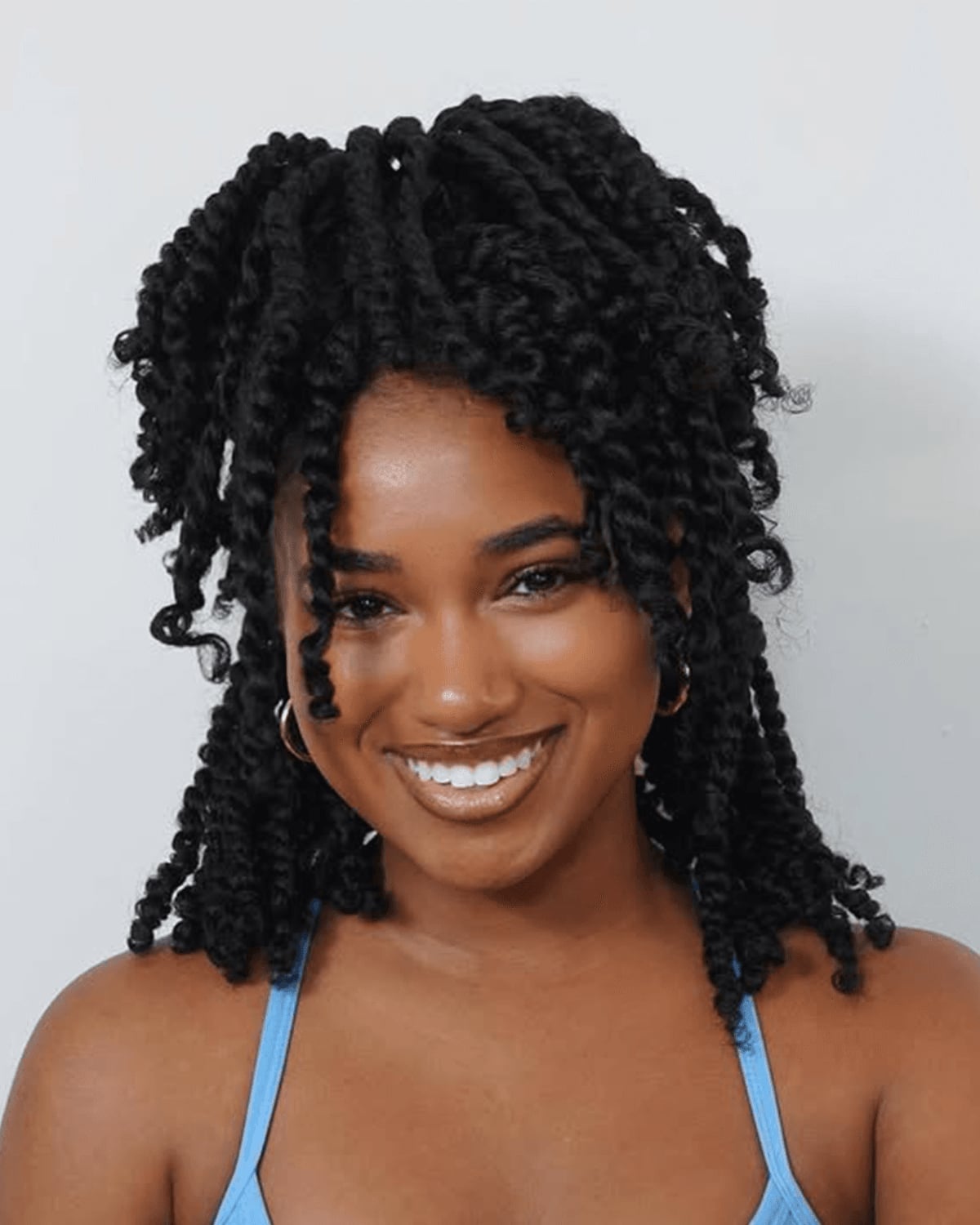
Short twists at shoulder length work best when the volume comes from the texture itself. The curly structure here creates a full silhouette without added bulk at the roots. Ask your stylist for: shoulder length short twists with natural volume. A diffuser on low heat refreshes the body between washes, and a middle part keeps the shape balanced. This density suits medium to thick hair types best. Re-twist the roots every 4 to 6 weeks to keep the lift consistent.
Flat Twists Swept To One Side
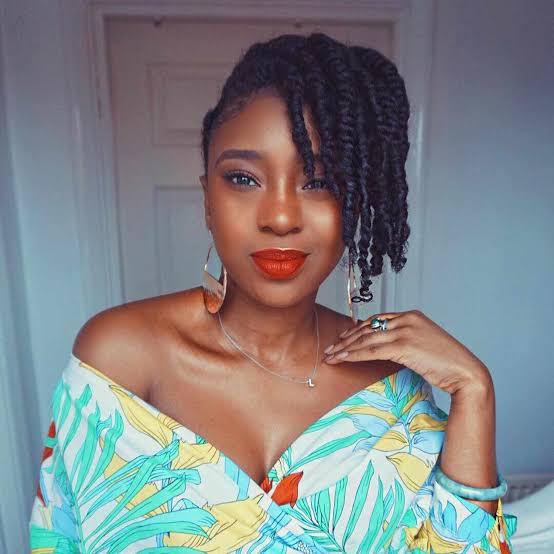
Flat twists pulled to one side are not a set-it-and-forget-it style. The dramatic side sweep needs a strong hold gel at the roots and pins at the nape to stay put through the day. Ask your stylist for: shoulder length flat twists swept to one side with side-swept fringe. The coily, thick texture holds the asymmetrical shape well, and the side-swept bangs soften the angular jaw. A touch of edge control along the hairline keeps everything sleek until you take it down.
Dense Micro Twists With Gradient Color
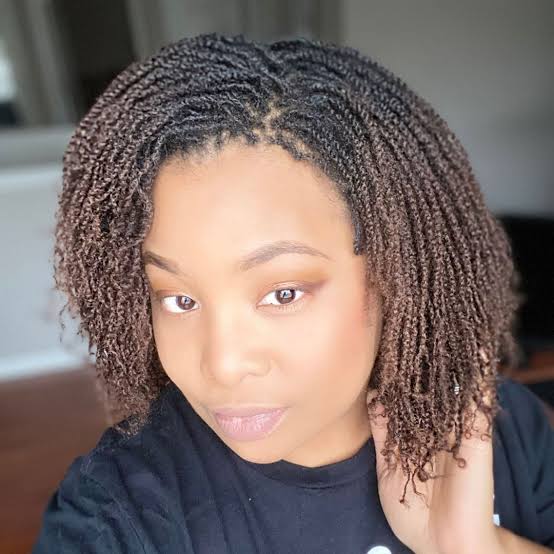
Dense micro twists gain depth when the color shifts from dark brown at the roots to lighter brown at the ends. The gradient technique here uses a subtle ombre, not a hard line. Ask your colorist for: shoulder length dense micro twists with dark to light brown gradient. A middle part and shorter twists around the face keep the look deliberate. Use a hydrating spray to prevent dryness in the finer sections. Re-twist the roots every 4 to 6 weeks to maintain the density.
Shoulder Length Flat Twists With Curled Ends
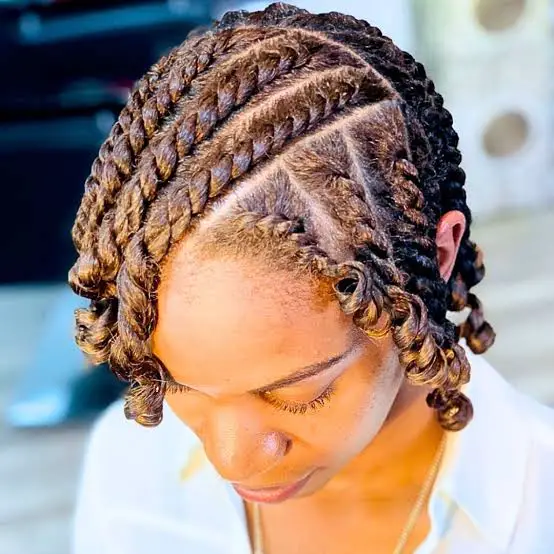
How do you get flat twists with curled ends and a geometric parting to look this polished? The key is the sectioning. Ask your stylist for: shoulder length flat twists with curled ends and blonde highlights. The dark brown base with blonde streaks adds contrast to the wavy texture, and the curled ends prevent the style from looking too severe. A curl-defining cream on the ends before twisting locks in the shape. Re-twist the roots every 6 to 8 weeks to keep the part lines crisp.
Shoulder Length Twists With Caramel Highlights
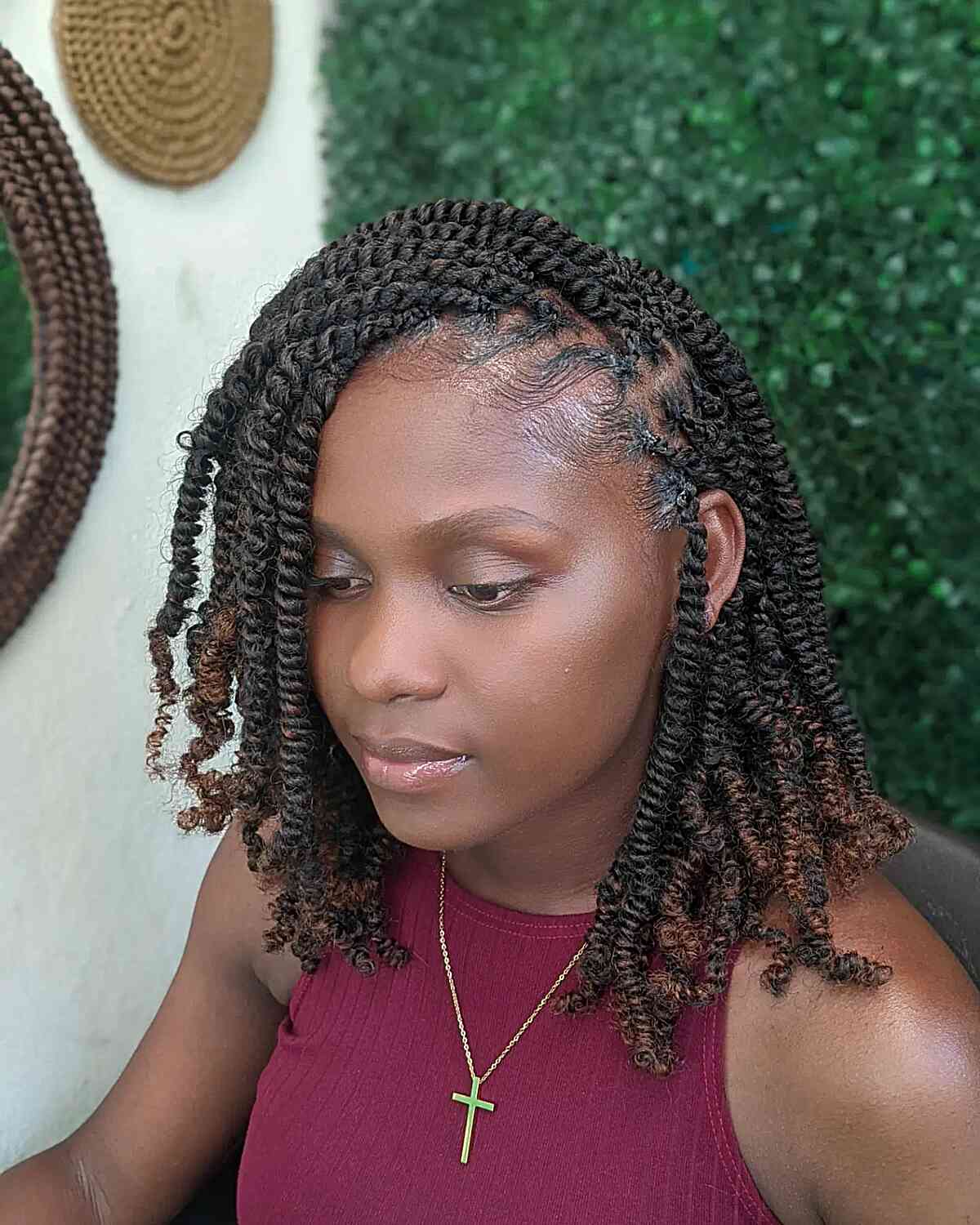
The side view shows off how defined each twist is, especially where the curly ends curl up. A wavy two-strand twist at shoulder length can appear neat or casual depending on the finish. Here, the caramel highlights against dark brown add warmth without competing with the texture. Ask your colorist for: caramel highlights on dark brown two-strand twists. The defined ends mean the eye lands on the curl pattern, not the color placement. Fine-haired friends, note that a dense twist pattern like this one holds better than looser waves, which can lose shape by midday. A side parting keeps the volume balanced and avoids piling at the crown.
Shoulder Length Coily Twists
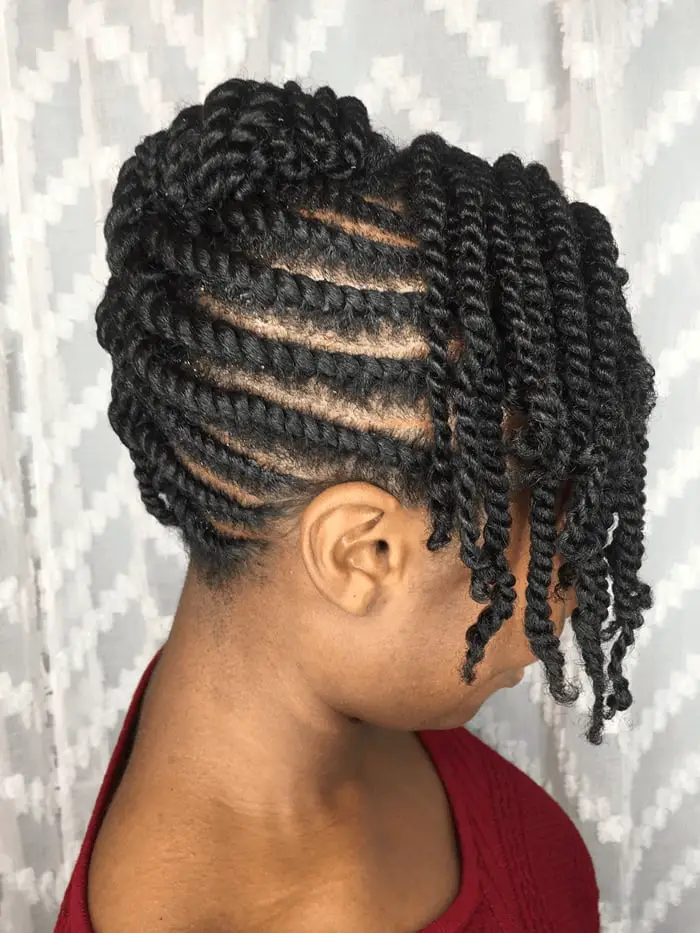
Neatly sectioned coily twists at shoulder length work best when the hair is thick enough to fill each twist without gaps. The even partings create a grid that makes the style look deliberate, not hurried. Ask your stylist for: shoulder length coily two-strand twists with a middle part. This texture holds its shape for weeks with minimal fuss, which is the point. If your hair is fine or low-density, the sections will look sparse; a smaller twist count and slightly larger parts give a fuller appearance. The side view here confirms that the weight of coily hair falls better when the twists end above the collarbone, avoiding that heavy drag.
Shoulder Length Twisted Updo Bun
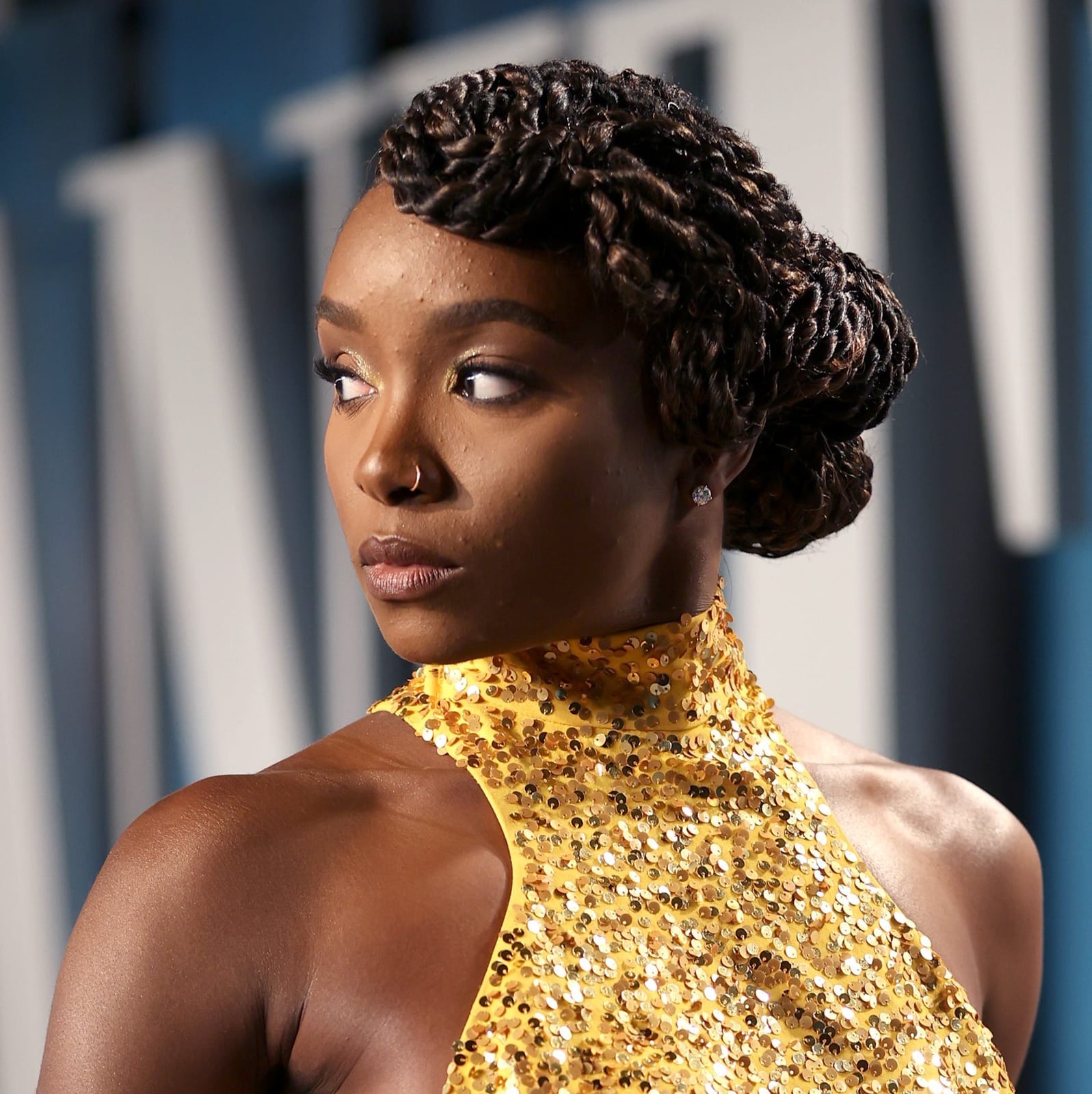
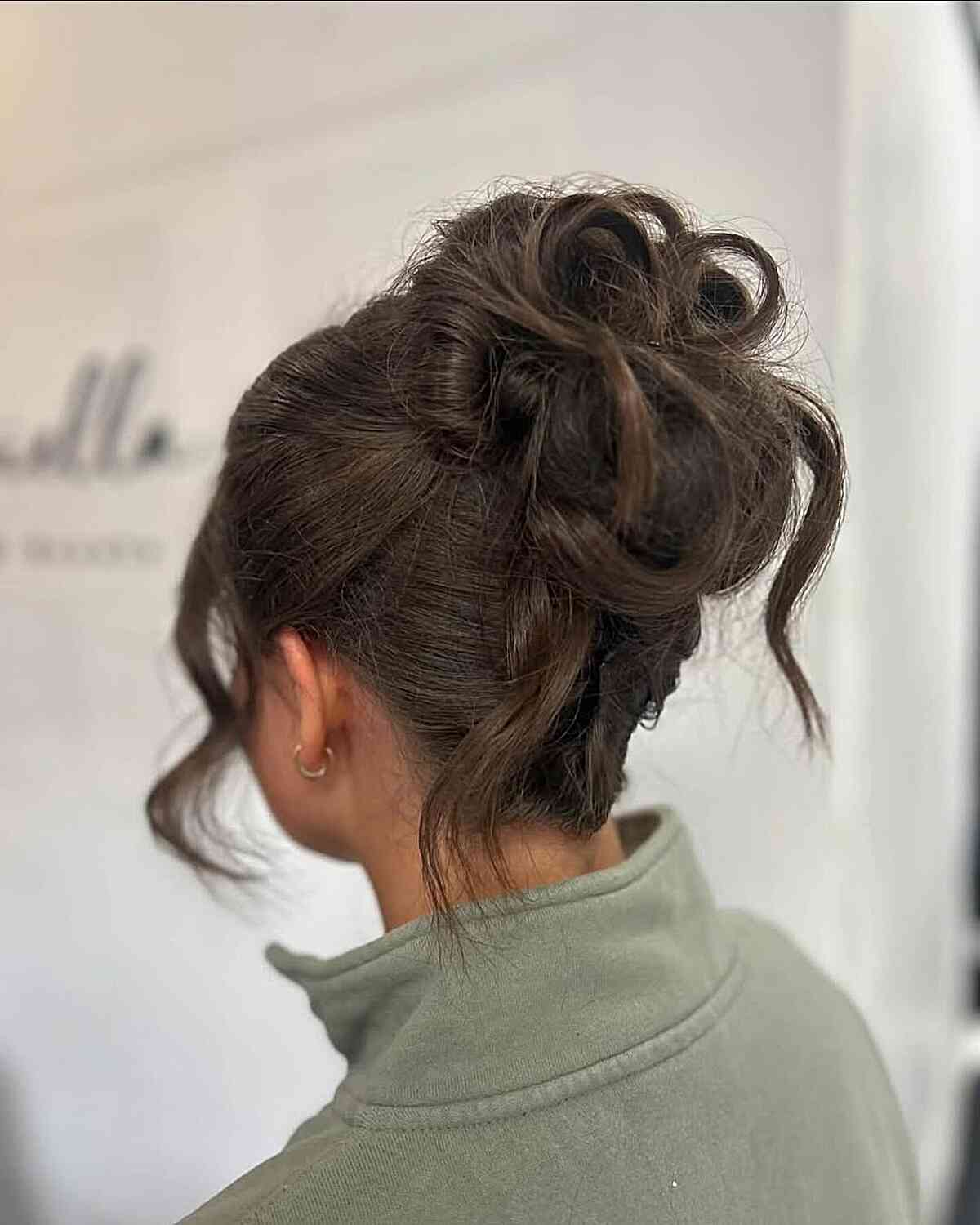
A twisted bun at the crown from shoulder-length wavy hair looks polished because the length is just enough to wrap without a donut or clip. The middle parting keeps the front sleek while the bun adds volume at the top. Ask your stylist for: a twisted updo bun with a middle part. To keep it from slipping, the twists need to be tight enough at the root to anchor the bun. A light-hold hairspray after styling will catch any wispy ends that escaped the twist. This is a style that holds all evening, though the front may need a quick pin check after a few hours.
Playful Double Buns With Short Curly Twists, Close-Up Take
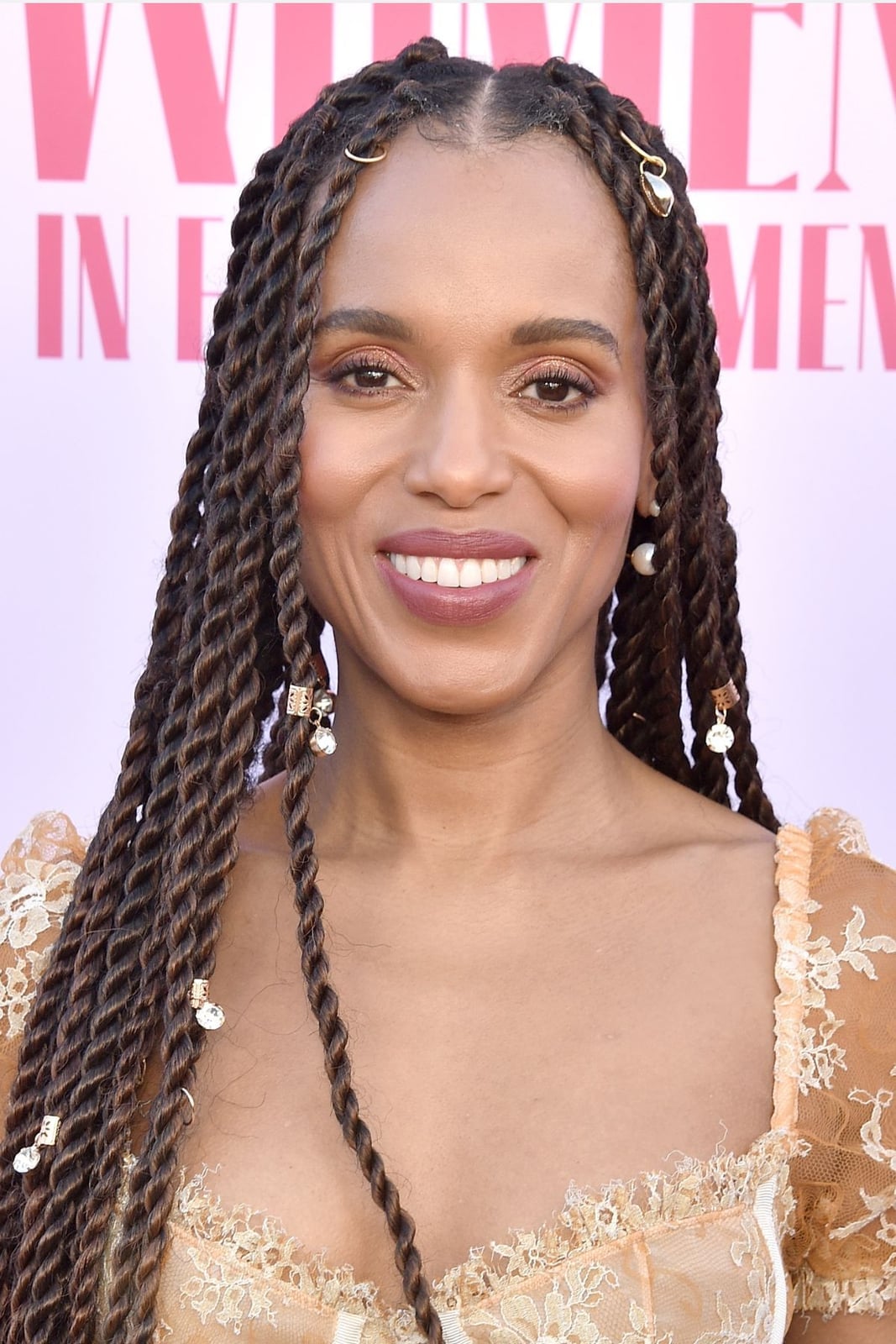
Long twists with accessories read differently than plain ones. Here, small charms and beads are spaced through mid-back twists, breaking up the length without adding weight. The middle parting keeps the accessories centered rather than lost on one side. Ask your stylist for: mid-back two-strand twists with small decorative beads. To get the spacing right, have the stylist place each bead during the twist, not after. A few steps to consider: section the hair into even parts, twist each section from root to end, slide the bead onto the twist before sealing the end. The wavy texture here helps the beads catch light, which is the whole trick.
Mid-Back Twists With Blonde Balayage
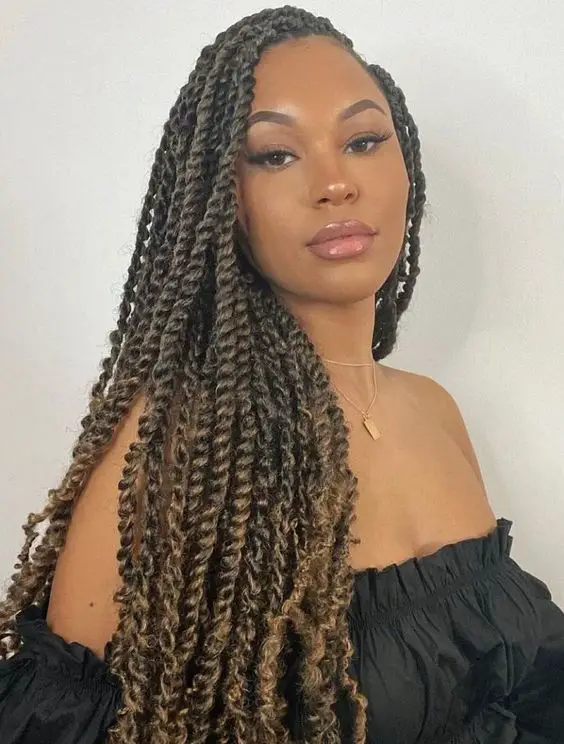
To get a balayage effect on twists, the trick is in the base. Here, the dark brown roots fade into blonde through the ends, so the lighter pieces sit on the twist surface, not buried underneath. Ask your colorist for: a dark brown base with a blonde balayage on two-strand twists. The wavy texture helps the blonde show as dimension, not stripes. Thick hair carries this technique best because the twists stay full enough to show the color shift. A middle part shows the symmetry of the color placement, which is why the front view works better than a side part for this one.
Mid-Back Twists With Gray Purple Ombre
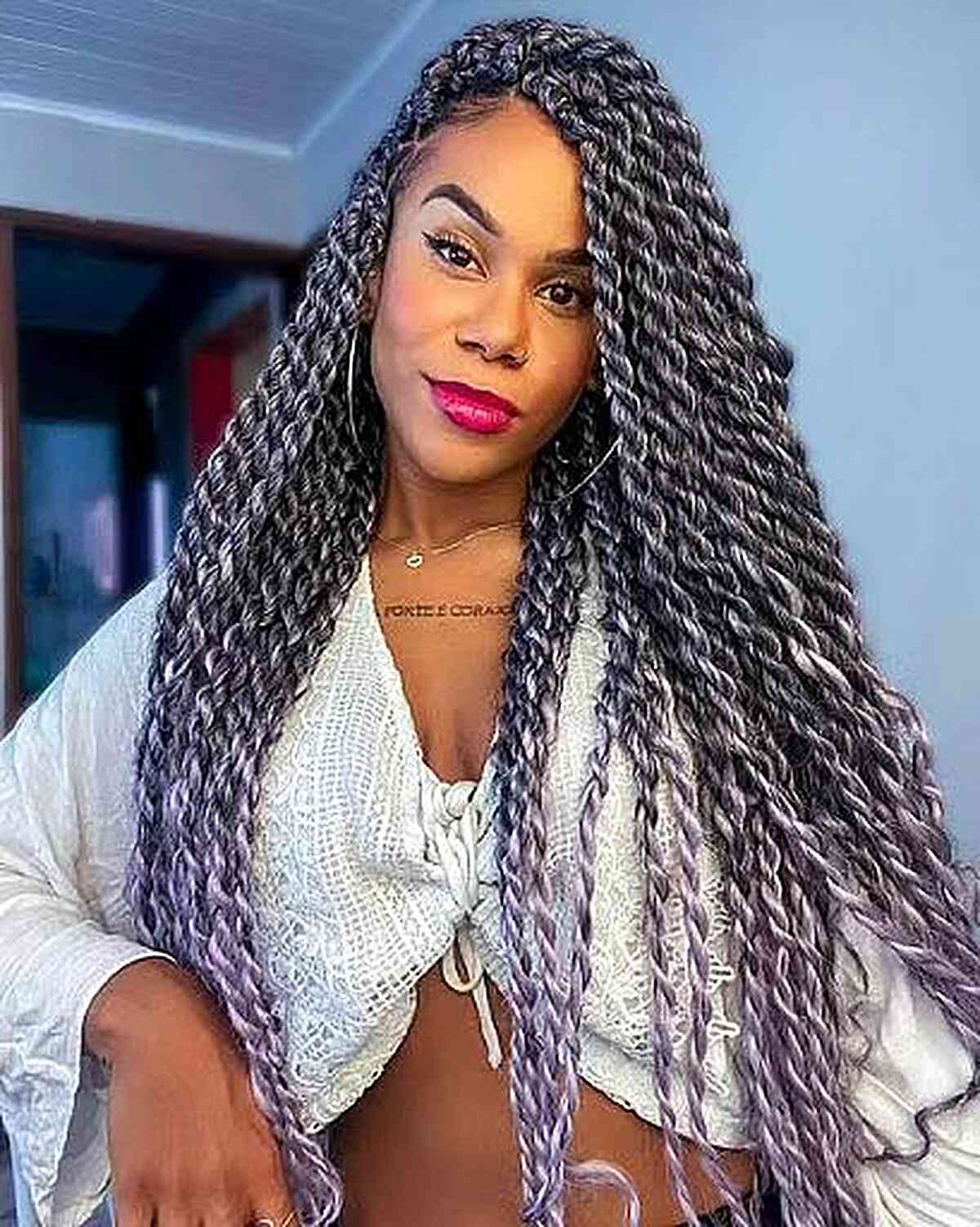
These mid-back twists skip the solid-color route entirely. The dark base fades into a cool gray, then shifts to subtle purple near the ends, creating a gradient that looks intentional. Wavy hair at mid-back length handles this ombre well, since the texture catches the color shift at every angle. Ask your stylist for: mid-back length twists with gray and purple ombre. The transition works best on a middle part that lets both sides mirror each other. A color-depositing mask keeps the purple from washing out too fast, and re-twisting the roots every six to eight weeks maintains the line.
Mid-Back Passion Twists With Brown Highlights
These passion twists hit mid-back length with a side parting and a black base that gets broken up by subtle brown highlights. The wavy, thick texture gives them that full, flowing weight that moves when you turn your head. This style suits anyone with thick wavy hair at mid-back length who wants a protective style that still has movement. Thinner hair may struggle to support the volume, so know your density before you book. Ask your stylist for: mid-back length passion twists with subtle brown highlights. The side parting helps the highlights catch light unevenly, which is exactly the point. Hydration keeps the twists smooth and prevents frizz at the roots. Re-twist every six to eight weeks to maintain the look.
Mid-Back Twists With Decorative Accessories
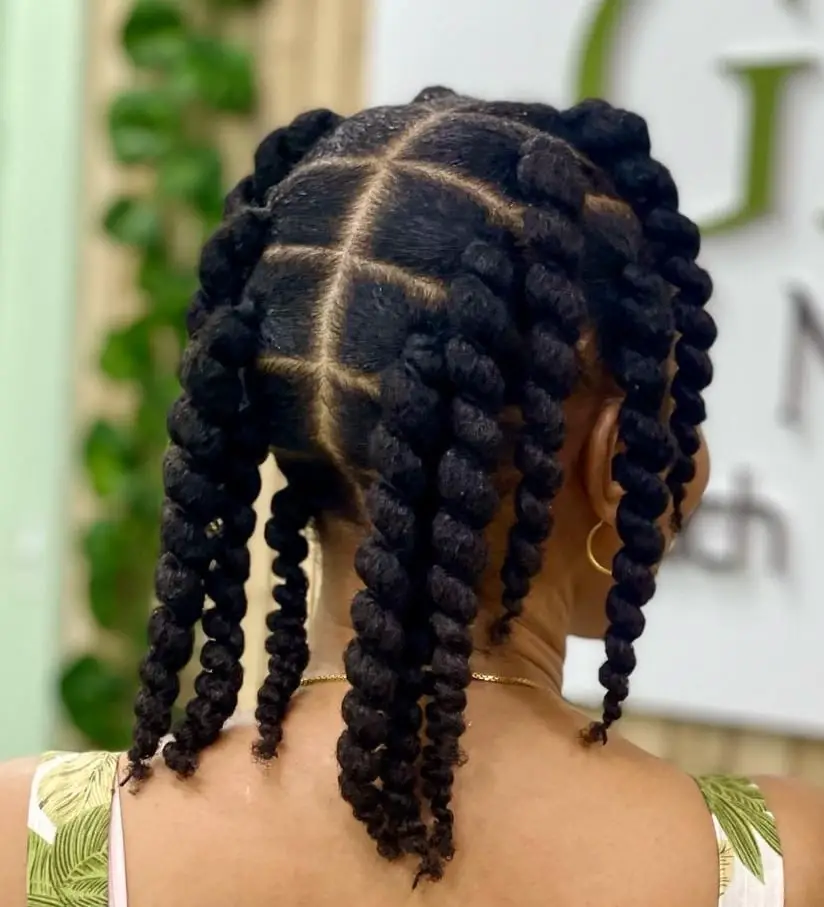
These large twists run to mid-back with a clean middle part and dark brown color, but the real story is the charms and beads threaded through them. The accessories add weight, which changes how the twists hang. That means the style wears differently than plain twists. The charms can pull on the roots if they are too heavy, so ask for lightweight pieces that are securely attached to avoid snagging. Ask your stylist for: mid-back length twists with charms and beads. Remove the accessories gently before sleeping to keep the twists from getting pulled loose. The wavy texture holds the beads in place better than straight hair would, so the coils help anchor each piece.
Mid-Back Large Coily Twists
These large coily twists reach mid-back with a middle part and a uniform thickness that gives the whole style a scaled, deliberate look. The coily texture grips the twists so they hold their shape without slipping. Thick, coily hair at mid-back length is the ideal candidate for this style, since the density makes each twist feel substantial. Ask your stylist for: mid-back length large coily twists. A moisturizing balm applied to the scalp and the twists themselves prevents dryness, and re-twisting the roots every four to six weeks keeps the definition sharp. The middle part lets the volume fall evenly on both sides.
Mid-Back Braided Twists With Loose Ends
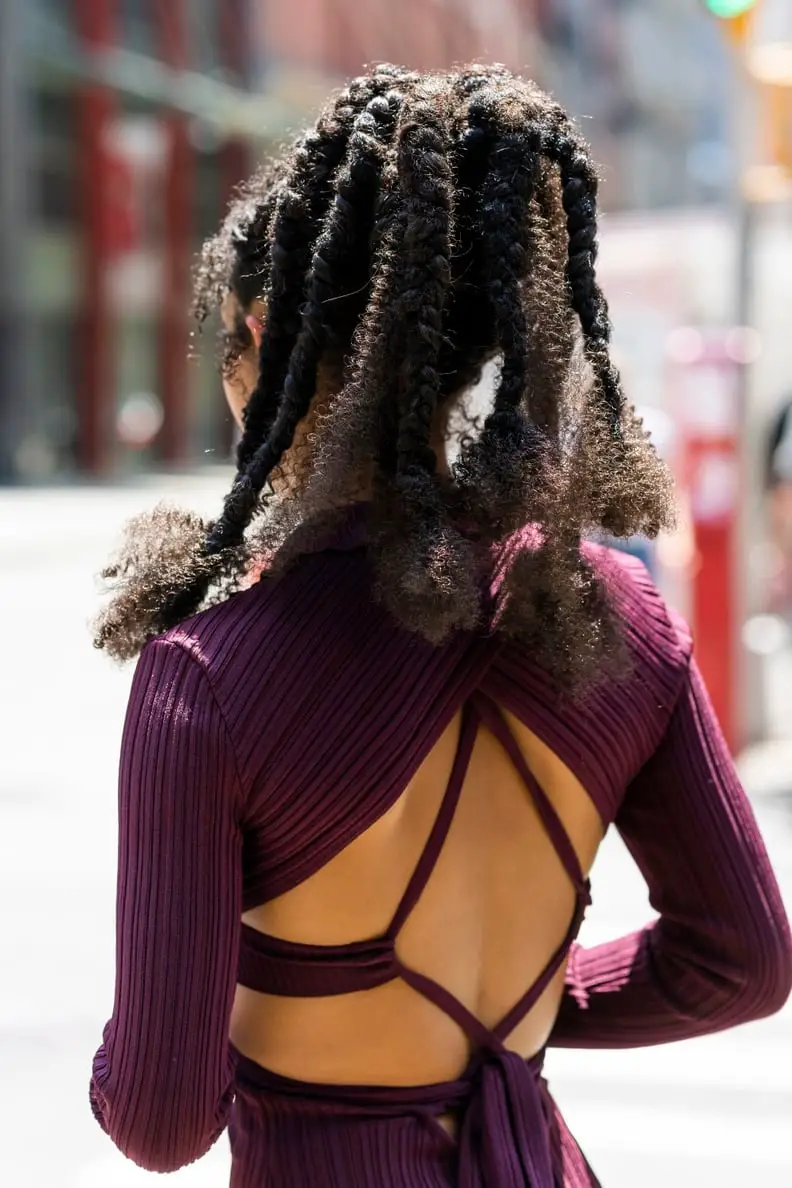
How do you get the security of a braid without losing the texture of a twist? These mid-back braided twists answer that question. The top portion is braided for hold, while the ends are left loose and curly for movement. The curly texture at the ends gives the style a softer finish than a fully braided look would. Natural hair at mid-back length that wants both structure and softness should ask for this hybrid. Ask your stylist for: mid-back length braided twists with loose ends. A curl refresher sprayed on the ends keeps them defined between washes. Re-twist the roots every six to eight weeks to maintain the shape.
Flat Twists In A Heart Shape
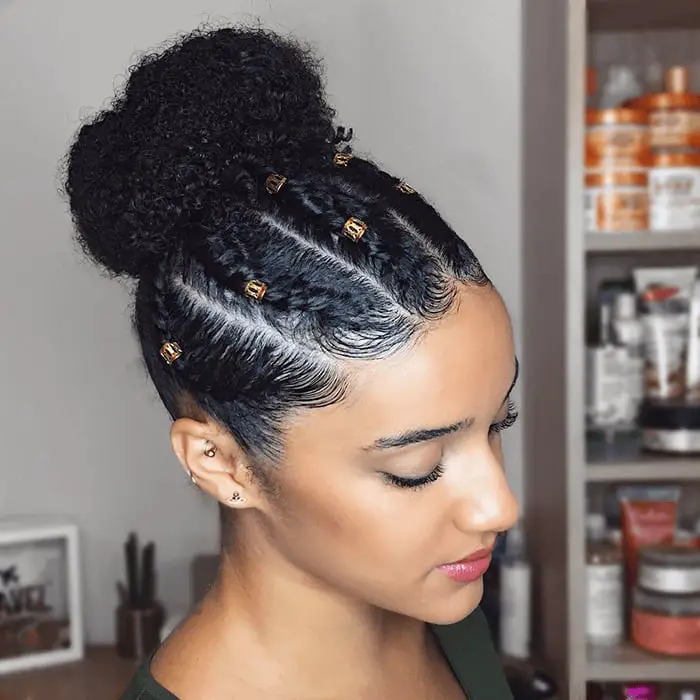
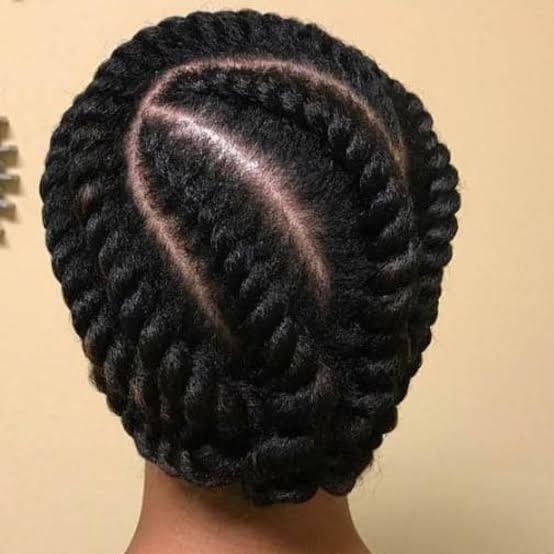
A large twisted bun at the back shifts the whole mood toward playful. The middle parting and coily texture are the canvas for that pattern, and the gold beads threaded through the twists add a decorative finish. Ask your stylist for: flat twists styled in a heart shape with a large bun. This design favors coily hair types who want a style that communicates a specific shape or symbol. A strong hold gel defines the pattern during installation, and even tension on each twist keeps the heart symmetrical. The precision of the heart shape is hard to replicate at home, so this is a salon-only look.
Updo With Twisted Bun And Gold Beads
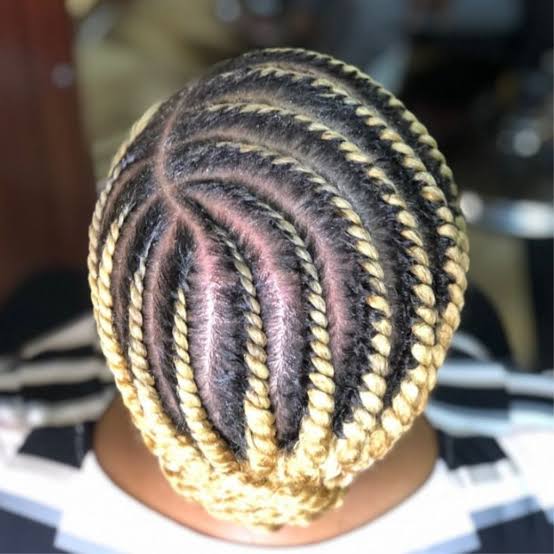
A diagonal parting cuts across the scalp, and the flat twists follow that line toward a large twisted bun. The gold beads sit in the twists, not at the ends, which keeps the focus on the coily texture. Ask your stylist for: diagonal flat twists with gold beads and a twisted updo. This is a look for coily hair types who want an updo that looks polished without a slick, stretched finish. The beads need to be secured firmly against the twist to avoid shifting, and a lightweight hairspray at the surface controls flyaways without weighing down the volume.
Diagonal Flat Twists With Gold Beads
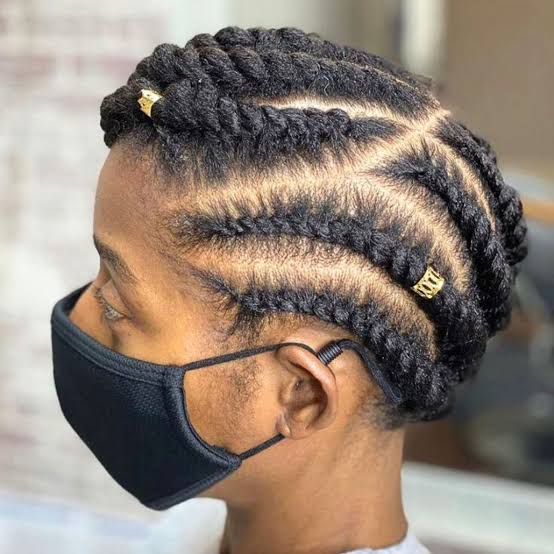
The diagonal line of the twists creates a clear visual path from the front hairline toward the back, and the gold beads punctuate that line at regular intervals. The coily texture is visible between the beads, which keeps the style from reading as purely decorative. The hair itself still does the work. Ask your stylist for: diagonal flat twists with gold beads. This style suits coily hair types who want a polished, symmetrical look with a single decorative element rather than multiple accents. The installation takes time because each bead must be threaded onto a twist and secured so it does not slide. Plan for two to three hours in the chair. At home, the upkeep is straightforward: avoid sleeping directly on the beads to prevent tension at the root, and re-twist the roots every four to six weeks to maintain the clean parting line. A satin scarf at night reduces friction on both the twists and the beads.
Diagonal Flat Twists With Gold Beads and Twisted Updo
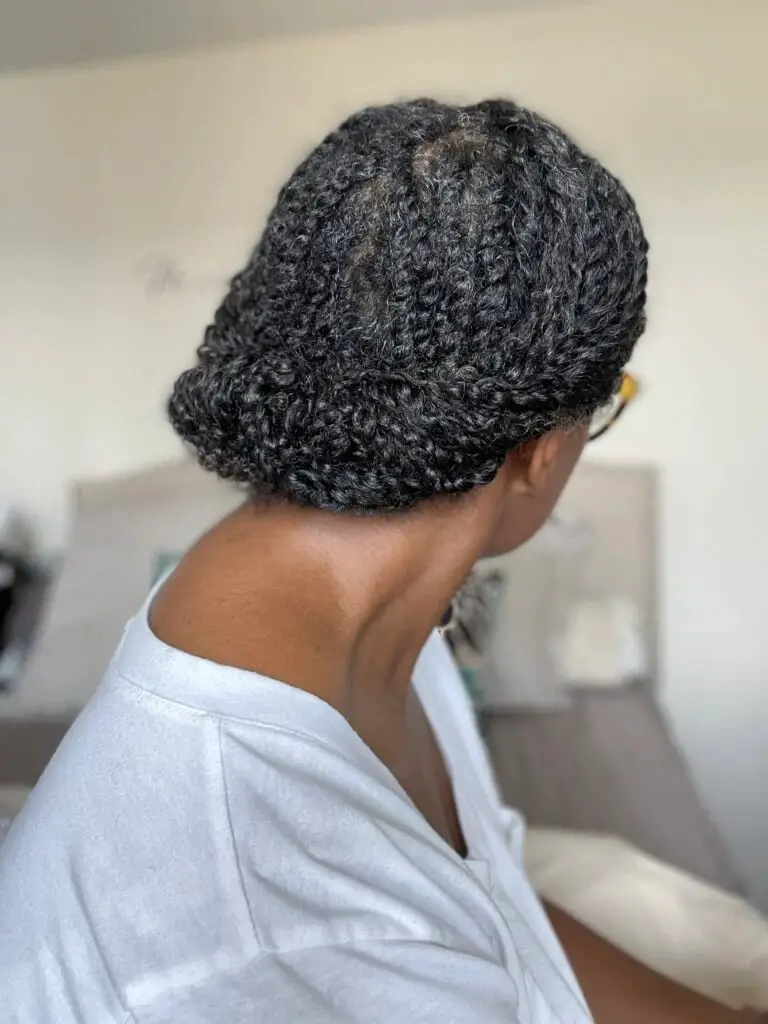
From the back, the updo shows how chin-length, fine, curly hair can be gathered into a twisted shape that holds its structure without pins slipping. The middle parting keeps the volume distributed evenly, and the black base color lets the twist pattern read clearly. Ask your stylist for: diagonal flat twists with gold beads swept into a twisted updo. This is a salon look; the fine texture needs precise sectioning and even tension to keep the twists from loosening at the ends. A stylist can also place the beads so they sit flush against the twist rather than dangling, which is harder to manage on your own with shorter hair.
Final Thoughts
For shorter styles or fine hair, mini twists or passion twists keep volume without weighing hair down. For longer, thicker hair, two-strand twists or larger passion twists are easier to manage and create more drama.
- Refresh twists with a light mist of water or leave-in conditioner as needed.
- Sleep with a satin bonnet or scarf to preserve twist definition and reduce frizz.
- Deep condition hair every two to four weeks to maintain moisture and elasticity.
- Gently unravel twists to avoid breakage, ensuring hair is moisturized beforehand.
- Re-twist or touch up roots every 4-8 weeks, depending on hair growth and desired style longevity.
Twists offer a world of style; find the one that speaks to you.