
I’ve been seeing a shift in winter color choices for olive skin tones. More warmth, less ash. My own fine hair goes flat by 4pm, so I pay attention to which colors add dimension without weighing down. This winter, the palette is richer than I expected.
Here are 14 Winter Hair Colors for Olive Skin that actually work. From low-maintenance root shadows to bold burgundies, there’s something for every density and face shape. I’ve tested a few myself, and my grow-out line at week five taught me which techniques buy you time. These are the ones I’d book again.
Dark Chocolate Brown With Auburn Undertones
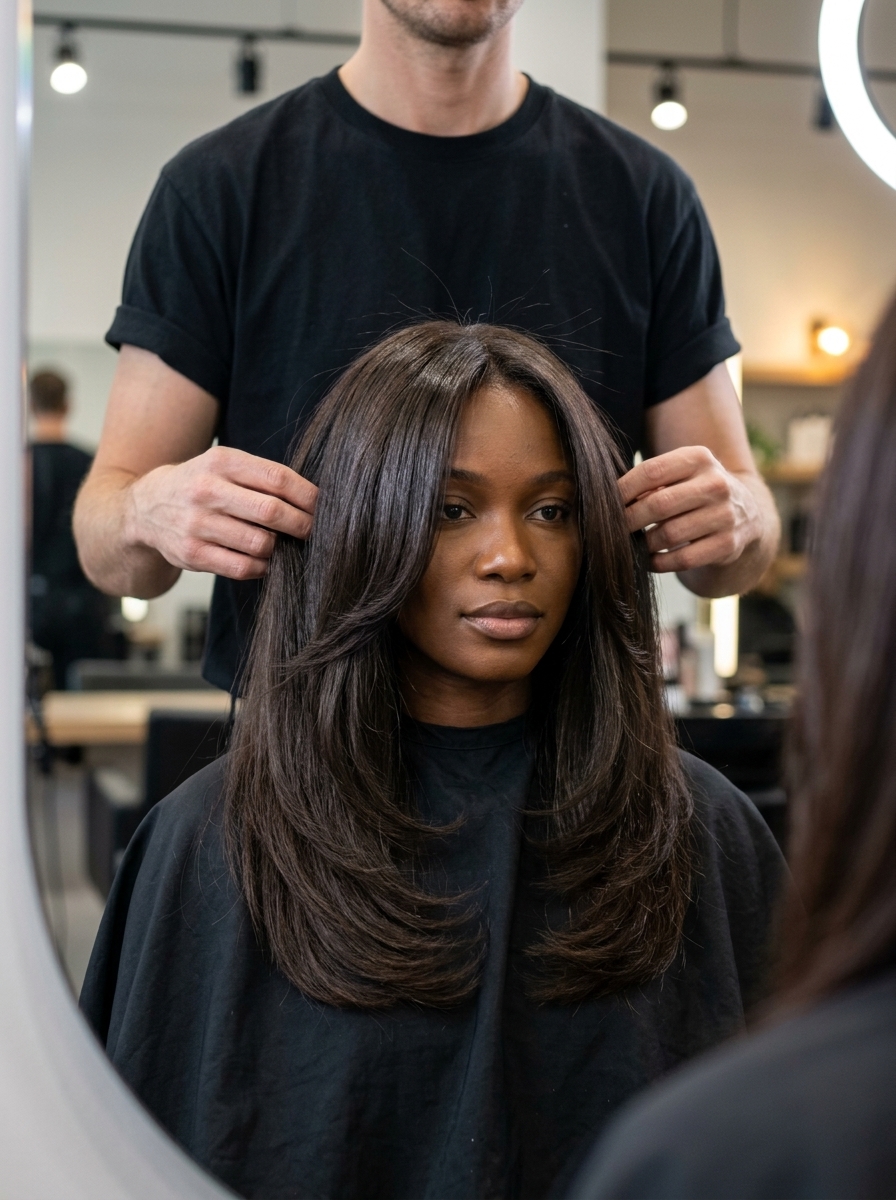
If you’re weighing dark chocolate hair color against a medium brown, take this one. The auburn undertones add warmth without tipping into red, so the shade stays deep but never flat. On olive skin, that mix reads rich rather than muddy, which is harder to pull off than it sounds. The colour sits at mid-back length on straight, thick hair, and the texture keeps the dark shade from looking heavy.
Wear and upkeep are straightforward. Because it’s a single process with subtle warmth, the grow-out is soft with no hard line. You’ll want a trim every eight weeks to keep the ends healthy, and a color-depositing conditioner once a week will keep those auburn notes visible. It’s the kind of colour that looks like you put thought into it without the daily maintenance of a brighter shade.
Warm Chestnut Brown With Golden Undertones
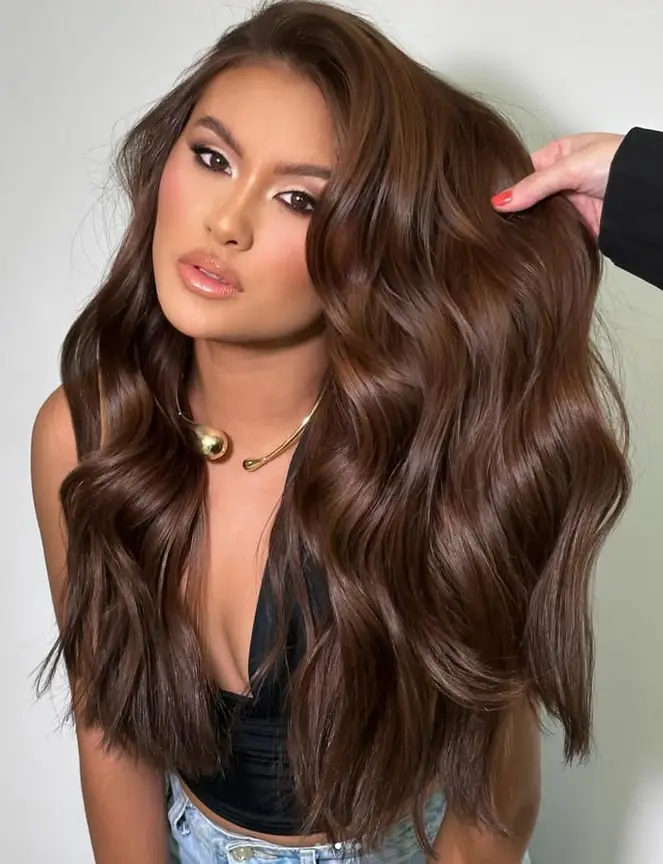
The most common mistake with warm chestnut brown hair is treating it like a one-and-done colour. That rich golden undertones glow lasts about four weeks before the warmth starts pulling orange or, worse, muddy brown. The technique here is an all-over gloss layered over a deep chestnut base, not a single-process dye that fades unevenly. Length hits mid-back, and the texture is naturally thick and wavy, which helps the golden light catch every wave.
To dodge the brassy slide, you need a color-safe shampoo that won’t strip the warmth. Wash in cool water and stretch your washes to every three days. A gloss refresh every six to eight weeks keeps the golden undertones from turning into something you didn’t ask for. The upkeep is moderate, but the payoff is a winter shade that doesn’t go flat by week two.
Ash Blonde Bob With Blunt Bangs
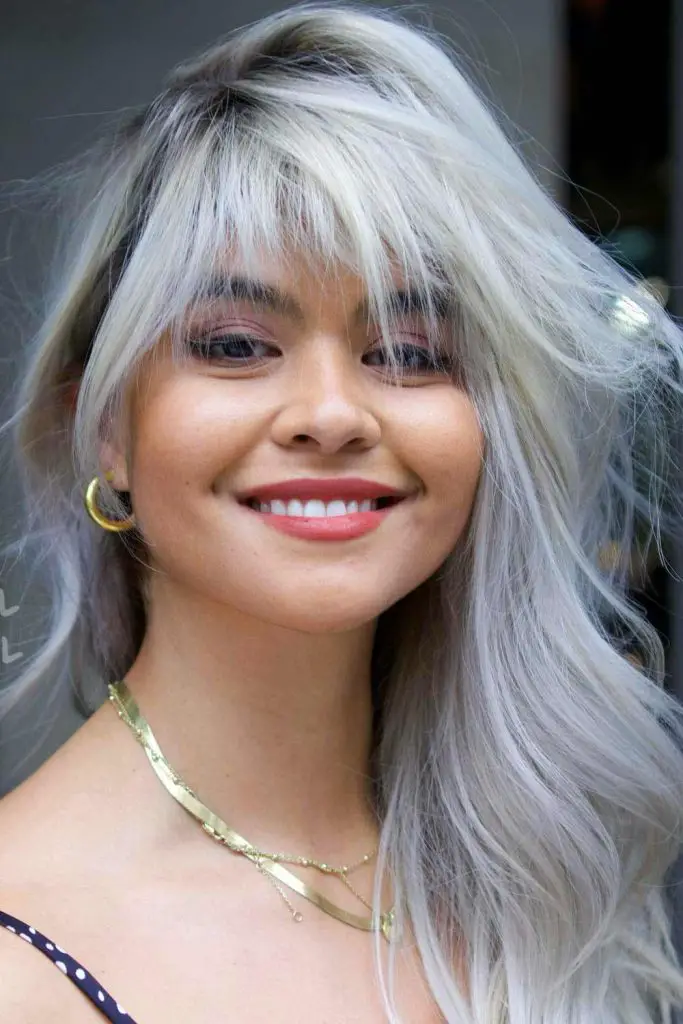
I tried to do this at home once. It was a disaster. An ash blonde bob with blunt bangs requires a salon, period. The colour is a cool, silver-tinged ash blonde, and the technique is a full-head lightener followed by a toner that neutralises every hint of yellow. The tone is icy, not beige. The bob stops at chin length, and the texture is straight and fine, which means every uneven patch shows. Bangs are cut straight across, demanding precision. At home, you’ll get brass, banding, or a chemical cut. Leave this one to the pros — your olive skin will thank you for the clean cool tone.
Deep Plum Lob With Full Bangs
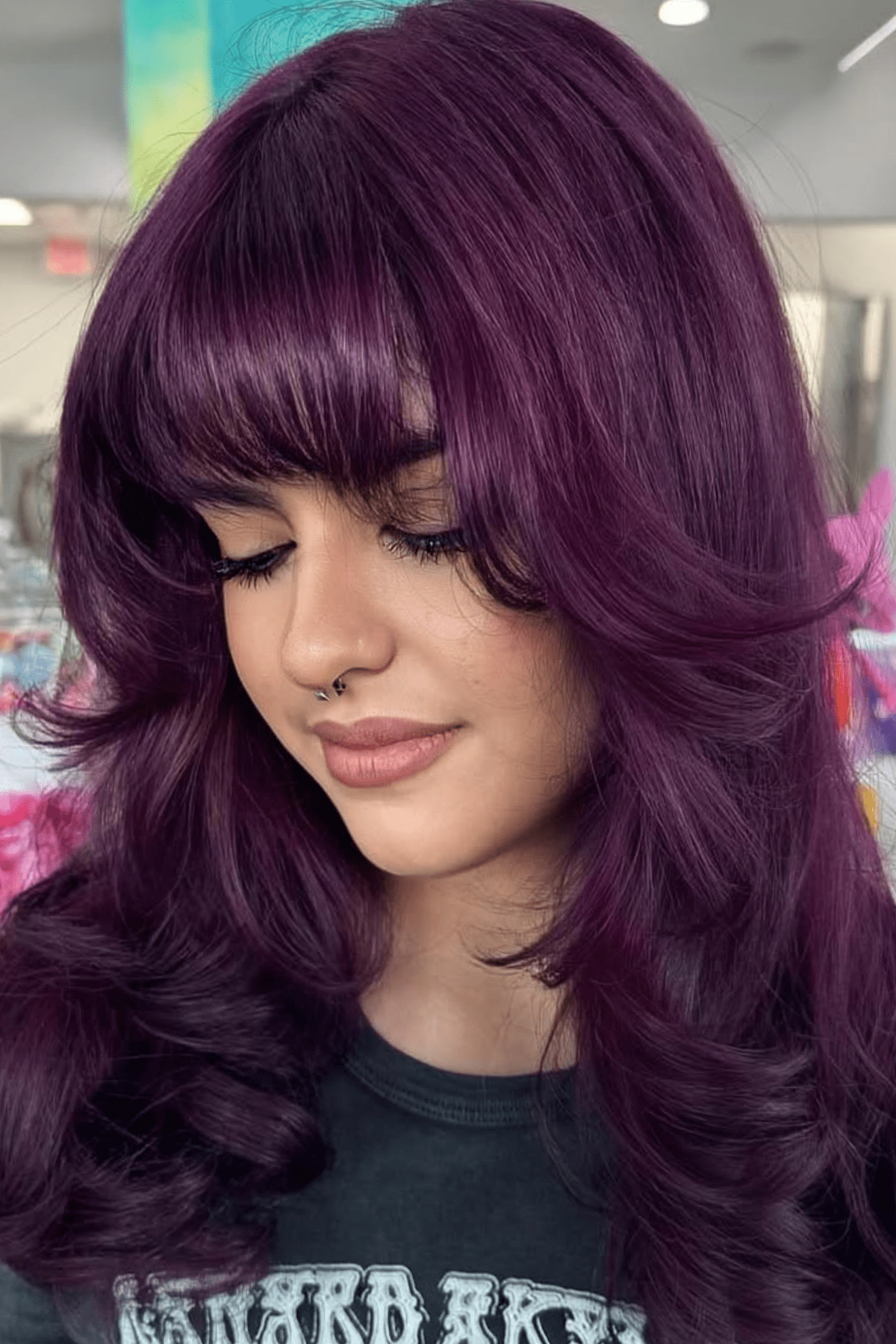
Deep plum hair color on olive skin reads like a jewel, not a bruise. The violet undertones in this shade catch the cool green of your complexion and turn it into contrast. Full bangs were the real surprise: they frame the face without washing it out, which I did not expect from a dark, cool tone. This is a salon-only job, no box color will get this depth. Tell your stylist you want a deep plum all-over color with a violet base, and ask for the bangs to be cut slightly textured so they sweep rather than sit flat. The collarbone length with soft waves keeps the whole thing from feeling heavy.
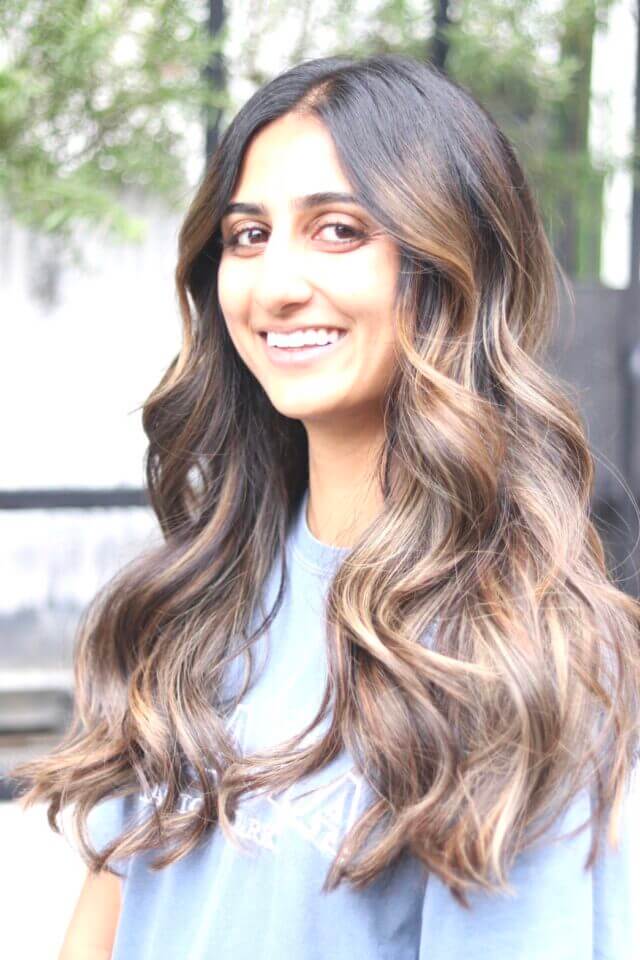
Dark Brown With Caramel Balayage
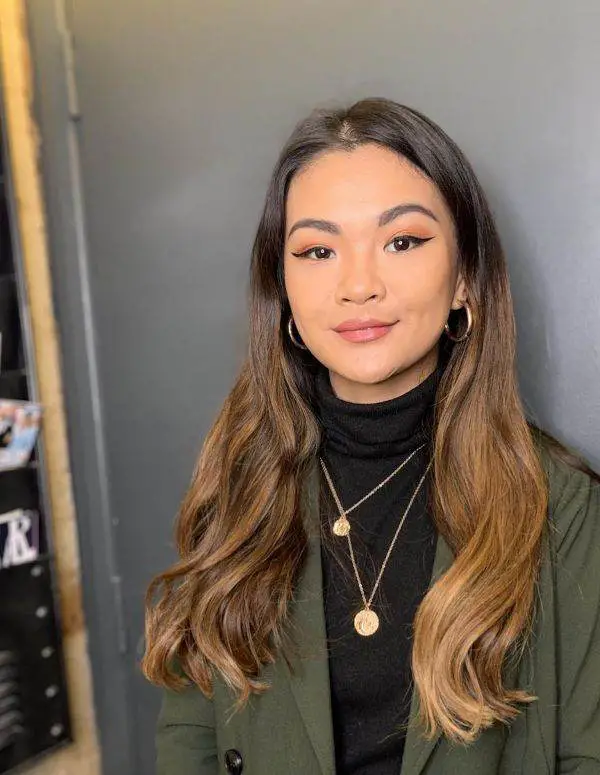
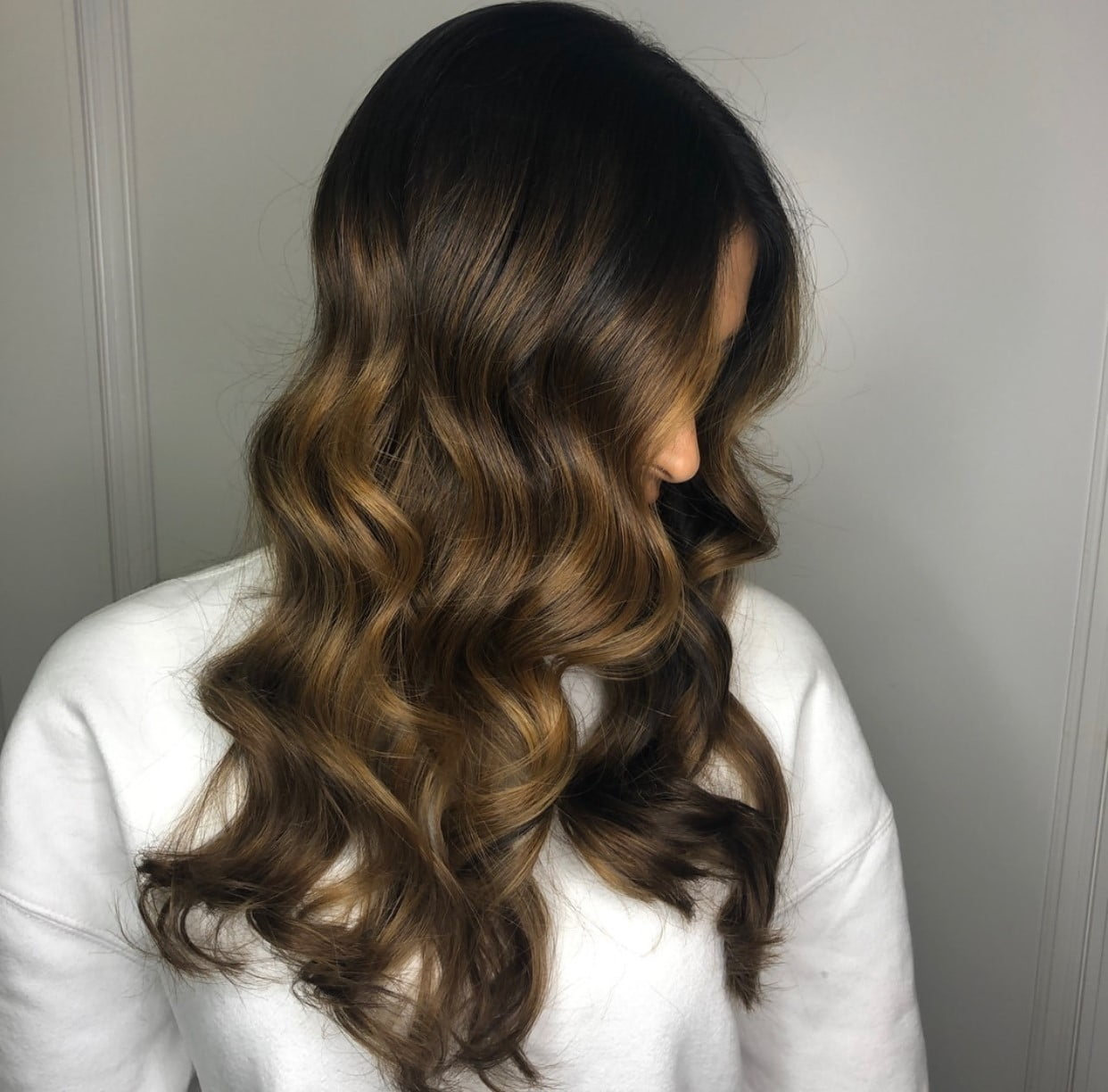
Verdict: caramel balayage on dark hair beats subtle highlights hands down. Where babylights disappear into your base, the caramel slices in this technique create actual dimension. The dark brown base stays rich near the roots, and the caramel pieces wrap around the front pieces, which is what gives olive skin its warmth without going brassy.
The honest downside? That contrast means your regrowth shows faster than a single-process color, especially if your natural is much darker than the caramel. Plan on a tone refresh around week six if the gold starts pulling orange. The mid-back length and loose waves help hide the line, but the grow-out is real. Not a set-it-and-forget-it color.
Caramel Chestnut Brown Lob
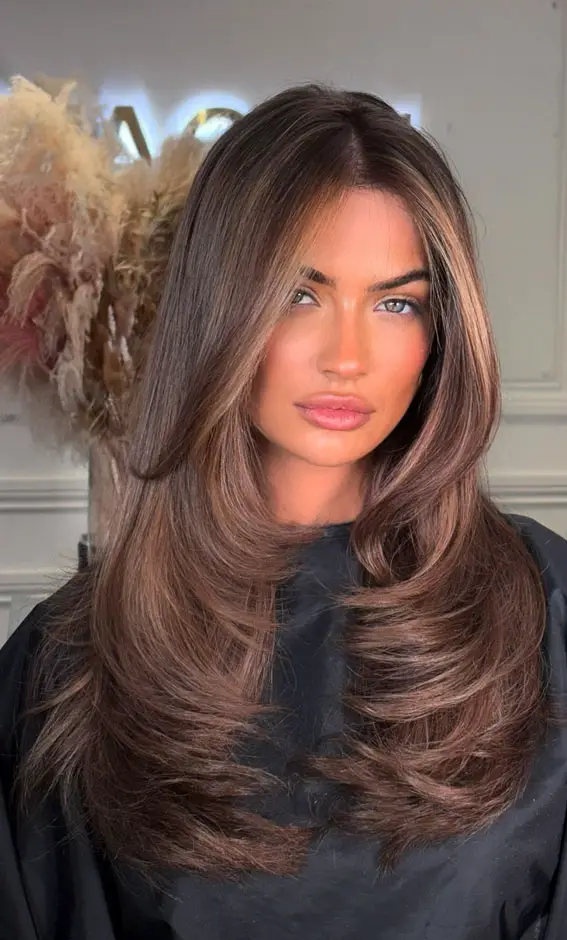
I admit, I underestimated how quickly a caramel chestnut brown hair color adapts to olive skin. The caramelized tone stays warm without drifting orange, and the layered lob with thick waves holds the dimension across a full work week. Wash day is day one, day three still looks intentional. The lob needs a trim every eight weeks to keep the shape from collapsing, and a color-safe shampoo extends the life by two solid weeks.
Dark Auburn With Warm Red Undertones
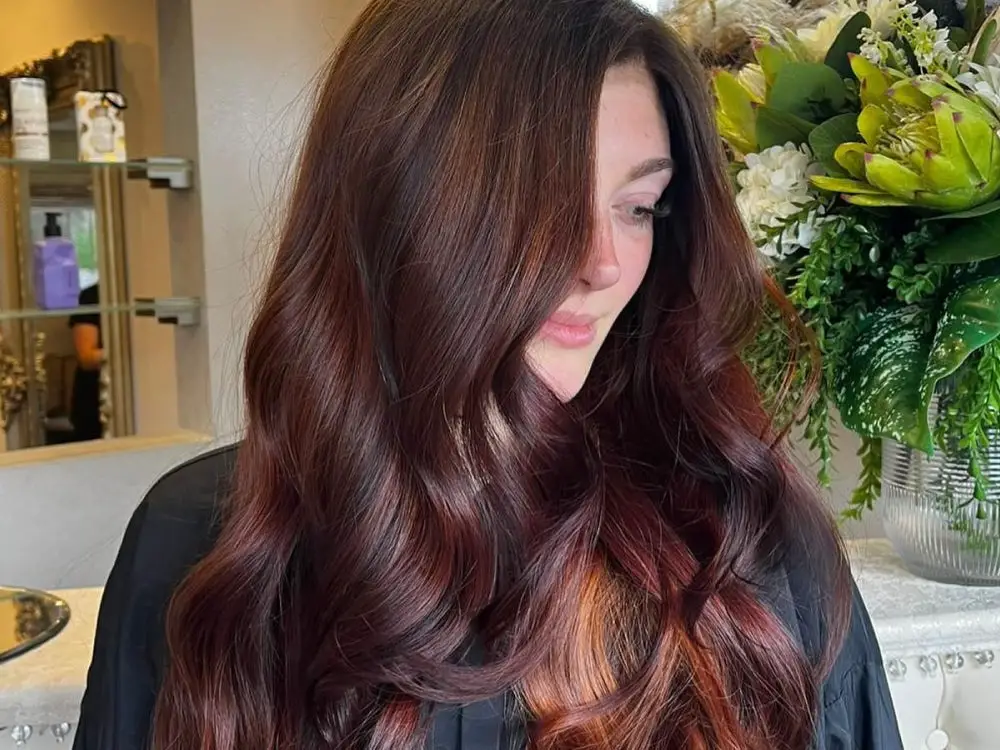
This is a salon-only colour, full stop. The dark auburn hair with warm red undertones is rich and dimensional, but achieving that nuanced shade at home is a gamble. The collarbone length with layers and loose waves shows off the depth of the colour, which reads as vibrant without being cartoonish. A professional can layer the warm red undertones into the dark auburn base so it catches light differently depending on the wave. The side part adds a bit of asymmetry that keeps the look from feeling heavy. The texture is wavy and medium density, which helps the colour read as multidimensional. Book the appointment, bring a reference photo, and let someone who knows what they are doing mix the formula.
Rich Chocolate Brown With Auburn Highlights
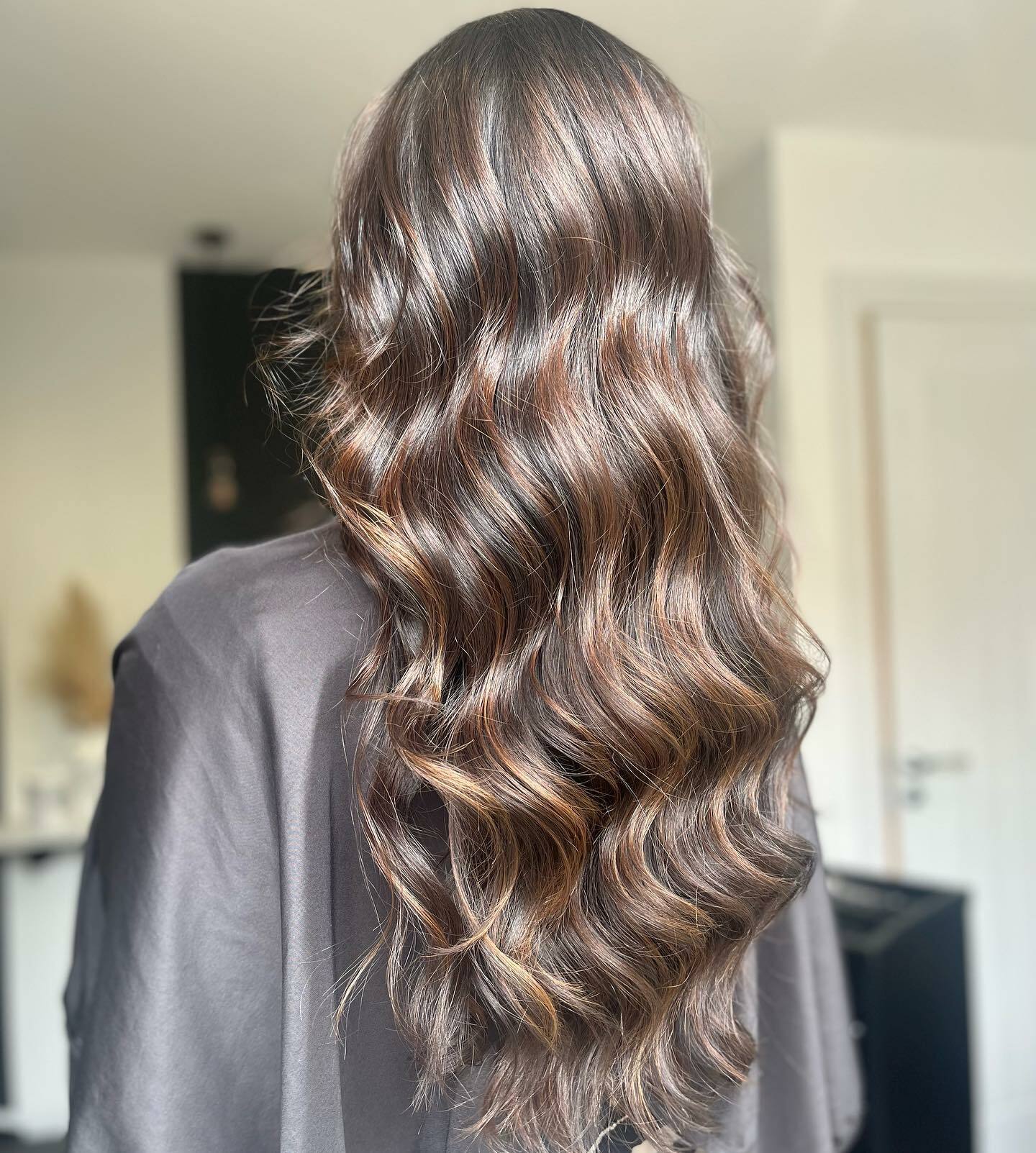
There’s a trick to making highlights look like they grew there, not like they were painted on, and this is it. The base is a rich chocolate brown with auburn highlights woven through the mid-lengths and ends, leaving the root area untouched. That placement is what sells it. Dark base, lighter strands, no harsh line where the colour starts. On thick, wavy hair cut in long layers, the dimension catches the light every time the hair moves. The tone stays warm without tipping into orange, which is the part that matters on olive skin.
What nobody tells you is that the technique is more about restraint than skill. The stylist has to place each highlight sparingly, or you end up with stripes instead of depth. That’s why this is a salon job, not a bathroom-mirror project. The honest downside: the auburn will fade to a warmer brown in about six weeks, and if you skip the toning, it drifts brassy. Ask for “soft woven highlights, no chunky pieces, keep the root shadow.”
Mocha Brown With Caramel Highlights
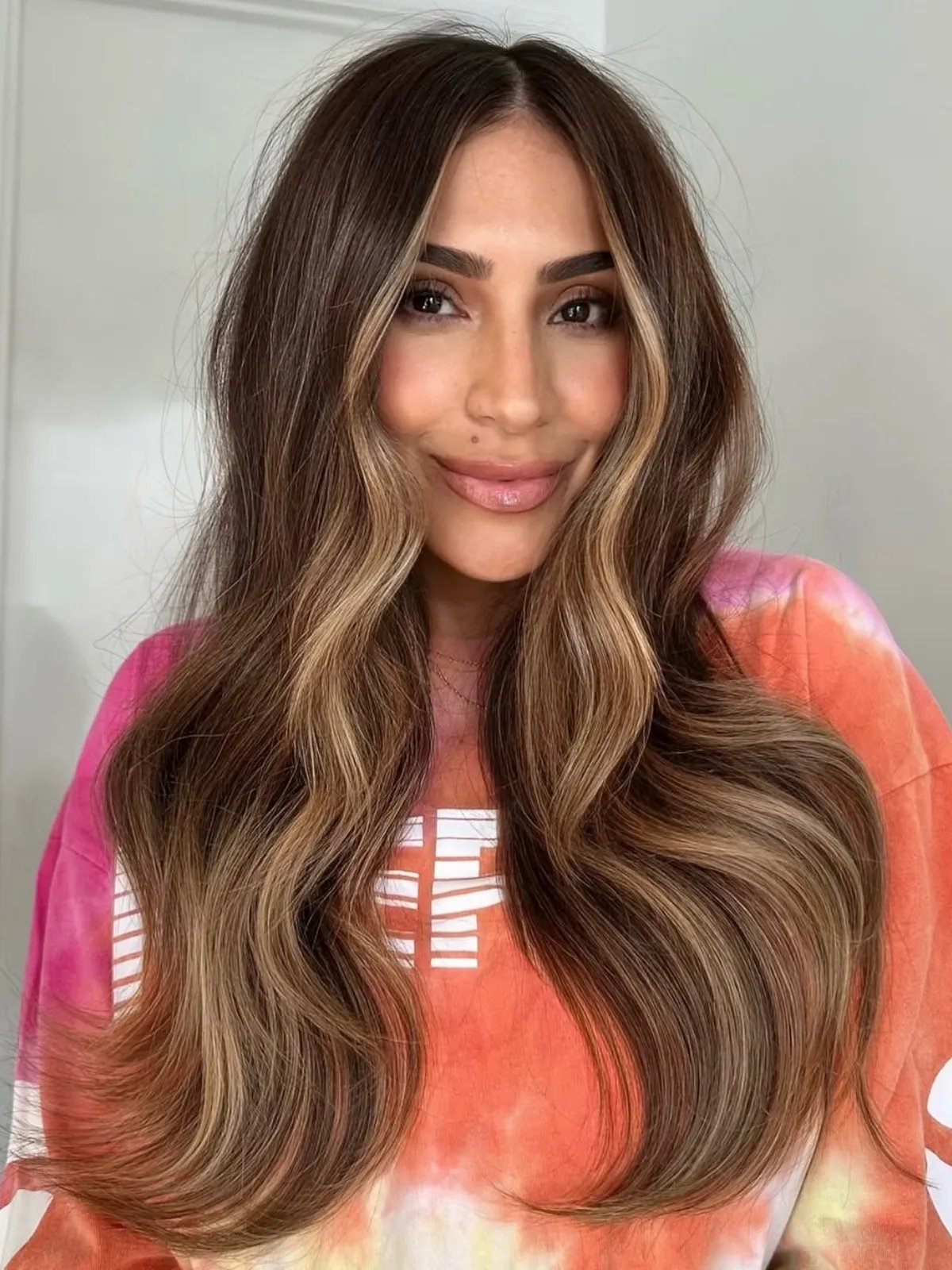
I’ll admit it: I’ve had face-framing highlights go brassy by week three, and it’s not cute. The mocha brown with caramel highlights is the fix, but only if you respect the upkeep. The caramel is placed around the face to brighten the front, and the mocha base keeps the rest from washing out. On mid-back, thick, wavy hair with layers, the wavy blowout takes about 15 minutes and the face-framing pieces do the heavy lifting. The honest downside: those front highlights are the first to fade and the first to turn orange. You’ll need a toner every 4 to 6 weeks, and if you skip it, you’ll see it. Trims every 8 weeks keep the layers from turning into a triangle.
Dark Brown With Ash Blonde Highlights
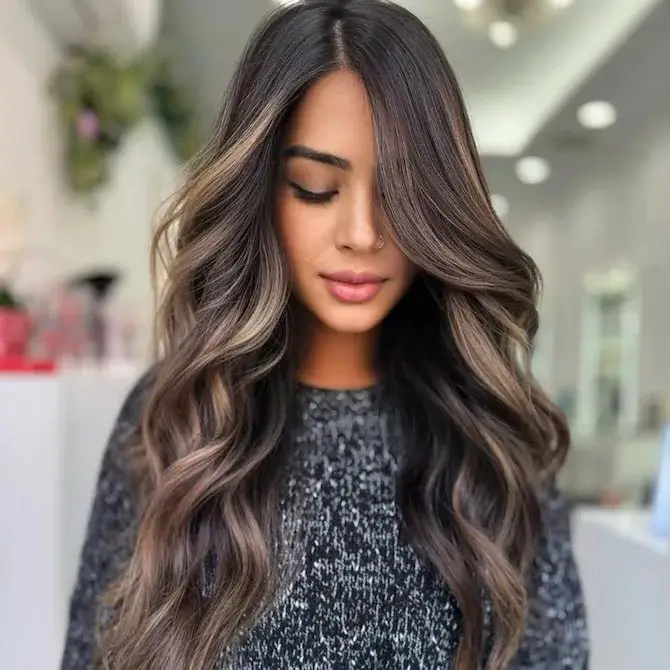
You see someone with dark brown with ash blonde highlights and think, I could do that at home. You cannot. The ash blonde highlights on dark hair require lifting the colour first, and if you miss the timing, you get orange stripes instead of cool dimension. That’s the mistake everyone makes, and it’s why this is a salon-only job.
The technique is precise: each strand has to be lightened enough to take the ash tone, but not so much that it turns yellow. On mid-back, thick, wavy hair with layers, the contrast between the dark base and the cool blonde reads sharp and intentional. The tone is what makes it work on olive skin, because the ash cuts the warmth that can make olive look sallow. Expect toning every 4 to 6 weeks to keep the blonde from drifting brassy. Tell your stylist “I want cool ash highlights, no gold, keep the base dark.”
Dark Chocolate With Subtle Caramel Highlights
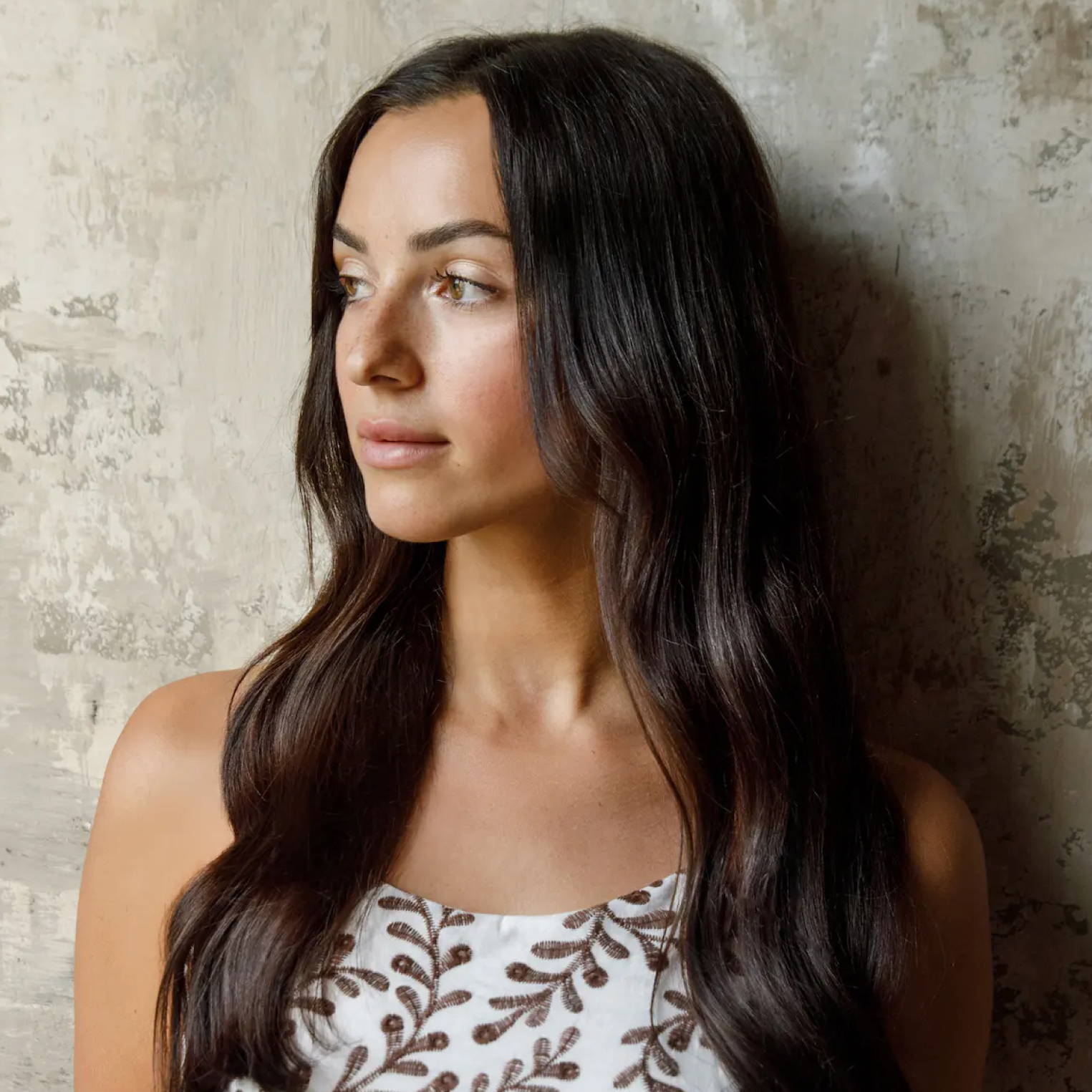
This is the most forgiving dark chocolate with caramel I have seen in a while. The subtle caramel highlights are painted on with a hand-painted balayage technique, placed low and sparingly so they catch light only when the hair moves. On a mid-back length with loose waves, the dimension reads as expensive, not brassy. The downside: if your stylist gets heavy-handed, the caramel overpowers the base and you lose the whole point. On thick, wavy hair like this, the highlights sit deep enough that they never scream for a toner. Ask for a root shadow that stays within a quarter-inch of the scalp, and keep the caramel pieces no wider than a pencil.
Collarbone Dark Brown With Honey Blonde Highlights
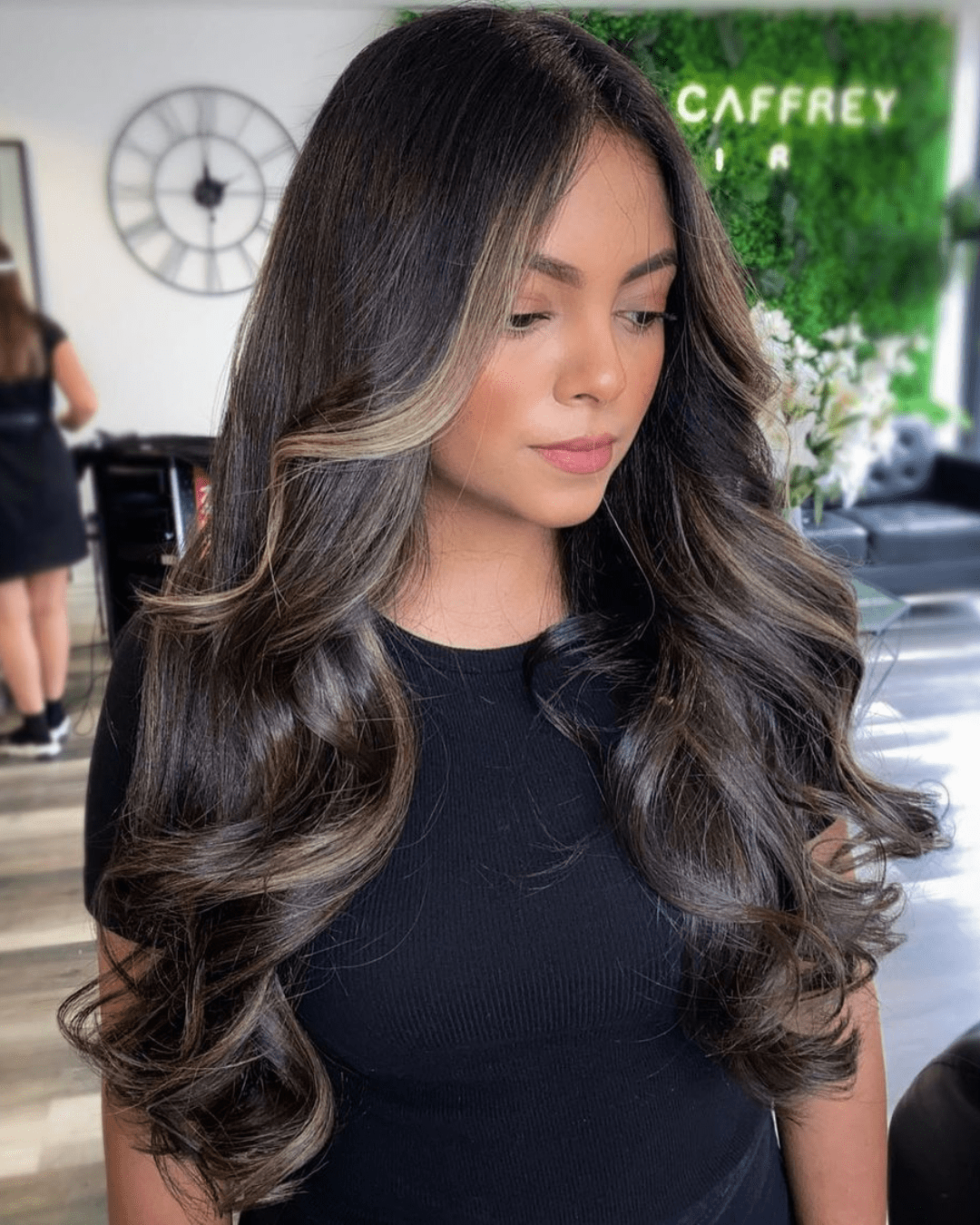
I did not expect honey blonde highlights to look this natural on olive skin. The dark brown with honey highlights here is built with a soft foiling technique — thin slices of honey woven through the top layers so the warmth reads as a glow, not a stripe. This suits anyone with warm or neutral olive undertones who wants brightness without going full blonde. Skip it if your skin pulls very cool or pink; the honey will fight you. The collarbone length with a side part lets the highlights fall forward, which is exactly where you want them.
Deep Burgundy With Soft Waves
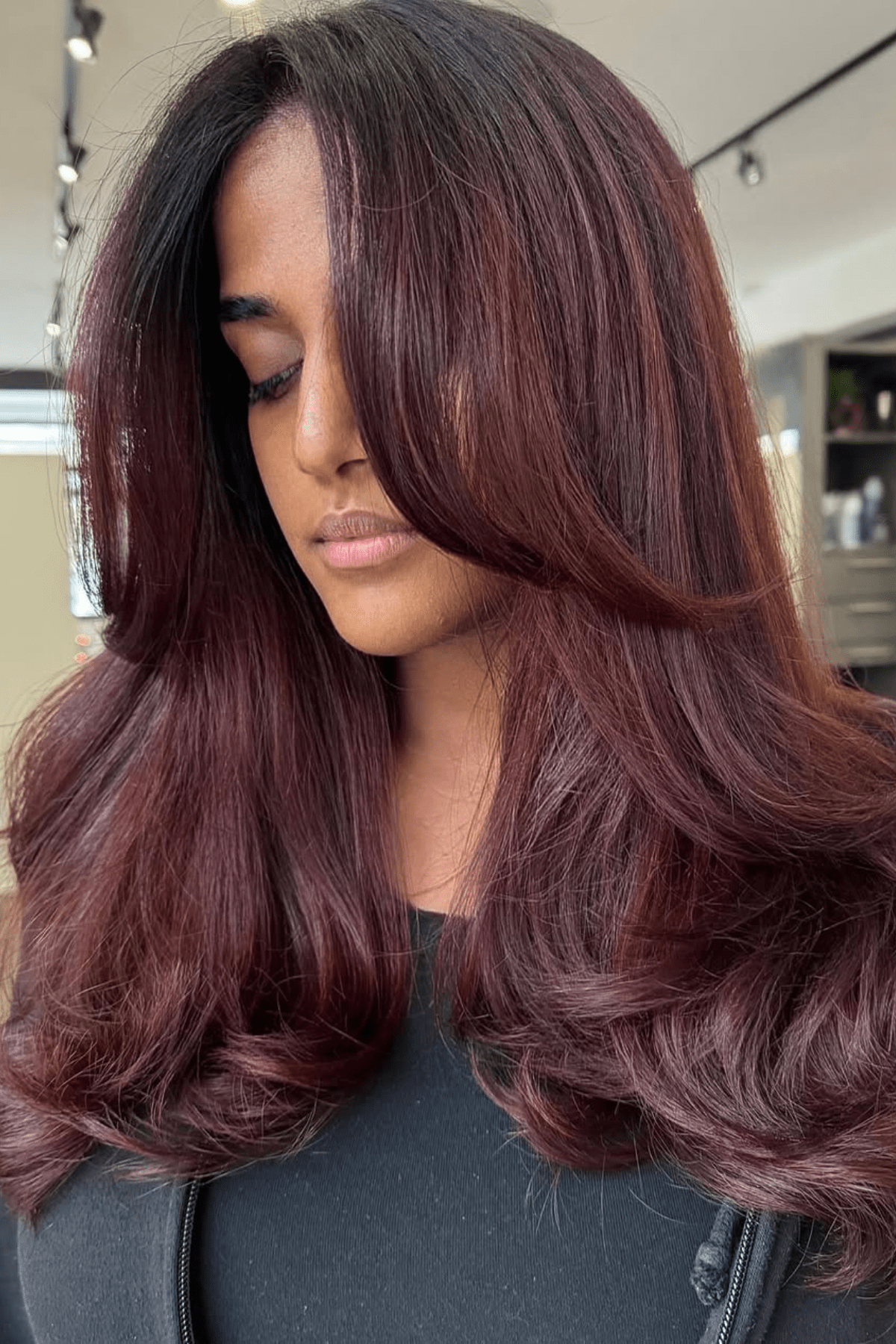
Deep burgundy is not for everyone, but for olive skin it is a standout. Deep burgundy hair with subtle red undertones adds depth without washing you out. The collarbone length and soft waves give it movement, and the wavy texture keeps it from looking flat. Those with very fair, cool skin may find it overpowering, but for warm olive tones it reads as sophisticated. This shade works best on medium density hair that can hold the rich pigment.
Tortoiseshell Brown With Caramel and Gold Highlights
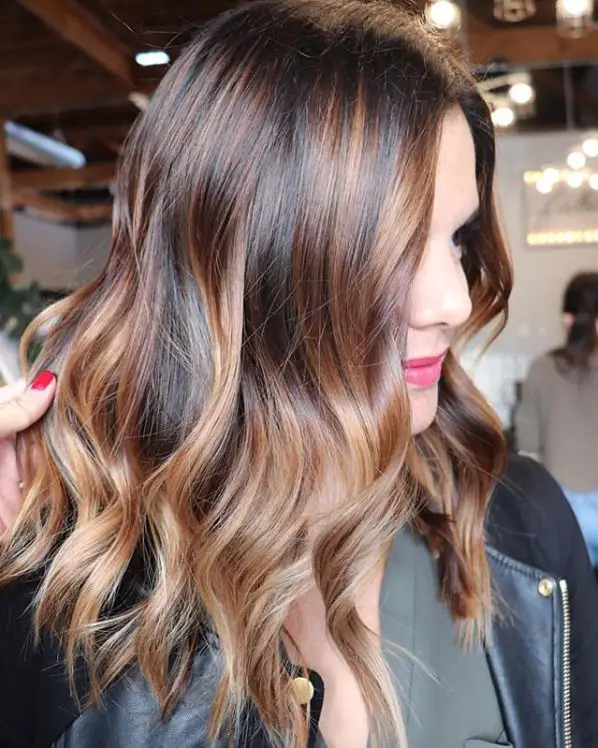
Tortoiseshell brown is not your average balayage. Tortoiseshell brown hair with caramel and gold highlights is a complex blend that mimics the shell pattern. Compared to a simpler balayage that uses one tone, this technique layers warm caramel and golden blonde pieces for more dimension. The result is a dimensional collarbone lob with loose waves. Upkeep includes a gloss every six weeks to keep the tones fresh, a trim every eight to ten weeks, and a color-safe shampoo to prevent brass. It works best on wavy, medium density hair that can show the multiple tones.
Final Thoughts
After writing all of these, I keep coming back to the dark chocolate with auburn undertones. It’s the one that made me reconsider my own color. I’m booking it next month.