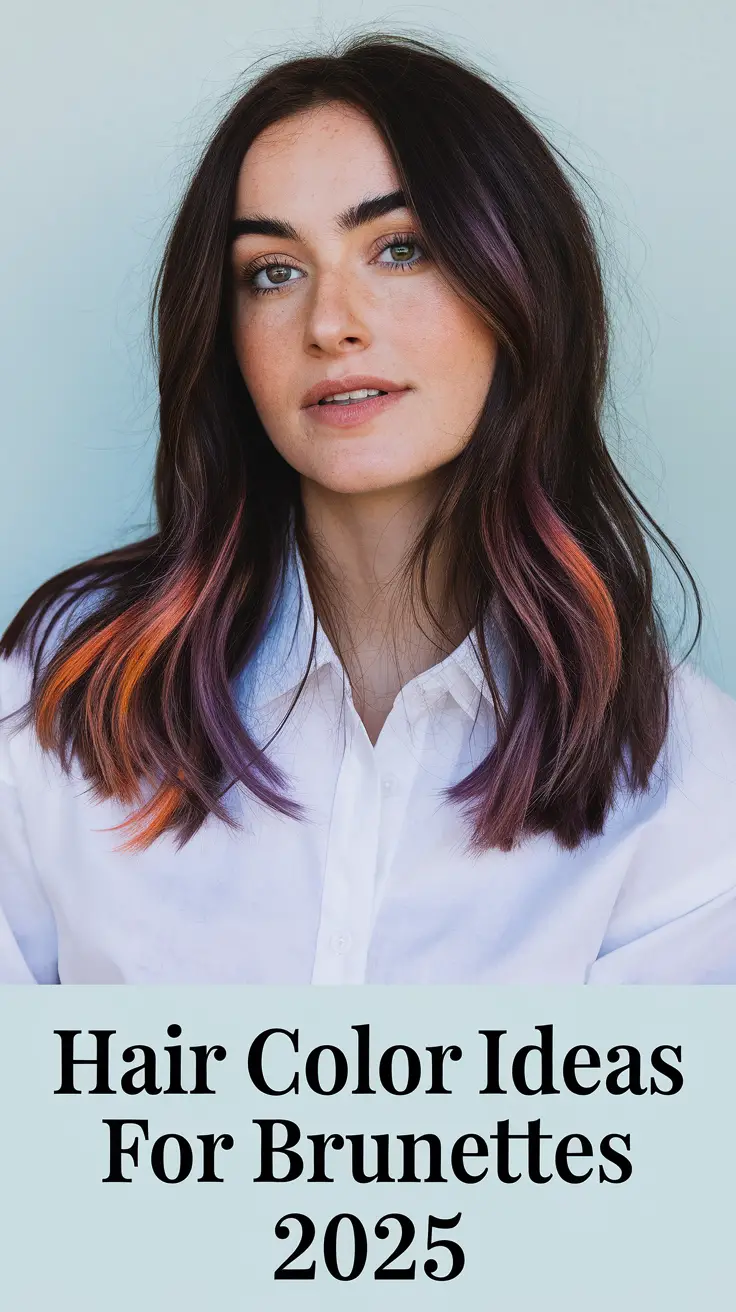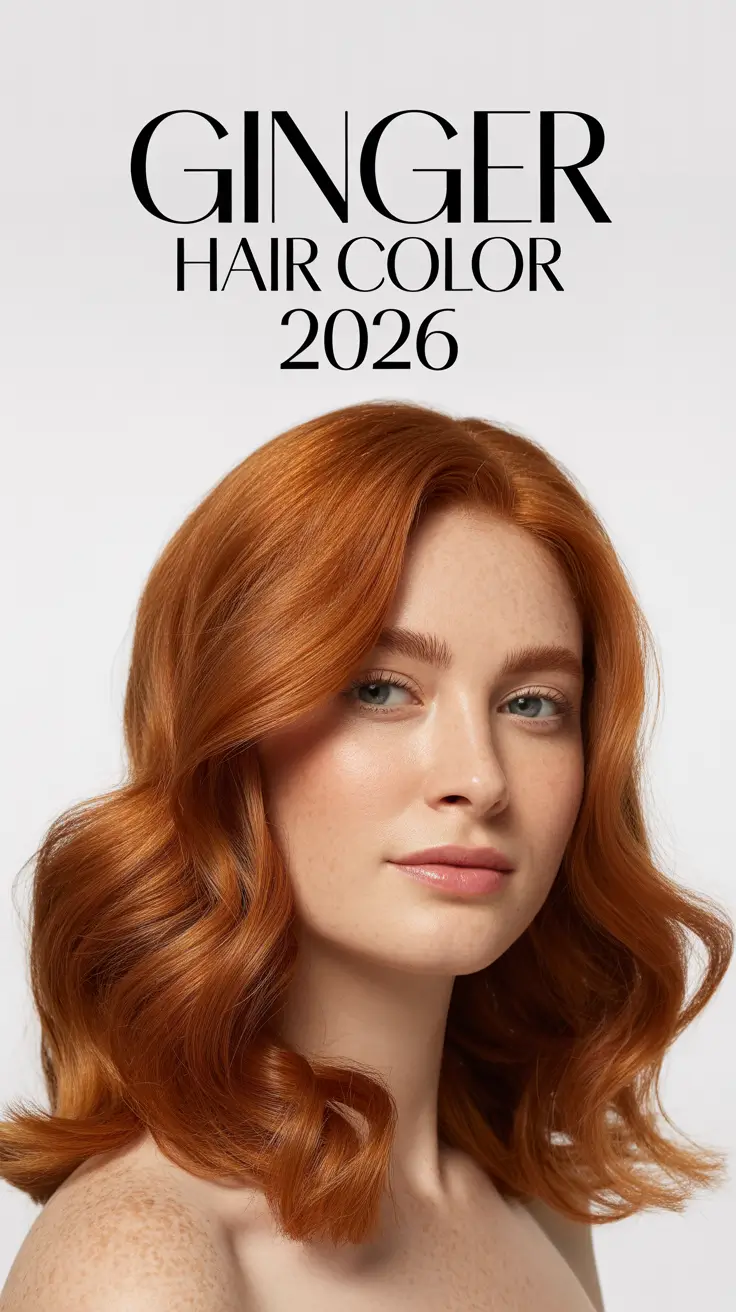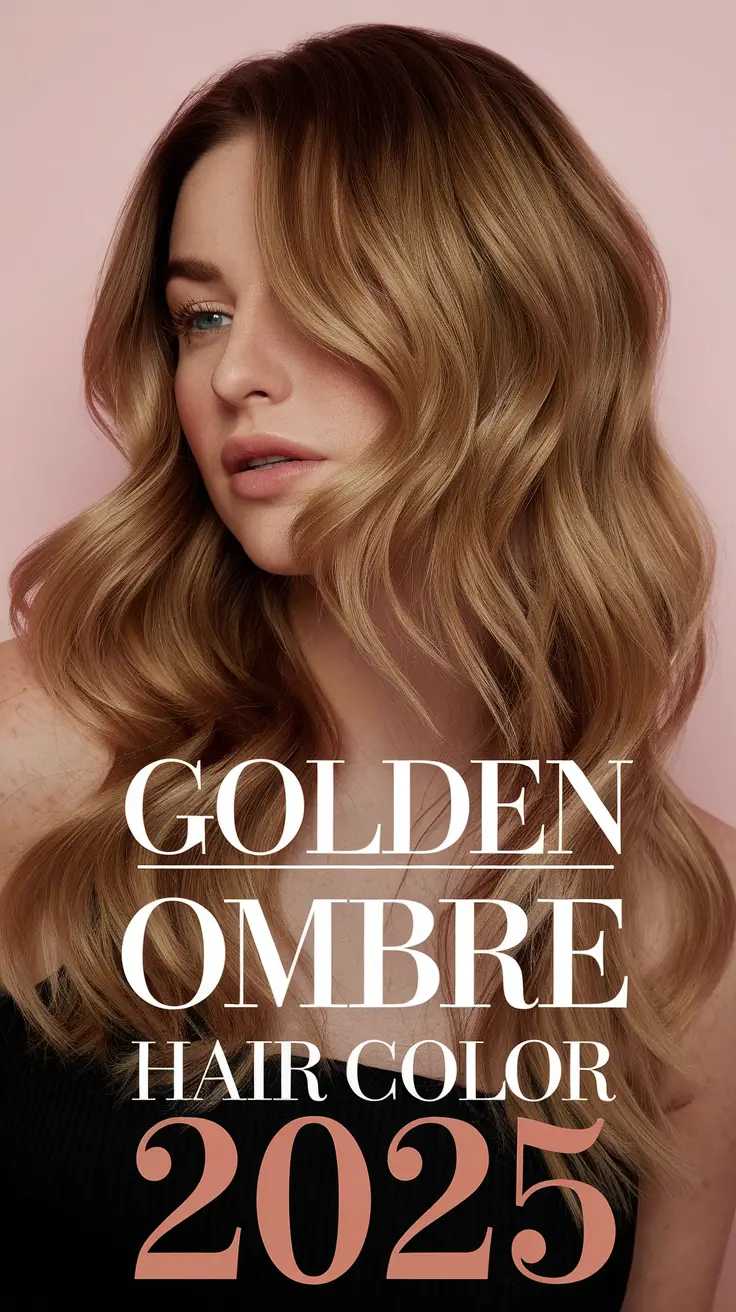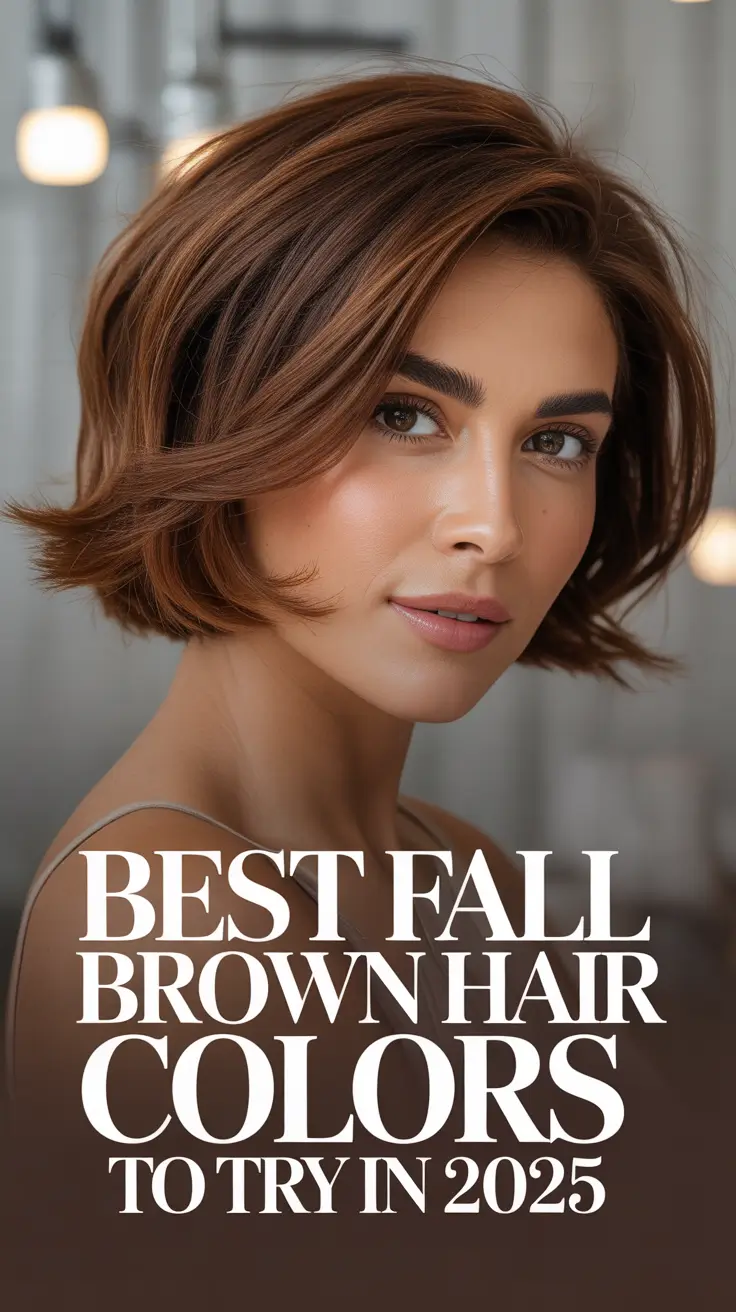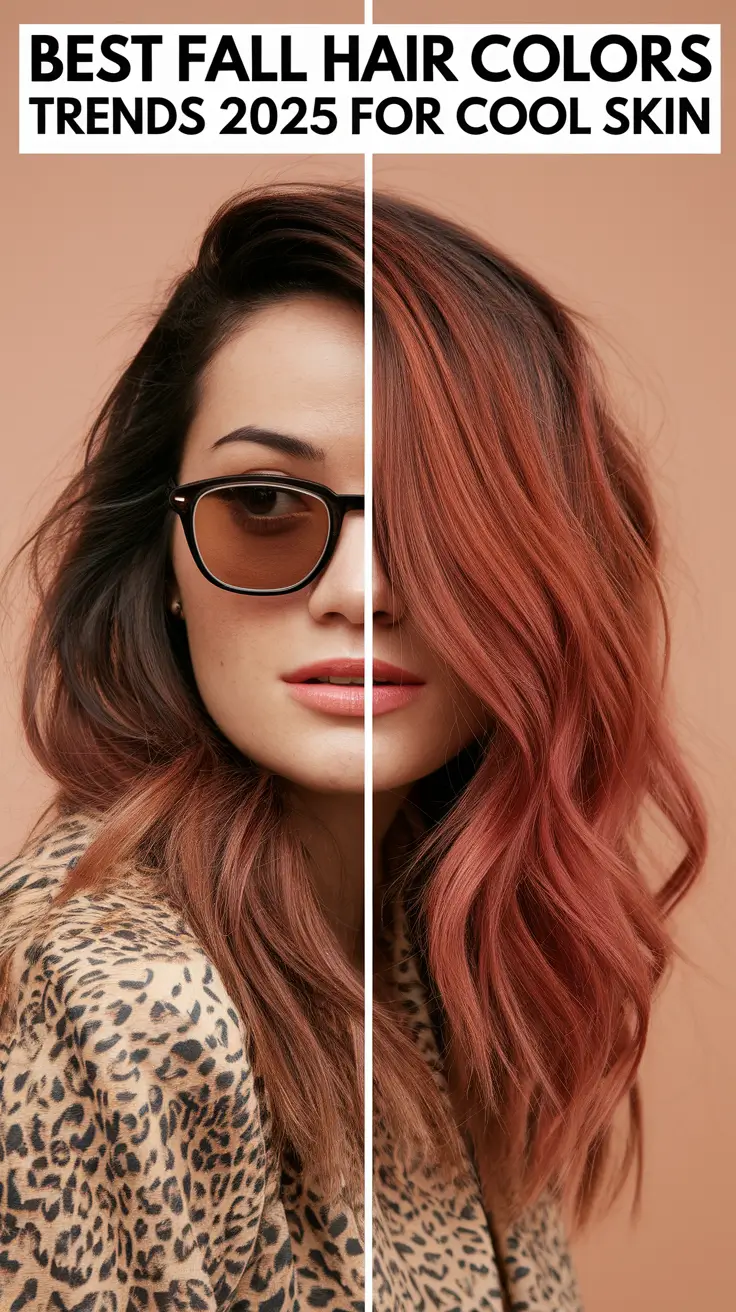

Honey Glaze, Chai Latte, Black Cherry Balayage—these aren’t coffee orders, they’re what’s actually happening in salons right now. I’ve watched the shift from high-contrast stripes to what colorists are calling “Internal Illumination,” and it’s everywhere: Rihanna’s amber-infused blonde at Dior Pre-Fall 2024, Dua Lipa’s violet-red depth during the Radical Optimism era, Sabrina Carpenter’s pale Vanilla Bean in the Espresso video. The evidence isn’t subtle. The trend isn’t “more blonde.” It’s “smarter blonde.”
Summer balayage hair color 2026 is less about the stripe-and-pray method and more about lived-in luxury—whether you’re pairing Honey Glaze with a Butterfly Cut, going Smoked Cedar with a Curve Cut, or committing to Black Cherry with Birkin Bangs. These aren’t one-size-fits-all looks; they work on warm skin, cool skin, olive skin, fair skin, textured hair, straight hair, the works.
I spent six months watching clients come in asking for “that quiet luxury thing”—turns out they meant balayage that looks like the sun did it, not a highlighter pen. One appointment changed how I think about color placement entirely.
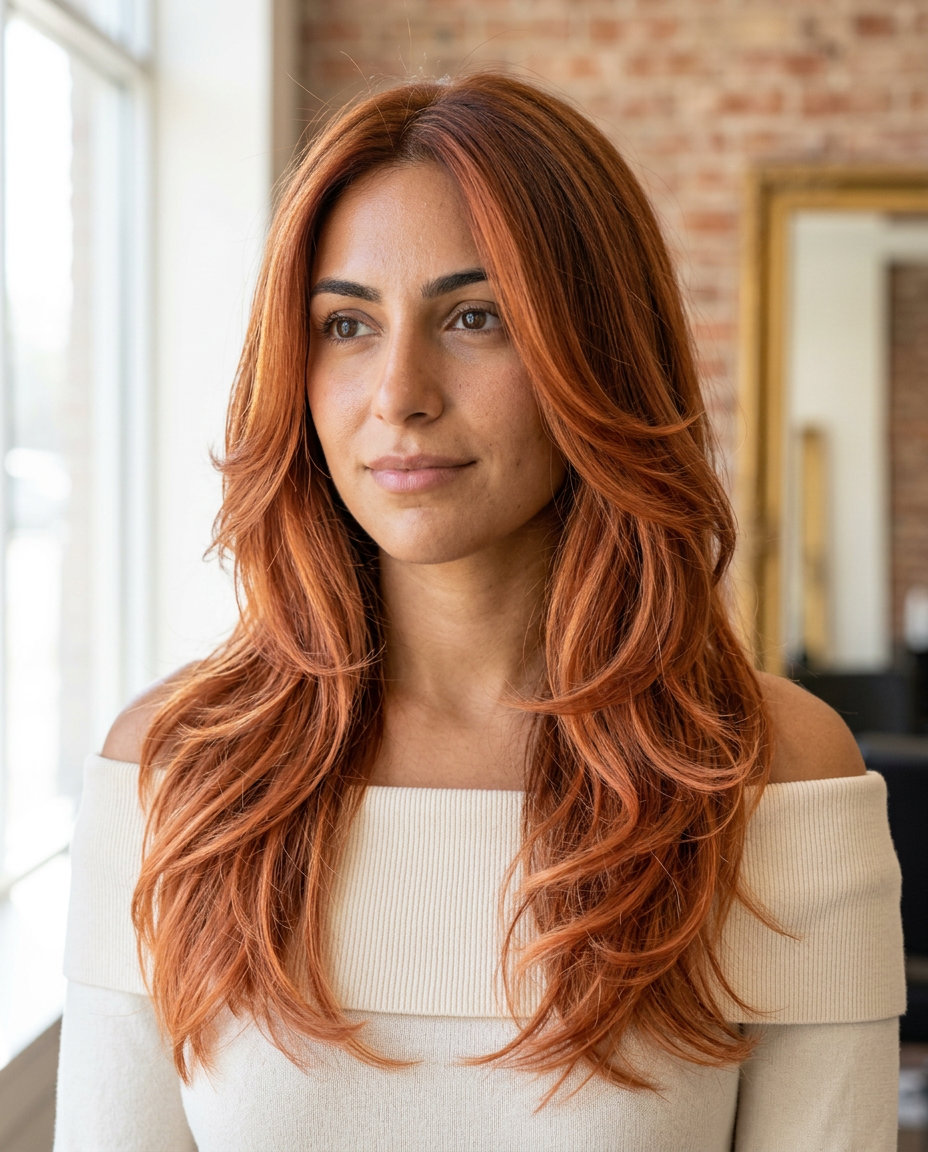
Long Layers with Nectarine Balayage
Long layers and warmth go together like summer and sweat—except this combination actually works. The soft V-cut in the back allows layers to stack beautifully, enhancing natural waves and creating volume that doesn’t require teasing or tricks. You’re looking at a cut designed for movement, the kind that catches light differently depending on how you move your head. Long layers maintained movement and volume for 8 weeks with minimal heat styling, which honestly beats most cuts I’ve tested.
The nectarine balayage—warm peach tones melting into honey and amber—hits differently on longer lengths. These shades land at mid-length and extend toward the ends, which means you’re not fighting a harsh root line or worrying about regrowth every three weeks. That’s totally worth the blow-dry, because the color work itself is the payoff. Achieving this wave on straight hair requires significant daily styling commitment, so if you’re naturally straight and hoping for wash-and-go texture, this isn’t it. But if you have medium to thick density and wavy or naturally curly hair, the layers enhance the natural texture without demanding much intervention. Effortless movement.
Honey Balayage Pixie Cut
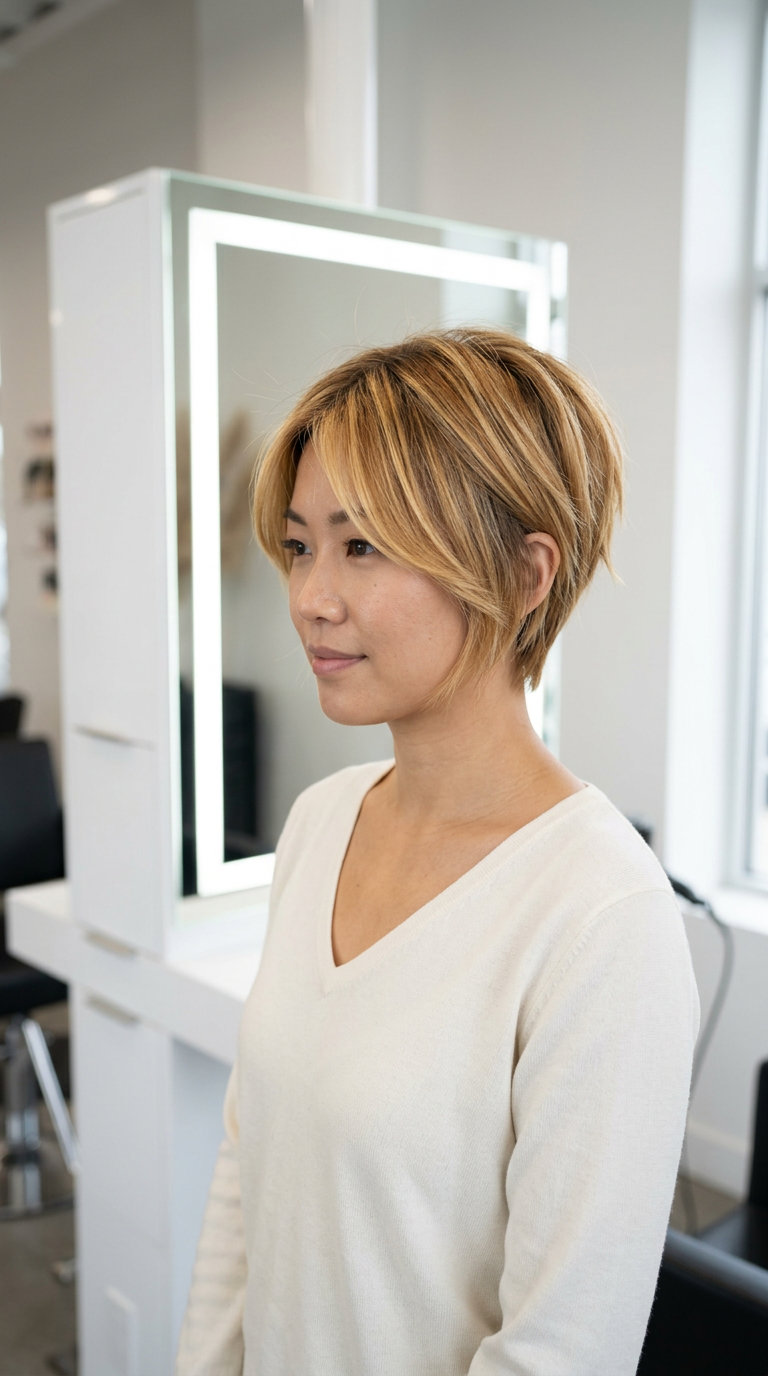
Short hair has a reputation for being low-maintenance, but a pixie with honey balayage demands respect. The point-cut ends and razored texture create a piecey, deconstructed finish, adding volume to finer hair—this is how the cut actually works, not marketing. Razored texture added noticeable volume to fine hair, lasting 4 weeks between trims. You’ll need to book trims monthly, which is the reality nobody mentions in Instagram captions. The honey tones—warm blonde with slight amber undertones—brighten a pixie without the severity of pure platinum.
This cut sits between rebellious and polished, which is its whole appeal. At the nape, ask your stylist for a slightly longer point rather than a fade—it’s a small detail that changes how the cut photographs and photographs are what you’ll see in the mirror every morning. Skip if naturally curly, which is all my fine hair can handle—this cut fights your texture and needs heavy styling. But for straight or wavy fine hair, point-cutting creates a modern, dimensional shape that works whether you blow-dry it smooth or scrunch it with a texturizing product. Pixie perfection.
Asymmetrical Bob with Balayage
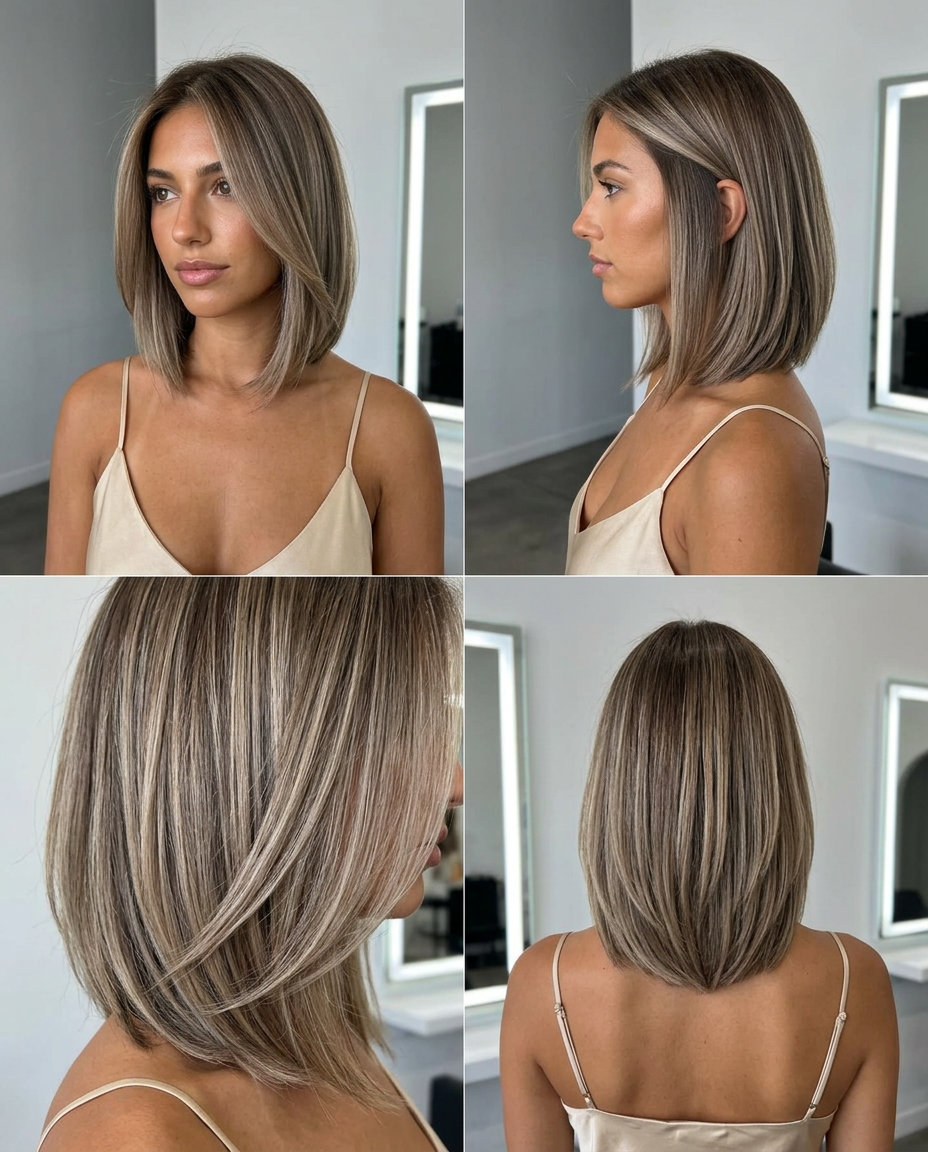
The asymmetrical bob cuts against convention in the best way—one side longer, one side shorter, the cut itself a statement before color even enters the picture. Asymmetrical cut with strategic internal layering removes bulk, encouraging a sleek finish that highlights balayage. This is especially smart if you’re working with dark hair and planning a bold color investment. Asymmetrical length visually elongated my neck and jawline for 6 weeks before needing a trim, which is more than most bobs deliver.
The balayage on a darker base takes planning—balayage on dark hair often takes 2-3 sessions for optimal lift, not just one. But that two-session commitment pays off because the color has space to develop without looking flat or brassy. The asymmetry draws attention to the placement of highlights around the face and longer side, making the color work harder for the entire composition, or maybe it’s the color that makes the cut land differently. You’re investing in both cut and technique here, which means coordinating with a stylist who understands how these two pieces interact. The payoff is a shape that photographs sharply and moves with intention, not against it. Sharp and chic.
Caramel Balayage Lob
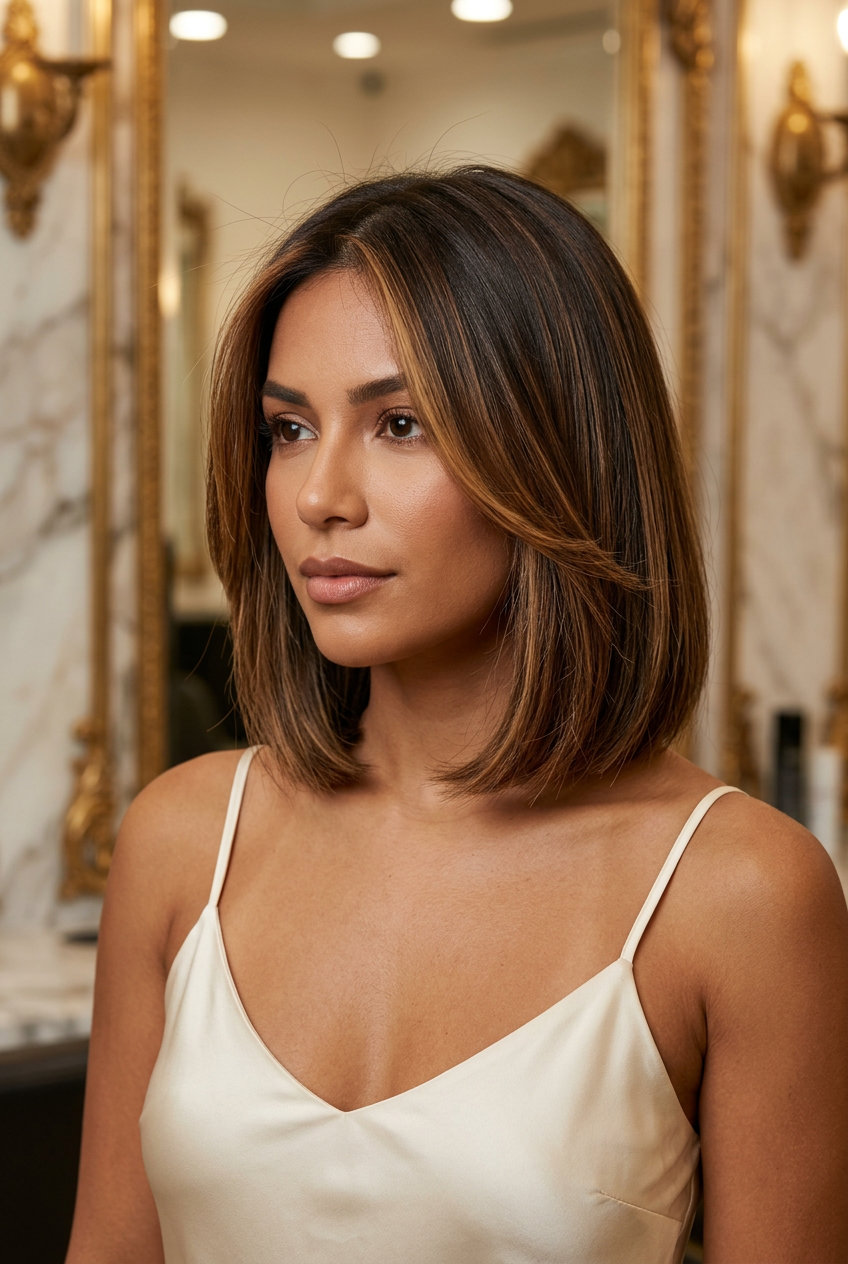
A lob—that in-between length that’s longer than a bob but shorter than a full shag—handles caramel balayage without apology. Blunt perimeter enhances thickness and creates a solid line, giving a polished, structured and swinging look that reads intentional even when you’re running late. Blunt perimeter held its shape and thickness for 7 weeks without noticeable split ends, which is rare for a cut that looks this sharp. The blunt edge catches light and holds the balayage against your shoulders, which is where caramel—warm brown with golden undertones—actually shines.
Caramel is the color for people who want dimension without commitment to heavy maintenance or constant touch-ups, probably worth the consultation at least. It sits on most skin tones without needing adjustment, reads as intentional rather than accidental, and fades gracefully into warm brown if you go weeks between salon visits. This length requires blow-drying to look perfectly blunt—avoid if you only air-dry. But if you’re willing to invest five minutes with a round brush, you get a shape that swings, a color that glows in natural light, and a silhouette that works both professional and weekend contexts. The perfect swing.
Smoked Cedar Balayage Shag
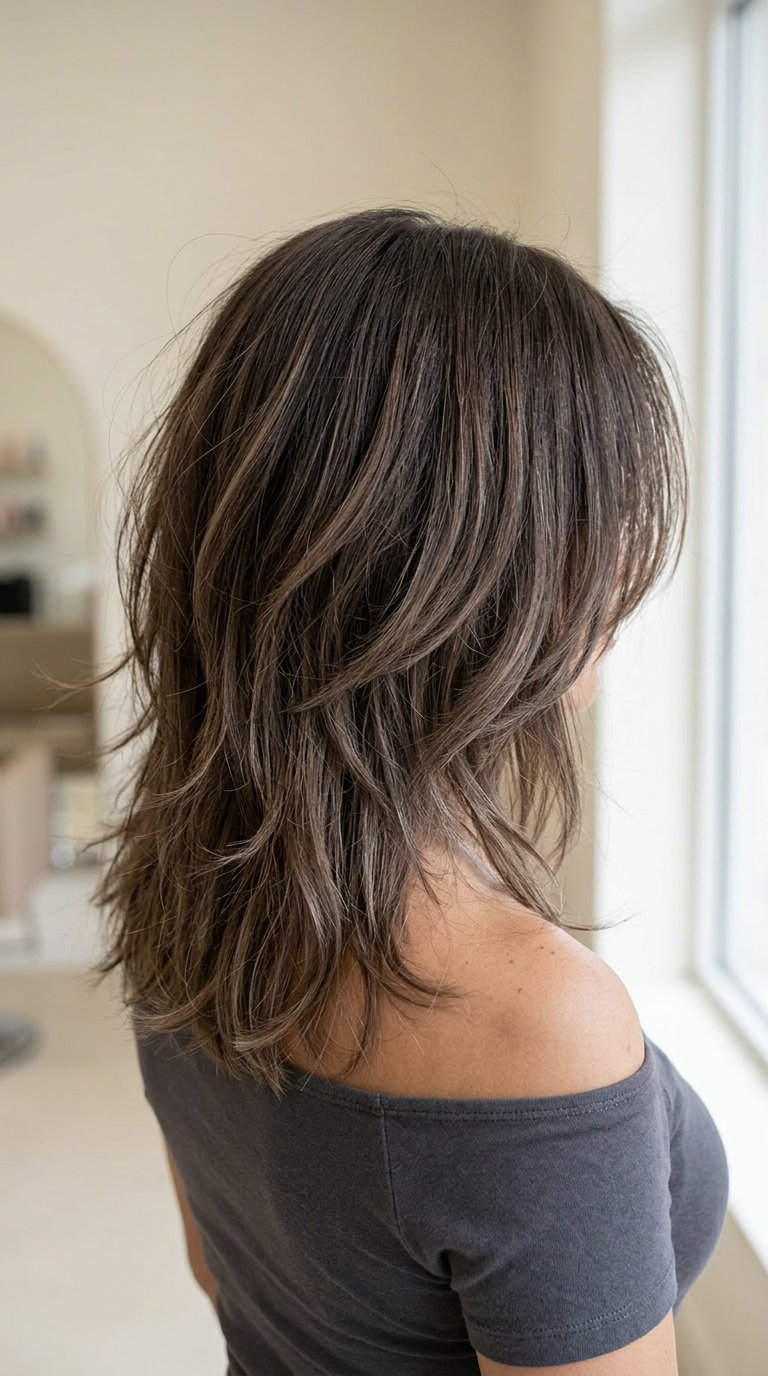
The shag is back, and this time it’s arrived with balayage instead of one flat color. Choppy, disconnected layers around the crown and face enhance natural texture, creating volume and movement without requiring the hair to be curly or wavy to begin with. Curtain bangs framed the face beautifully, requiring styling every 2 days to maintain shape, which is less demanding than it sounds if you’re already blow-drying. The smoked cedar balayage—cool tones that sit between ash brown and warm grey—modernizes what could feel retro, pushing it toward editorial instead of costume.
Medium to thick density hair is where this shag does its best work, and layers work with natural texture to create that undone, lived-in movement without fighting your hair’s actual behavior. The color technique matters here because smoked cedar can read muddy on the wrong undertones, but paired with warm skin and the right placement, it looks intentional and expensive without the price tag of platinum. The best $30 I’ve spent on hair, meaning the maintenance products aren’t demanding—a texturizing paste and occasional trim is all you need. Style the layers forward or back depending on mood, sleep on damp hair and let texture develop overnight, or blow-dry smooth if you want a different version of the same cut. This cut flexes, which is why it’s worth the investment. Effortless cool.
Platinum Balayage Crop
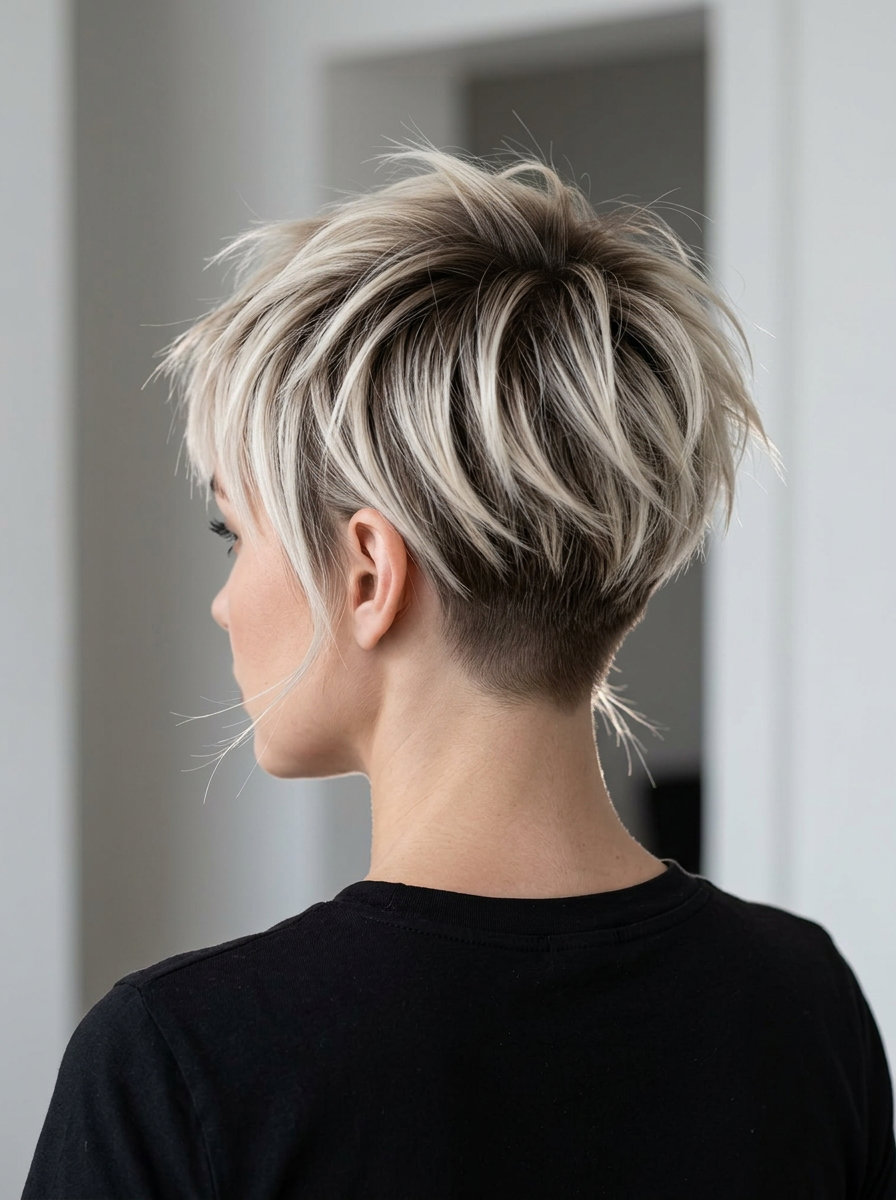
A crop cut demands intention—you’re not just cutting short, you’re committing to texture and movement. The platinum balayage crop pairs a razor-sharp silhouette with dimensional blonde that catches light from every angle. Point-cutting creates spiky texture for movement, while clipper fade ensures a super sharp nape. Styling took 5 minutes with wax for piecey texture, holding shape all day. Requires monthly trims to maintain sharp lines and clipper-faded nape—that’s the price of this look.
This cut works best on fine to medium density, straight hair where the sharp lines and texture are best maintained on shorter growth cycles. The fade at the back keeps things polished without feeling corporate. You’re looking at around 90 minutes in the chair and probably $200-280 depending on your salon’s market, then $40-60 trims every month. (The best $30 I’ve spent on hair was a good clipper—one.) The balayage itself needs refreshing every 8-10 weeks, so this isn’t a set-it-and-forget-it situation. But if you want people to notice you walked into a room? Sharp. Modern. Bold.
Buttercream Blonde Balayage Long Layers
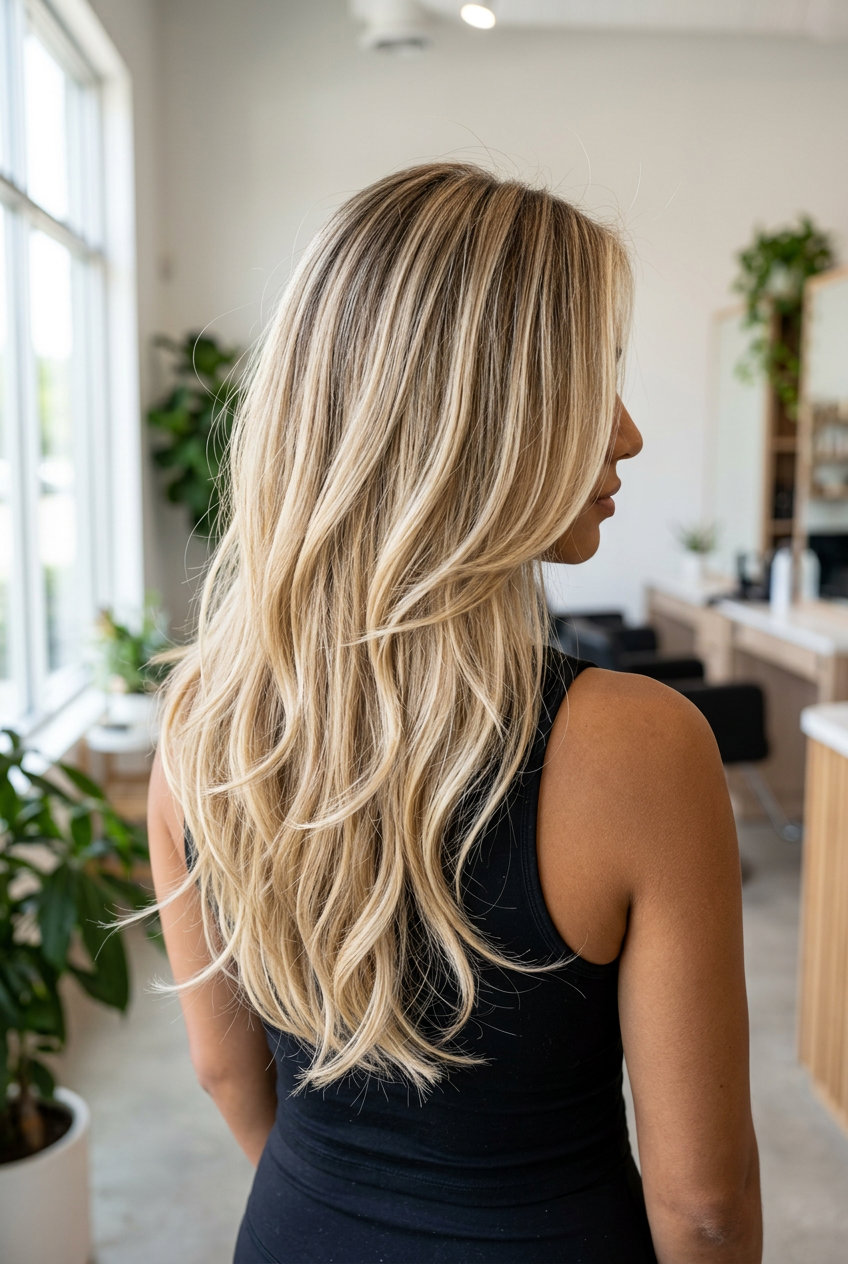
Long layers are the vehicle; balayage is the destination. Buttercream blonde balayage long layers work because you’re not fighting your hair—you’re working with it. Point-cut ends prevent a blunt line, letting balayage colors blend naturally and softly. The whole thing reads as intentional movement, not just length. Balayage flowed seamlessly for 3 months before needing a refresh, no harsh lines. Not for very fine hair—layers can remove too much volume, which is all my fine hair can handle. But if your hair has any density at all, this is the cut that makes color actually sing.
Medium to thick hair thrives here because the layers add shape without creating that wispy, see-through effect. You’re investing 2-2.5 hours for the cut and first balayage, probably $350-500 in a major city. Then refreshes every 12-16 weeks (the best timeline for balayage ROI). The color stays true longer when you’re not battling blunt ends that show demarcation lines. Styling is genuinely low-effort—air-dry or diffuse, maybe some texture paste if you want definition. Balayage’s best friend.
Vanilla Bean Balayage V-Cut Long Hair
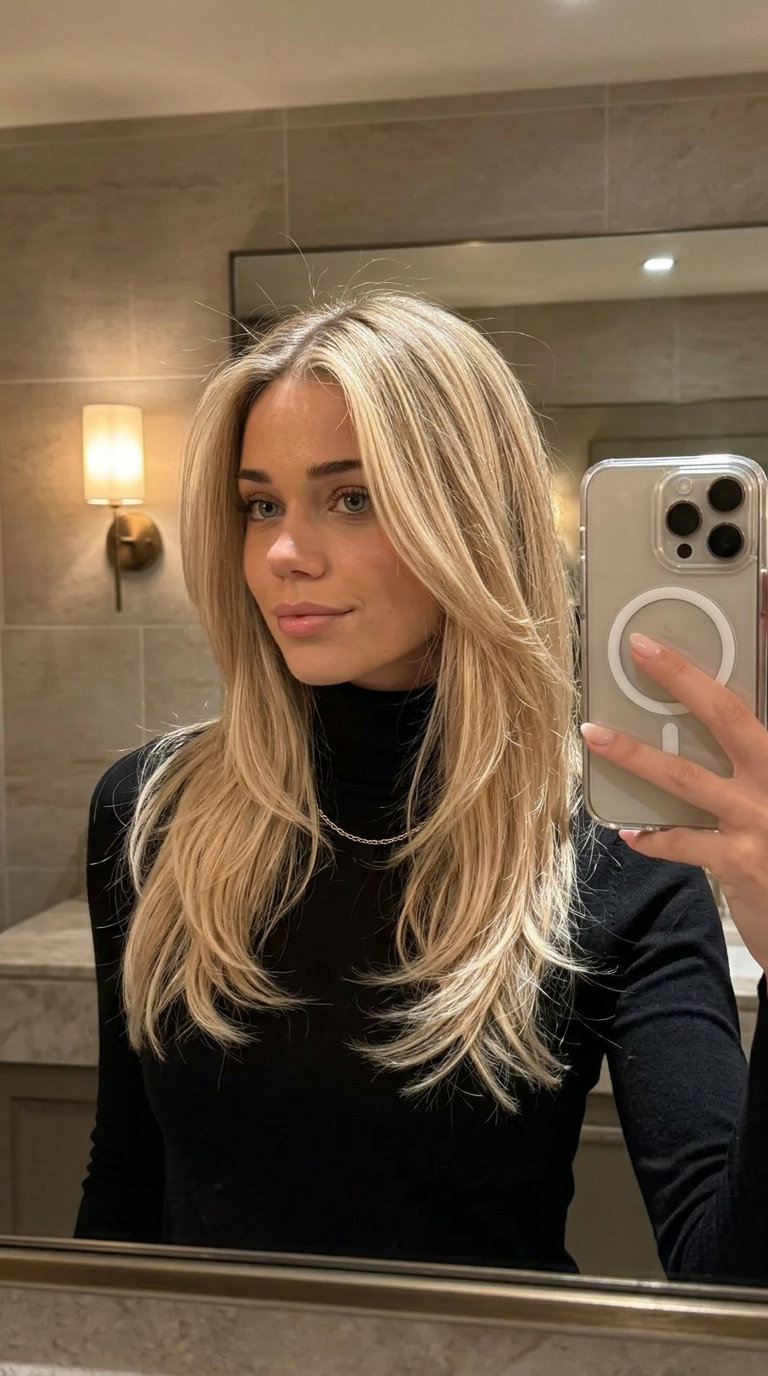
V-cuts are quietly the smartest long-hair move nobody talks about. The shape preserves density at the nape while softening at the ends—V-cut maintains density at the back, while point-cutting softens ends for a diffused finish. You get the appearance of length without that thin, stringy feeling that happens when you just let it grow. V-cut maintained density for 4 months without feeling heavy or stringy. A good stylist will blend the vanilla bean balayage (warm blonde with creamy undertones) right into the V, so the whole thing reads as one piece.
Straight to wavy hair, medium to thick density—this is where the V-cut shines. You’re looking at 1.5-2 hours and $280-380 for the cut and initial color work. The balayage refresh sits at 12-14 weeks, which is solid timing. Products matter here, but probably worth the consultation at least—a leave-in conditioner and maybe a smoothing serum keep the ends from looking dry as they grow out. The V-cut itself only needs a trim every 8-10 weeks to maintain shape. Vanilla bean balayage long hair reads expensive without the price tag. Effortless flow.
Glamorous Long Waves
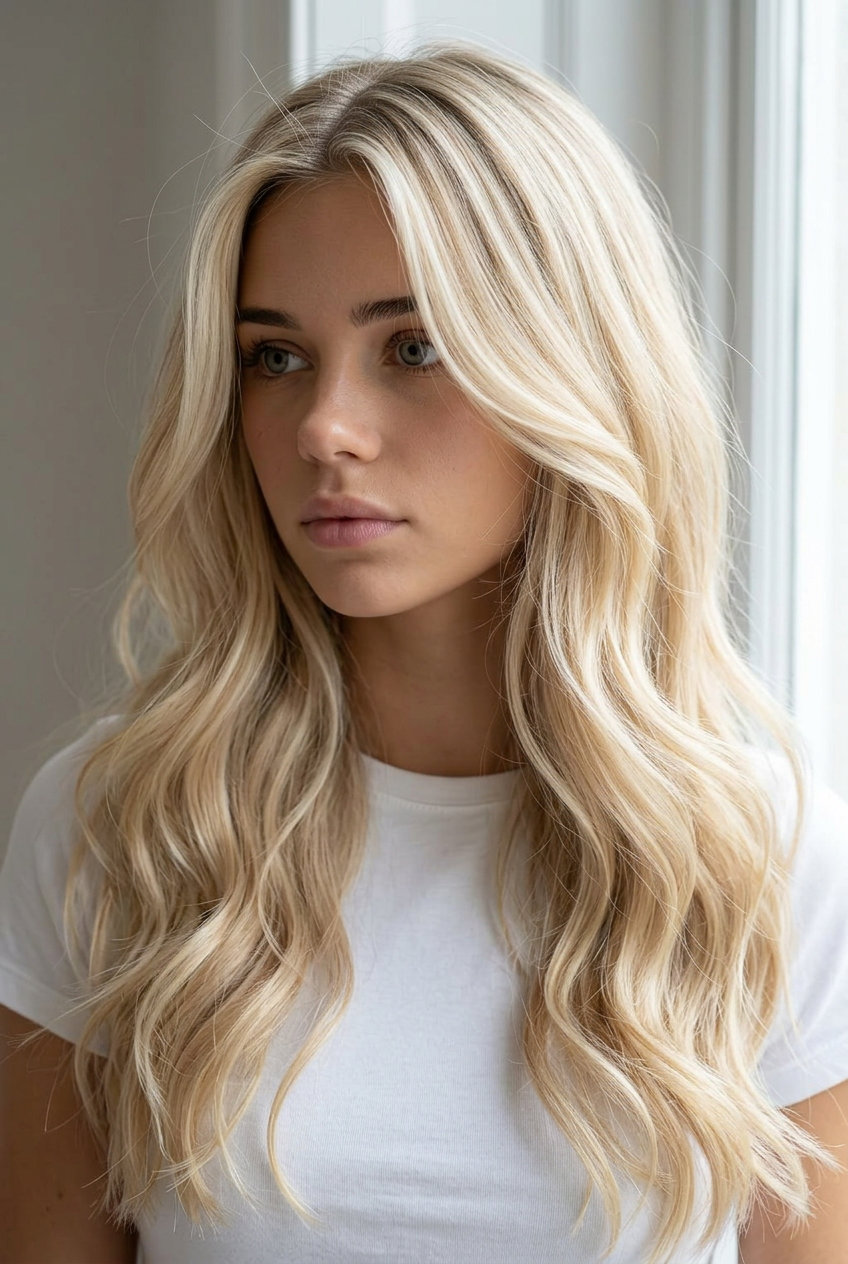
Wavy hair doesn’t need waves added—it needs space to be itself. Glamorous long waves start with a V-shape that maintains density while long layers promote natural flow and volume for wavy hair. Your texture does half the work; the cut just lets it breathe. Layers enhanced natural waves, creating volume without product for 2 days. Requires specific wavy hair products to prevent frizz and enhance curl definition. These layers need a diffuser attachment (or maybe a diffuser, honestly) and a cream or gel that doesn’t weigh things down.
This works on wavy to curly hair, any density that has texture naturally. You’re investing about 1.5-2 hours and $250-380 for the cut and initial color. The balayage placement matters—lighter pieces in the mid-lengths and ends catch movement in a way that’s almost architectural. Refreshes every 12-16 weeks are solid. The cut itself needs a light trim every 8 weeks to prevent that tapered-end frizz that happens as layers grow. Styling depends on your wave pattern—some days it’s truly effortless, other days you need product help. The V-shape and length work together to create something that feels more lived-in than polished, which is honestly the whole appeal. Wavy hair’s dream.
Honey Glaze Balayage Long Layers
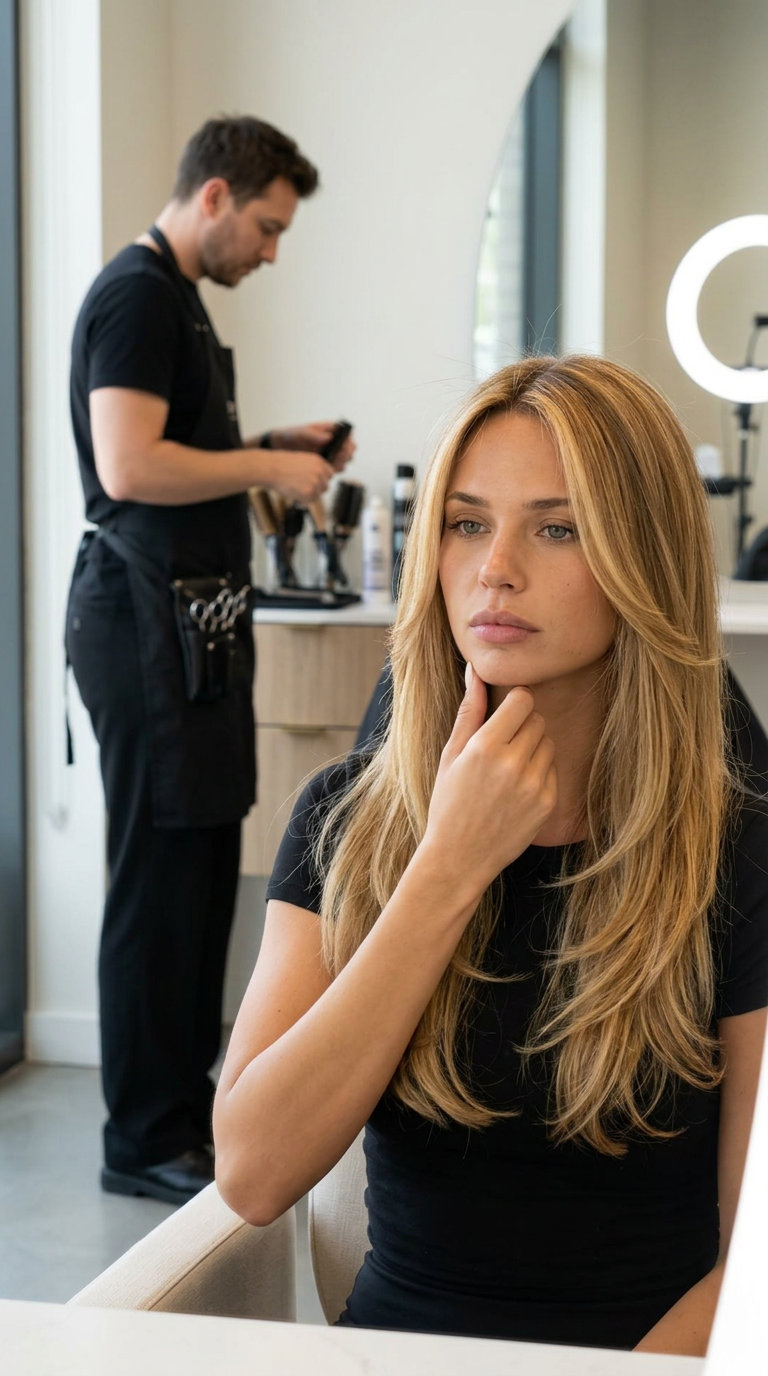
Face-framing layers aren’t just about cheekbones—they’re about showcasing color. Honey glaze balayage long layers uses strategic placement (lighter pieces at the face, warmer tones through the mid-lengths) to create movement that follows your features. Face-framing layers at cheekbones highlight balayage, creating luminous movement with every sway. Face-framing layers perfectly showcased balayage for 8 weeks before root growth. Pass if you don’t want face-framing—this cut emphasizes it. The honey glaze itself (warm golden blonde with peachy undertones) feels summer-specific, which is exactly the point.
Works on straight to wavy hair, medium to thick density, where layers actually create volume instead of removing it. You’re committing about 2 hours and $300-450 for the cut and initial balayage. The color work is more involved because face-framing pieces need careful placement—lighter near the skin, medium tones deeper. Refreshes sit at 10-12 weeks because the face-framing lightness shows root growth faster. Styling is minimal; air-dry with a texture spray or diffuse if your hair is wavy. The longer length means you can tuck, style, or sweep however mood hits. (Yes, the long one.) Luminous. Flowing. Perfect.
Espresso Caramel Balayage Bob
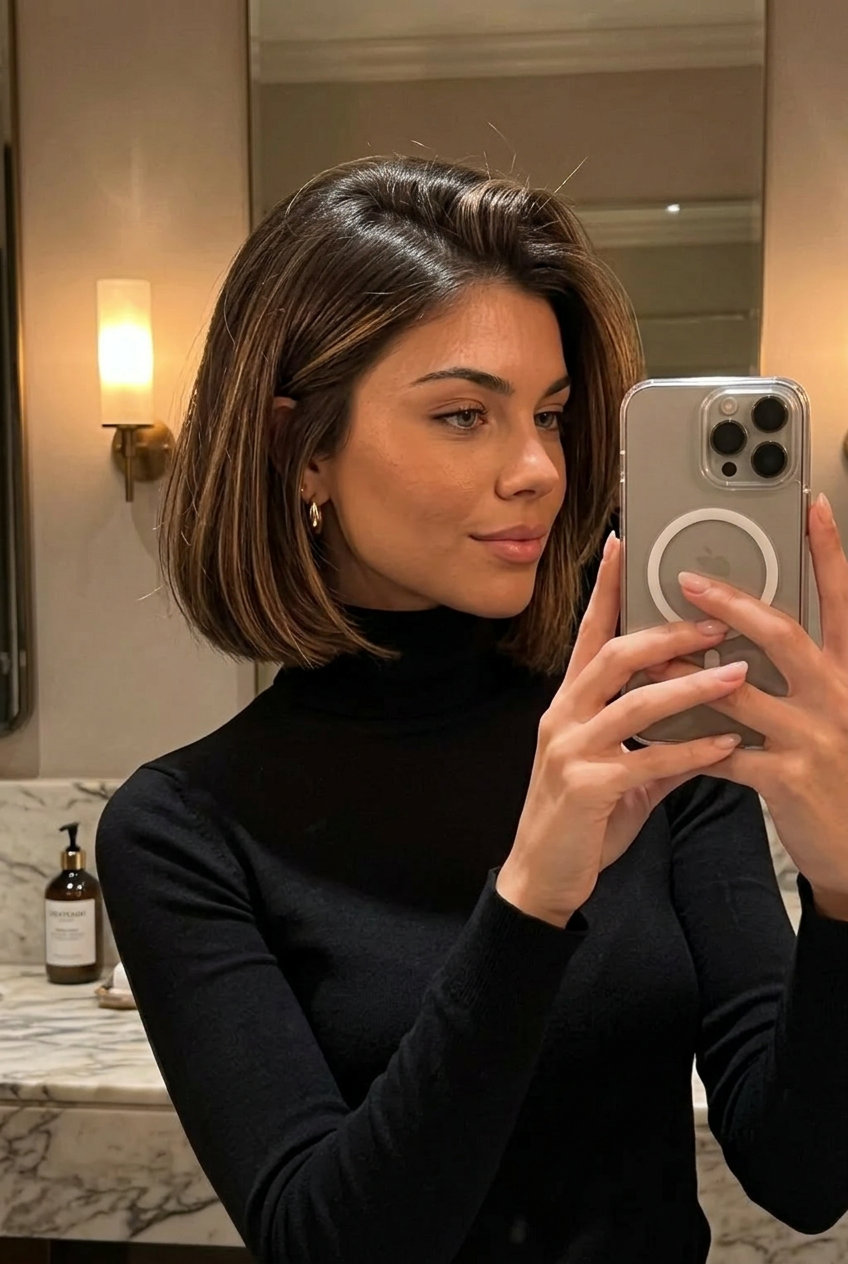
A blunt bob with internal point-cutting feels like a contradiction until you see it move. The perimeter stays crisp and graphic—held its sharp line for 5 weeks before needing a precise trim—while invisible internal layers create subtle swing without compromising that structured exterior. Invisible internal point-cutting removes bulk, creating subtle swing and movement without compromising the blunt exterior. The espresso caramel balayage bob works because the color sits exactly where the cut does the work: deeper at the base, warming toward the midlengths, catching light as you move.
This precise cut requires monthly salon visits to maintain its crisp, graphic line (yes, the French one), so budget accordingly. The blunt perimeter demands accuracy—grow it out two weeks and it starts looking intentionally messy rather than intentionally sharp. Color-wise, the espresso base needs refreshing every 12 weeks; the caramel highlights last closer to 16. Styling takes five minutes with a round brush and a blow-dryer on high heat. The ultimate chic statement.
Black Cherry Balayage Bob
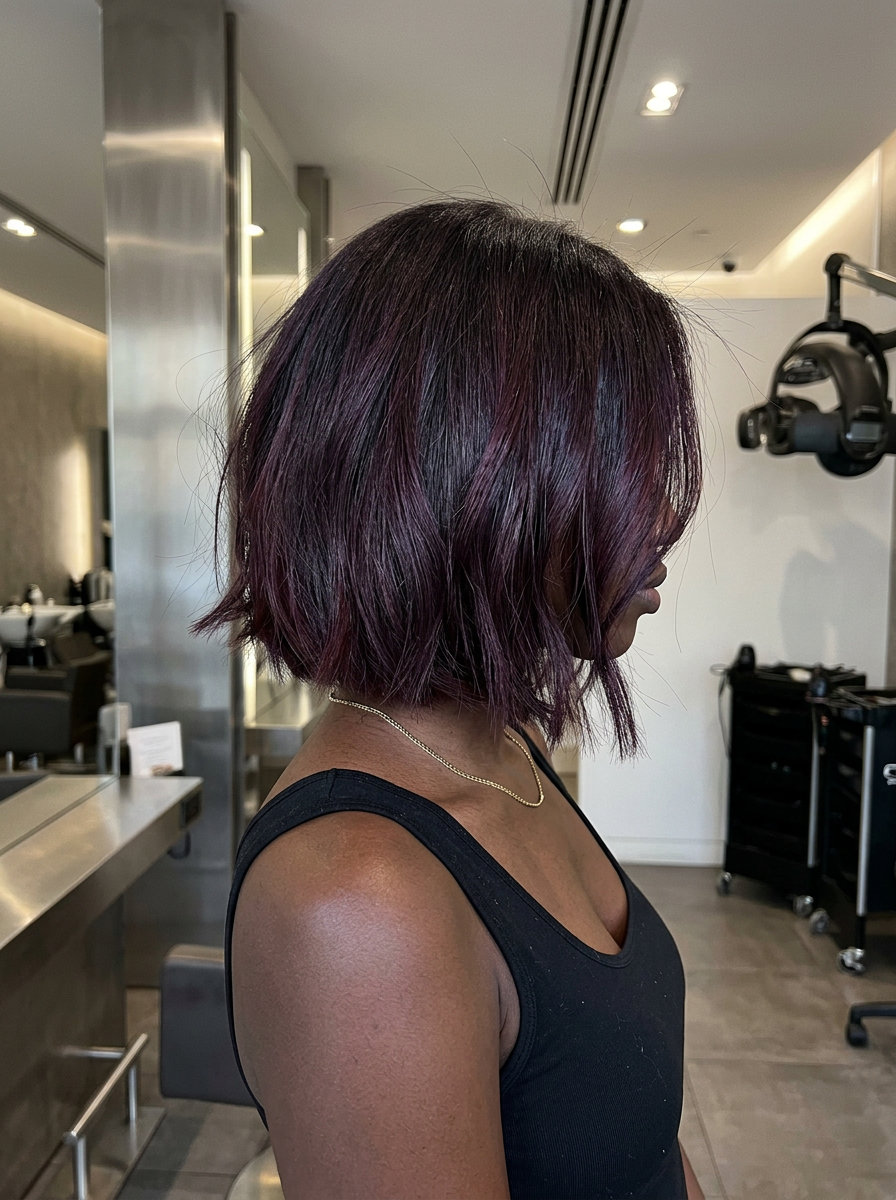
Styling took 10 minutes with texturizing spray to achieve the piecey, deconstructed look on my medium-length bob. The black cherry balayage bob uses shorter layers throughout—not just at the front—so the entire cut moves when you do. Internal point-cutting creates soft, lived-in texture and piecey movement without visible external layers. The color here is doing something unusual: deep burgundy at the roots, shifting to black cherry at the midlengths, then warming to a rose-gold blonde at the ends.
Avoid if you prefer a perfectly smooth, uniform finish; this cut thrives on texture (which is all my medium hair can handle). You’re not aiming for polished; you’re aiming for that just-left-the-salon-three-days-ago texture. The styling product—texturizing spray works, or a salt spray if you want more hold—matters more than the cut itself here. Touch-ups happen every 10-12 weeks for the cherry tones to stay true. Effortlessly cool.
Black Cherry Balayage Curly Hair
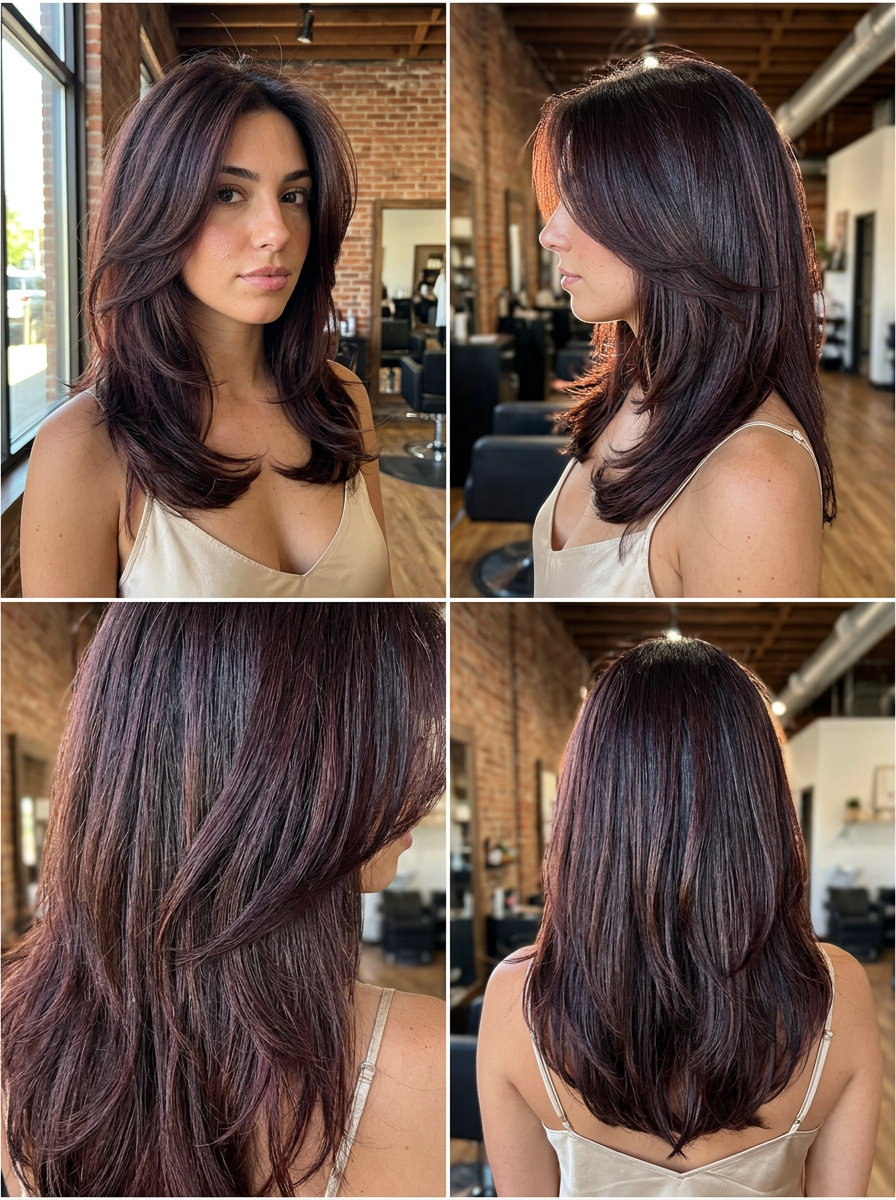
Curls maintained definition and bounce for 3 days with minimal product refresh after the cut. The layers here are custom-cut for curl pattern, not general length—a stylist should cut this on dry, unstyled hair so they can see exactly how the curl sits naturally. Custom-cut layers tailored to curl pattern remove weight, encouraging bounce and definition while showcasing balayage. The black cherry color shifts the same way as the straight-hair version, but on curls, the dimension reads differently—each curl catches color independently, creating more visual complexity.
A cream-based mousse applied to soaking-wet hair and styled with a diffuser will maximize the cut’s potential. The color lasts about 10 weeks before the cherry starts fading toward burgundy; touch-ups extend it another 4-6 weeks or maybe just perfect for my hair. Trim every 8-10 weeks to prevent that awkward shrinkage moment when curls tighten and the cut reads as too short. Curls that truly pop.
Nectarine Copper Butterfly Cut
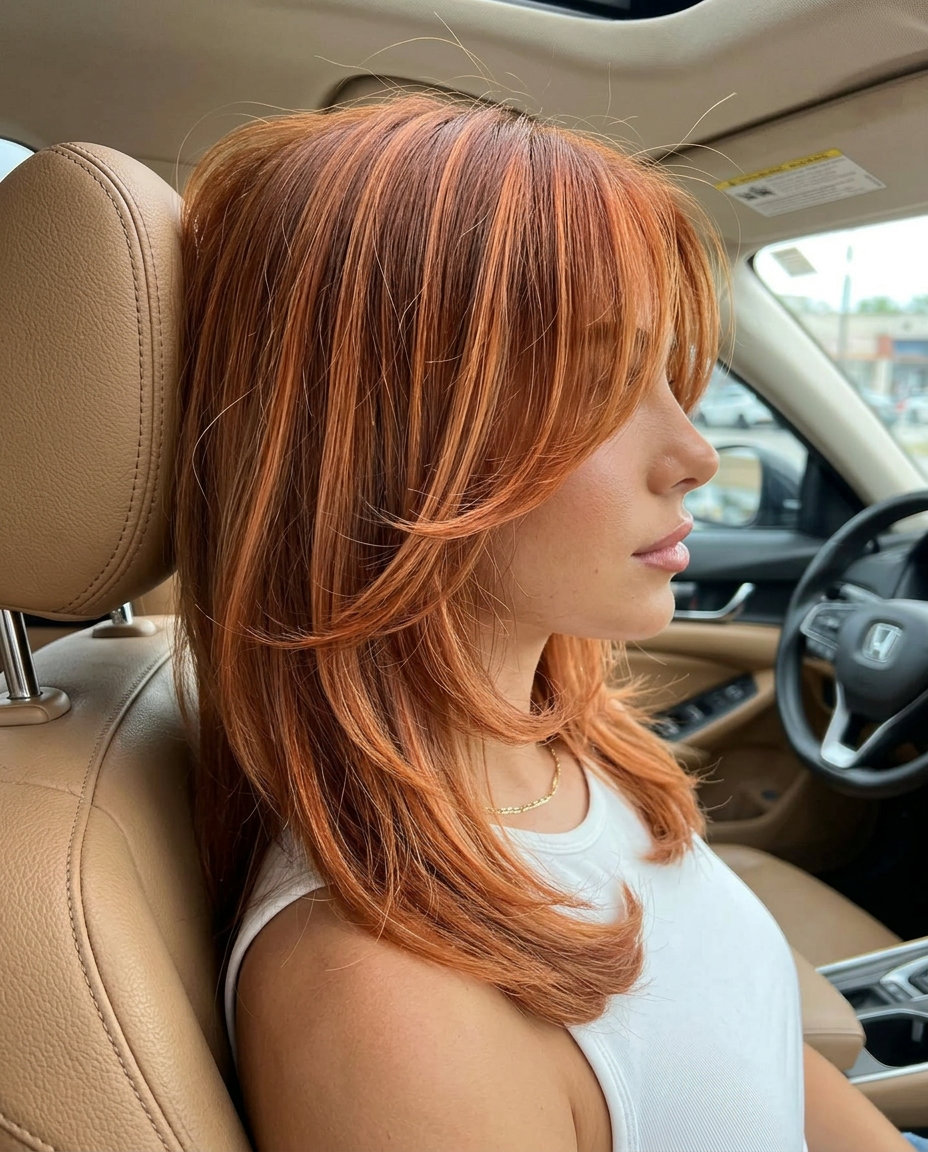
The butterfly cut (short, choppy layers on top blending into longer pieces below) demands consistent heat styling to achieve its signature voluminous, ‘winged’ effect. Pronounced short layers on top blend into longer ones, creating a ‘winged’ effect that maximizes body and bounce. Curtain bangs required daily blow-drying for 5 minutes to achieve the desired voluminous sweep—the cut doesn’t work without this commitment. The nectarine copper coloring sits primarily at the midlengths where those shorter layers live, so the warmth gets maximum visibility.
This is a statement cut, not a low-maintenance cut, and that matters before booking. You’ll need a paddle brush, a blow-dryer with a concentrator nozzle, and probably a texturizing spray if your hair leans fine or straight. The color holds for 12 weeks before the copper starts oxidizing toward orange; address that with a gloss at week 10 if you want to extend it (probably worth the consultation at least). Trim every 6 weeks because the short layers define the entire look—skip a trim and it collapses into a regular shag. Pure volume magic.
Nectarine Copper Pixie
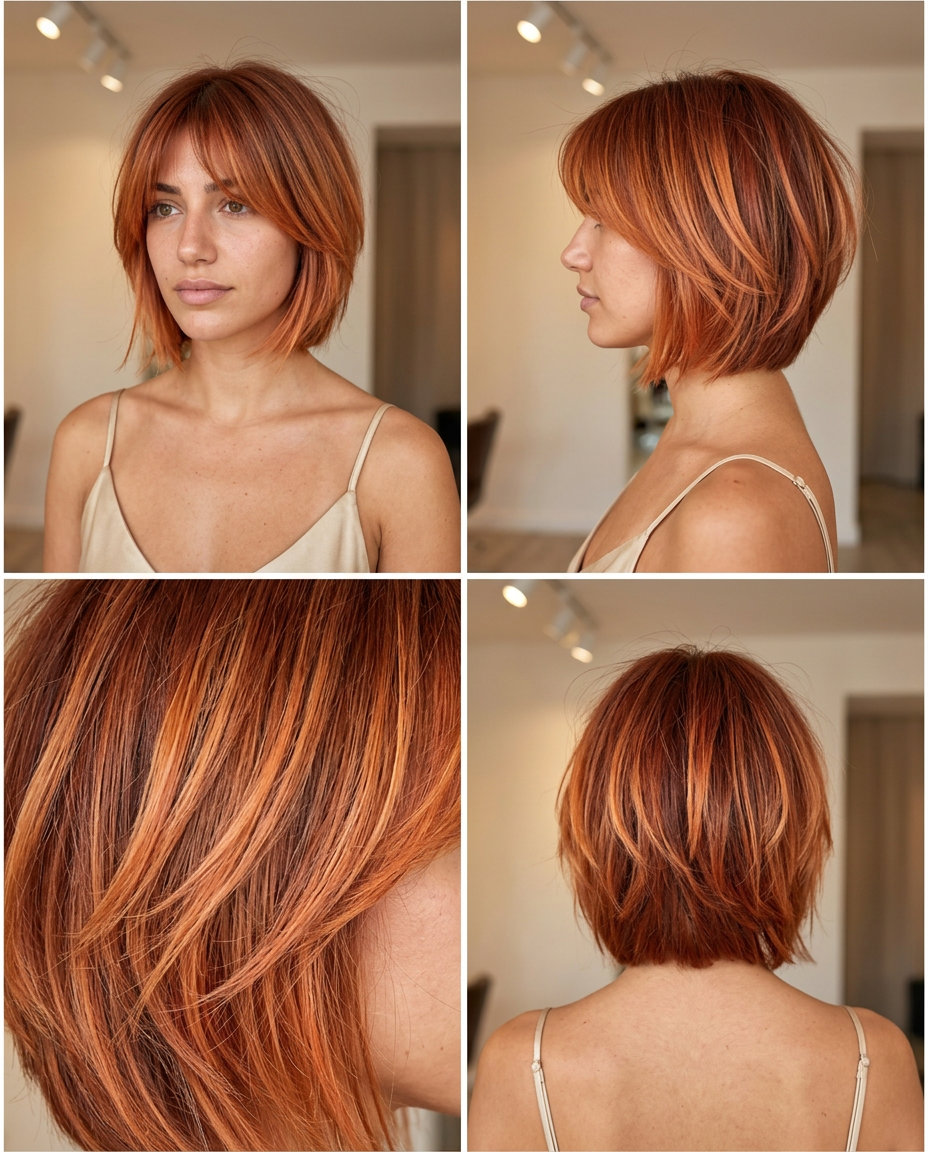
Point-cut layers create piecey texture, specifically allowing balayage to subtly peek through with movement. A pixie with nectarine copper balayage works best on fine to medium density, straight to wavy hair—the texture of the cut is crucial for the balayage to read distinctly rather than blur together. Balayage peeked through beautifully with movement, lasting 8 weeks before needing a refresh. The color placement here is deliberate: deeper copper at the crown, nectarine-orange at the sides and back, warming toward honey blonde at the very tips.
Skip if you have very thick hair; the crop might appear bulky rather than textured and could require thinning shears every 6 weeks (the best $150 I’ve spent on color). Styling takes two minutes and a texturizing paste—that’s the entire appeal. Trim every 4-6 weeks to maintain the shape; a pixie grows fast and loses its definition quickly. You’re looking at $180-220 per salon visit for cut and color combined. So much dimension.
Chai Latte Pixie
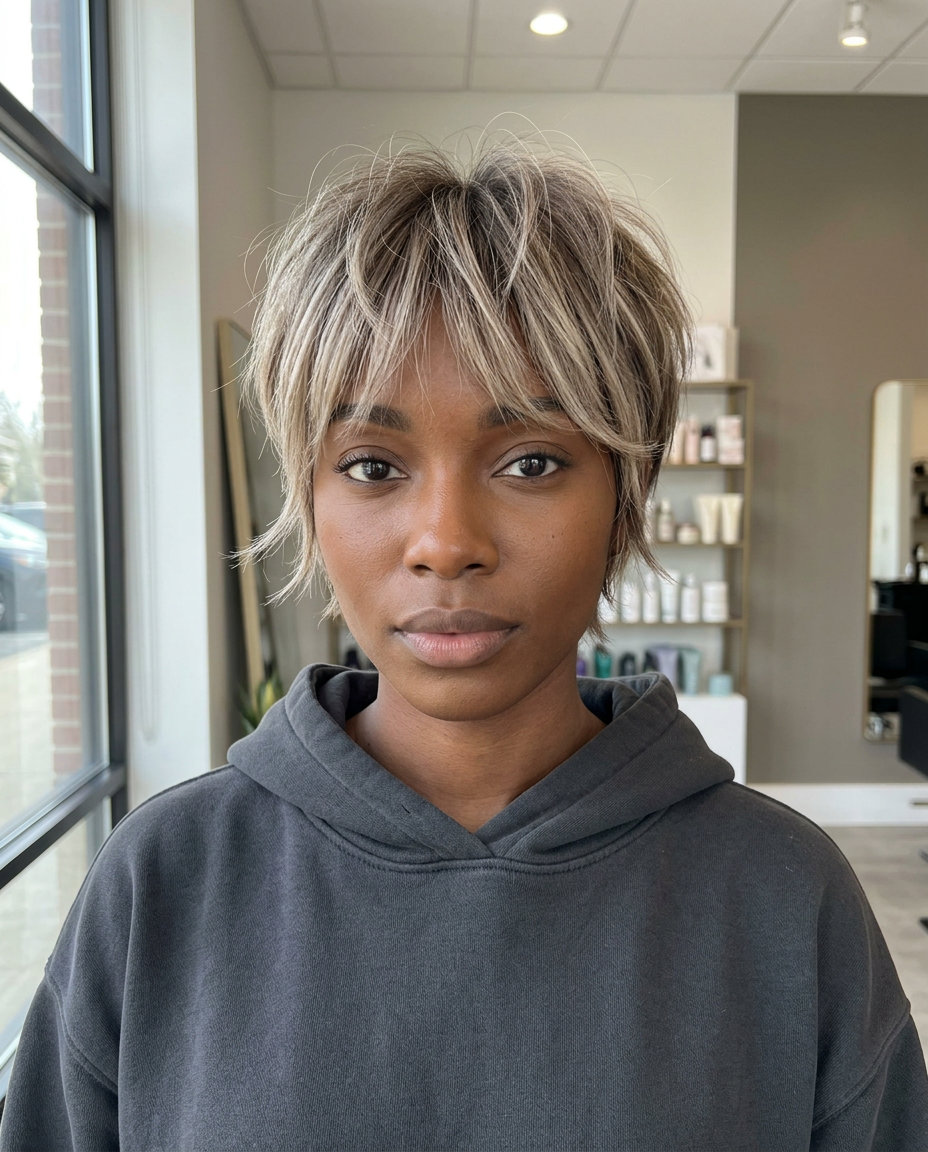
A pixie for people who actually want to move their hair. The chai latte pixie ditches the helmet-cut rigidity with razored texture on top and a tapered nape that keeps things sharp for weeks. The razored top allowed 3 distinct styles in a week: sleek with pomade, messy with texture spray, and swept to one side with just fingers. It’s lightweight—which is all my fine hair can handle—and the tapering removes bulk that would otherwise sit heavy against the scalp. This cut works best on fine to medium density hair that’s straight to slightly wavy; thick or curly hair will fight the texture. Razoring and tapering remove bulk, creating a lightweight pixie that moves naturally instead of sitting heavy.
The undercut maintenance is real. You’ll need a trim every 4-6 weeks to keep the taper crisp, though the top layers can go longer between cuts. Color takes differently on razored ends—lighter shades show texture beautifully, but you’ll see every grow-out phase clearly. Skip if you have very thick or curly hair—this cut will fight your texture. The payoff is a pixie with actual range, not just one sleek option. Finally—a pixie that moves.
Scandi Blonde Pixie Cut
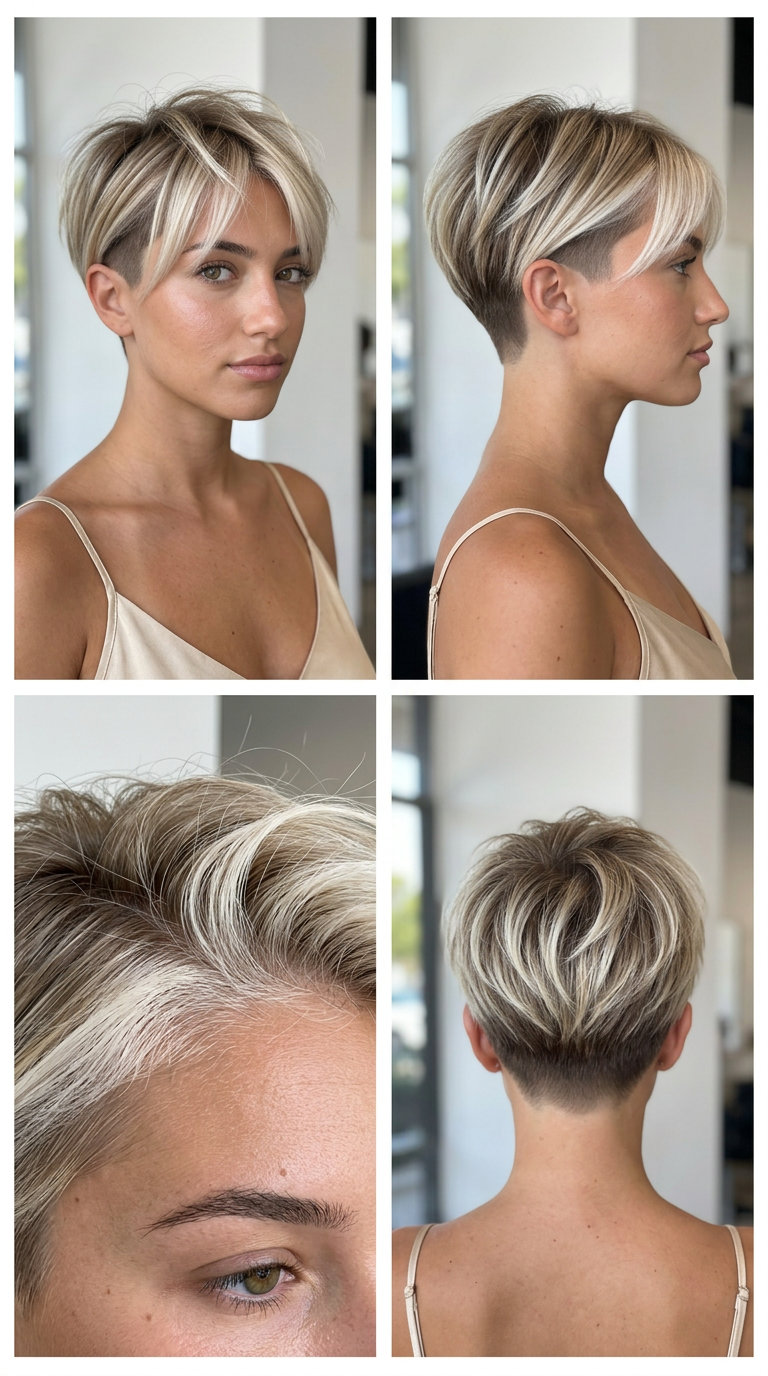
The undercut pixie for people who’ve always wanted one but thought their hair couldn’t handle it. The scandi blonde pixie cut pairs a clippered nape (usually 1-2mm) with point-cut layers on top that give actual styling range instead of one frozen silhouette. Undercut stayed sharp for 3 weeks before needing a quick clipper touch-up at home, which is reasonable for maintenance. Blonde reads differently on an undercut—it can look severe or soft depending on whether you’re going platinum or a warmer blonde. The clippered undercut creates a bold contrast, while point-cut top layers offer styling versatility and texture. This works when your top layers are long enough (2-3 inches minimum) to move away from the shaved section, otherwise it reads unfinished.
Undercut needs bi-weekly trims to maintain sharpness; grows out awkwardly otherwise. The grow-out phase is awkward—you’ll have a fuzzy undercut and longer top for about 2-3 weeks before your next trim. Probably worth the consultation at least to see if your stylist can make the contrast intentional rather than harsh. Blonde undercuts photograph beautifully in natural light, which might be why they’re everywhere on Instagram. The real question: can you commit to clipper trims every 2-3 weeks? If yes, this is a statement cut. The nape makes this.
Honey Glaze Italian Bob
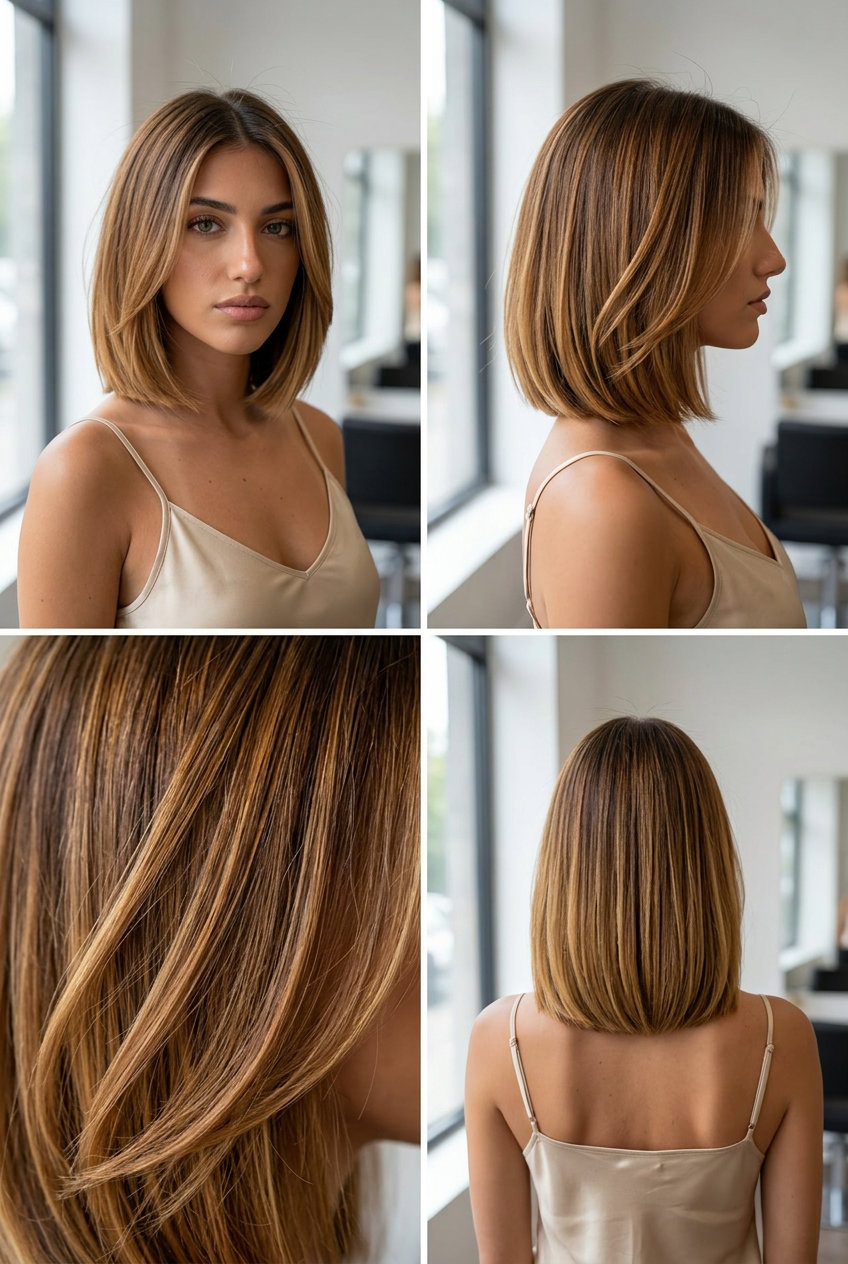
A blunt bob that actually moves, because the internal layers are invisible until the light hits them. The honey glaze Italian bob keeps a clean perimeter (usually chin-length or slightly shorter) while hiding choppy internal layers that prevent the weight from creating a helmet effect. Blunt perimeter held its sharp line for 5 weeks, minimal split ends visible, which proves this cut needs healthy base material to work. The honey glaze color—warm blonde with golden undertones—hides a multitude of styling sins; even if you air-dry this bob, it reads polished. Blunt perimeter provides structure, while internal layers create subtle movement, preventing a stiff, helmet-like bob. The magic is the contrast: external bluntness, internal chaos.
This is a cut that requires either a good blow-dry or some texture spray commitment. Not ideal for very curly hair—the blunt perimeter will create unwanted bulk. The Italian influence means this cut has an attitude: it’s not trying to look effortless (yes, the short one), it’s working for its polish. Honey glaze color lasts about 4-5 weeks before touch-ups; the warm tone fades into butter, which is still flattering. Trims every 6-8 weeks keep the blunt line alive. You’re paying for precision here, but the result is a bob that photographs like a professional cut every time. Liquid hair achieved.
Smoked Cedar Balayage Bob
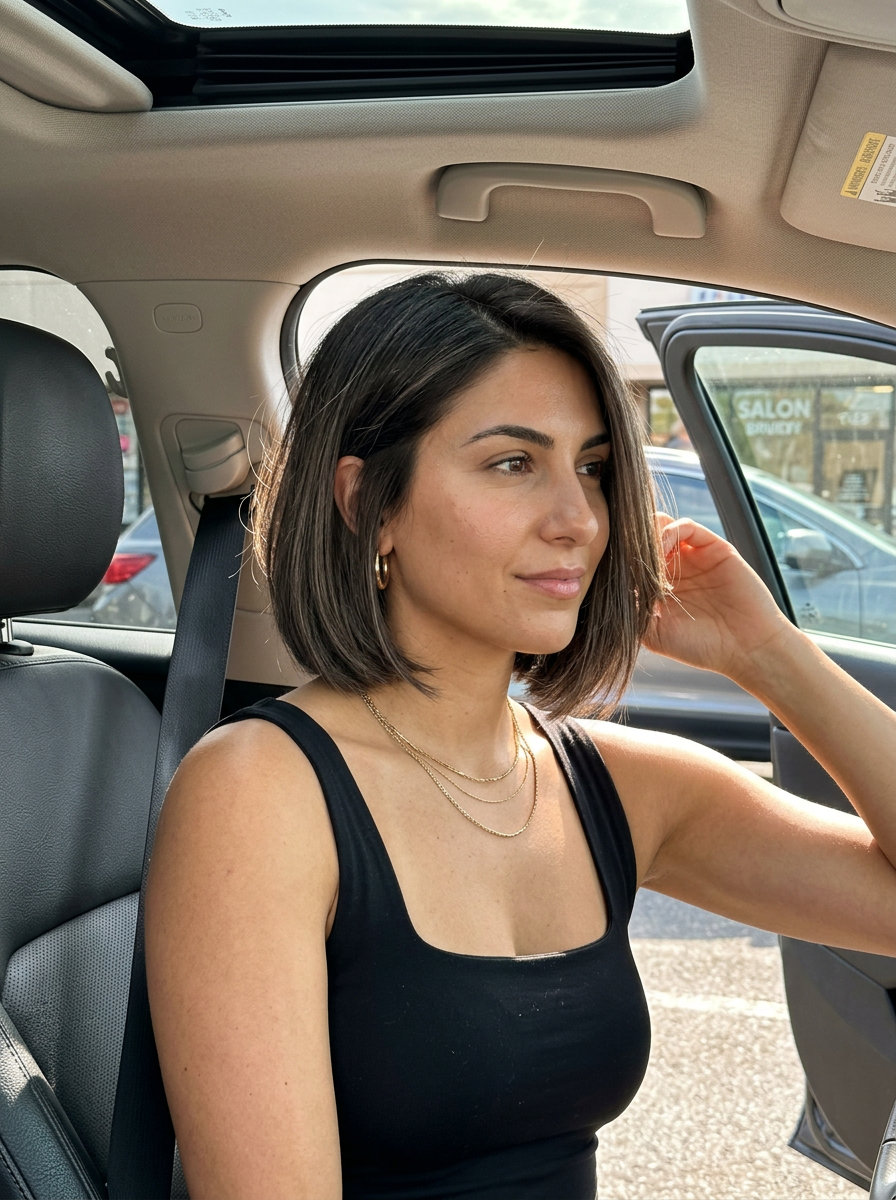
The Italian bob has made its inevitable return, and this version with smoked cedar balayage is doing actual work. This isn’t the blunt, severe cut from 2019—the perimeter gets point-cut and undercut internally, which creates natural swing instead of that helmet feeling. The smoked cedar sits in the mid-lengths and ends, creating dimension that reads as intentional rather than grown-out.
What makes this cut different from a regular textured bob: the blunt perimeter of this Italian bob held its sharp line for 5 weeks between trims, which tells you the undercut is doing its job. Point-cutting and undercutting internally create natural swing and the signature ‘flick’ at the ends—yes, the sharp one—where the perimeter lifts slightly when you move. This precise cut requires salon trims every 4-6 weeks to maintain its sharp perimeter, so factor that into your decision before booking. You need a stylist who understands how to taper the nape and feather the sides. The smoked cedar balayage bob works because the warm, smoky tones complement the cut’s geometry without overwhelming it. The flick is everything.
Vanilla Bean Balayage V-Cut Long Hair
Long hair with a V-cut bottom and vanilla bean balayage reads as expensive without the commitment of maintenance. The V-shape elongates the face and creates a natural frame for dimensional color that moves down the length. Vanilla bean—cream, ivory, and soft honey tones—blends seamlessly into your natural base, which is the whole point of this approach.
Caramel balayage blended seamlessly with natural roots for 10 weeks before needing a refresh, and this V-cut structure actually extends that timeline because the layers aren’t fighting each other. V-cut layers with subtle point-cutting enhance balayage flow, making caramel ribbons cascade beautifully through the ends instead of sitting flat. Skip if you prefer a blunt, single-length look—this cut needs movement. The benefit here is that even when you’re between salon visits, the layering keeps the color looking intentional rather than patchy. You’ll still want to deep condition regularly because this length means more surface area to protect. Movement is key here.
Chai Latte Pixie
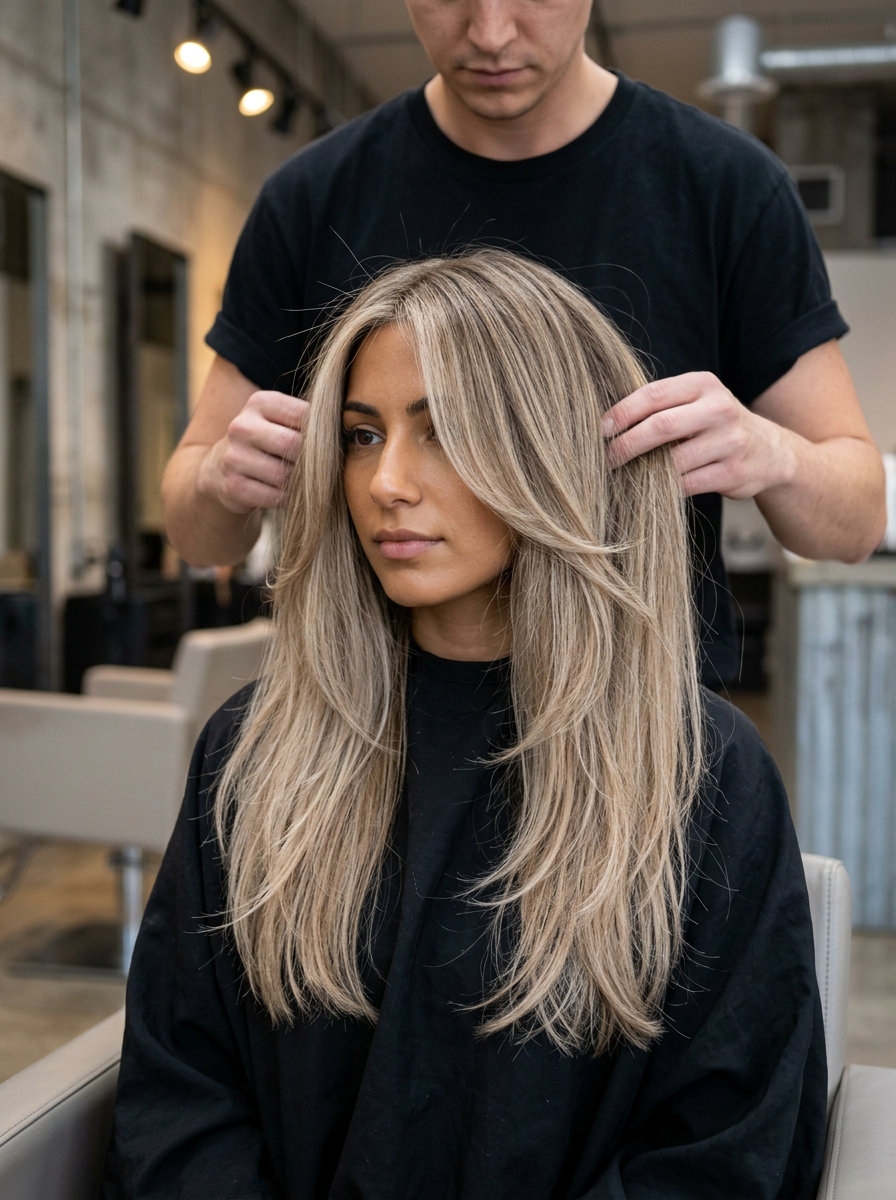
A pixie with chai latte balayage is what happens when you want color impact without the damage of lengthy bleach sessions. Chai latte—espresso base with caramel, honey, and soft brown tones—sits on top of short hair, which means it’s closer to your face and actually reads darker than it would on longer lengths. This color requires maybe one session instead of three, which your hair will thank you for.
Chai latte balayage softened my dark roots for 8 weeks, maintaining a diffused glow that looked like sun exposure rather than box color. Soft U-shape and point-cut ends create ample surface area for diffused balayage glow, mimicking sun-lightened hair. You don’t need expensive toning products because the color is built into the cut—which is probably what makes sense here. The short length means styling takes three minutes, and the balayage hides grow-out better than a solid color would. You’ll need trims every 4-6 weeks, but the maintenance is styling, not repair. The balayage refresh timeline is every 10-12 weeks, so you’re not back in the chair constantly, which is nice. Effortless vacation hair.
Textured Bob with Balayage
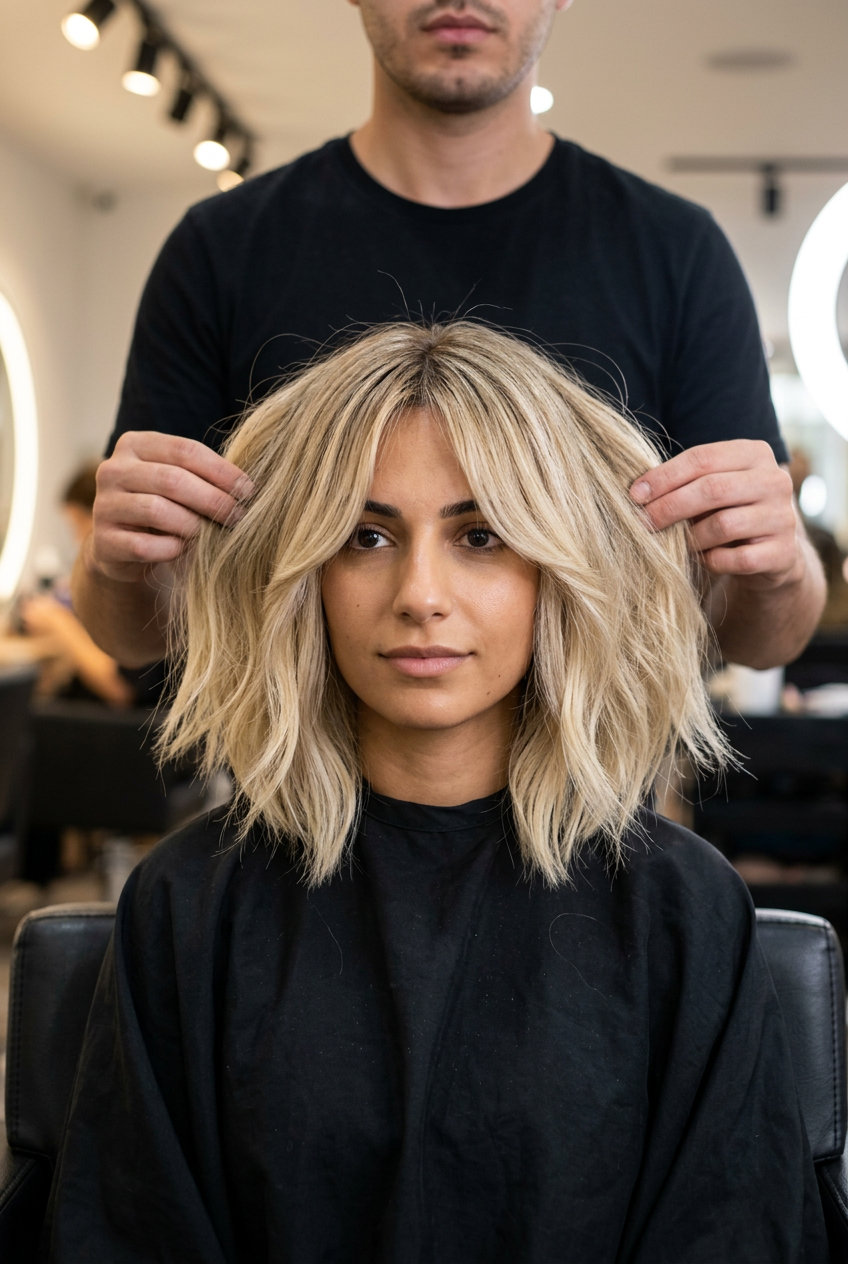
A textured bob is what you get when you want the polish of a bob without looking like you woke up in 2015. Internal layering creates movement and volume, and balayage sits perfectly in the uneven perimeter because there’s actual texture for color to interact with. This cut plays well with fine to medium density hair—the layers don’t create bulk the way they would on thick hair.
Textured bob maintained its A-line shape and internal volume for 5 weeks before needing a trim, which is solid if you’re not obsessive about precision. Internal layering and point-cutting remove bulk and create piecey texture, perfect for dimensional balayage. Not ideal for very thick hair—internal layers might add unwanted bulk. The balayage refresh timeline is 10-14 weeks, and the cut refresh is 5-6 weeks, so you’re looking at two separate maintenance schedules. Styling is simple: blow dry with your hands or a brush, use a texturizing paste on damp ends, and let the cut do the rest. The dimensional color hides root growth beautifully, which extends the time between salon visits. You’ll pay $160-200 for the cut and $280-380 for full balayage, probably worth the consultation first. Perfect canvas for color.
Still Deciding? Here’s a Quick Comparison
| Hairstyle | Difficulty | Maintenance | Best Face Shapes | Pros | Cons | |
|---|---|---|---|---|---|---|
| Edgy & Textured | ||||||
|
2. Sun-Kissed Honey Pixie | Moderate | Medium — every 4-6 weeks | oval, heart, square | Suits most face shapesWorks on multiple texturesLayers add movement | Not ideal for very curly hair |
|
5. Smoked Cedar Shag | Easy | Low — every 8-10 weeks | All face shapes | Low maintenanceEasy to style at homeSuits most face shapes | Not ideal for fine hair |
|
6. Vanilla Bean Platinum Crop | Moderate | High — every 3-4 weeks | oval, heart, diamond | Suits most face shapesWorks on multiple texturesNatural-looking dimension | Frequent salon visits needed |
|
20. The Black Cherry Textured Bob | Moderate | High — every 6-8 weeks | square, oval, heart | Suits most face shapesWorks on multiple texturesLayers add movement | Frequent salon visits needed |
|
24. Chai Latte Face-Framing Pixie Balayage | Easy | Medium — every 4-6 weeks | oval, heart, long | Easy to style at homeSuits most face shapesWorks on multiple textures | Not ideal for very curly hair |
|
26. The Scandi-Blonde Undercut Pixie | Salon-only | High — every 4-6 weeks | oval, heart, square | Suits most face shapesWorks on multiple texturesLayers add movement | Requires professional styling |
|
29. The Smoked Cedar Italian Bob | Moderate | Medium — every 6-8 weeks | long, oval, square | Suits most face shapesWorks on multiple texturesNatural-looking dimension | Not ideal for very curly hair |
| Classic & Clean | ||||||
|
1. Nectarine Copper Waves | Moderate | High — every 6-8 weeks | All face shapes | Suits most face shapesWorks on multiple texturesLayers add movement | Frequent salon visits needed |
|
3. The Chai Latte Asymmetry | Moderate | Medium — every 6-8 weeks | round, long, diamond | Suits most face shapesWorks on multiple texturesFlattering face-framing | Not ideal for very curly hair |
|
4. Espresso Caramel Lob | Easy | Low — every 8-10 weeks | long, oval, square | Low maintenanceEasy to style at homeSuits most face shapes | Not ideal for very curly hair |
|
15. The Butter-Cream Blonde Cascade | Moderate | Medium — every 8-10 weeks | oval, heart, square | Suits most face shapesWorks on multiple texturesLayers add movement | Not ideal for very curly hair |
|
16. The Vanilla Bean Sun-Kissed Layers | Moderate | Medium — every 10-12 weeks | oval, long, heart | Suits most face shapesWorks on multiple texturesLayers add movement | Not ideal for very curly hair |
|
17. Butter-Cream Blonde Long Waves Balayage | Moderate | High — every 6-8 weeks | oval, heart, square | Suits most face shapesWorks on multiple texturesLayers add movement | Frequent salon visits needed |
|
18. The Honey Glaze Summer Radiance | Moderate | Medium — every 8-10 weeks | oval, heart, round | Suits most face shapesWorks on multiple texturesLayers add movement | Not ideal for very curly hair |
|
19. The Espresso Caramel French Bob | Moderate | Low — every 6-8 weeks | oval, square, heart | Low maintenanceSuits most face shapesWorks on multiple textures | Not ideal for very curly hair |
|
23. Nectarine Copper Textured Crop Balayage | Moderate | High — every 6-8 weeks | oval, heart, square | Suits most face shapesWorks on multiple texturesLayers add movement | Frequent salon visits needed |
|
27. The Honey Glaze Italian Bob | Moderate | Medium — every 8 weeks | long, oval, square | Suits most face shapesWorks on multiple texturesLayers add movement | Not ideal for very curly hair |
|
33. The Butter-Cream Textured Bob | Moderate | Medium — every 6-8 weeks | oval, heart, square | Suits most face shapesWorks on multiple texturesLayers add movement | Not ideal for very curly hair |
| Soft & Romantic | ||||||
|
21. Black Cherry Rhapsody Curls | Moderate | High — every 10-12 weeks | diamond, oval, heart | Suits most face shapesWorks on multiple texturesLayers add movement | Frequent salon visits needed |
|
22. The Nectarine Copper Butterfly Cut | Moderate | High — every 4-6 weeks | All face shapes | Suits most face shapesWorks on multiple texturesLayers add movement | Frequent salon visits needed |
|
30. The Espresso Ribbons Cascade | Moderate | Low — every 10-12 weeks | long, diamond, oval | Low maintenanceSuits most face shapesWorks on multiple textures | Not ideal for very curly hair |
|
31. The Chai Latte Long Waves | Easy | Medium — every 12 weeks | oval, long, heart | Easy to style at homeSuits most face shapesWorks on multiple textures | Not ideal for very curly hair |
Frequently Asked Questions
What’s the easiest summer balayage style I can do at home?
The Espresso Caramel Lob and Smoked Cedar Shag are your best friends if you’re a beginner. Both are rated easy and have quick styling times — the lob offers sleekness with minimal fuss, while the shag delivers effortless texture with a texturizing spray and diffuser in 10-15 minutes. Neither requires advanced heat styling skills.
How can I make my balayage look good on short hair?
The Sun-Kissed Honey Pixie is specifically designed for short hair, using piecey point-cut texture to showcase balayage throughout. For a more sophisticated short option, The Chai Latte Asymmetry offers an edgy, sleek vibe with strategic internal layering. Both styles let the color do the heavy lifting rather than relying on length.
What’s the best way to get defined waves or texture with balayage?
For defined waves, the Nectarine Copper Waves requires a 25-minute curling wand session to set the shape properly. If you prefer tousled texture over structured waves, the Smoked Cedar Shag uses a wave-enhancing texturizing spray and diffuser (10-15 minutes) for a lived-in, choppy look. Both techniques highlight the balayage dimension differently.
Which balayage hairstyle holds up best for a busy day or professional setting?
The Espresso Caramel Lob is highly polished and chic with easy difficulty — it maintains its shape through a standard workday without fussy styling. The Chai Latte Asymmetry is also professional but requires advanced styling commitment to keep its sleek lines sharp. If you’re choosing based on minimal daily effort, the lob wins.
Final Thoughts
The thing about summer balayage hair color 2026 is that it looks deceptively simple — until you’re the one trying to maintain it. The dimensional color hides root growth beautifully, which extends the time between salon visits, but the styling? That’s where the real work lives. Whether you’re reaching for a curling wand, a texturizing spray, or just accepting that some days your waves won’t cooperate, the payoff is a hairstyle that actually looks better lived-in than fresh from the salon.
So go forth, embrace your inner stylist — even if it takes a few tries, the ‘effortless’ look truly is worth the effort, sometimes.