
I spent December watching every woman in the coffee shop hold her hair up to the light. Cooler tones, softer transitions. The summer balayage that screamed bright bleach is gone. Winter wants something you can grow out without apology, and honestly, that is my kind of low stakes.
These 33 Winter Balayage ideas run the gamut: dark bases that fade to ash, copper that warms a grey December, platinum only near the ends. I wrote each one thinking about fine hair that goes flat by 4pm, because that is mine, and about a root line that shows at week five. If you need a colour that works with a busy week and a hair tie, start here.
Dark Brown With Ash Blonde Balayage
The dark brown base makes the ash blonde balayage read cooler than it would on a lighter starting point. I’ve seen this on fine hair and it can look too heavy, so medium density or thicker is safer. The balayage technique keeps the root dark, so the ash blonde highlights stay concentrated on the mid-lengths and ends. On wavy, mid-back hair, the contrast reads deliberate and wintery. The tone is cool, almost silvery, which works best with a middle part and loose waves. Length is mid-back, texture is wavy and medium density.
Shoulder Length Layers With Golden Blonde Balayage
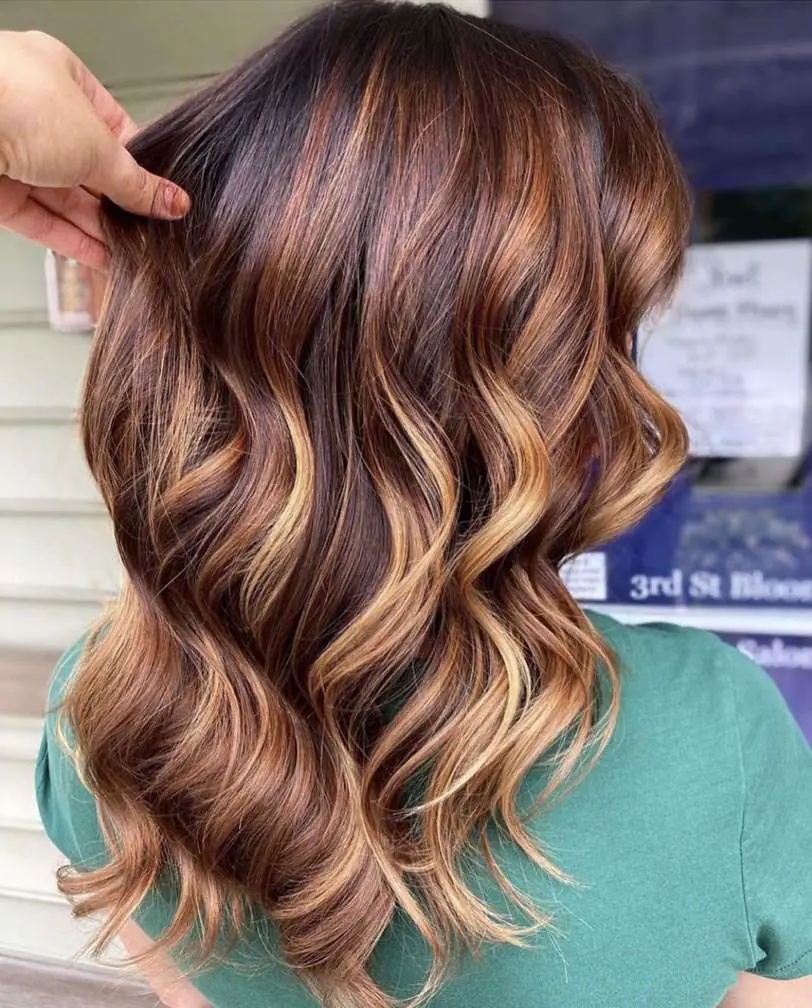
I’ll admit, I was skeptical about golden blonde on a medium brown base. But the grow-out is surprisingly soft because the golden blonde fades into the brown without a harsh line. The balayage technique places the lightness on the layers, so shoulder-length hair gets movement without looking striped. The tone is warm but not brassy, provided you use a purple shampoo every third wash. The length is shoulder, the texture is wavy and medium density. Upkeep means a toner every six to eight weeks to keep the gold from turning orange.
Mid-Back Copper Balayage With Curtain Bangs
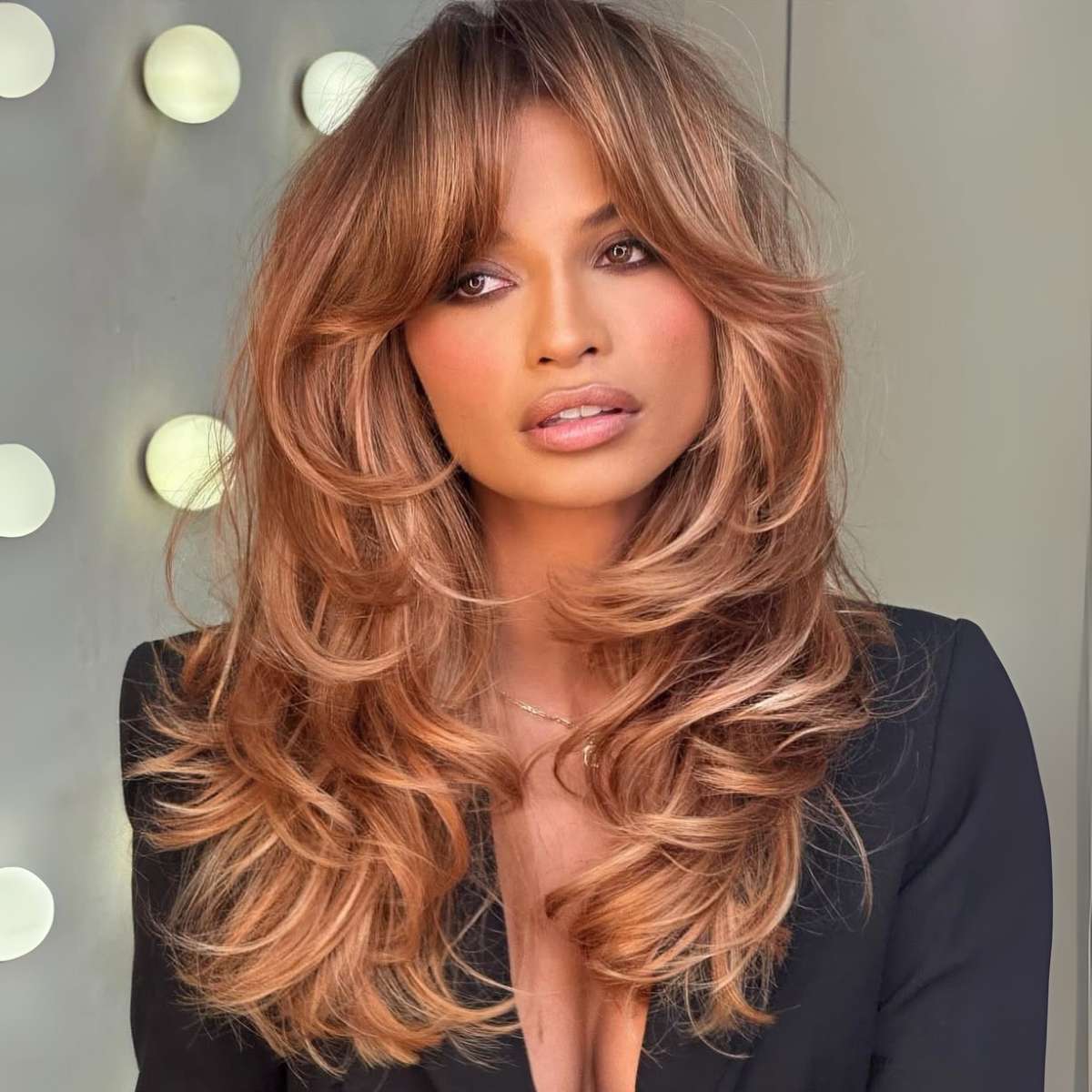
Copper balayage is the winter color that actually warms you up. On mid-back, thick, wavy hair, the copper reads rich and dimensional, not costume-y. The balayage technique keeps the root darker, so the copper tones feel grown-in. Curtain bangs soften the face and let the copper peek through at the front.
This is the color you wear to holiday parties and still look intentional in January. The tone is warm copper, the length is mid-back, the texture is thick and wavy. The curtain bangs need a quick blow-dry every morning, but the rest of the hair can air-dry with a curl cream. Seasonal? Yes. But it lasts through spring if you tone it once.
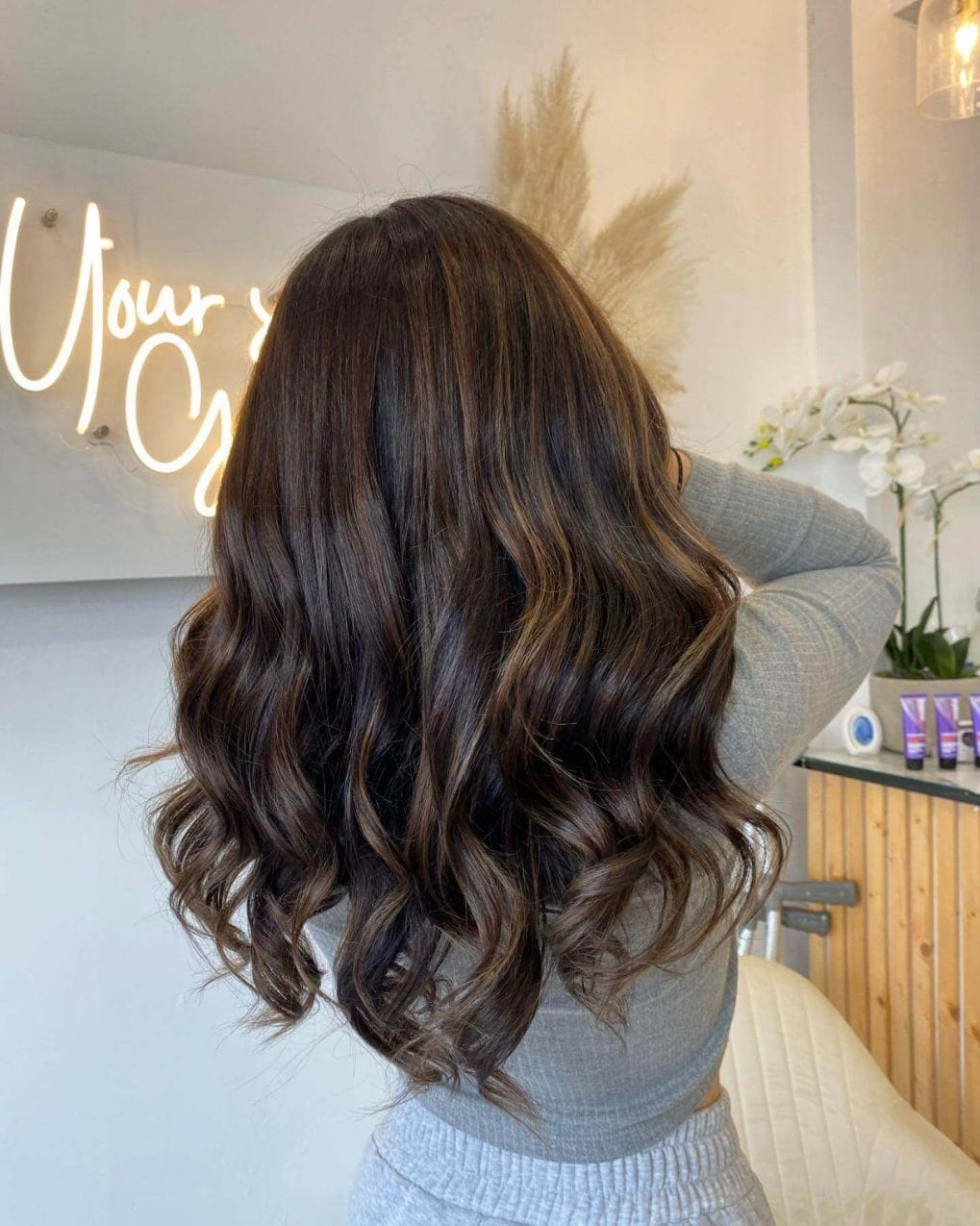
Mid-Back Dark Brown With Ash Blonde Highlights
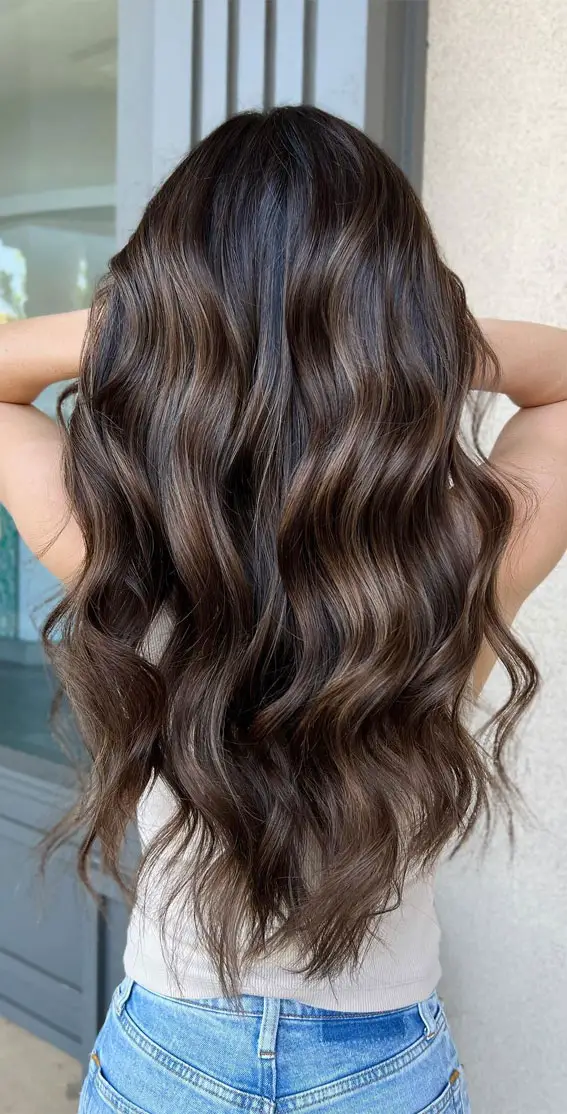
If you want ash blonde without the root commitment, this is the better bet. A full head of ash blonde needs touch-ups every four weeks. Dark brown with ash blonde highlights grows out gracefully because the dark base hides the new growth. The balayage technique places the highlights sparingly, so the contrast is dimensional but not high-maintenance. The tone is cool ash, the length is mid-back, the texture is thick and wavy. Defined waves show off the highlights without extra effort.
Chocolate Brown With Warm Caramel Highlights
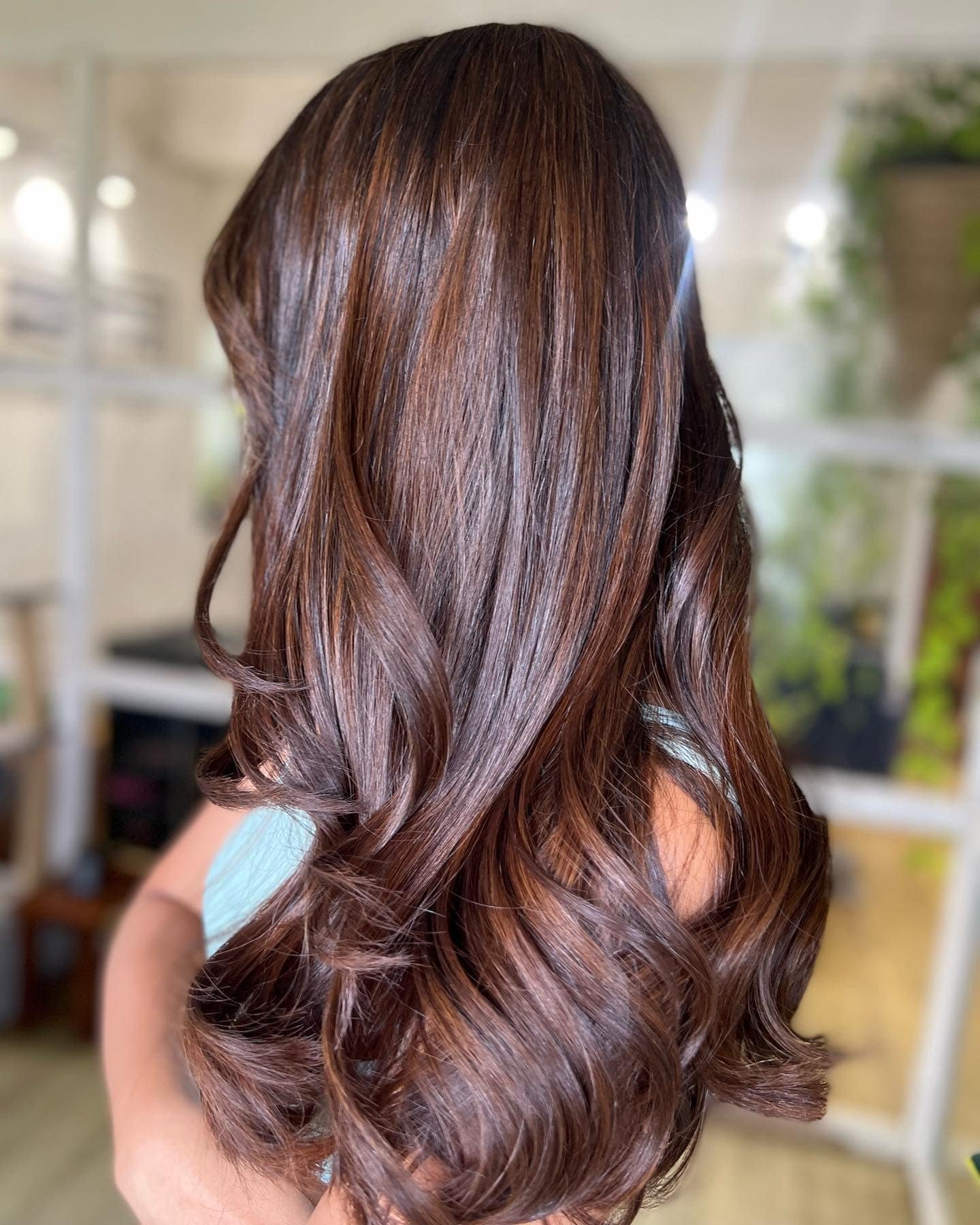
Have you ever looked at a chocolate brown that somehow manages to be both deep and glowing? That is what warm caramel highlights do to a rich base — they catch the light without washing you out. This is a salon job, not a box colour moment, because the caramel needs to be painted in sections, not foiled all over. On warmer skin tones, the combination reads like deliberate luxury. The wavy texture helps the highlights ripple, so the chocolate base stays grounded. No bangs here, just layers that let the colour breathe from mid-back down.
Long Ash and Platinum Blonde Balayage
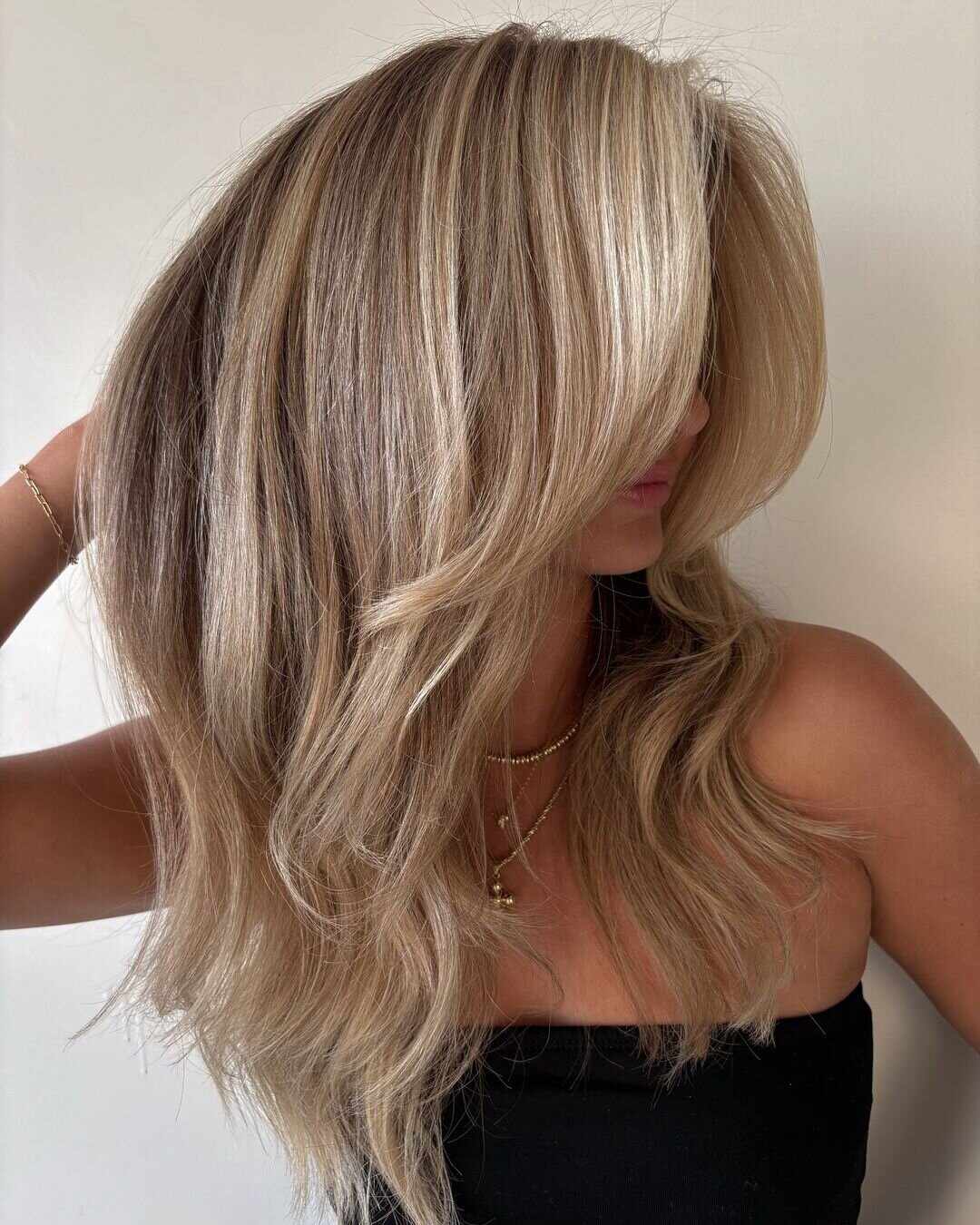
I will admit it: I gasped a little when I saw this balayage. The technique is not subtle — the stylist paints the ash blonde lowlights toward the root and pulls platinum blonde through the mid-lengths and ends, creating a contrast that reads almost silver in certain light. That is the trick: the colour is not flat, it is stacked. The front-facing layers catch the platinum first, then the length deepens into ash.
Here is the trade-off. Platinum blonde requires a toning appointment every four to six weeks or it drifts into yellow. The roots on long hair show at week three even with a soft grow-out line. Voluminous waves add time to your morning, about twenty minutes with a large barrel. If you want low upkeep, skip this. If you want the brightest blonde in the room, book it and expect to maintain.
Ash Brown Balayage Lob
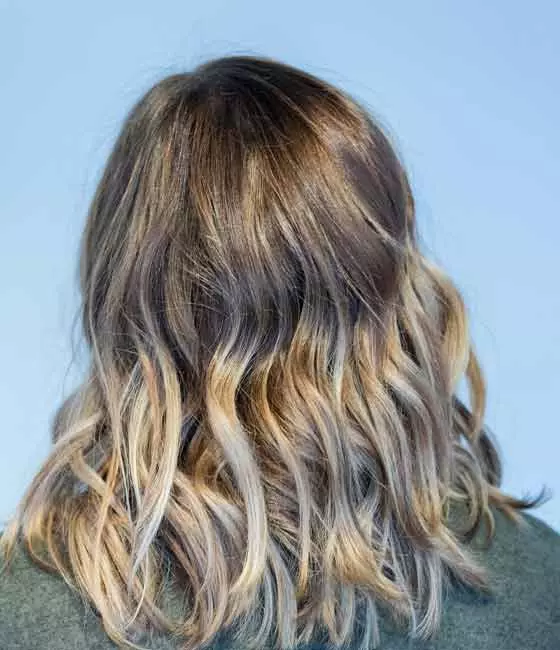
The first week, it looks fresh. The eighth week, it still looks intentional. That is the wear reality of an ash brown balayage lob — the subtle cool tone fades evenly and the root line softens because the colour is painted lower, not pulled through to the scalp. Shoulder-length wavy texture helps; the waves bend the colour so the grow-out never becomes a harsh stripe. Medium density is ideal: too fine and the ash can read flat, too thick and the balayage gets swallowed. This is a colour that rewards patience, not a quick fix.
Dark Blonde With Creamy Blonde Balayage
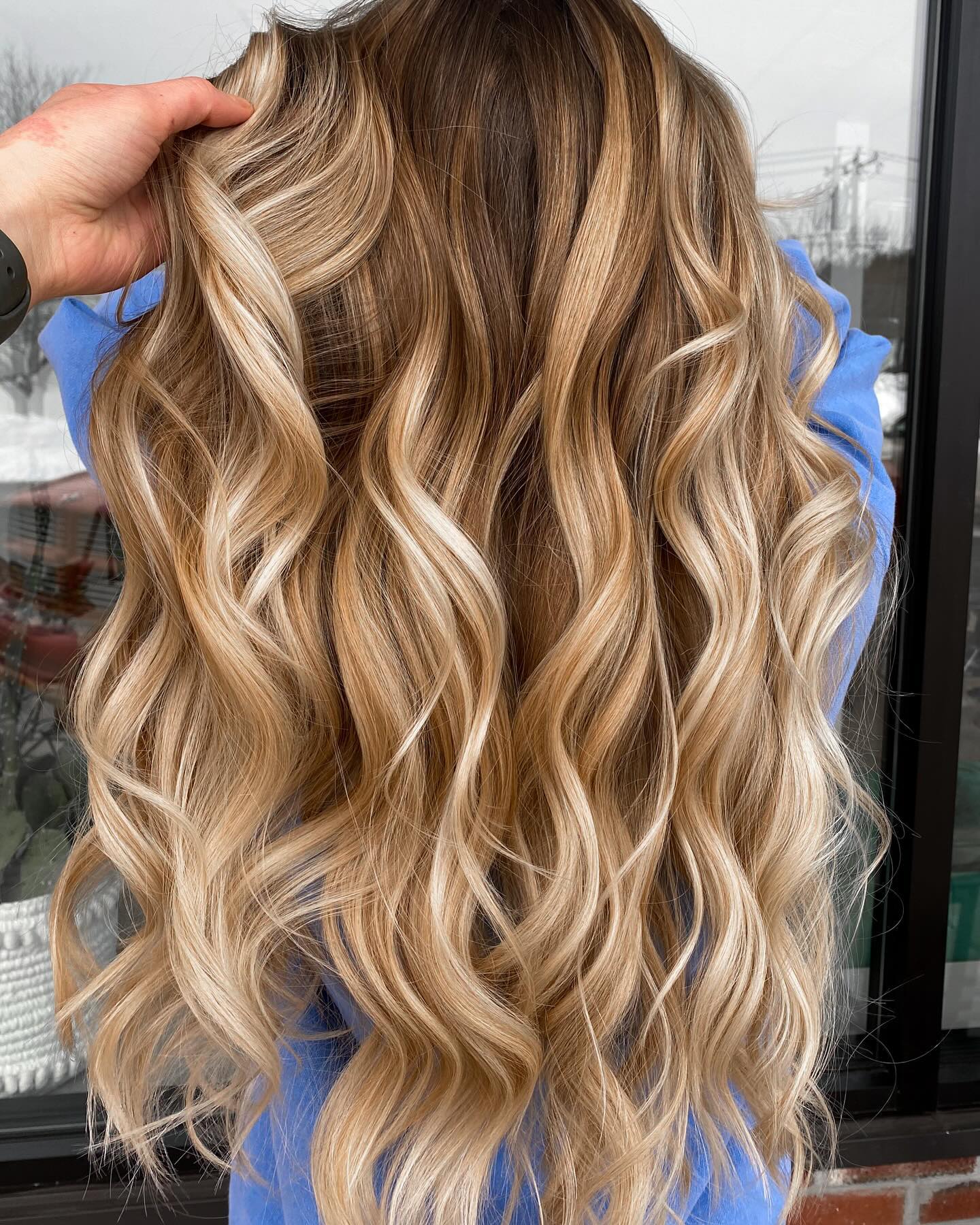
Why does creamy blonde feel so right in January? Because it is warm without being brassy, bright without being icy — the winter light bounces off it instead of washing it out. The dark blonde base anchors the colour, so the creamy blonde reads as sunlit rather than bleached. Styling is straightforward: loose curls take about fifteen minutes with a one-inch barrel, or a quick blowout with a round brush in ten. Mid-back thick hair holds curl well, so you can get away with day-two texture. This is the seasonal shade that works with turtlenecks and grey skies, not against them.
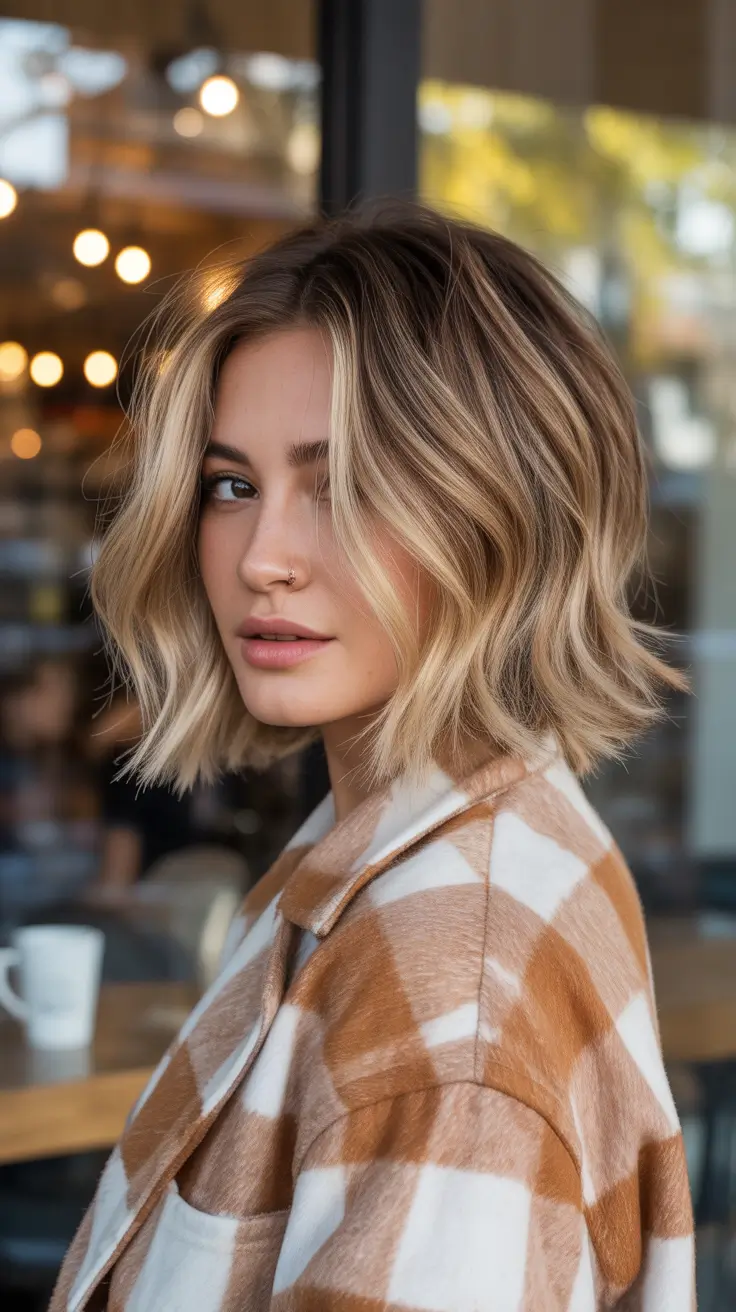
Chin Length Bob Dark Brown With Blonde Balayage
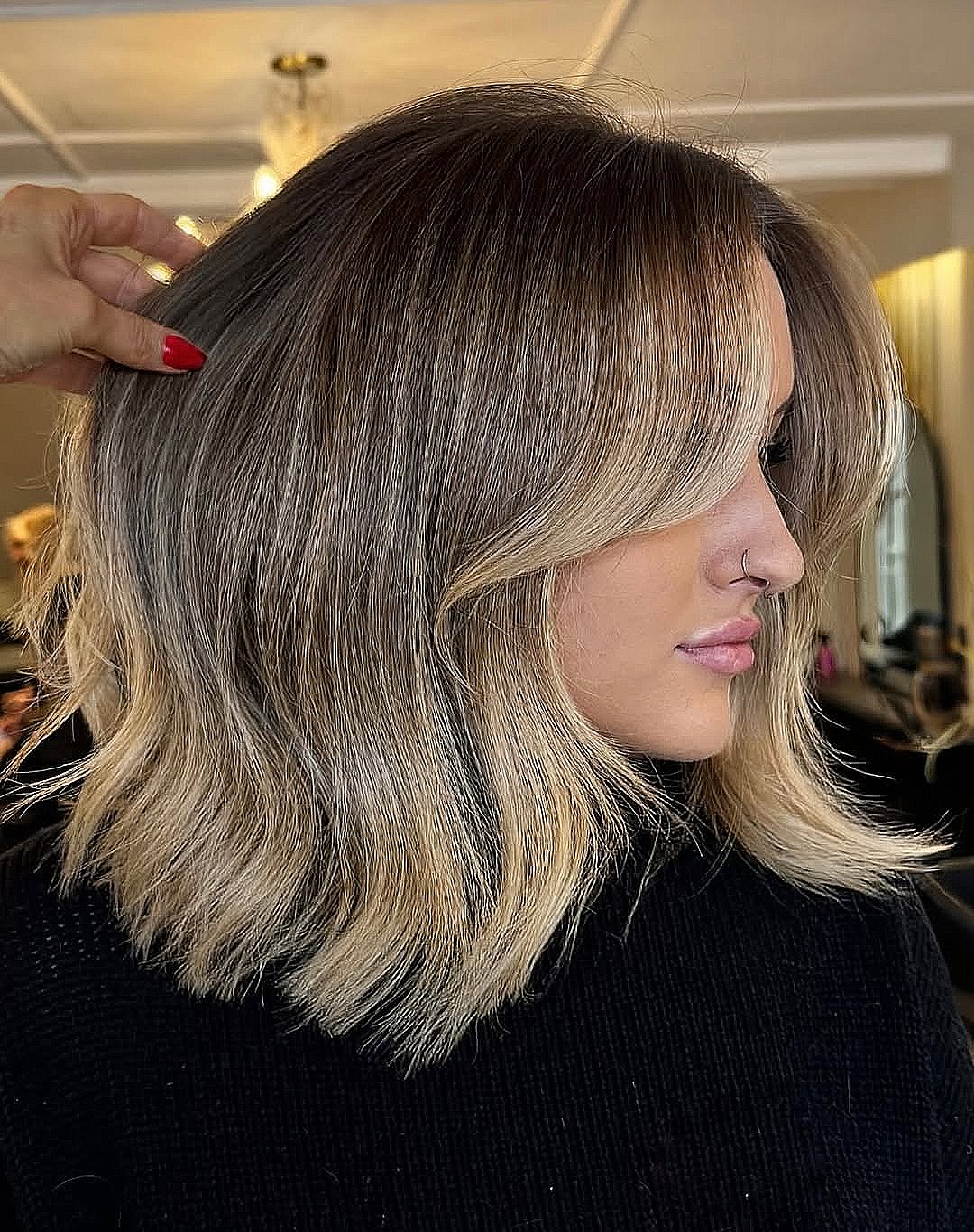
I tried this at home once. Once. The problem with a chin-length dark brown blonde balayage bob is that the shorter the canvas, the less room for error — one misplaced highlight and the whole front looks stripey. Curtain bangs complicate it further because the fringe needs to blend into the colour, not contrast against it. A professional paints the blonde balayage with a freehand technique that keeps the dark brown root visible, so the grow-out looks deliberate. This is not a bathroom-mirror job. Book the consultation, let someone with a brush do it.
Wavy Lob Copper With Blonde Balayage
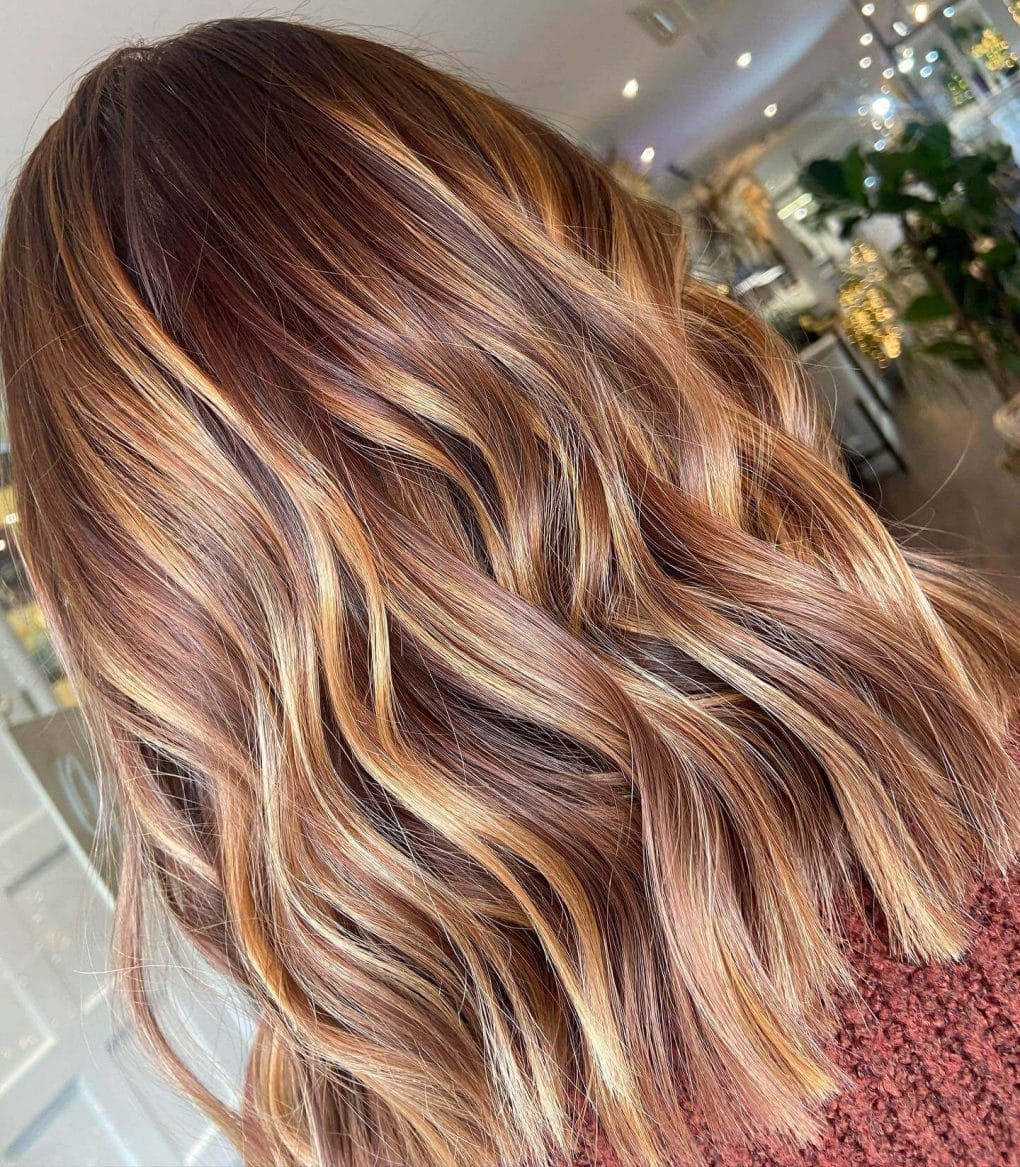
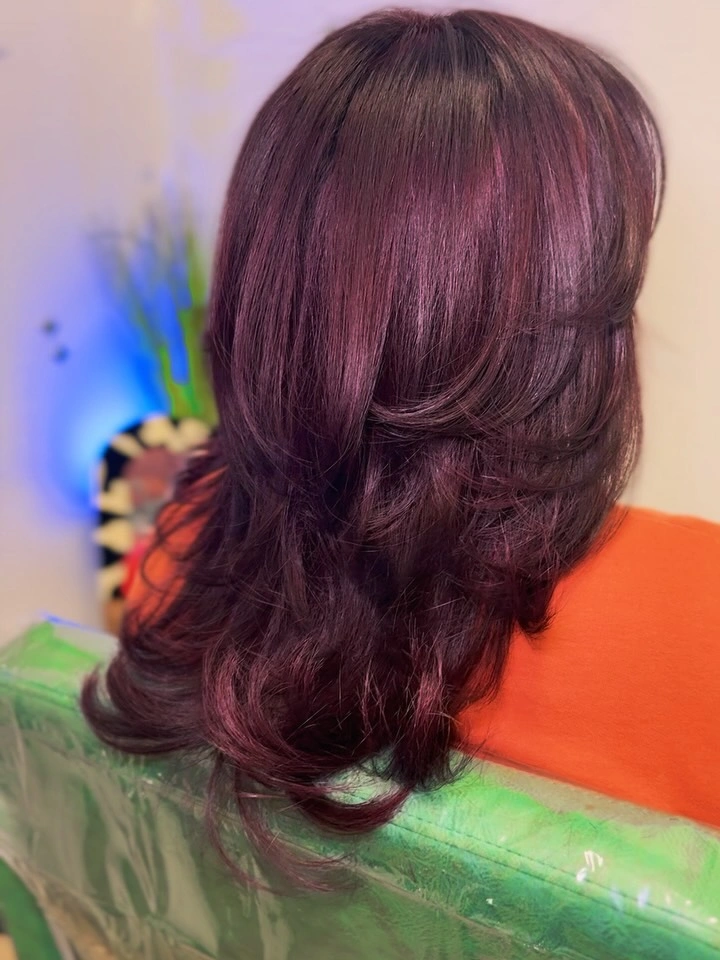
This one earns its keep. The copper blonde balayage lob works best on warm undertones, the copper reads golden not rusty. The balayage technique keeps the blonde swept through the mid-lengths and ends, so the tone stays dimensional without a harsh root line. Shoulder-length, wavy texture holds the shape without fighting it. Medium density is ideal; too fine and the copper can overwhelm, too thick and the blonde gets lost. It is a salon job, and the back view shows the balayage placement clearly: a middle part lets the colour fall evenly.
Mid-Back Honey Blonde Balayage Blowout
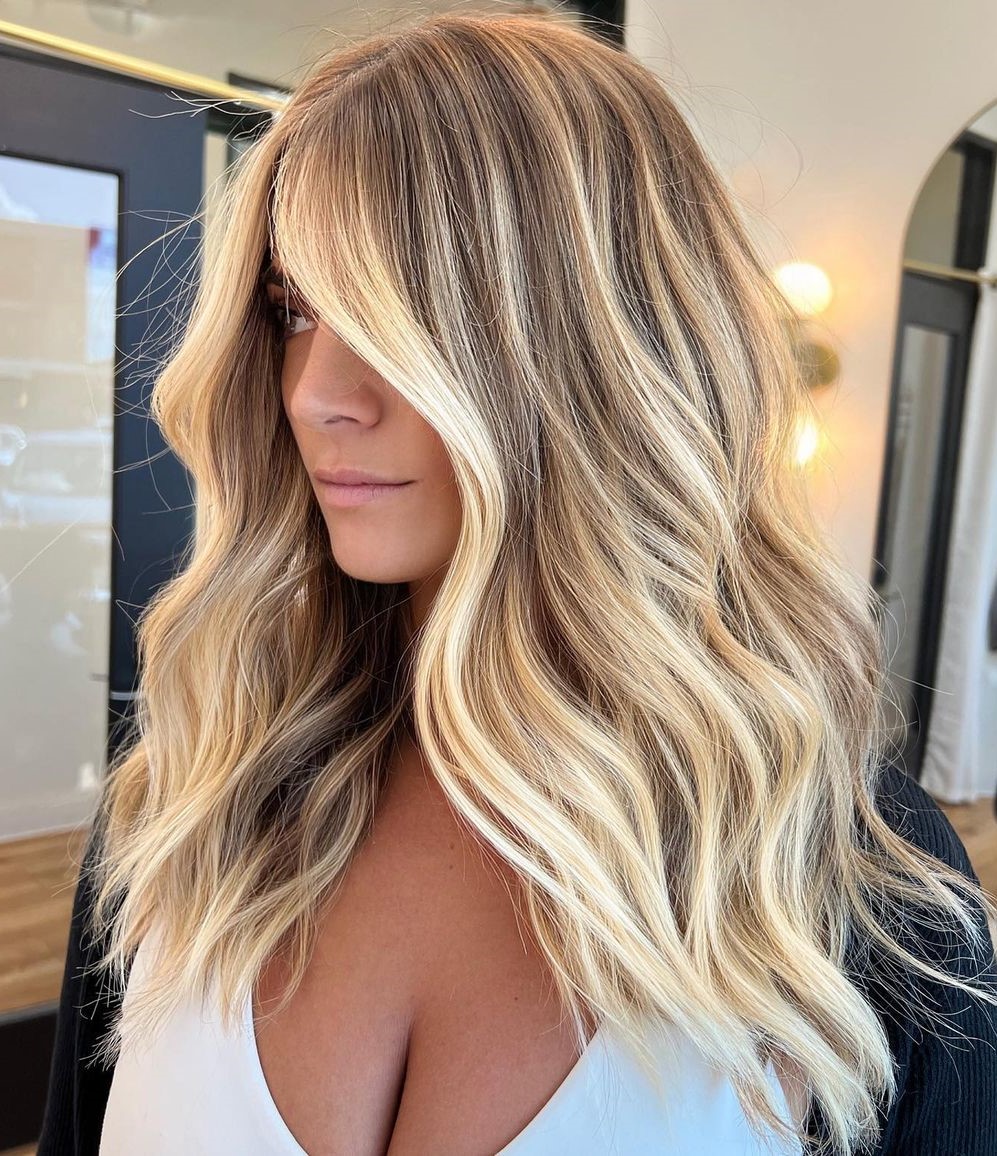
The honey blonde balayage blowout starts with a precise hand: the lightener is painted freehand onto mid-lengths and ends, leaving the roots dark. For mid-back length with thick wavy texture, the balayage is stacked heavier toward the ends to create a luminous gradient. The front view shows face-framing pieces painted slightly lighter, catching the light around the face. Tone is honey, warm and golden, not brassy. The middle part lets the balayage fall symmetrically.
Wear and upkeep are straightforward. The honey toning needs a refresh every six to eight weeks to keep the warmth clear. Trims every ten to twelve weeks prevent the ends from drying out. A heat protectant is essential for the wavy blowout styling, which takes about twenty minutes. This is not a low-maintenance colour, but the grow-out is gentle because the roots stay dark.
Dark Brown With Caramel Balayage Waves
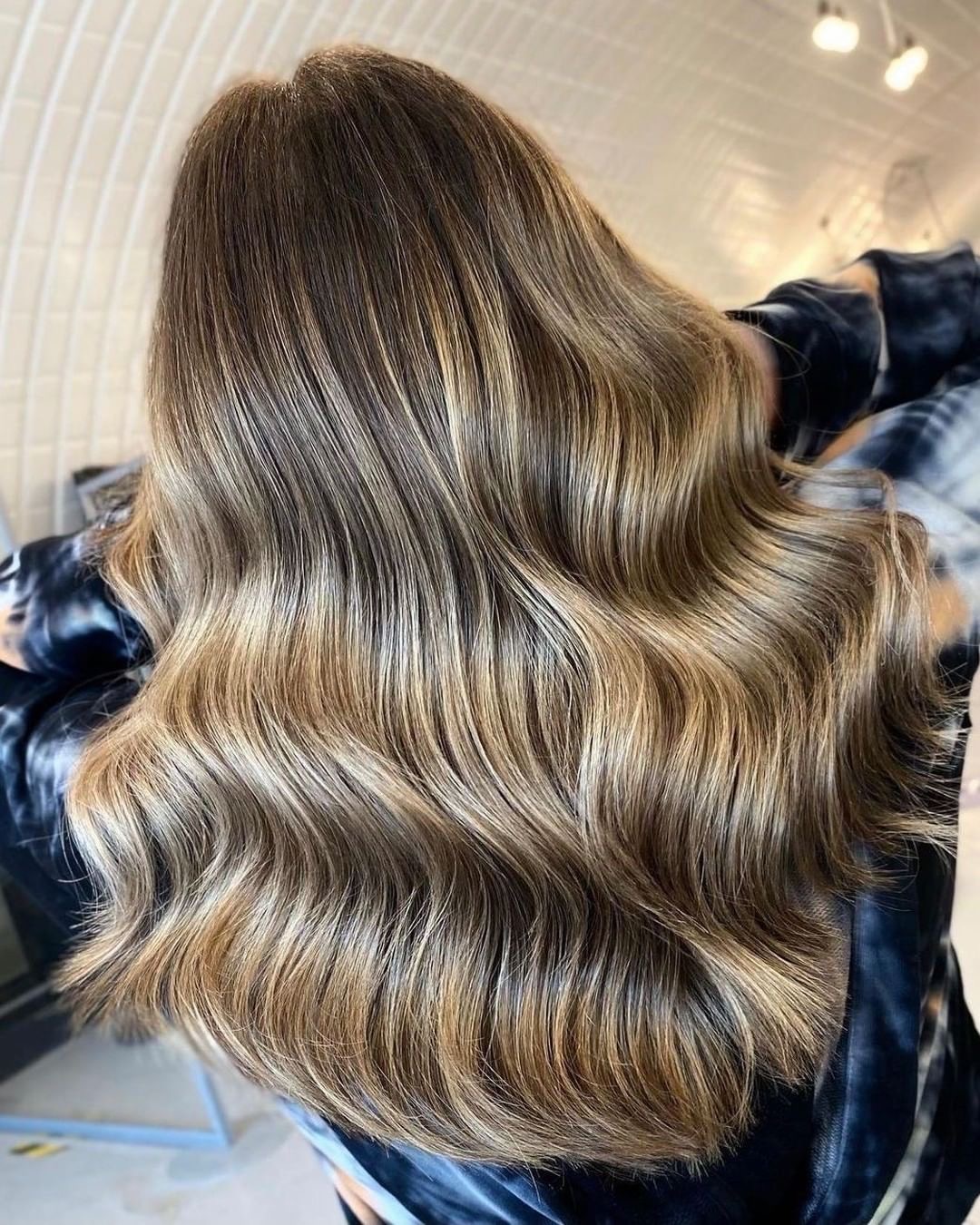
Ever had a dark brown caramel balayage go brassy by week three? It happens. The caramel tone sits on a dark brown base, so when the warmth fades, the contrast turns orange. This mid-back length with long layers and polished waves shows the balayage placement best. Medium density keeps the caramel visible without overwhelming the base. A purple shampoo can help, but the honest downside is that this look needs a toning visit every four to six weeks to keep the caramel from reading brassy.
Collarbone Layers Ash Blonde Balayage
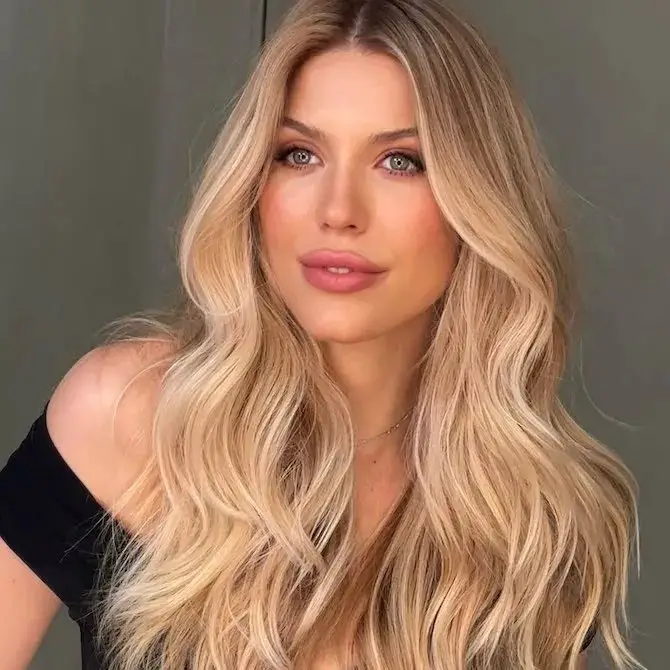
Ash toned hair on collarbone length always reads cooler than on long hair. The collarbone ash blonde balayage concentrates the silver tone closer to the face, making the contrast more defined. On longer styles, ash blonde can look muddy if not toned correctly. Here, thick wavy texture and side-swept bangs add softness. The middle part and wavy blowout keep the colour dimensional. It is a salon application, and the front view shows the ash tone playing against the root shadow.
Long Layers Dark Brown With Ash Blonde Contrast
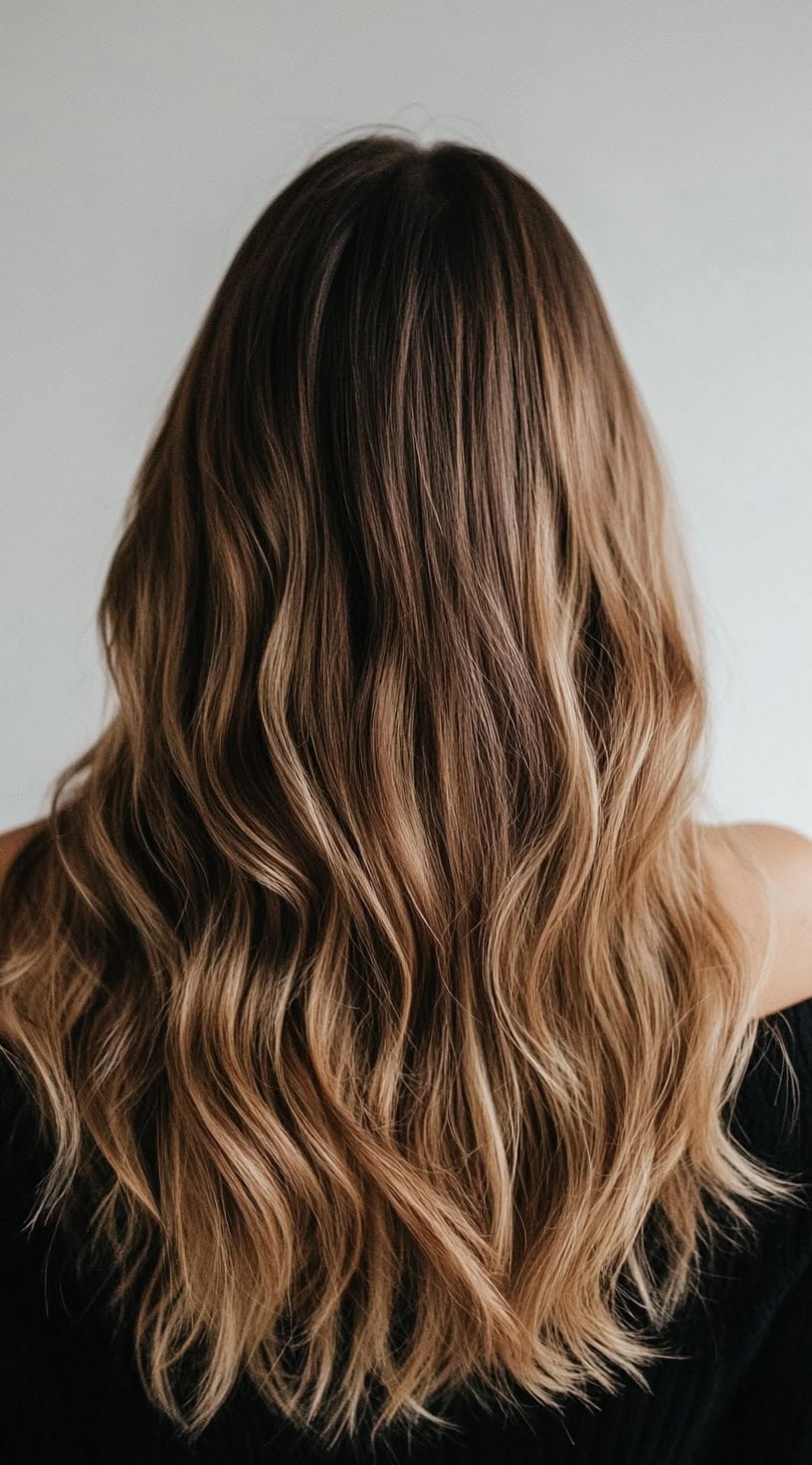
The contrast between a dark brown base and ash blonde balayage is sharp, it brightens fair to medium skin tones best. The dark brown ash blonde contrast works best on cool or neutral undertones; very warm skin tones may find the ash washes them out. The long layers at mid-back length keep the colour moving, and the soft waves let the ash blonde peek through. Medium density, wavy texture carries the balayage without it looking patchy. No bangs here, so the colour falls straight down the back. It is a salon colour, not a bathroom mirror job.
Mid-Back Ash Blonde With Platinum Blonde Balayage
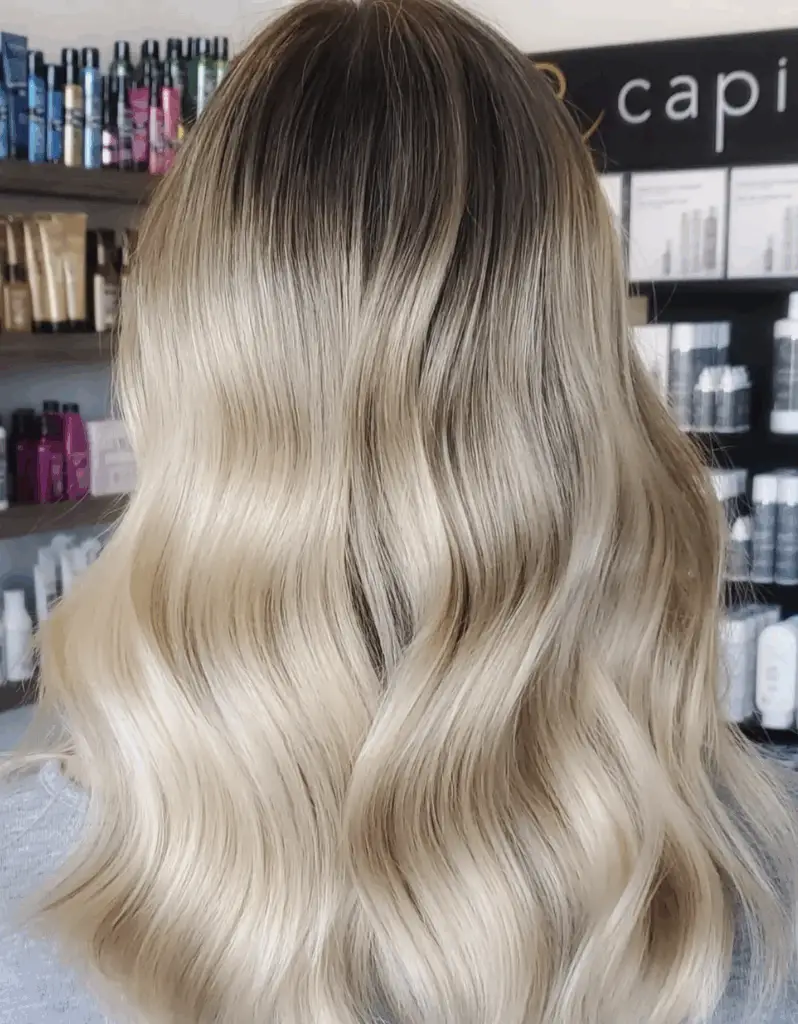
I’ll confess: I used to think platinum was strictly a summer thing, reserved for beachy highlights and bright sun. Then I saw this ash blonde platinum blonde balayage in winter light, and I changed my mind. The platinum reads icy, not brassy, like frost on a window.
This is mid-back length with layers cut to keep the volume from falling flat. The hair is thick and wavy, which helps the platinum sections stand out without looking stripey. Since it’s a balayage, the grow-out is soft — no harsh line when the roots show. I use a purple shampoo once a week to keep the platinum from warming up. This length needs a trim every 10-12 weeks, especially with lightened ends. It’s not a low-maintenance color, but for the way it catches winter light, I’ll take the extra work.
Collarbone Layers Ash Blonde Balayage — A Front View Of Thick
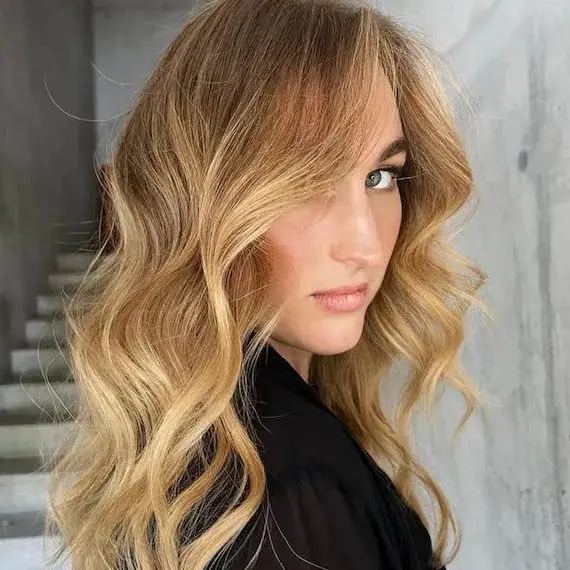
Can a collarbone ash blonde balayage work on thick, wavy hair? It can, but a good ash blonde balayage requires a stylist who knows how to weave through the density. Thick hair takes product unevenly, so the risk of patchy lightening is real. The ash tone needs precision — one sloppy section and you get a brassy spot. Side-swept bangs help camouflage the grow-out line, but the application has to be deliberate.
Mid-Back Bronde Balayage With Face-Framing
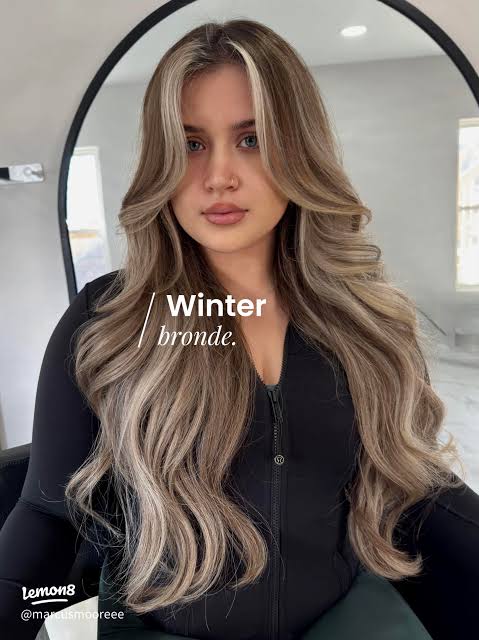
Bronde balayage is the most forgiving color I’ve tried. The bronde balayage face framing technique brightens the front without committing to full blonde. Mid-back length with layers keeps the waves from turning into a triangle. The texture is wavy and thick, so the bronde transitions look natural. I wash twice a week with a color-safe shampoo, and the roots don’t show for at least eight weeks. The face-framing pieces fade gracefully — they get softer, not brassy. Trims every 10-12 weeks keep the ends healthy. It’s the kind of color that stays presentable even when you air-dry.
Dark Brown Base With Blonde Ends
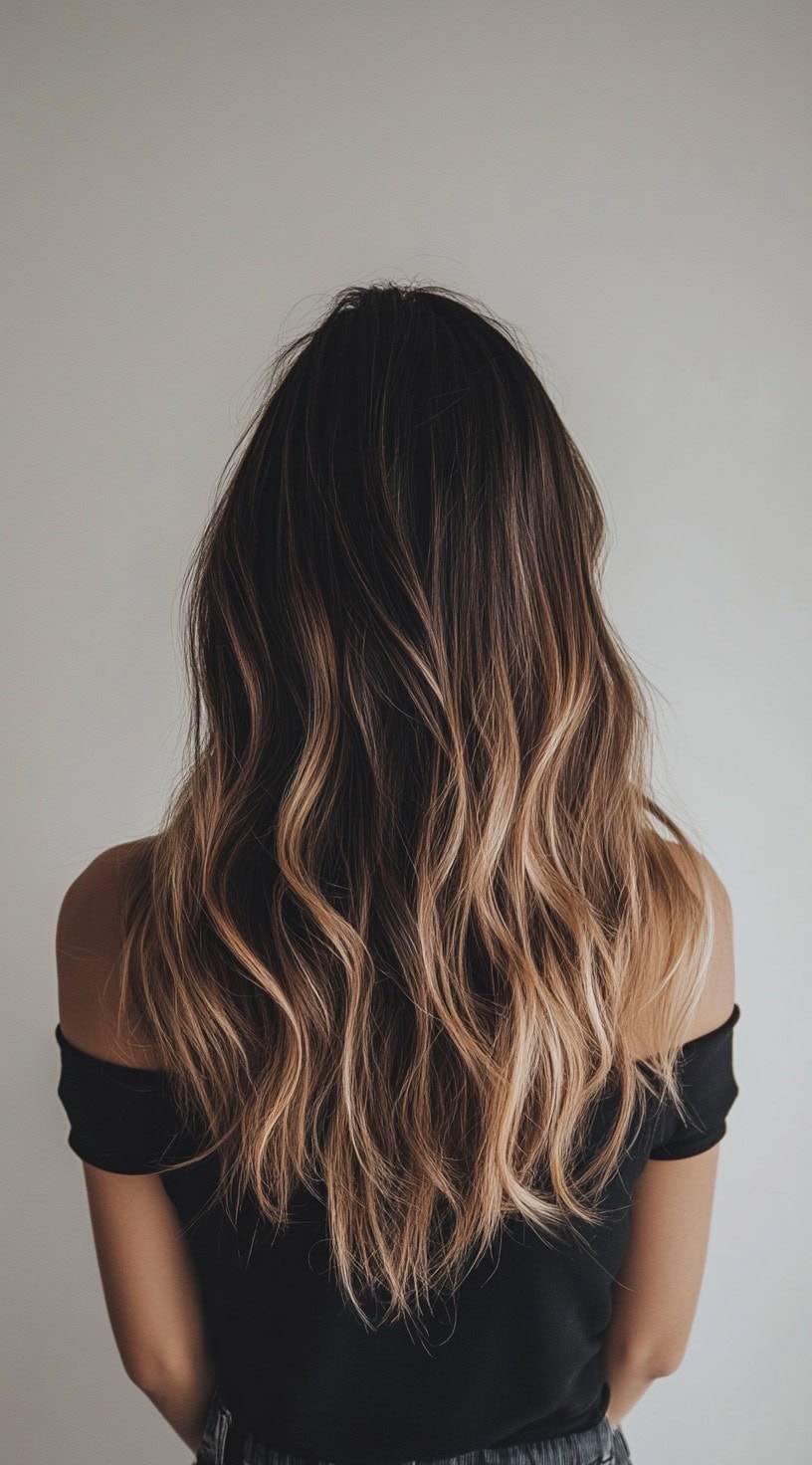
Why go full blonde when you can keep the dark base and let the ends steal the show? A dark brown blonde ends balayage offers contrast that full blonde can’t match — the dark roots stay deep, the blonde ends brighten, and the grow-out line is soft. Full blonde needs constant toning; this demands less.
Here, the dark base starts at the scalp and graduates into blonde through the mid-back length. The balayage technique ensures the blonde is concentrated on the ends, so the transition is gradual. Thick, wavy hair helps the blonde ends catch light without looking stripey. The dark brown and blonde work as a pair — one grounds, one lifts. It’s the kind of dimension that full blonde, with its even colour, can’t achieve. This colour still looks intentional at eight weeks post-salon.
Collarbone Ash Blonde Balayage With Curtain Bangs
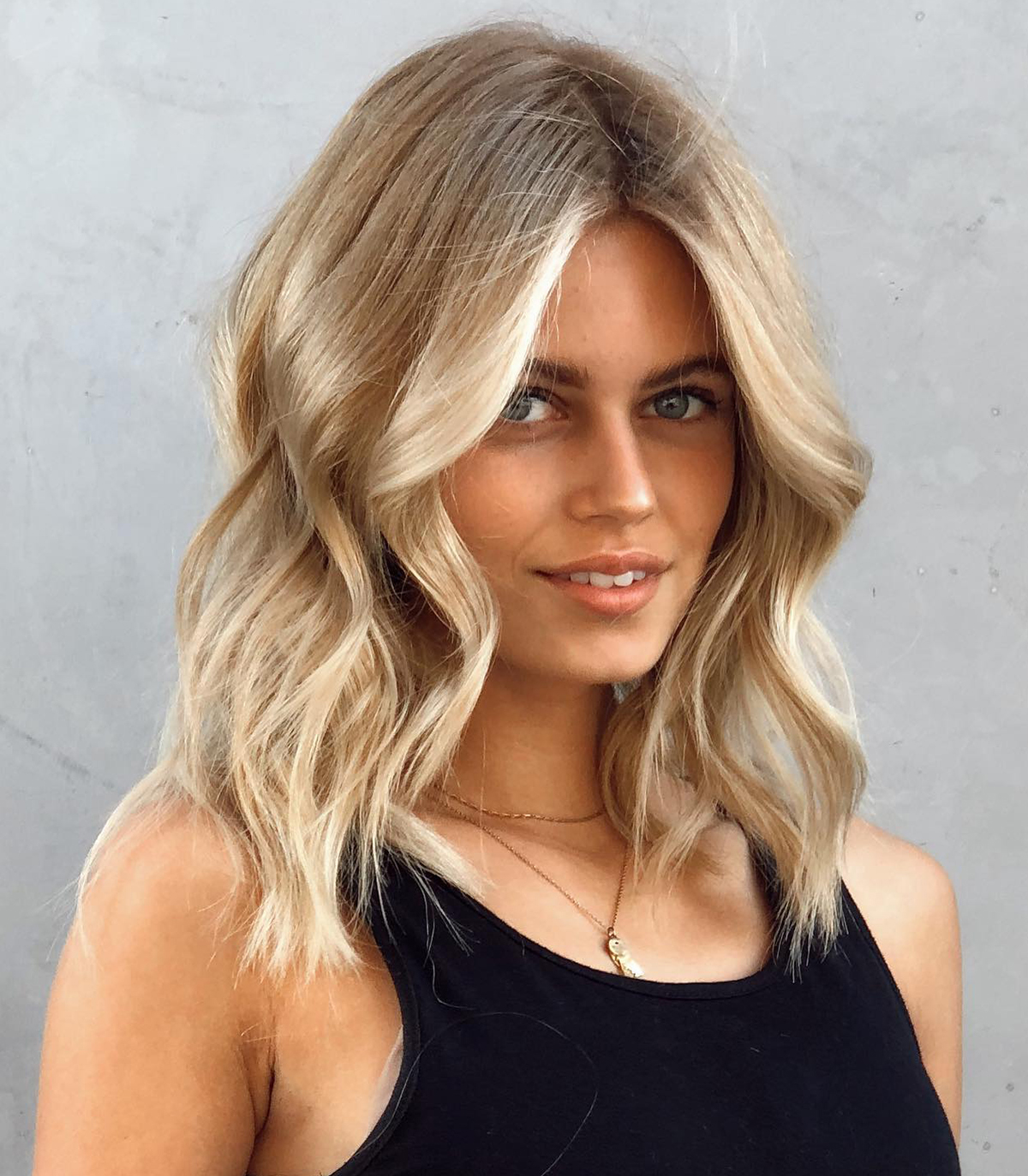
I’ll admit, I was skeptical about curtain bangs with ash blonde balayage. But this collarbone-length, wavy, medium-density look softens a square jaw like nothing else. The ash blonde balayage curtain bangs hit right at the cheekbone, which draws the eye outward rather than down. If you have a round face, the middle part and curtain bangs create vertical lines that elongate. The technique is a hand-painted balayage from mid-lengths to ends, so the ash tone stays cool and never muddy. This works best on wavy texture; stick-straight hair might need a curling iron to get the bend. For very fine hair, the layers can thin it out too much. But for medium density? This is the softener your face needed.
Dark Brown Subtle Chocolate Balayage
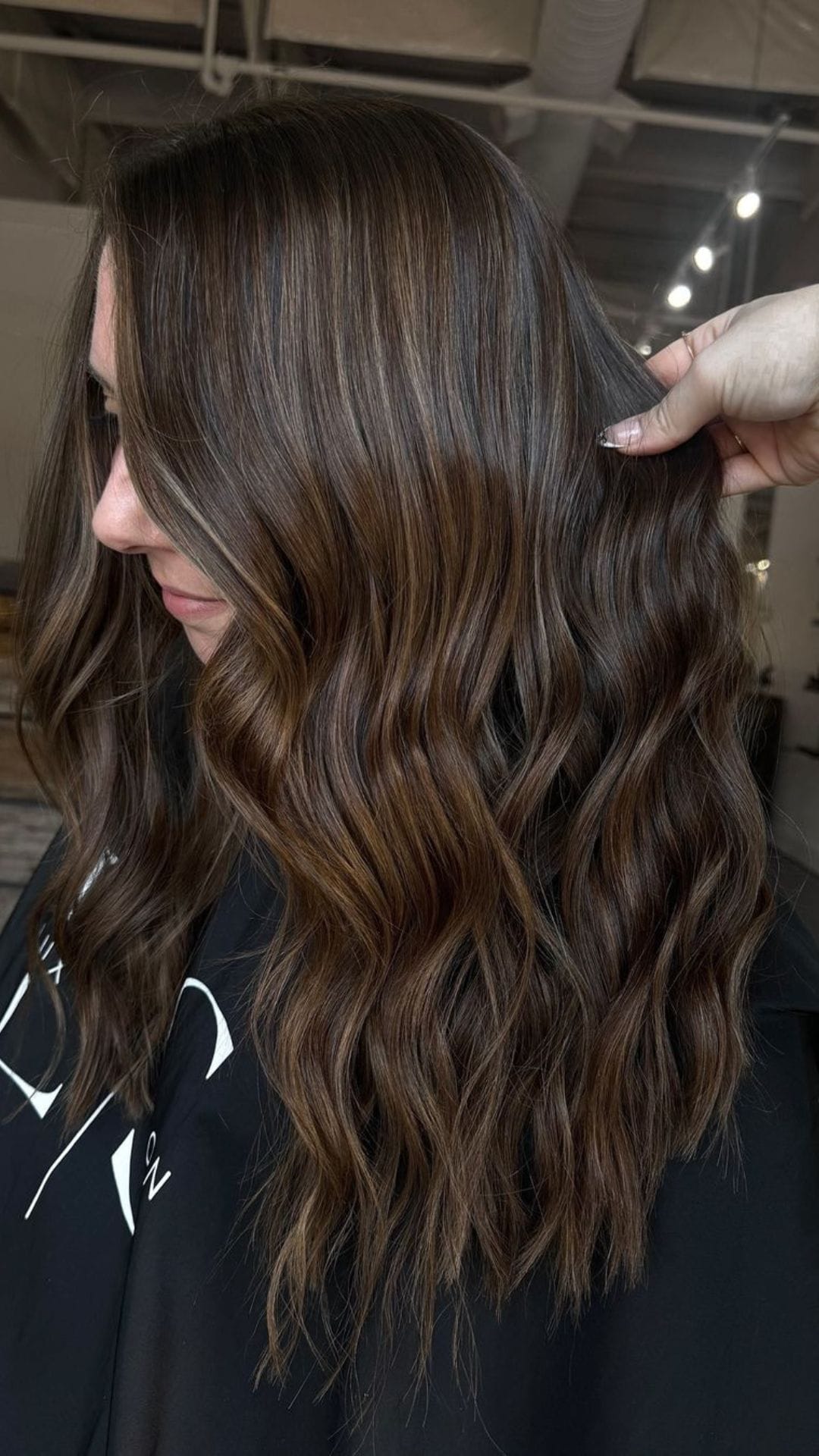
This is the kind of colour that makes you do a double take. The dark brown chocolate balayage is built with fine, hand-painted ribbons of chocolate balayage that start below the ear and deepen toward the ends. The base stays a rich dark brown, so the warm tone reads as a subtle glow rather than a stripe. On mid-back, wavy, medium-density hair, the long layers let the colour cascade. The technique relies on low-contrast placement, no harsh line, just a gradual melt. Subtle, but it works.
Mid-Back Dark Blonde With Beige Blonde Balayage
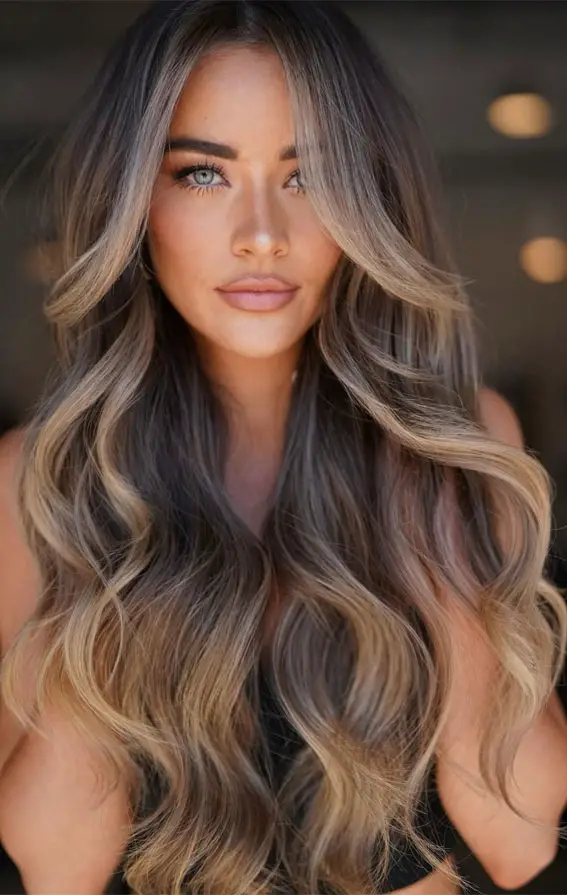
By day three, the beige tone starts to soften into something closer to honey. That’s not a bad thing — it just means the dark blonde beige blonde balayage lives in a warm-cool balance. On wavy, thick, mid-back hair, the layers keep the colour from pooling at the ends. Day one is a cool, creamy beige. Day five is warmer, more blended. That’s the wear reality.
Styling takes about 15 minutes for loose waves, and a purple shampoo once a week keeps the beige blonde balayage from tipping into brass. Trims every 10-12 weeks keep the ends healthy. The trick is to wash less often — the natural oils help the beige tone stay soft. If you blow-dry, use a heat protectant. That’s the reality: it’s not zero maintenance, but it’s manageable.
Side View Ash Blonde With Platinum Balayage
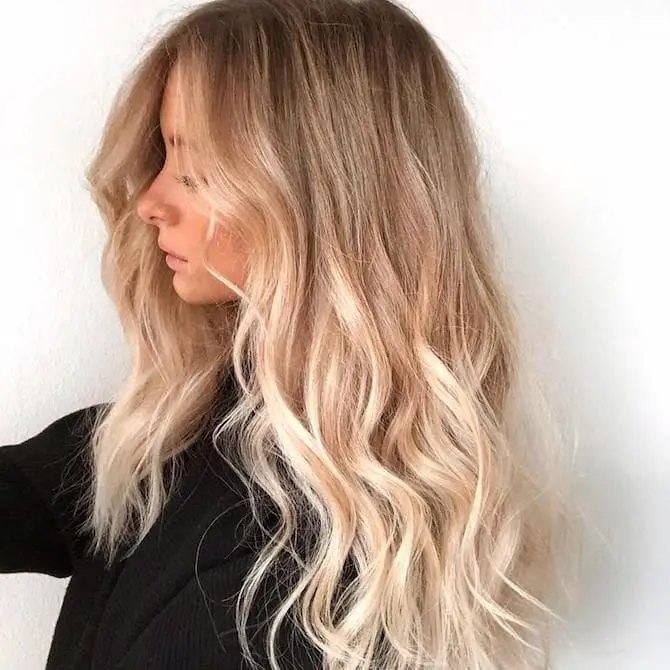
Platinum highlights on an ash base beat platinum on a dark base every time. On ash blonde, the lighter strands read as icy, dimensional, intentional. On dark brown, they look like stripes. This ash blonde platinum balayage sits on mid-back length, thick, wavy hair with the technique applied so the platinum hits the mid-lengths and ends. The stylist lifts the base to a pale yellow before toning to platinum blonde. That extra step is the difference between expensive and brassy.
On a darker base, you get contrast. On this base, you get softness. The contrast is still there but the transition is blurred, so the roots grow in without a harsh line. The tone stays cool and the texture of loose waves catches the platinum blonde at different angles. It is not a low-maintenance colour. But if you want the look, start from a lighter base or plan a longer appointment for the warm-up bleach.
Collarbone Ash Blonde Platinum Beige Balayage
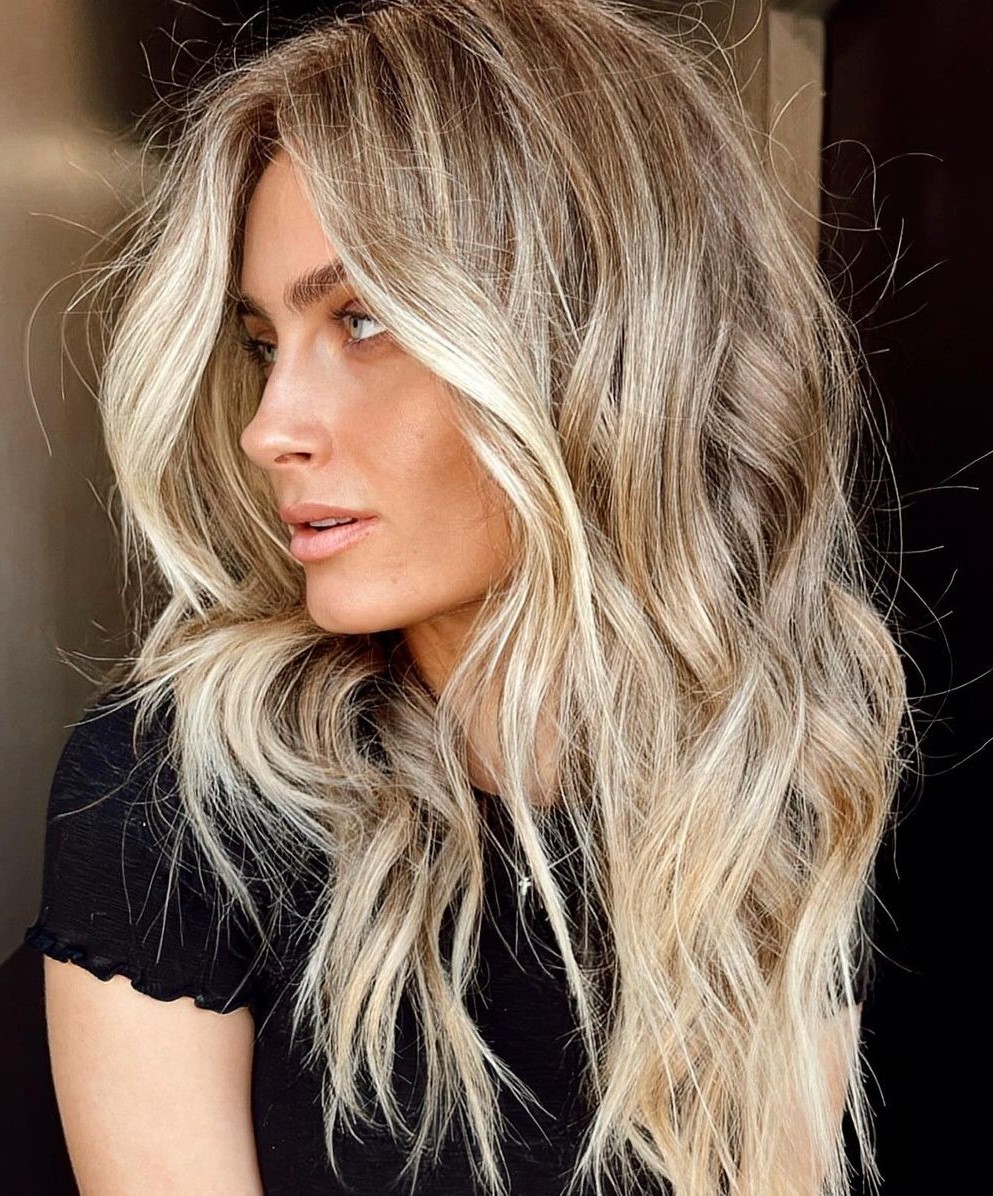
Ash blonde with beige and platinum is three shades vying for top billing. This collarbone style uses an ash blonde platinum beige balayage technique, essentially a platinum beige balayage with an ash base: the platinum lightens the ends, the beige softens the mid-lengths, and the ash base keeps everything cool. The tone is complex but harmonious. It suits medium to thick wavy hair because the waves catch each shade separately. The side-swept bangs frame the face without competing. Best for those with cool or neutral undertones. If your skin runs warm, the beige can read as yellow. Skip it if your hair is fine — the layers can look sparse.
Long Dark Brown With Beige Balayage
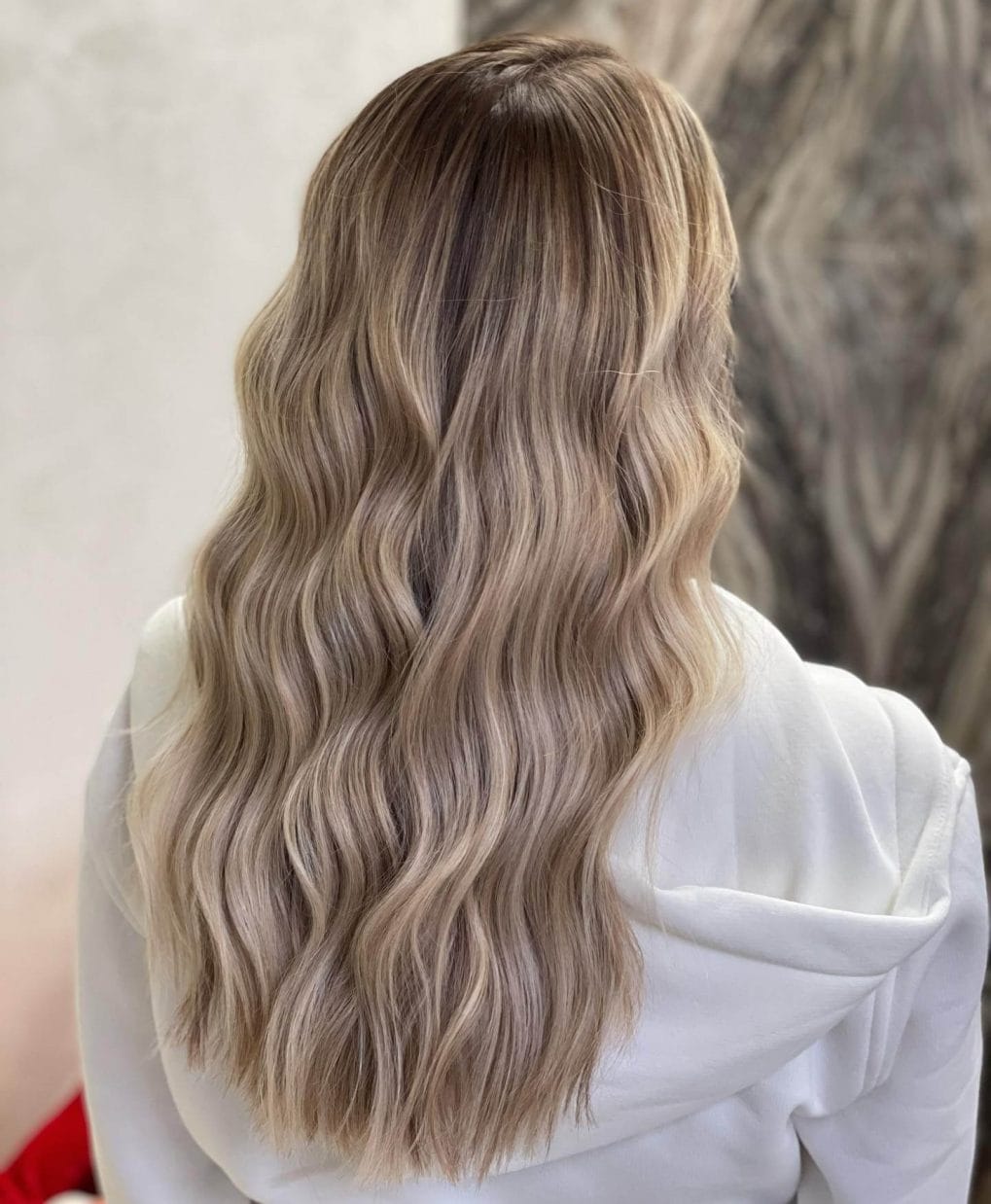
Ever wonder what happens when you put beige on dark brown? The stylist weaves fine sections through the top and sides to create a dark brown beige blonde balayage. The beige blonde balayage tone lifts just enough to add warmth. The technique keeps the darkest strands at the nape. The honest downside: beige fades warm on dark bases. Long wavy hair of medium density holds the gradient. If you hate any warmth showing through, request a beige toner at the sink.
Wavy Medium Density Collarbone Ash Blonde Balayage With Side Bangs
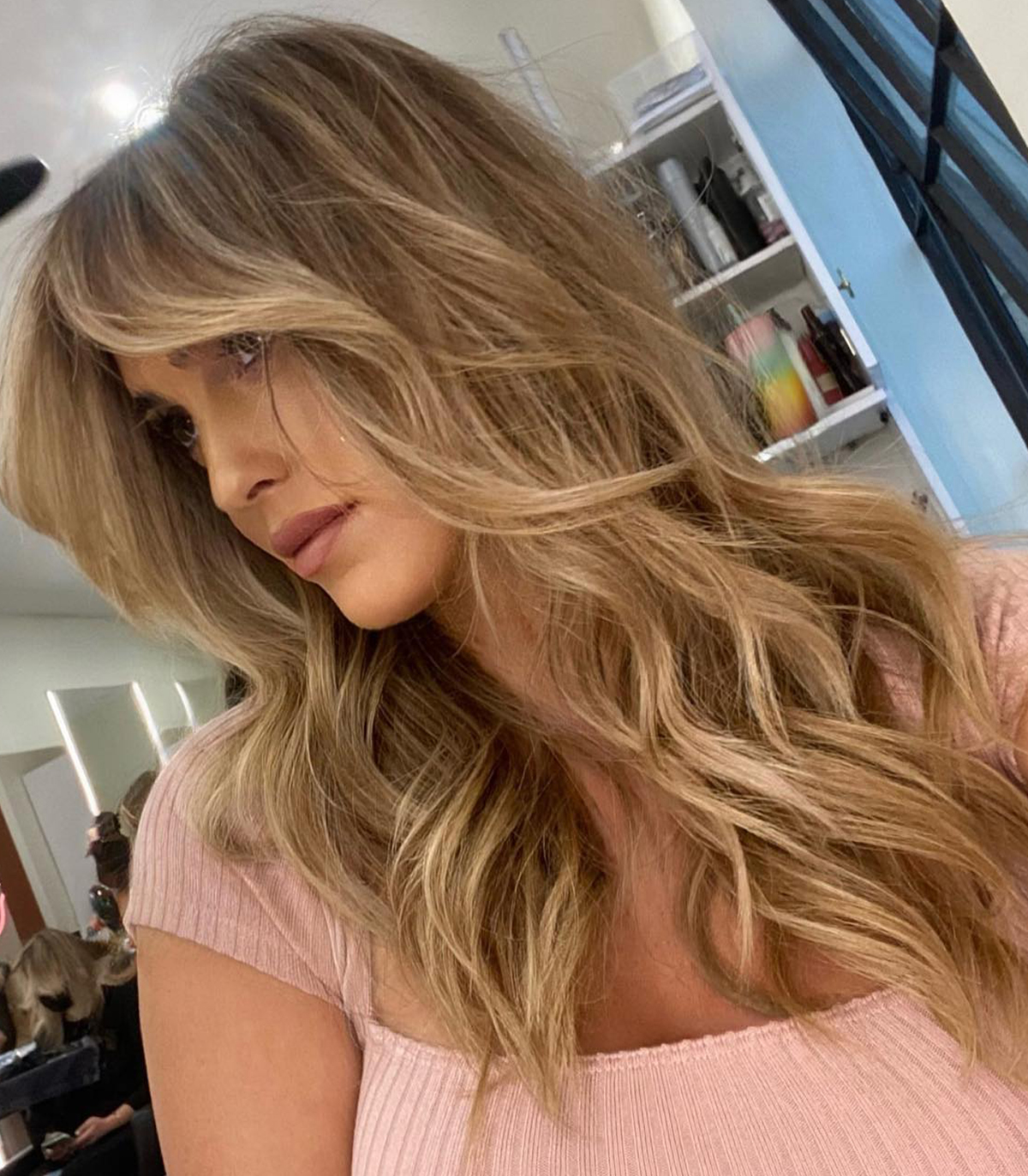
I’ll admit, I was skeptical about side bangs with balayage. But this collarbone ash blonde side bangs look works better than I expected. The ash blonde balayage keeps the cool tone, so the daily restyle of the fringe doesn’t get warm. The waves hold all day if I use medium heat and a texturizing spray. By day three, the wave pattern drops but the side bangs still sweep. The upkeep: a purple shampoo every third wash and trims every six weeks for the bangs. The medium density wavy texture makes the balayage look scattered, not striped. That’s the key.
Collarbone Ash Blonde Balayage With Side Bangs — Side-Swept Bangs Frame The Face
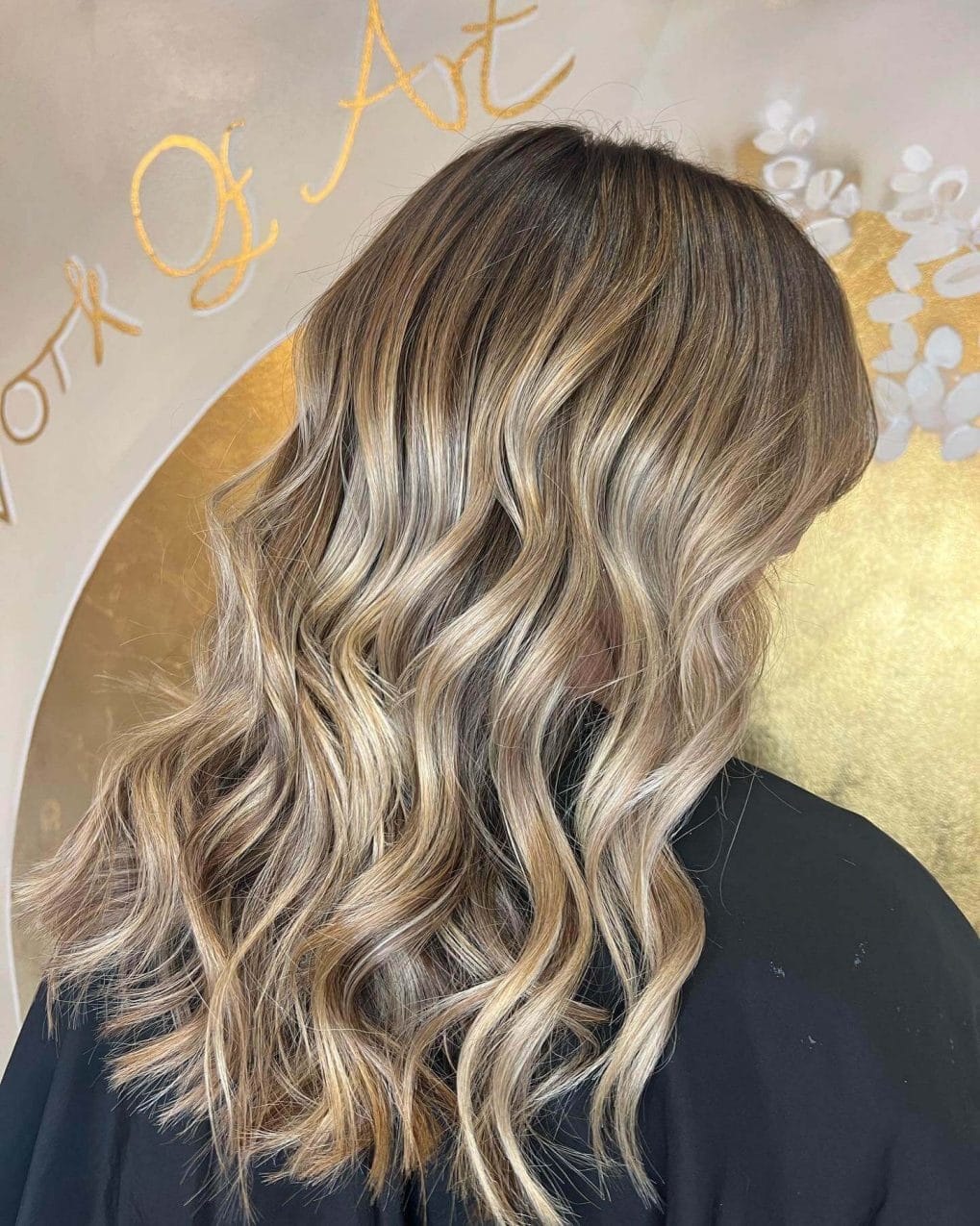
There is something about ash blonde and winter. The cool tone matches the gray light instead of fighting it. This collarbone ash blonde side bangs with wavy texture is an ash blonde balayage that reads as deliberately frosty. The technique places the lighter strands low on the length. The season calls for a tone that does not go brassy in low light. Ash blonde delivers that. Side-swept bangs break the line against a sweater collar. It is a cold-weather colour that actually looks like it belongs in the cold.
Collarbone Wavy Warm Caramel Balayage
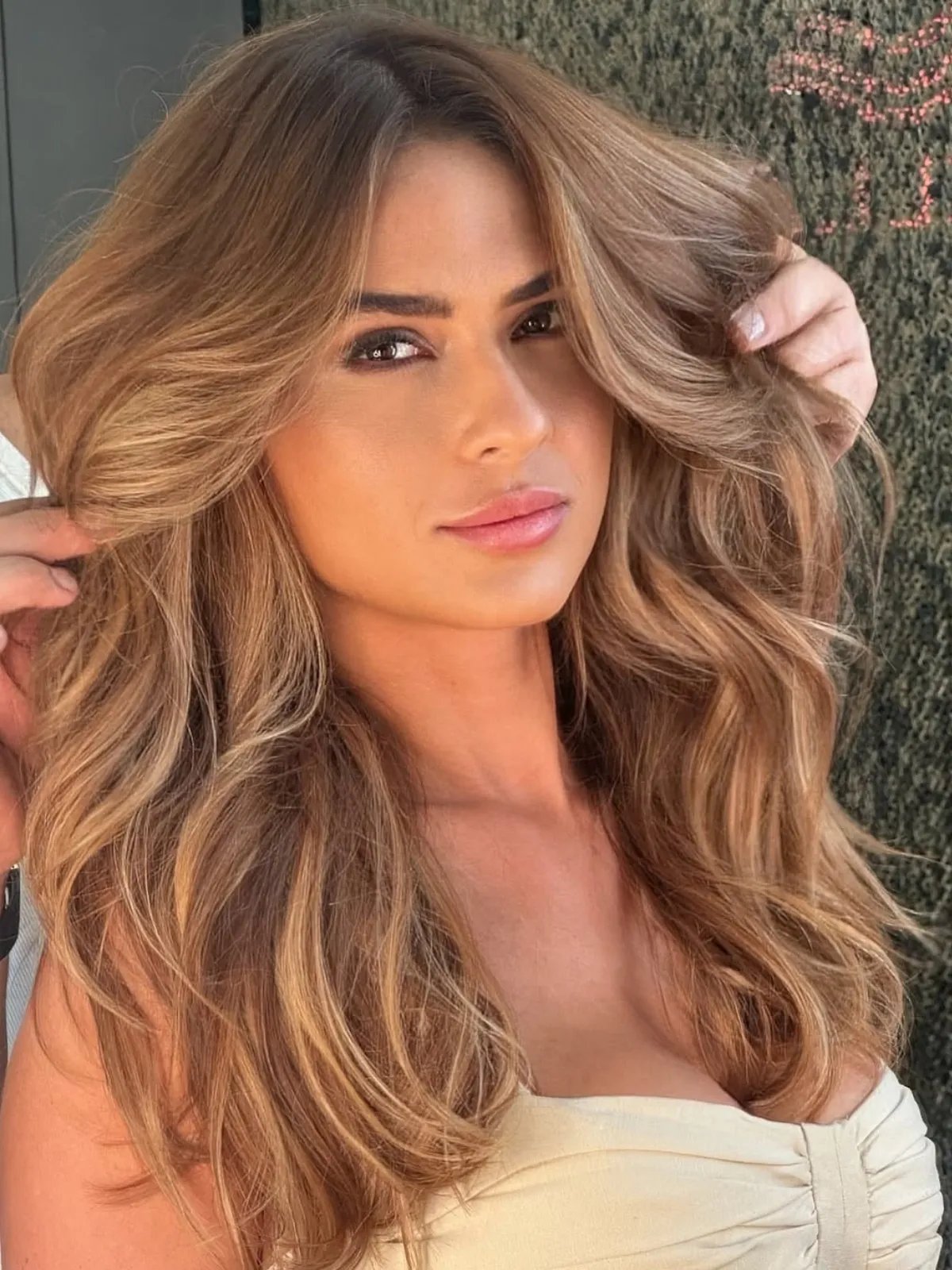
The warmth in this collarbone warm caramel balayage comes from placement, not the bottle. A stylist paints caramel on midlengths and ends while keeping the root dark, then uses a lower volume developer on the thick, wavy parts so the color doesn’t go flat. That is a sequence home lightener cannot replicate. I have seen caramel balayage turn mud when someone tries to do it all at once. Here the warm caramel balayage reads rich against the collarbone length because each section was processed separately. The finishing tone is a gloss that warms the base without lifting it further. That is why this collarbone warm caramel balayage needs a salon chair, not a bathroom mirror.
Collarbone Lob Dark Brown Caramel Balayage
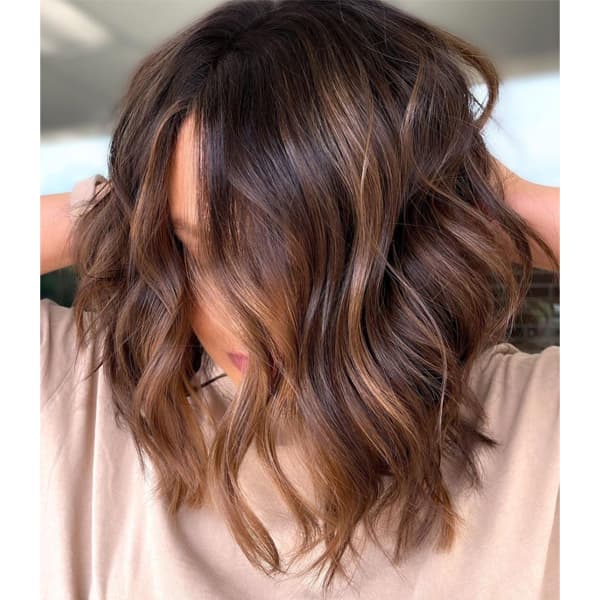
Who decided winter hair had to be cool? This dark brown caramel balayage lob proves caramel belongs every season. Against an ash brown balayage, the warm caramel balayage reads less flat and more alive under indoor winter light. The collarbone length keeps the wavy, medium-density texture from feeling heavy. The balayage technique keeps the root dark, so the warmth stays on the ends. That is the difference: ash goes gray by week three; caramel just softens.
Collarbone Sandy Blonde Balayage
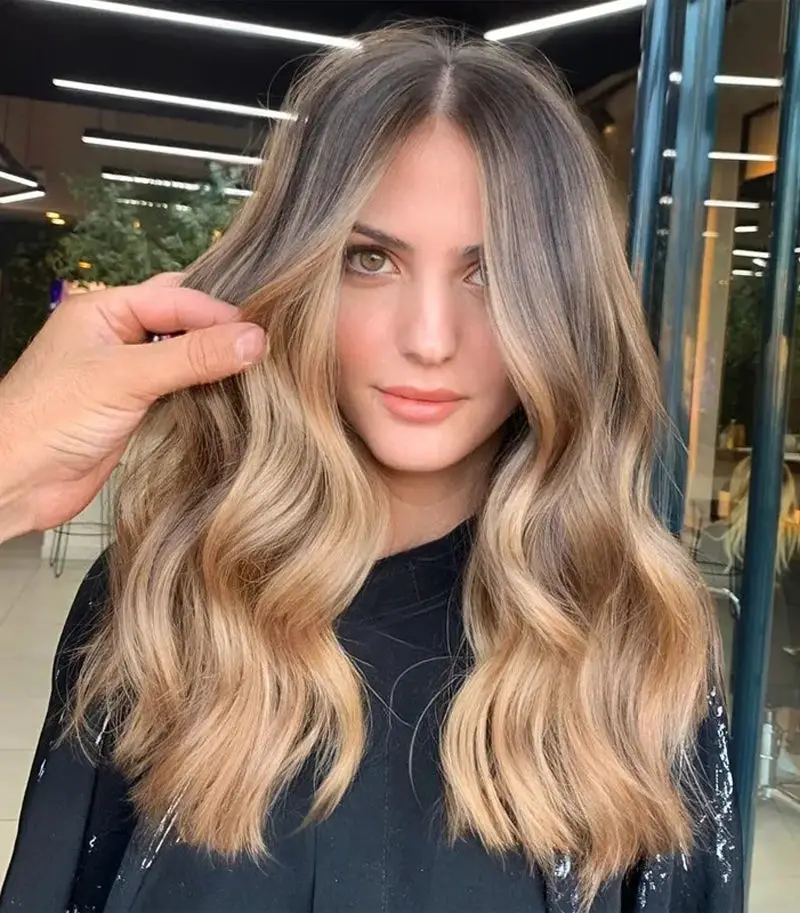
If your skin sits neutral, this collarbone sandy blonde balayage will look like your hair grew that way. The sandy blonde balayage lands between beige and ash, so it does not wash out fair skin the way platinum can. On medium-density wavy hair at collarbone length, the balayage technique keeps the tone soft near the root and stronger at the ends. Fair and light skin with neutral undertones catch the dimension best. Deeper olive or very cool pink undertones? The sandy can pull chalky without a warm gloss underneath. That is the honest fit. It is a natural winter shade, but natural does not mean universal.
Collarbone Dark Blonde Ash Platinum Highlights
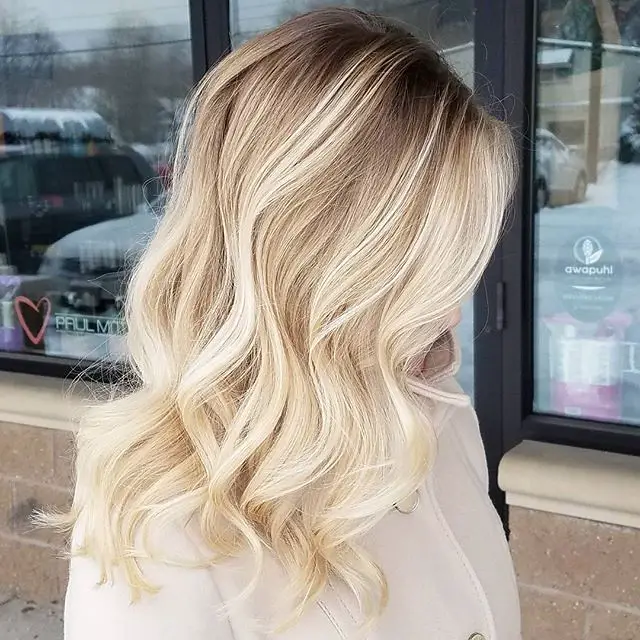
The ash tones hide brass for about two weeks, then the platinum starts pulling yellow. That is the honest downside of dark blonde ash platinum highlights. On a dark blonde base at collarbone length with wavy, medium-density texture, the subtle platinum highlights register as fine lines rather than chunky streaks. But platinum lifts fast and fades faster. A purple shampoo buys an extra week before the brass sets in. By week four, the ash has softened and the platinum is a pale gold. That is wear reality: this shade looks best in the first two weeks, then it requires upkeep to stay cool.
Middle Collarbone Ash Blonde Balayage Blowout
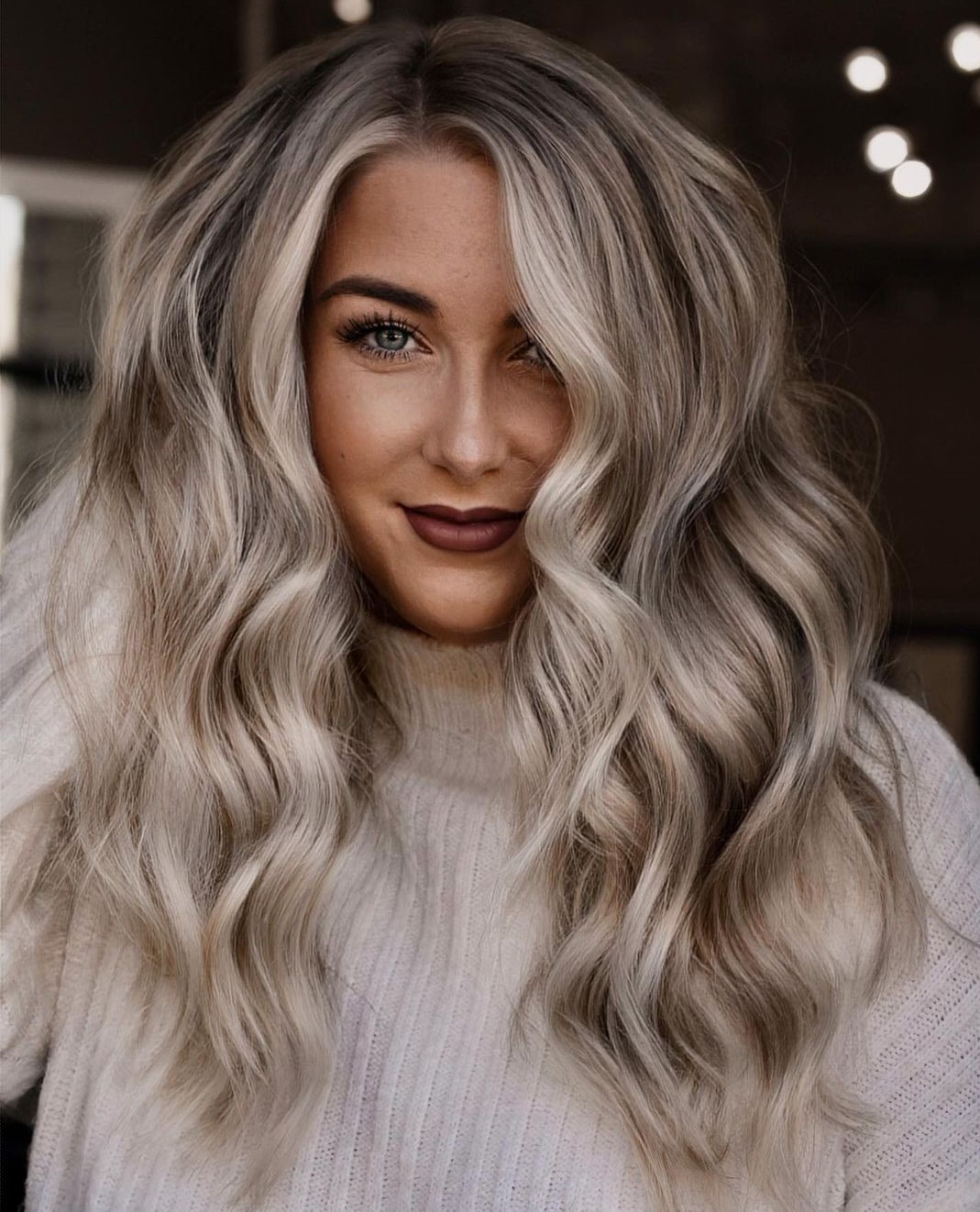
I will admit it: I tried to achieve an ash blonde balayage blowout at home once. It came out brassy and uneven. The collarbone ash blonde balayage you see here requires a stylist who knows how to keep the tone cool without going flat. On thick wavy texture, the blowout lifts the colour so the ash reads clean. This is not a bathroom-mirror job. Book the salon, bring a photo, and let someone else handle the foils.
Collarbone Dark Blonde Ash Blonde Blowout
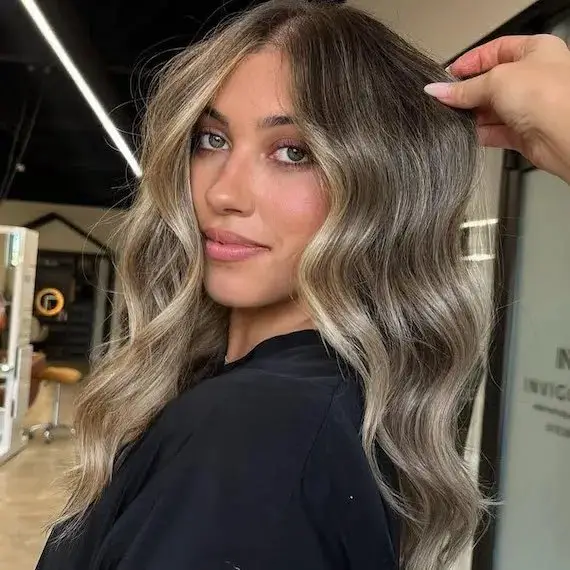
The dark blonde ash blonde blowout starts with a neutral dark blonde base. The balayage is painted freehand, so the ash tones sweep through the mid-lengths and ends without a hard line. At collarbone length, the colour wraps around the waves without overwhelming them. On medium density wavy texture, the tone stays cool, almost silver in the light. This is the colour that does not quit.
Compared to a darker blonde balayage, this version is brighter and reads more intentional. The dark base holds the ash in place, so it does not yellow after a few washes. The ash blonde balayage lifts the surface while the roots stay natural, so grow-out is gradual. It is the kind of winter colour that looks like you spent the morning at a salon, even when you did not. The collarbone length makes it easy to style with a blowout, and the layers add movement without losing shape.
Visual Idea
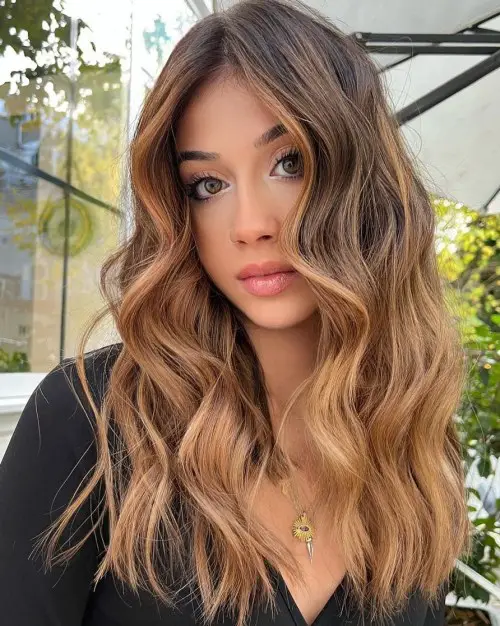
The caramel in this balayage is what keeps the dark base from feeling heavy. The dark brown base with caramel and blonde balayage hits collarbone length with soft waves. It flatters warm skin tones and oval or heart faces best. The blonde sections lift around the eyes, the caramel warms the cheek area. The honest downside? The caramel can pull brassy after a month without a toning session. This is not a set-it-and-forget-it colour. If you hate purple shampoo, this might test your patience.
Final Thoughts
I started by noticing the shift to cooler, growable colour. After writing all 33 of these, I see one thing clearly: a soft fade from dark brown to warm caramel is the quietest way to survive January. It does not scream fresh from the salon, which is exactly why it works. I am booking the dark brown with caramel balayage next. No appointment needed for another six weeks.