
On dark skin, color can look jewel-bright, smoky, milky, or almost electric depending on the finish beside it. That is why fall nail colors for dark skin are better chosen by the relationship they create than by a fixed seasonal list: a shade may become softer with a sheer surface, sharper with a glossy edge, or unexpectedly rich when its warmth meets the natural depth of the hand. The right choice starts with the mood you want to see when you reach for a cup, a coat, or your phone.
A manicure begins to feel right when the color and the shape stop arguing. The length changes the volume of a shade, the tip changes where the eye lands, and a small accent can give a plain surface just enough tension to feel deliberate. The useful question is not whether a color is officially meant for fall, but whether it gives your hands the mood you want and still fits the way you move through an ordinary week.
Short Cobalt Squares with Clean Saturation
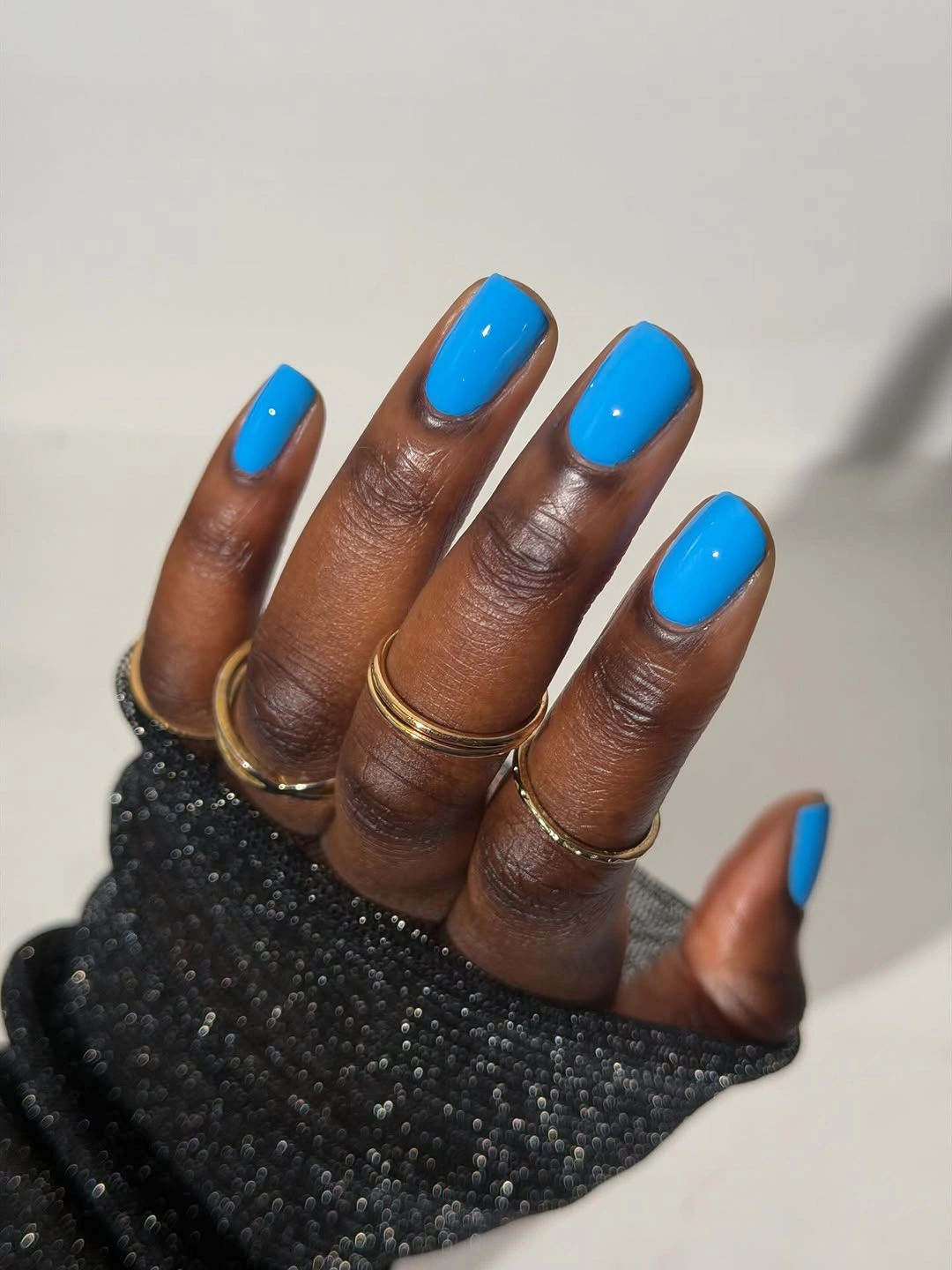
Short square nails coated in bright cobalt blue create an immediate color statement without relying on length or decoration. Against deep brown skin, the saturated finish reads clear and lively, while the compact edge keeps the result grounded and practical. This is a useful starting point for fall nail colors for dark skin because it shows how one vivid shade can carry the whole manicure when the silhouette stays simple.
The contrast comes from color intensity rather than lightness: the blue is much brighter than the sleeve and stands out against the skin without needing a pale border. Because every nail repeats the same finish, the eye reads the set as one confident field instead of several competing ideas. If you want a quieter version, choose a deeper blue while keeping the short square shape so the color remains crisp.
This length is friendly to readers who like a high-impact shade but do not want a long extension silhouette. The tradeoff is that the manicure depends on even coverage and a clean edge, since there are no details to disguise chips or uneven corners. Compared with the longer pale gradient next, the blue feels more direct and more noticeable from a distance.
Blush-to-White Ombre on Almond Length
Long almond nails move from a soft blush base into milky white tips, creating a gradual light-to-light transition rather than a hard French line. The tapered silhouette adds length, but the pale palette keeps the overall impression gentle against dark skin. This design shows that fall nail colors for dark skin can stay airy when the shape supplies elegance and the color relationship remains close in value.
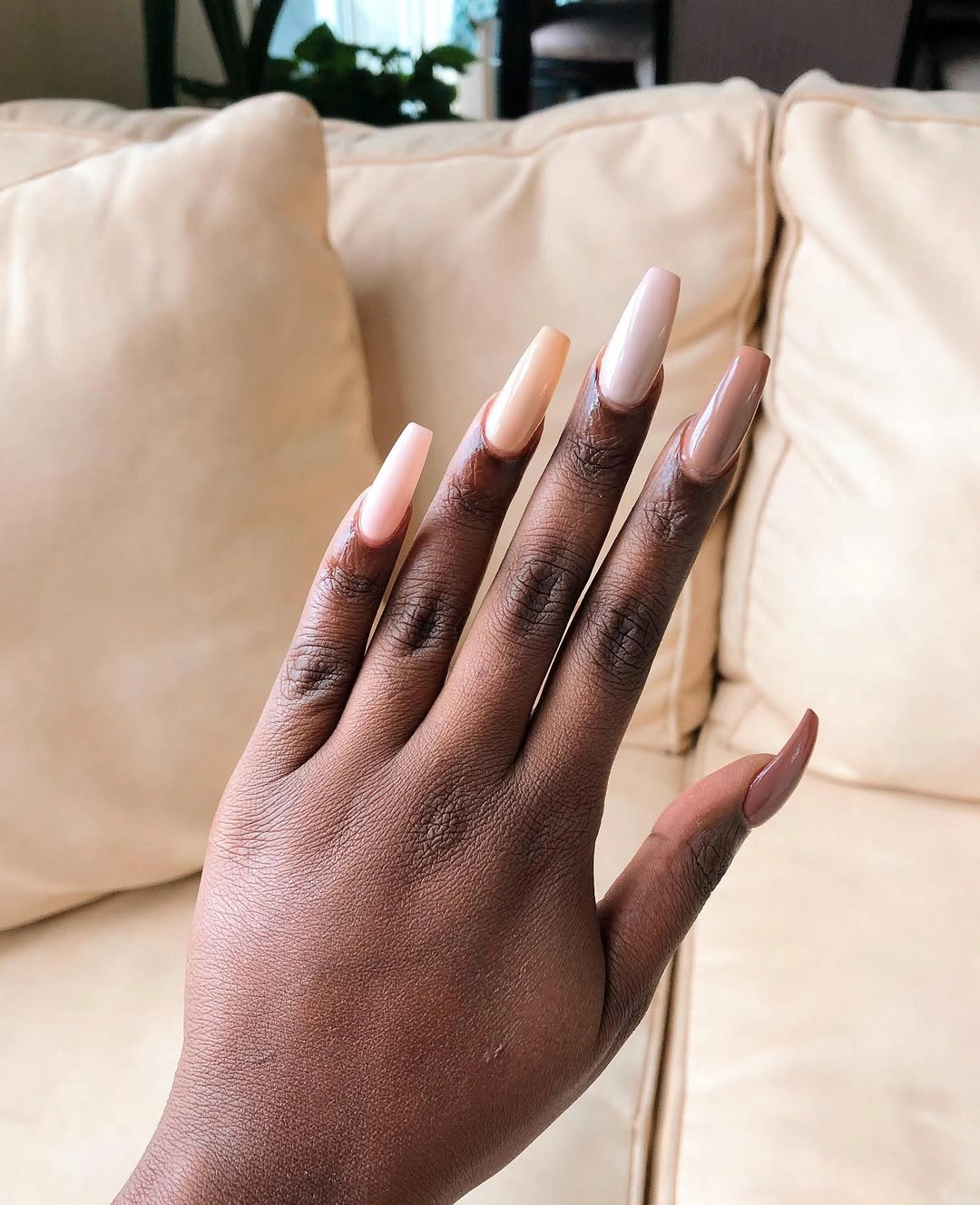
The gradient works because the pink near the hand and the white at the tip share a soft brightness, so the change feels blended instead of sharply contrasted. The almond point gives the fade a long path to travel, making the transition easier to notice than it would be on a short square. For a more autumnal variation, a warm cream tip could replace the bright white without changing the gentle structure.
This option suits someone who wants length and polish with less visual intensity than a dark solid color. The limitation is practical rather than chromatic: the long tapered edge asks for more comfort with length, and a very short nail will not create the same gradient effect. Compared with the cobalt set, this look is quieter because the contrast is distributed across the surface instead of concentrated in one shade.
Glossy Wine Almonds with Deep Contrast
Long almond nails covered in deep burgundy use one rich color and a reflective finish to create a strong fall mood. The wine tone sits deep against the skin, while the tapered tip keeps the monochrome set from looking heavy or flat. There is no visible art to distract from the relationship between the dark red, the glossy surface, and the elongated outline.
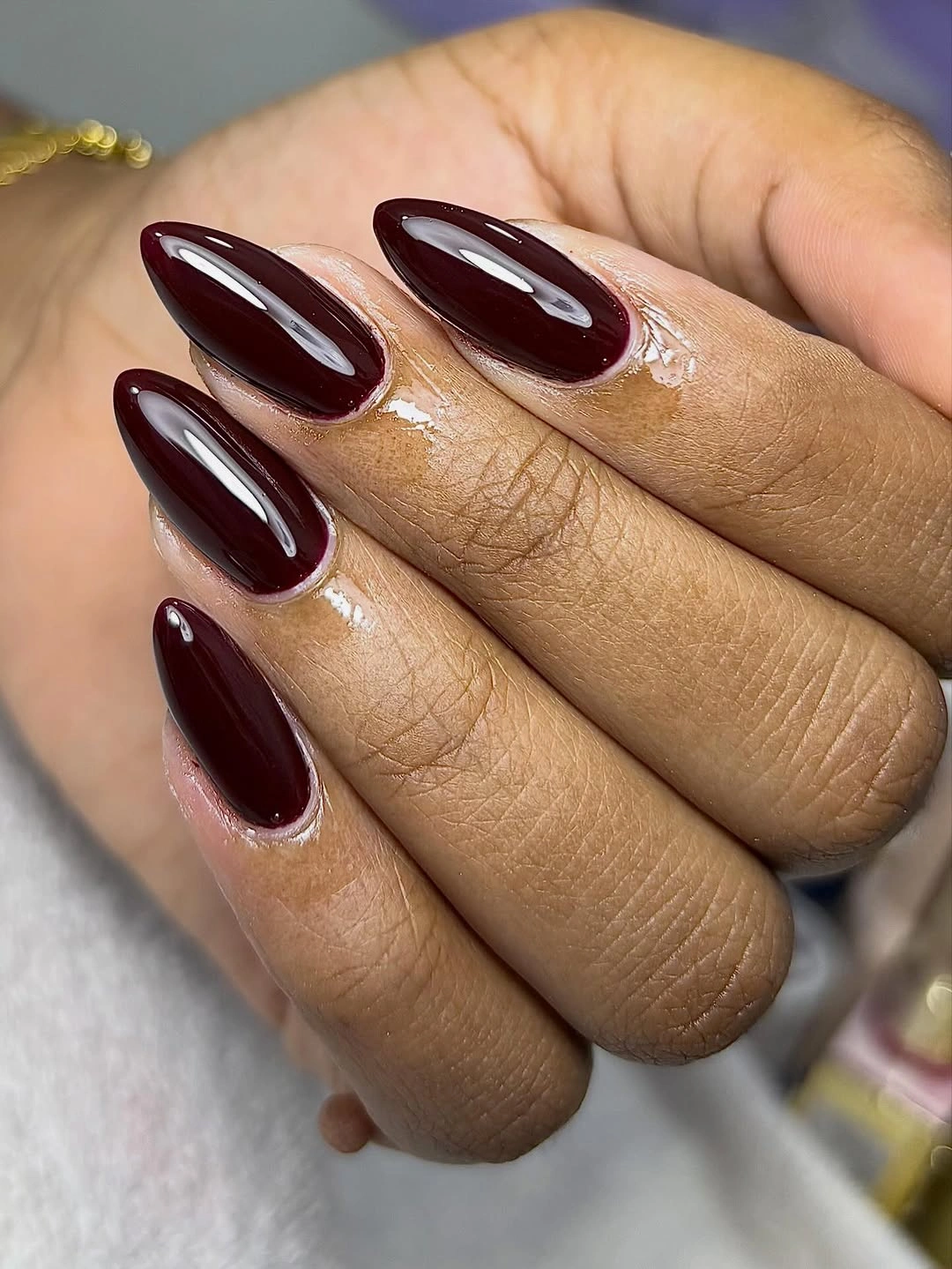
Dark red gains visual depth when the finish reflects a clean highlight along the curve of each nail. The almond shape softens the color at the point, so the manicure feels more fluid than a dark square with a blunt edge. If you want less drama, keeping the same family but choosing a sheer wine layer would reduce the density while preserving the seasonal direction.
This is a good choice for a reader who wants a clear autumn signal without pattern mixing or accent nails. The tradeoff is that the long point makes the color feel more statement-led, and the glossy surface will show scuffs quickly if the hands are hard on the finish. Compared with the pale ombre, the burgundy concentrates contrast across every nail and therefore reads stronger at first glance.
Short Pink French Tips with a Square Edge
Short square nails use a sheer pink base and crisp white tips, creating a classic contrast in a compact proportion. The pale colors sit softly against dark skin, while the straight free edge makes the French line easy to follow. This idea is valuable for anyone exploring fall nail colors for dark skin who wants a light manicure that still has a clear structure instead of disappearing into the hand.
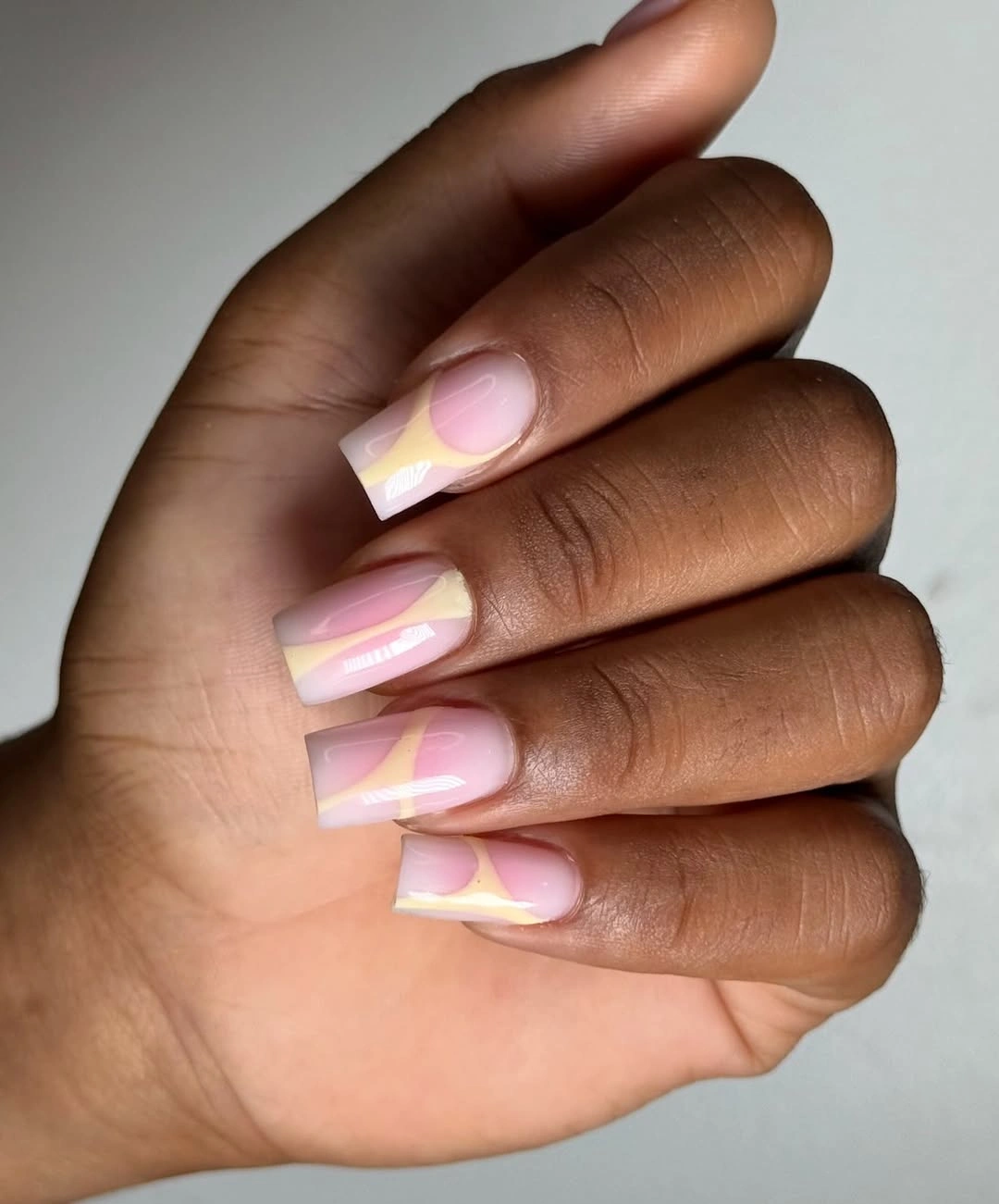
The white tip provides the emphasis and the pink base supplies continuity, so the color relationship stays clean rather than busy. On a short square, the tip must remain proportionate because a thick white band can shorten the nail visually. A useful variation is to keep the same pale base and use a slightly warmer ivory edge if you want the contrast to feel softer for autumn.
This set is practical for readers who like neat lines and a restrained palette. The limitation is that the design depends on the tip being even across all nails, and the short edge leaves less room for a wide gradient or elaborate art. Compared with the long pastel mix, it feels calmer, more repeatable, and easier to pair with patterned clothing or jewelry.
Pastel Tip Mix on a Long Square Canvas
Long square nails combine pale pink, white, yellow, and green-toned accents in a playful French-inspired mix. Different nails carry different tip colors and small outlined details, so the manicure feels collected rather than monochrome. The long straight edge gives each accent enough space to show, making this one of the more expressive fall nail colors for dark skin in the set.
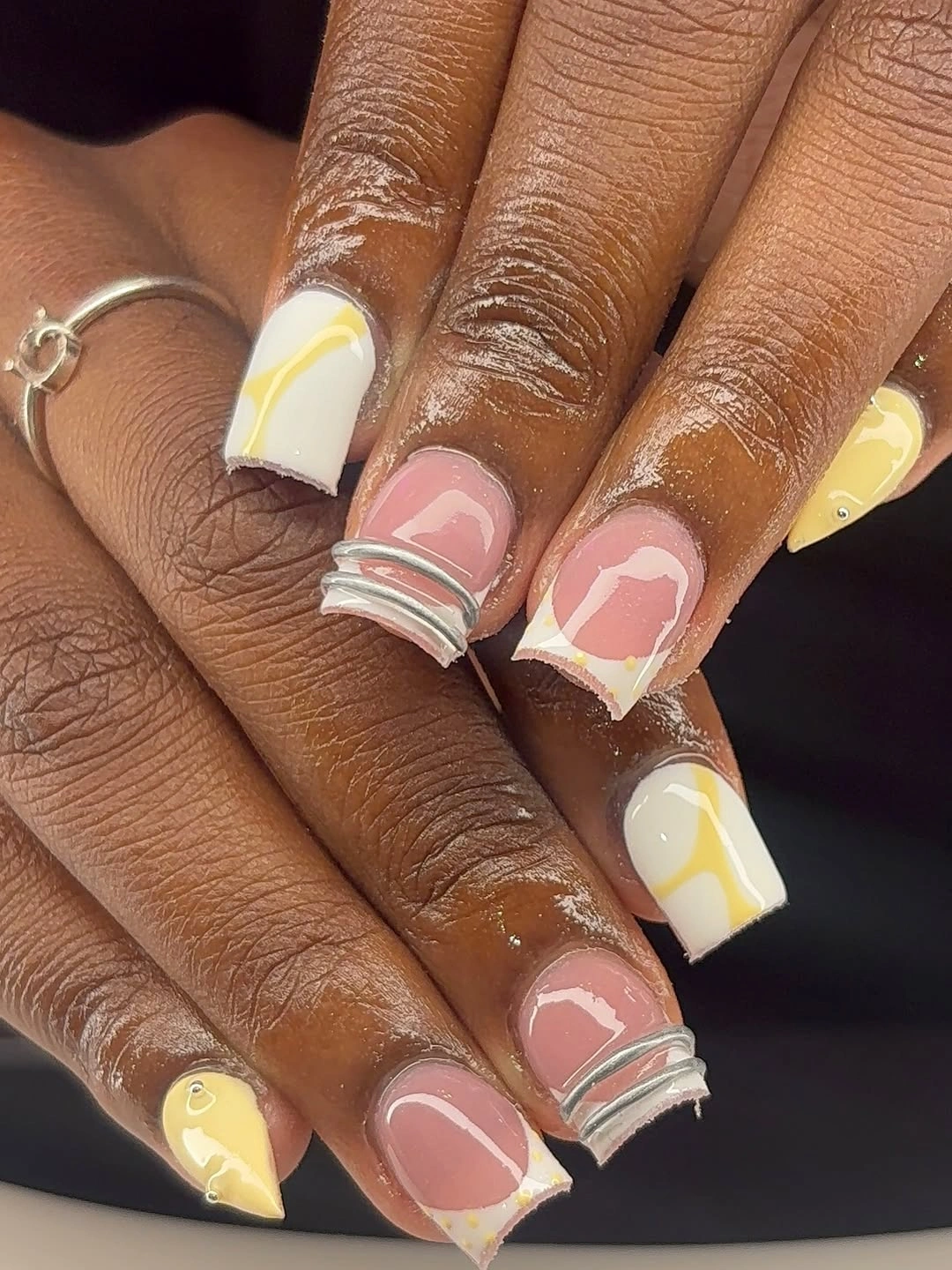
The palette stays coherent because the colors are placed over light bases and repeated through the set instead of appearing as unrelated blocks. Yellow brings warmth, pink keeps the hand soft, and green adds a cooler counterpoint that prevents the manicure from becoming sugary. If you want to reduce the visual volume, keep the mixed tips on two accent nails and use one pale base for the rest.
This design suits someone who enjoys variation and wants the manicure to look different from nail to nail. The tradeoff is that a long square shape and several tip colors require more visual commitment than the clean French idea before it. It can also be less forgiving when one accent wears down, because the mismatch is part of the intended charm.
Speckled Glitter on Short Square Nails
Short squared nails carry a dark base scattered with dense multicolor glitter, including red, silver, and darker reflective flecks. The particles change as the hand moves, so the manicure has texture and light play without separate drawings or lines. It is a useful fall direction when you want the finish to provide complexity while the short shape keeps the overall proportion manageable.
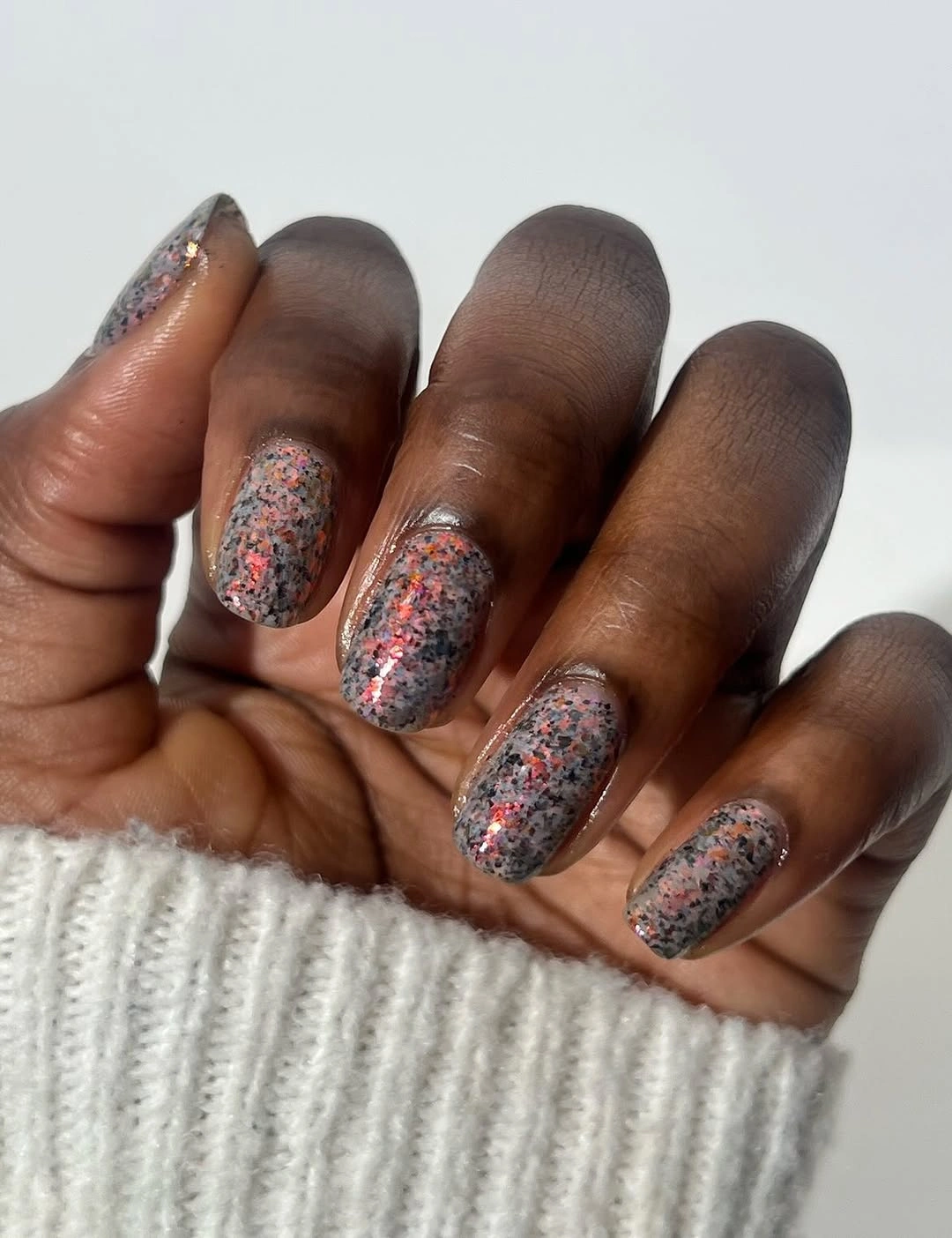
The glitter has more impact because it sits over a darker field, which gives the small reflective pieces a clear background. The short edge prevents the sparkle from becoming too elongated, and the sweater nearby reinforces the cozy seasonal mood without changing the nail design itself. A softer variation could use a finer shimmer over a lighter base if dense particles feel too bold.
This option is practical for someone who wants a festive surface but prefers short nails. The limitation is maintenance visibility: glitter may hide a small loss of smoothness, yet the dark base can make a missing patch noticeable. Compared with the solid cobalt finish, this manicure distributes attention across many tiny points instead of one uninterrupted color block.
Minimal Blush over a Tapered Almond
Long almond nails are covered in a pale blush-pink shade with a smooth glossy surface and very little visible decoration. The color stays close to a soft nude family, while the tapered outline supplies the length and elegance. This is a quiet example of fall nail colors for dark skin where the shape, not a strong contrast, creates the main visual statement.
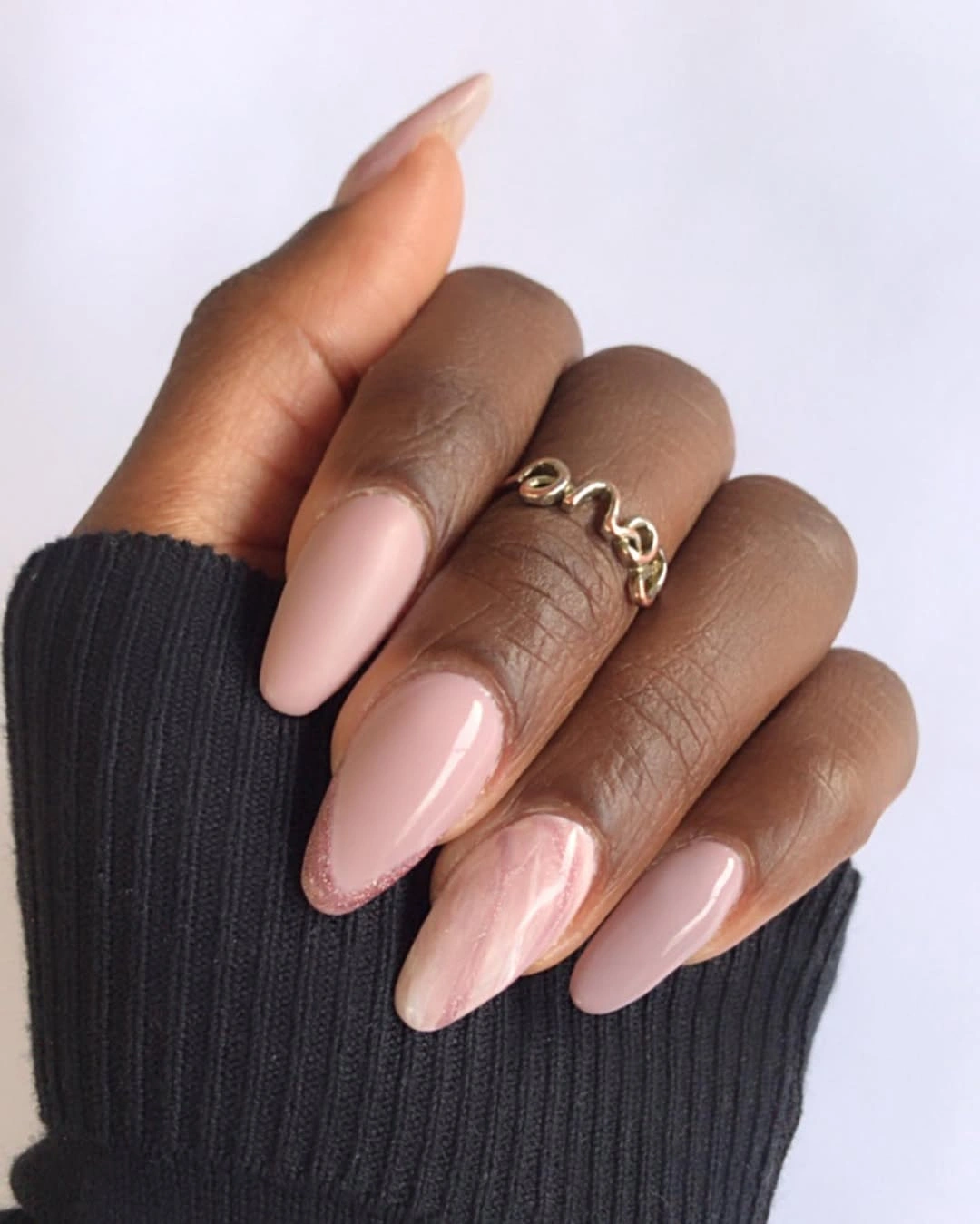
The calm color leaves the almond silhouette fully visible, so the eye follows the curve from the base to the narrow tip. That relationship can feel polished without needing glitter, art, or a dark seasonal shade. If you want a warmer autumn variation, a muted rose or clay-pink base could keep the same low-detail approach while adding slightly more contrast.
This manicure works for readers who want length but prefer a quiet surface. The tradeoff is that the long point remains the dominant choice, so it may not fit a routine that favors short edges or frequent hands-on work. Compared with the glitter set, it is less reflective and less forgiving of shape changes, but it is also easier to read as a clean neutral.
Delicate Pale Pink on a Pointed Shape
Long pointed nails use a translucent pale-pink color with a glossy finish, creating a narrow silhouette that feels more directional than the rounded blush almond. The shade remains restrained against dark skin, while the repeated point gives the set a fashion-forward edge. This pairing shows how shape intensity can compensate for a quiet color without needing extra pattern.
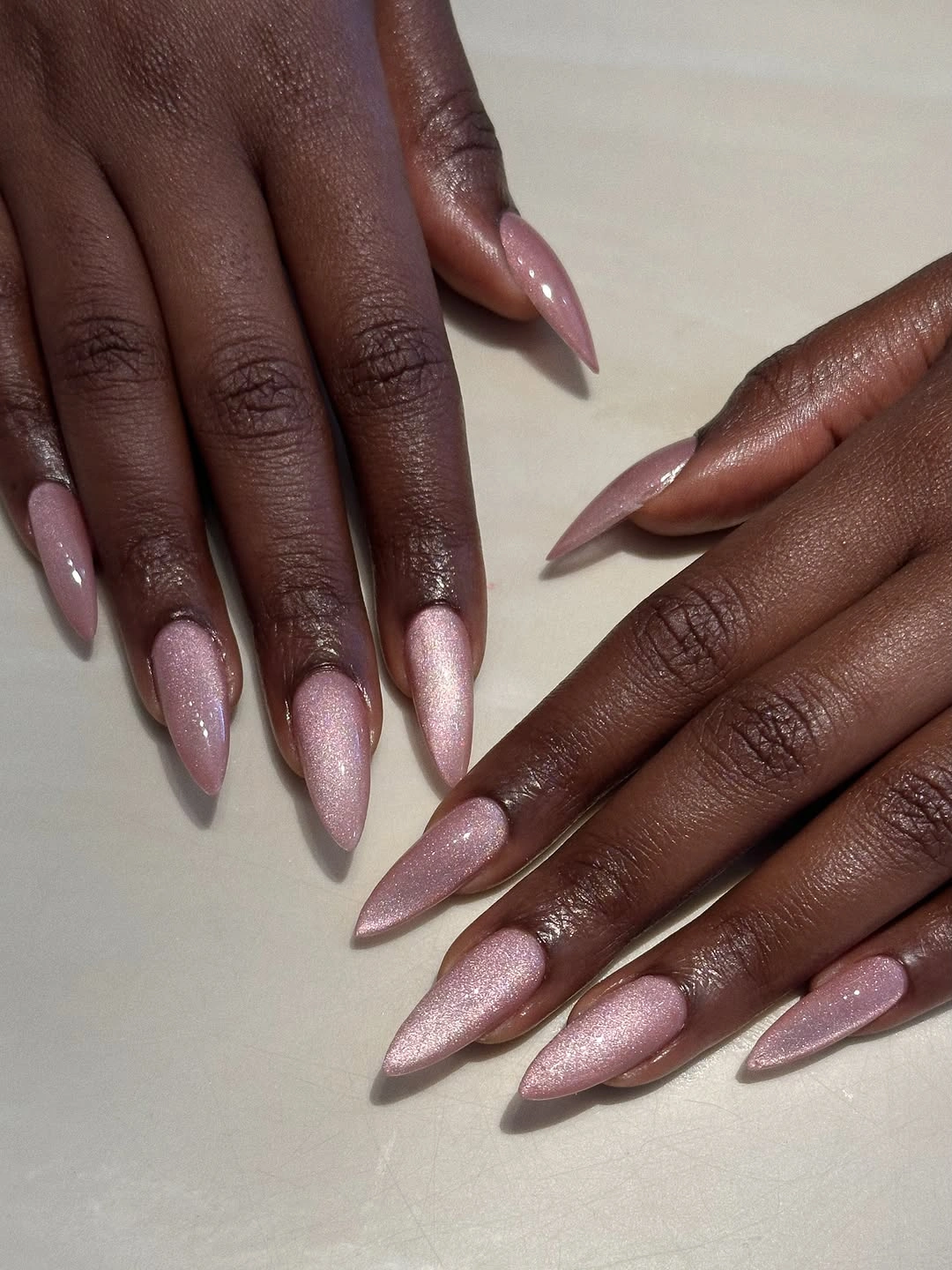
The color stays delicate because it does not cover the hand with heavy contrast, but the tapered tips pull the eye outward and lengthen the fingers visually. Keeping the surface free of decoration allows the point to remain the central design decision. A practical variation is to use a softer almond tip if you want the same pale-pink relationship with a less sharp outline.
This idea suits someone who likes minimal color but is comfortable with a noticeable length. The limitation is that the point changes how the hand functions day to day, so the shade alone should not be the only factor in choosing it. Compared with the blush almond, it feels more dramatic because the silhouette is narrower and more emphatic even though both colors are light.
Soft Pink with Fine Reflective Detail
Long almond nails use a pale blush base with fine shimmer or reflective detail near the tips. The color remains within one pink family, but the small sparkle prevents the surface from looking completely flat. Against dark skin, the low-contrast base stays gentle while the reflective edge supplies just enough emphasis to make the manicure feel finished.
The almond shape gives the shimmer a clean perimeter, and the restrained placement keeps the design from competing with the soft base. This is a useful color relationship when you want more interest than a plain nude but less contrast than a metallic border or glitter-heavy set. For autumn, the same idea could use a muted rose base with a warm champagne glint at the tip.
This manicure fits a reader who prefers detail that appears gradually rather than announcing itself immediately. The tradeoff is that the sparkle may be subtle in low light, and the long almond proportion still requires comfort with length. Compared with the plain blush set, it adds texture without changing the overall quiet mood or introducing a second strong color.
Purple Short Nails Warmed by Gold Accents
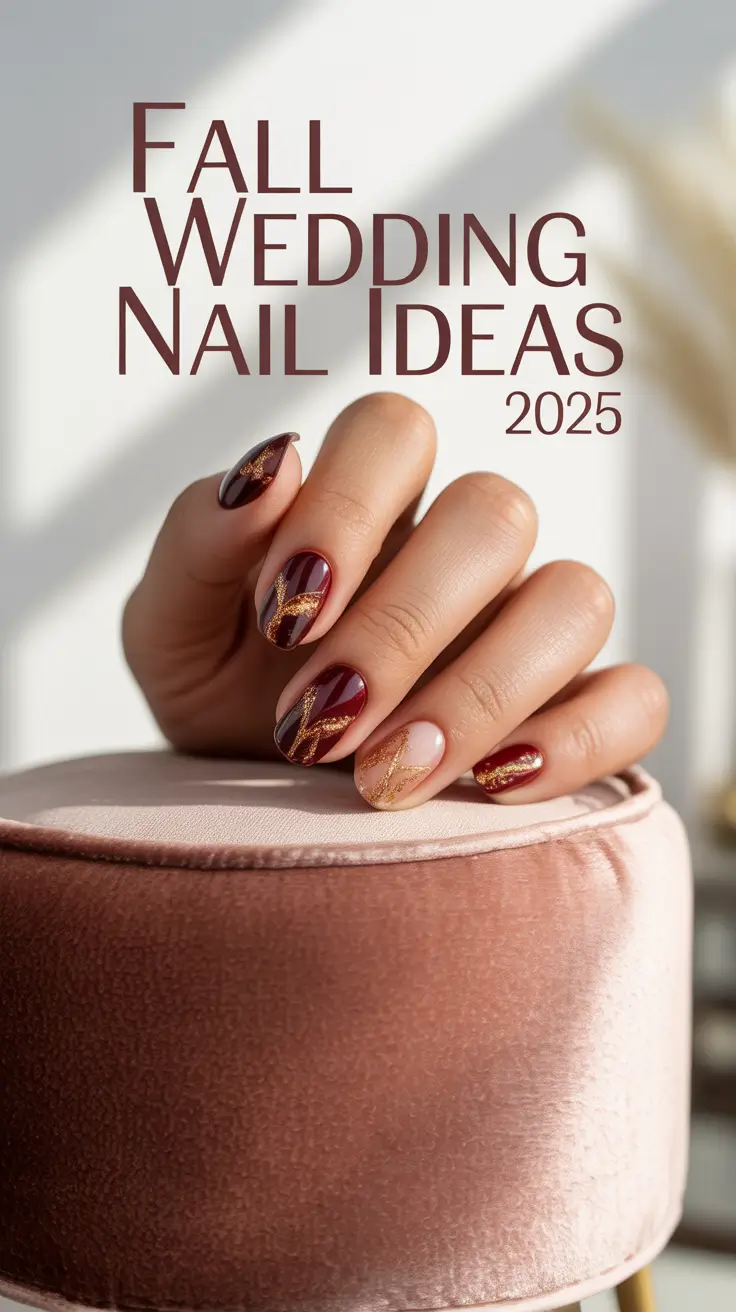
Short nails combine glossy purple polish with nude or translucent accent nails carrying thin gold lines and small metallic-looking details. The purple supplies the cool color focus, while the gold warms the set and helps it sit comfortably within an autumn wardrobe. Because the tips stay short and gently rounded, the design feels more wearable than a long jewel-toned statement.
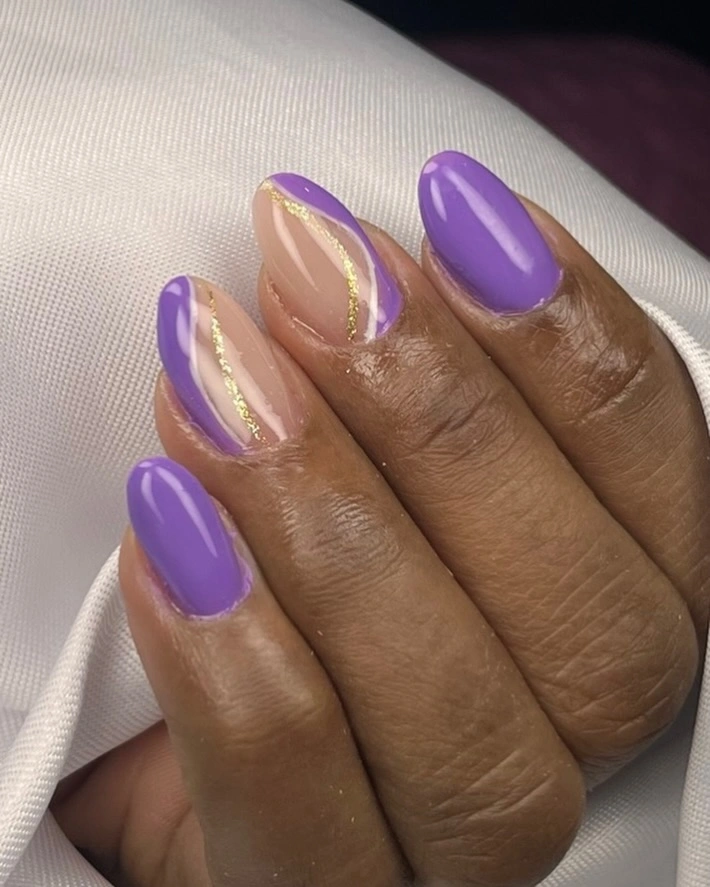
The contrast is controlled through placement: most nails hold the saturated purple, and the metallic detail appears only on selected accents. That repetition keeps the manicure readable while the gold prevents the cool shade from feeling isolated. If you want a moodier version, a deeper plum could replace the purple and the fine gold lines could remain unchanged.
This is a useful formula for readers who want a jewel tone but do not want every nail covered in art. The limitation is that the small gold work becomes a close-up detail rather than a long-distance focal point, especially on a short shape. Compared with the bright orange, the purple feels cooler and more considered, while the metallic accents provide the seasonal bridge.
Neon-Tipped Almonds over a Blush Base
Long almond nails begin with a glossy blush-pink base and finish with bright yellow-green French-style tips. The vivid edge traces the tapered ends instead of covering the entire nail, so the manicure combines a soft center with a lively border. This is an excellent example of using placement to make fall nail colors for dark skin feel playful without turning every surface into a full neon field.
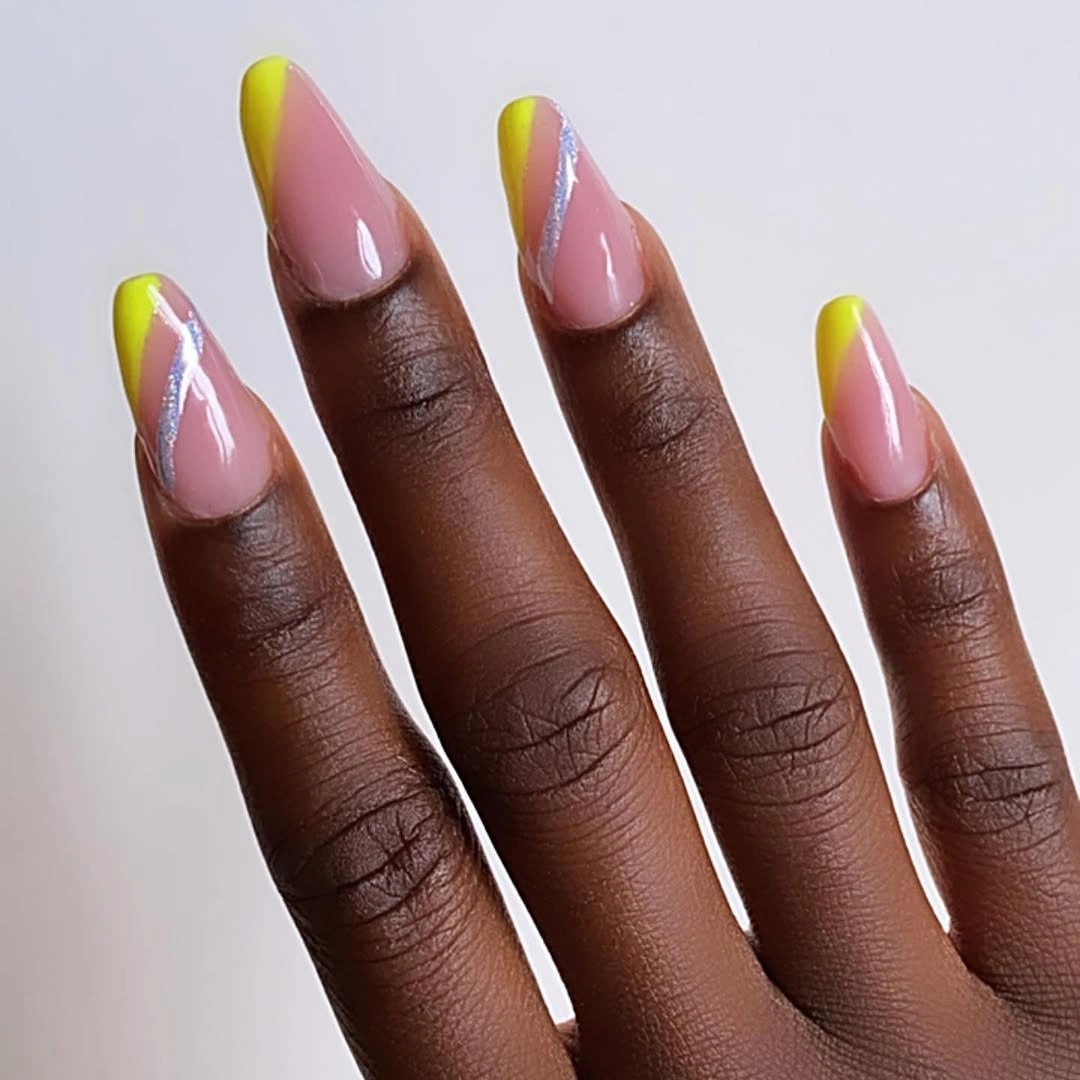
The pale base gives the bright tips space to stand out, while the pointed shape makes the color line look sleek rather than bulky. The accent is concentrated at the edge, which preserves the hand’s natural visual warmth and keeps the manicure from becoming visually flat. A quieter variation could shift the tips toward muted olive while keeping the same blush center and almond contour.
This set works for someone who wants color to appear in a controlled location and enjoys a little surprise at the tip. The tradeoff is that the bright edge becomes the first thing people notice, and a short nail will leave less room for the relationship between base and tip. Compared with the pale shimmer, this look is more energetic because the contrast is sharp and directional.
Navy with One Tiny Patterned Accent
Several short-to-medium nails are coated in glossy navy blue, while one lighter accent nail carries tiny dark and warm-toned motifs. The deep blue provides repetition and weight, and the small pattern adds personality without changing the entire set. This balance demonstrates how a single accent can make fall nail colors for dark skin feel individual while the main shade remains easy to wear.
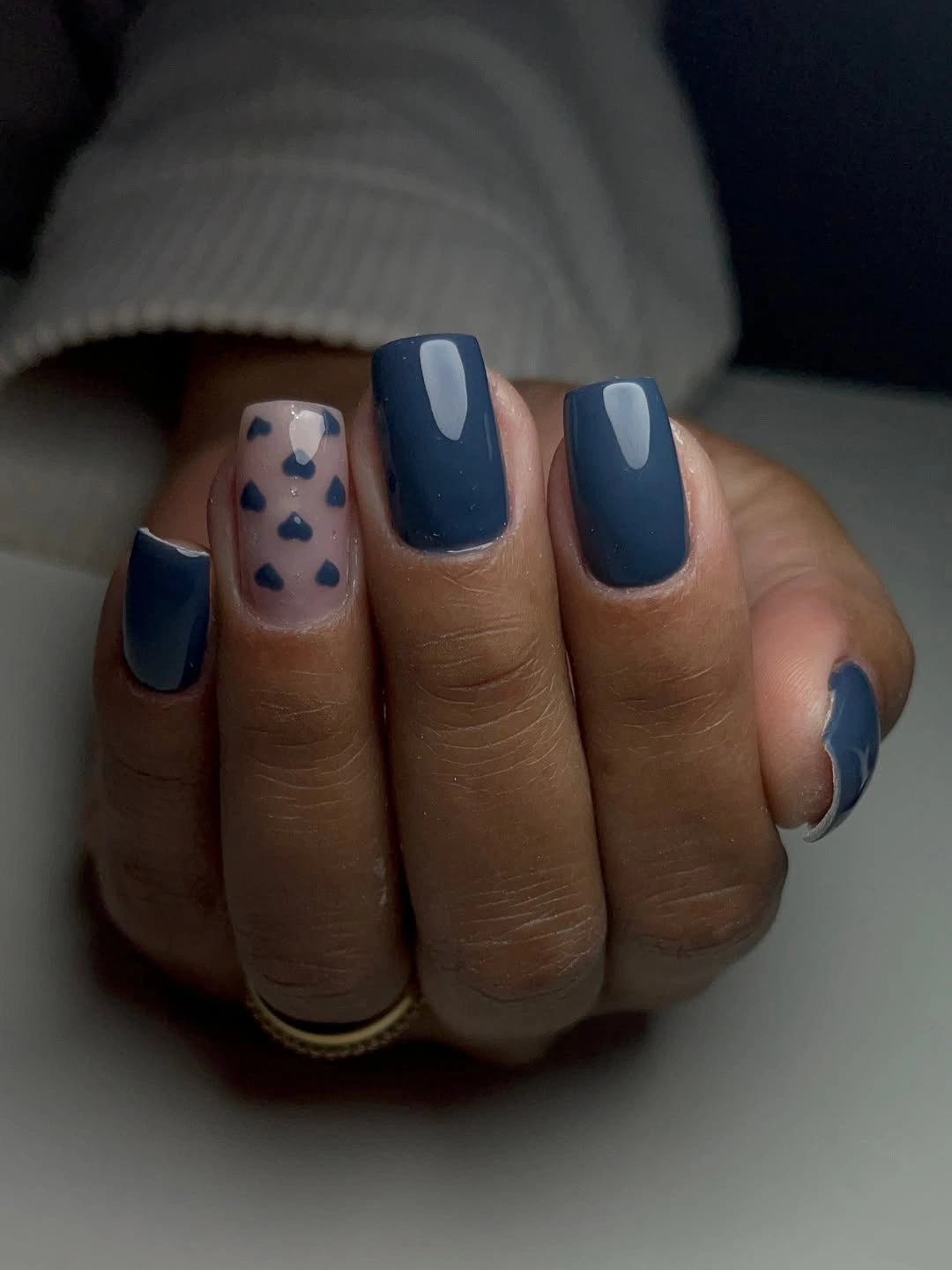
The accent works because the surrounding nails are visually quiet and similar in length. The navy gives the small marks a clear context, while the pale accent interrupts the dark field just enough to draw attention. If you want a softer version, use a muted slate or blue-gray base and keep the same one-nail approach rather than adding art everywhere.
This idea suits a reader who likes nail art in principle but wants the manicure to stay controlled. The limitation is that tiny motifs are best appreciated up close, and a short edge offers little room for a large illustration. Compared with the multi-color tips, the set has less variety but a clearer hierarchy, which can make it easier to style with everyday clothing.
Bright Orange on a Compact Rounded Shape
Short rounded nails are covered in vivid glossy orange with no visible art or accent shade. The warmth of the color stands out against deep skin, while the compact outline prevents the saturation from feeling overly elongated or theatrical. This direct color choice shows that autumn can be represented by clarity and warmth rather than by a complex brown or burgundy pattern.
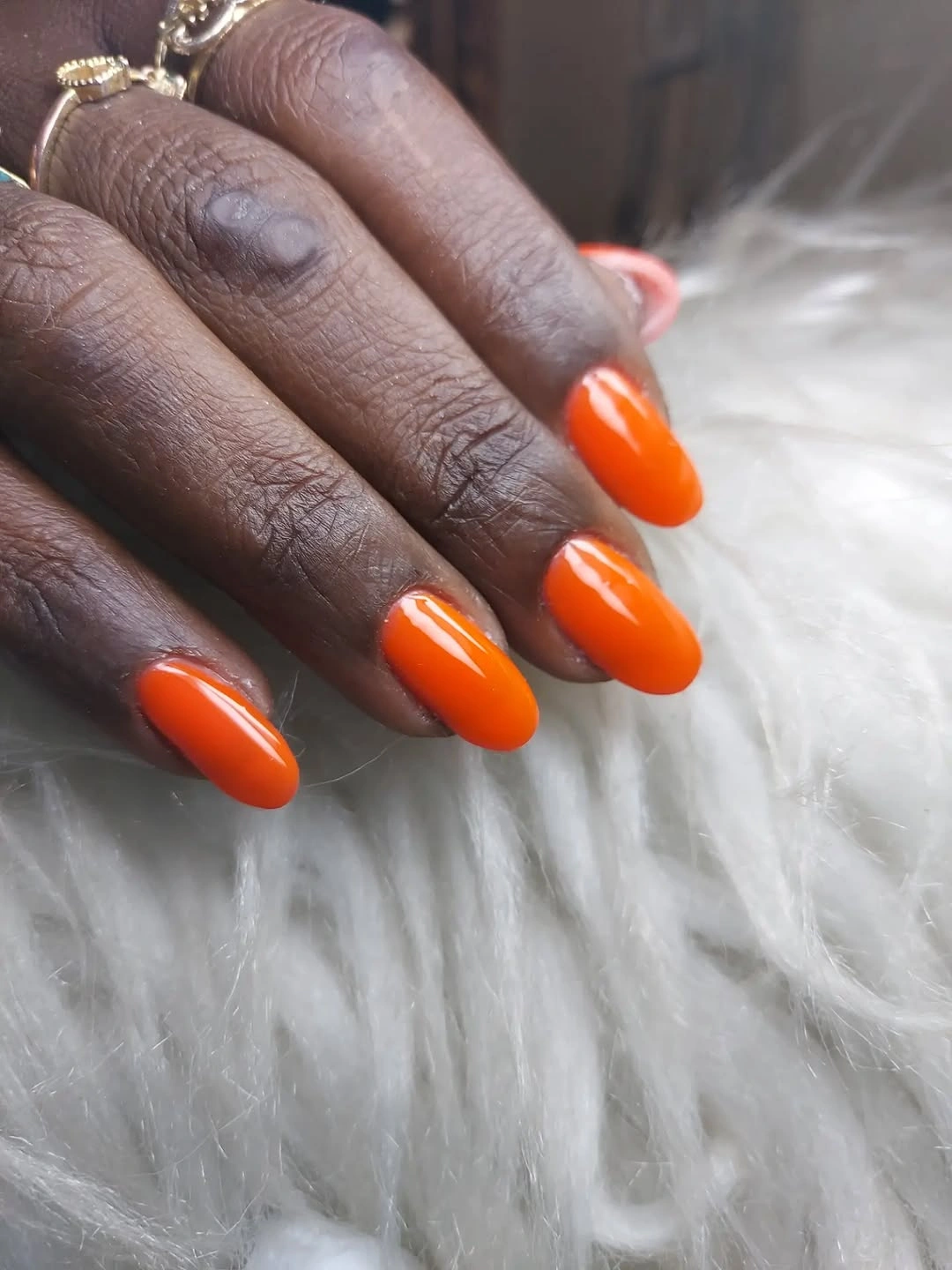
The manicure stays visually strong because the finish is uninterrupted and the shape is easy to read. Short nails keep the orange close to the hand, so the eye registers one warm field rather than a long row of repeated tips. A more muted variation could use a clay or burnt-orange tone if you want the same seasonal relationship with less brightness.
This is a practical option for someone who likes a bold color but prefers a short routine and no extra design work. The tradeoff is that high saturation makes uneven application or wear easy to notice, especially because there are no accents to break the surface. Compared with the navy set, orange feels warmer and more immediate, while the rounded edge softens its impact.
Gold Glitter Edging around Soft Pink
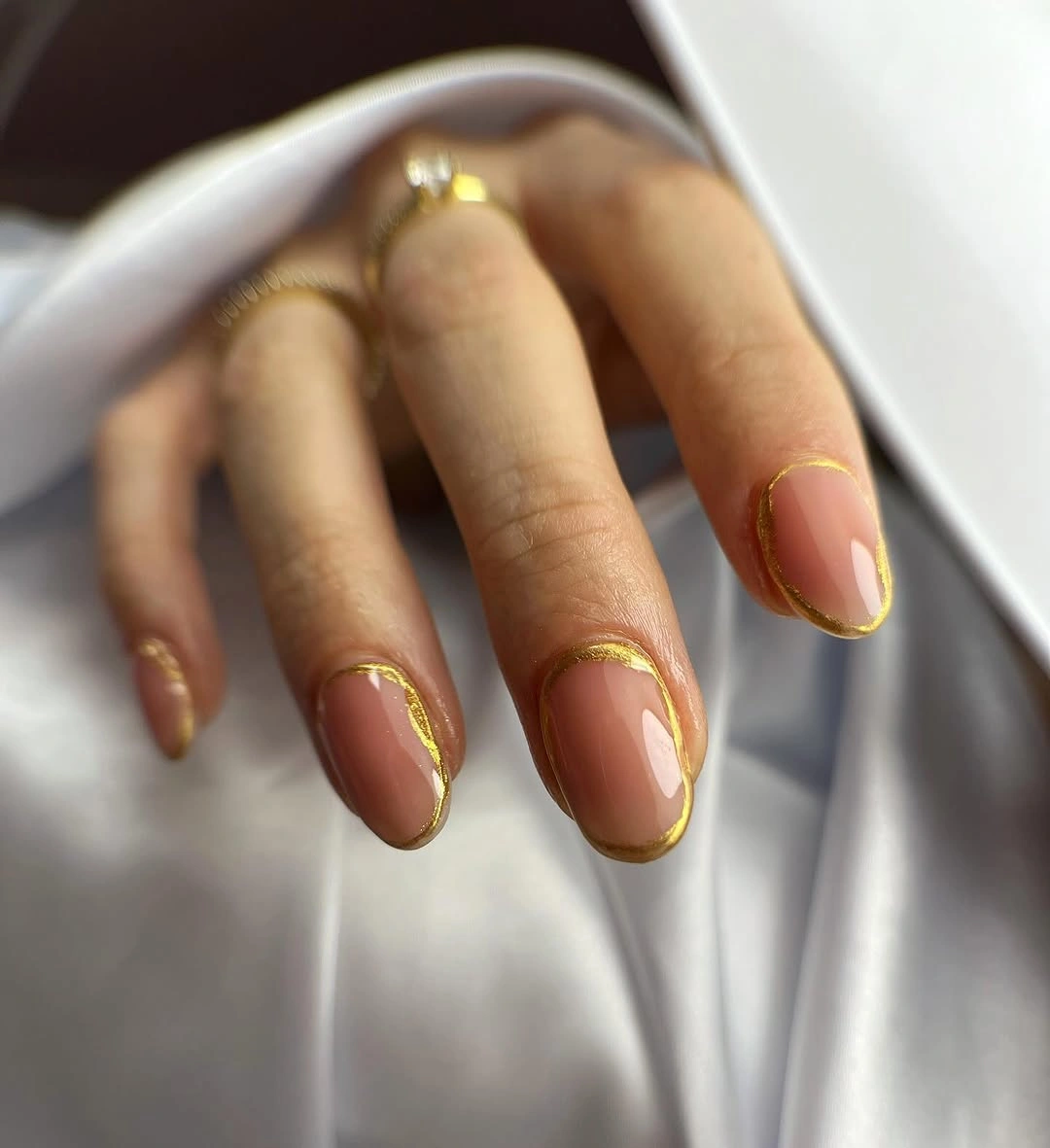
Long almond nails use a pale pink base outlined near the tips by fine gold glitter or metallic edging. The center remains mostly open, so the design is not a full glitter manicure; instead, the warm border emphasizes the almond perimeter. Against dark skin, the soft base keeps the look light and the gold supplies the autumn connection.
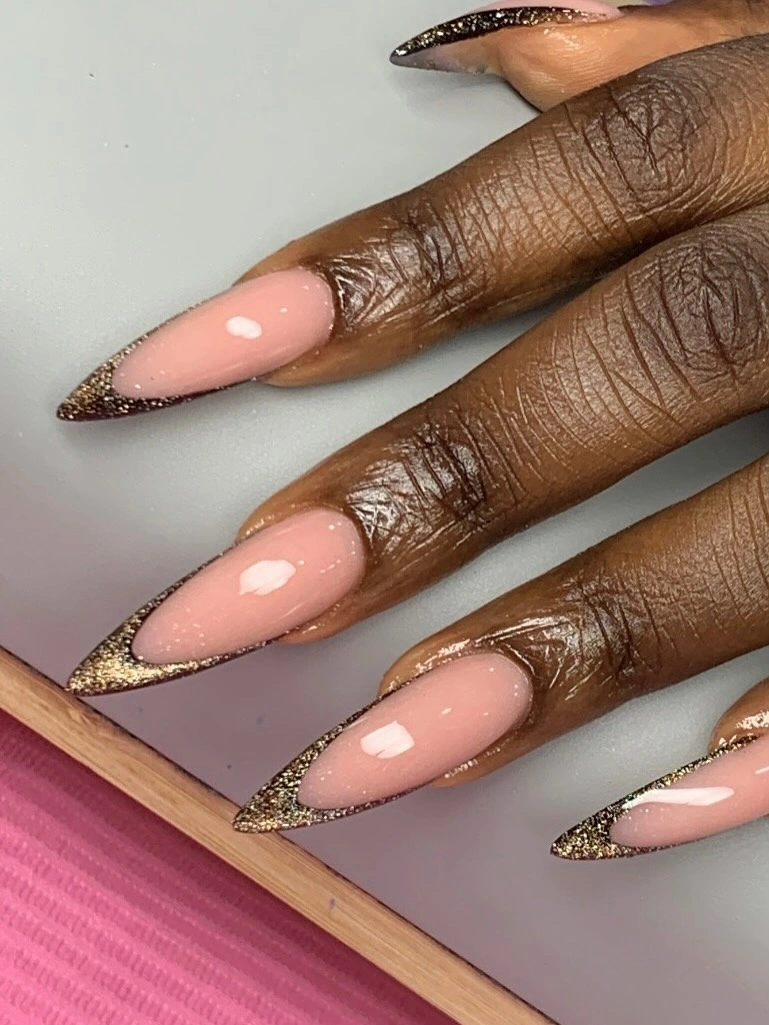
The border succeeds because it follows the shape instead of cutting across it. The metallic line makes the taper easier to see, while the pale center prevents the gold from becoming dense or overly formal. If you want less sparkle, a thin warm-brown outline could provide a similar framing effect with a quieter finish.
This option suits a reader who likes metallic detail but wants the base to remain gentle. The limitation is that the long almond length is doing part of the design work, so a shorter nail will create a smaller frame and a different proportion. Compared with the neon tips, the gold edge is less playful and more polished, with warmth arriving through finish rather than brightness.
Deeper Blue on a Medium Square
Medium square nails carry a rich blue polish that appears deeper and more grounded than the bright cobalt short set. The finish is glossy and unbroken, while the extra length gives the color a stronger presence without introducing any art. This is a useful comparison because the same broad color family changes mood when the shade darkens and the square edge extends.
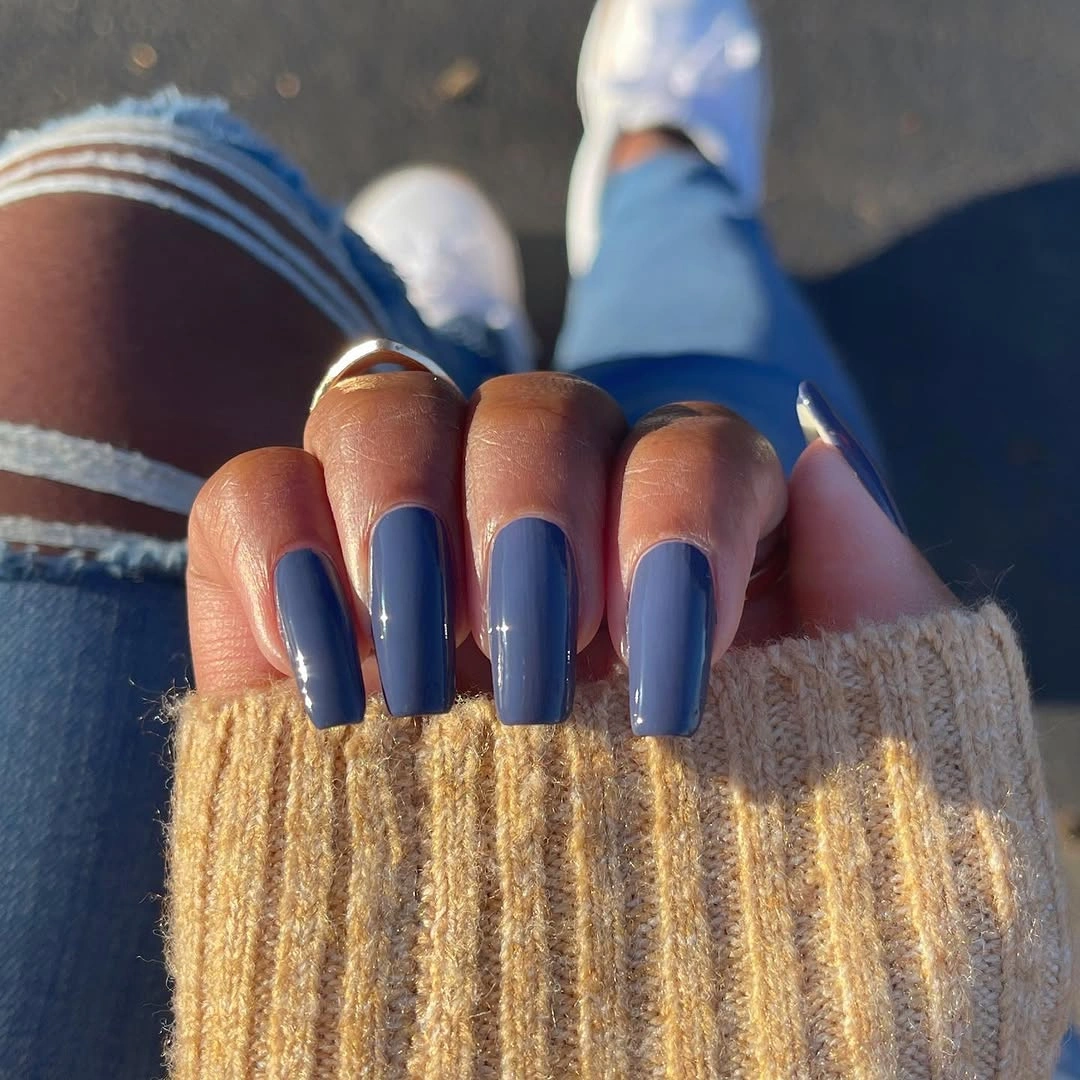
The color relationship is straightforward: a deeper blue creates less electric contrast than bright cobalt but still stands apart against the skin. The medium square silhouette adds structure and makes the set feel more polished, while the lack of decoration keeps the result easy to understand. A softer option could use a muted ink blue if you want less brightness without moving into black.
This manicure works for someone who wants a strong single color with a little more length than a short square. The tradeoff is that the longer edge may be less convenient, and a solid dark surface can show dents or missing shine clearly. Compared with the bright orange, it feels cooler and more controlled, making it easier to wear with neutral layers or darker fall clothing.
Open Blush Space with Fine Black Curves
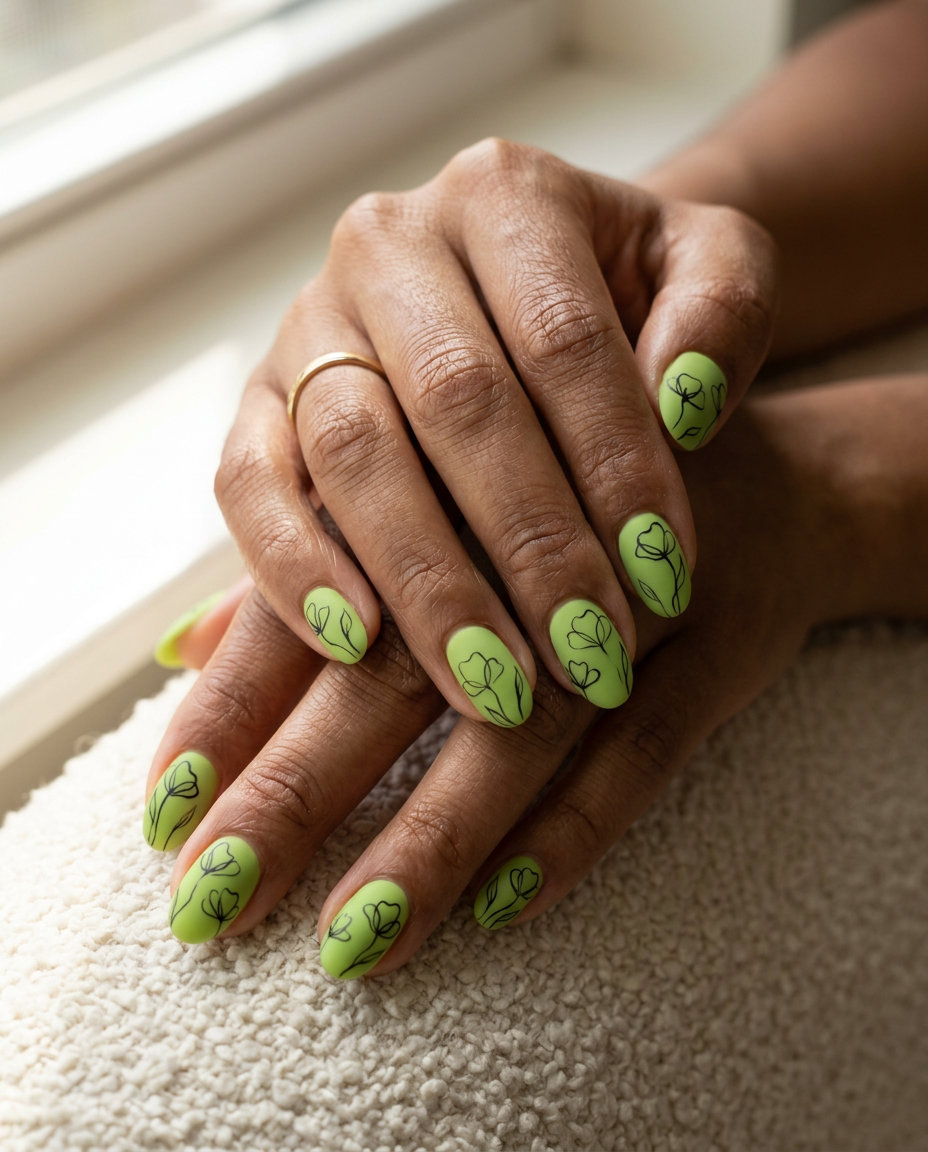
Short rounded nails begin with a pale blush base and add delicate black curved linework near the tips and sides. Much of the light base remains visible, so the design feels detailed without becoming dense. The dark lines create a crisp contrast against the blush and deep skin, giving a small manicure a distinct graphic identity.
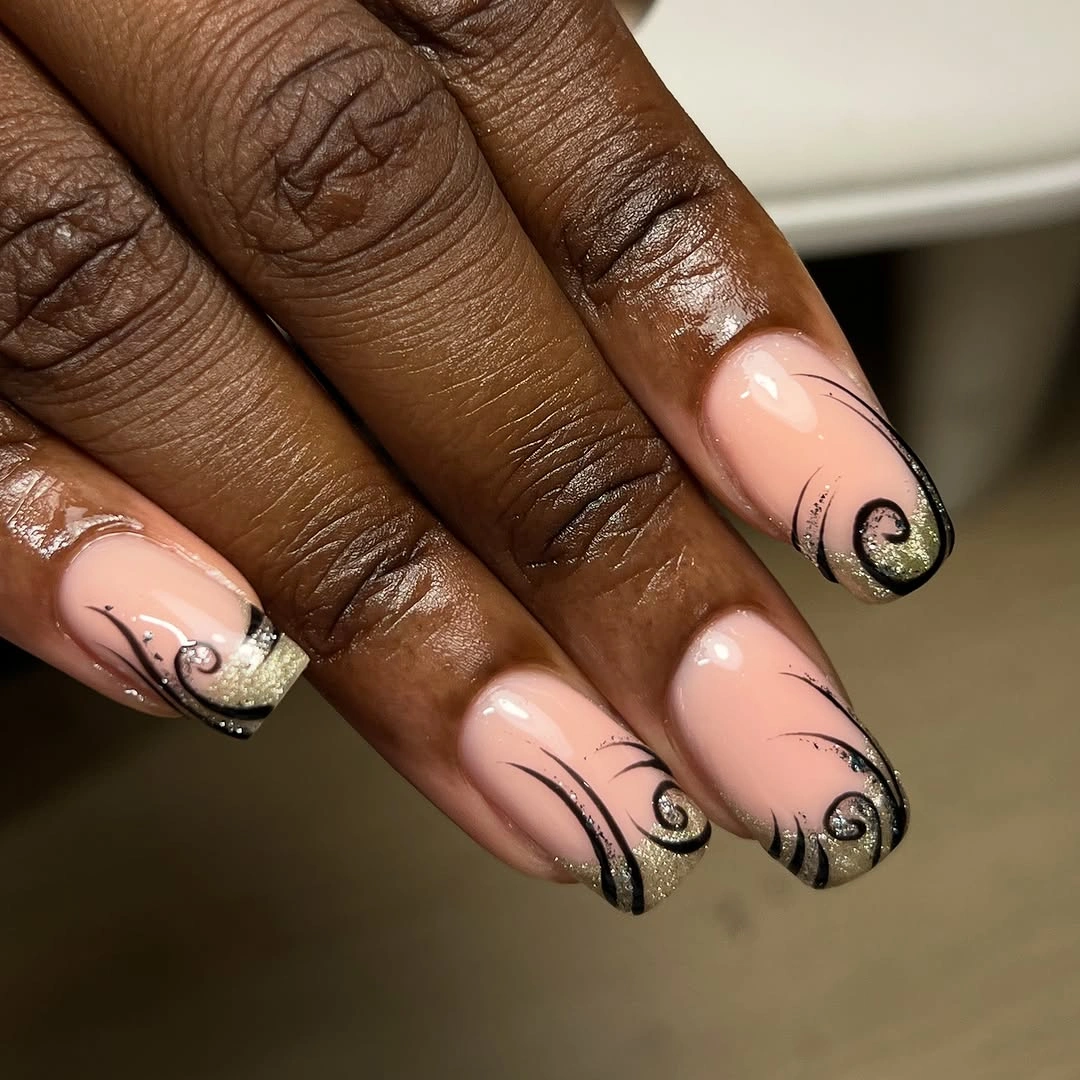
The marks work because they are sparse and varied rather than repeated as a heavy border on every nail. The open space keeps the short shape legible, while the black provides enough definition for the art to register at close range. If you want a softer autumn variation, the same curved placement could be done in deep brown or muted burgundy instead of black.
This is a practical direction for someone who wants art but does not want long tips or a fully decorated set. The limitation is that fine lines can lose clarity as the nail grows, and the design depends on leaving enough base visible to avoid visual crowding. Compared with the navy accent manicure, this set spreads the detail more evenly but keeps the overall amount restrained.
Layered Brown and Red Details on Long Points
Long pointed nails mix warm brown, red, amber, and lighter translucent sections with layered linework and changing treatments from nail to nail. The palette is unmistakably autumnal, but the manicure avoids looking random by keeping the tones close in warmth. The long points provide room for swirls, translucent blocks, and small graphic accents, making this the most elaborate color composition in the collection.
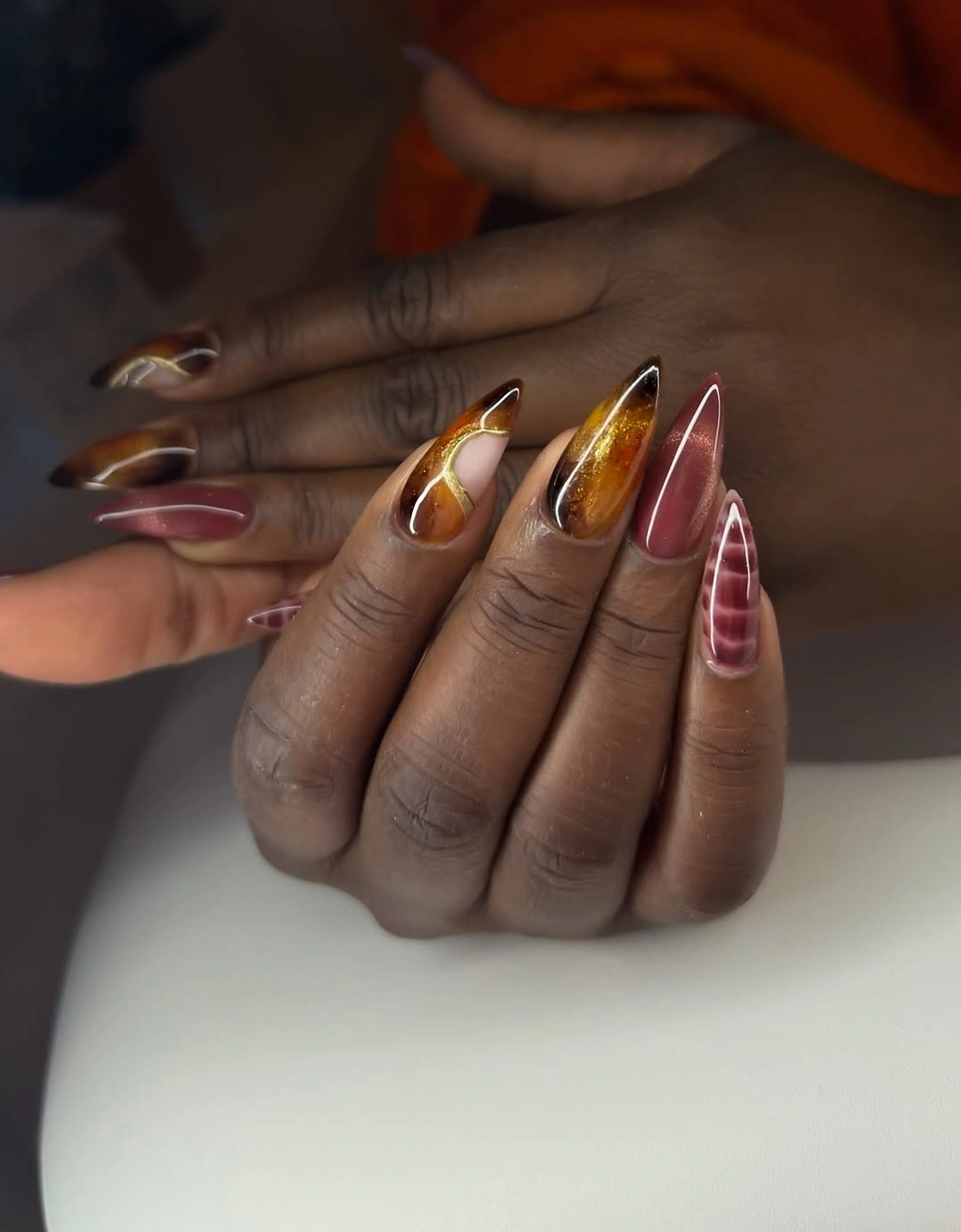
The color theory is about repetition with variation: brown grounds the set, red adds depth, amber lifts the warm range, and lighter sections create breathing room. Because no single nail carries the entire palette, the eye moves across the hand instead of stopping at one solid block. If you want to simplify it, choose brown and red as the main pairing and reserve the lighter or metallic detail for one accent nail.
This manicure suits a reader who enjoys a statement and is comfortable with a longer, more involved design. The tradeoff is practical upkeep and visual commitment, since a mismatched set reveals wear or replacement more readily than a single shade. Compared with the clean blue or orange options, it offers far more texture and color movement but much less simplicity.
Blue and Gold Edges over a Blush Base
Medium almond nails use a pale blush base with dark blue French-style edges, thin gold lines, and small light accents on selected nails. The cool blue and warm gold create a deliberate contrast, while the open pink center keeps the set from feeling crowded. This arrangement shows how fall nail colors for dark skin can combine two strong accents when both are kept close to the edge.
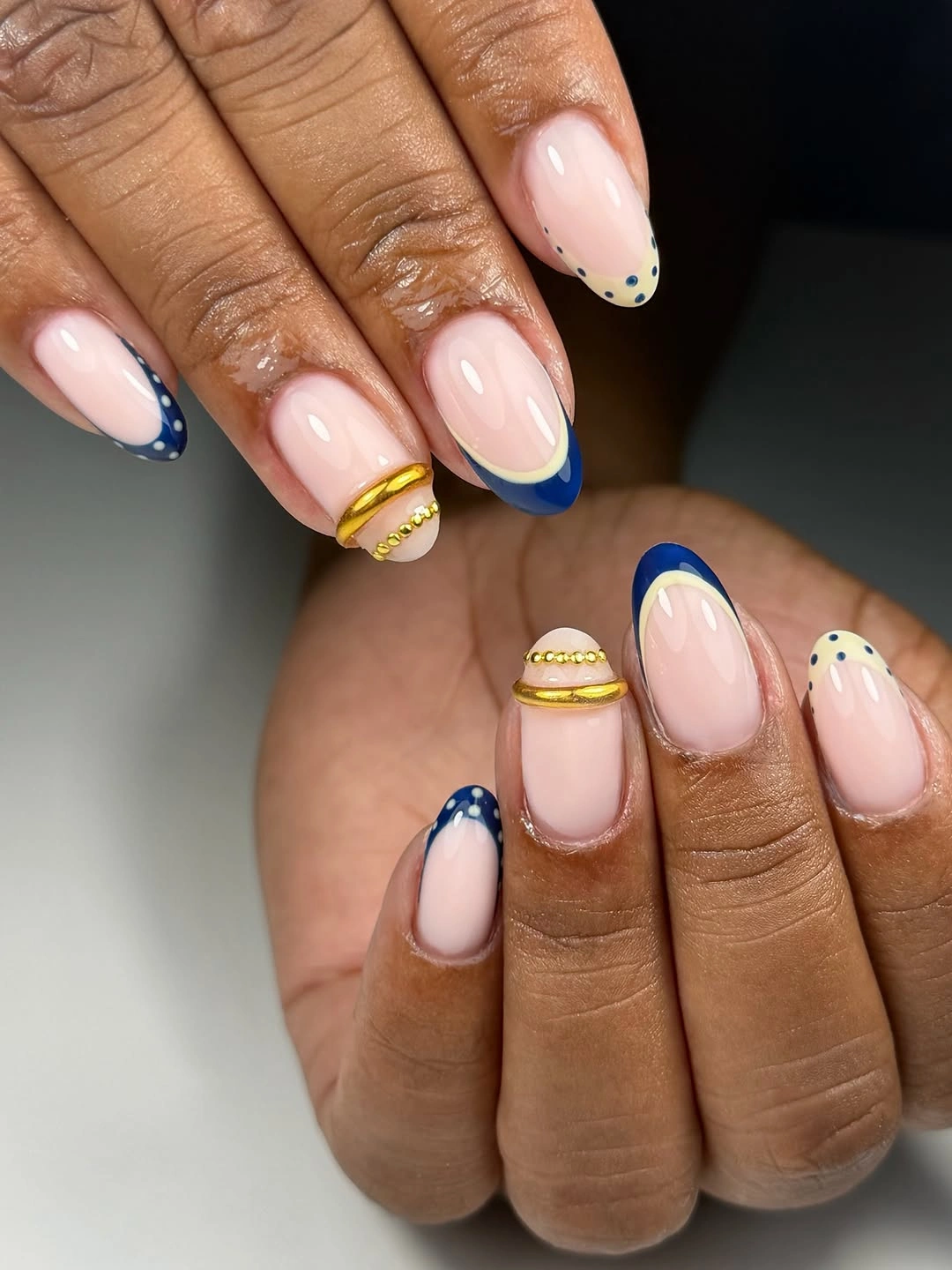
The blue defines the tip and the gold adds a warm glint beside it, so neither color has to cover the entire nail to be noticed. The medium almond shape provides enough curve for the accents to follow without the drama of a very long point. A quieter adaptation could keep blue on only two nails and let the gold appear as a tiny line on the rest.
This is a useful option for someone who wants detail that is coordinated rather than mismatched. The limitation is that the two accent colors require a steady relationship in scale; if one becomes much thicker, the manicure can lose its balance. Compared with the black line art, the blue-and-gold set feels warmer and more decorative while still leaving ample pale space.
Sheer Nude with Small Metallic Pieces
Short rounded nails use a sheer nude base with small gold foil-like pieces and translucent accents concentrated on selected nails. The base keeps the manicure close to the natural hand, while the metallic details catch light only when viewed more closely. It is one of the quietest fall nail colors for dark skin here, proving that seasonal interest can come from small placement rather than strong saturation.
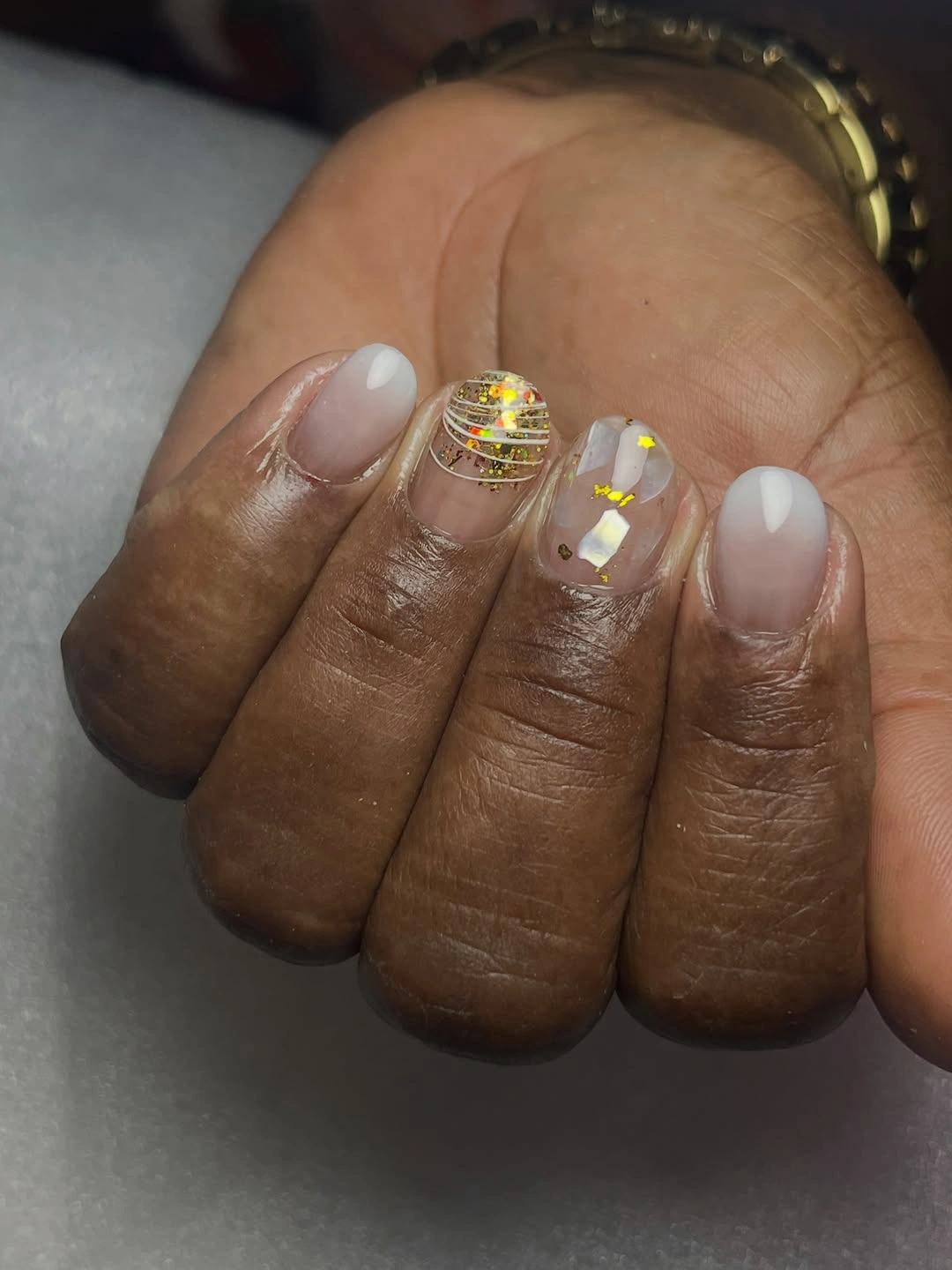
The contrast stays low because the nude surface remains open and the gold appears in small fragments rather than a full border. That makes the set easy to combine with jewelry or layered clothing, since the nails add a glint without creating another dominant color. If you want more autumn depth, a transparent caramel base could warm the same small metallic composition.
This idea suits someone who prefers short nails and close-up detail over a manicure that announces itself across the room. The tradeoff is that the accents may be hard to appreciate in low light, and the sheer base offers little visual cover for uneven shaping. Compared with the bright red set, it is quieter, more flexible with outfits, and more dependent on the quality of small details.
Glossy Red on a Short Square
Short square nails are coated in vivid glossy red with a clean, undecorated surface. The color creates immediate warmth and contrast against deep skin, while the compact square edge keeps the classic shade from feeling overly formal or elongated. As a final solid-color idea, it shows how a clear red can carry a fall mood through tone and finish alone.
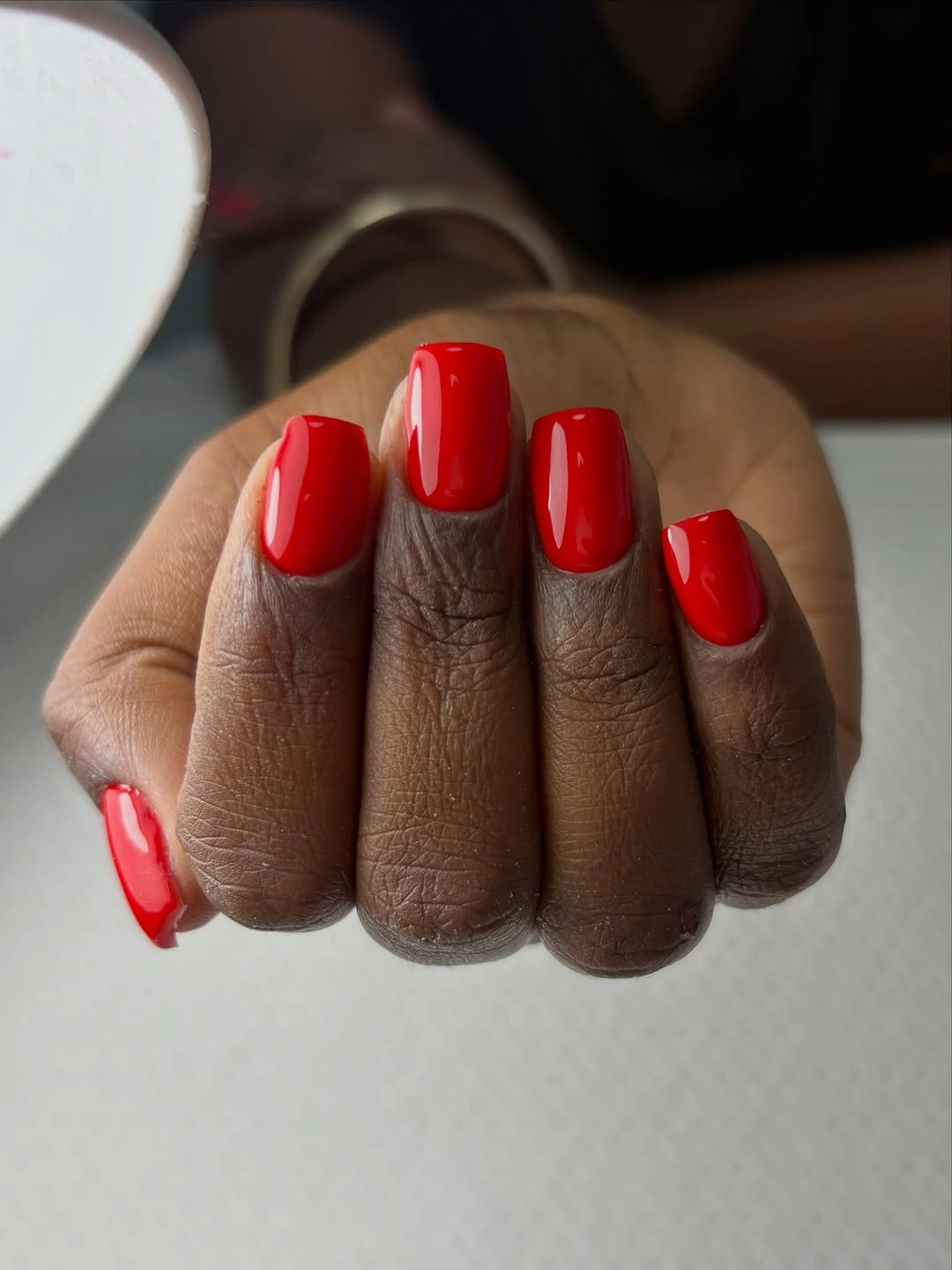
The design works through a simple pairing of saturation and shine. Red supplies the visual emphasis, and the glossy surface keeps the color lively across the short edge instead of making it look flat. A more muted variation could shift toward brick or berry while preserving the same unbroken coverage and tidy square proportion.
This manicure is practical for a reader who wants a familiar statement with no pattern decisions. The limitation is that the strong color makes chips and uneven edges easy to notice, so the simplicity asks for clean application. Compared with the orange, the red feels more classic and concentrated, while its short square outline keeps the overall result direct and wearable.