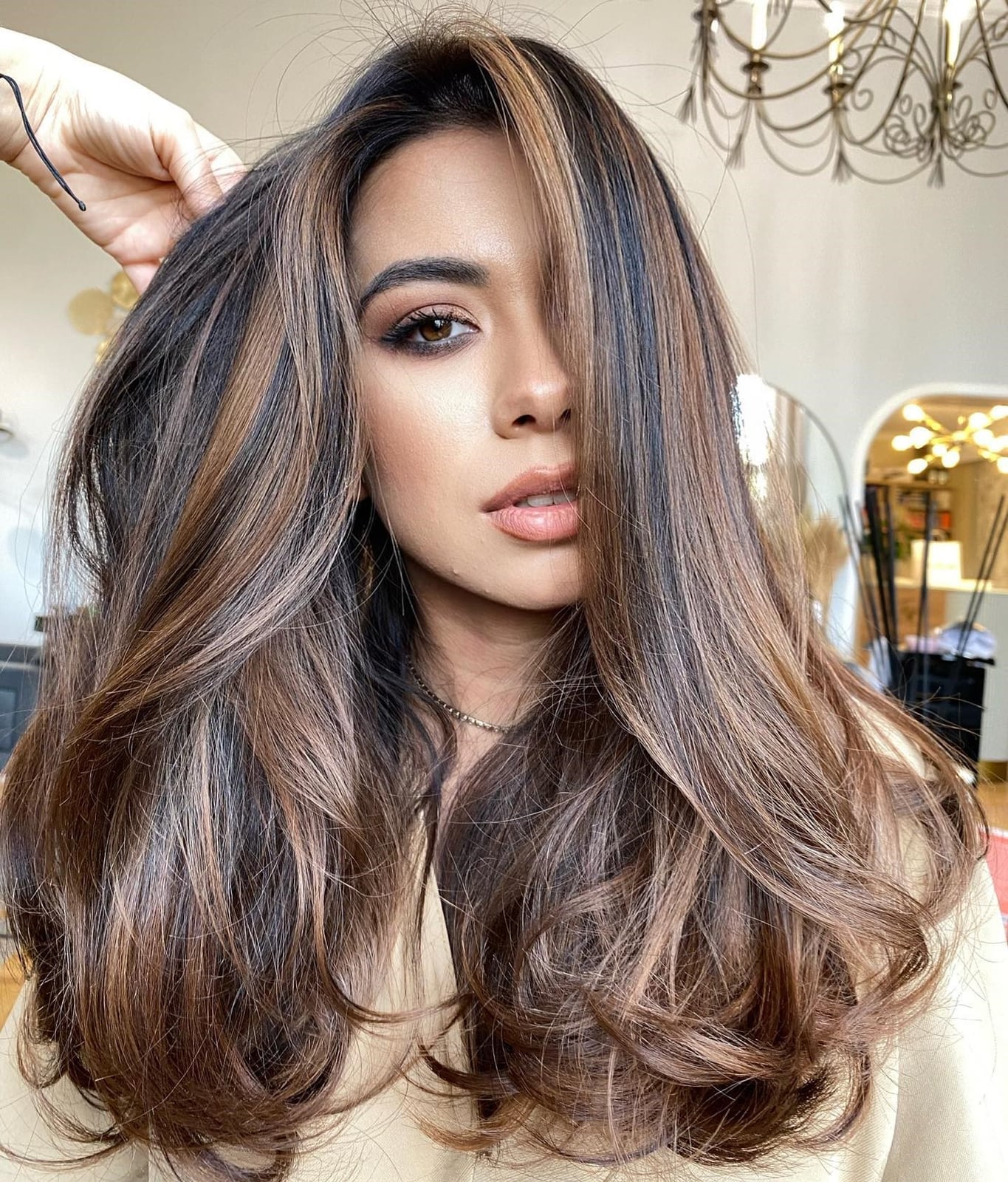

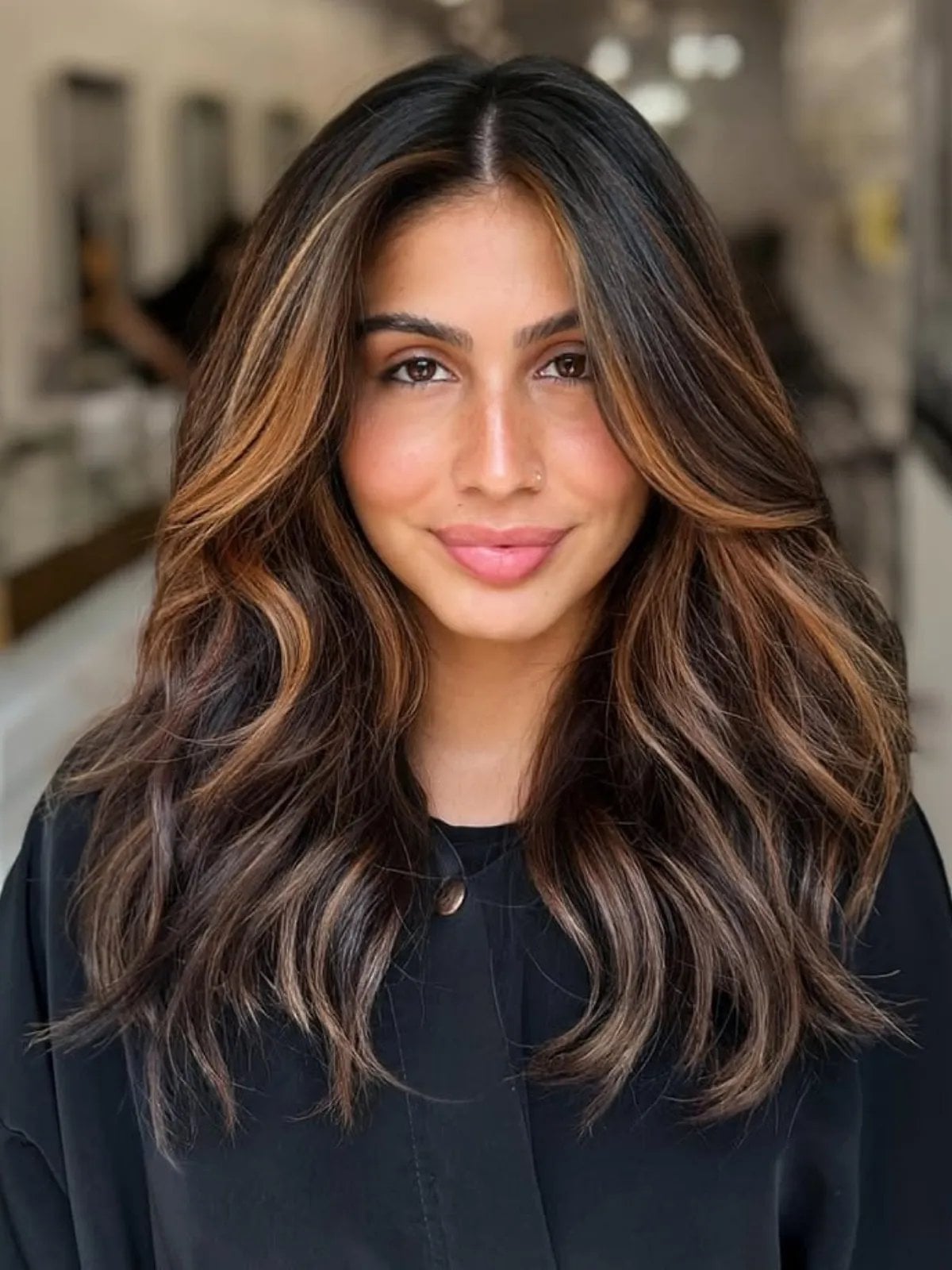
Dark brown hair with blonde highlights is a classic that keeps evolving, and right now the shift is toward softer, more lived-in placement that grows out gracefully. The glossy natural texture and curtain bangs that define the current trend make this combination feel modern without requiring a salon visit every four weeks.
This collection of 23 ideas covers the full range, from subtle face-framing pieces to seamless balayage, on lengths from collarbone to mid-back. Simple Dark Brown Hair with Blonde works for anyone who wants dimension without the high upkeep, and it solves the problem of a harsh grow-out line that plagues chunkier highlights. Fine hair gets movement, thick hair gets weight relief, and every texture benefits from the blend.
Collarbone Layers With Subtle Blonde Highlights
Ever wonder how to add brightness without looking like you tried too hard? This collarbone cut keeps a dark brown base and threads subtle blonde highlights through the top layers, so the dimension shows in soft waves without screaming for attention. Curtain bangs and face-framing pieces break up the shape around the cheekbones, which softens round and heart-shaped faces. Ask your colorist for: collarbone length layers, subtle blonde highlights, curtain bangs. Thick hair holds the wave pattern well, and a round brush on the bangs gives a smooth finish. The baseline needs a trim every six to eight weeks to keep the ends clean.
Glossy Collarbone Lob With Curtain Bangs
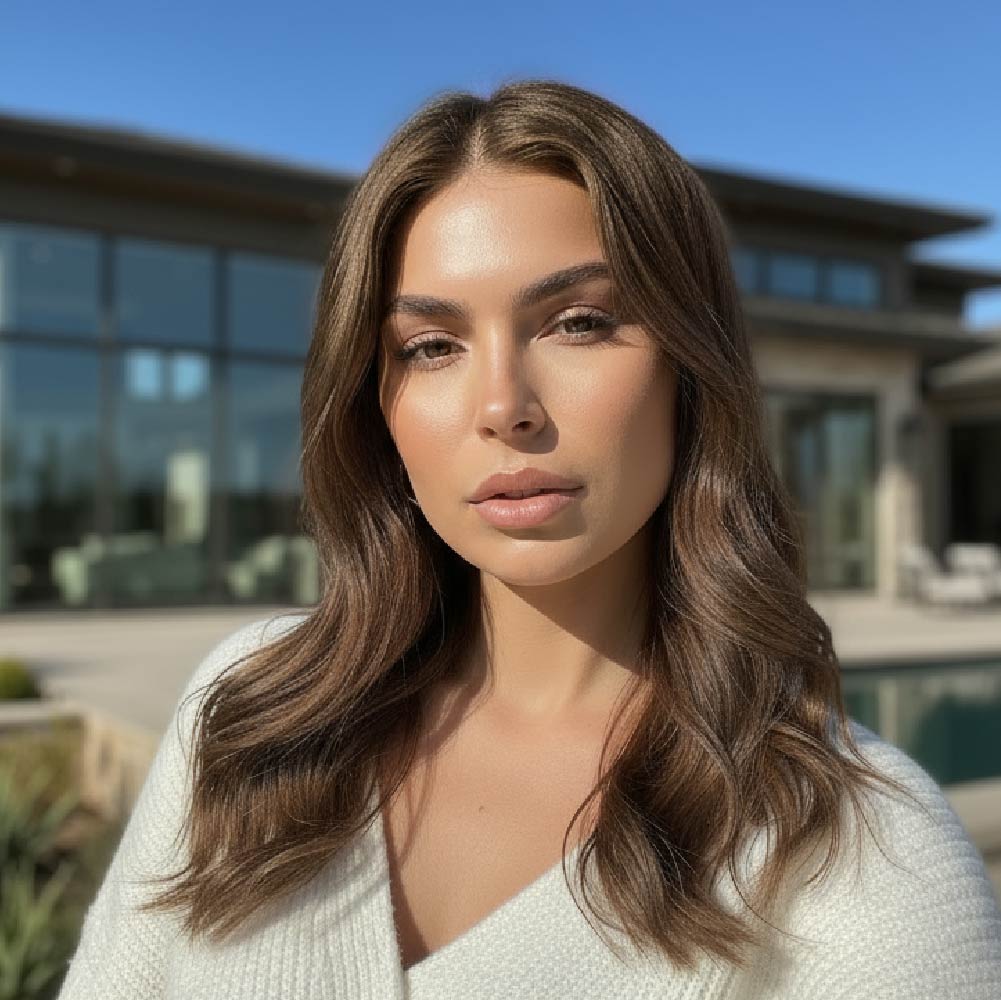
The glossy finish is what separates this lob from every other dark brown cut. A shine-enhancing serum applied to damp hair before blow-drying locks in the reflection, and the subtle blonde highlights catch light at different angles so the color never looks flat. The collarbone length works with thick, wavy textures, and the curtain bangs frame the face without demanding daily styling. Ask your colorist for: collarbone length lob, subtle blonde highlights, curtain bangs, glossy finish. That shine fades after about four weeks, so a clear gloss treatment every other month keeps the surface smooth. Trim the ends every six to eight weeks to maintain the blunt line.
Wavy Dark Brown Lob With Dimensional Highlights
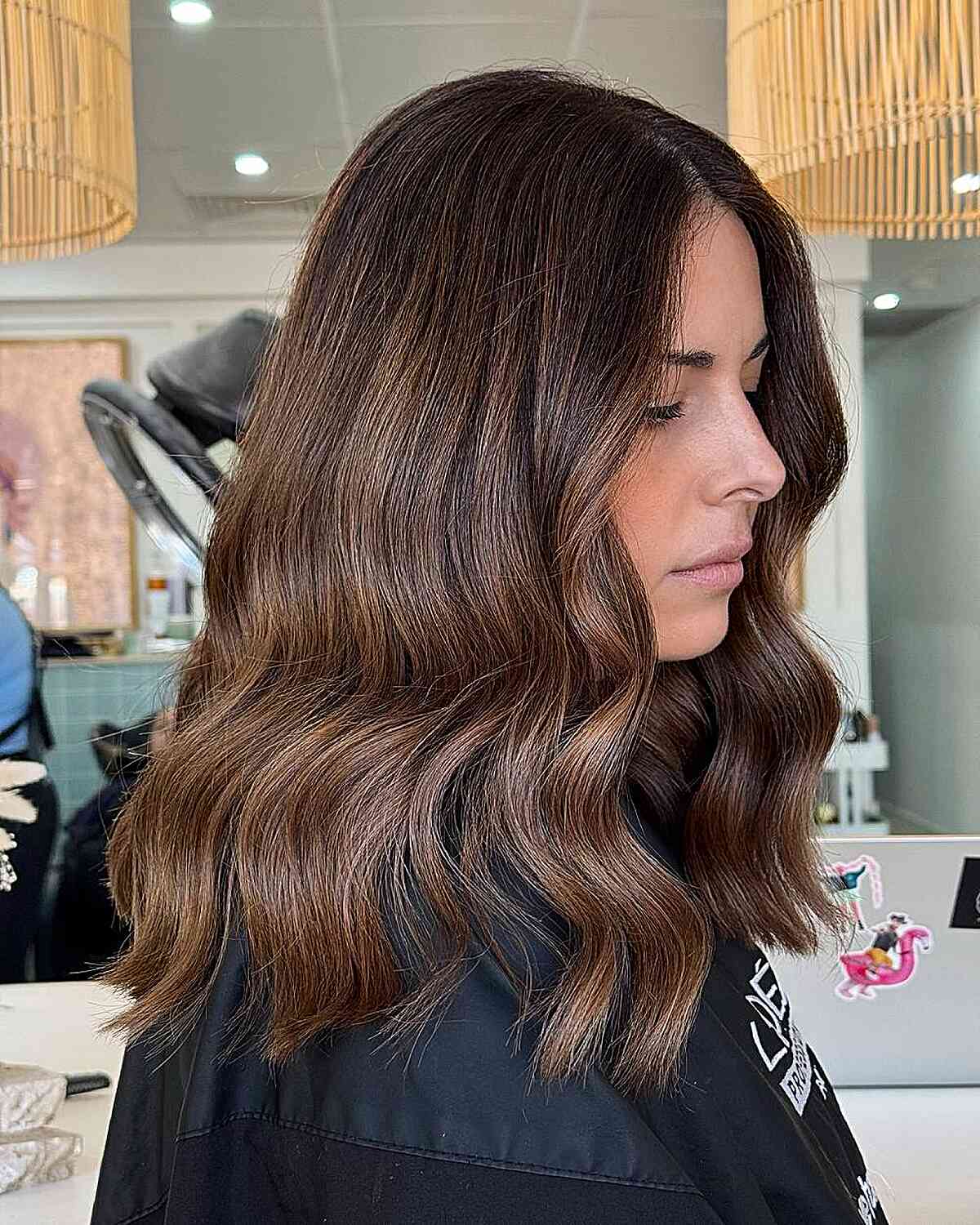
Dimensional highlights rely on varying the depth of blonde tones within the dark brown base, so the hair reads as layered rather than striped. A collarbone lob with a middle part and loose waves shows off the contrast best, especially from a side view. Medium-density hair takes the color without the ends feeling overloaded. Ask your colorist for: collarbone length lob, subtle blonde highlights, loose waves. The lob elongates round faces when styled with that center part, and the soft wave pattern keeps the shape from looking severe.
Collarbone Waves With Light Brown Balayage
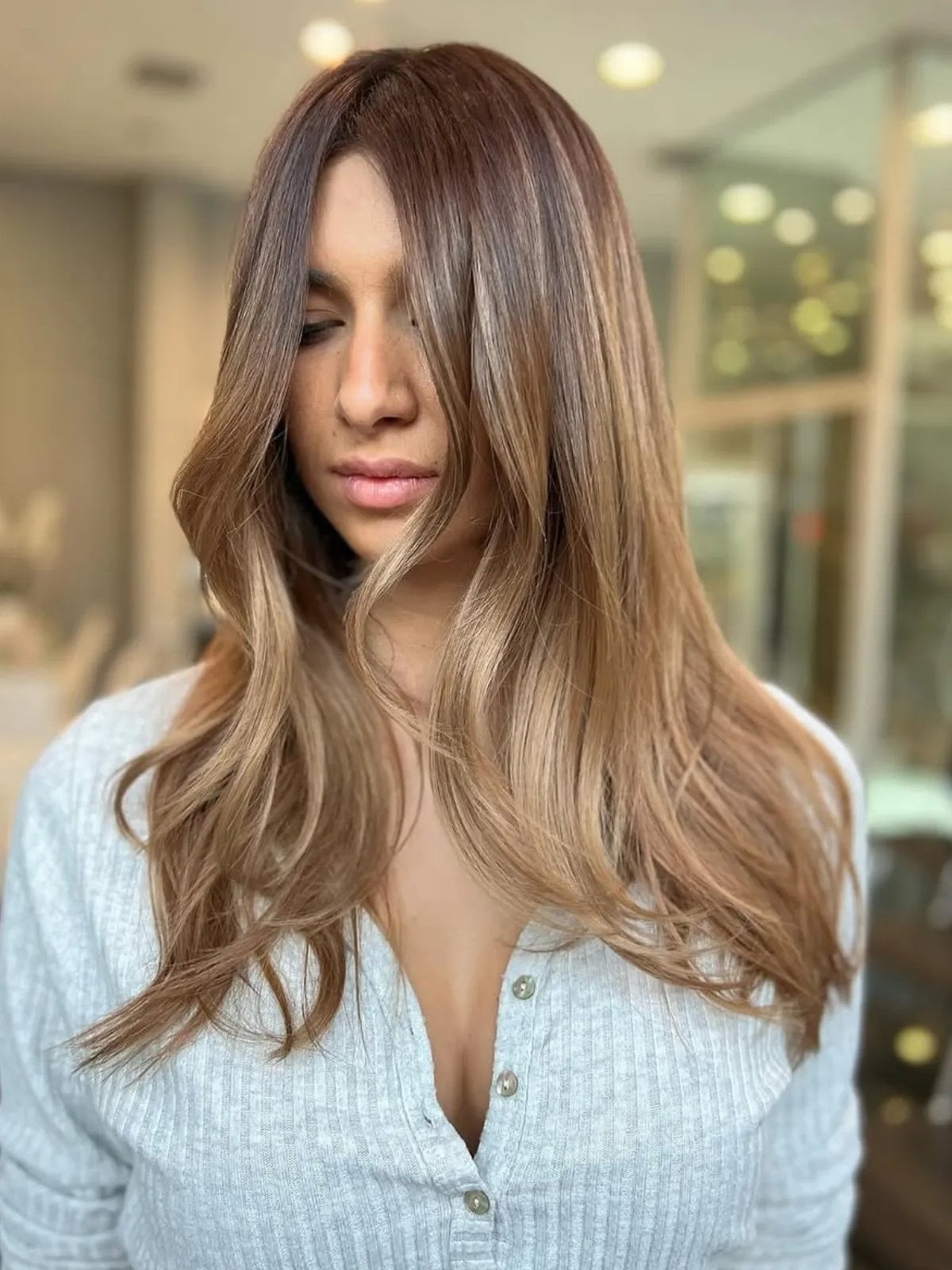
Balayage paints color onto the surface for a softer transition from a dark brown base to light brown compared to traditional highlights. The blended effect grows out without a harsh root line, which matters if you stretch salon visits. A side parting and loose waves show the color shift from the front view, and medium-thick wavy hair carries the gradient naturally. Ask your colorist for: collarbone length layers, light brown balayage, loose waves. The technique suits oval and long faces because the lighter pieces sit around the collarbone.
Shoulder Length Dark Brown With Blonde Balayage
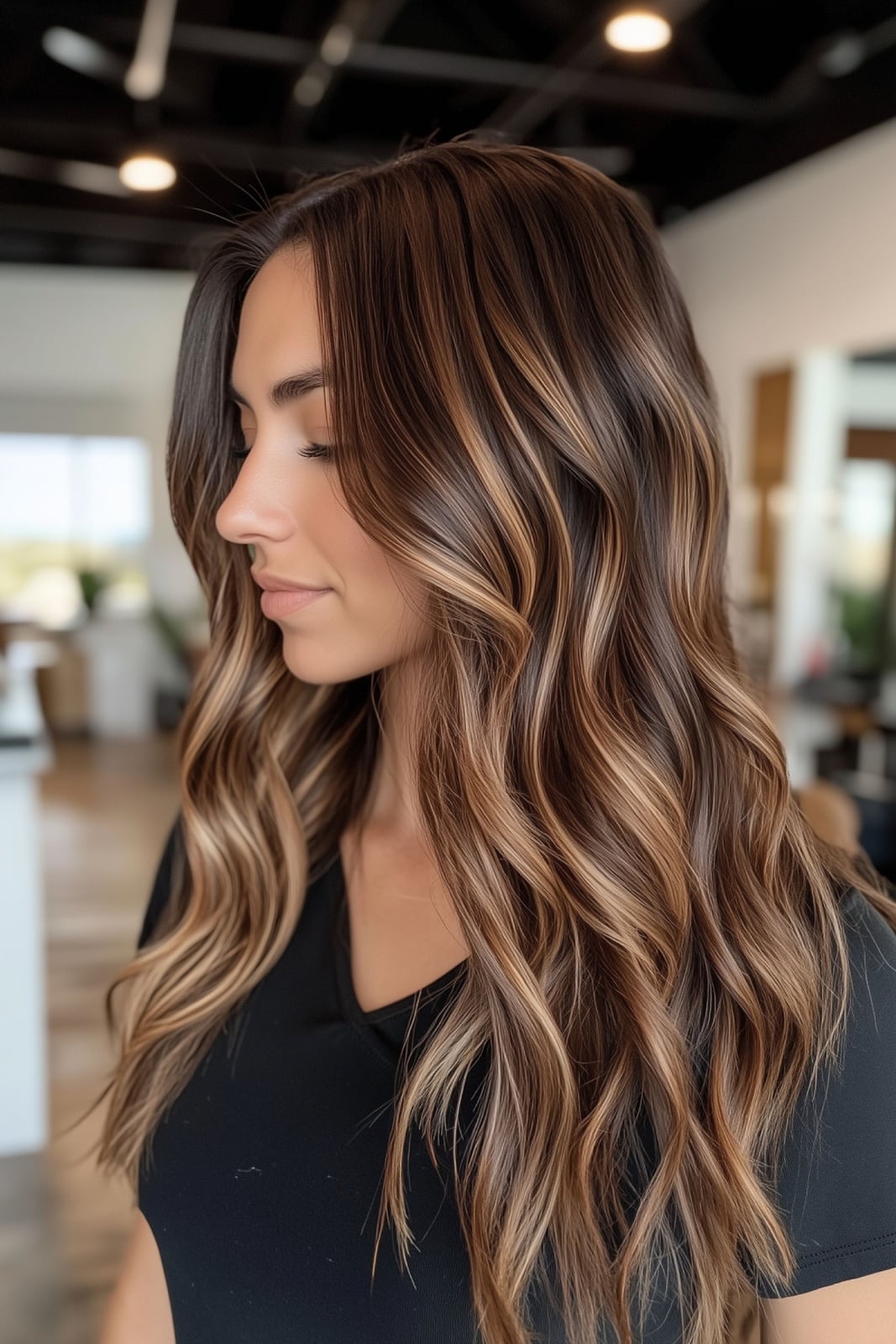
Who should book this? Anyone with thick, wavy hair who wants color that stays low-maintenance for months. The blonde balayage starts below the ears and blends into the shoulder-length dark brown base, so regrowth is barely noticeable. A side parting and soft waves let the lighter sections catch light without looking deliberate. Ask your colorist for: shoulder length layers, blonde balayage, soft waves. The layered cut softens square and round faces by adding movement at the ends. A diffuser on low heat enhances the natural wave pattern without frizz.
Collarbone Layers With Face-Framing Blonde
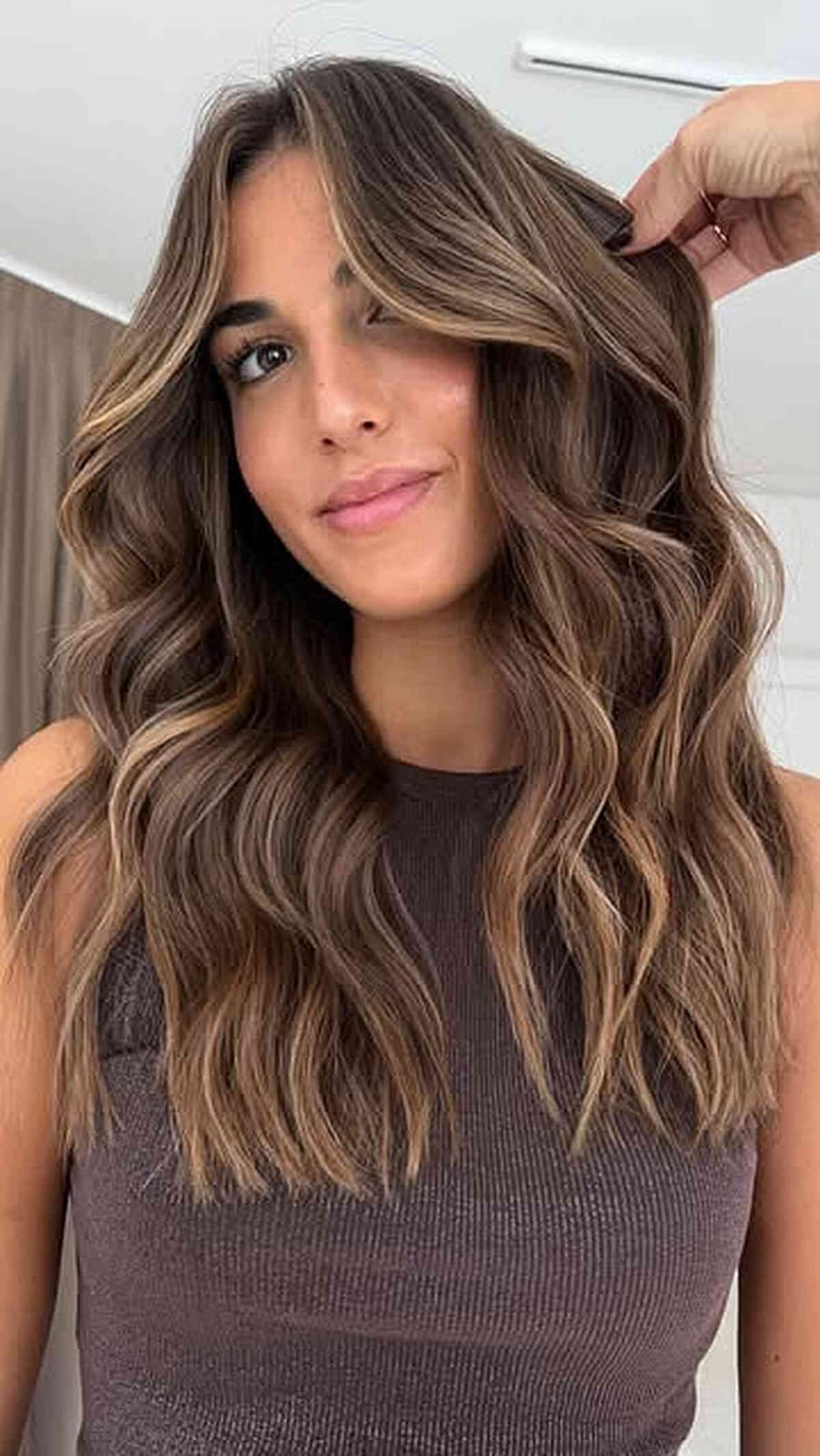
The design here is precise: the blonde pieces are concentrated around the face, not scattered through the whole head. That means the contrast lands where you want it, right at the jaw and cheekbones, while the rest stays a simple dark brown base. Thick hair at collarbone length is the best candidate; the layers reduce bulk without losing density, and the lighter pieces soften angular faces. Ask your colorist for: collarbone length layers, face-framing blonde highlights. This is a salon-only color because the placement around the face needs to be painted, not foiled randomly. A blow-dry with a medium round brush, directing the front sections forward, takes about fifteen minutes. Plan a trim every six to eight weeks to keep the shape sharp.
Mid-Back Layers With Face-Framing Balayage
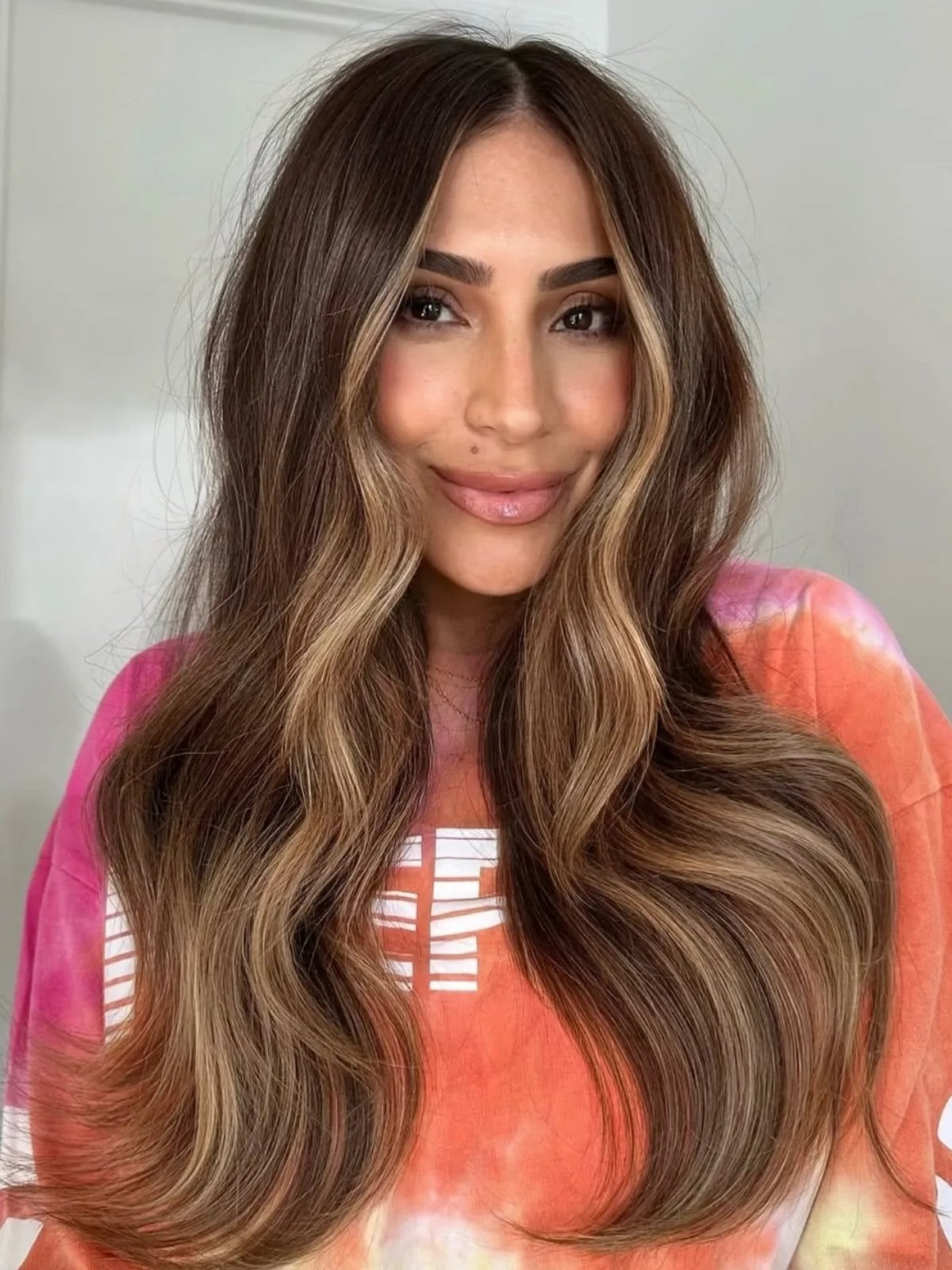
This balayage color has a dark brown base that stays rich at the roots, with blonde lightening gradually through the mid-lengths. The most noticeable pieces wrap around the face and into curtain bangs. It works best on thick hair at mid-back length, where the hair helps the waves hold their shape. Ask your colorist for: mid-back layers, blonde balayage, curtain bangs. Summer is the obvious season for this. The sun-kissed effect plays well with warm weather and lighter clothing. A large barrel curling iron to enhance the existing wave pattern takes under twenty minutes. Trims every eight to ten weeks keep the ends healthy without losing length.
Mid-Back Balayage With Curtain Bangs
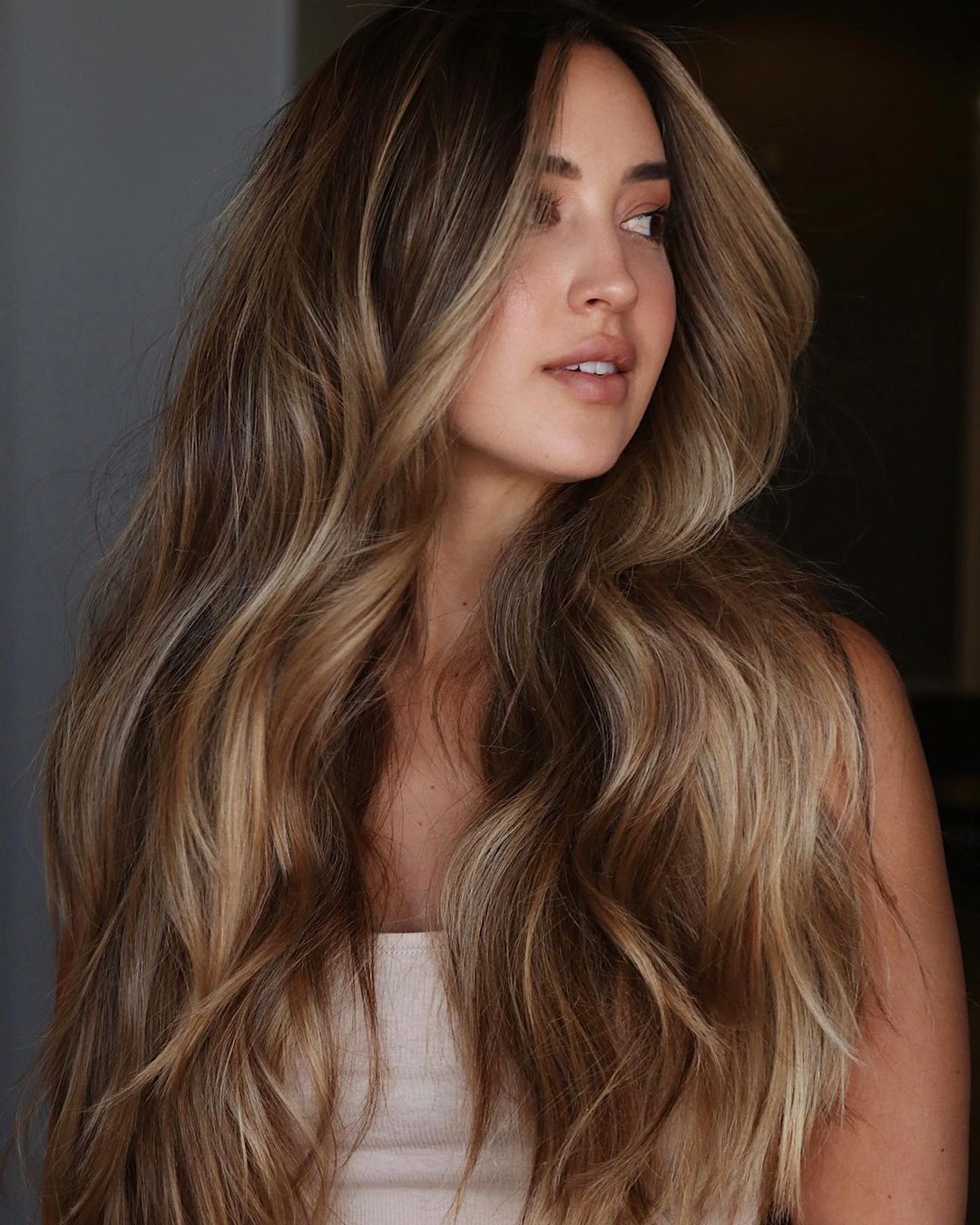
A seamless balayage transition avoids a striped look because the colorist paints the blonde freehand, concentrating it through the ends, then softens the root line by feathering the lightener upward. The dark brown base provides a deep backdrop, and the curtain bangs frame the face differently than the rest. Thick hair at mid-back length works best; the weight gives the waves a relaxed S-pattern. Ask your colorist for: mid-back length, blonde balayage, curtain bangs. Doing this at home is not recommended. The hand-painted technique requires experience to avoid blotchiness. A blow-dry with a small round brush on the bangs and a texture spray on the ends takes about twenty minutes.
Mid-Back Ash Blonde Highlights On Dark Brown
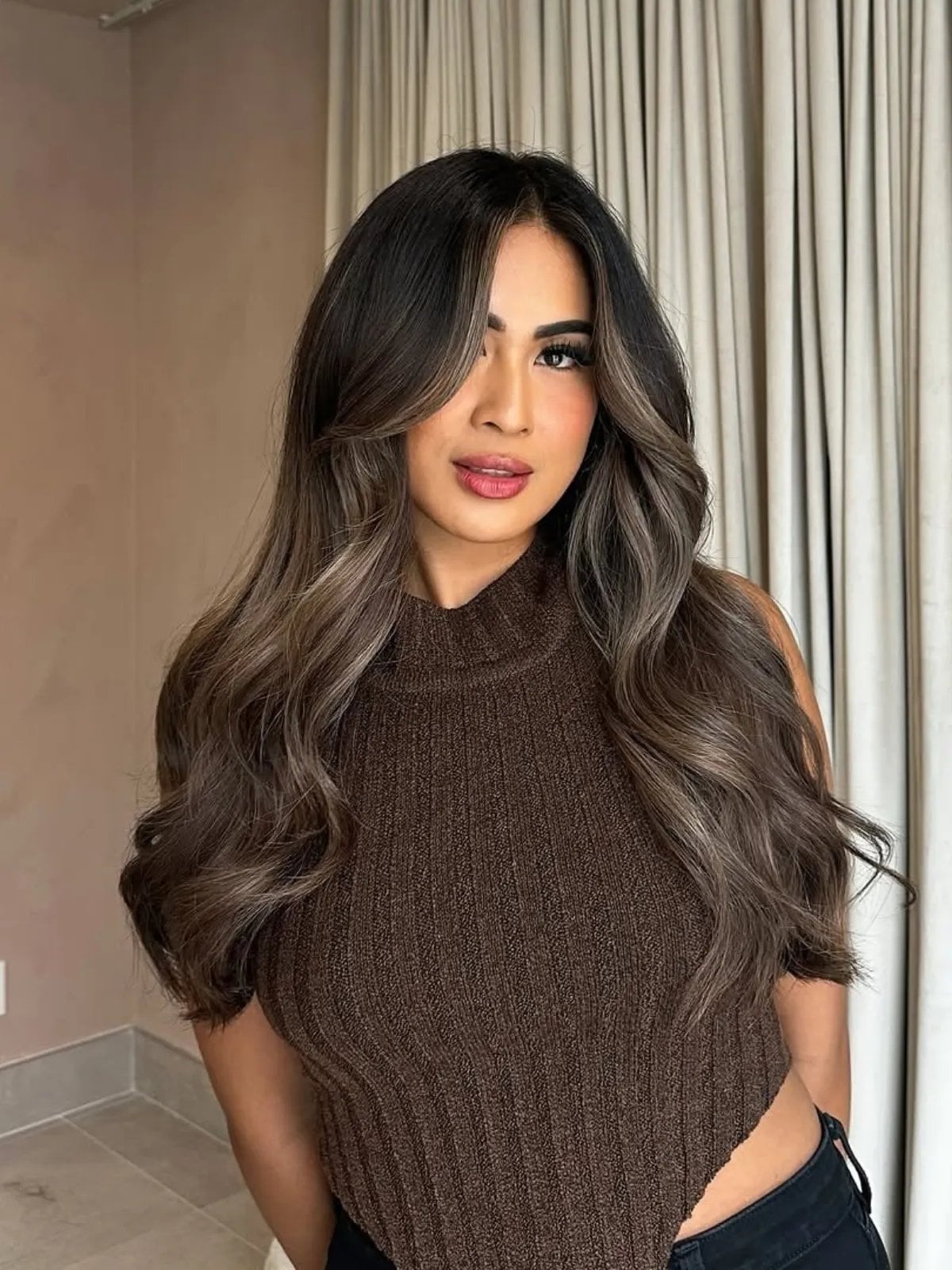
The contrast here is deliberate: ash blonde against a dark brown base reads as cool and modern, not brassy. The highlights are woven through the mid-lengths and ends, with a few face-framing pieces to pull the eye upward. Thick hair at mid-back length carries the tone well because the density prevents the ash from overwhelming the base. Ask your colorist for: mid-back length layers, ash blonde highlights, face-framing pieces. Ash tones need a purple shampoo about once a week to keep the brassiness at bay; skip it and you will see warmth creep in by week three. A volumizing mousse before blow-drying adds body, and a trim every eight to ten weeks keeps the layers defined.
Long Dark Brown With Subtle Blonde Highlights
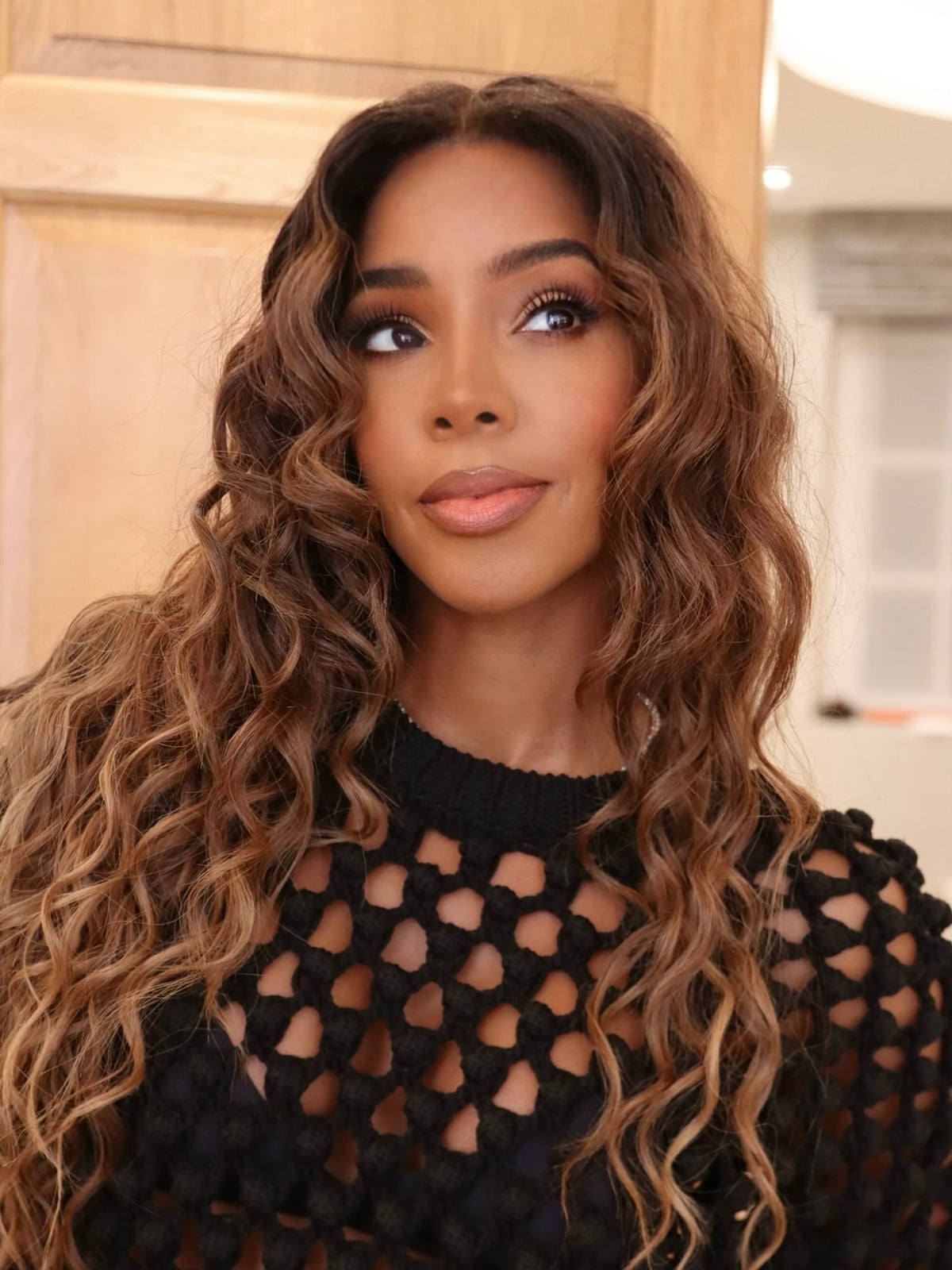
The blonde here is not trying to be the main event. It is woven sparingly through the dark brown base, just enough to catch the light and create dimension without a visible root line. That subtlety is what makes it practical: the grow-out is gradual, so you can stretch the time between appointments. Thick hair past the shoulders suits this approach best because the length gives the highlights room to breathe. Ask your colorist for: long length, subtle blonde highlights, face-framing layers. A texture spray on dry hair is enough to encourage the waves, no curling iron required. Plan a toning appointment every ten to twelve weeks to keep the blonde from pulling warm, and a trim on the same schedule to maintain the face-framing layers.
Mid-Back Waves With Blended Blonde Highlights
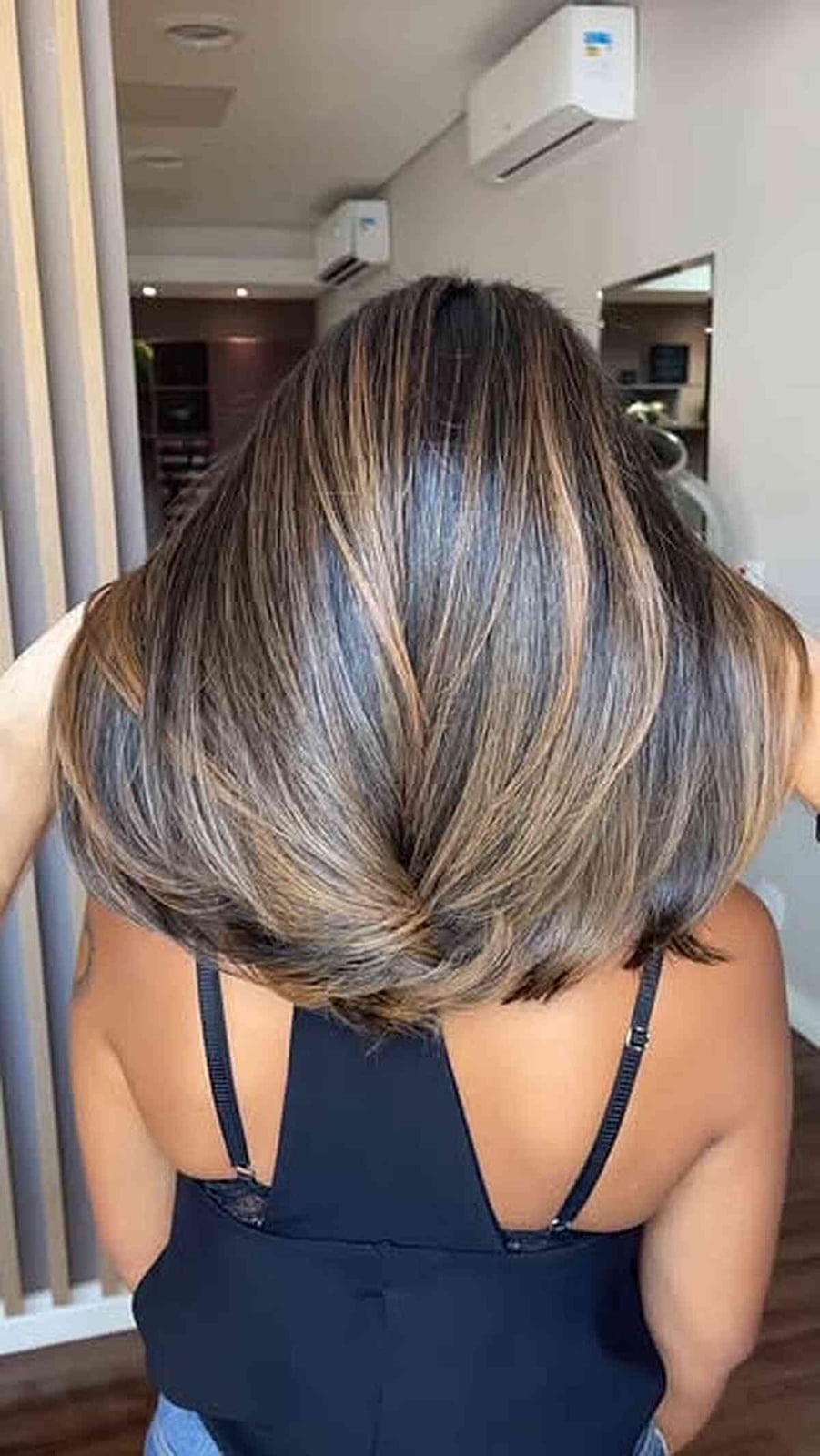
Ever wonder how to get dimension without looking like you tried too hard? This is the answer: a dark brown base with blended blonde highlights that refuse to shout. The technique uses a hand-painted approach so the lighter pieces sit softly within the mid-back length, never in stark stripes. Wavy texture helps the blend, letting the color move naturally with each bend.
Thick hair at mid-back length carries this best; the layers keep the weight from dragging the waves flat. Ask your colorist for: blended blonde highlights and layered cut. Style with a heat protectant, then wrap sections around a large-barrel iron for soft waves. A trim every eight to ten weeks keeps the ends clean.
Mid-Back Layers With Dimensional Highlights
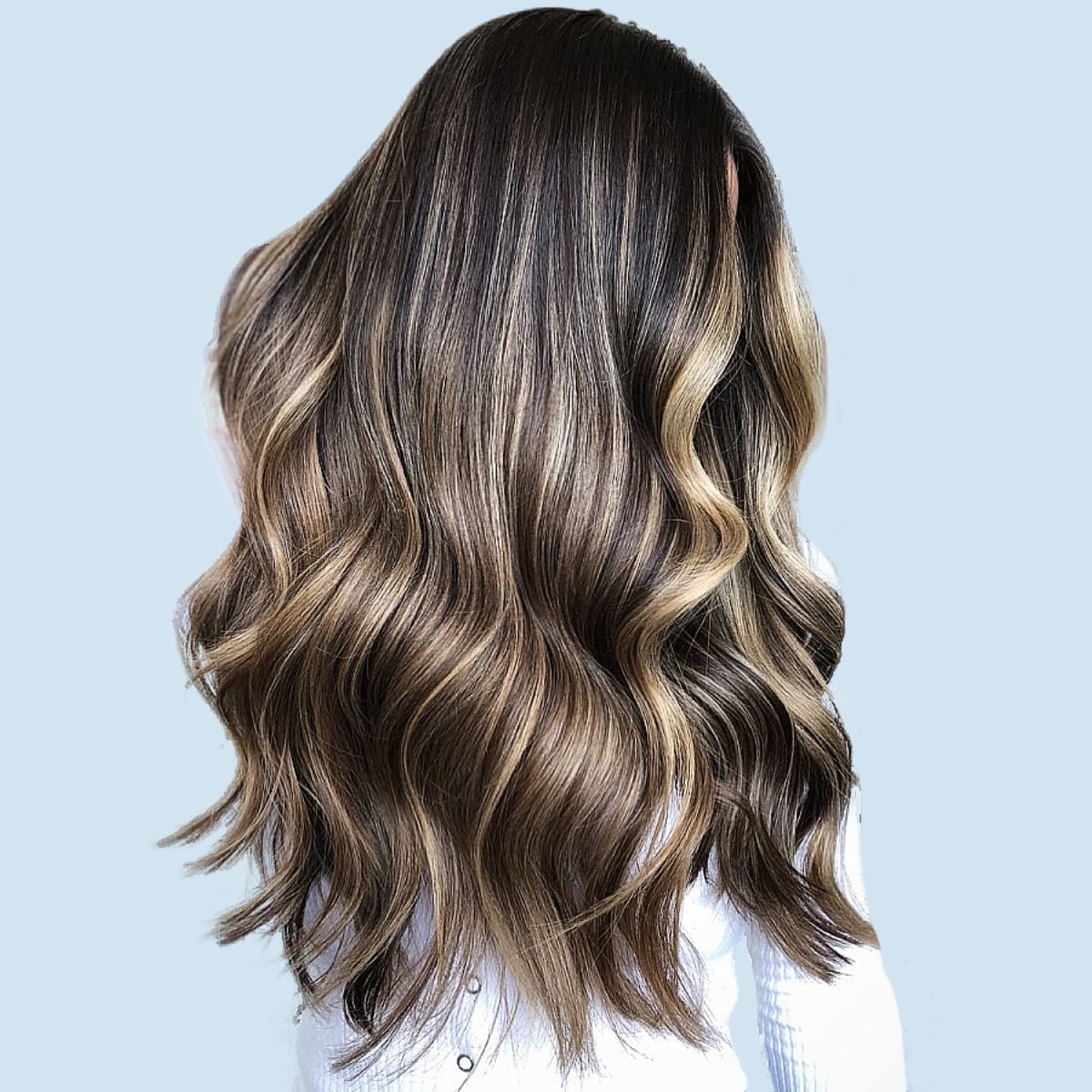
A solid dark brown base can read as flat next to this. Dimensional highlights layer in varied blonde tones that create depth and movement, so the color shifts as the hair moves. The loose waves and glossy finish from a blowout make the contrast visible without being harsh. Thick hair at mid-back length suits this best; the layers prevent the weight from pulling the shape down.
Mid-Back Wavy Hair With Face-Framing Blonde
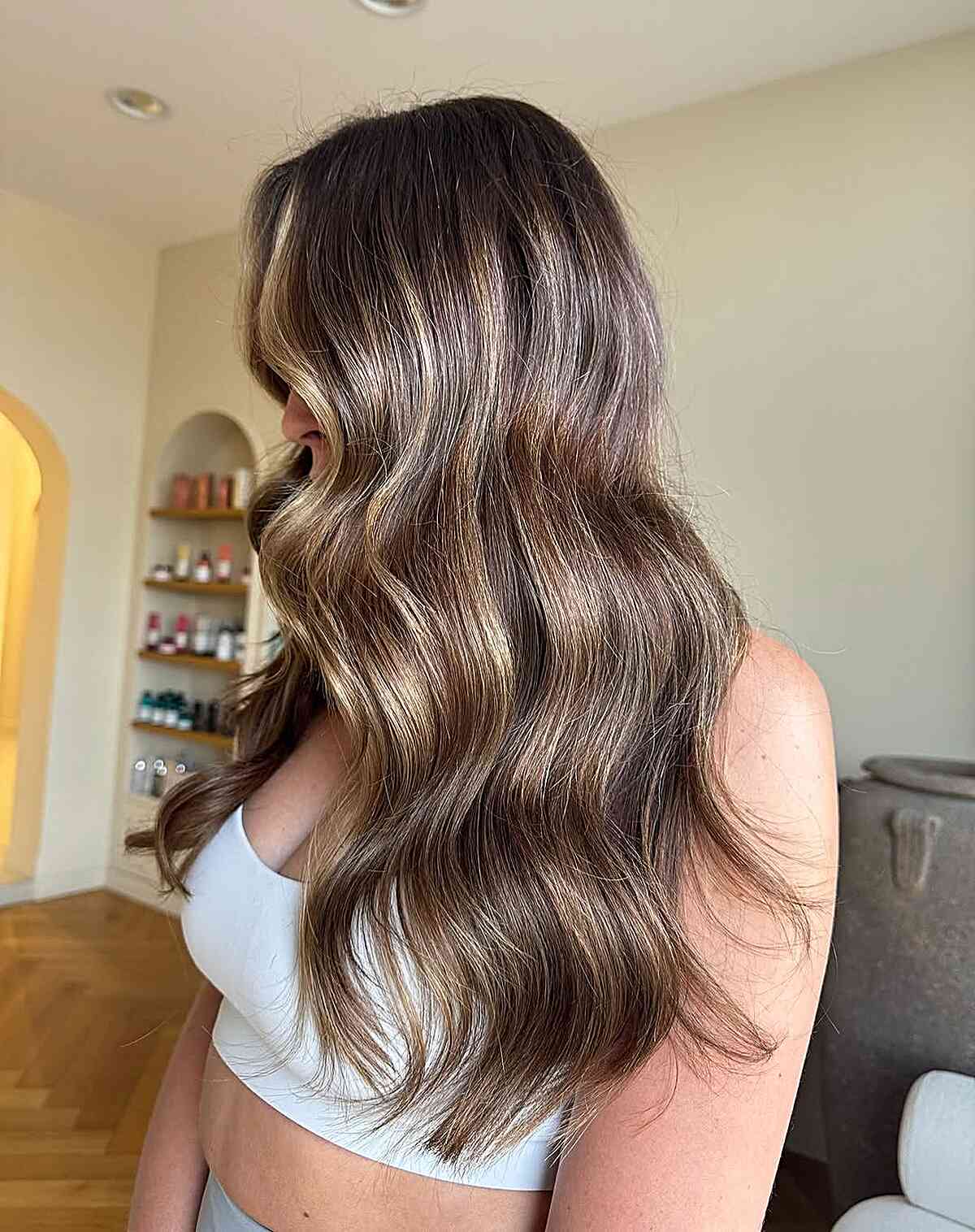
The design here is strategic: blonde pieces that frame the face while the rest stays dark brown. It draws attention upward without committing to full highlights. Thick, wavy hair at mid-back length carries the look, and the middle part keeps the face-framing pieces symmetrical. Oval and heart-shaped faces get the most from this placement.
Ask your colorist for: mid-back length layers and blonde face-framing pieces. The loose waves are styled with a texturizing spray for grip, not crunch. A trim every eight to ten weeks maintains the shape without losing the face-framing effect.
Mid-Back Dark Brown With Blended Highlights and A Glossy Finish
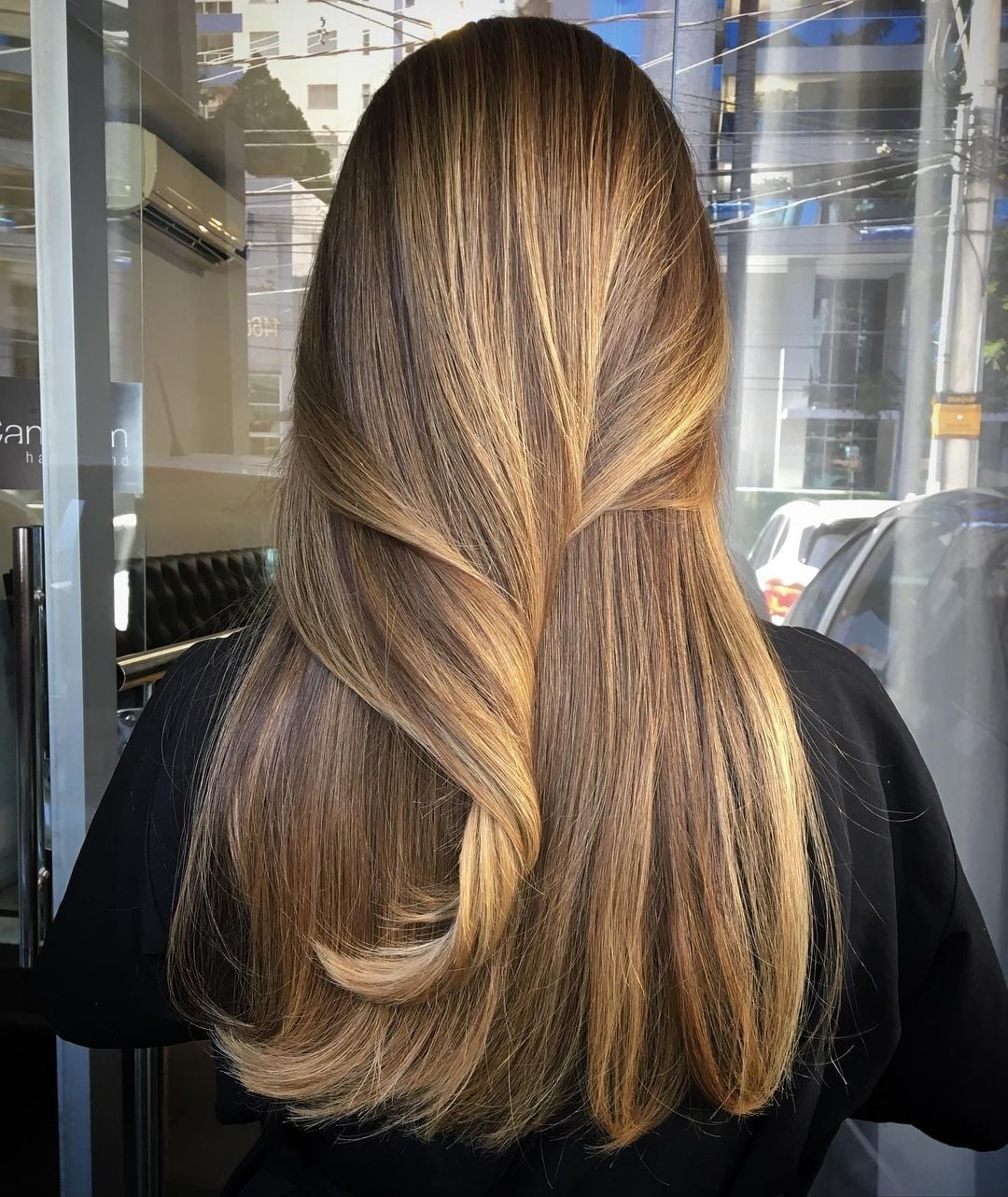
The technique here is balayage applied to a dark brown base, with the blonde blended so thoroughly it looks like a natural lightening. The blowout adds a glossy finish that seals the effect, making the hair look polished without obvious product. Thick hair at mid-back length holds the shape well; the layers keep the ends from feeling heavy.
Ask your colorist for: blended blonde highlights and a layered cut. The gloss is built with a shine serum applied to damp hair before blow-drying. A trim every eight to ten weeks keeps the ends healthy and the blend intact.
Mid-Back Dimensional Blonde Highlights With Creating A Rich
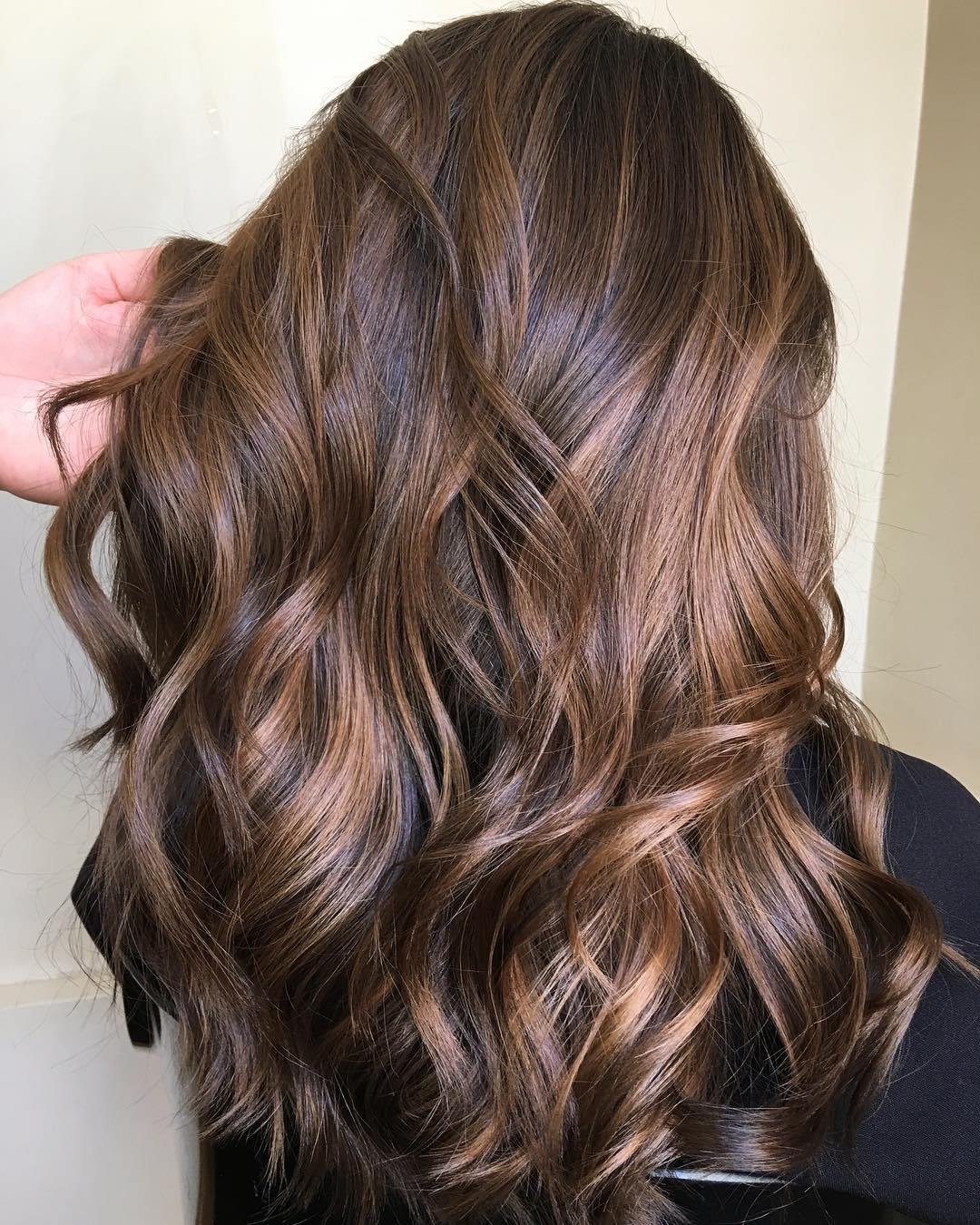
Subtle blonde highlights on a dark brown base create a rich, dimensional effect. The soft waves show the color from different angles. The trade-off: achieving this depth requires a colorist who understands placement, not just lift. Thick hair at mid-back length suits the technique best, and a trim every eight to ten weeks keeps the layers from tangling.
Mid-Back Seamless Blonde Balayage
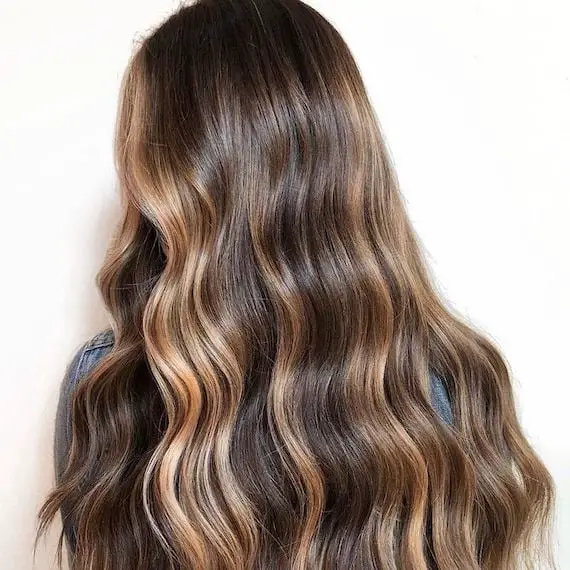
A seamless balayage on a rich dark brown base means the color transition from root to end has no hard line. The blonde highlights start lower, so the regrowth blends into the hair without announcing itself. Mid-back length and thick, wavy texture give the color plenty of canvas to travel across.
Ask your colorist for: seamless blonde balayage, middle part, loose waves. A trim every 10 to 12 weeks keeps the ends healthy, and the grow-out buys you about two extra weeks between appointments compared to traditional highlights. The payoff is a color that still looks deliberate when you skip the salon.
Mid-Back Balayage Transition With Waves
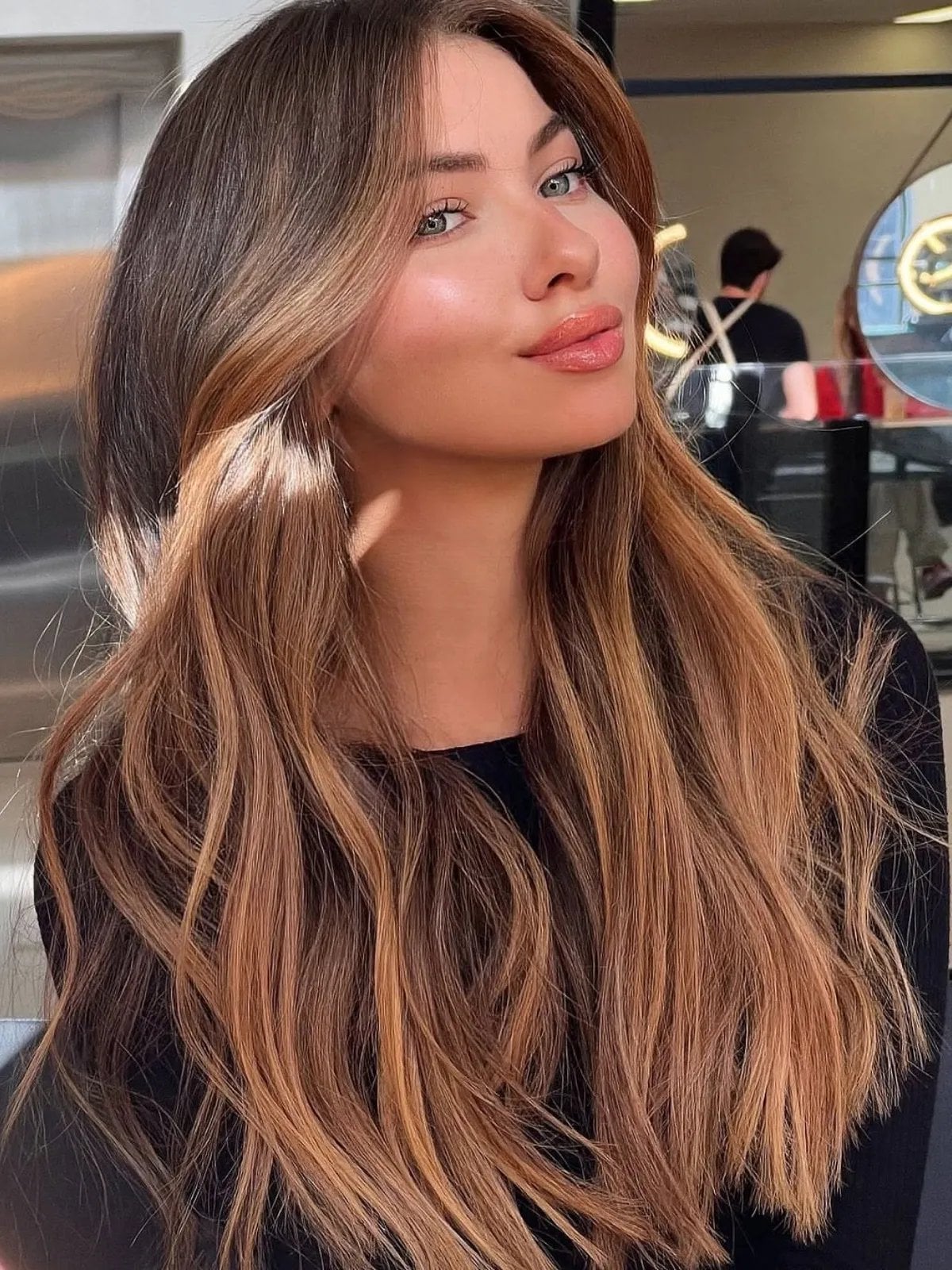
For a balayage transition, the color needs to be softest at the roots and build gradually through the mid-lengths. On a dark brown base with curtain bangs, the blonde should concentrate around the face and the ends, leaving the top third untouched.
Ask your colorist for: dark brown base, mid-back layers, curtain bangs, balayage transition. The waves break up the color so the lighter pieces peek through the darker ones. Separating the hair with your fingers or a wide-tooth comb after styling makes the transition look natural, not painted.
Mid-Back Balayage With Lived-In Effect
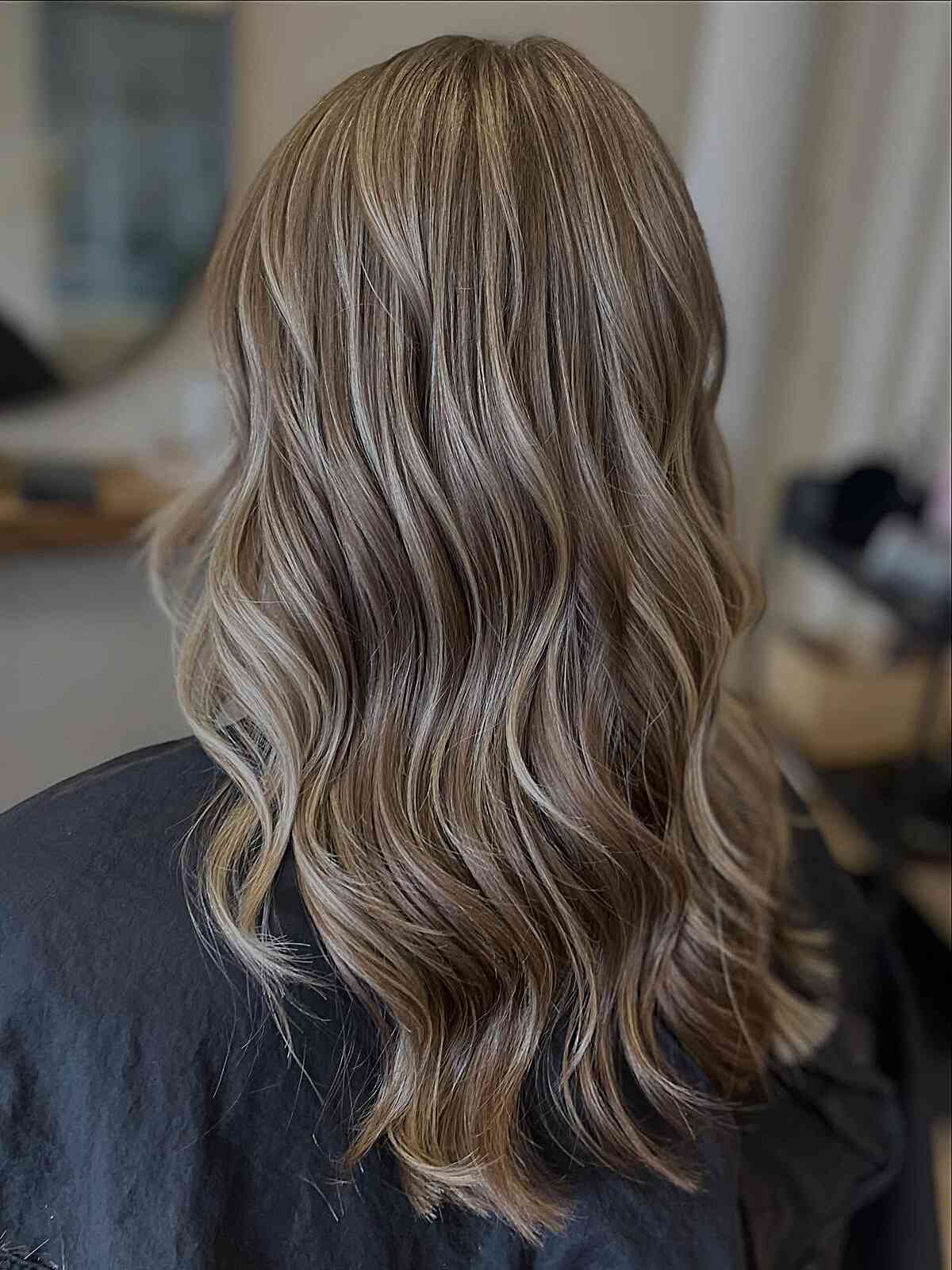
The back view of this balayage tells the real story: the blonde starts well below the crown and fans out through the ends, leaving the dark brown base dominant at the roots. That placement is what gives the lived-in effect its staying power. It is the color equivalent of a relaxed weekend. No sharp lines, no urgent need to refresh. Thick, wavy texture helps the blonde settle into the hair rather than sit on top of it. For spring and summer, this is the set-and-forget option that still looks like you made an effort.
Mid-Back Balayage With Glossy Finish
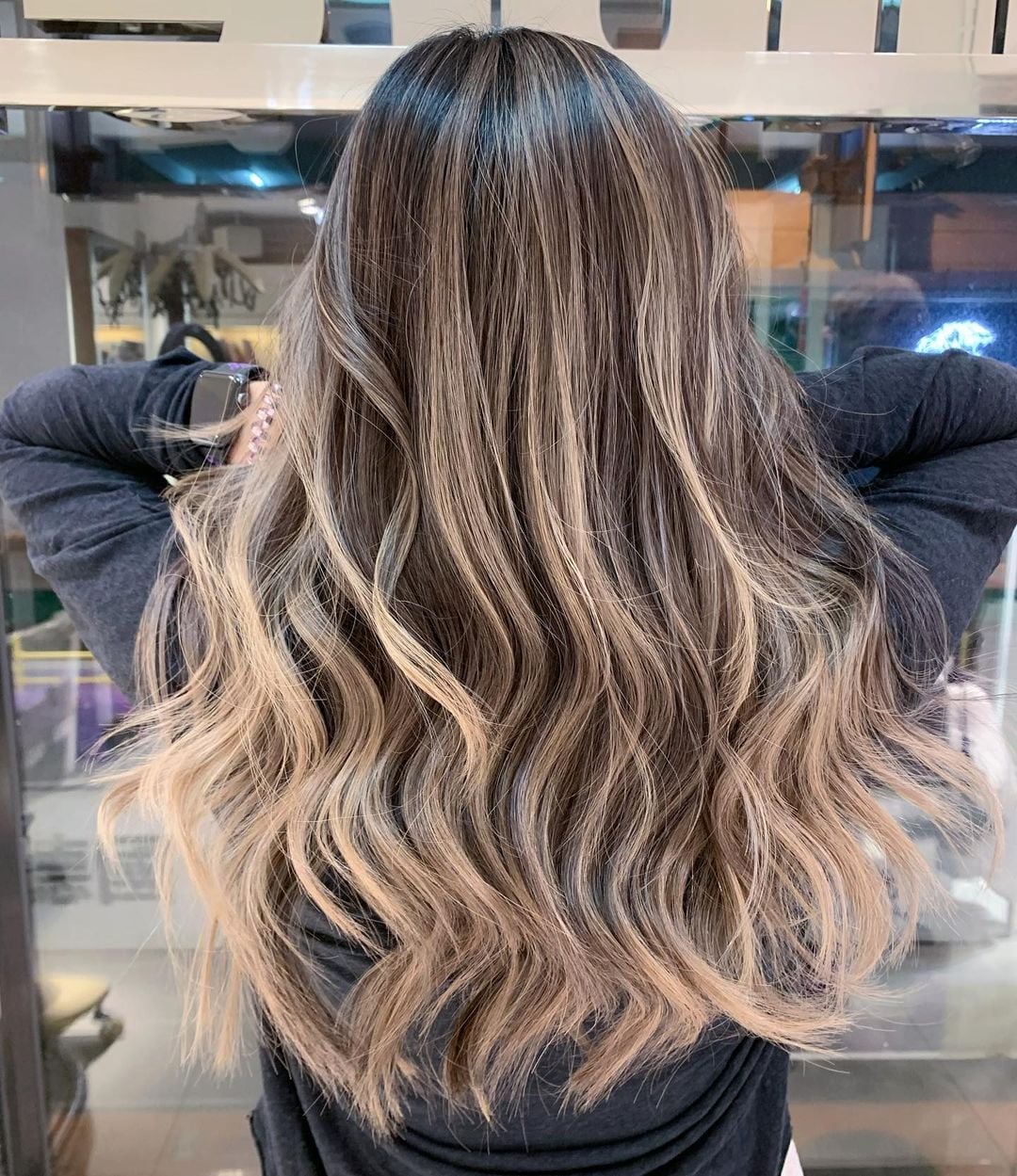
A glossy finish on balayage is the difference between color that sits on the hair and color that looks part of it. The shine comes from a salon gloss treatment, which seals the cuticle and reflects light evenly across both the dark brown base and the blonde highlights. At home, a clear gloss or a shine serum on dry hair can approximate the effect, but it lasts only until the next wash.
Ask your colorist for: mid-back layers, blonde balayage, a gloss finish. The salon version holds for four to six weeks and deepens the contrast between the dark roots and the lighter ends. Wavy texture catches the gloss from every angle, so the dimension reads even in low light.
Back View Mid-Back Balayage Waves, Wavy
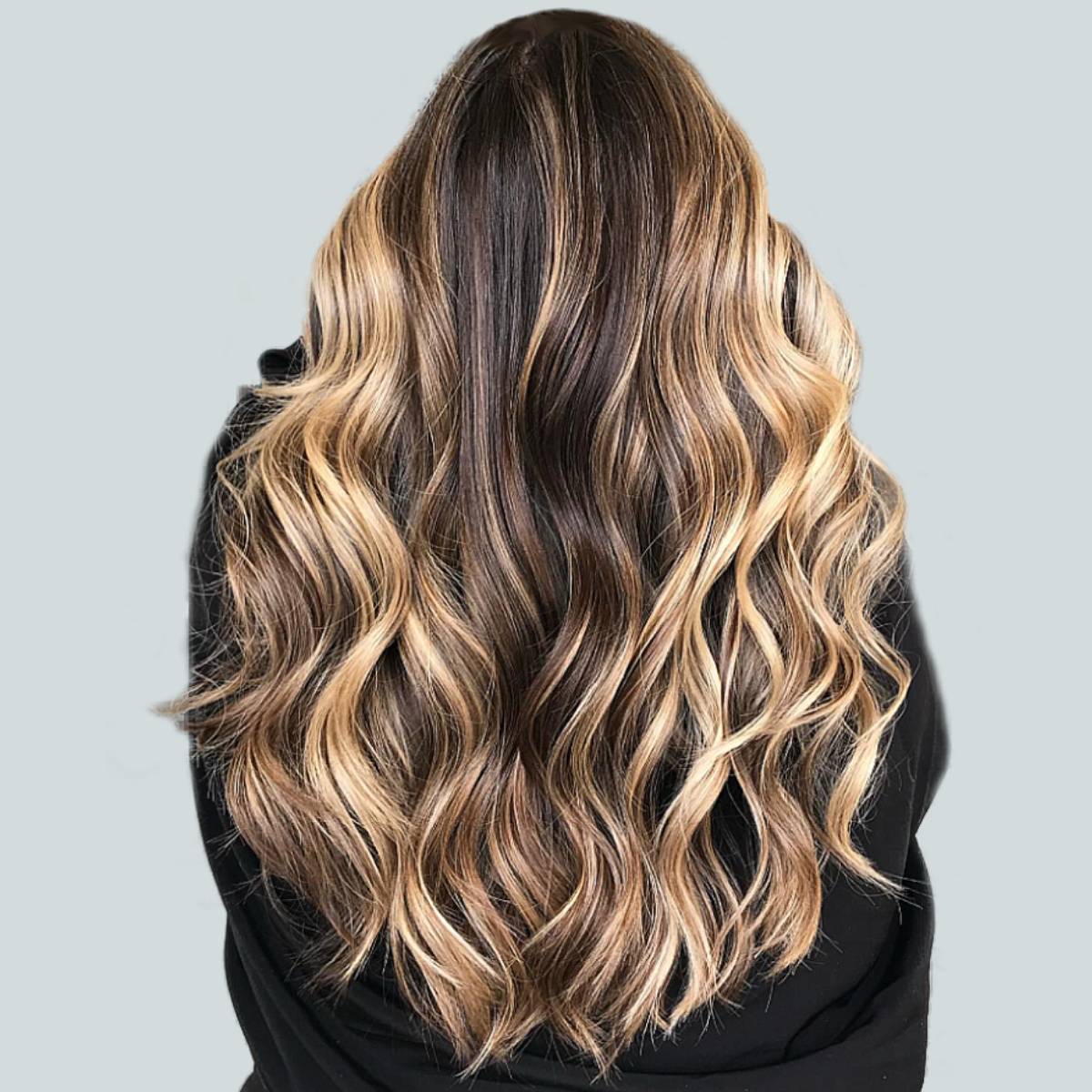
From the back, the balayage spreads wide: the blonde is distributed through the ends. That spread is what gives the color movement when the hair is in motion. The waves are the mechanism, each bend reveals a different ratio of dark brown to blonde, so the color never looks static.
Ask your colorist for: mid-back layers, extensive blonde balayage, loose flowing waves. Thick texture supports the volume the waves need to keep the color visible. A large-barrel curling iron and a texture spray are enough to recreate the shape at home.
Mid-Back Bronde Highlight Blend
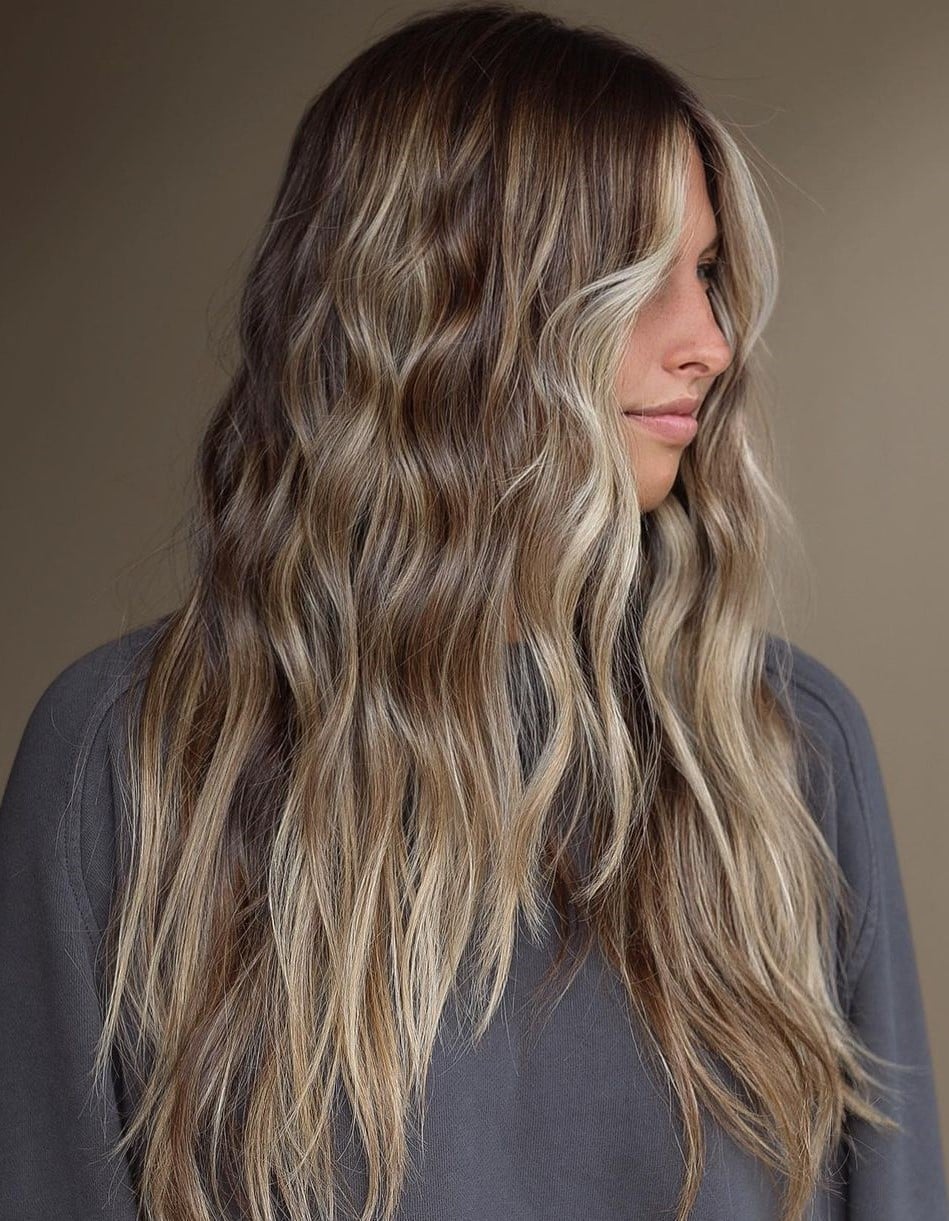
Bold blonde can feel like a lot. This bronde blend takes the edge off, mixing blonde and light brown highlights into a dark brown base for a dimensional effect that looks richer and not too bright. The mid-back length and soft waves show off the seamless color transition from the back view, where the middle parting frames the blend. Ask your colorist for: mid-back length layers, bronde highlight blend, soft waves. Thick hair at this length carries the blend without it looking sparse, and it suits most face shapes.
Mid-Back Wavy Dark Brown With Bold Blonde
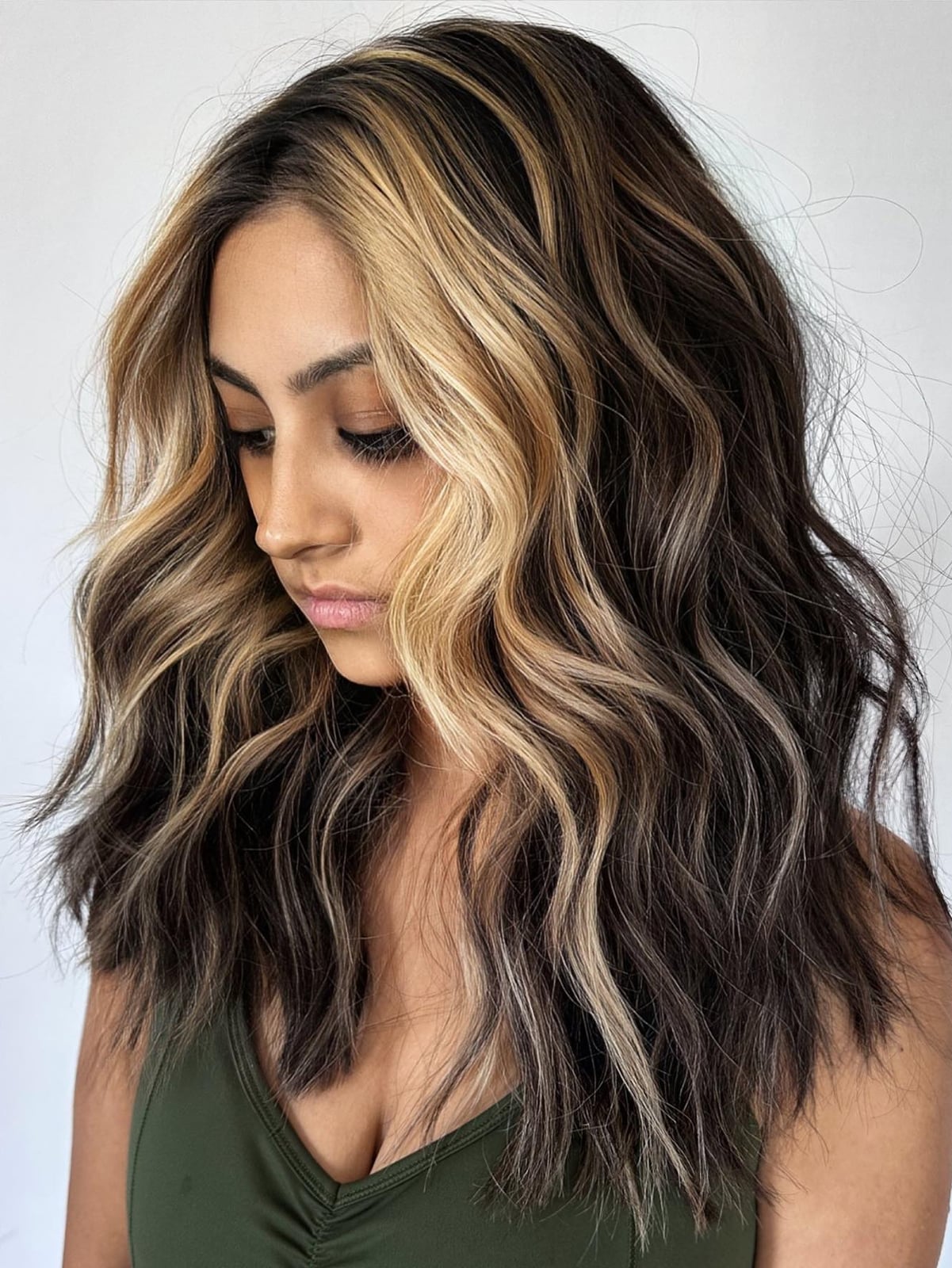
Do you want your highlights to announce themselves? The bold blonde pieces here sit in thick, wavy dark brown hair that reaches mid-back, creating a contrast that a subtle blend cannot match. The side parting lets the lighter strands fall forward, which draws attention to the texture. Ask your colorist for: mid-back length layers, bold blonde highlights, wavy styling.
This is for hair that can handle the lift and a person who does not mind the grow-out line showing. Thick, wavy texture at mid-back length gives the blonde enough surface area to stand out. Most face shapes work with a side part and long layers, so the main question is if you want the contrast or prefer something that fades into the base.
Mid-Back Ash Blonde Ombre On Dark Brown, Wavy
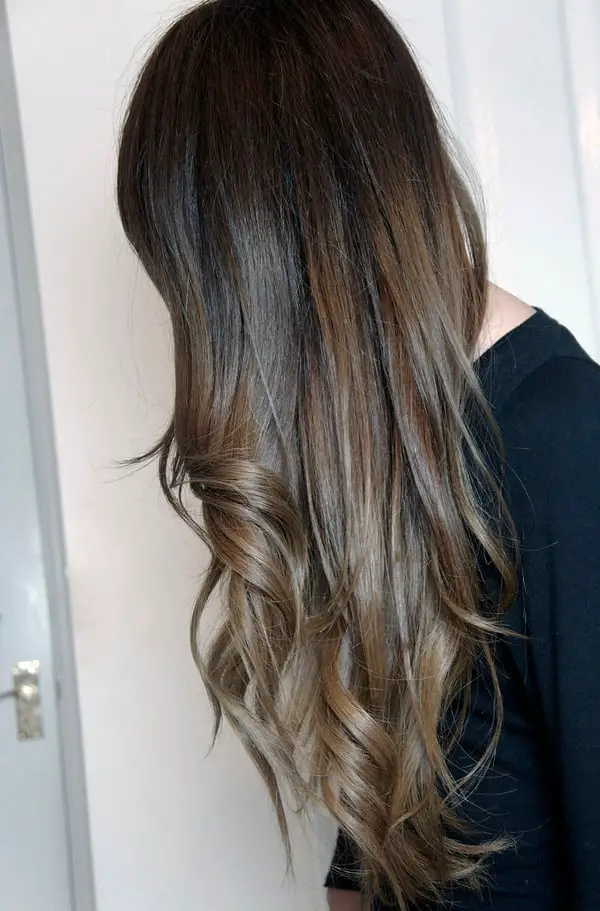
The ombre here starts dark brown at the roots and transitions into an ash blonde at the mid-back ends, with soft waves and a side parting that emphasize the gradient. It is a deliberate fade that works because the ash tone cools down what could otherwise be too warm. Ask your colorist for: mid-back length layers, ash blonde ombre, soft waves.
Fine, wavy hair can make an ombre look less blended if the dark-to-light transition is too long or the application is not tailored to your density. Discuss the placement with your stylist so the ash blonde sits where your hair can carry it without the mid-section turning muddy. This suits most face shapes and does not demand a toning appointment every month, but the gradient does need a trim every 10 to 12 weeks to keep the ends looking clean.
Final Thoughts
For low maintenance, stick with a blended balayage on a dark brown base and focus on subtle, natural-looking highlights around the face. A root shadow at the first appointment buys you an extra month between touch-ups.
- Schedule balayage touch-ups every 10-12 weeks to maintain blend.
- Use a color-safe shampoo and conditioner to preserve tone.
- Incorporate a weekly deep conditioning treatment for shine.
- Allow hair to air dry partially before blow-drying to minimize heat damage.
Dark brown with blonde is a timeless combination that always works.