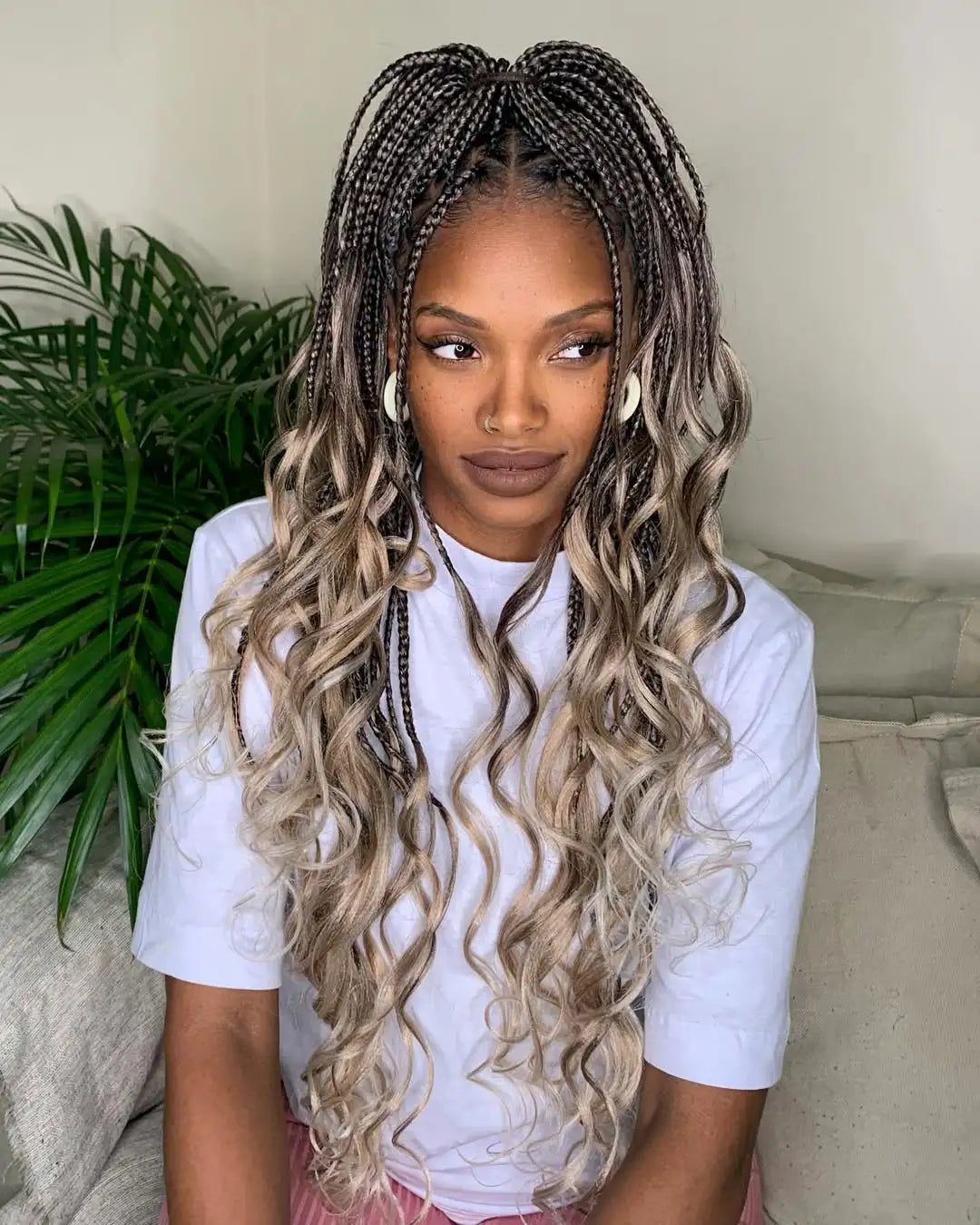

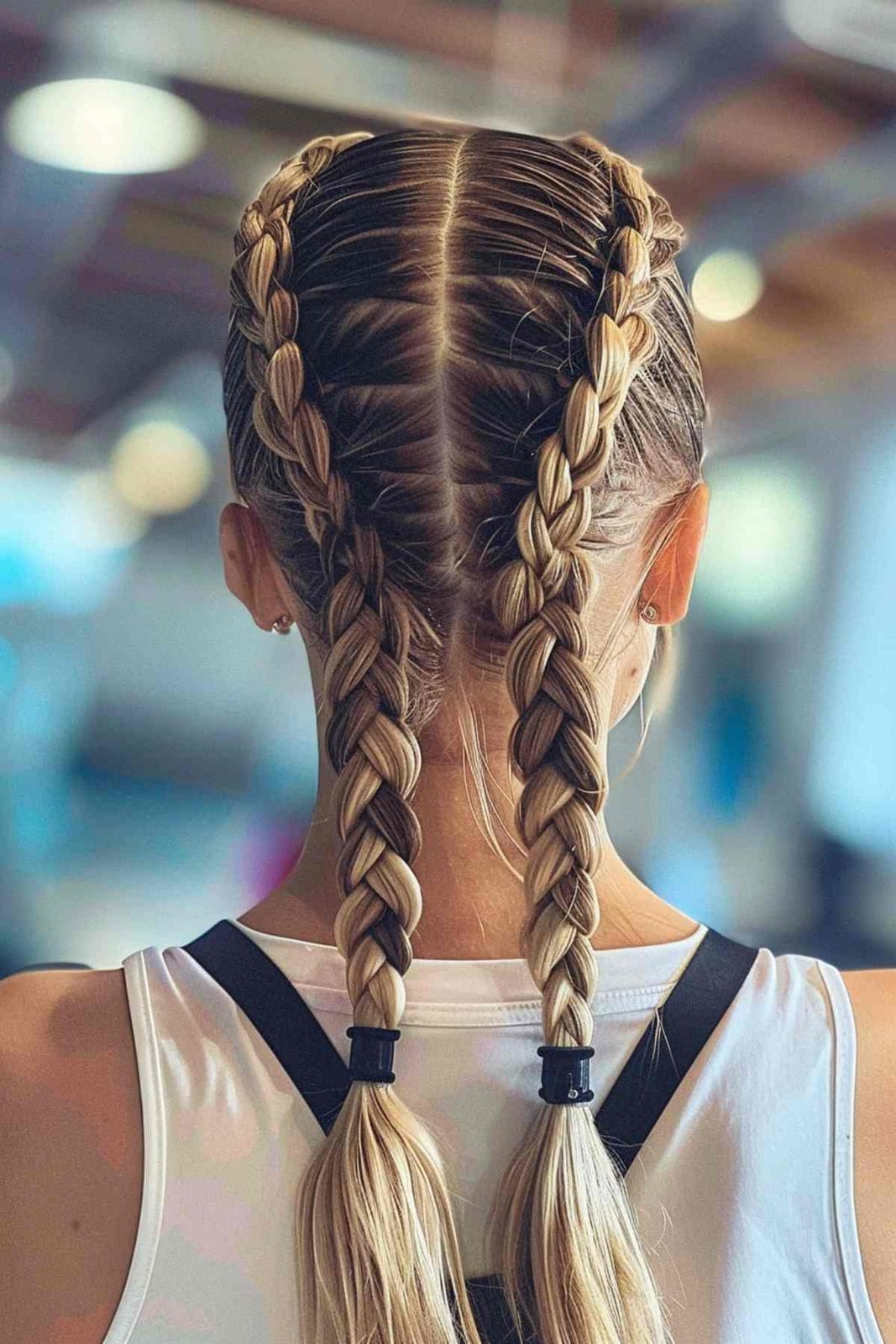
Softball season means your hair needs to survive warm-ups, innings, and the occasional dust cloud without a second thought. The trick is choosing styles that hold tight without looking like you tried too hard, think polished braids, secure ponytails, and neat updos that actually stay put.
This collection of 25 Classy Softball Hair ideas covers everything from simple double French braids to intricate cornrows and braided ponytails. Whether your hair is fine and needs grip or thick and needs weight management, these looks keep you in the game without sacrificing polish. No more hair in your face or a ponytail that slips mid-pitch.
Neat Double French Braids to Mid-Back
A middle part is the foundation here, ensuring each French braid pulls back with equal tension from the scalp to the ends. The straight, thick texture and dark blonde base with lighter highlights create a clean, polished look with no stray pieces in sight. This works best on hair at least shoulder length, ideally longer; the vertical lines of the braids and the center part help elongate a round face. Ask your stylist for: double French braids from a middle part. Apply a smoothing cream before braiding to keep flyaways controlled. Plan a trim every six weeks to keep the ends neat.
Low Ponytail With Braided Crown Accent

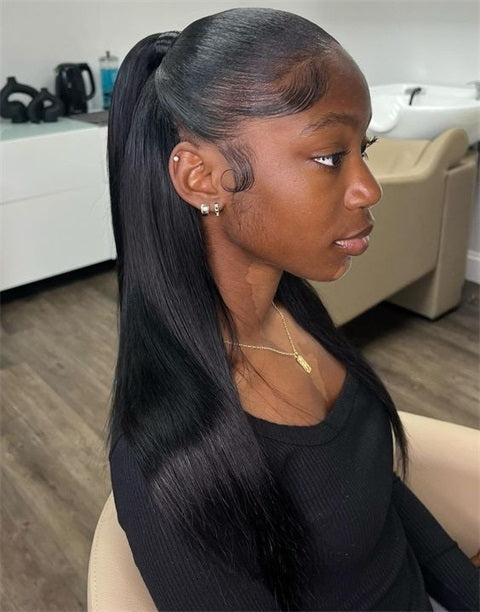
Can a ponytail feel finished without a hair tie showing? This one manages it. A braided section wraps from the crown and disappears into the low ponytail at the nape, creating a continuous line. Thick, straight, long hair holds the braid and the sleek ponytail equally well. The low placement and clean sides suit long faces, as they don’t add extra height. Ask your stylist for: low ponytail with braided crown detail. Secure the ponytail with a clear elastic first, then wrap the braid around the base. Trim every six to eight weeks.
High Fishtail Braid Ponytail
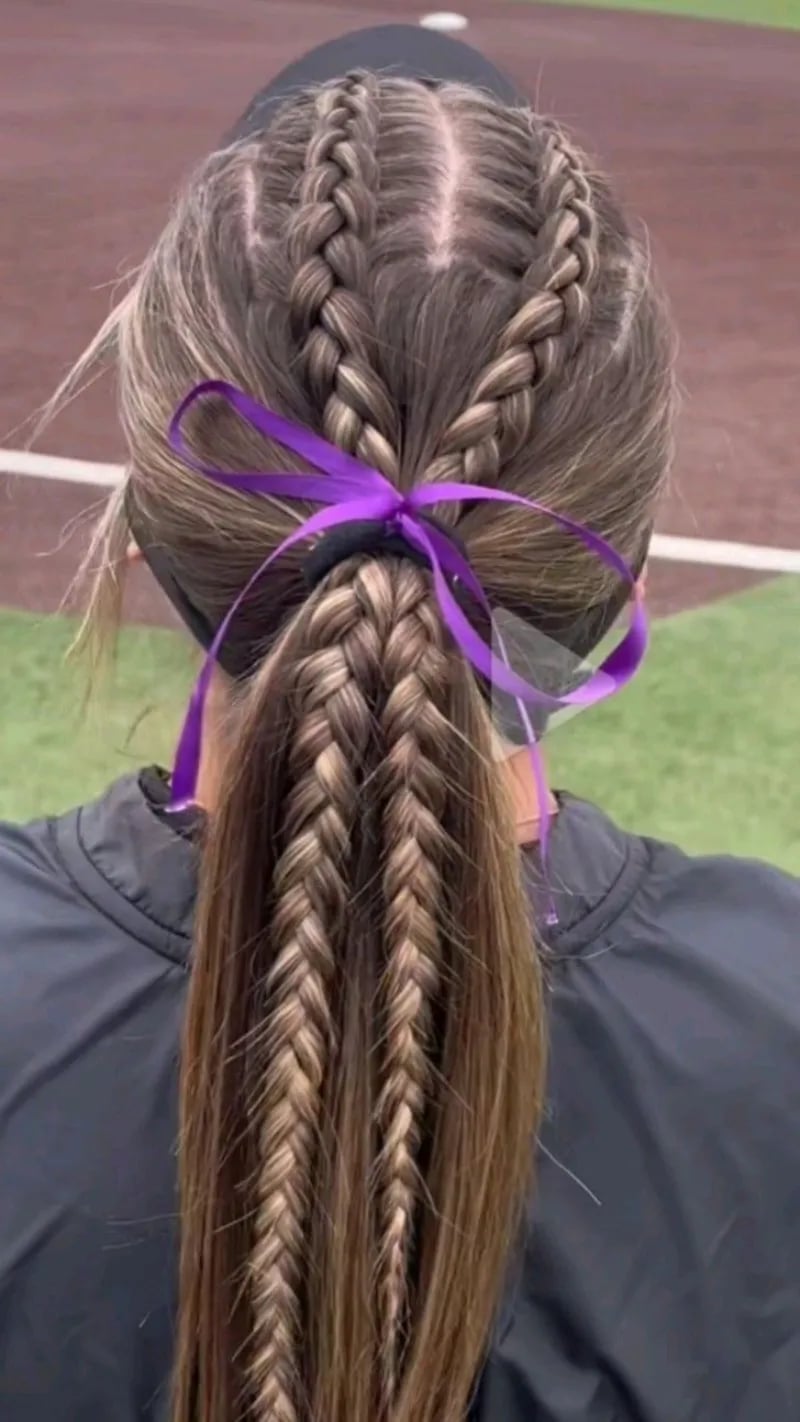
A standard three-strand braid lies flat. A fishtail braid reads as woven, with visible seams that give the ponytail a textured, almost ribbed appearance. This high ponytail version pulls thick, wavy blonde-brown hair off the neck completely. The height and the braid’s width add structure around a square jawline. Ask your stylist for: high fishtail braid ponytail. Gently pull the outer edges of the braid sections to plump the weave. A color refresh every eight weeks keeps the blonde-brown tones distinct.
Double French Braids Into Ponytail

Two French braids start at the hairline and meet at the nape, where they merge into a single ponytail. The transition from two braids to one is the key detail. This style works on thick, wavy hair at mid-back length. The symmetrical braids and central ponytail create even visual weight, which balances a round face. Ask your stylist for: double French braids into a single ponytail. Tell them to keep the braids taut at the scalp for a secure hold that lasts through a full game. Trim every six to eight weeks.
Playful Blonde Bubble Ponytails
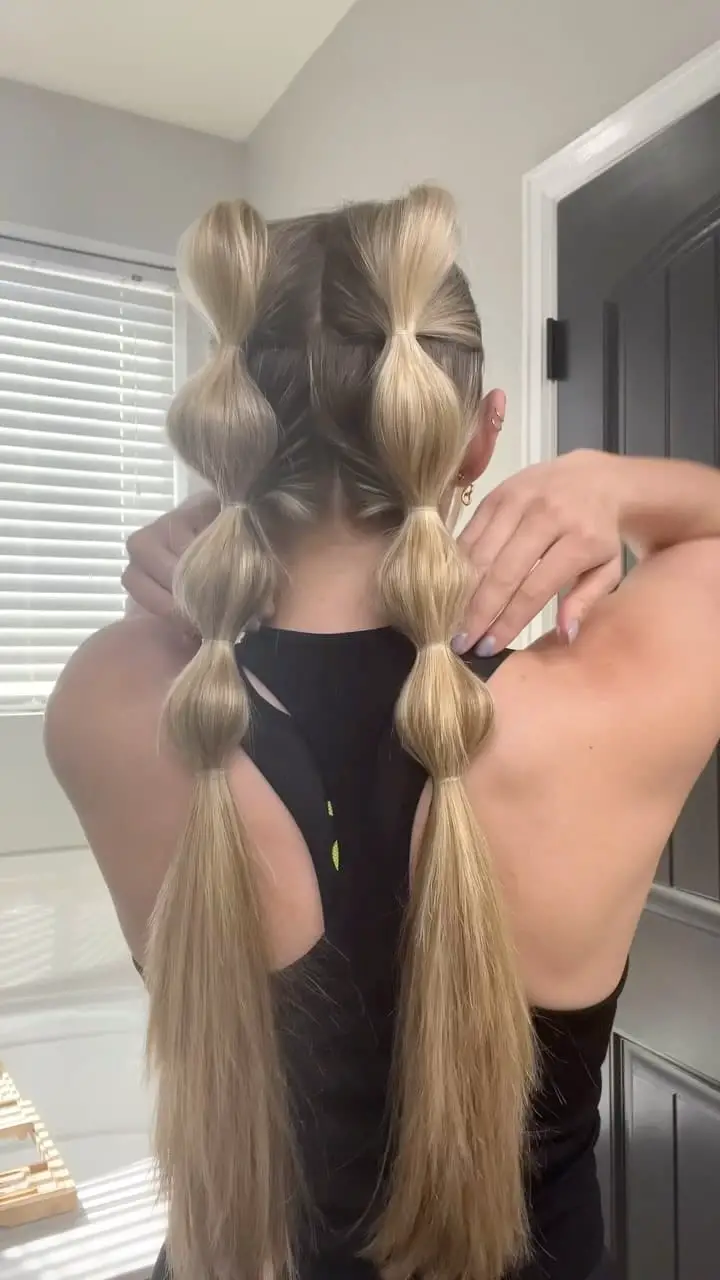
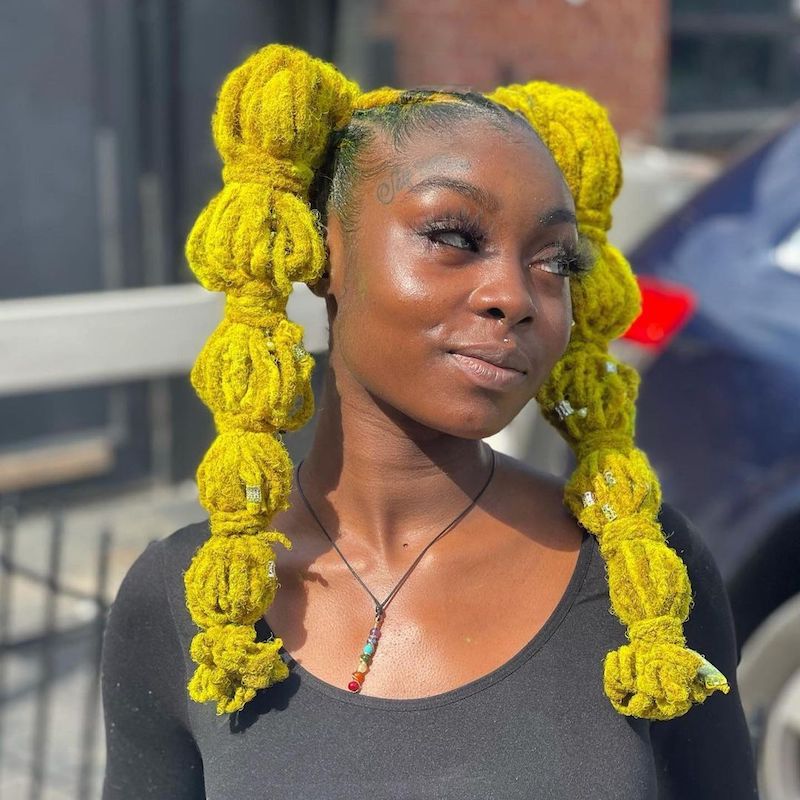
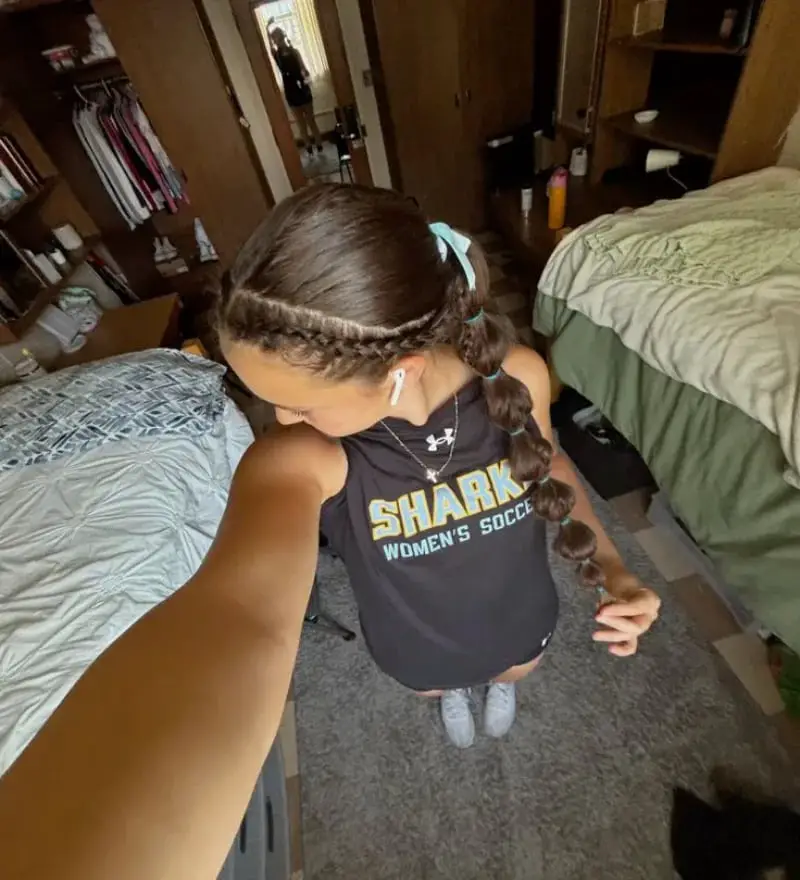
Regular elastics placed every few inches turn a straight ponytail into a segmented bubble effect. Each section puffs slightly above the band, creating a series of rounded shapes down the back. Thick, straight blonde hair at mid-back length holds the segments clearly. The playful structure suits oval and heart face shapes. Ask your stylist for: double bubble ponytails. Use small clear elastics so they disappear into the blonde. Trim ends every eight weeks to keep the bubble shapes crisp rather than frayed.
Dutch Braid Into Bubble Braid
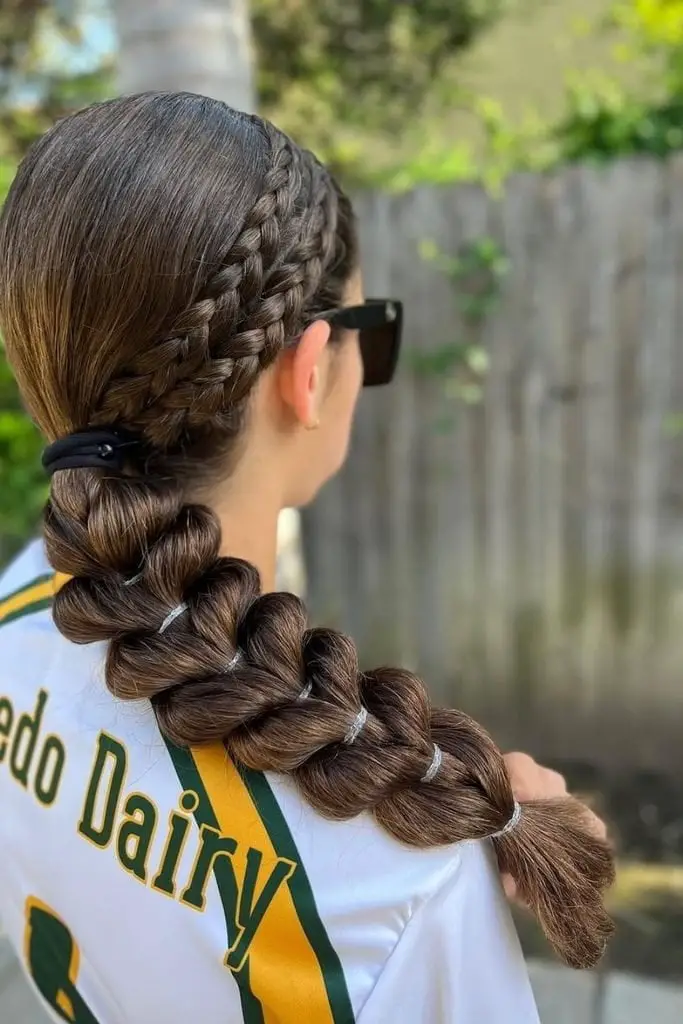
The transition from a Dutch braid to a bubble braid is a clever design trick that looks more complicated than it is. A side part gives the crown section a clean start, then the Dutch braid runs down to about the nape before the technique shifts: instead of continuing the underhand weave, you secure the remaining length into a low ponytail and add small elastics every couple of inches, gently tugging each segment into a rounded bubble. This creates a single braided line with a dramatic, sculptural finish. Thick, straight hair at mid-back length holds the shape best, since fine strands tend to collapse the bubbles. Ask your stylist for: Dutch braid into a bubble braid from a side part. A texturizing spray on each section before braiding gives the hair enough grip to keep the bubbles from sliding.
Double Dutch Braids Into Ponytail, Dark Blonde

Is there a hairstyle that stays put through seven innings and still looks intentional when you take off the cap? This one. Double Dutch braids start at the hairline and weave back to the nape, where both braids merge into a single ponytail. The medium, wavy texture of dark blonde hair is ideal here: the wave adds volume to the braids without making them look messy. A middle parting keeps the symmetry clean. Oval and heart-shaped faces benefit from the vertical lines, while round faces may find the side volume a bit widening. Ask your stylist for: double Dutch braids into a ponytail. The braids do the work of holding flyaways, so no gel or spray is needed for the first few hours.
Dutch Braids With Lavender Extensions

Lavender woven into dark brown hair is not a quiet choice, and that is the point. Two Dutch braids run down each side from a middle part, with lavender extensions threaded through every few inches, creating a color pop that stands out under stadium lights. The straight, medium-density texture keeps the braids sleek, and the mid-back length gives the extensions enough room to show their full shade. This look lands best in late spring or summer, when brighter hair colors feel more like seasonal fun. Square and round faces get a softening effect from the vertical braid lines. Ask your stylist for: double Dutch braids with lavender extensions. Regular conditioning keeps the extensions from turning dry and frizzy.
Neat Cornrows to Mid-Back
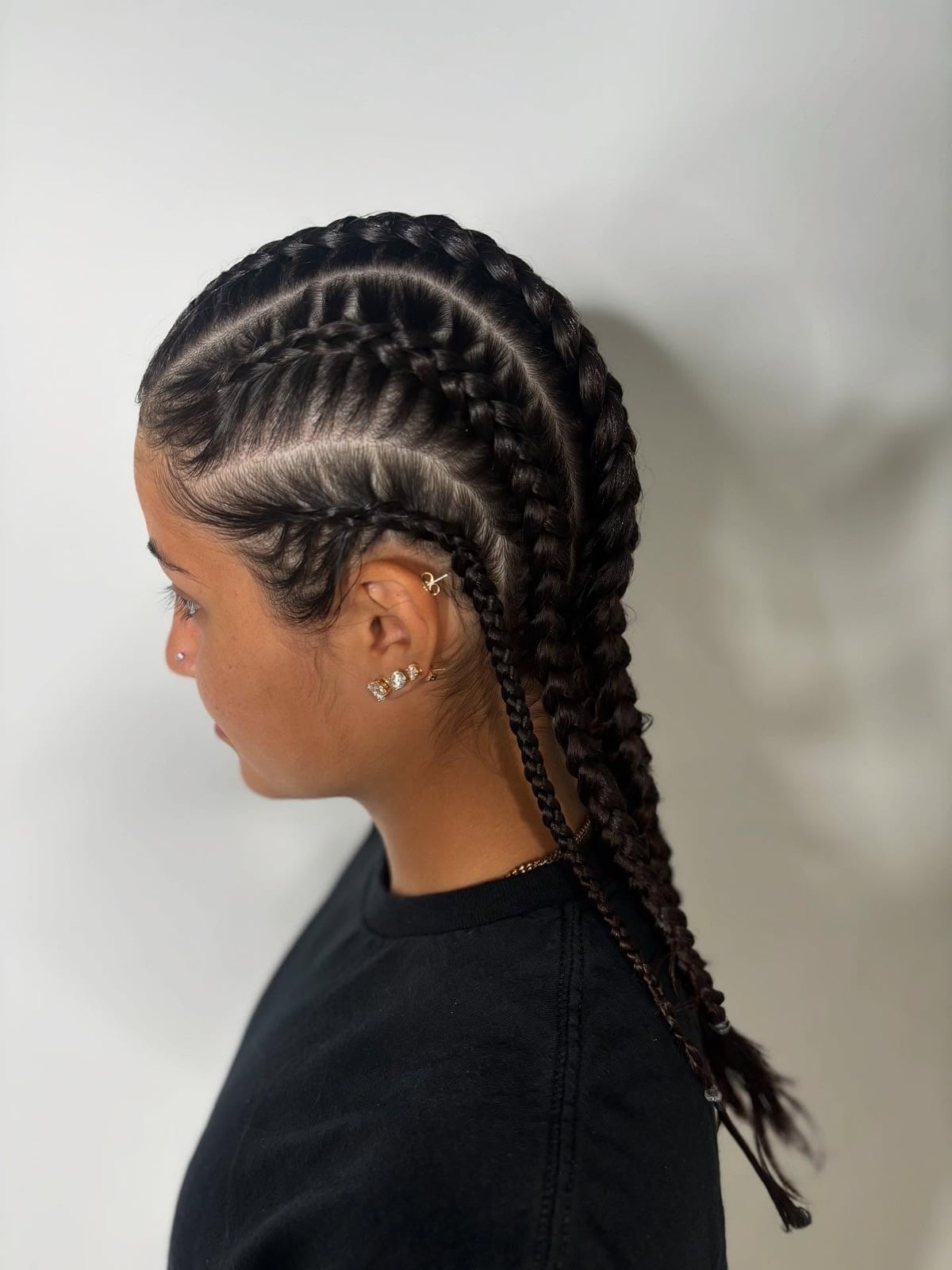
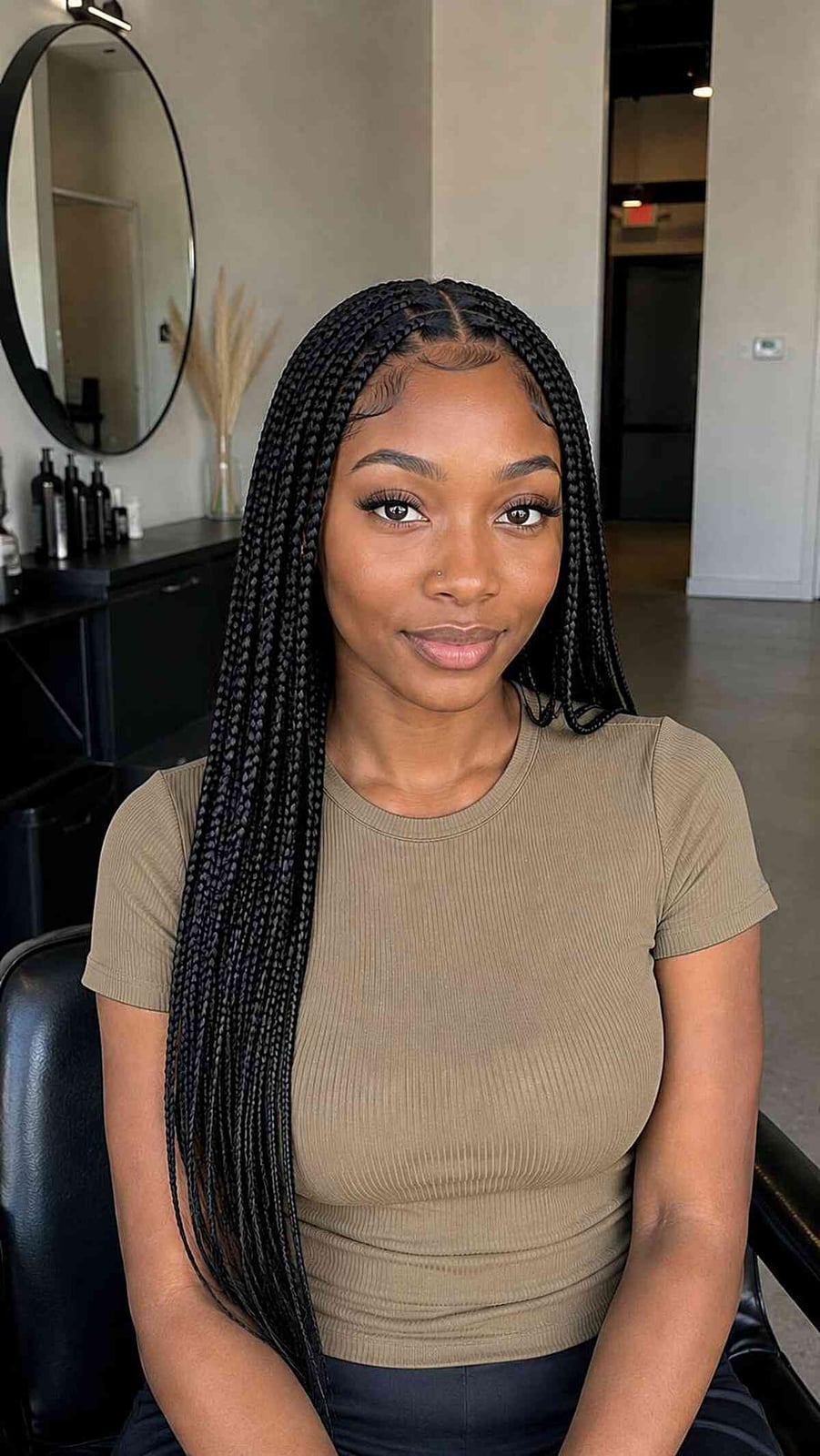
A clean cornrow style is built on precision: each row starts at the hairline with a sharp middle part and follows a straight path down to the ends. The thick, dark brown hair here is sectioned into uniform rows that lie flat against the scalp, then continue as loose braids past the nape to mid-back. The technique requires a steady hand and a fine-tooth comb to keep the parts straight and the tension even. Most face shapes work with this style because the rows create vertical lines that lengthen the appearance of the face. Ask your stylist for: neat cornrows from a middle part. A lightweight scalp oil applied every few days prevents dryness at the roots, and a trim every eight weeks keeps the ends from fraying.
Cornrows Into Braided Ponytail
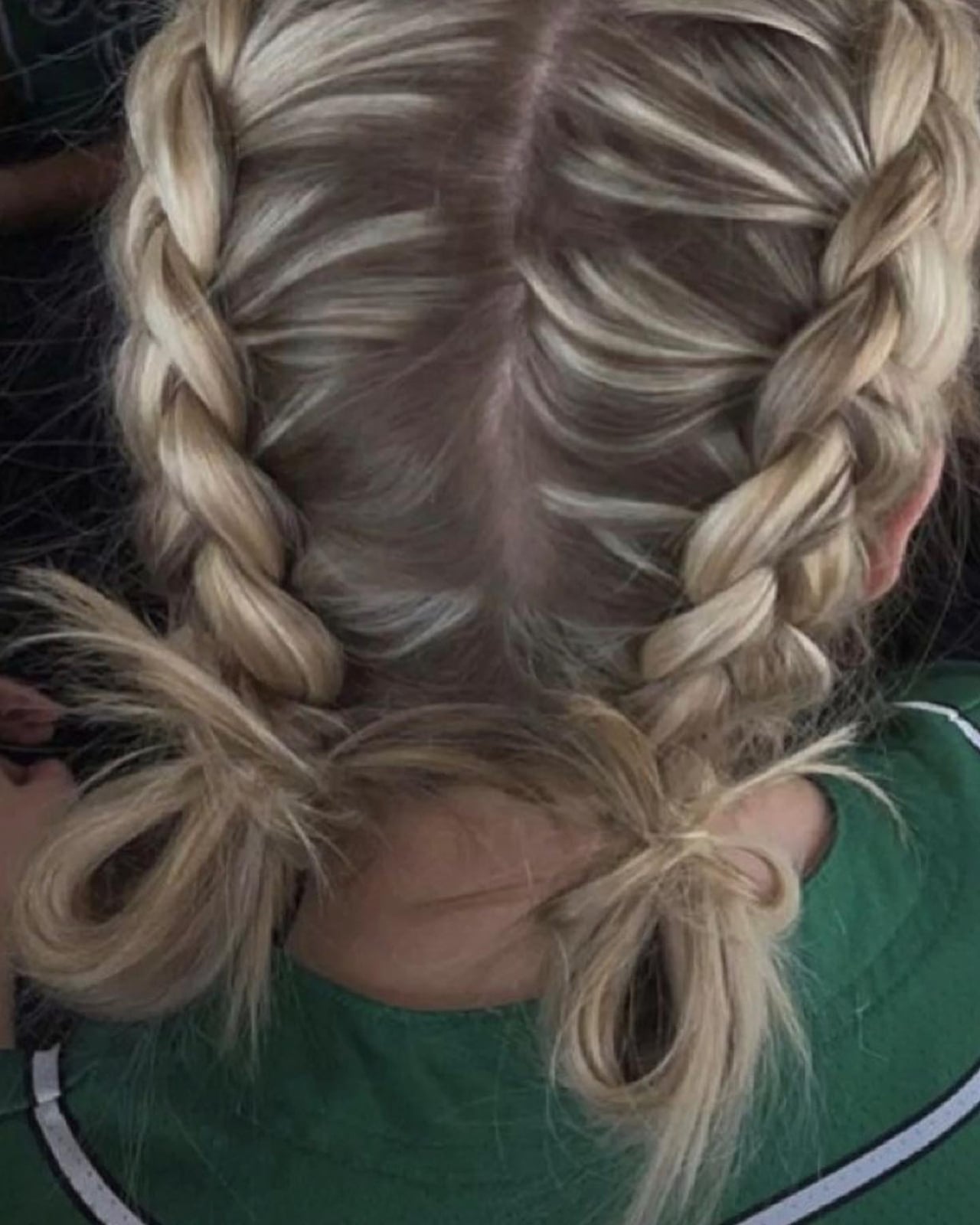
How do you keep cornrows secure and still have hair that moves? The answer is in the transition. Cornrows are braided from the front hairline to the crown, then gathered into a thick, three-strand braided ponytail that falls to mid-back. The dark brown base gets dimension from subtle blonde highlights woven through the cornrow pattern, which keeps the style from reading as one flat block of color. Thick, coily hair is the natural fit here: the texture grips the braids without slipping, and the density gives the ponytail enough weight to hang properly. This is a salon-only project, given the precision of the cornrow pattern and the highlight placement. Ask your stylist for: cornrows into a braided ponytail.
Braids and Cornrows With Pink and Blonde Streaks
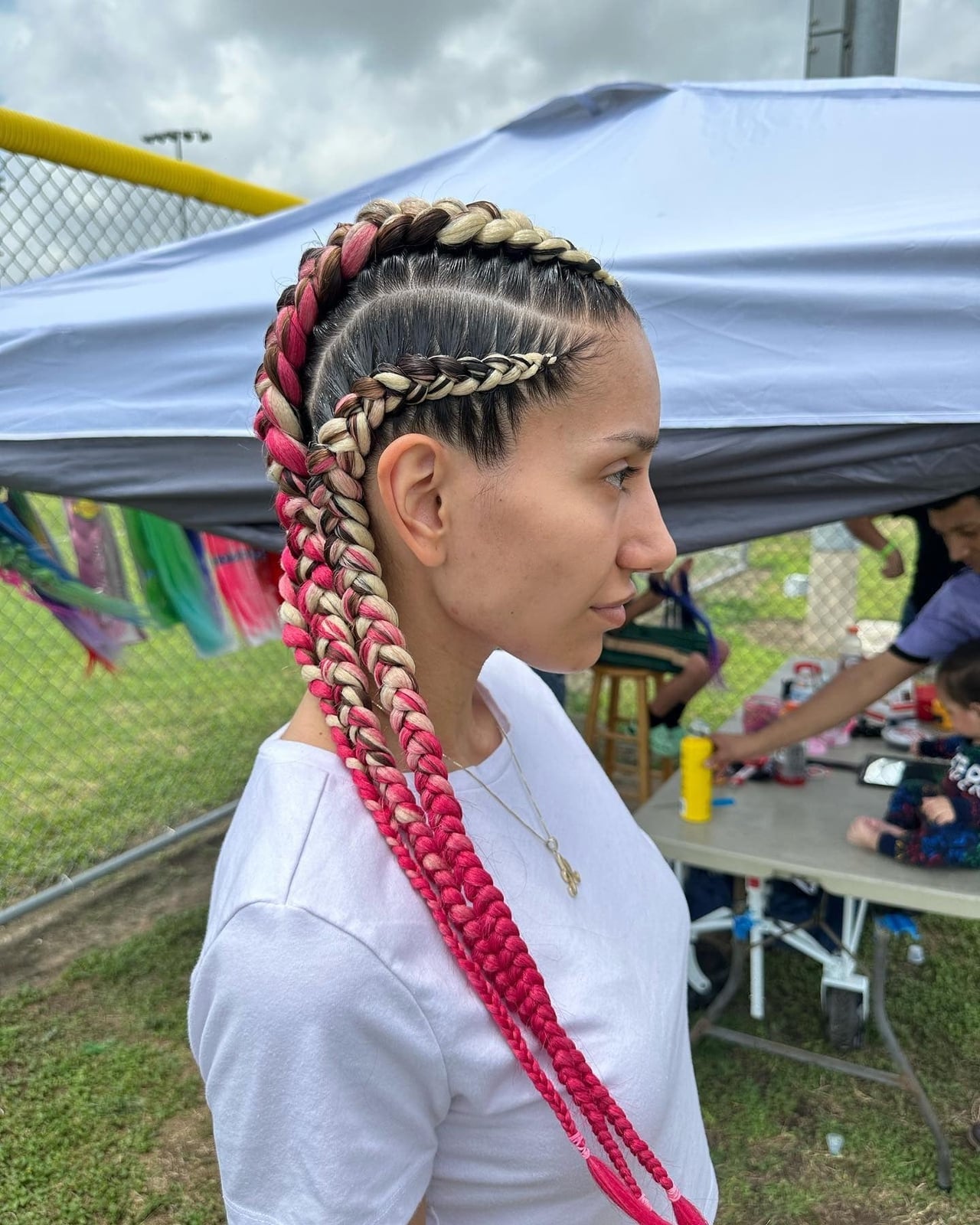
If subtle highlights feel too safe, this is the alternative you actually want: cornrows at the scalp that transition into thick, long braids with vivid pink and blonde streaks woven through a dark brown base. The side part keeps everything clean, and the mid-back length gives the color room to show off. Ask your stylist for: braids and cornrows with pink and blonde streaks. Thick hair of at least mid-back length handles the tension best, and the vertical lines suit most face shapes. A color-safe shampoo preserves the pink and blonde, and a trim every six weeks keeps the ends tidy.
Multiple Braids With Ribbon Accents
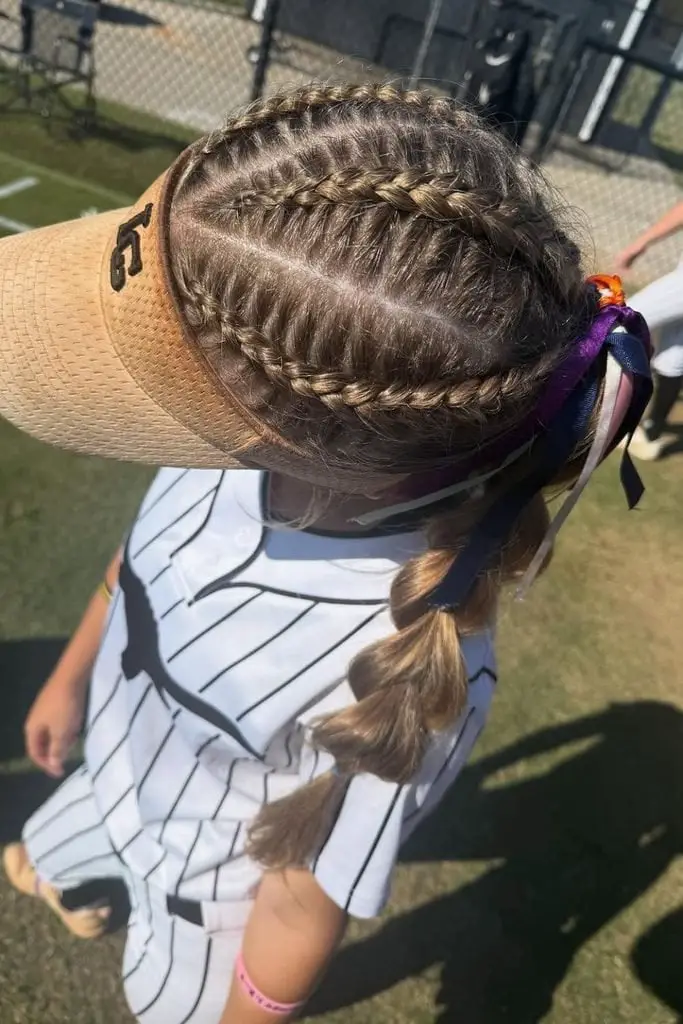
The ribbon is the detail that makes this more than a standard braided ponytail: it is woven through the hair, not tied around it, so it stays put through a full game. Multiple braids on light brown, wavy hair are gathered into a ponytail that falls to mid-back, with the ribbon adding a pop of contrast. Ask your stylist for: multiple braids with ribbon accents. Thick, wavy hair that reaches mid-back length holds the braids best, and the vertical lines suit oval and heart faces. The ribbons can snag on a glove or bat handle, so tuck the ends under a final elastic for safety.
Double Braids With Decorative Ribbon

A red, white and black ribbon is threaded through each braid, not just tied at the end, which means it stays centered and does not loosen as you move. Two dark brown, straight braids fall to mid-back from a middle part, with the ribbon running the full length of each section. Ask your stylist for: double braids with a decorative ribbon. Thick, straight hair of mid-back length or longer works best because the ribbon needs a stable surface to sit on. The ribbon is secured under the final elastic, so it will not pull or tangle during play. A trim every six to eight weeks keeps the ends from fraying around the ribbon.
Thick Single Braid
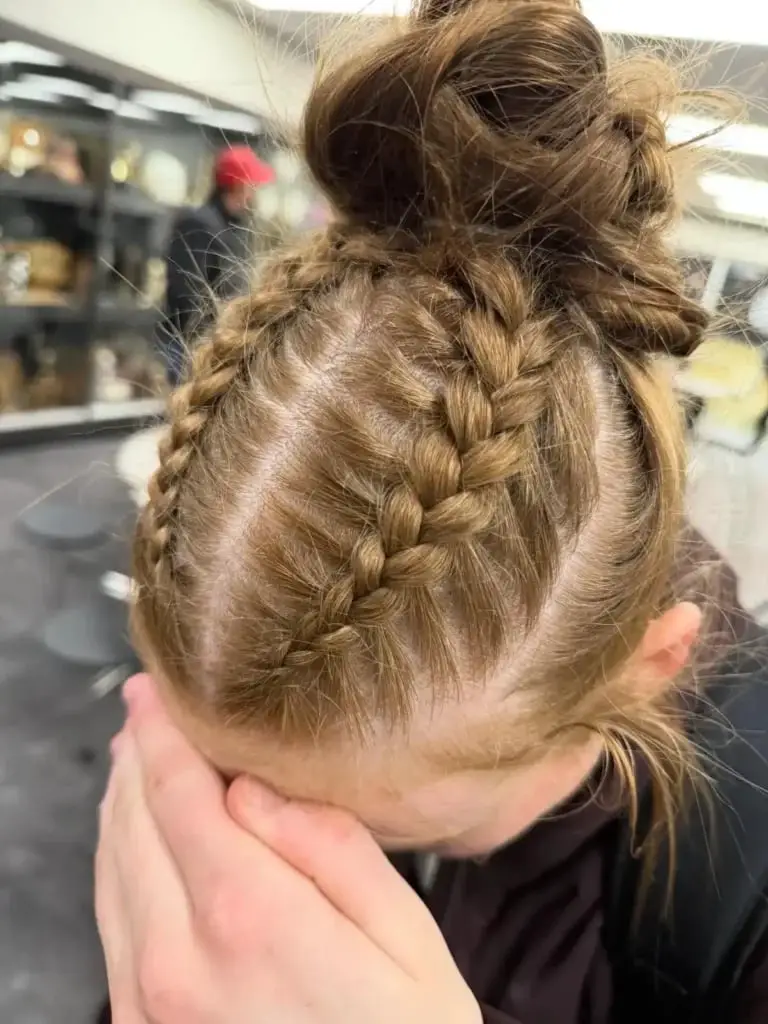
Can one braid really hold all of that thick, wavy hair without falling apart by the third inning? Yes, if the layers are cut right. This medium brown braid starts at the nape and runs to mid-back, with a side part that keeps the front smooth and the bulk concentrated where the elastic can handle it. Ask your stylist for: a thick single braid. Wavy, thick hair of mid-back length or longer is ideal; the natural texture grips the braid and keeps it from slipping. The layers matter here: too many short pieces near the crown will poke out, so a longer layered cut that keeps weight in the lower half gives the cleanest result. Most face shapes can wear it, though the side part adds a little asymmetry that softens round faces.
Applying a texturizing product on the lengths before braiding helps the sections stay defined, and a trim every six to eight weeks prevents the ends from looking straggly. The downside is that fine or thin hair will produce a skimpy braid, so this one is best saved for those with density to spare.
Honey Blonde Fishtail Braid Ponytail
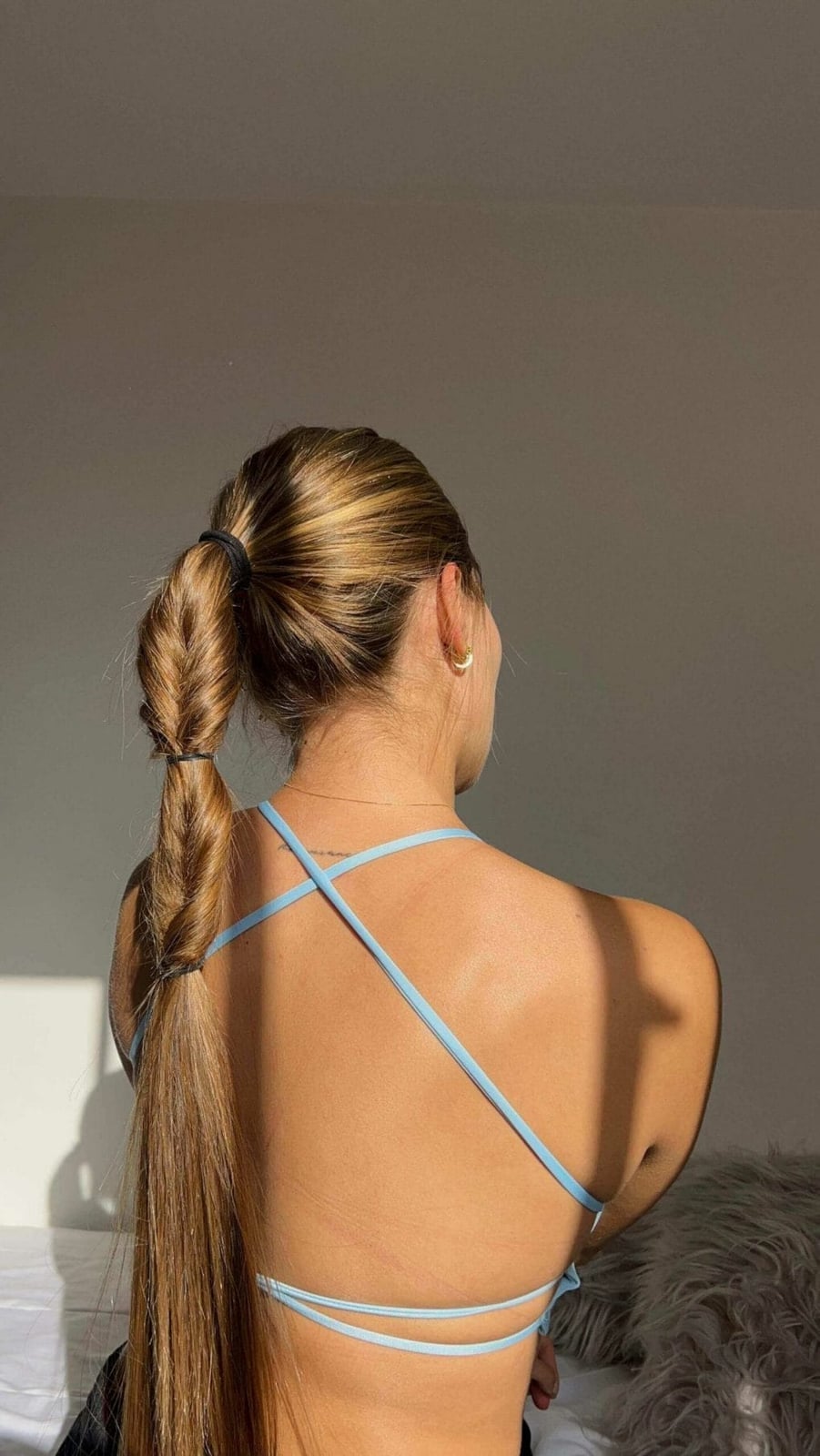
The fishtail braid adds texture to fine, straight hair that otherwise might look flat in a standard ponytail. A honey blonde base with subtle highlights creates contrast between the woven sections, and the long length lets the braid hang past the shoulders with a clean, tapered end. Ask your stylist for: honey blonde fishtail braid ponytail. Fine, straight hair of long length works well because the fishtail technique creates visual density without adding bulk. The middle part keeps the front symmetrical, which suits oval and heart faces. Fine hair can slip out of a fishtail braid during active play, so a strong elastic at the base and a few small ones spaced down the length help it hold. Regular toning appointments every eight to ten weeks keep the honey blonde from turning brassy.
High Ponytail With Braided Accents
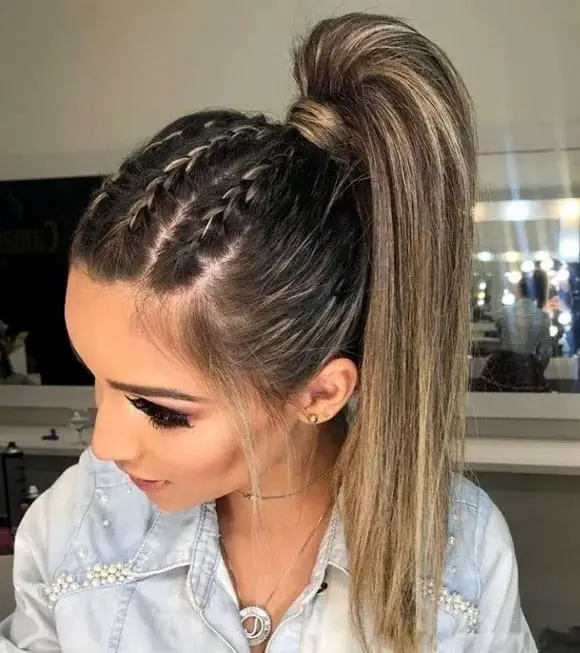
A high ponytail on dark brown hair with subtle highlights gets a decorative upgrade from braided accents along the hairline. The straight, thick texture holds the sleek shape well, and the side part keeps the braids visible. Ask your stylist for: a high ponytail with braided accents. A boar bristle brush smooths the ponytail, while a few bobby pins secure any stray braided pieces. A trim every six to eight weeks keeps the ends looking neat.
High Ponytail With Braided Accent, Mid-Back
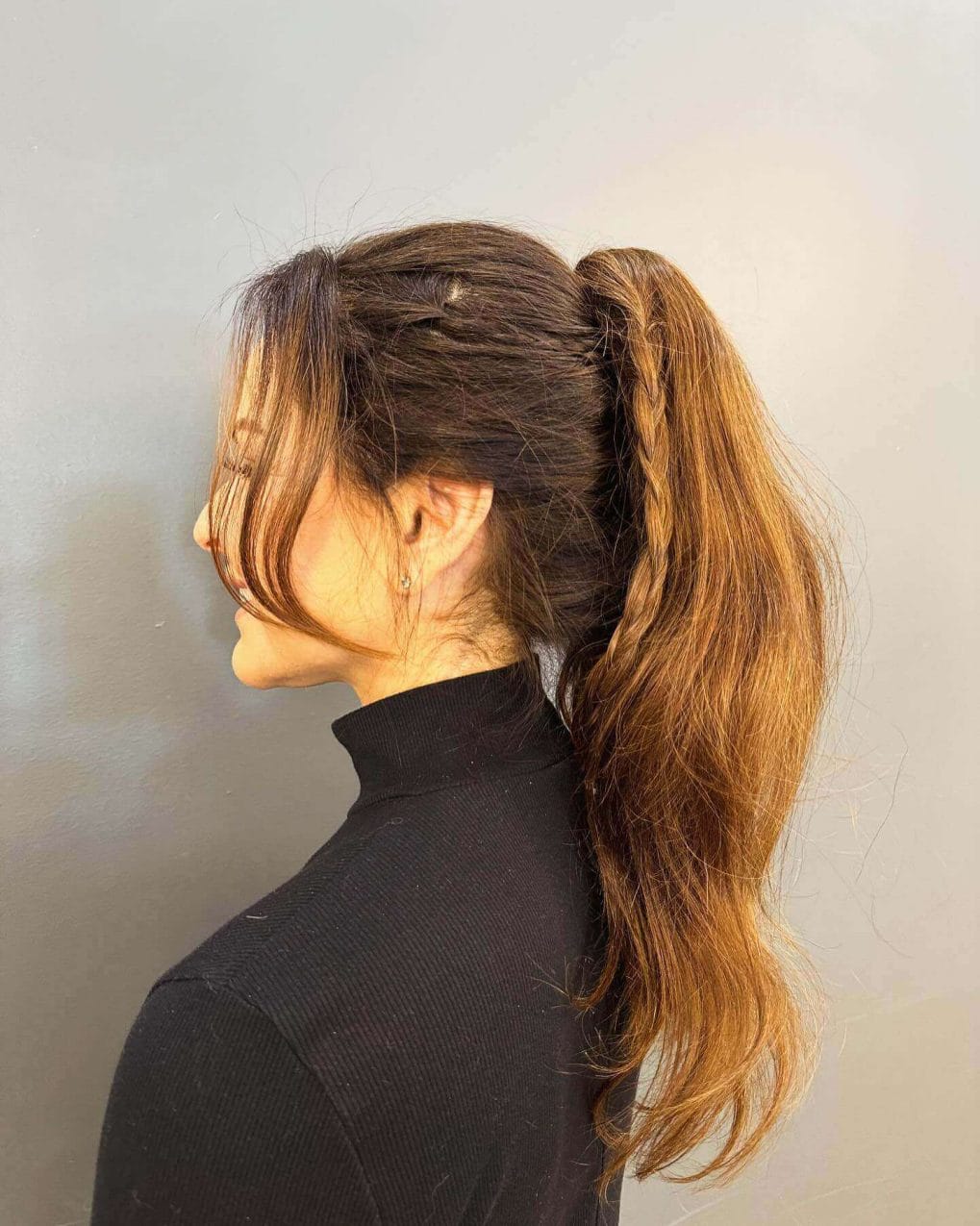
Does your ponytail always look the same? A small braid woven into the base changes the whole dynamic. Medium brown, wavy hair is pulled into a high ponytail with face-framing pieces that soften the perimeter around square faces. Ask your stylist for: a high ponytail with a braided accent and face-framing pieces.
The wavy texture gives the braid a slightly relaxed feel, while the face-framing pieces curl gently for a softer finish. A trim every six to eight weeks keeps the layers from losing their shape.
Neat Double French Braids
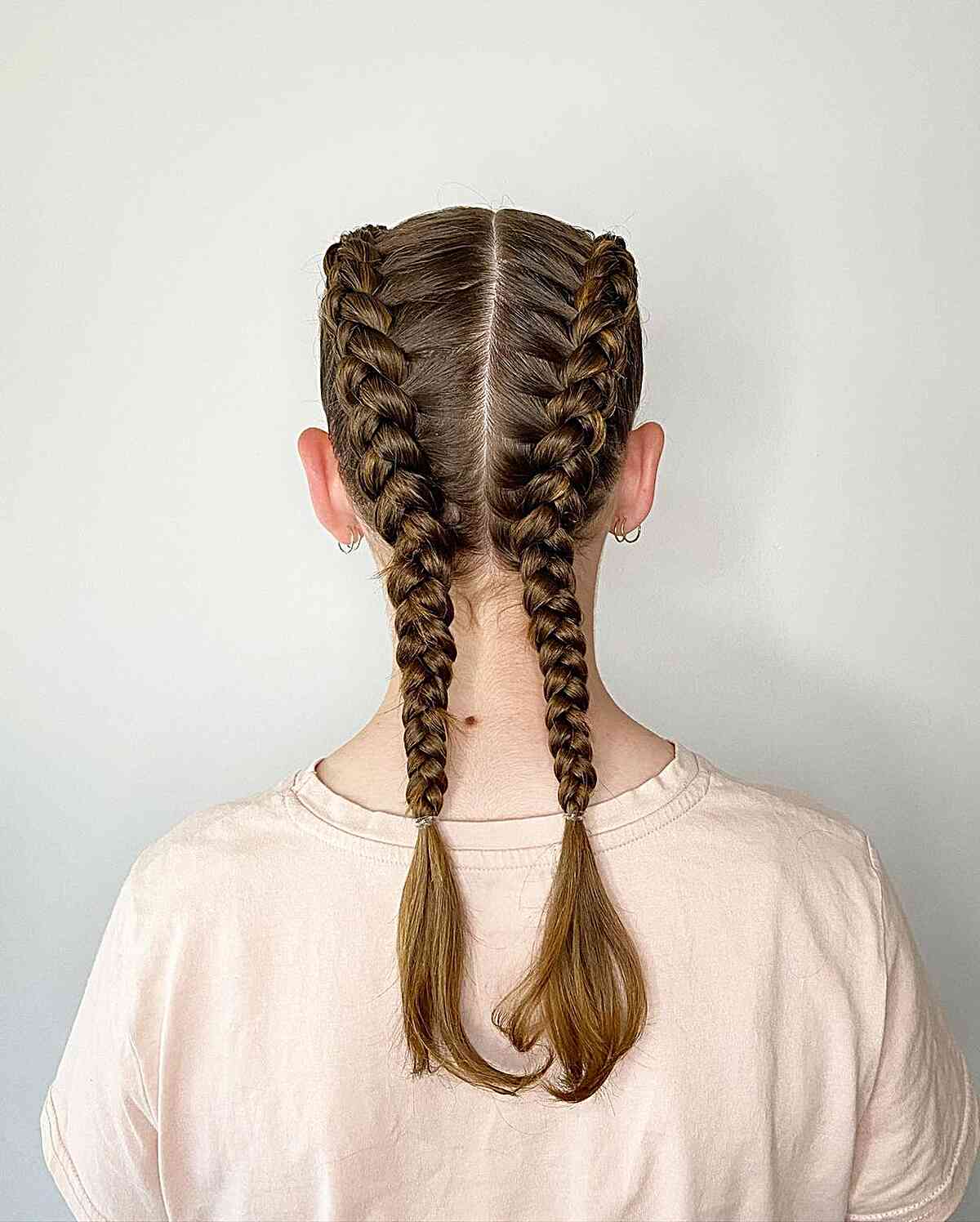
Two neat French braids are tightly woven from the scalp to the ends on medium brown, straight hair. The middle part creates perfect symmetry, and the medium density texture makes the braids look full without being bulky. Ask your stylist for: double French braids from a middle part. The key is even tension on both sides, so the braids stay the same thickness from top to bottom. A light-hold hairspray helps keep flyaways in check. Trim the ends every six weeks to prevent fraying.
Double Cornrows Into High Ponytail
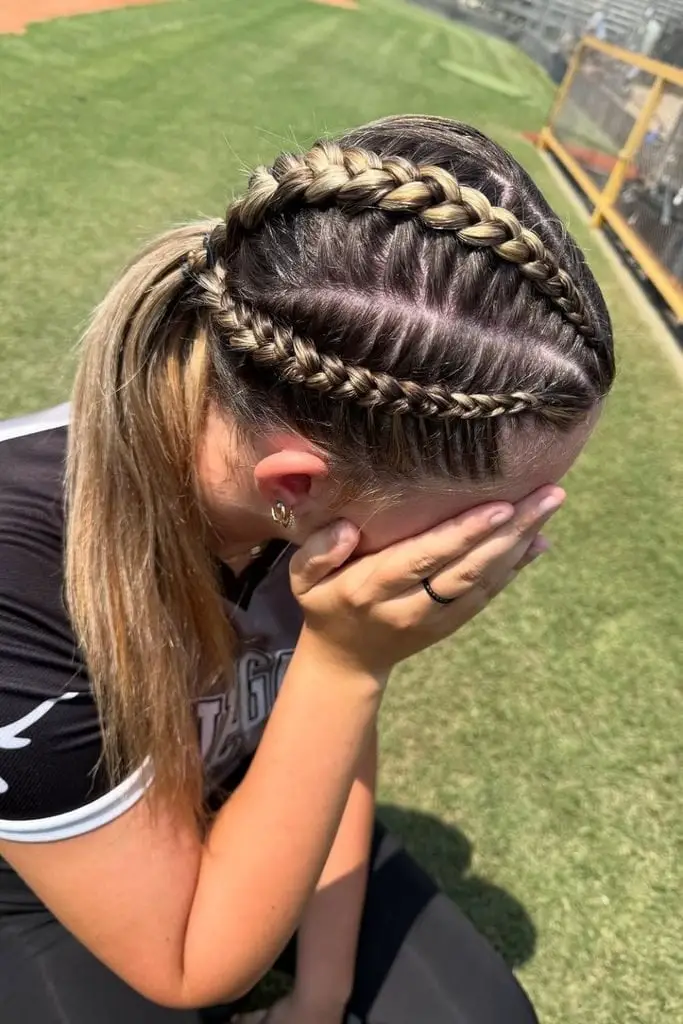
Double cornrows into a high ponytail takes less time than single cornrows and creates a bolder visual line. Dark blonde, wavy hair is parted down the middle, with two cornrows feeding into a sleek ponytail. Ask your stylist for: double cornrows into a high ponytail. The cornrows keep the front tidy, while the ponytail adds movement. A moisturizing spray on the scalp between washes prevents dryness.
Neat Dark Brown Ponytail
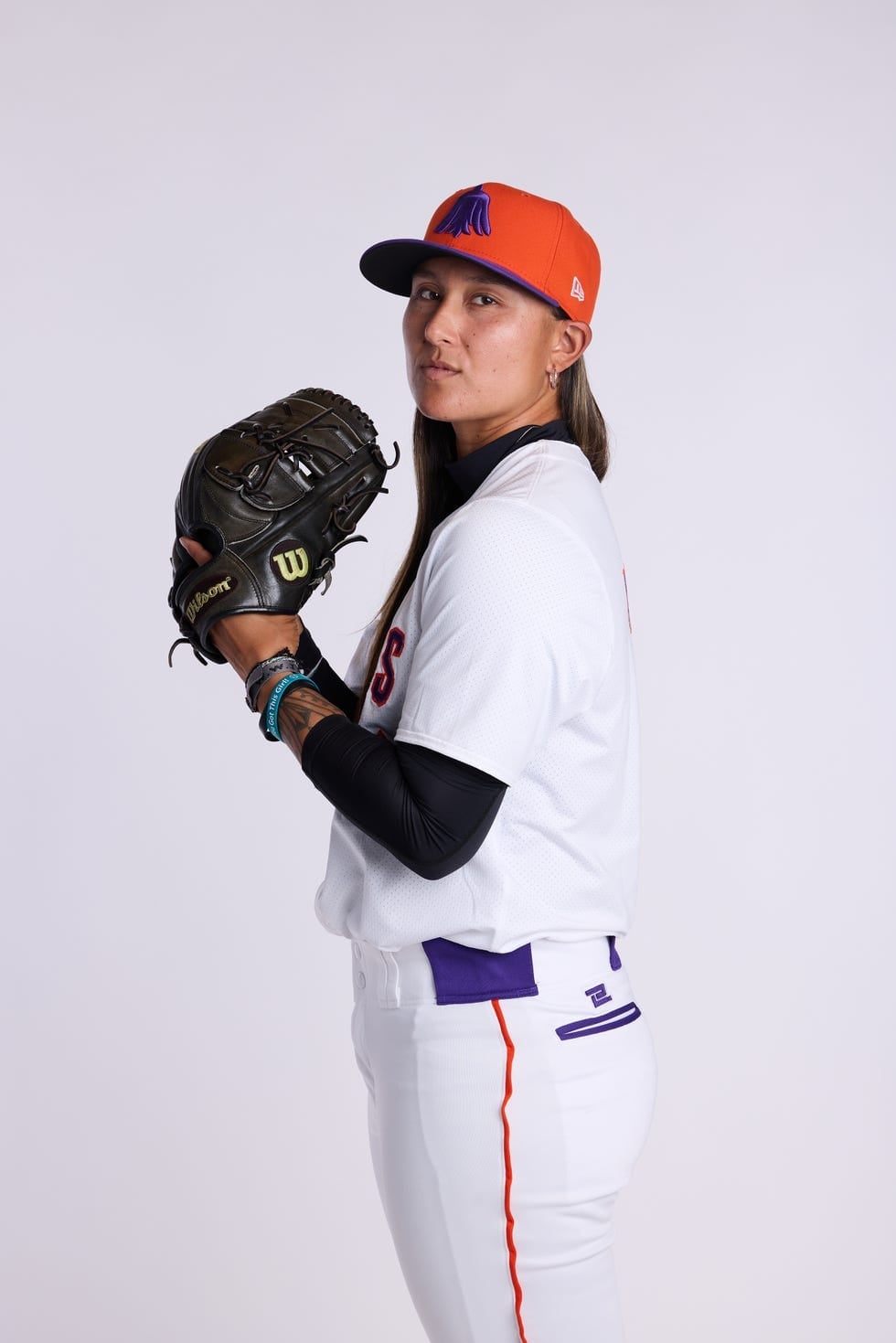
A neat dark brown ponytail is the definition of practical polish. Thick, straight hair reaches mid-back and is pulled back from a middle part with no bangs. The layers add subtle movement without creating bulk at the ends. Ask your stylist for: a neat dark brown ponytail. A boar bristle brush smooths the hair into place, and a trim every six to eight weeks keeps the ends healthy. This style works best on hair that is long enough to sit cleanly in a single elastic.
Half-Up Style With Glossy Waves
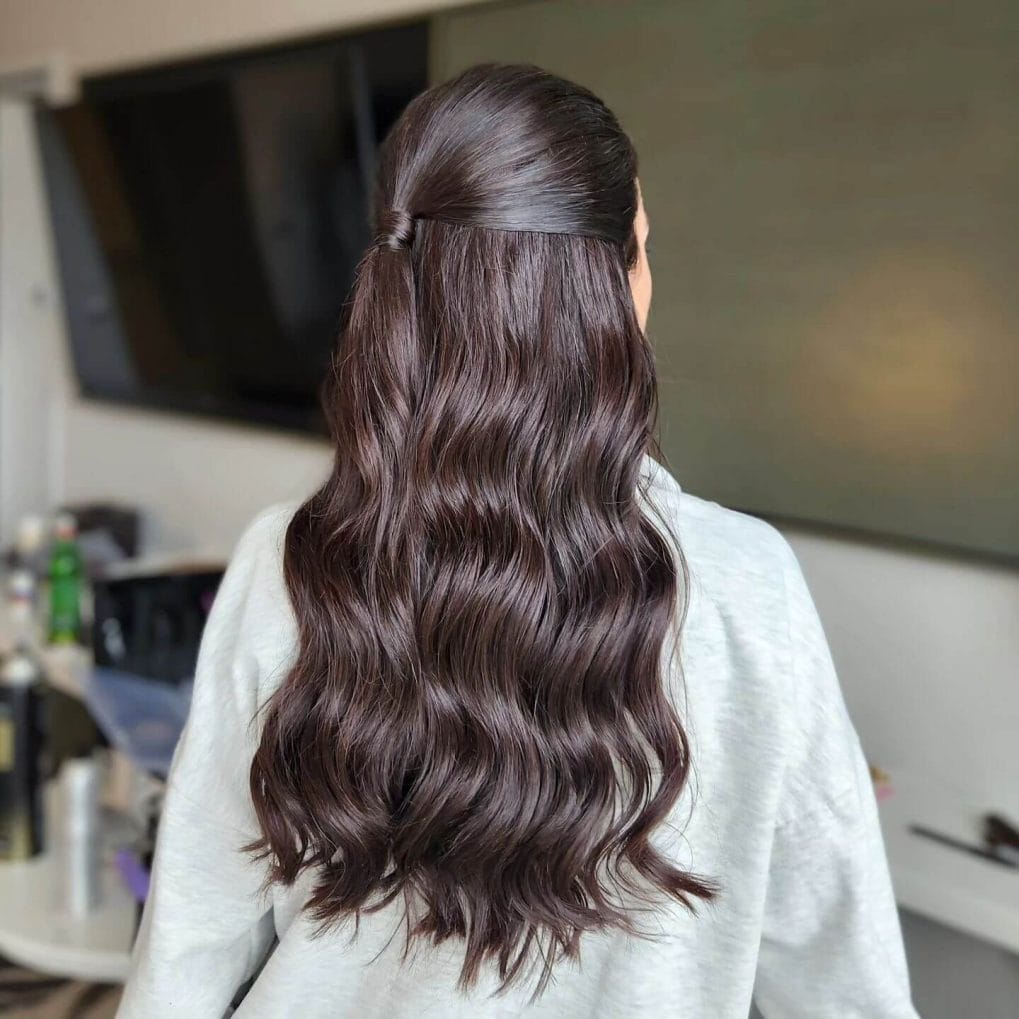
The half-up style keeps hair out of your face without committing to a full ponytail. The top section is pulled back and secured, leaving the thick, dark brown waves to fall loose to mid-back. Ask your stylist for: a half-up style with loose waves. This works best on thick, wavy hair with a middle part and at least mid-back length, and it softens square and long faces. The waves have the hold to survive a full game. Plan on a trim every 6-8 weeks to keep the ends healthy.
Half-Up Twisted Knot With Balayage
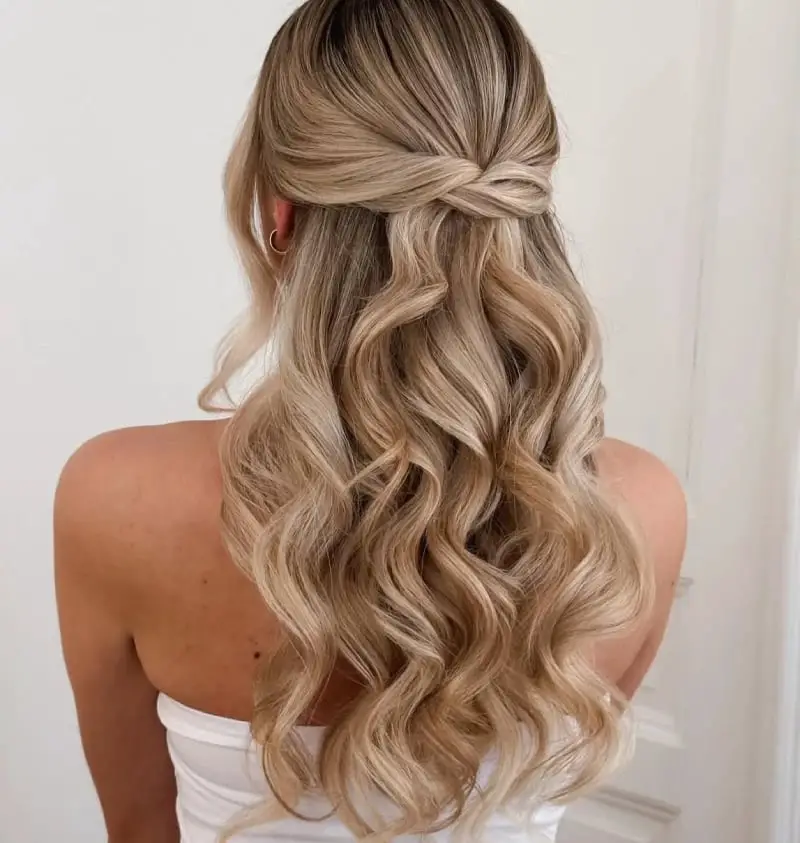
Can a half-up style stay secure through seven innings? The twisted knot at the crown helps, but fine, wavy hair needs some texture to keep the twist from sliding. The long layers and blonde balayage add dimension, with darker roots blending into lighter ends at mid-back. Ask your stylist for: half-up style with a twisted knot and balayage. The waves get a polished finish, but be aware the knot can loosen over time. The balayage needs refreshing every 10-12 weeks. This style suits oval and heart faces best.
Intricate Braided Updo Bun
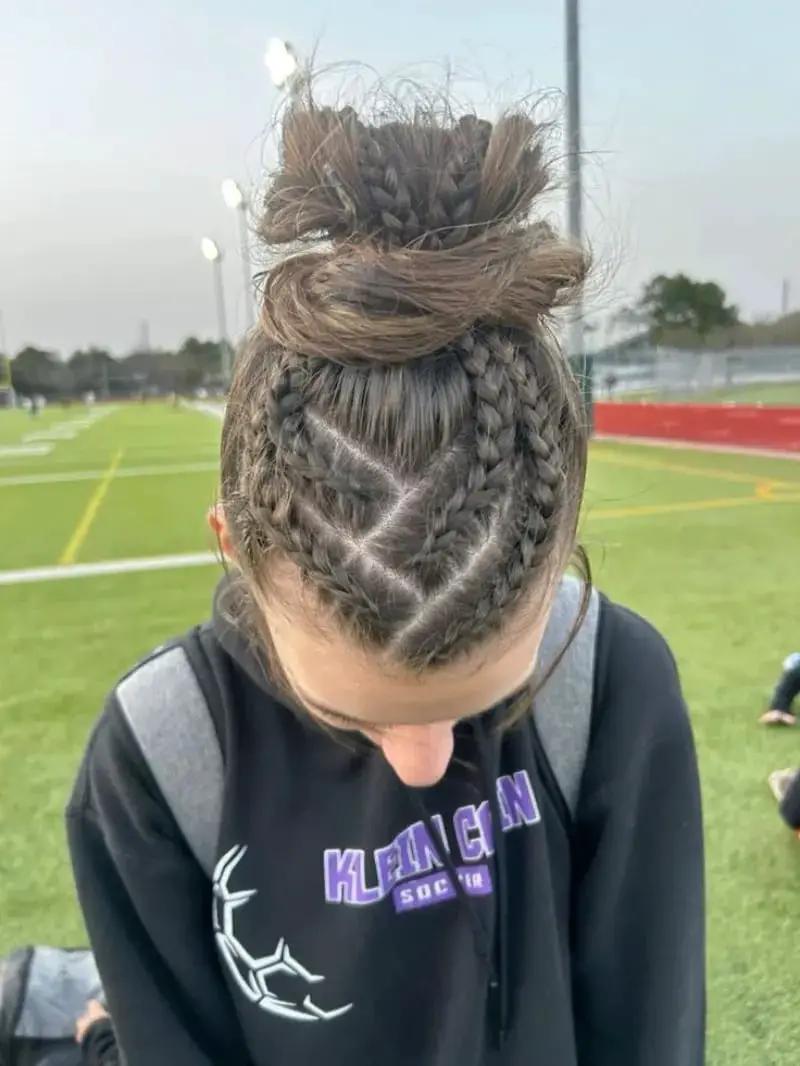
The braided updo bun is a precise piece of work. The braids form a V-shape pattern on the scalp, starting from a middle part and converging into a neat bun at the back. This style requires thick, straight hair of long length to hold the pattern cleanly. Ask your stylist for: an intricate braided bun. The good news is that once it is done, it stays put through a full game or a long day. Use plenty of pins to secure the bun. A trim every 8 weeks keeps the ends from fraying. The design suits most face shapes.
Shoulder Length Ponytail With Headband
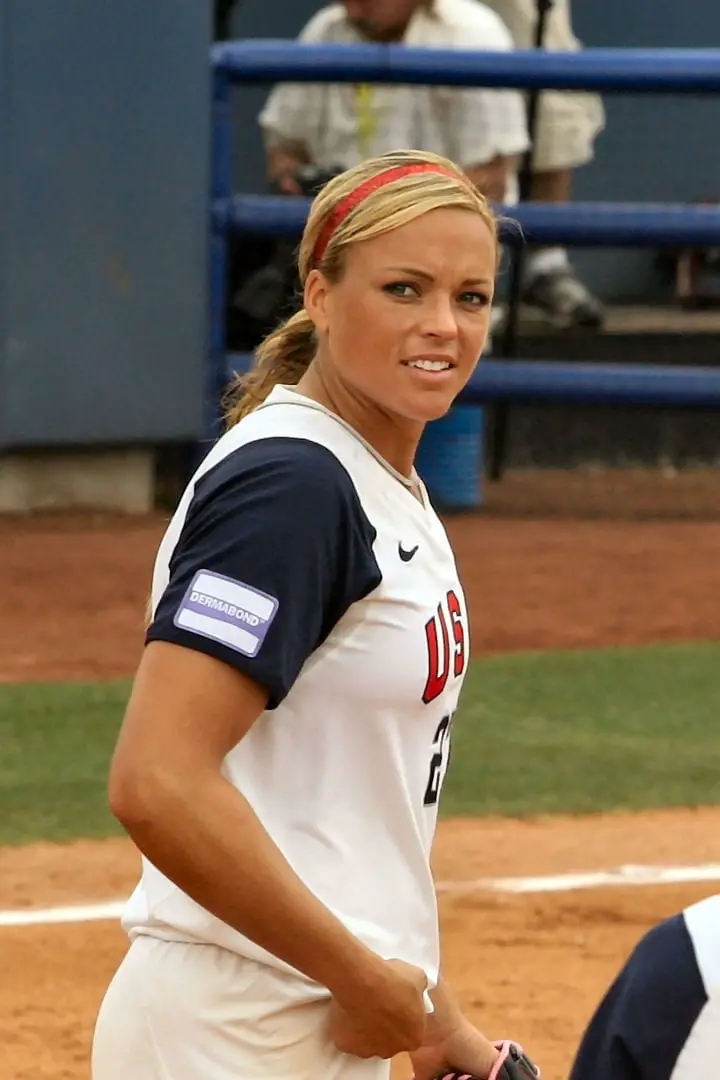
The mistake people make with a shoulder-length ponytail is letting the front pieces escape. A red headband solves that, holding the wavy blonde hair back while adding a sporty touch. The side part and medium density texture give the ponytail enough volume to look polished. Ask your stylist for: shoulder length ponytail with a red headband. This is a salon-leaning style, but you can replicate it at home with a headband and a brush. A trim every 6-8 weeks keeps the layers from looking ragged.
Collarbone Lob With Soft Curtain Bangs
Who does a collarbone lob with soft curtain bangs actually flatter? The cut works best on medium density, wavy hair starting at collarbone length, with a middle part and a honey blonde base plus a root shadow. The curtain bangs soften round and heart faces without demanding constant trimming. Ask your stylist for: collarbone length lob with loose waves and curtain bangs. Blow-dry the fringe with a round brush for that soft, face-framing curve. The lob needs a trim every 8-10 weeks to hold its shape.
Final Thoughts
For fine hair, stick with braided styles or tight ponytails that add volume and stay secure. Thick hair benefits from multi-braid techniques or high ponytails to manage weight and prevent slippage.
- Trim ends every 6-8 weeks to maintain braid integrity and prevent split ends.
- Refresh color with a toner every 4-6 weeks to keep highlights bright.
- Use a heat protectant spray before any heat styling, especially for wavy textures.
- Wash hair 1-2 times per week to preserve style and natural oils.
- Apply a lightweight serum to ends to combat dryness and add shine.
Play hard, look good, and keep your hair out of the way.