
Pigtail braids are back, and they’ve traded the kindergarten playground for something a little more polished. The trick is treating them like any other grown-up style: matching the braid type to your hair’s texture and length, not just winging it.
This collection of 28 Simple Pigtails Braids covers everything from a five-minute Dutch braid on a Tuesday to a pull-through style that looks salon-complex but isn’t. You will find options for fine hair that needs volume, for a visible grow-out line that needs hiding, and for a fringe that refuses to behave. No product list, no three-hour tutorial, just the right braid for your hair as it is right now.
Collarbone Wavy Braids With Balayage
Two simple braids let a dark brown-to-blonde balayage do the heavy lifting, so the style looks deliberate without requiring much effort. The middle parting keeps things symmetrical, and the wavy texture adds grip so the braids stay put. Medium to thick wavy hair at collarbone length takes to this best, especially if you have an oval or heart-shaped face. Ask your stylist for: collarbone length wavy braids with balayage ends. A texturizing spray before braiding keeps the waves from going flat, and a trim every six to eight weeks stops the ends from looking ragged.
Collarbone Braids Dark Brown To Blonde Balayage
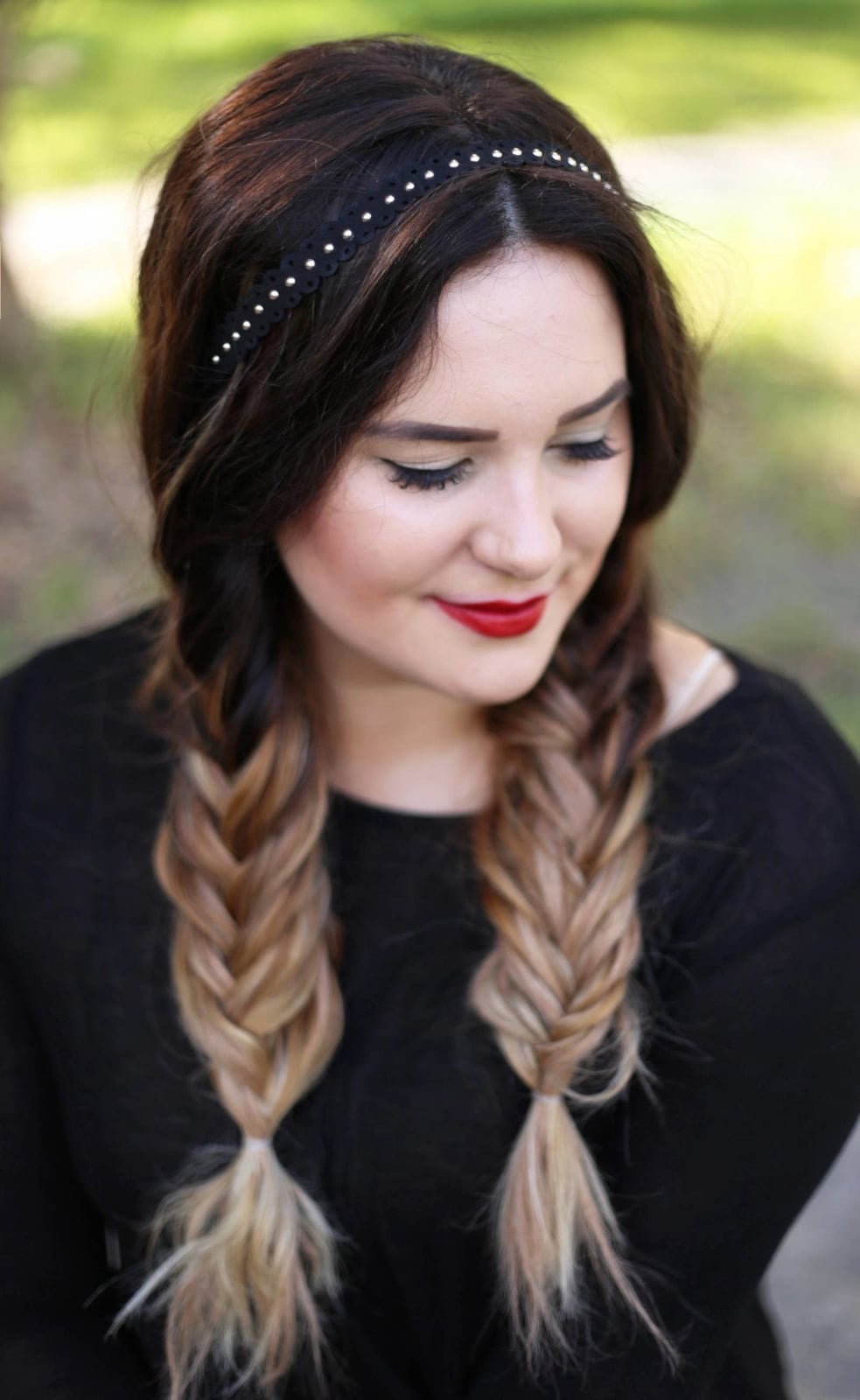
Ever wonder why some braids show off color better than others? The trick is the middle part and the simple three-strand braid, which lets the dark brown base fade into blonde balayage in clear sections. On wavy, collarbone-length hair, the ombre effect is clearly visible. Ask your stylist for: collarbone braids with dark brown to blonde balayage. This is a solid DIY candidate: section the hair down the middle, braid loosely, and you are done. A sea salt spray before braiding adds texture, and a toning gloss every ten to twelve weeks keeps the blonde from going brassy.
Collarbone Ash Blonde Braids With Bows
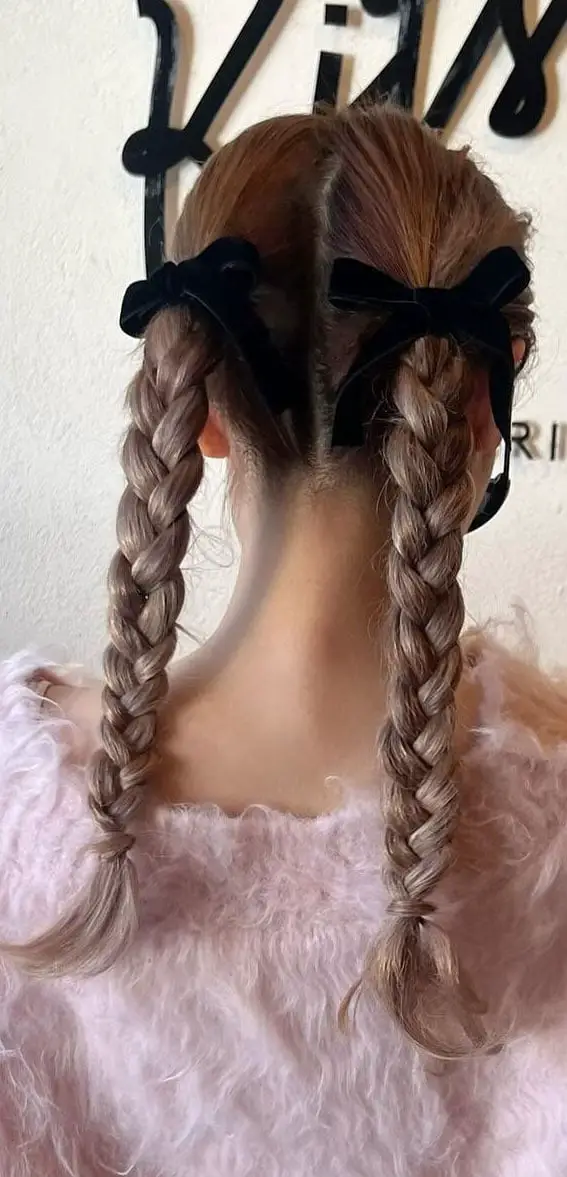
Two classic braids tied with black velvet bows at the nape of the neck turn a simple pigtail into a polished style. The ash blonde base with subtle highlights keeps the tone cool, and the straight, medium-density texture makes the braids lie neatly. Ask your stylist for: collarbone length ash blonde braids with bows. This is a salon-level detail only because of the precision color work. Applying a smoothing serum to the ends before braiding gives a polished finish, and a trim every six to eight weeks keeps the collarbone length sharp.
Collarbone Orange Dutch Braids
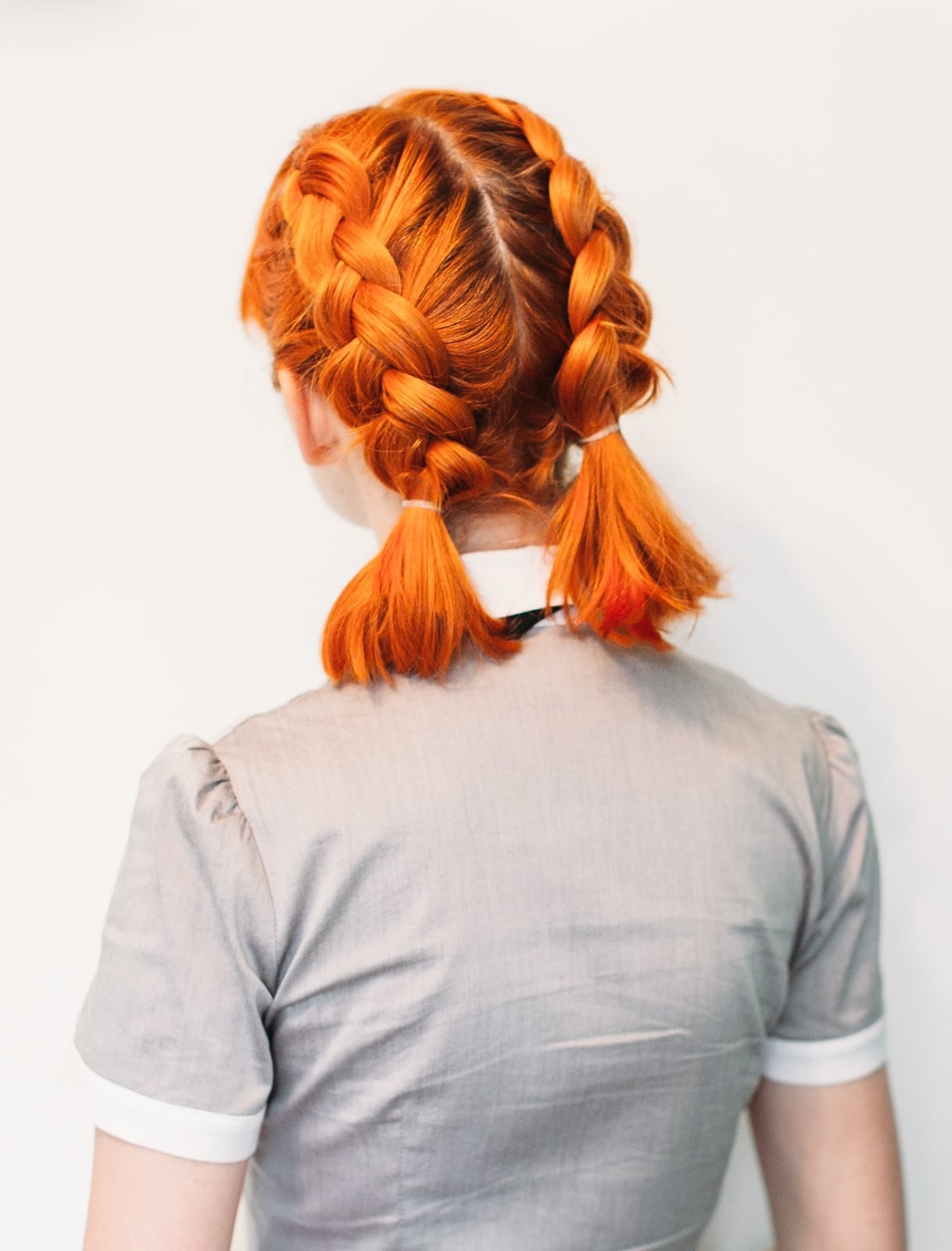
This is not your standard pigtail braid. The Dutch braid technique sits the plait on top of the hair rather than under it, which makes the vibrant orange color pop even more. Thick, wavy hair at collarbone length gives the braids enough weight to hold their shape. Ask your colorist for: collarbone length vibrant orange Dutch braids. The uniform orange with a hint of red at the ends is a bold statement suited for festival season or anytime you want the hair to arrive before you do. A texturizing spray before braiding adds grip, and the color needs refreshing every six to eight weeks.
Shoulder Dark Brown Wavy Braids
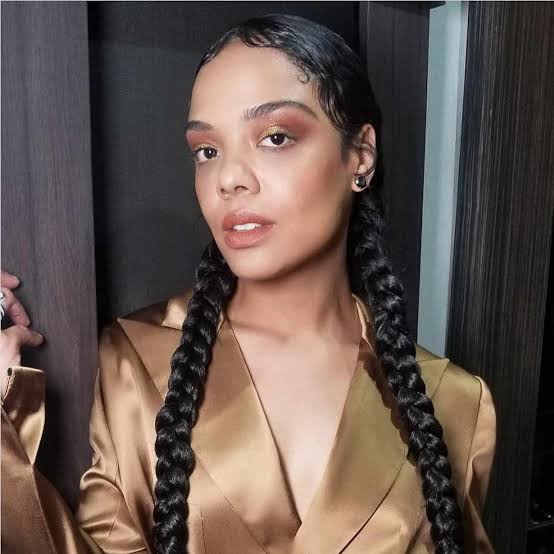
Thick, textured braids starting from the crown and falling to the shoulders work best when the hair has natural density and wave. The dark brown base is uniform, so the focus stays on the braid structure. Ask your stylist for: shoulder length thick wavy dark brown braids. A styling cream worked through damp hair before braiding controls frizz without weighing down the texture. Layers in the cut help the braids sit with more movement. A trim every six to eight weeks keeps the ends healthy and the braids looking neat.
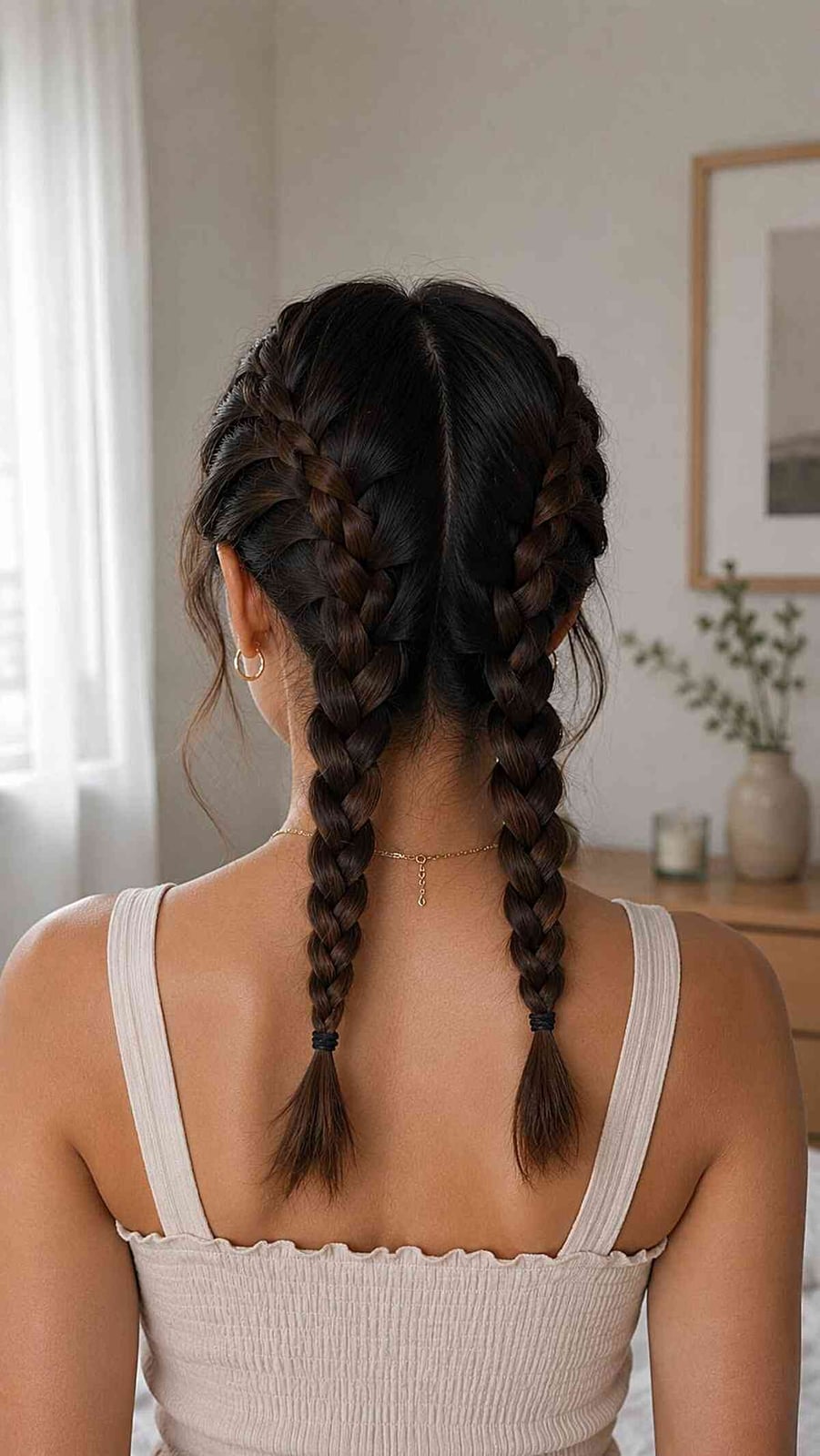
Mid-Back Straight Dark Brown Braids

If your hair is thick and straight, a simple braid is often the most efficient way to keep it out of your face. Two neat braids with a middle parting land at the mid-back, turning a uniform dark brown into a clean, deliberate line. The straight texture means the braid lies flat and stays put, with no flyaways by lunch.
This works best on straight, thick hair that reaches mid-back. Ask your stylist for: mid-back length simple dark brown braids. A finishing spray helps seal the ends and maintain the hold, and a trim every six to eight weeks keeps the ends from looking frayed. Oval and long faces get the most out of this geometry, as the vertical line lengthens without widening.
Mid-Back Dark Brown Pigtail Braids, Layers

The design here is straightforward: two even pigtail braids in thick, straight dark brown hair, parted down the middle and falling to the mid-back. The layers add a bit of texture within the braid, preventing it from looking like a single solid tube. It reads as youthful without trying to be cute about it.
Round and heart-shaped faces benefit from the volume at the sides, which balances a wider jaw or a softer chin. Ask your stylist for: mid-back length dark brown pigtail braids. A fine-tooth comb is your best friend for a clean, precise parting. This is a salon-level finish, but the upkeep is minimal, just a trim every six to eight weeks.
Mid-Back Red Fishtail Braids

A fishtail braid is essentially a two-strand weave that looks more complicated than it is, and on thick, wavy red hair with auburn highlights, the interlocking sections catch the light from different angles. The wavy texture gives the braid natural grip, so it holds its shape without a bucket of product. The red base with lighter auburn pieces creates a dimensional effect that a solid color cannot match.
Thick, wavy hair at mid-back length is the ideal starting point. Ask your colorist for: mid-back length red fishtail braids with auburn tones. Oval and long faces suit the vertical pull of the style. Gently pulling apart the braid after securing the ends gives a fuller, more relaxed silhouette. A color touch-up every eight to ten weeks keeps the red from fading into a dull burgundy.
Mid-Back Blonde Fishtail Braids, Wavy
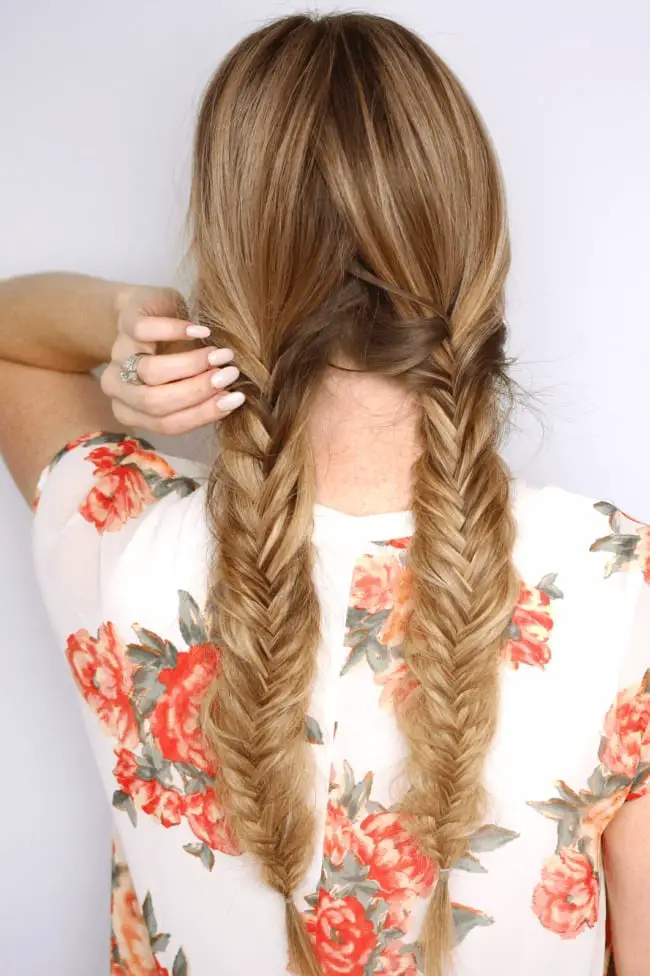
Wavy, thick hair gives a fishtail braid a lot of natural volume, so the braid looks substantial rather than skinny. The blonde base with brown lowlights adds a subtle contrast that reads as depth, not a DIY dye job. The back view makes it clear that the middle parting keeps everything symmetrical, and the wavy texture means the braid holds its shape for a full day. A texturizing spray applied before braiding enhances grip and definition. Ask your stylist for: mid-back length blonde fishtail braids with brown lowlights. A trim every six to eight weeks maintains the clean ends.
Mid-Back Wavy Blonde Fishtail Braids, Close-Up Take
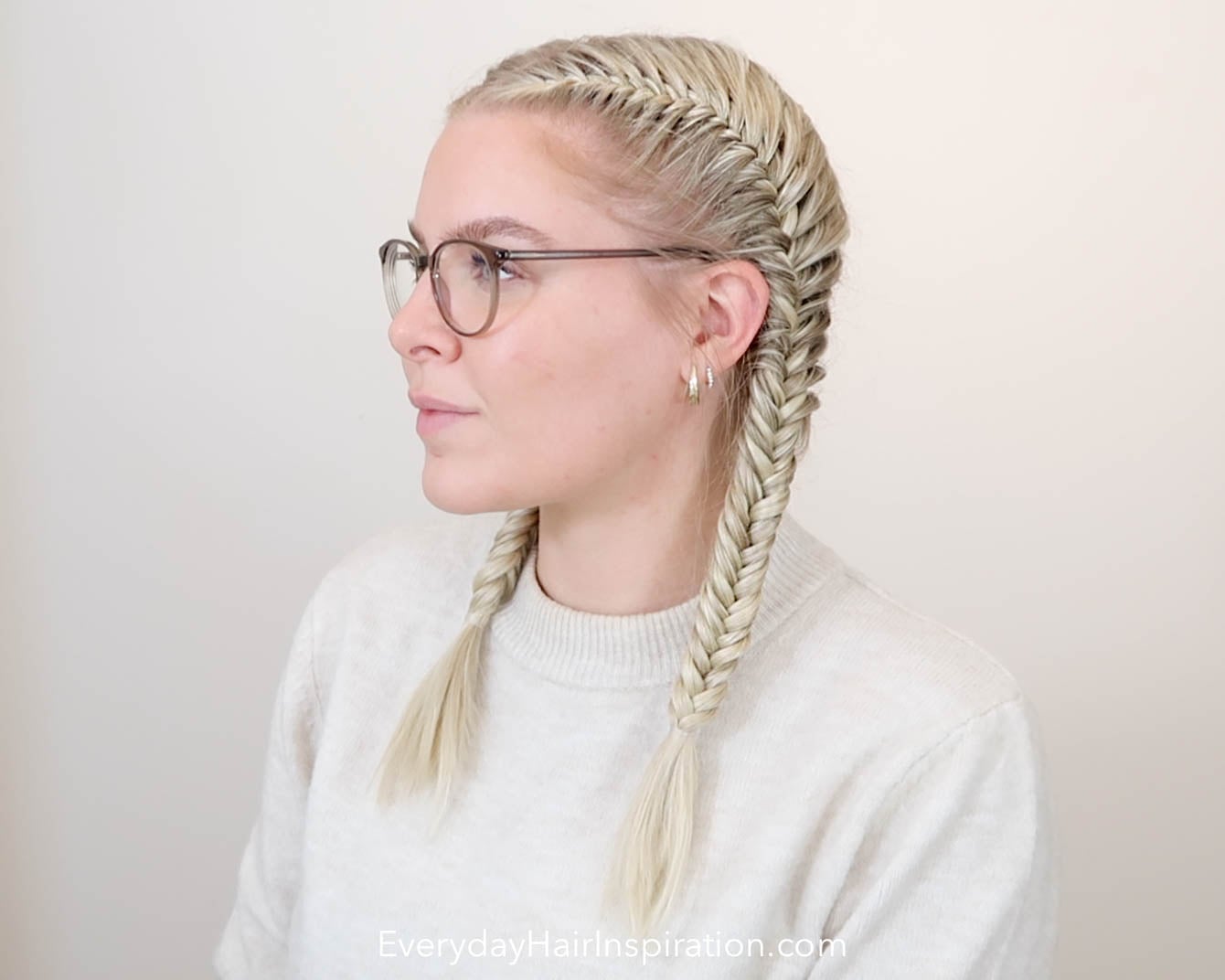
How do you describe a fishtail braid that looks this deliberate to a stylist? Start with the length: mid-back. Then specify the technique: fishtail, not a standard three-strand braid. The wavy, thick texture in blonde with highlights means the braid has natural grip and visible dimension. The side view shows the intricate crossover pattern clearly, so you can point to the photo and say, “that exact weave.”
Ask your stylist for: mid-back length wavy blonde fishtail braids. Oval and long faces work best with the vertical line. Gently loosen the braid after styling for a softer, fuller appearance. A trim every six to eight weeks keeps the ends from looking ragged, which is especially important when the braid is the main event.
Mid-Back Brown Blonde Highlights Dutch Braids

These Dutch braids are not the skinny, scraped-back kind you wore to soccer practice. They are thick, voluminous and start from a middle parting, with the medium brown base and blonde highlights catching every angle. The wavy texture and mid-back length give the braids enough weight to hang forward over your shoulders, which is the whole point. Ask your stylist for: mid-back length medium brown Dutch braids with blonde highlights.
Thick, wavy hair that reaches mid-back is the ideal starting point, and the layers built into the cut prevent the braids from looking like two solid ropes. A root-lifting spray applied before braiding adds crown volume that holds all day, even in humidity. This is a fall-to-spring staple that works for a workday or a wedding, and it requires a trim every six to eight weeks to keep the ends clean.
Mid-Back Blonde Balayage Double Braids

These double braids are built thick, not the thin, three-strand kind that disappears by noon, but wide, substantial braids that start at the crown and extend down the back in a middle parting. The blonde balayage creates a natural ribbon effect, with the lighter pieces wrapping around the darker base as the braid turns. Ask your stylist for: mid-back length blonde balayage double braids.
If your hair is thick and wavy and reaches mid-back, this style uses that density instead of fighting it. A dry shampoo spritzed at the roots before braiding adds grip and keeps the volume from deflating, and the balayage means you can stretch toning to every eight weeks. The finish is neat but not stiff, suitable for both everyday wear and a date night.
Mid-Back Chunky Blonde Dutch Braids
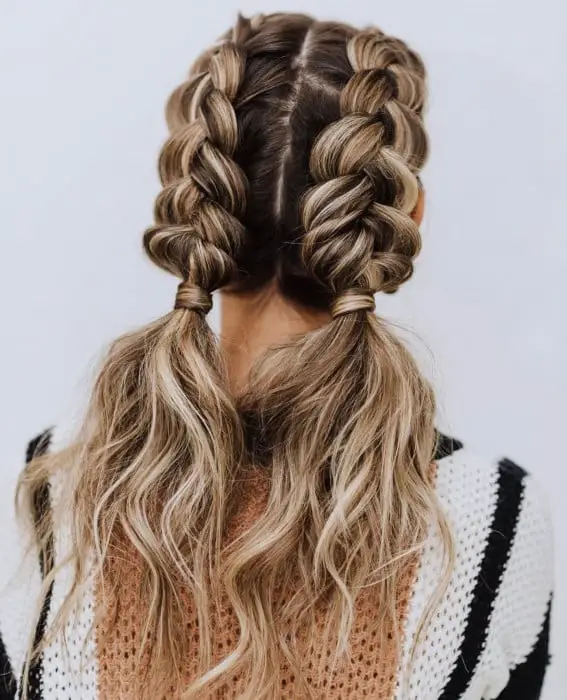
The chunky Dutch braid technique relies on taking larger sections than you think you need. Each pass pulls in a generous chunk of hair, which creates that wide, sculptural ridge visible from the back. These two braids start at the crown and are tied off just above the ends, leaving a few inches of loose wavy texture that softens the overall shape. Ask your stylist for: mid-back length chunky blonde Dutch braids.
Thick, wavy hair with a blonde balayage is the natural habitat for this style, because the lighter tones emphasize the braid’s raised structure. A texturizing spray applied to damp hair before braiding gives the strands enough grit to hold the shape without slipping, and the balayage grow-out is forgiving enough to skip a toning appointment for up to ten weeks. This is a back-view style that delivers on its promise: volume that stays put.
Mid-Back Dark Brown Wavy Dutch Braids
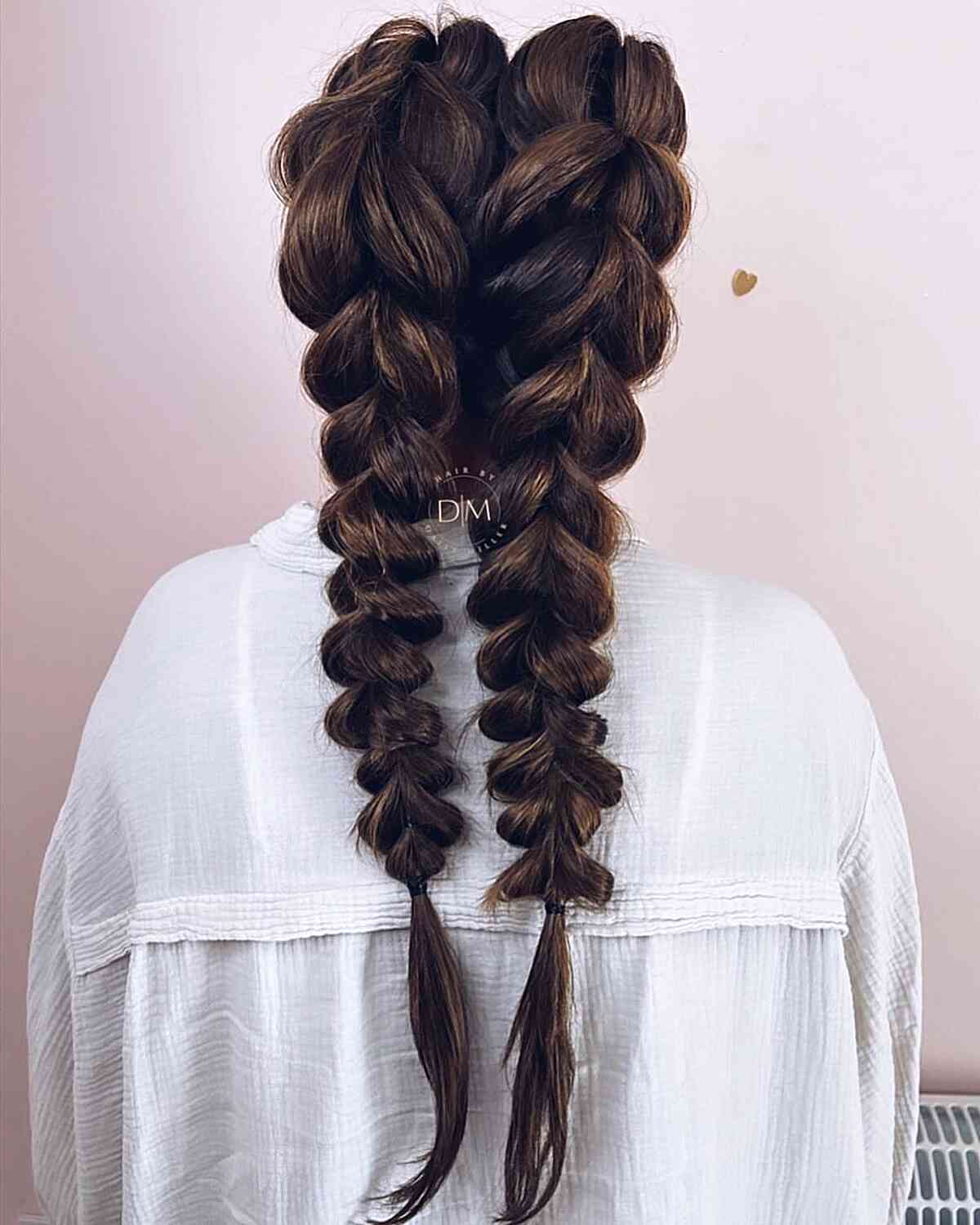
Can Dutch braids on dark, wavy hair look as dimensional as the blonde versions? Yes, but the trick is in the subtle lighter highlights woven through the dark brown base. They add enough contrast to keep the braid from reading as a single flat mass. These two braids start at the crown and extend down the back, with the wavy texture giving each section a soft, lived-in edge. Ask your stylist for: mid-back length dark brown wavy Dutch braids.
The reality of maintaining volume in thick, wavy hair is that it starts to settle within a few hours, especially if you skip product. A styling cream applied to damp hair before braiding controls the flyaways that naturally appear along the part and keeps the braid defined without stiffness. A trim every six to eight weeks prevents the ends from looking ragged, and the subtle highlights mean you can go eight to ten weeks between toning sessions.
Mid-Back Auburn Highlight Dutch Braid
A single Dutch braid on the left side, starting from a middle parting and ending mid-back, turns auburn hair with lighter highlights into a study in texture and depth. The side view shows how the braid’s raised sections reflect light differently depending on the highlight placement. Ask your stylist for: mid-back length single Dutch braid with auburn highlights.
Thick, wavy hair that reaches mid-back is the prerequisite, and the layers in the cut keep the braid from feeling heavy at the ends. A smoothing serum applied to the finished braid tames the halo of frizz that wavy hair naturally produces, and the auburn base with lighter highlights needs a toning appointment every six to eight weeks to keep the copper from turning brassy. This is a one-braid style that does not need a second to make its point.
Mid-Back Light Brown Highlight Pull-Through Braids, Wavy

Pull-through braids are the lazy person’s Dutch braid, and these mid-back versions in light brown with subtle highlights prove the point. The technique involves pulling sections of hair through loops, creating a voluminous, textured finish that looks far more complex than it is. The wavy texture and thick density give the braids serious body, while the middle part keeps the whole thing symmetrical. Ask your stylist for: mid-back length light brown pull-through braids with highlights.
This style works best on thick hair that has some natural wave, since the braids need bulk to hold their shape. A middle part and length below the chin help elongate a round face. Spritz a texturizing spray on each section before you pull through for extra grip. Plan on a trim every six to eight weeks to keep the ends from looking ragged.
Mid-Back Dark Brown Textured Pull-Through Braids, Wavy, Close-Up Take
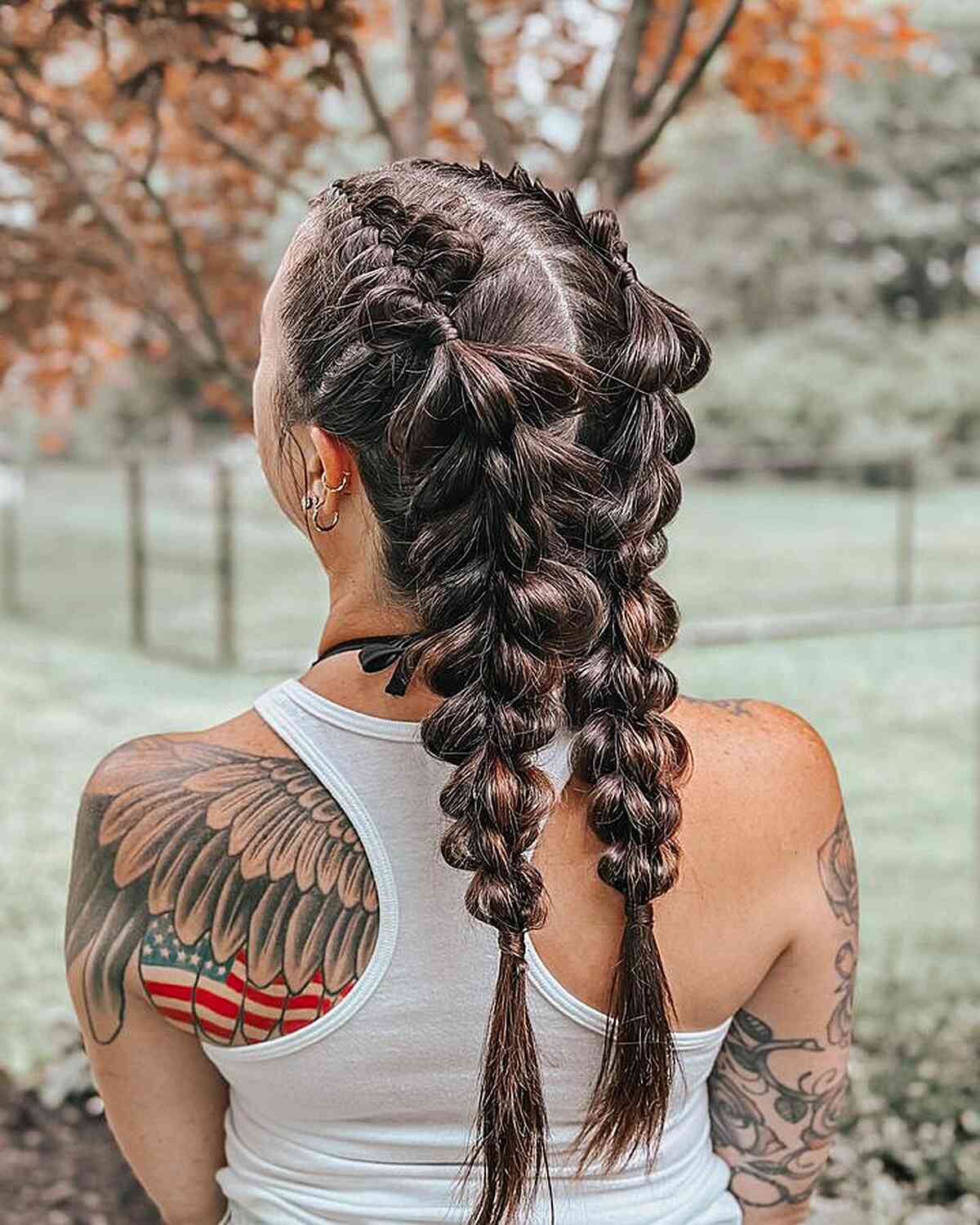
These dark brown pull-through braids look like a cousin of the classic Dutch braid, but they trade clean lines for serious volume. The wavy, thick texture is the whole point, giving each braid a chunky, almost rope-like appearance that stands out from a mile away. The middle part and mid-back length keep the look grounded. Ask your stylist for: mid-back length dark brown textured pull-through braids.
The honest trade-off is that this level of texture does not hold together on its own. Fine or slippery hair will need a heavy hand with texturizing spray or even a salt spray before braiding, and the braids can loosen noticeably by the end of the day. Oval and heart-shaped faces get the most balanced proportions from the volume at the sides. Skip this one if you prefer a braid that stays tidy from morning to night.
Mid-Back Blonde Textured Pull-Through Braids, Everyday Version

Large, textured pull-through braids in blonde with highlights make a statement. The thick, wavy texture gives each braid a soft, airy quality that works for a summer wedding or a weekend brunch where you want to look like you made an effort. The middle part and mid-back length keep the proportions balanced. Ask your stylist for: mid-back length blonde textured pull-through braids. Adding a volumizing spray to the roots before braiding lifts the crown, and a trim every six to eight weeks keeps the shape fresh.
Mid-Back Dark Brown Fringe Pull-Through Braids, Everyday Version
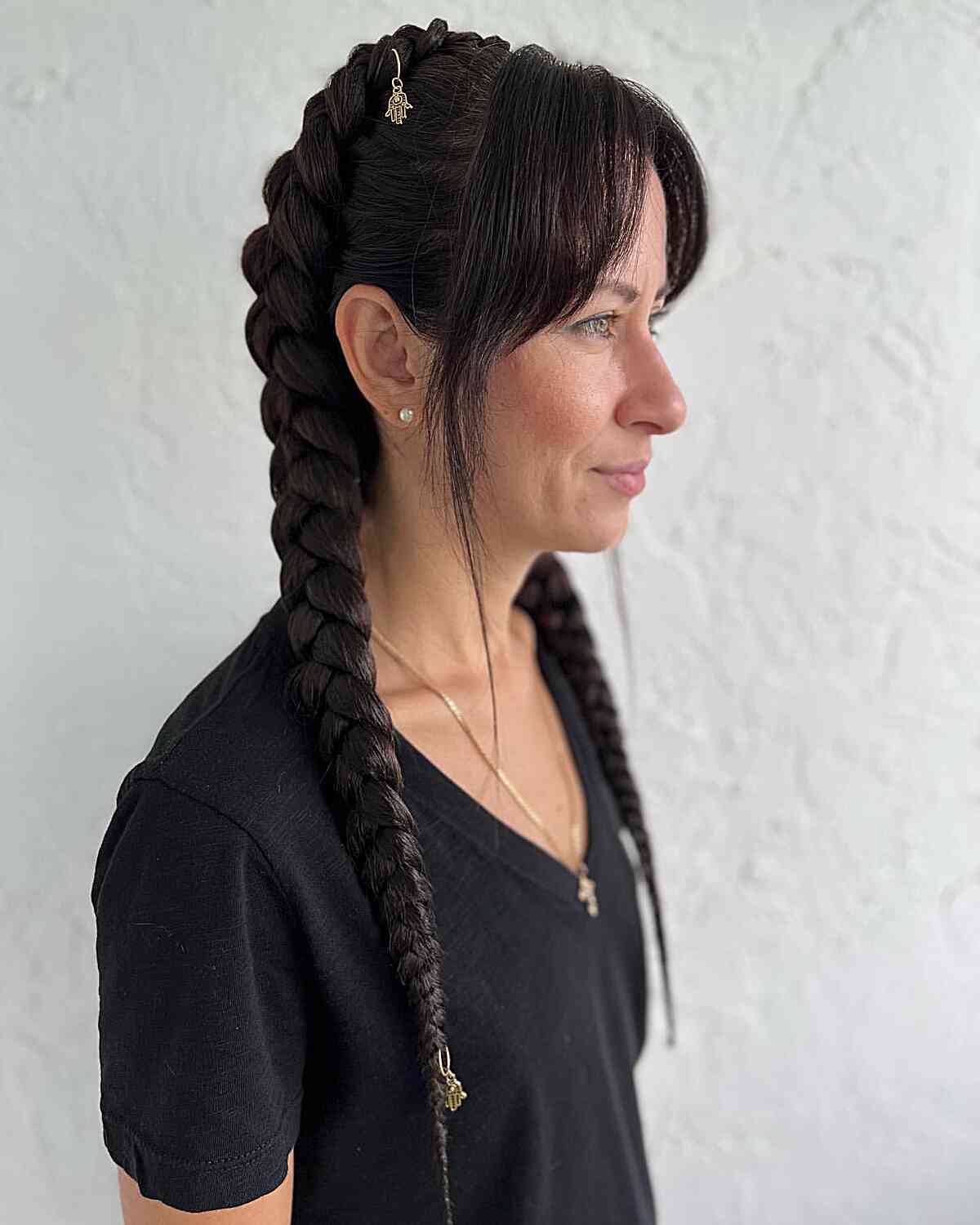
The fringe is the part that needs the most attention. A smoothing serum on the bangs keeps them from separating into greasy strands, and a quick blast of heat from a round brush in the morning resets the shape. Round and square faces benefit from the fringe’s ability to shorten the forehead visually. Trim both the fringe and the braid ends every six to eight weeks to keep the proportions sharp.
Mid-Back Dark Brown Multi-Highlight Dutch Braids, Layers
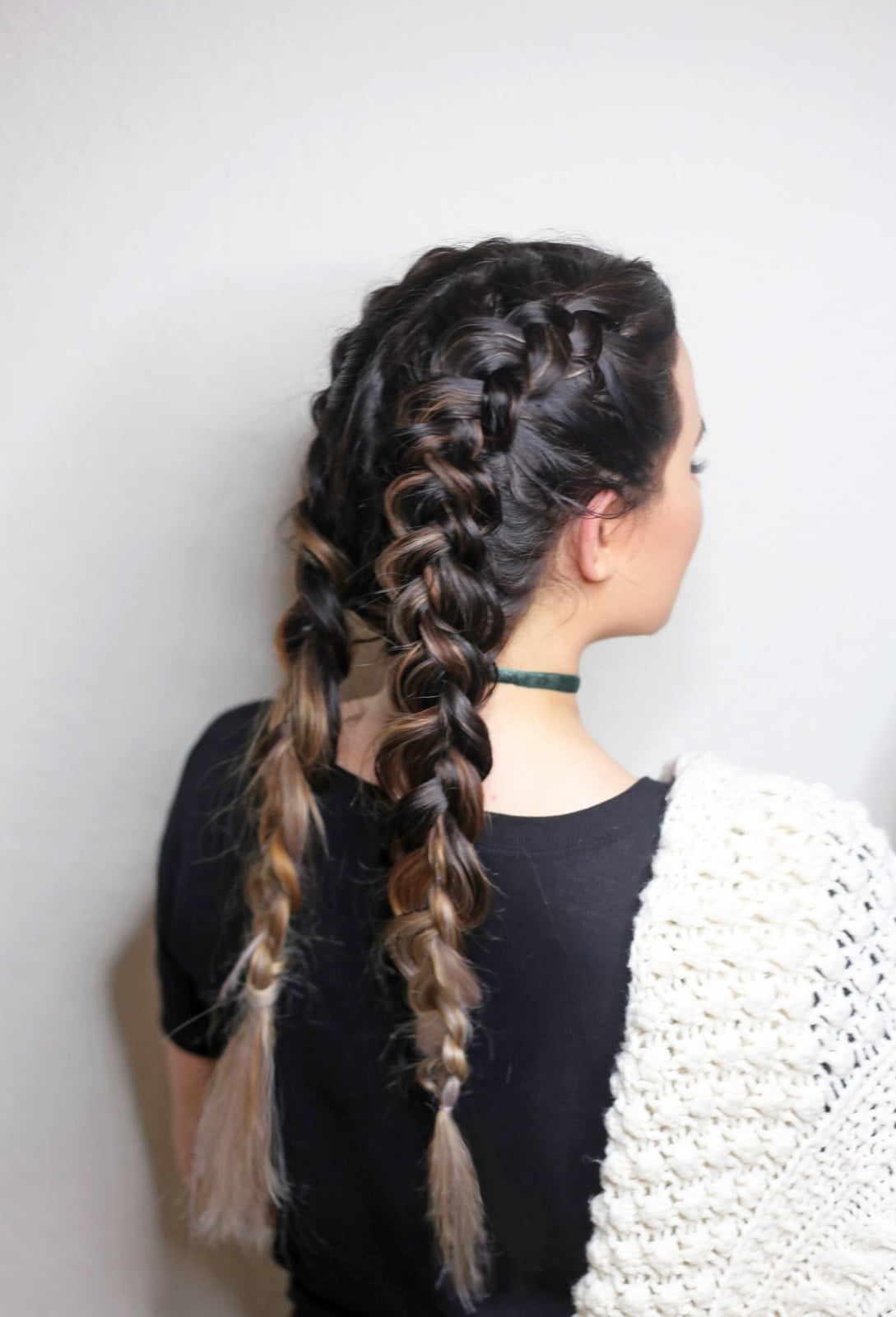
Dutch braids are the inverted cousin of the French braid, sitting on top of the hair, and these mid-back versions in dark brown with blonde and auburn highlights show exactly why the extra effort is worth it. The raised braid structure separates every highlight, creating a dimensional effect that a single-color braid simply cannot match. The wavy, thick texture and layers add movement at the ends. Ask your stylist for: mid-back length dark brown Dutch braids with blonde and auburn highlights.
The comparison here is with a classic three-strand braid, which flattens highlights into a single stripe. Dutch braids separate the color into visible sections, making each highlight a deliberate accent. A color-depositing conditioner in a warm tone keeps the auburn pieces from fading too quickly. Oval and heart-shaped faces suit the volume at the crown best. A trim every six to eight weeks keeps the layered ends from looking stringy.
Mid-Back Blonde Highlight Simple Pigtail Braids

Want a braid style that won’t eat half your morning? This mid-back set starts with a clean middle part and a few generous sections. Ask your stylist for: Mid-back length simple blonde pigtail braids with highlights. Thick, wavy hair with a bit of texture holds this shape best, and a flat brush on the sections before you braid keeps the highlights visible. A texturizing spray on each half before braiding gives the finished look staying power that lasts through the workday.
Mid-Back Platinum Blonde Braids With Root Shadow
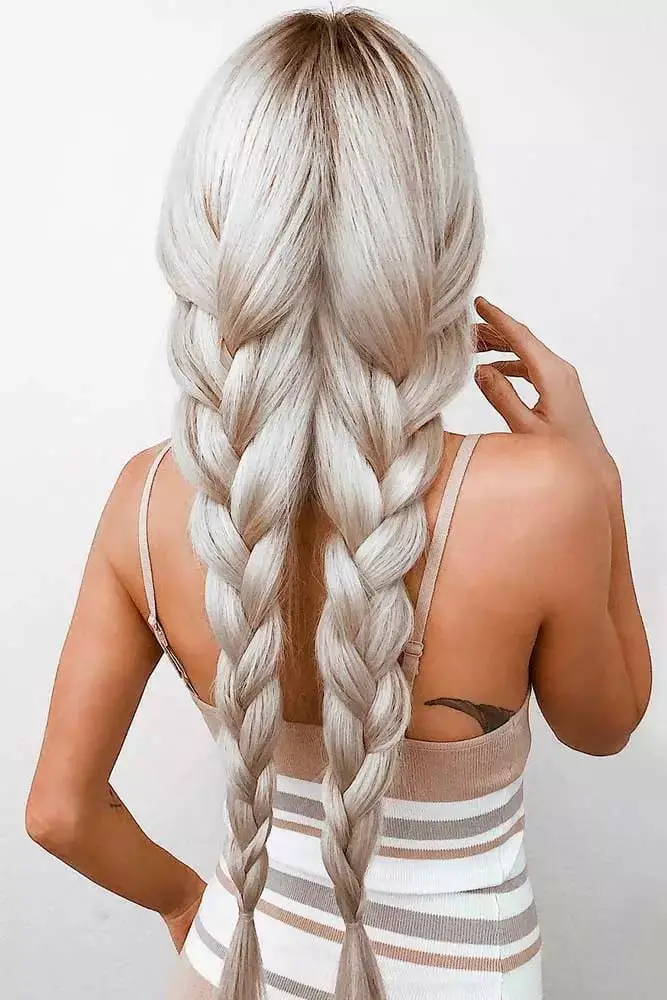
Platinum blonde at this length needs a root shadow to keep the grow-out line from announcing itself at week three. Two thick, straight braids falling to mid-back demand enough density to fill each section, so coarse or high-density textures work best. Ask your colorist for: Mid-back length platinum blonde braids with root shadow. A purple shampoo once a week prevents the brass that shows up faster in braided sections, and a trim every eight weeks keeps the ends from splitting where the braid rubs against clothing.
The root shadow buys you a solid six weeks between toning appointments. That is the point of it: you get the drama of pale blonde without the salon schedule of a full platinum head. The straight texture in the photo helps each braid lie flat and clean, which is exactly what you want when the color is the star.
Mid-Back Ash Blonde Thick Dutch Braids
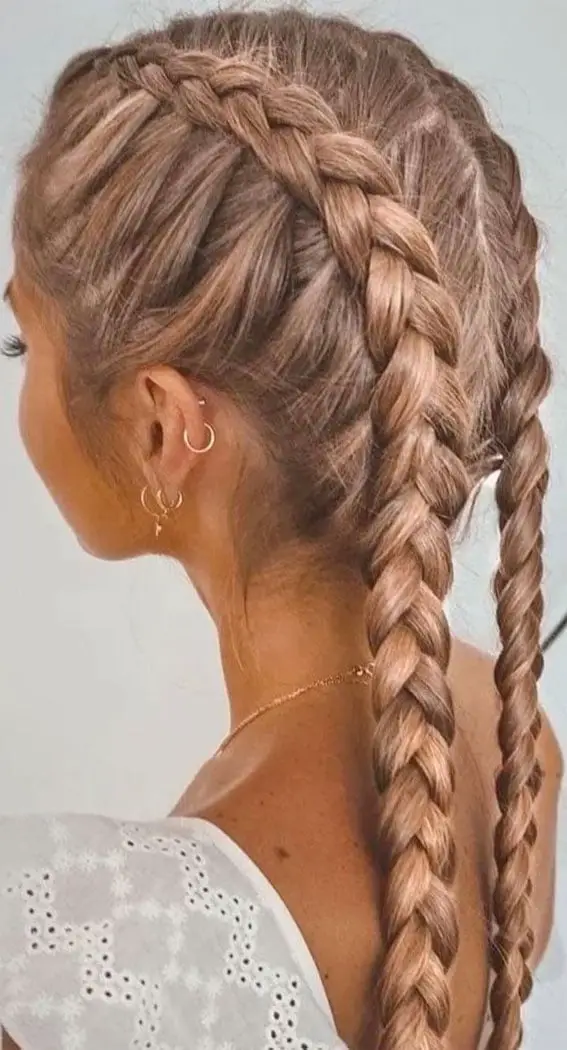
A Dutch braid is a reverse French braid: you cross the sections under the middle strand instead of over it, which makes the braid pop up from the scalp. This side view shows how the technique creates visible ridges along the part line. Ask your stylist for: Mid-back length ash blonde thick Dutch braids. The wavy texture gives the braid body without needing to back-comb each section. Thick hair with some natural wave grips the under-cross motion well, and a clean middle part keeps the two braids symmetrical from the crown to the ends.
For oval and heart-shaped faces the lifted ridge at the hairline balances a wider forehead or a pointed chin. The ash blonde base with lighter highlights creates dimension because each under-cross reflects light differently. No texturizing spray required if your hair holds a bend; a dry shampoo at the roots the day before adds enough grip for the braid to stay tight for hours.
Mid-Back Ash Blonde Wavy Pigtail Braids
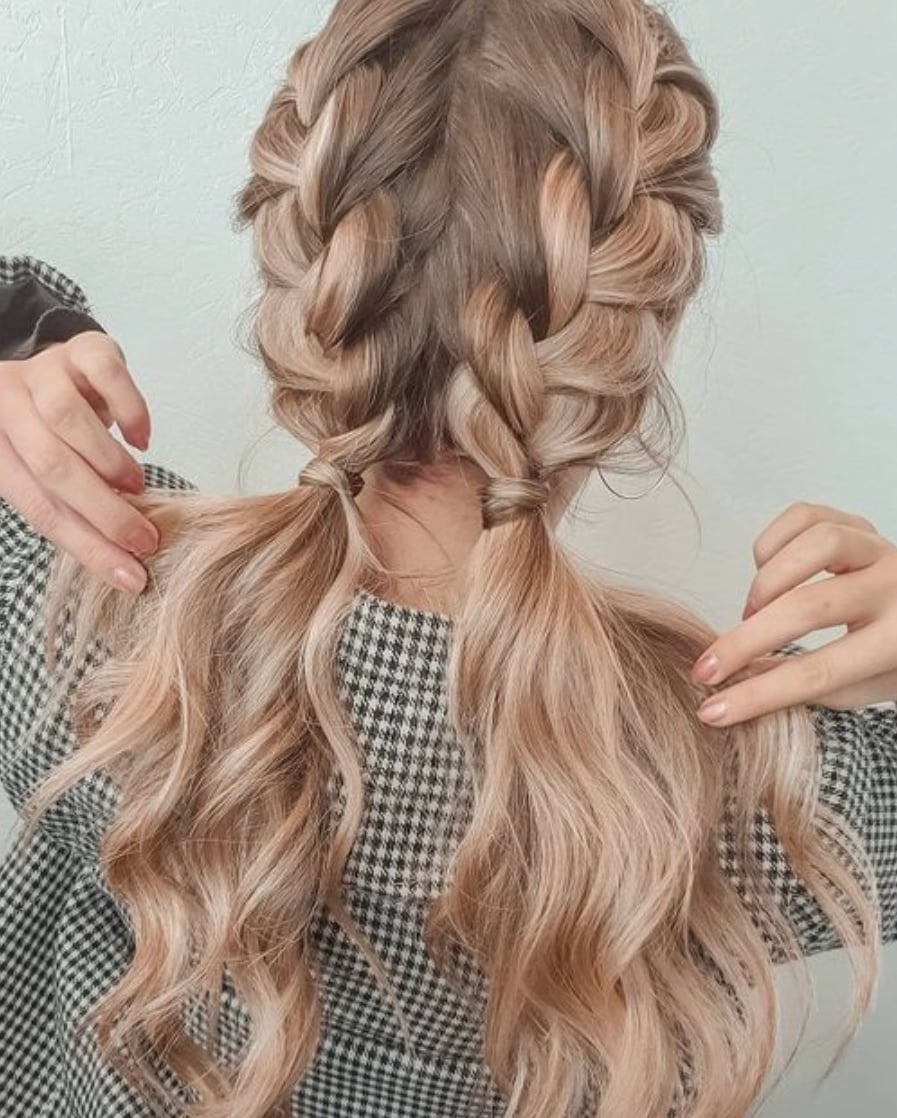
Who can pull off thick, wavy pigtail braids that land at mid-back? Anyone with enough density to fill a three-strand braid without it looking like a string. Ask your stylist for: Mid-back length ash blonde wavy pigtail braids. The subtle highlights in the photo add dimension without creating a stripe effect, which matters when the braid twists and hides color sections. Oval and long faces benefit from the horizontal width the braids create at the jawline. Thick wavy texture holds the braid shape on its own, no product needed beyond a light pomade on the ends to seal the waves.
Mid-Back Blonde Highlights Fishtail Braids Side View
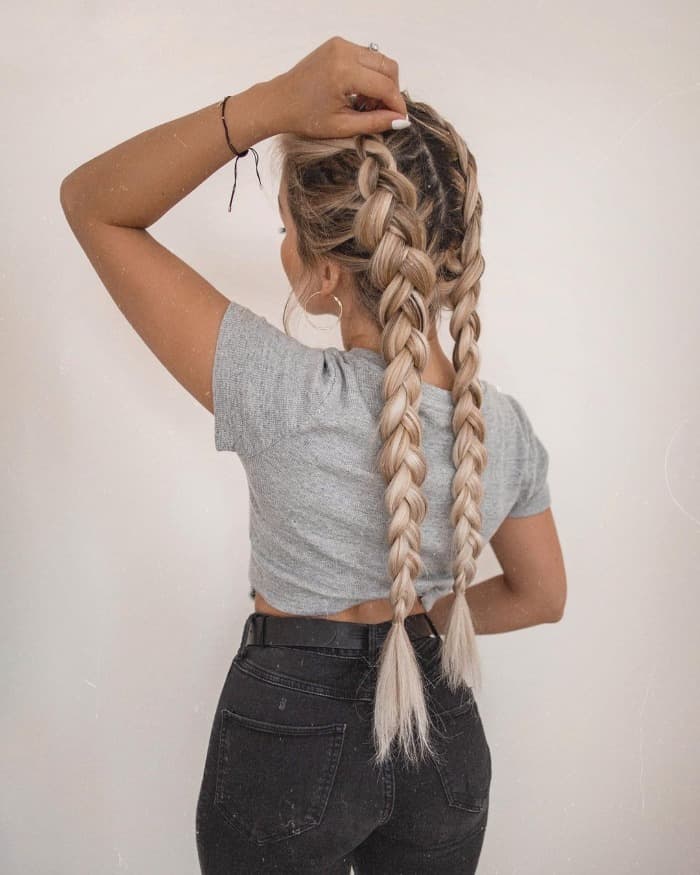
A fishtail braid splits the hair into two sections instead of three, then pulls a thin strand from the outside of one section and crosses it to the inside of the other. This side view reveals how the alternating strands create a scalloped edge that shows every highlight. Ask your stylist for: Mid-back length blonde fishtail braids with highlights. Thick, wavy hair at mid-back gives you enough length to see the pattern repeat at least six times per braid. The technique works best on hair that has some texture, because silky straight strands slide out of the two-section grip. A light hold spray on the finished braid keeps the edges crisp without stiffening the whole thing.
Oval and long faces read well with the braids falling straight down the back; the vertical line elongates the face without adding width at the cheeks. The blonde highlights in the photo catch the light at each cross-point, which is the whole visual payoff of a fishtail over a standard three-strand braid.
Mid-Back Blonde Balayage Thick Braids, Everyday Version

Two thick braids from a middle part keep blonde balayage from tangling into a single knot by midday. The technique uses each section of the balayage as a built-in highlight stripe, so the color appears deliberate. Ask your stylist for mid-back length blonde balayage thick braids. The braids hold well on straight, thick hair that reaches mid-back, and the blunt bangs frame the face without slipping out.
A texturizing spray at the roots gives the braids enough grip to last through a full workday. Between washes, a dry shampoo at the part line refreshes the hold without re-braiding. A trim every six to eight weeks keeps the ends blunt so the braids finish cleanly without fraying. The balayage itself needs a toning appointment every ten to twelve weeks to keep the blonde from warming toward brass.
Mid-Back Dark Brown Textured Pull-Through Braids

Pull-through braids look like a complex weave but actually trade precision for volume. Where a classic three-strand braid lies flat against the head, the pull-through method uses small elastic bands and a finger hook to create a chunky, scalloped silhouette that looks thick from every angle. Ask your stylist for mid-back length dark brown textured pull-through braids. The straight fringe and middle part keep the look grounded. The drawback is removal: each elastic has to be cut out carefully, and the process takes about fifteen minutes if you have all the bands in. Straight, thick hair at mid-back length works best; fine hair tends to show the elastic gaps.
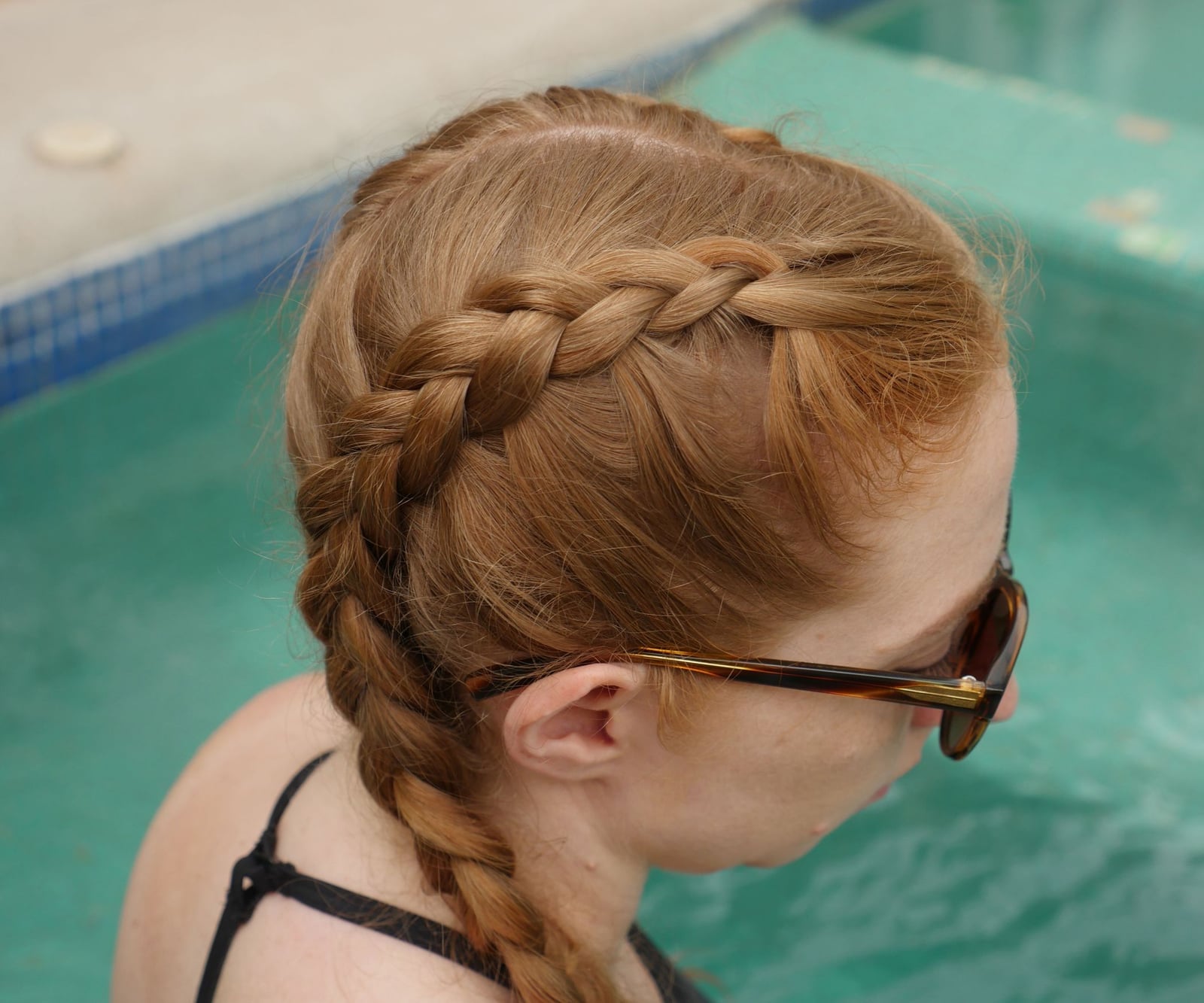
Pigtails Trend Revival Simple Braids
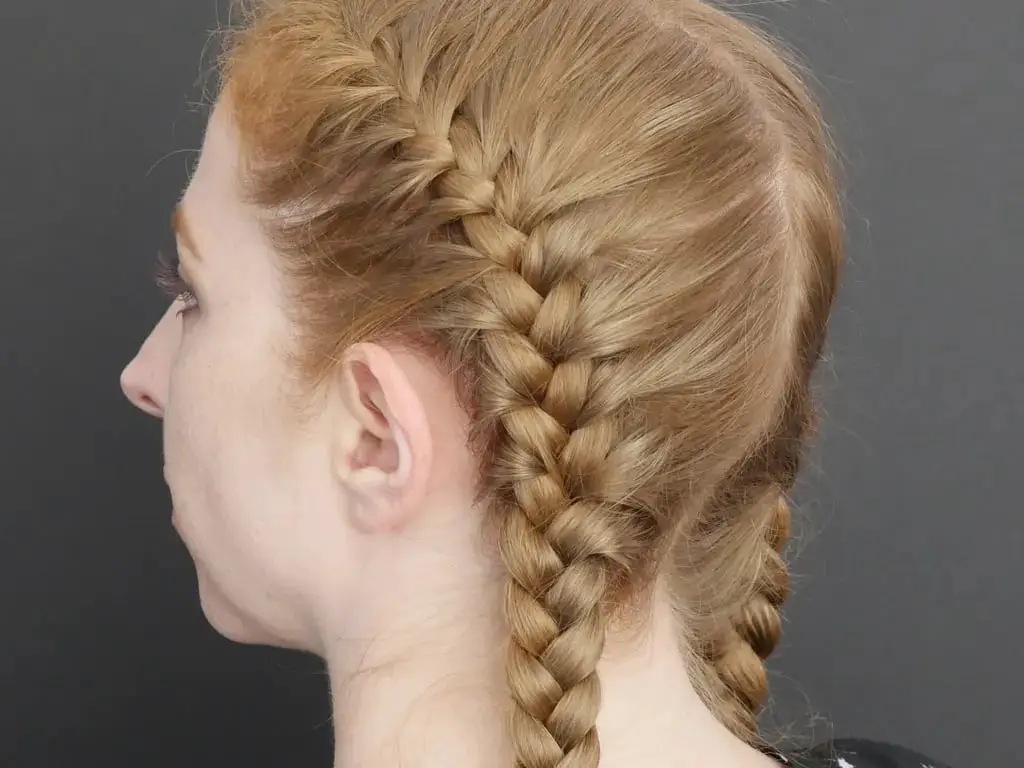
Why did pigtails fall off the radar, and are they worth bringing back? Tight French braids in strawberry blonde hair offer the same nostalgic shape without reading as juvenile. Ask your stylist for simple pigtail braids. The key is the middle part and the tension: braid close to the scalp at the crown, then loosen slightly as you work down the length. Straight, thick hair at mid-back holds the braid shape all day without re-pinning. Compared to a Dutch braid, which sits raised off the head, a French braid lies flat and stays cooler against the neck. No bangs means the part line stays crisp and the braids frame the face evenly on both sides.
Final Thoughts
For fine hair, pull-through or Dutch braids add the volume a classic three-strand cannot. For thick hair, a tight fishtail or a sleek Dutch braid keeps everything contained. Colored braids need a tone refresh every six weeks and a purple shampoo once a week to keep brass at bay.
- Trim split ends every 6-8 weeks to maintain braid health.
- For colored hair, use color-safe shampoo and conditioner to preserve vibrancy.
- Apply a heat protectant spray before any heat styling.
- Wash hair 1-2 times a week to avoid over-drying, especially with intricate braids.
Embrace the simplicity and charm of pigtail braids for an instantly styled look.