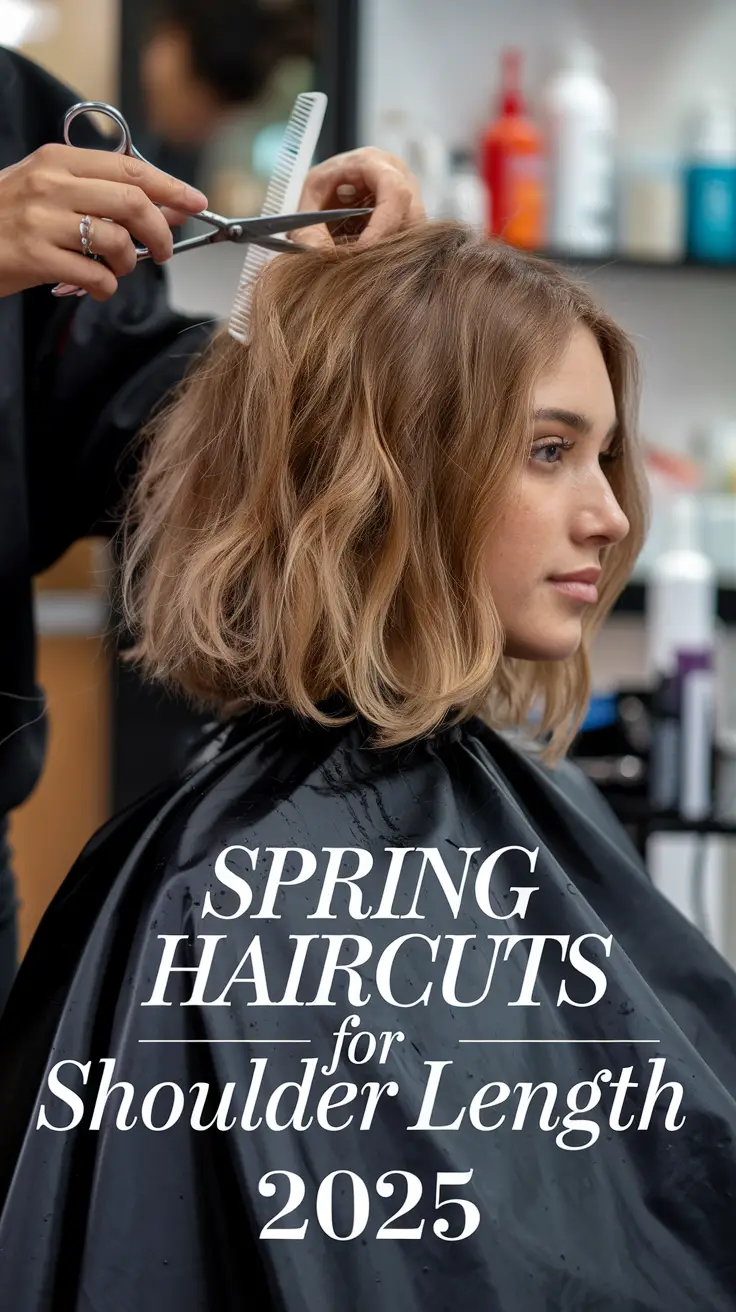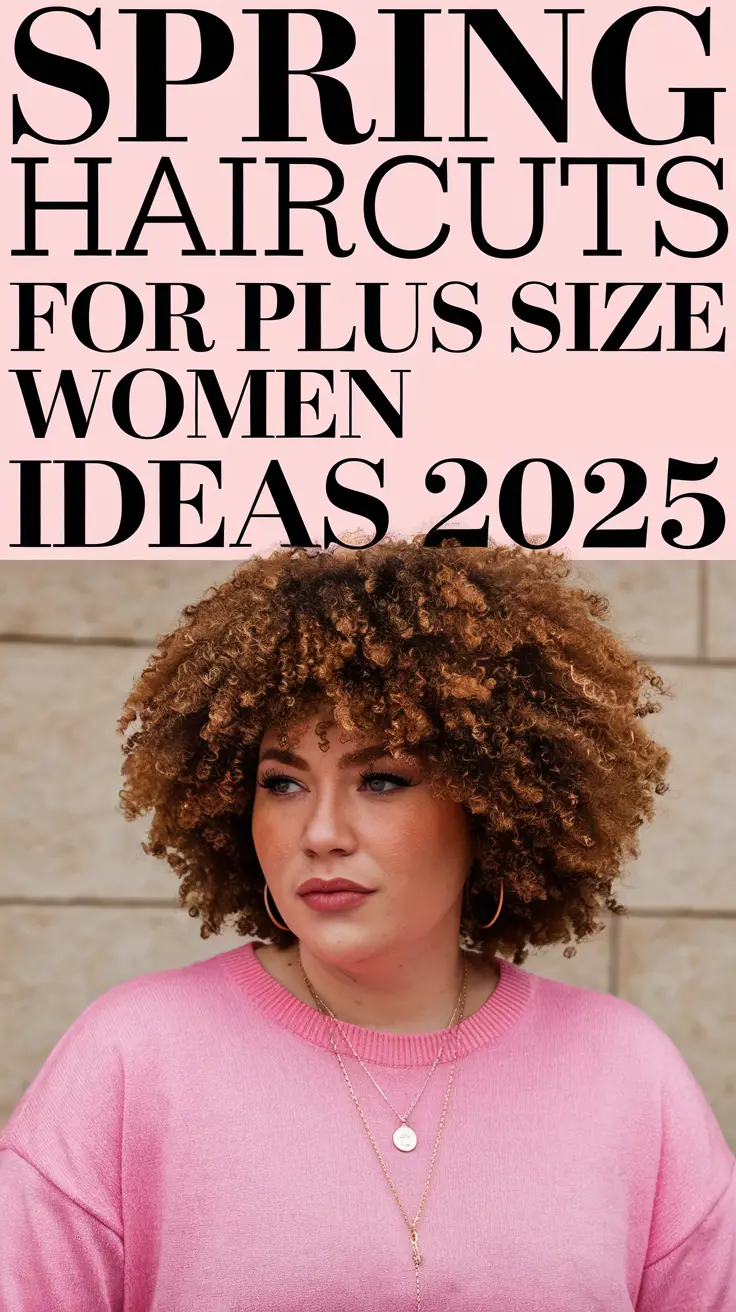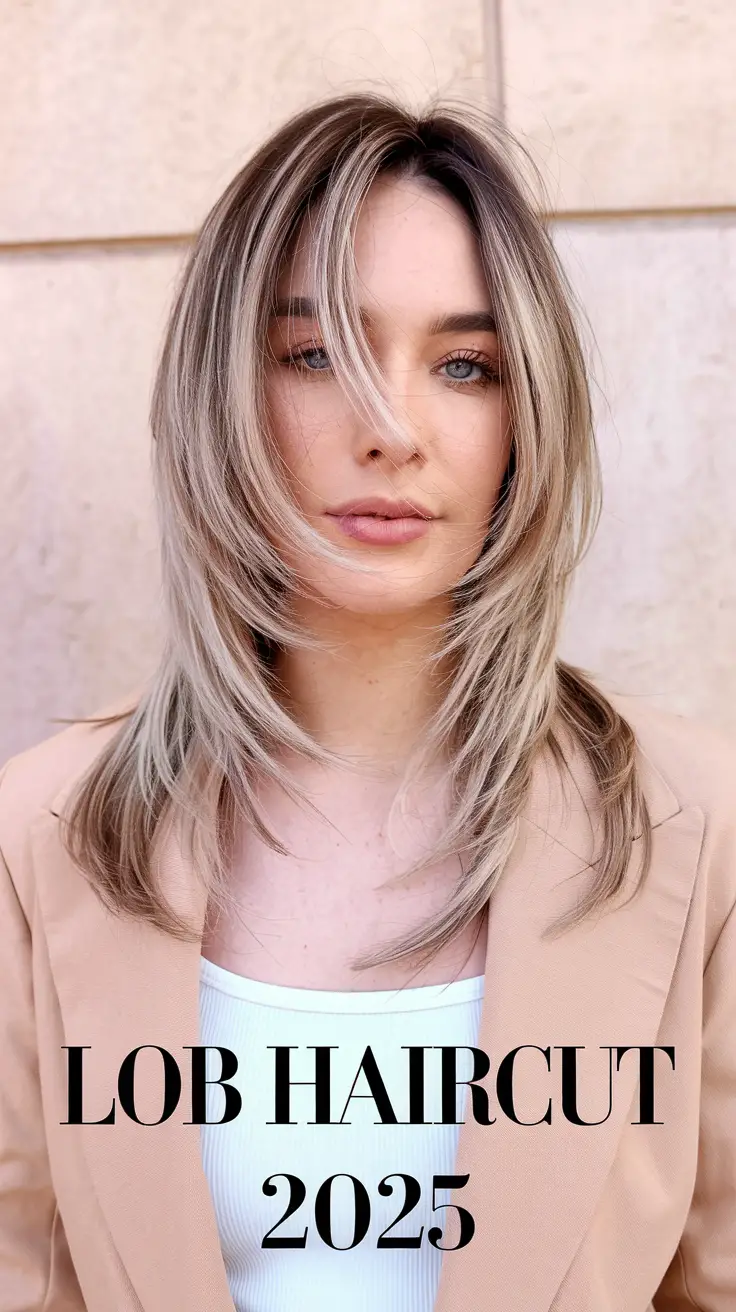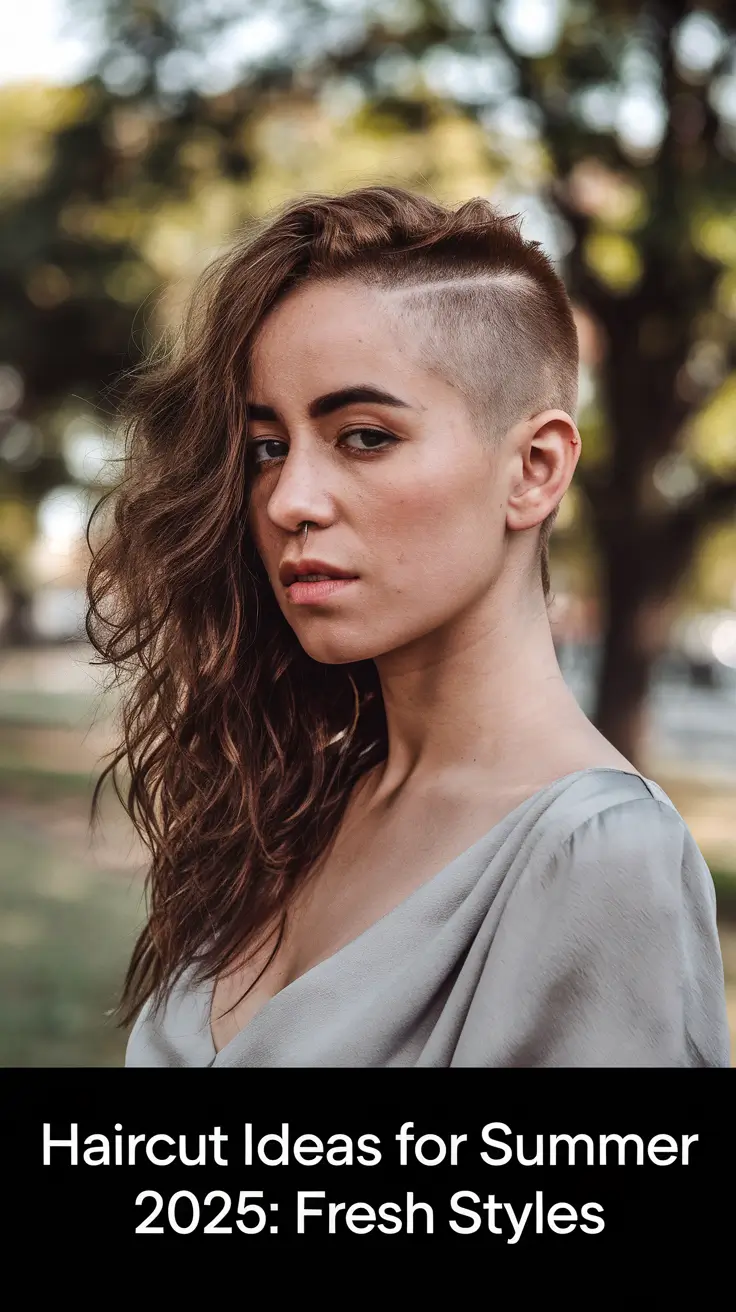

The Butterfly Shag is everywhere—TikTok stylists are cutting them, Hailee Steinfeld’s wearing one, and Sabrina Carpenter basically made the voluminous curtain fringe a personality trait. But it’s not just the one cut anymore. The Birkin Shag, the Octopus Cut, the Curly Shag, the Pixie Shag—suddenly there’s a layered, textured option for literally every hair type and face shape. Something genuinely shifted in how we’re thinking about shags in 2026.
Modern summer shag haircuts 2026 range from the effortless Birkin (five-minute air dry, full blunt fringe) to the technically demanding Octopus Cut (rounded crown, thin tentacle layers) to cuts specifically engineered for curls. Whether you’ve got thick hair that needs internal thinning, fine hair that demands a blunt fringe, or coils that deserve a dry cut, there’s a shag built for your actual hair—not some Pinterest fantasy that requires a wind machine and a personal stylist.
I spent three years watching clients ask for “something with movement” and leave disappointed. Then I realized the problem wasn’t the cut—it was that everyone was getting the same generic layers. The shag’s comeback isn’t about nostalgia. It’s about precision.
The Razored Shag with Apricot Crush
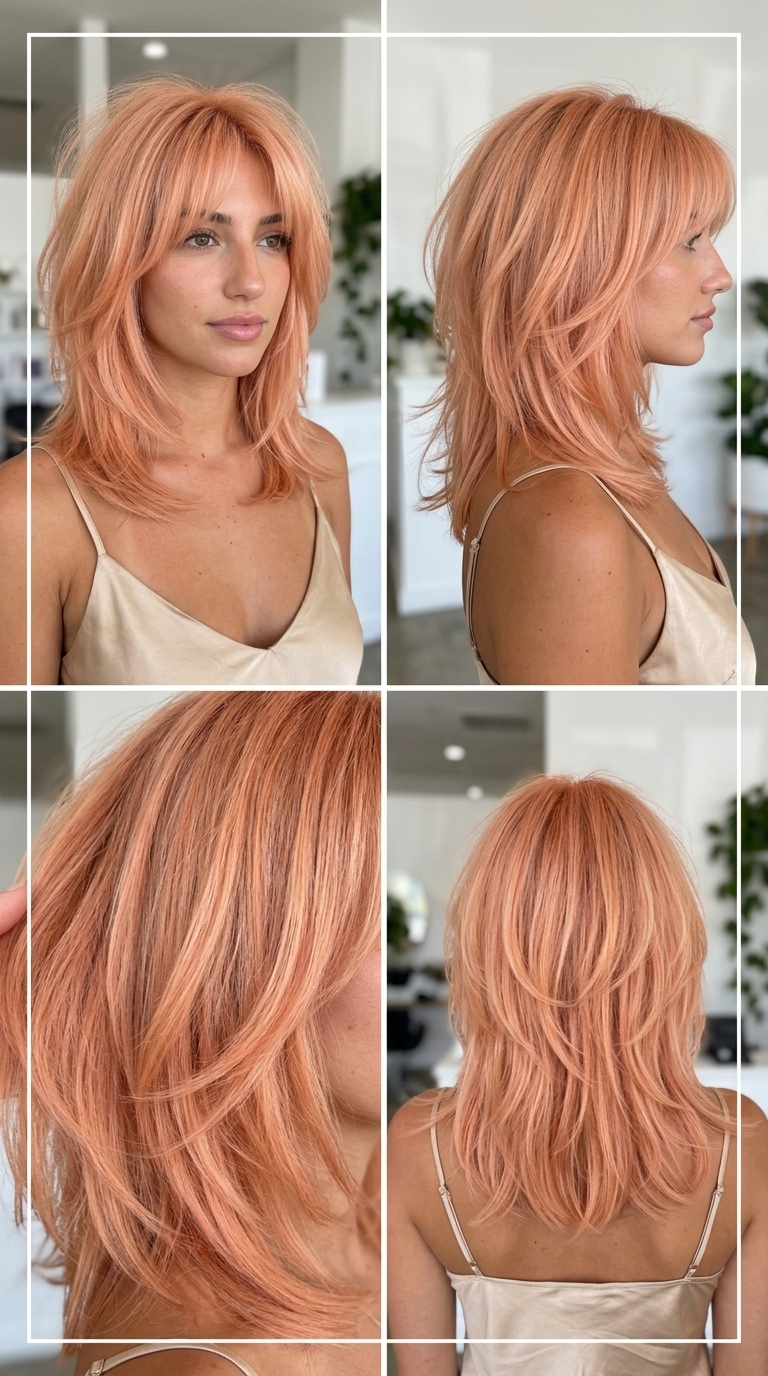
Razored ends are what separate a shag from just… choppy hair. This cut starts with a heavy crown—lots of short, choppy layers stacked right at the top—and tapers into longer pieces that feather out dramatically. The perimeter gets the point-cutting treatment (yes, the messy one), creating that signature choppy, piece-y texture that actually moves instead of just sitting there looking confused. Heavily layered crown creates abundant volume and a rounded shape, defining the shag’s signature lift. Pair it with apricot crush hair color—warm, honeyed, with just enough depth to hide regrowth—and suddenly you’ve got a cut that feels both editorial and wearable.
The real win? Razored ends maintained soft, feathery texture for 4 weeks without needing a trim. That’s unusual for a shag this short. The downside is real though: heavy crown layering requires daily styling commitment for optimal volume and shape. If you’re not willing to blow-dry and shape the crown with your hands most mornings, this isn’t your cut. But if you want a shag that actually photographs well and moves when you turn your head, finally, a shag that moves.
The Invisible Layer Shag
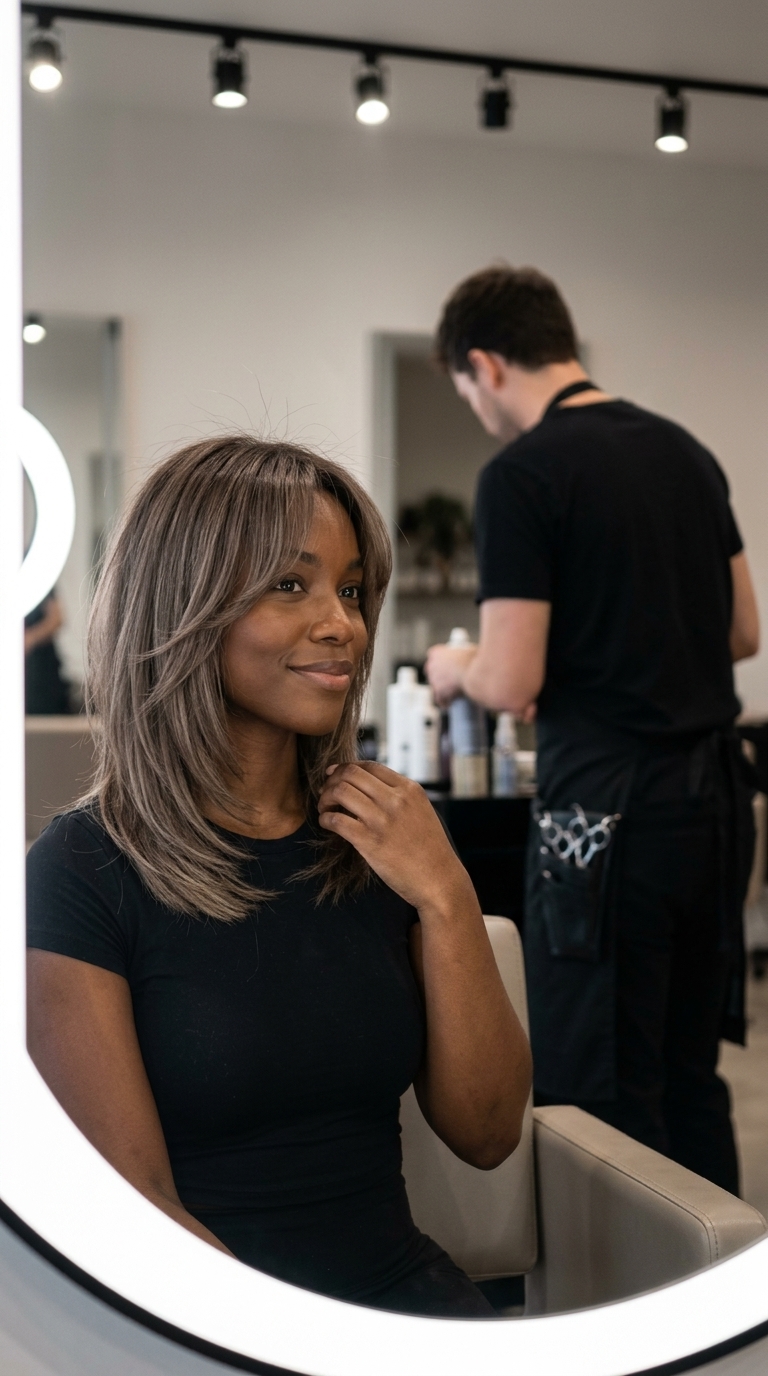
Sometimes the most powerful cuts are the ones nobody notices. This shag starts with an almost shoulder-length base—conservative, blunt-ish perimeter—but the entire interior is feathered with invisible layers. Point-cutting diffuses the perimeter, preventing harsh lines and allowing for a soft, natural grow-out. The layers are cut so subtly they don’t read as “layers” at first glance; they just make your hair look thicker, bouncier, and naturally textured. This is the anti-shag shag—all the movement and volume, none of the statement.
Invisible layers provided natural volume for 3 weeks before needing a refresh. The catch: not for very thick hair—invisible layers won’t provide enough bulk reduction, which means you’ll just look fuller without the actual definition. But for fine to medium hair that needs dimension without drama, this works. The grow-out plan is nearly effortless too, which is all my fine hair can handle. The grow-out plan sold me.
The Modern Mullet Shag
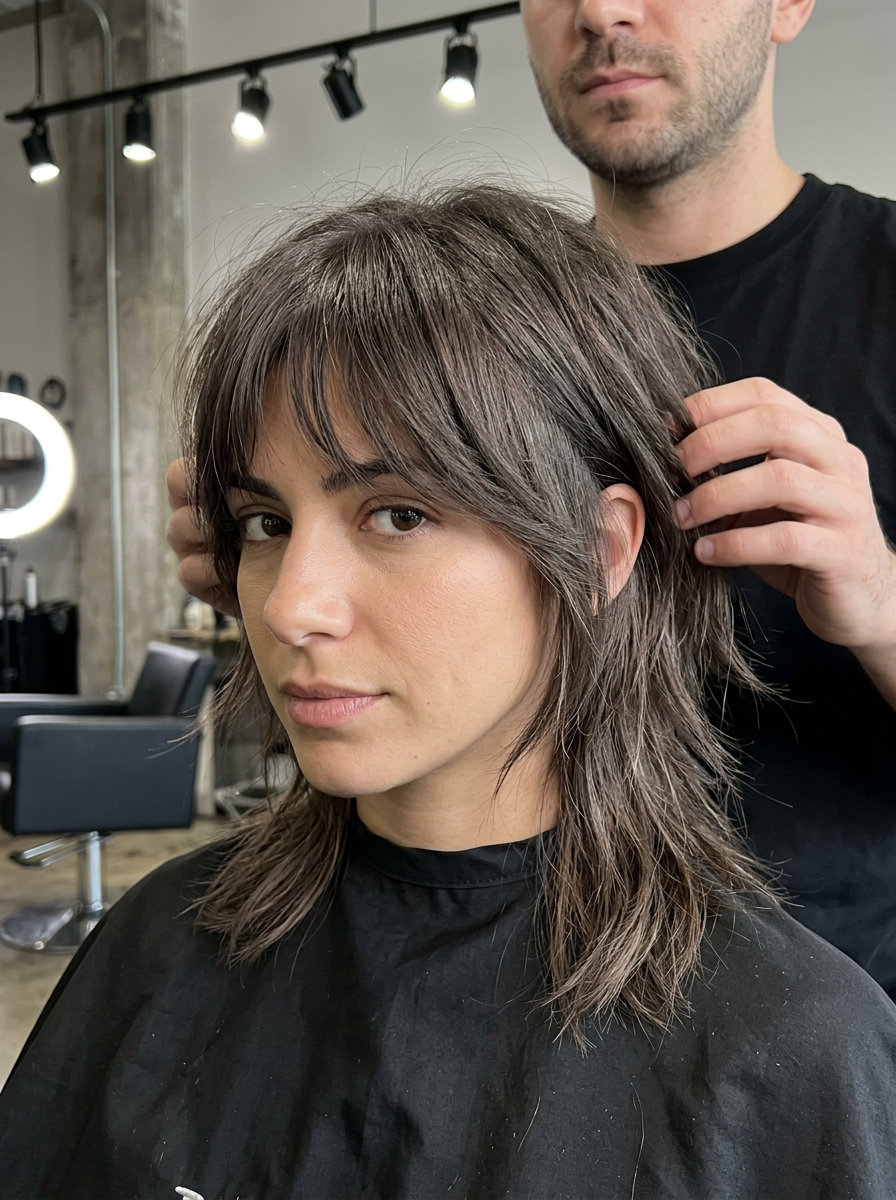
The modern mullet isn’t your dad’s haircut. This version layers aggressively through a short crown (textured, point-cut, intentionally choppy) and extends into longer pieces at the nape—but not dramatically. It reads as a shag first, a mullet second. A brow-skimming fringe blends into the crown layers, creating that editorial edge. Heavily point-cut layers through the crown create texture and lift, defining the modern mullet shape. The fringe is heavy enough to require actual styling but light enough that it’s not costume-y. This is the cut that turns heads—probably worth the consultation at least.
Brow-skimming fringe stayed out of eyes for 3 weeks before needing a trim. Avoid if you prefer low-maintenance—this fringe needs daily styling commitment. The nape length is longer, so if you hate hair touching your neck, adjust expectations upward. But if you want a cut that signals you actually care about your appearance, this does it faster than most.
The Point-Cut Feather Shag
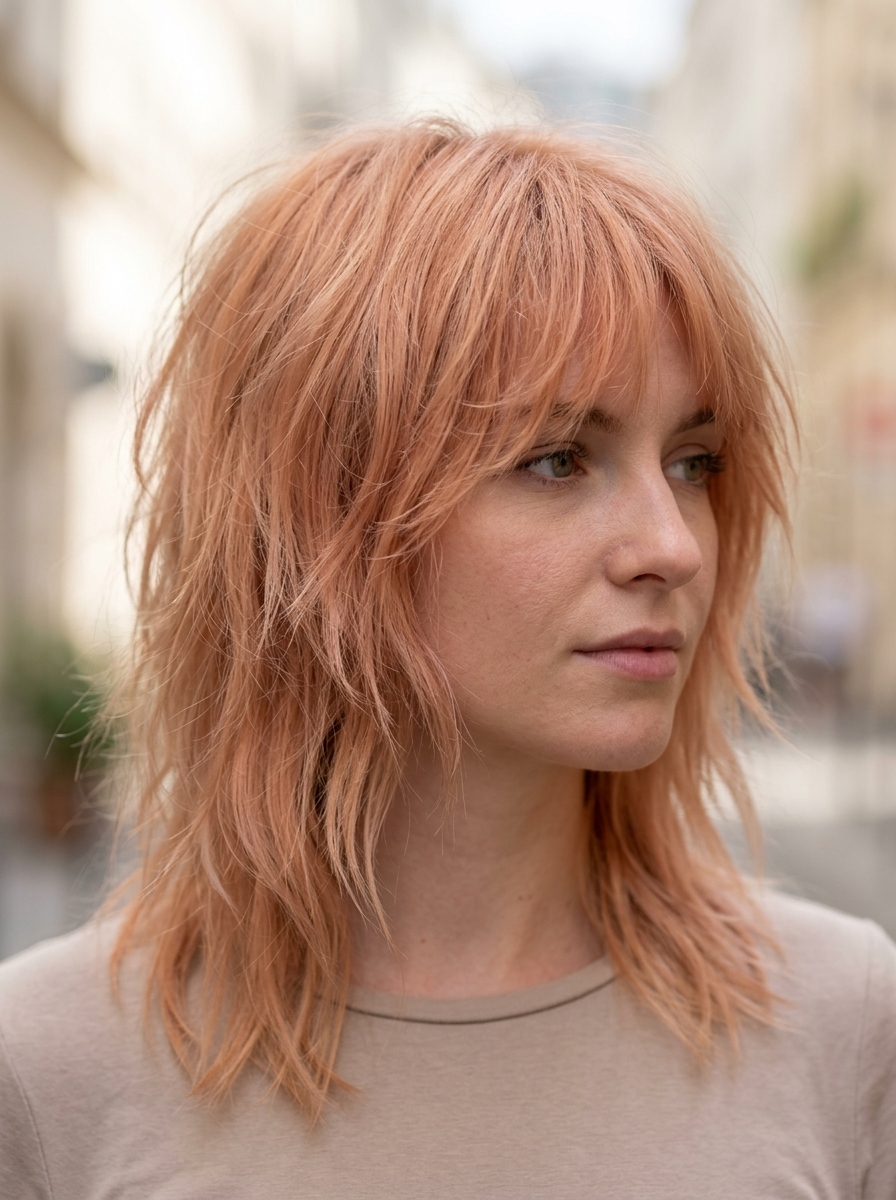
This shag is all movement. Extensive point-cutting throughout creates a feathered, piece-y texture that feels airy and delicate rather than heavy or structured. The crown is layered for volume but stays relatively long—collarbone or slightly shorter. Each layer is heavily point-cut so the ends taper into thin, feathery pieces rather than blunt chunks. Extensive point-cutting throughout mid-lengths and ends creates a light, airy texture and delicate movement. The color is usually something soft and warm—strawberry blonde works beautifully—because the cut itself is the statement. Best suited for fine to medium hair textures that desire volume and a soft, ethereal look.
Extensive point-cutting kept ends light and airy for 5 weeks without looking heavy. Skip if you air-dry only—this cut needs blow-drying for its airy texture to actually reveal itself. Air-dry it and it just looks like regular layers. But style it intentionally and you get the lived-in, just-left-the-beach texture that takes actual work to achieve. Weave a light texturizing paste through damp hair before blow-drying, focusing on mid-lengths and ends to enhance the feathery effect (my stylist nailed it). Strawberry blonde shag haircut color pairs perfectly because the softness of the tone matches the softness of the cut. The softest shag ever.
The Razored Shag with Apricot Crush
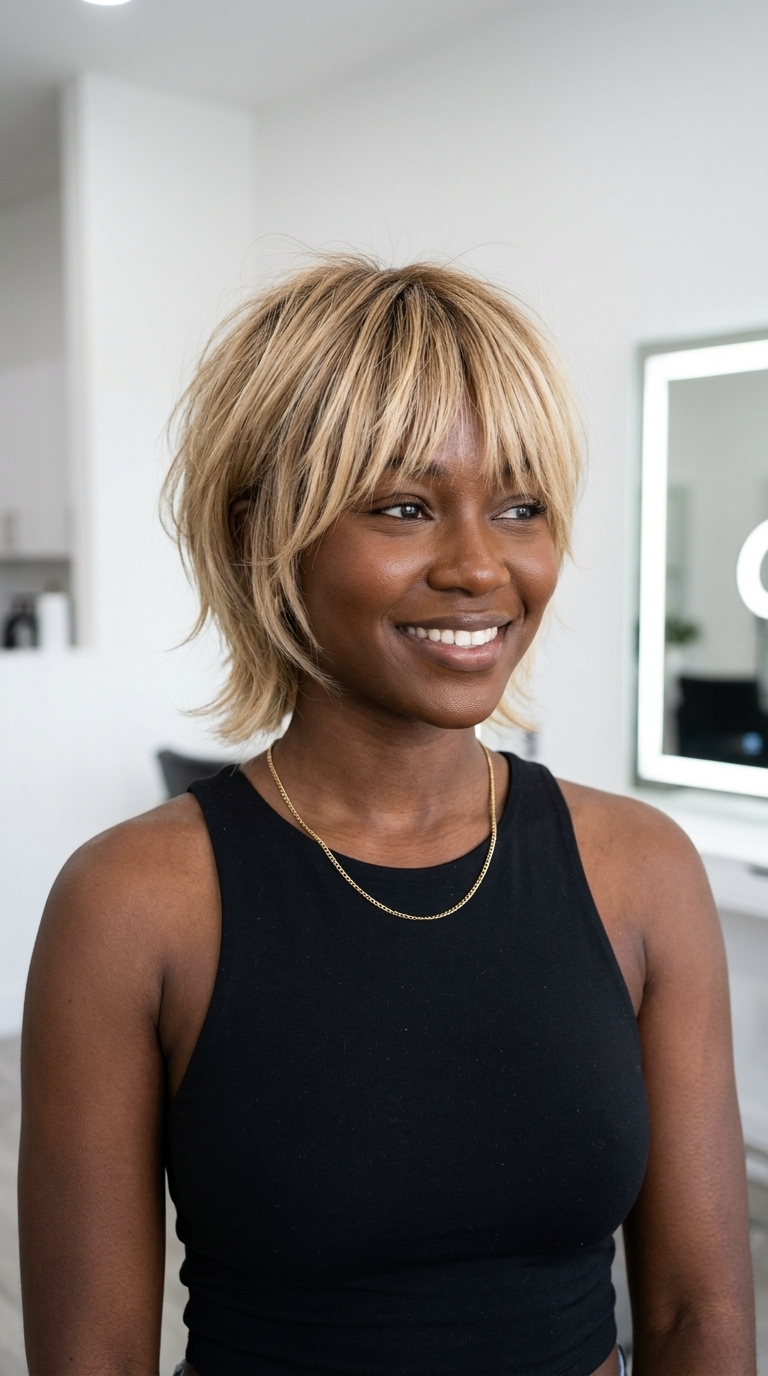
This shag strips down to its essential DNA: movement and texture without the weight. Razored layers maintain that piece-y, deconstructed vibe that makes summer hair feel intentional rather than accidental. The apricot crush color—warm, slightly muted, nowhere near neon—sits somewhere between peachy and rose gold, which means it doesn’t demand the platinum-level maintenance commitment but still reads as a real color choice. Razored layers maintained texture for 4 weeks with minimal product, air-drying quickly in that way that makes you feel like you have your life together even when you absolutely don’t.
Point-cut fringe creates a wispy, ‘piecey’ effect, softening the face and blending seamlessly into the overall shape. Not for very thick hair; it might struggle to achieve the desired lightness and movement, which is what a shag needs. Fine to medium density hair with straight to wavy textures will thrive here—the cut does the work, not your styling arsenal. One texture spray or sea salt product and you’re done. Finally, a shag that moves.
The Invisible Layer Shag
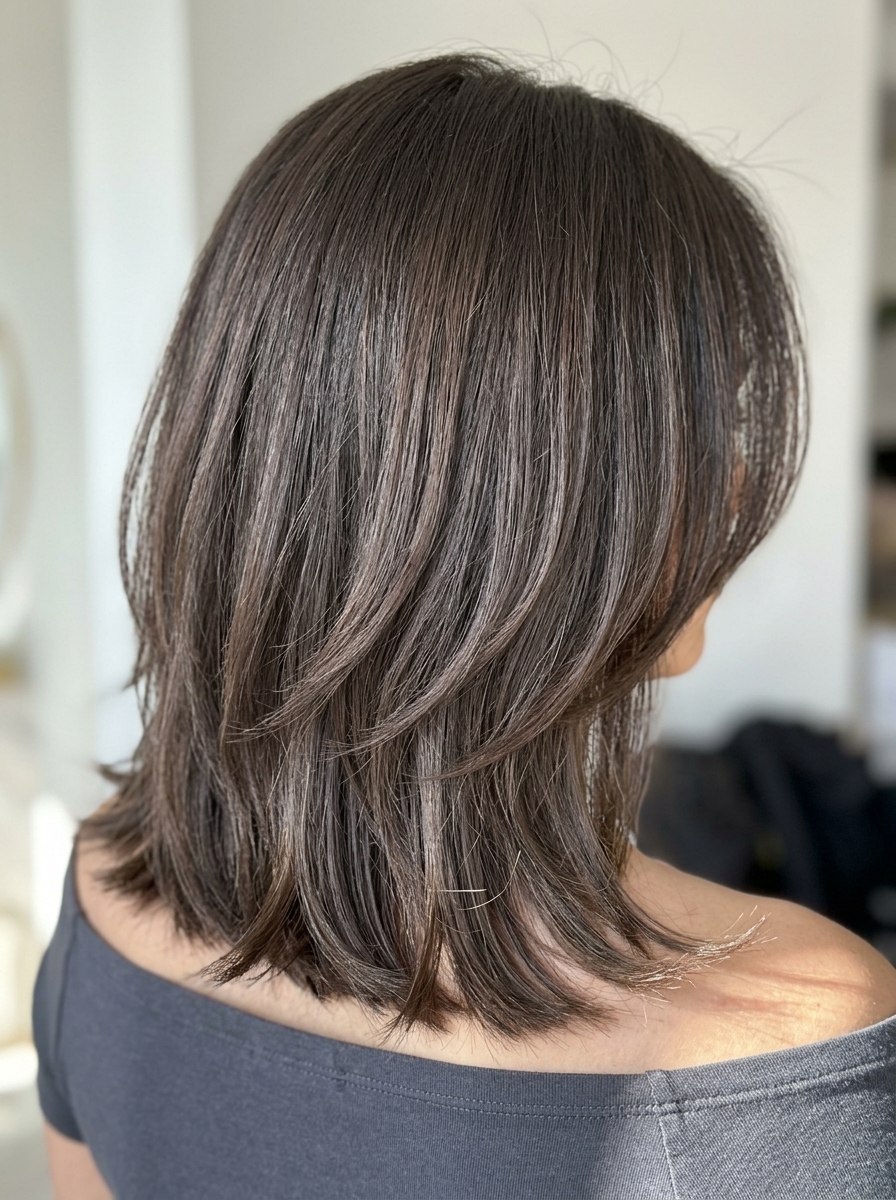
Internal layering is the stylist move that nobody sees but everyone feels. These layers live inside the hair, creating bounce and removing weight without announcing themselves via choppy perimeter lines. The scissor-over-comb technique creates internal layers, removing weight for movement without visible steps. This is the cut your coworker shows you and says, “I don’t know, I just got it trimmed,” which is a lie—they got a precision cut and they know it. Eight weeks. That’s how long internal layers kept the lob feeling light and bouncy without becoming flat, which for a longer cut is genuinely remarkable.
Skip color if you want. Keep your natural base. Or go for a soft bronde that lets the layers do their texture-creating job without demanding extra upkeep. The cut itself is the statement here, my go-to for work because it’s clean enough to look intentional but lived-in enough to feel real. No heavy product needed. No blow-dryer requirement. Effortless, everyday chic.
The Textured Crown Shag with Caramel Balayage
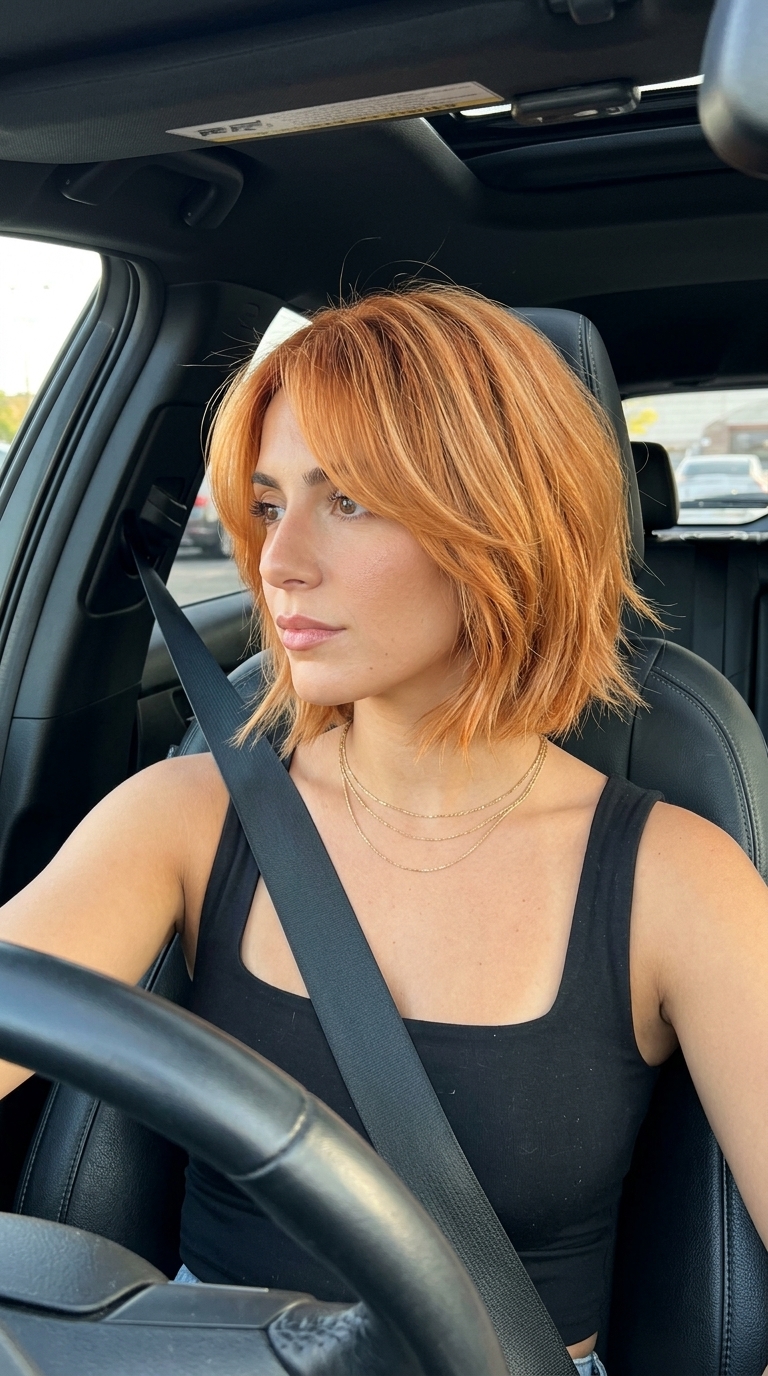
This one prioritizes volume at the crown, which means the cut is actually working against gravity instead of just going along for the ride. Heavy internal layering and point-cut perimeter create volume and deconstructed texture, avoiding bluntness. The caramel balayage brings warmth without the commitment of full color—just ribbons of lighter tone throughout, melting into a darker base. A good balayage artist will space these sections wide enough that you’re looking at 12-16 weeks before you need a refresh, which honestly beats the hell out of root touch-ups every three weeks.
Curtain fringe grew out gracefully over 10 weeks, blending into face-framing layers naturally as it lengthened. Heavy internal layering requires specific styling products to maintain volume and prevent flatness—or maybe it’s the fringe that makes the difference, or maybe it’s just knowing when to let your hair air-dry versus when to actually blow-dry it with intention. The perfect face-framer.
The Modern Mullet Shag
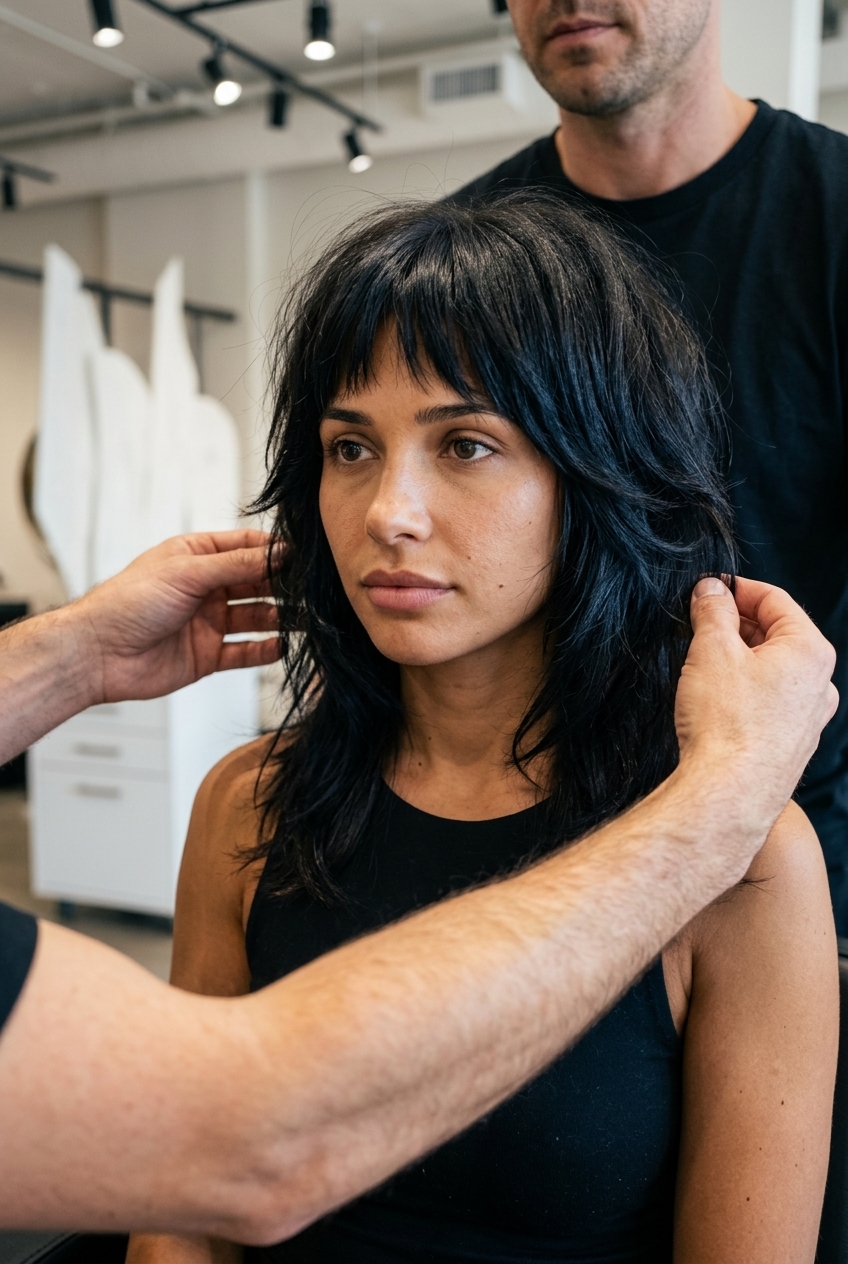
Short on top. Business in the front, party in the back—except now it’s actual texture and movement instead of a punchline from 1989. Aggressive razor-cutting creates sharp, disconnected layers, removing bulk and adding extreme texture. This cut thrives on specific product application, but only if you’re brave enough. Thick hair benefits most here; the aggressive cutting removes enough bulk that the shape reads cleanly instead of just looking dense. Aggressive razor-cutting removed bulk, making thick hair feel lighter and more voluminous for 6 weeks, which means regular trims are non-negotiable.
No color required—the cut is doing all the talking. But if you want to lean into the attitude, a darker base with silver or ash-blonde undercut makes the disconnection even sharper visually. Styling means texture paste applied to damp hair and then let it dry however it wants. Low-maintenance it is not. Avoid if you prefer low-maintenance styling; this cut thrives on specific product application. Edgy, bold, unapologetic.
The Razored Shag with Apricot Crush
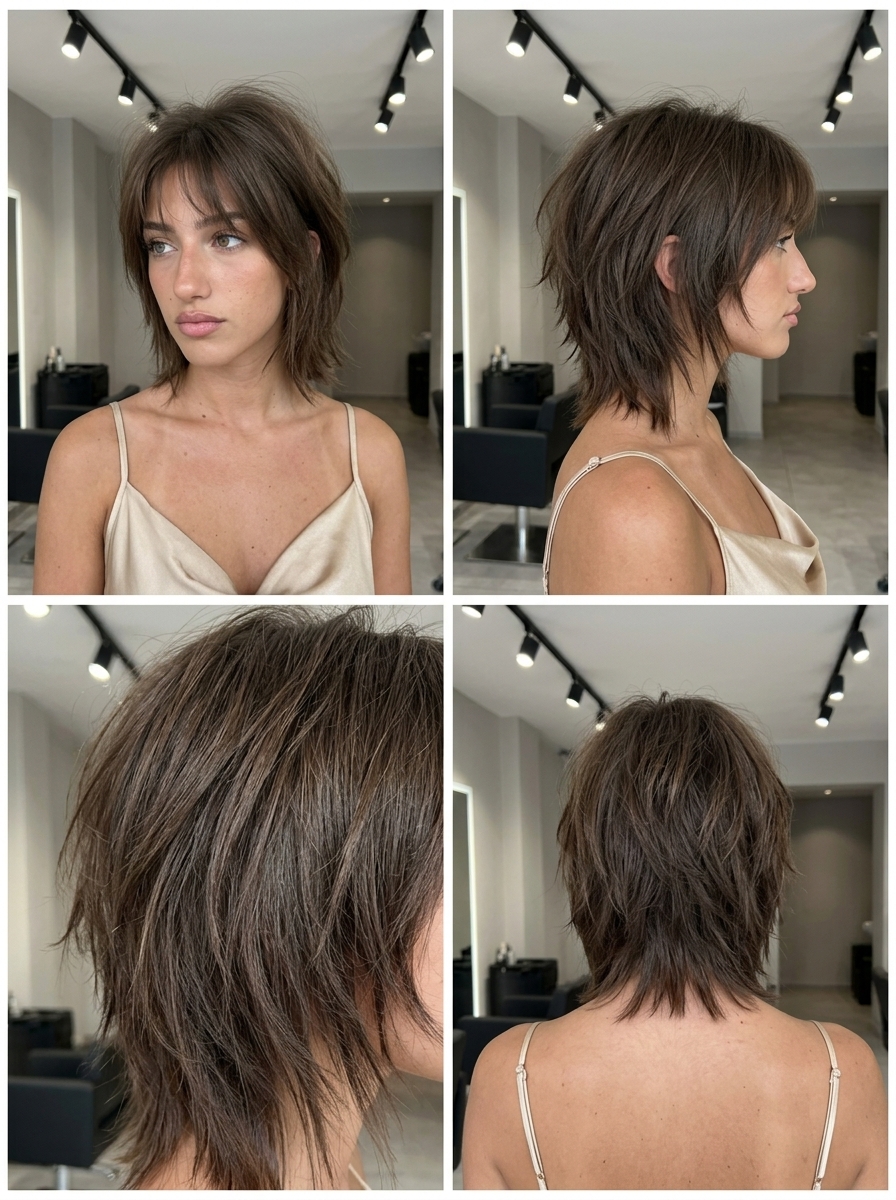
The short razored shag takes everything abrasive about the ’70s and makes it look intentional. Heavily razored, disconnected layers create maximum volume and movement, giving the shag its signature lived-in feel—which sounds like code for “I didn’t try,” except you absolutely have to try. Razored layers maintained their piecey texture for 4 weeks with minimal product use, meaning you’re not drowning this in cream every morning (the ultimate festival hair). The disconnection between layers means each section moves independently, so even on flat-hair days, you get texture and dimension.
Here’s the thing about razor-cut shags: they grow out awkwardly between weeks 5-8, requiring frequent trims to keep that choppy intentionality intact. Ask your stylist specifically for point-cutting at the ends—it’s different from blunt razoring and creates softer, more flexible movement. The apricot crush color adds warmth without demanding root touch-ups every three weeks, and honestly, that’s where most people’s shag dreams die. Fine to medium hair thrives here. This cut has attitude.
The Birkin Bangs Shag
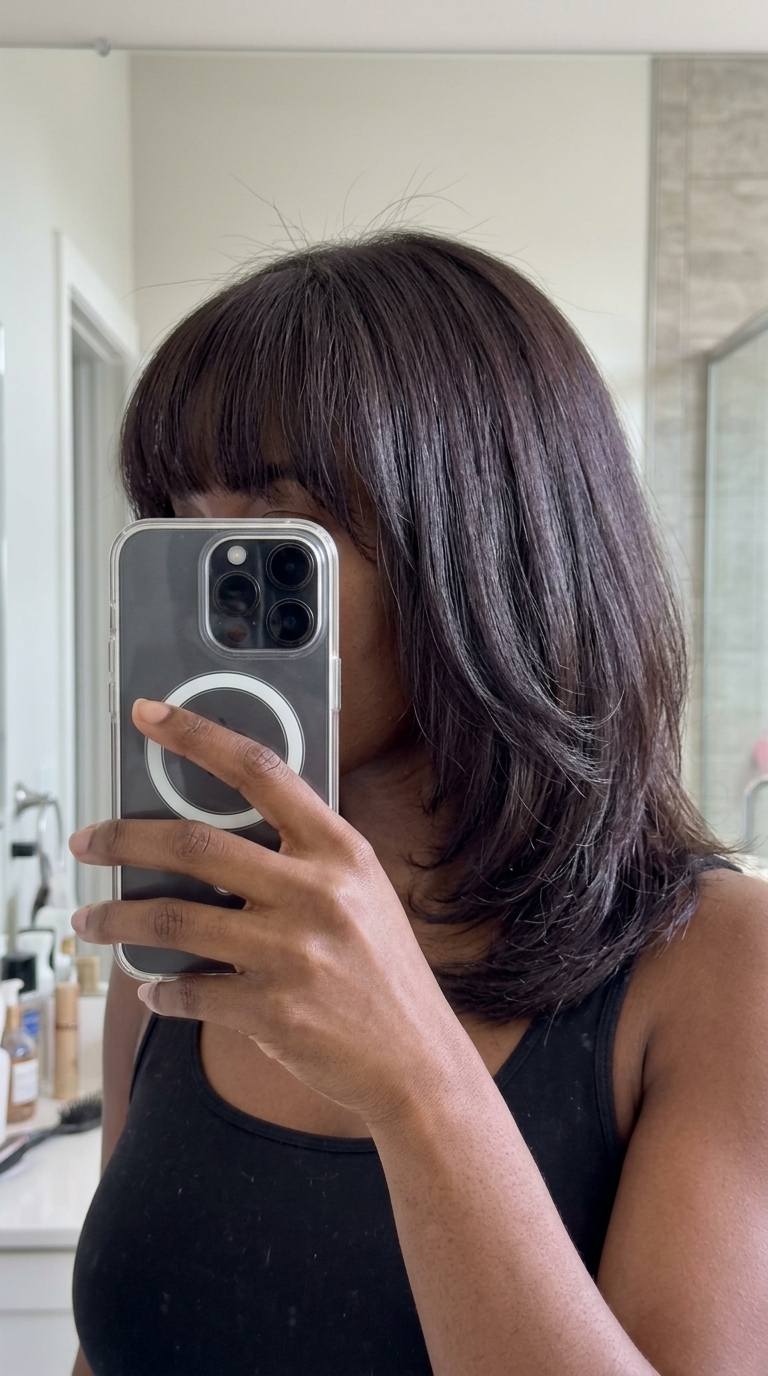
The birkin bangs shag is for people who want their hair to be the most talkative thing in the room. Blunt fringe held its shape for 3 weeks before needing a professional trim to maintain brow-skimming length, and that’s the actual timeline you need to know. Long, seamless layers create a soft, rounded shape that adds body without removing too much density from fine hair, which is why this cut works on textures that usually get destroyed by heavy layering. The fringe is blunt—sharp, clean, immaculate—while the back layers stay soft and piecy, probably worth the consultation at least.
Blunt fringe requires monthly trims to maintain its sharp line and eyebrow-skimming length, so you’re committing to salon visits the way some people commit to their favorite coffee shop. The contrast between the structured bangs and the undone layers behind them is exactly what makes this cut photograph so well and feel so intentional. Medium to thick hair handles this better than fine, because the fringe needs enough weight to stay geometric. Fringe is the star.
The Mahogany Layered Shag
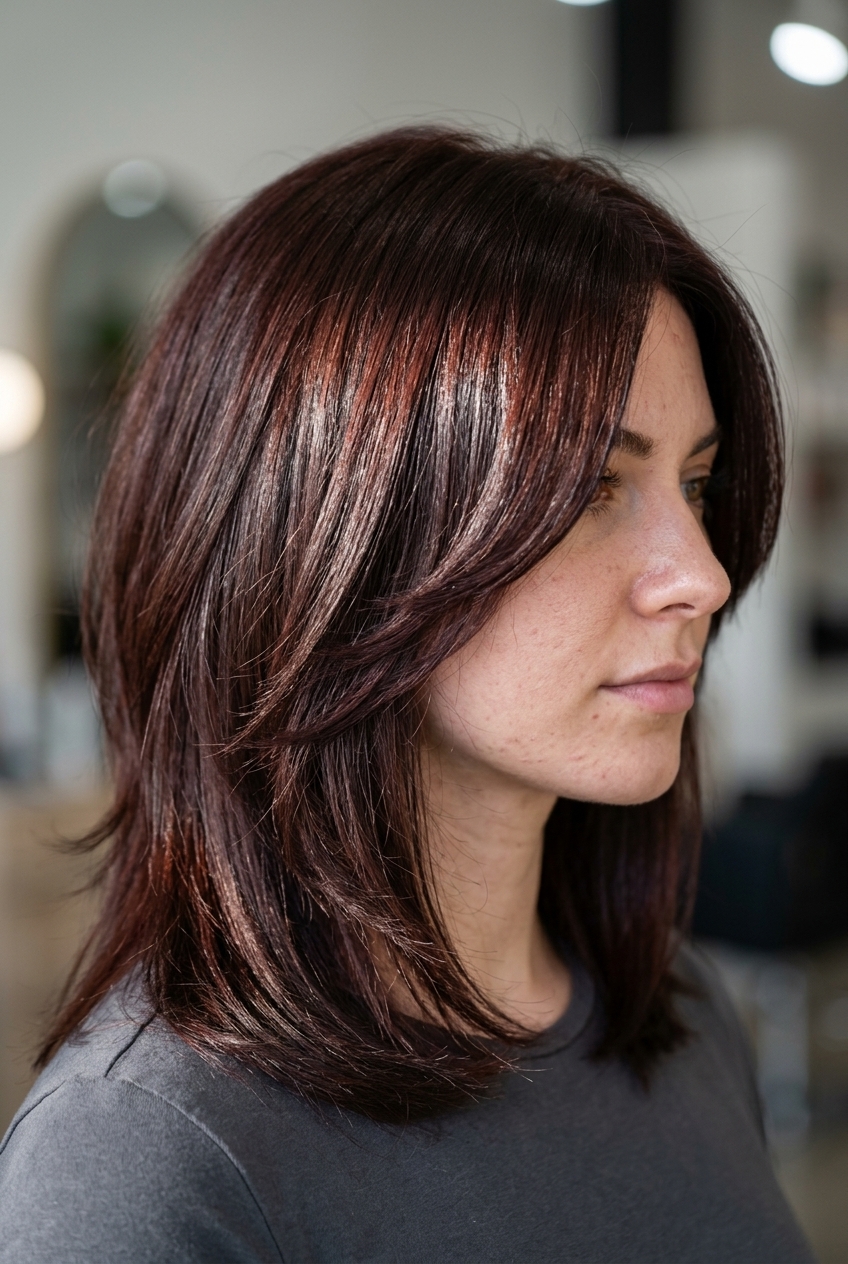
The mahogany layered shag is what happens when you commit to color-forward thinking and let the layers do the sculptural work. Wispy fringe grew out gracefully for 6 weeks, easily swept aside without awkward stages, which means this cut actually has a grow-out plan built into its DNA. Razored ends create soft, fluid movement that enhances the hair’s natural texture and color dimension—meaning the mahogany payoff is real, not a flat wash. The layering is aggressive at the crown (creating lift) and softens toward the ends, so you get the shag shape without looking like you’re wearing a costume.
Not for very fine hair; layers might remove too much volume if not cut carefully, and at that point you’re fighting the cut instead of working with it. The mahogany tone needs touch-ups every 8-10 weeks to stay warm, but it fades beautifully into amber-blonde undertones, so the in-between phase is actually wearable. Thick and medium textures are ideal here, and if you have natural wave, this cut amplifies it into something that looks intentionally tousled rather than actually messy. Movement is key here.
The Golden Blonde Shag Haircut
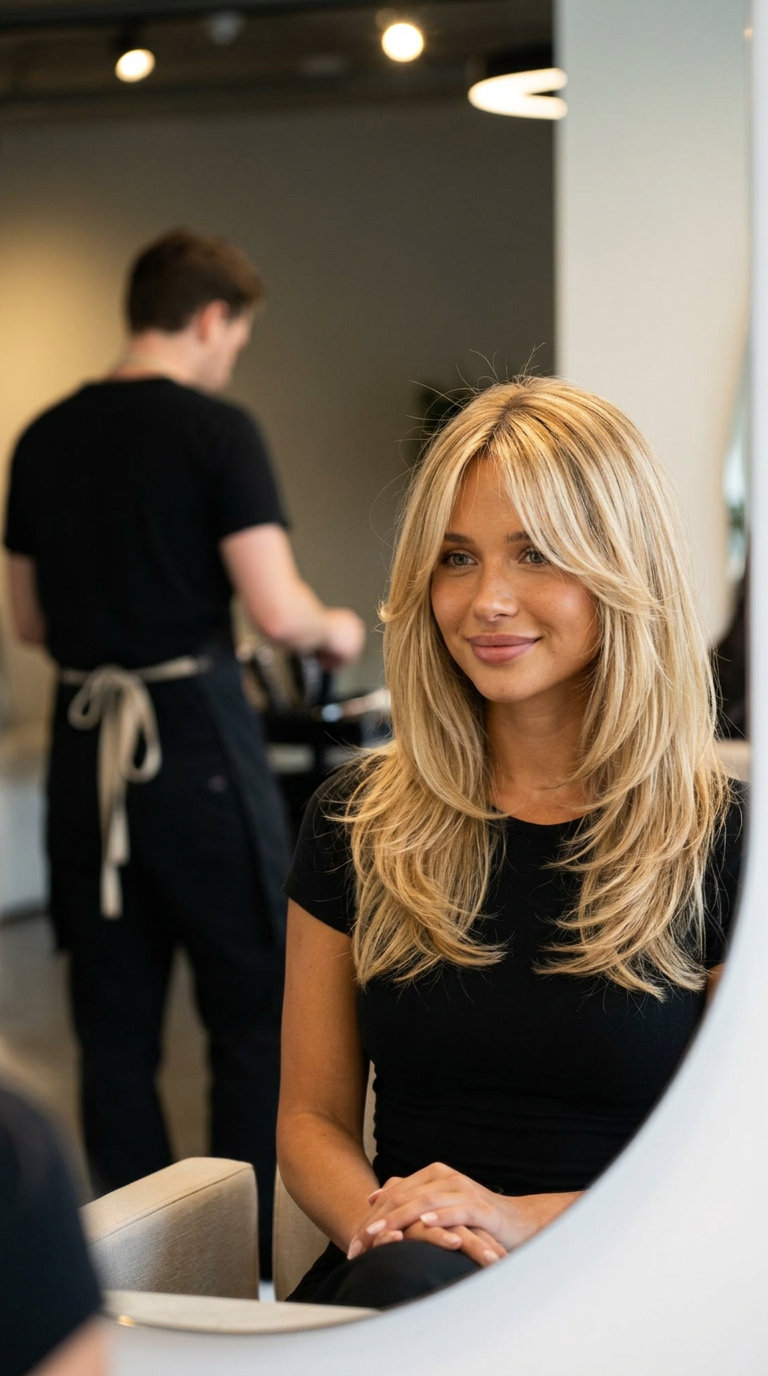
The golden blonde shag haircut is the version that looks good in daylight, in photos, and even when you haven’t washed your hair in a week. Curtain bangs parted easily and framed the face perfectly with minimal styling for 8 weeks, meaning the bangs actually do their job and don’t become a source of frustration. Internal texturizing removes weight from long hair, allowing layers to create volume and movement without making it look thin—this is the difference between a shag that adds shape and one that just thins you out. The golden tone is forgiving on root growth and complements warm-undertone skin without looking orange (or maybe just low maintenance).
This cut works best on fine to medium hair with natural wave or softness, because the layering adds volume without creating that choppy, disconnected look some people hate. The length sits past the shoulders, so you get shag movement without sacrificing length, and that middle ground is harder to find than it sounds. Blonde fades evenly, so even month four of color, you’re still reading as intentional rather than regrowth-having. Romantic and effortless.
The Butterfly Shag
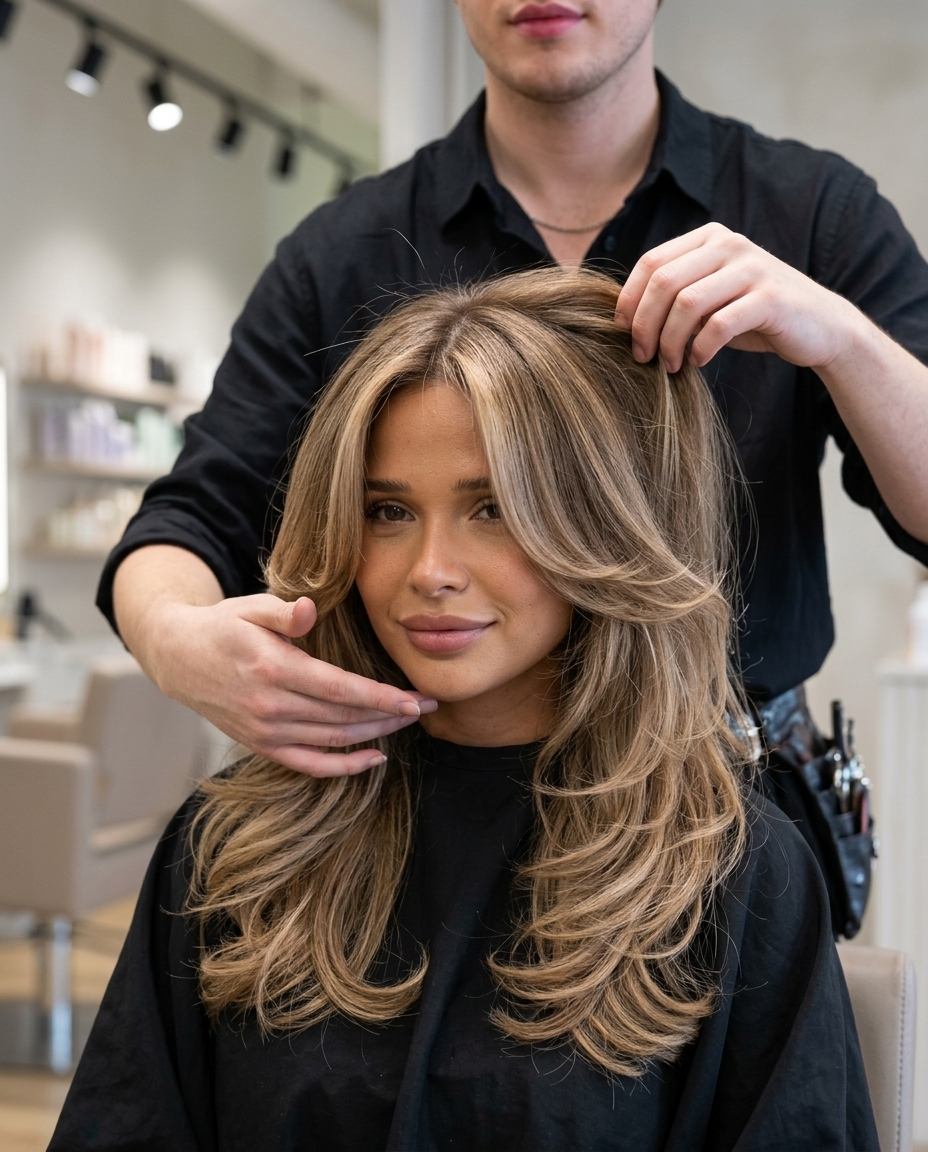
This is the shag for people who think they don’t want layers. Internal thinning does the heavy lifting here—literally removing bulk from the midsection while keeping the perimeter dense and intentional. You get movement without the “I cut my own hair at 2 AM” energy that scared you away from shags in the first place. The layering enhances natural movement and works best on medium to thick hair, naturally wavy or straight. (Worth the extra time in the chair.)
Internal thinning maintained movement for 8 weeks without feeling heavy or bulky, which is exactly what happens when your stylist understands that less material doesn’t mean fewer layers—it means smarter placement. The technique removes bulk from thick hair, allowing layers to move freely and preventing that helmet-like density that kills a shag’s entire vibe. Ask your stylist specifically for internal thinning, not choppy perimeter layers. The movement is everything.
The XL Mermaid Shag Haircut
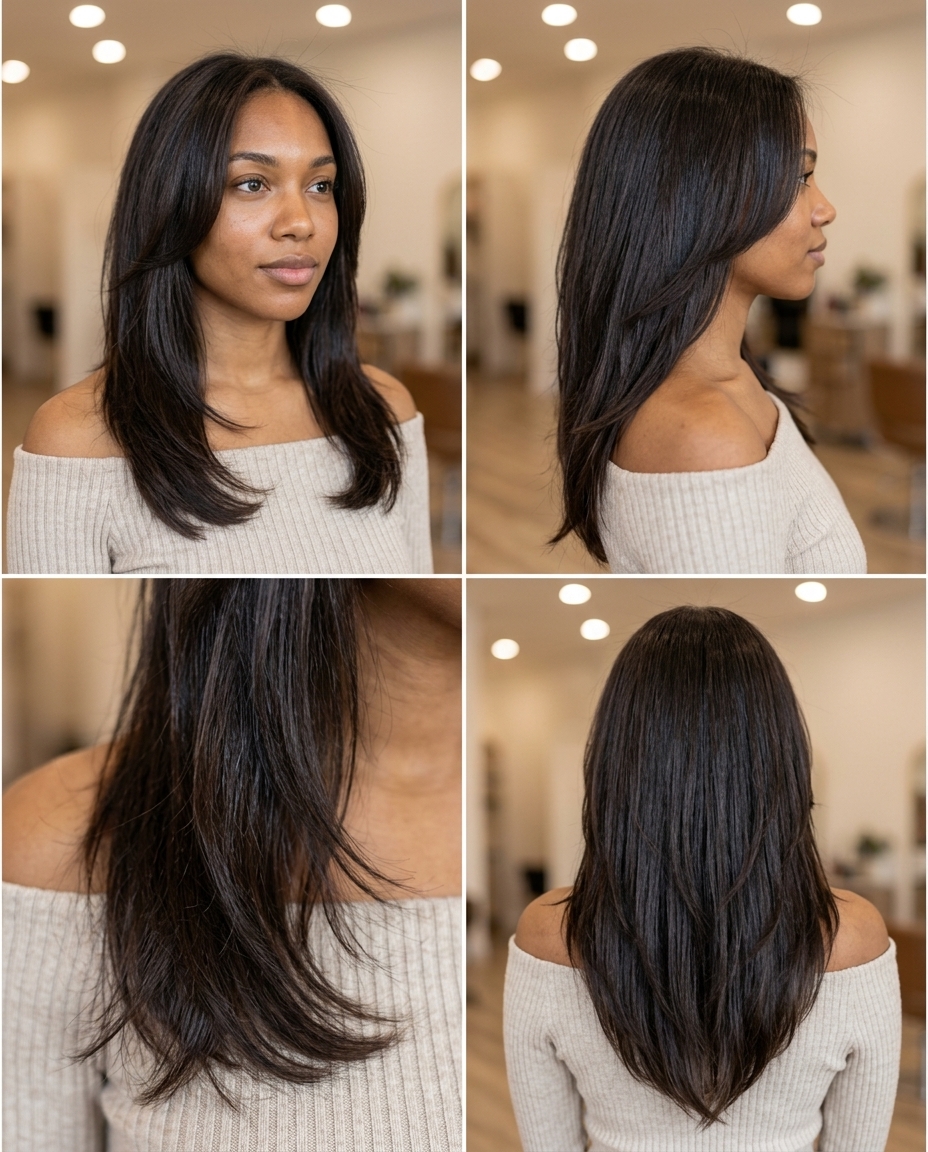
Long shags that actually move instead of just existing are rare. This one stretches past the collarbone with extensive internal layering and point-cut ends that catch light and air in equal measure. The XL mermaid shag haircut is for thick, long hair that you want to feel lighter without cutting length. Point-cut and razored ends kept frizz at bay for 6 weeks, even with air-drying, because the technique removes enough density that humidity doesn’t trap moisture in dead weight.
Extensive internal layering and point-cutting create weightless movement, preventing thick, long hair from looking heavy or immovable, which is the actual distinction between a good long shag and one that just sits there. Expect to pay more for this—layering on long hair requires precision and time. This isn’t a cut you can refresh easily between appointments (which is a commitment, but so worth it). Mermaid hair goals achieved.
The Smoky Ash Balayage Shag
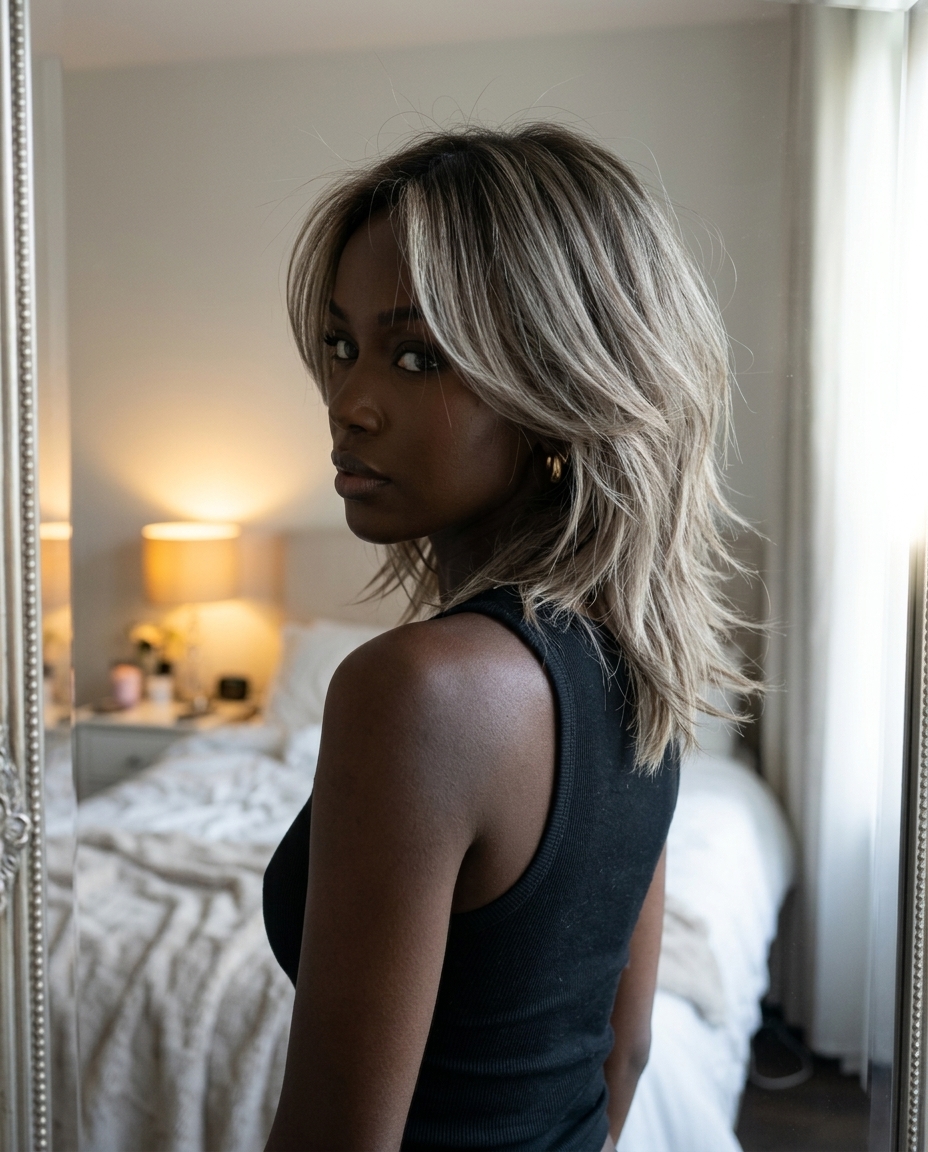
This shag is built for hair that’s medium to thick and either naturally wavy or willing to take styling seriously. The cut itself is deceptively simple: razored layers concentrated at the crown for lift, with longer pieces around the face that blend into the body. The color—a smoky ash balayage shag—sits in that gray-blonde territory that reads expensive but won’t destroy your hair with constant touch-ups. Crown volume lasted 2 days with light texturizing spray, not falling flat by evening, which is all my thick hair can handle.
The magic happens in the layering technique. Shorter razored layers at the crown create lift and dynamic movement by reducing bulk, enhancing volume—not just the idea of volume, but actual body that doesn’t collapse by day three. Ask your stylist to point-cut the ends rather than blunt-cut them; that’s what gives the shag its textured, lived-in finish. The ash tones work because they’re forgiving on root growth, so you’re stretching time between salon visits naturally.
Maintenance means a texturizing spray on damp hair, maybe a light blow-dry if you have time, or just scrunching product through and letting air-dry if you’re rushing. Skip if you prefer low-maintenance air-drying—this cut needs styling for texture. The payoff is undeniable though: a cut that photographs well, feels substantial, and doesn’t require monthly trims. Finally, a shag that moves.
The Sunset Ombré Shag Haircut
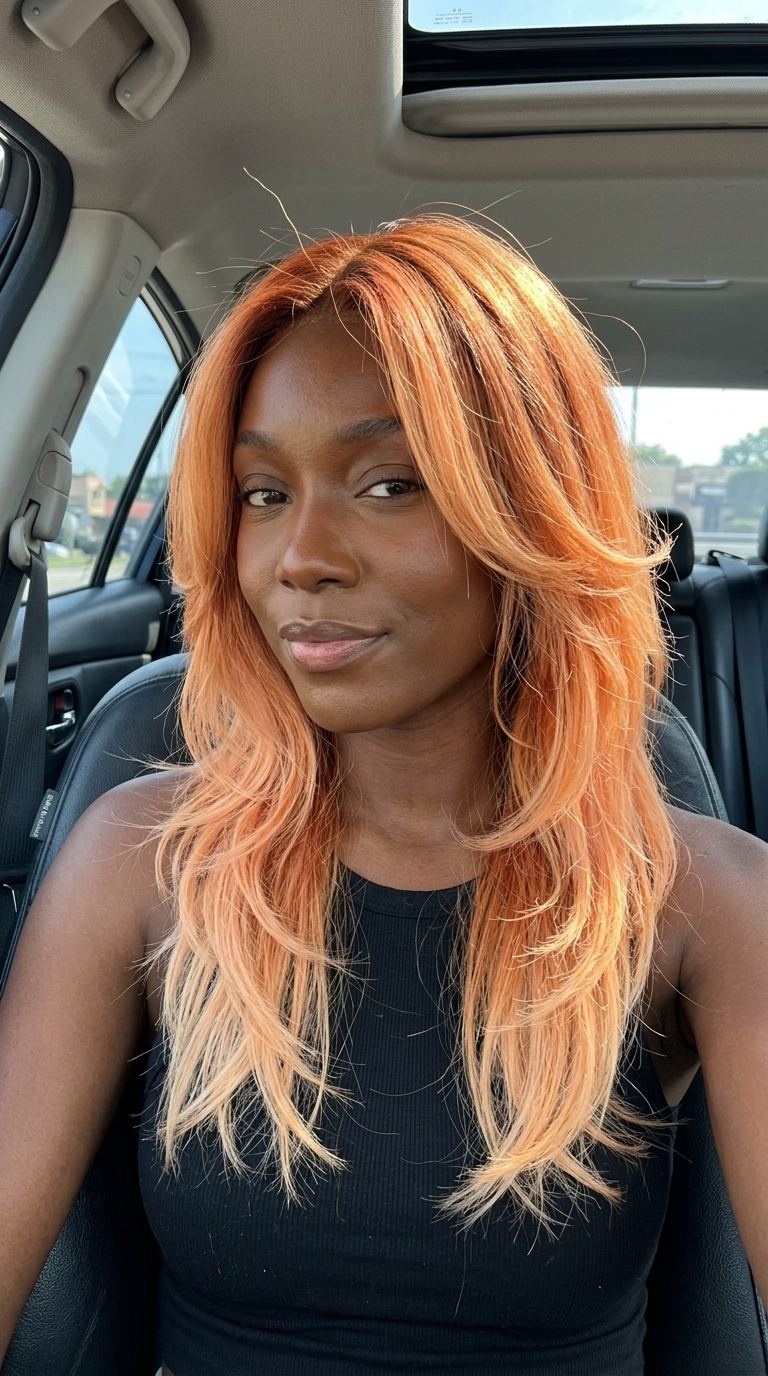
Fine hair has spent years getting the short end of the stick when it comes to volume-focused cuts. This shag flips that: instead of stacking layers that thin the hair out further, internal weight removal keeps the structure intact while creating movement. The sunset ombré shag haircut combines a warm apricot-to-rose gradient—perfect for summer skin tones—with a cut designed specifically for hair that can’t handle heavy layering. Internal weight removal kept hair feeling light for 8 weeks without becoming flat or heavy, which was honestly shocking.
What makes this work is the restraint. Instead of aggressive razoring throughout, the cut removes weight from inside the hair, creating airy, flowing movement without sacrificing length, perfect for fine hair. (Yes, the soft one.) The ombré sits on the warmer side of the color wheel, which means it complements golden undertones and doesn’t wash out pale skin. Root shadow blending means you won’t see a harsh line as it grows, buying you 10-12 weeks between visits instead of 6-8.
Styling is genuinely minimal: a lightweight mousse or cream if your hair needs texture, but honestly, this cut moves without fuss. Internal weight removal on fine hair can sometimes fall flat if not styled correctly, so a quick spray or product through the mid-lengths helps. The combination of cut and color means summer sweat and humidity actually work in your favor—the hair gets softer and less blown-out, not frizzier. Effortless texture, truly.
The Cherry Cola Red Shag
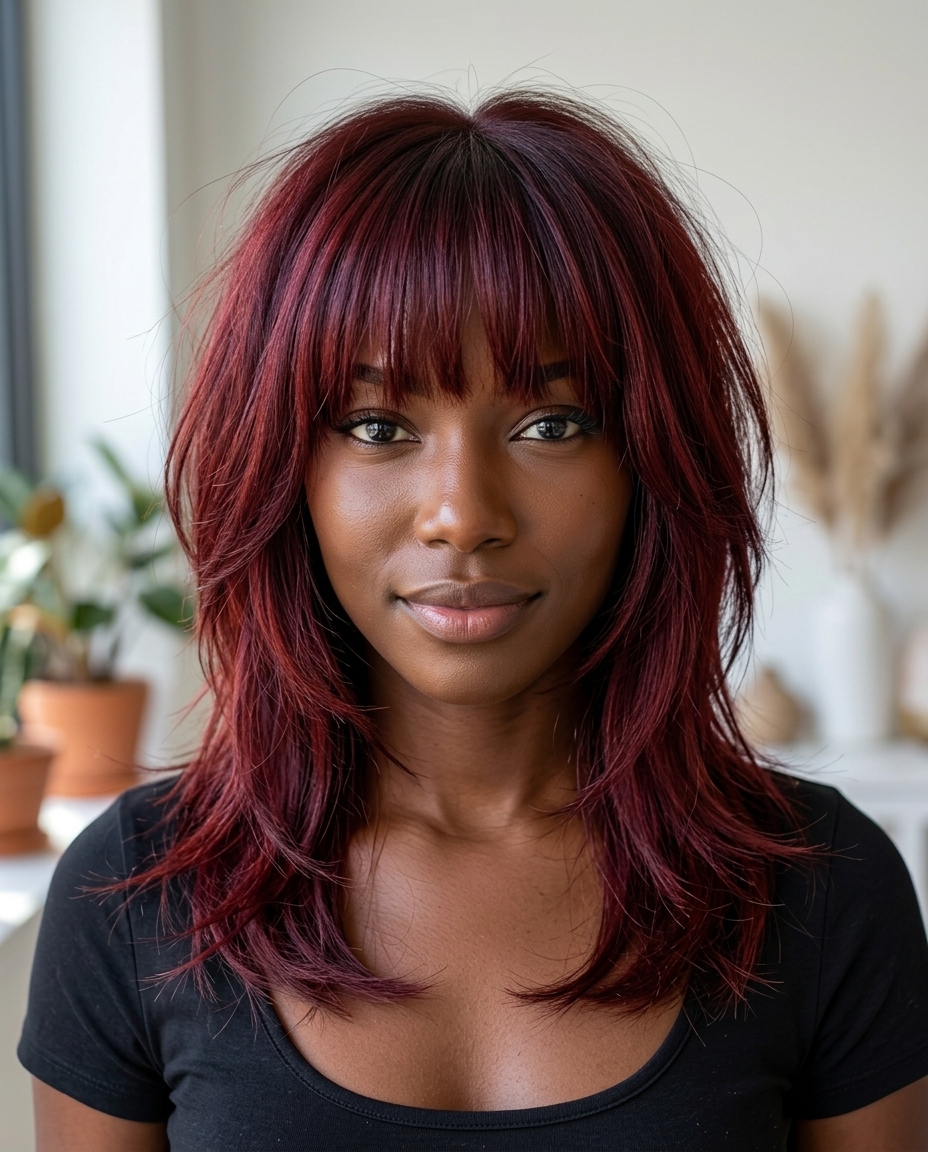
Bold color needs bold structure. This shag leans hard into choppy, disconnected layers paired with a blunt fringe and a deep cherry cola red that sits right at the intersection of burgundy and auburn. The cut itself is heavily point-cut layers that create a textured, almost disconnected feel, enhancing the shag silhouette with volume. Blunt fringe maintained shape for 4 weeks before needing a trim, even with daily styling, which meant the whole look stayed sharp longer than expected.
The fringe is the anchor here—it’s not feathered or soft, it’s a statement piece that frames the face and adds weight at the crown. Or maybe the volume, honestly. The cherry cola color requires some maintenance (expect root touch-ups every 4-6 weeks), but the warmth of the red actually reads younger than platinum and photographs beautifully in natural light. The heavily point-cut layers throughout create separation and movement, so even on humid days, the cut maintains its edgy definition.
Styling means texture spray and potentially a blow-dryer to get the fringe to sit exactly right, so this isn’t a grab-and-go cut. Not for very fine hair—blunt fringe can look sparse and stringy. But if you’ve got medium to thick hair and want a cut that announces itself the moment you walk into a room, this delivers. The fringe makes this.
The Deep Auburn Shag with Fringe
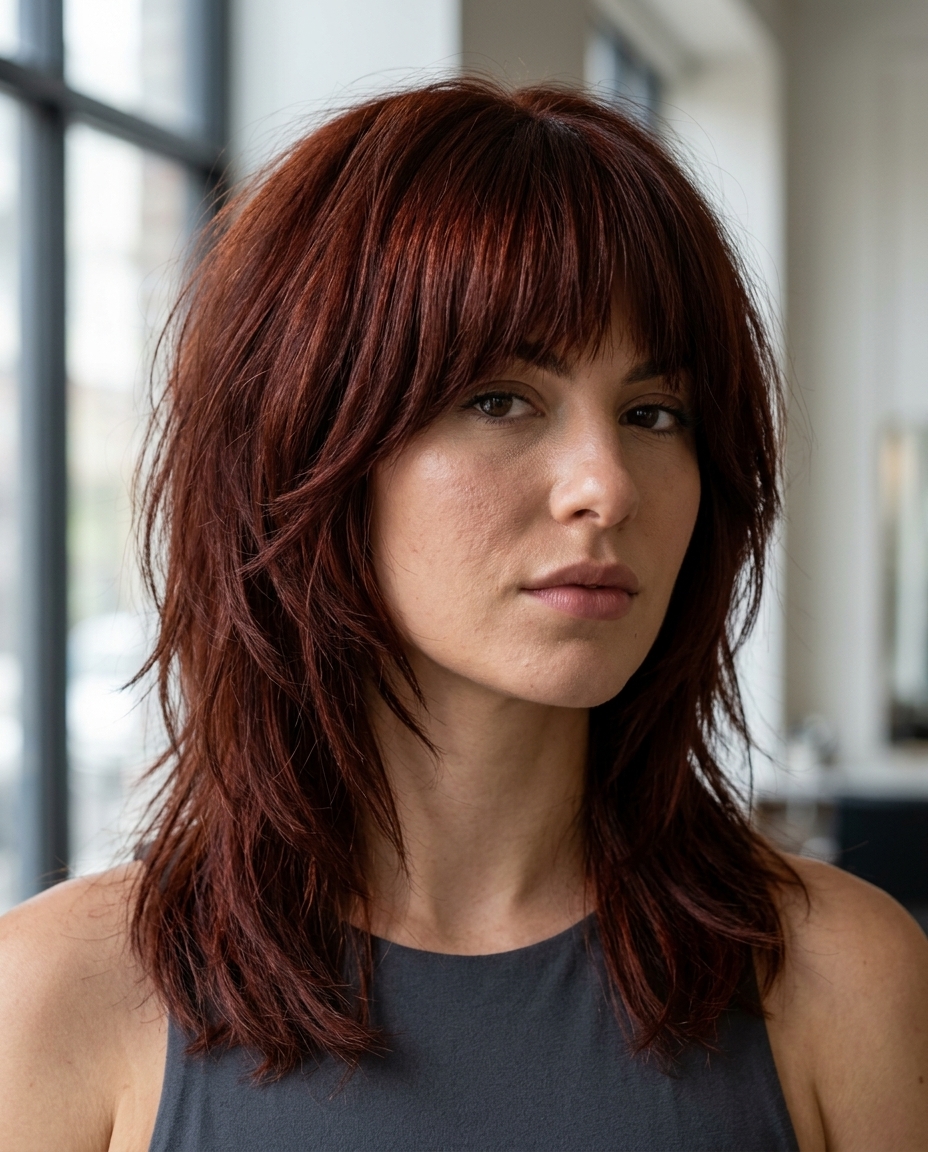
Strong, choppy layers create maximum volume and edgy texture by building internal support and separation—meaning every piece of hair has its own job to do. The deep auburn shag with fringe uses these layers strategically: concentrated at the crown and around the face-framing area, longer through the body, with a fringe that’s blunt but not severe. Choppy layers held maximum volume for 3 days without product, resisting collapse on day two, which feels wild for something this textured.
The color is warm but sophisticated—deep enough that it reads mature, saturated enough that it photographs like luxury. Root growth on auburn is actually forgiving because the dimension naturally hides regrowth, stretching visits to 8-10 weeks if you’re using a color-depositing shampoo. The cut itself demands precision: ask your stylist about the angle of each layer, the shape of the fringe, and how it’ll adapt as your hair grows. Probably worth the consultation at least.
This is high-maintenance territory. Strong choppy layers can be high maintenance, requiring specific products for definition—usually a texturizing paste or clay-based product to separate the layers and prevent them from clumping. But the payoff is a cut that looks intentional, expensive, and absolutely refuses to be boring. It photographs exceptionally well from every angle, and the edgy layers give you versatility: styled with product for drama, or just dried quickly for a softer, more relaxed vibe. Edgy, yet refined.
The Soft Girl Shaglet Haircut
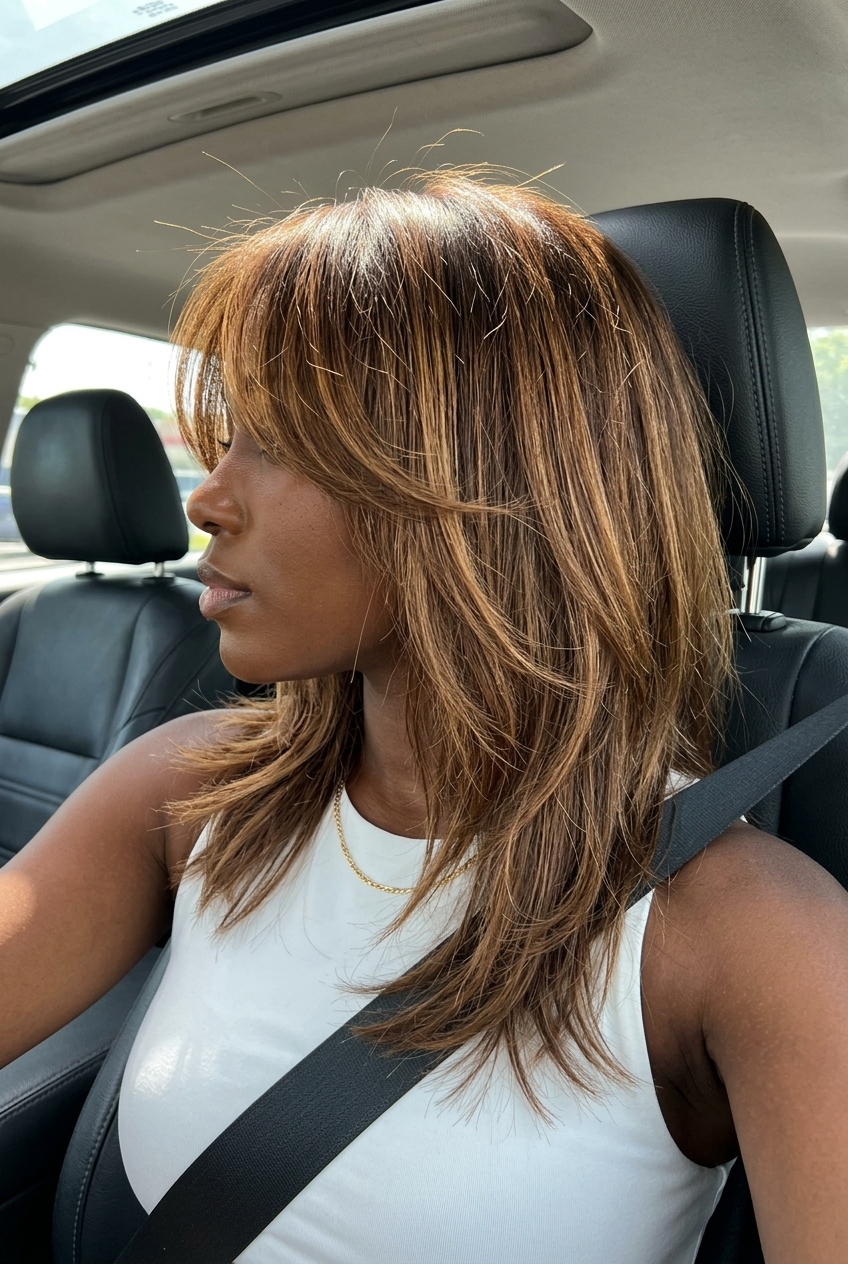
This is where the shag and mullet have a secret meeting and agree to create something entirely new. The soft girl shaglet haircut is built for fine to medium density hair, whether naturally straight or wavy, and it doesn’t demand much beyond a basic styling routine. Internal layers create movement without harsh lines, blending the shaglet and mullet for a seamless hybrid—meaning no awkward divisions, just flowing texture. Shaglet grew out gracefully for 10 weeks, maintaining shape without awkward stages, which sold me immediately on the structural integrity here.
Length sits somewhere between chin and shoulder, shorter in the crown for lift, longer at the nape—essentially giving you the volume of a shag without the dramatic length commitment. The cut uses internal layering rather than surface chop, so it feels soft and piecy without looking disconnected or trying too hard. Styling is genuinely minimal: a light cream or mousse if your hair wants texture, but this cut moves naturally, which is all my fine hair can handle.
The genius of the shaglet is the grow-out trajectory. Instead of hitting that awkward eight-week stage where everything looks shapeless, this cut blends itself as it grows, extending the time between trims to 8-10 weeks comfortably. Perfect for summer when you don’t want to spend every other week in a salon chair. The color options are endless, but soft sands and warm honeys complement the undone aesthetic. The grow-out plan sold me.
Still Deciding? Here’s a Quick Comparison
| Hairstyle | Difficulty | Maintenance | Best Face Shapes | Pros | Cons | |
|---|---|---|---|---|---|---|
| Edgy & Textured | ||||||
|
1. The Apricot Crush Shag | Salon-only | High — every 4 weeks | oval, heart, long | Suits most face shapesWorks on multiple texturesLayers add movement | Requires professional styling |
|
4. The Festival Shaggy Mullet | Moderate | High — every 3-4 weeks | heart, diamond, oval | Suits most face shapesWorks on multiple texturesLayers add movement | Frequent salon visits needed |
|
6. The Sun-Kissed Pixie Shag | Moderate | Medium — every 6-8 weeks | oval, heart, diamond | Suits most face shapesWorks on multiple texturesLayers add movement | Not ideal for very curly hair |
|
8. The Copper Blonde Shag Bob | Moderate | Medium — every 6-8 weeks | oval, heart, square | Suits most face shapesWorks on multiple texturesLayers add movement | Not ideal for very curly hair |
|
9. Midnight Wet-Look Shag | Moderate | Low — every 8-10 weeks | All face shapes | Low maintenanceSuits most face shapesWorks on multiple textures | Not ideal for very curly hair |
|
11. The Gritty Texture Shag | Easy | Medium — every 6-8 weeks | heart, diamond, oval | Easy to style at homeSuits most face shapesWorks on multiple textures | Not ideal for very curly hair |
|
14. The Polished Mahogany Shag | Moderate | Medium — every 4-6 weeks | oval, diamond, round | Suits most face shapesWorks on multiple texturesLayers add movement | Not ideal for very curly hair |
|
17. The XL Mermaid Shag | Moderate | Medium — trim every 5-6 weeks | round, square, long | Suits most face shapesWorks on multiple texturesLayers add movement | Not ideal for fine hair |
|
21. The Smoky Ash Summer Shag | Salon-only | Medium — every 6-8 weeks | square, heart, oval | Suits most face shapesWorks on multiple texturesLayers add movement | Requires professional styling |
|
22. The Sunset Ombré Summer Shag | Salon-only | High — every 4-6 weeks | oval, long, diamond | Suits most face shapesWorks on multiple texturesLayers add movement | Requires professional styling |
|
23. The Cherry Cola Midi Shag | Moderate | High — every 4-5 weeks | square, diamond, heart | Suits most face shapesWorks on multiple texturesLayers add movement | Frequent salon visits needed |
|
24. The Deep Auburn Layered Shag | Moderate | High — every 4-6 weeks | long, oval, diamond | Suits most face shapesWorks on multiple texturesLayers add movement | Frequent salon visits needed |
| Classic & Clean | ||||||
|
2. The Blended ‘Shullet’ Shag | Easy | Low — every 10-12 weeks | oval, square, long | Low maintenanceEasy to style at homeSuits most face shapes | Not ideal for very curly hair |
|
5. The Whispering Strawberry Shag | Moderate | Medium — every 4-6 weeks | oval, heart, diamond | Suits most face shapesWorks on multiple texturesLayers add movement | Not ideal for very curly hair |
|
7. The Lived-In Espresso Lob Shag | Easy | Low — every 10-12 weeks | all face shapes | Low maintenanceEasy to style at homeWorks on multiple textures | Not ideal for very curly hair |
|
13. The Birkin Shag | Easy | Medium — every 3-4 weeks | long, oval | Easy to style at homeWorks on multiple texturesLayers add movement | Not ideal for very curly hair |
| Soft & Romantic | ||||||
|
15. The Golden Hour Shag | Easy | Medium — every 8-10 weeks | oval, round, long | Easy to style at homeSuits most face shapesWorks on multiple textures | Not ideal for very curly hair |
|
16. The Summer Butterfly Shag | Moderate | Medium — every 8-10 weeks | round, oval, square | Suits most face shapesWorks on multiple texturesLayers add movement | Not ideal for very curly hair |
|
25. The Soft-Girl Shaglet | Easy | Low — every 8-10 weeks | heart, oval, square | Low maintenanceEasy to style at homeSuits most face shapes | Not ideal for very curly hair |
Frequently Asked Questions
Can I style these shags if my hair is naturally straight?
Absolutely. The Blended ‘Shullet’ Shag and The Festival Shaggy Mullet both work beautifully on straight hair—the key is using a texturizing spray to define the point-cut layers and create separation. Without texture product, straight hair can look flat through the mid-lengths, so lean on dry texturizing spray and a light hold hairspray to emphasize the internal layering your stylist created.
What’s the quickest shag style for a busy morning?
The Blended ‘Shullet’ Shag takes 5–10 minutes with a texturizing spray and minimal heat, while The Festival Shaggy Mullet is equally fast at 5–8 minutes. Both are designed for air-drying with a quick pass of product through the layers. If you’re choosing between shags specifically for speed, ask your stylist for seamless blending and invisible layers—they’re the difference between a 15-minute style and a 5-minute one.
How do I make my shag style last all day in summer humidity?
Focus on lightweight texturizing spray and a flexible hold hairspray—heavy products will weigh down the razored ends and point-cut layers. The Apricot Crush Shag’s bouncy waves hold up well with a diffuser and volumizing spray, while The Sun-Drenched Caramel Shag’s lived-in aesthetic actually benefits from humidity breaking down the style slightly. A heat protectant with UV filters also shields your color from fading in the sun while keeping frizz minimal.
Are there any shag styles that don’t require heat tools?
Yes. The Blended ‘Shullet’ Shag and The Whispering Strawberry Shag are both designed for air-drying with minimal effort. Both rely on internal layering and point-cutting to create movement without a blow dryer or flat iron. Apply a leave-in conditioner to damp hair, scrunch in texturizing spray, and let it dry naturally—the razored ends will separate on their own. You’ll still need a trim every 6–8 weeks to maintain the shape, but daily styling is genuinely hands-off.
Final Thoughts
The thing about modern summer shag haircuts 2026 is that they’re designed to look like you didn’t try—which means you actually have to try, but only a little. The grow-out plan isn’t a bug; it’s the feature. Your stylist isn’t sending you home with a haircut that demands perfection; they’re giving you permission to let it live a little.
So go forth, embrace the layers, and let your summer shag do all the talking. No excessive effort required—just a texturizing spray, a heat protectant, and the confidence to walk out of that salon knowing you’re not going back for eight weeks.