
Ombré hair is a color technique that fades from a darker root to a lighter end, leaving the regrowth line intentionally soft. In 2027, the shift is toward softer transitions and lived-in shades that work with natural texture rather than against it.
This collection of 26 cuts and colors covers lengths from chin-grazing bobs to mid-back lengths, with options for fine, thick, curly, and straight hair. Simple Ombré Hair works for anyone who wants a low-upkeep color that grows out gracefully, solves the problem of a harsh line at the root, and pairs well with face-framing layers or curtain bangs.
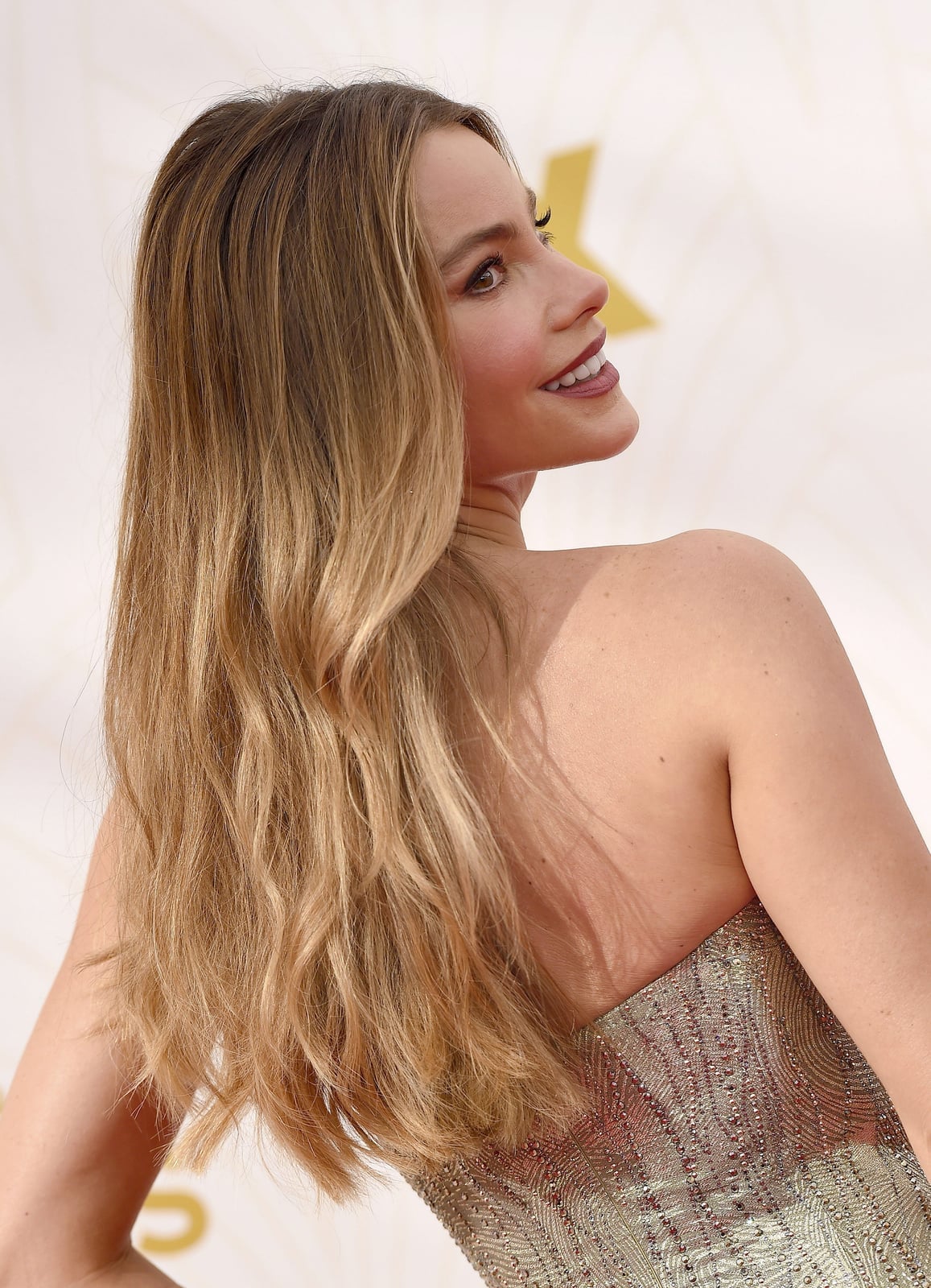
Mid-Back Length Hair With Platinum Blonde Ombré
The long layers here do more than add movement. They create a graduated canvas that lets the dark blonde base melt into a platinum blonde ombré without a harsh line. This cut works well on thick, wavy hair starting at mid-back length. A middle part and the length below the chin help elongate a round face, so if that describes you, this shape is worth discussing.
Ask your stylist for: mid-back length with long layers, dark blonde to platinum blonde ombré. The platinum ends need a toning appointment every 4 to 6 weeks to stay bright rather than brassy. A trim every 8 to 10 weeks keeps the long layers from looking straggly.
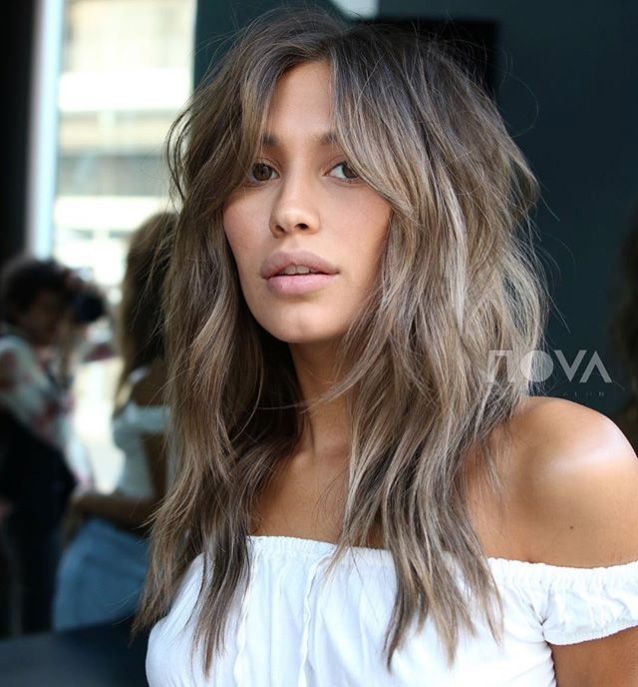
Mid-Back Hair With Ash Blonde Ombré And Bangs
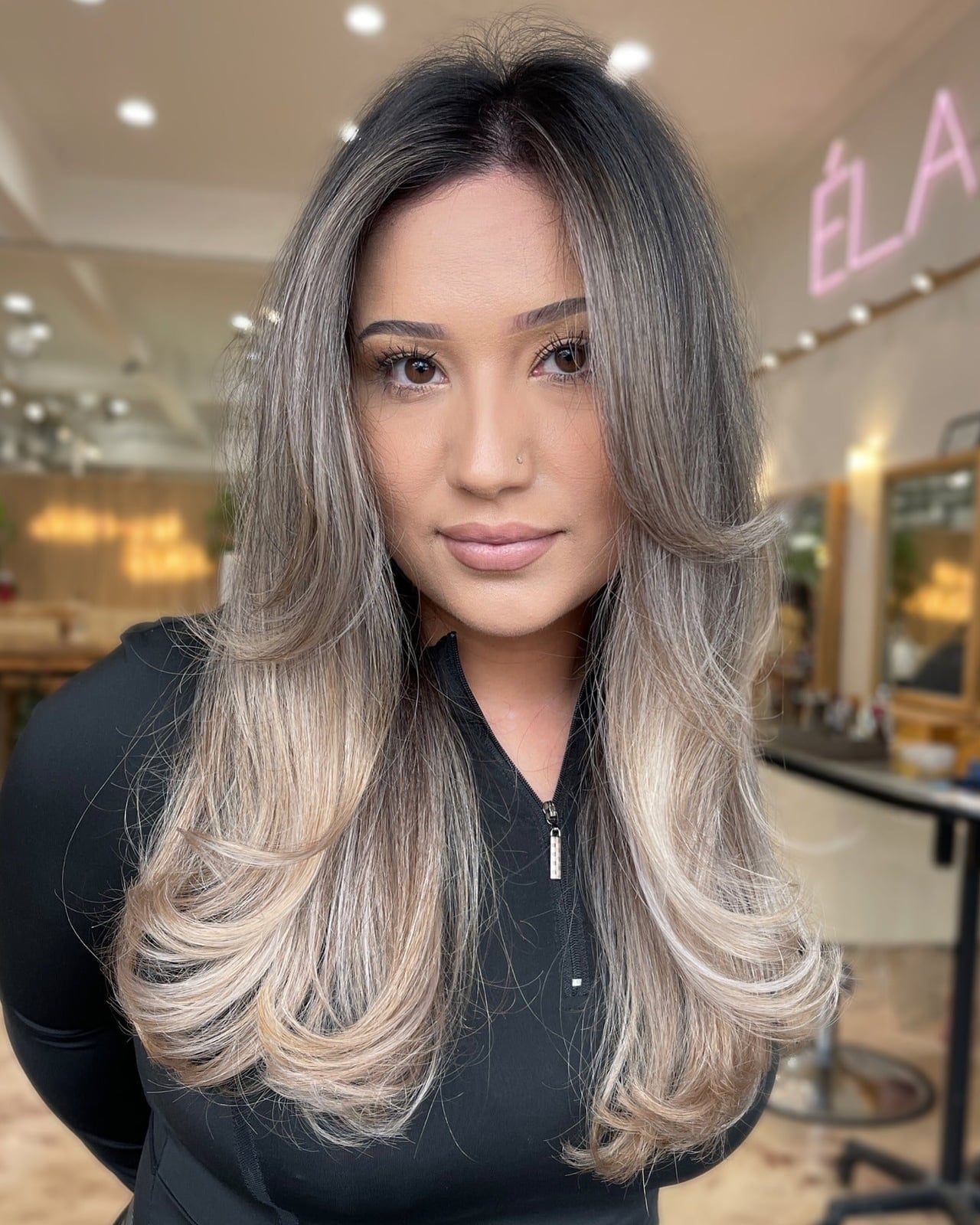
An ash blonde ombré keeps its cool tone when the base color and placement are precise. A dark brown root grounds the transition, and the ash tones begin subtly around the chin before lightening toward the ends. Face-framing bangs pull the cool color forward, making the ombré appear balanced.
Ask your colorist for: dark brown to ash blonde ombré with face-framing bangs. The bangs hit just below the brow and blend into long layers. Use a purple shampoo once a week to prevent the ash from warming. Trim the bangs every 4 to 6 weeks to maintain the right length.
Collarbone Lob With Curtain Bangs And Blonde Ombré
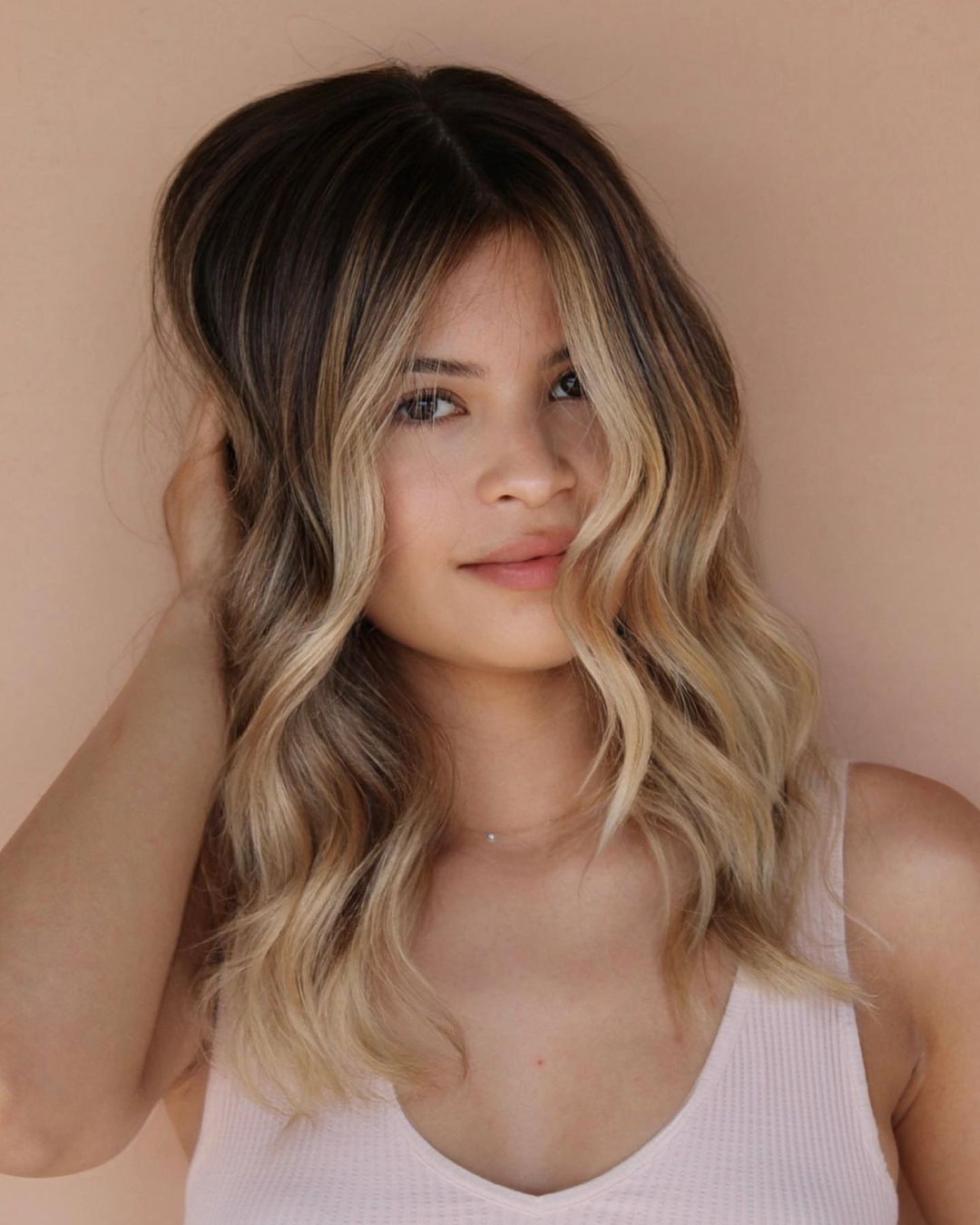
A collarbone lob with curtain bangs is often compared to longer ombré styles, but the trade-off is worth noting. The shorter length means the blonde ombré starts higher, which gives the color more visibility even when your hair is down. The soft, long layers prevent the lob from feeling heavy, and the curtain bangs soften the transition around the face.
Ask your stylist for: collarbone lob with long layers, dark brown to blonde ombré, curtain bangs. This cut suits medium-density wavy hair best. The curtain bangs frame the face without requiring daily styling, and the lob itself works for both straight and wavy textures.
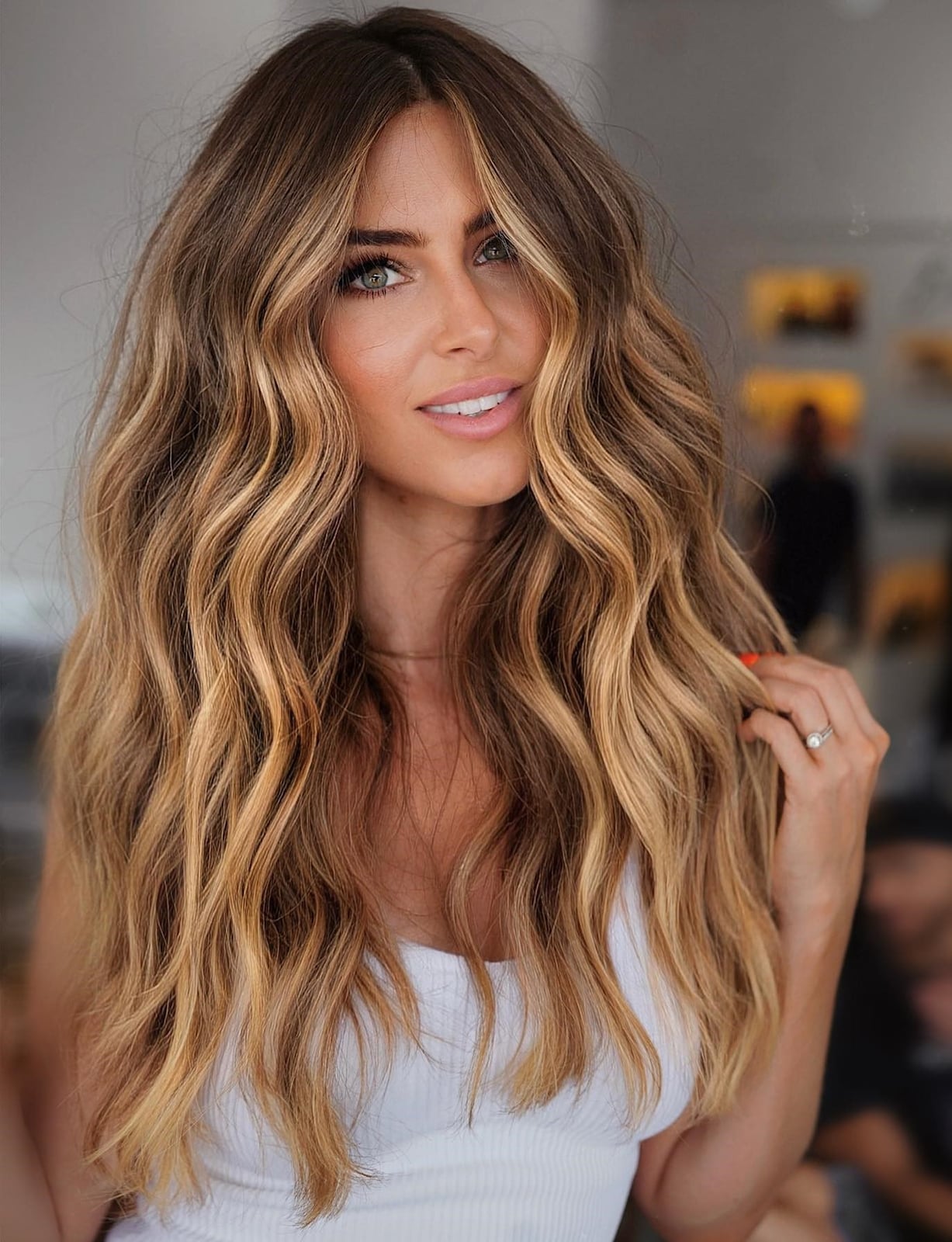
Mid-Back Hair With Dramatic Blonde Ombré
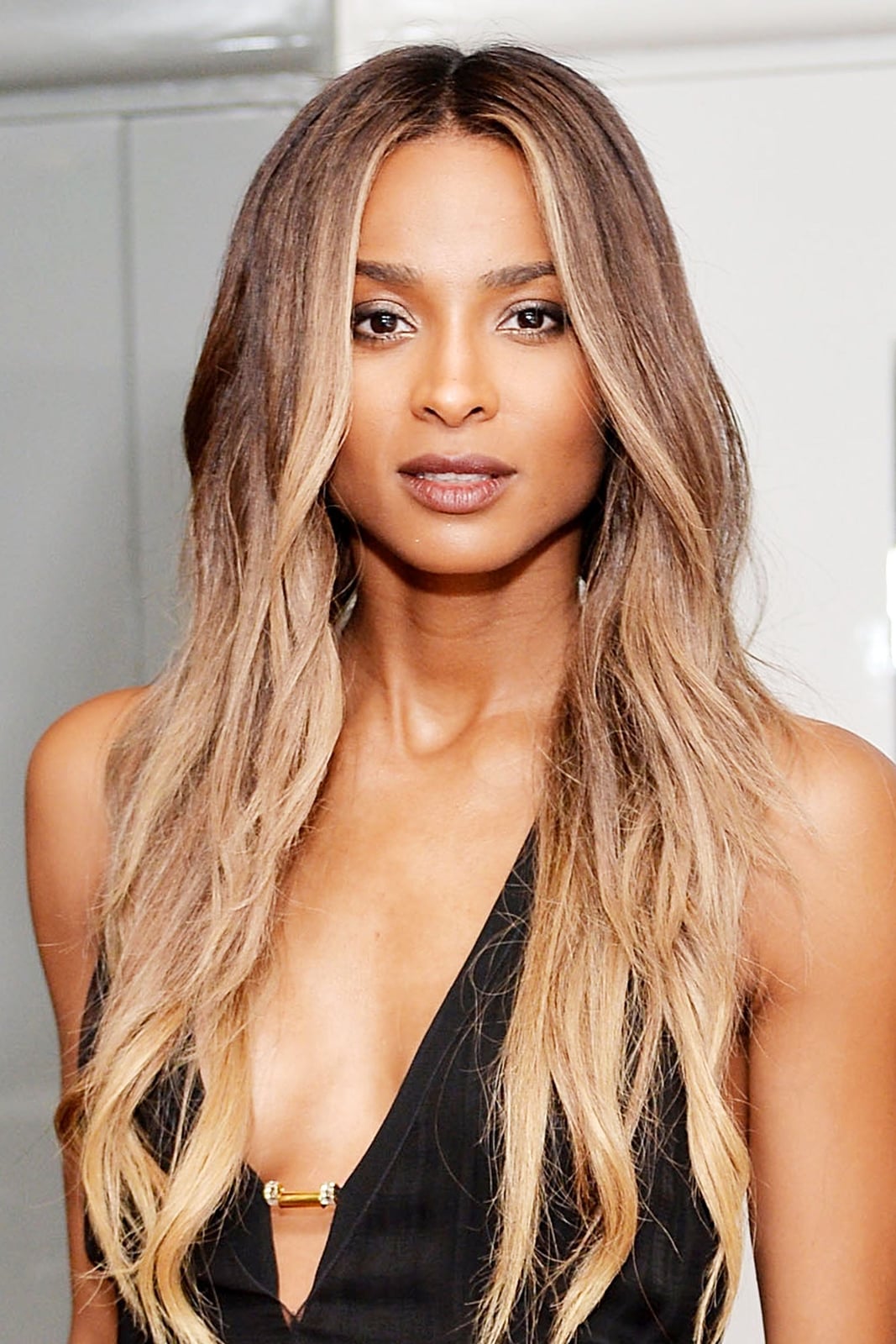
A dramatic blonde ombré on mid-back length hair is not subtle, and it is not supposed to be. The dark brown base stays rich at the roots while the blonde takes over around the shoulders, creating a visible contrast. The long layers give the color room to breathe, and the loose waves add movement.
Ask your colorist for: mid-back length with long layers, dark brown to dramatic blonde ombré. The lighter ends will need more moisture than the dark roots, so a deep conditioning treatment once a week is standard maintenance. Trim every 8 to 10 weeks to keep the ends healthy and the ombré line clean.
Collarbone Lob With Curtain Bangs And Ombré Ends, Wavy
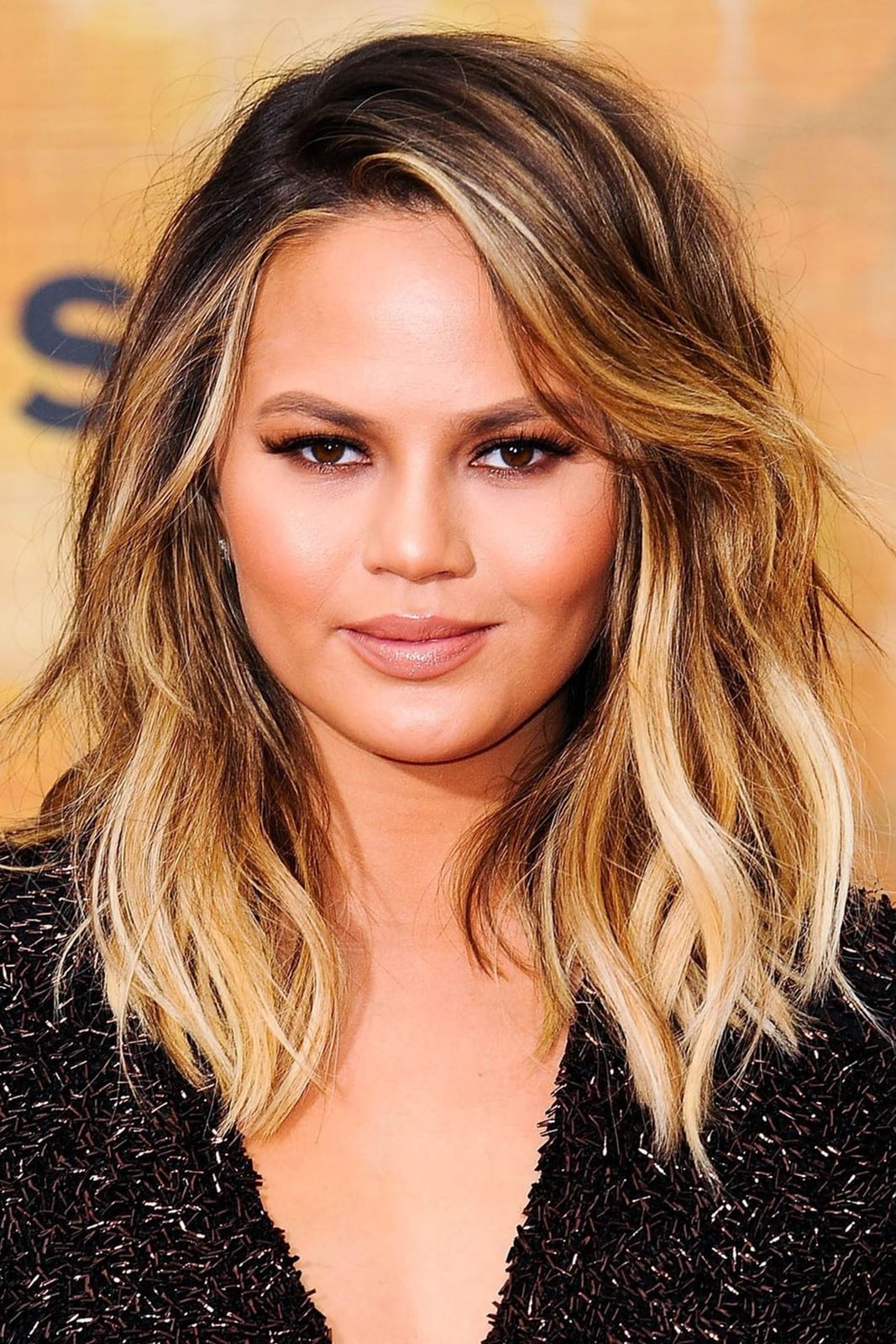
The lob here is cut to collarbone length, and the ombré is concentrated on the ends. That keeps the dark brown base dominant while the blonde acts as a lighter frame at the bottom. The curtain bangs are cut to blend into the sides, and the wavy blowout adds texture that masks the grow-out line. This is a salon-only technique because the ombré placement needs to be precise on a shorter cut. Ask your colorist for: collarbone lob, dark brown to blonde ombré ends, curtain bangs, side parting.
Collarbone Hair With Bright Blonde Ombré And Highlights
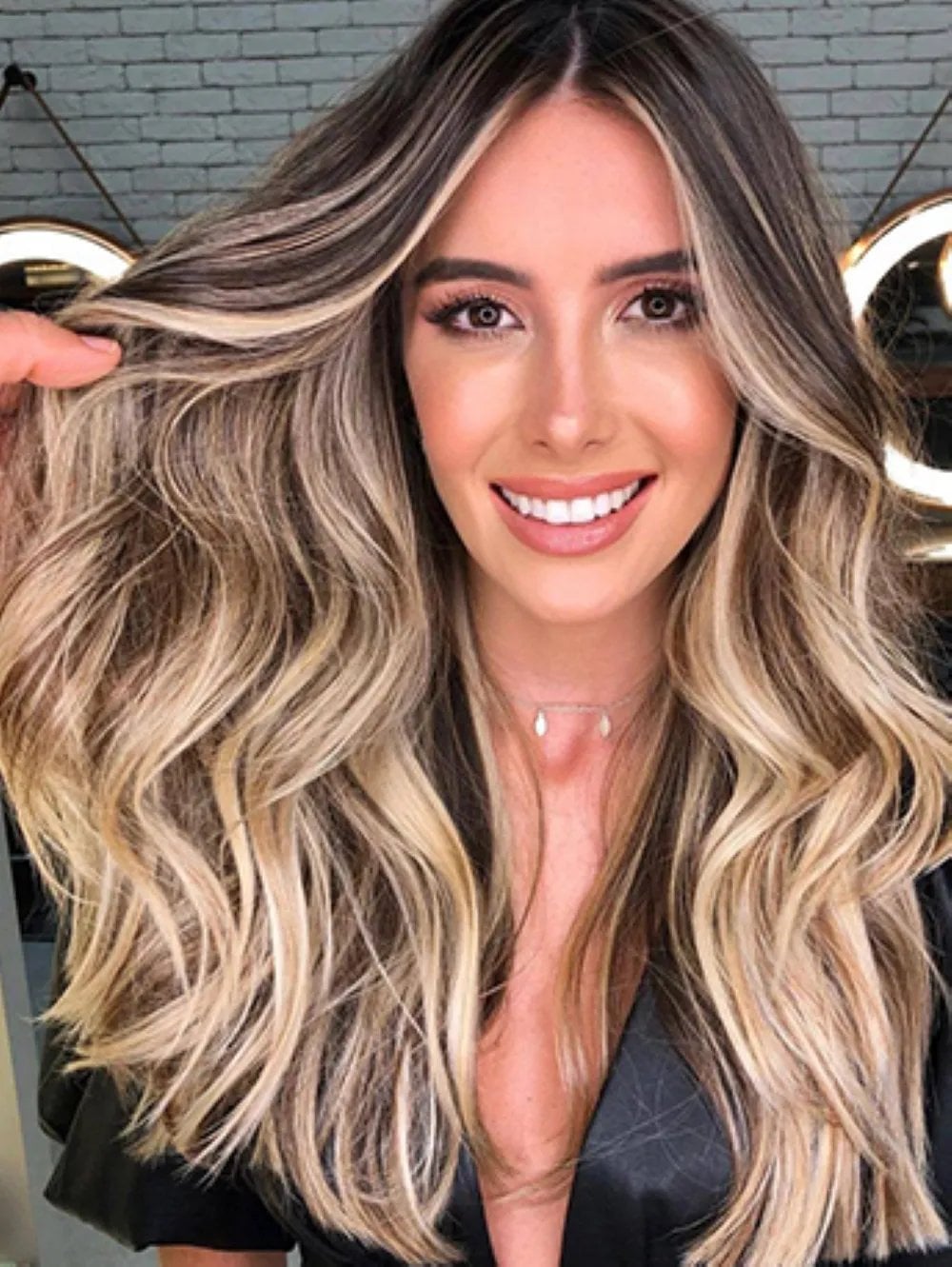
Ask your colorist for: collarbone length with long layers, dark brown to bright blonde ombré with highlights, curtain bangs. A color-safe toner every six to eight weeks keeps the blonde from turning brassy, and a trim every eight to ten weeks maintains the shape.
Collarbone Cut With Soft Blonde Ombré And Blowout
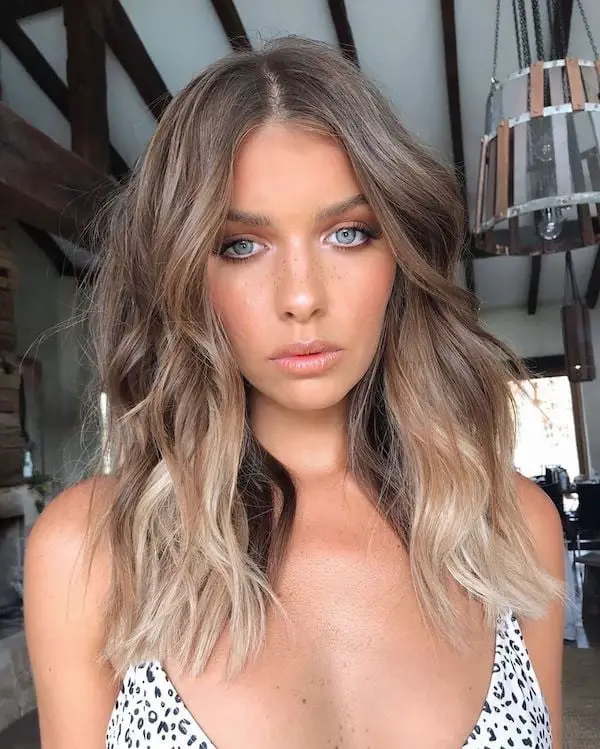
How do you get a blowout that looks polished but not stiff? Start with a collarbone-length cut layered enough to hold volume at the ends. The dark brown to soft blonde ombré keeps the transition subtle, and the curtain bangs frame the face without demanding daily work. Ask your stylist for: collarbone length with layers, dark brown to soft blonde ombré, curtain bangs, blowout style. Rough dry the hair first, then finish the front and ends with a round brush. A trim every eight to ten weeks keeps the layers from losing their shape.
Mid-Back Hair With Blended Ombré And Face-Framing Layers

The blended ombré on this mid-back length starts dark brown and warms to a natural blonde near the ends, with face-framing layers and curtain bangs softening the overall line. Thick, wavy texture holds the loose waves well, and the middle parting keeps the look symmetrical. The layers grow out gradually, and the ombré transition hides new growth. Ask your stylist for: mid-back length with layers, dark brown to warm blonde ombré, curtain bangs. Waves get definition without stiffness from a texturizing spray. Trim every eight to ten weeks.
Upkeep is straightforward. The face-framing layers need reshaping more often than the length, but the ombré itself can go six to eight weeks between toning appointments. A purple shampoo once a week helps the warm blonde stay clean-toned.
Shoulder Length Hair With Curly Texture And Blonde, Close-Up Take
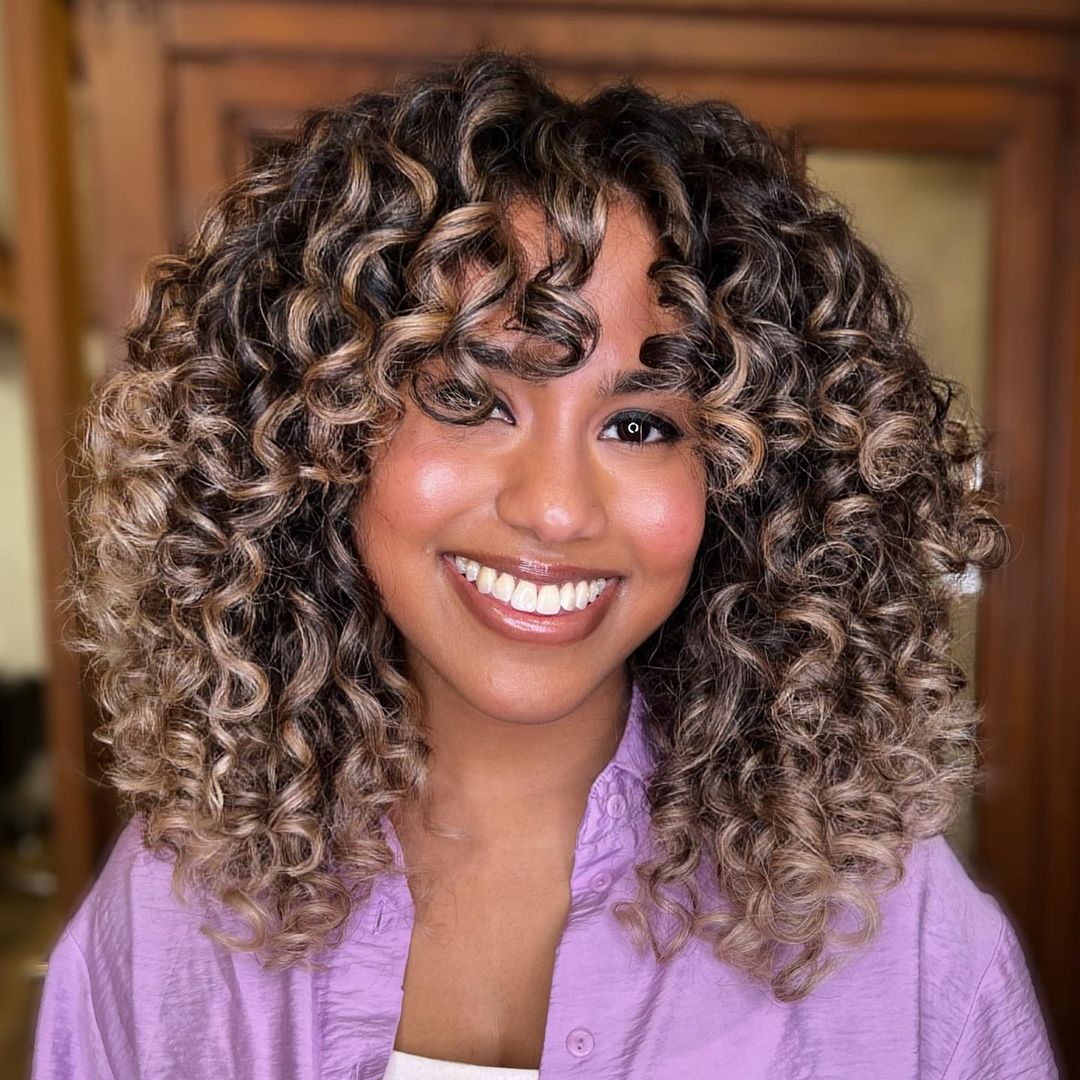
Summer is the season for shoulder-length hair with layers and curtain bangs, especially when the dark brown base melts into a blonde ombré that catches the sun. The thick, curly texture is air-dried, which means the curl pattern stays intact and the color reads as part of the hair rather than painted on top. A side parting and those curtain bangs keep the shape from looking too round. Ask your colorist for: shoulder length with layers, dark brown to blonde ombré, curtain bangs, air-dried finish. This works best for thick, curly hair that can handle the lightener without losing its bounce, and the ombré placement means your roots stay dark for about three months before you need a touch-up.
Chin Length Blunt Bob With Full Fringe And Light Blonde Ombré

It is not the grow-out-friendly ombré of a longer cut. This chin-length blunt bob with a full fringe requires precise placement: dark blonde at the roots graduates to light blonde at the ends, and the subtle transition keeps the blunt line from looking harsh. Fine, straight texture works best here because the ombré reads clearly without waves competing. Ask your colorist for: chin length blunt bob, full fringe, dark blonde to light blonde ombré. The drawback is the fringe: it needs a trim every three to four weeks, and the bob itself every six to eight. This is strictly a salon job. The blunt edge and even ombré are hard to replicate at home.
Collarbone Lob With High Contrast Black To Blonde Ombré
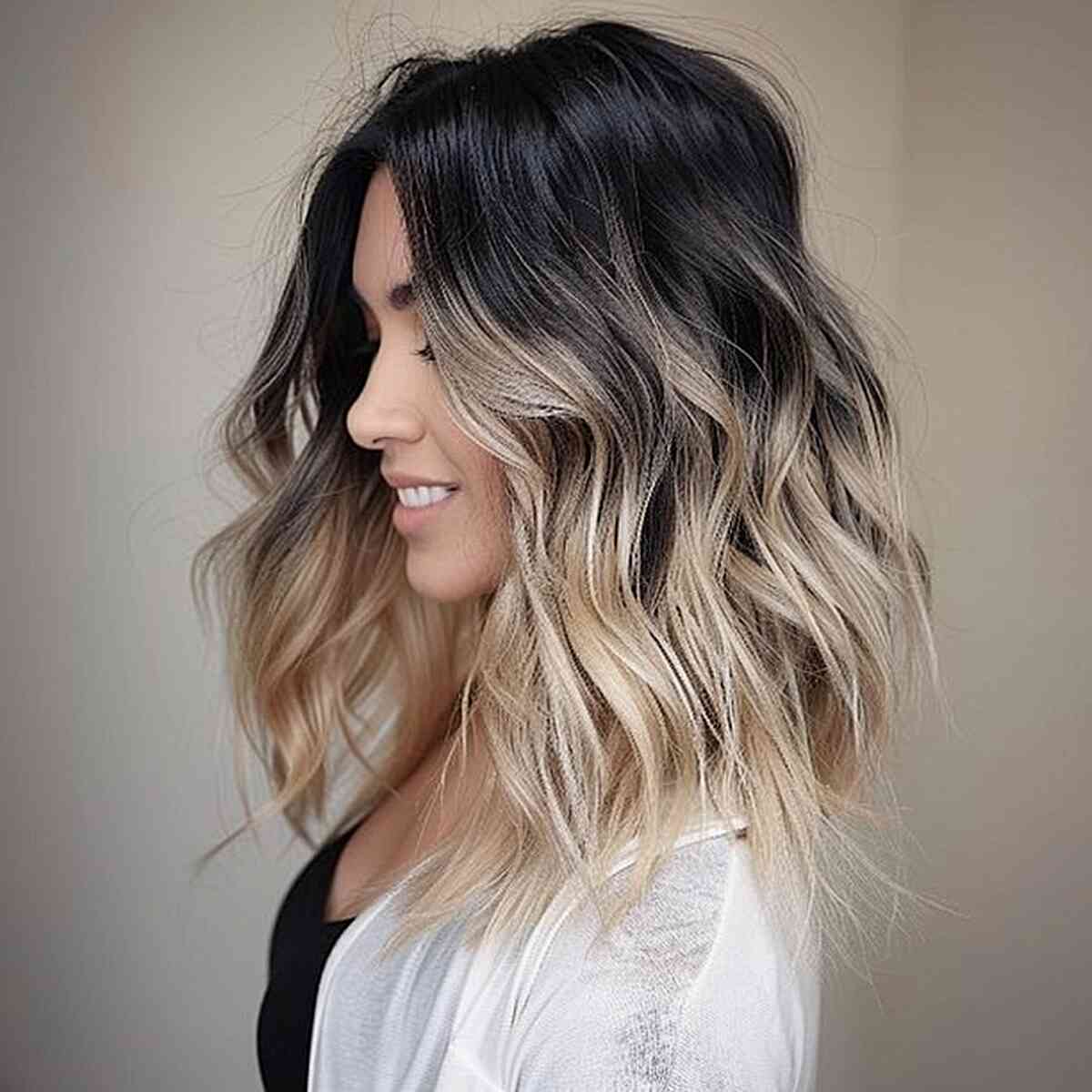
A high contrast black to blonde ombré on a lob uses a dark brown base that stays solid at the roots. The colorist paints a blonde ombré starting around the mid-lengths, using a balayage technique to hand-paint the lighter shade so the transition has a soft edge. The thick, wavy texture helps blur the boundary even more. Ask your colorist for: collarbone length lob with layers, black to blonde ombré. A middle parting keeps the contrast symmetrical, and the side view shows how the blonde wraps around the ends. A color-safe toner every 4 to 6 weeks prevents brassiness, and a trim every 8 to 10 weeks maintains the lob’s shape.
Mid-Back Hair With Blended Dark Brown To Blonde Ombré
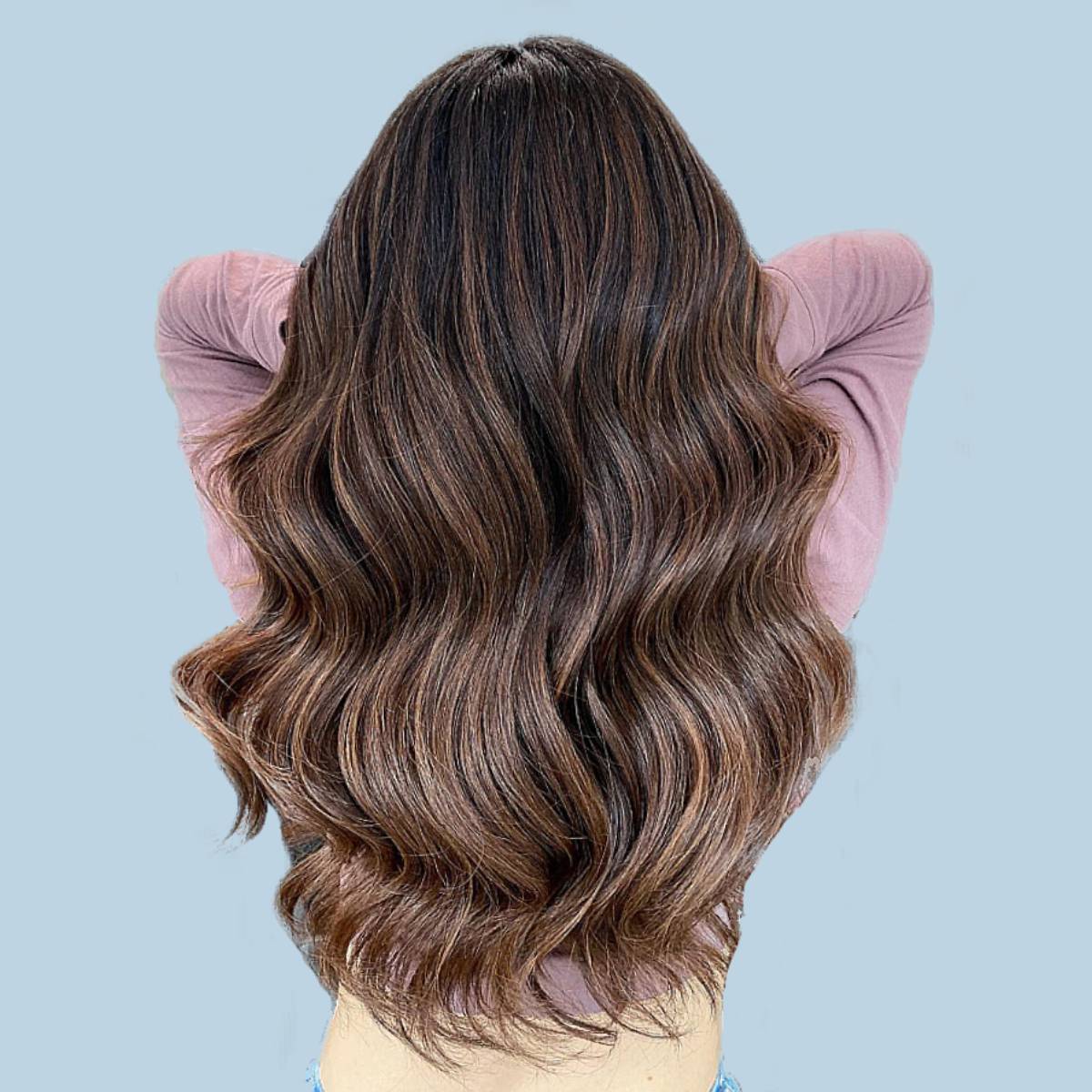
This ombré starts at the mid-lengths, so the dark brown base stays rich for about six inches before it begins to melt into blonde. The key difference between this and a more abrupt transition is the gradient: the lighter shade is painted in vertical strokes that follow the hair’s natural fall, so there is no single demarcation line. The thick, wavy texture and soft blowout style help the color appear as a single, seamless unit.
Ask your stylist for: mid-back length with layers, dark brown to blonde ombré, soft wavy blowout. A middle part and the length below the chin work well for elongating a round face. Use a smoothing serum on damp hair before blow-drying to keep the gloss consistent from root to tip. Expect a trim every 8-10 weeks and a toning appointment every 6-8 weeks to keep the blonde from drifting warm.
Chin Length Angled Bob With Blonde Ombré
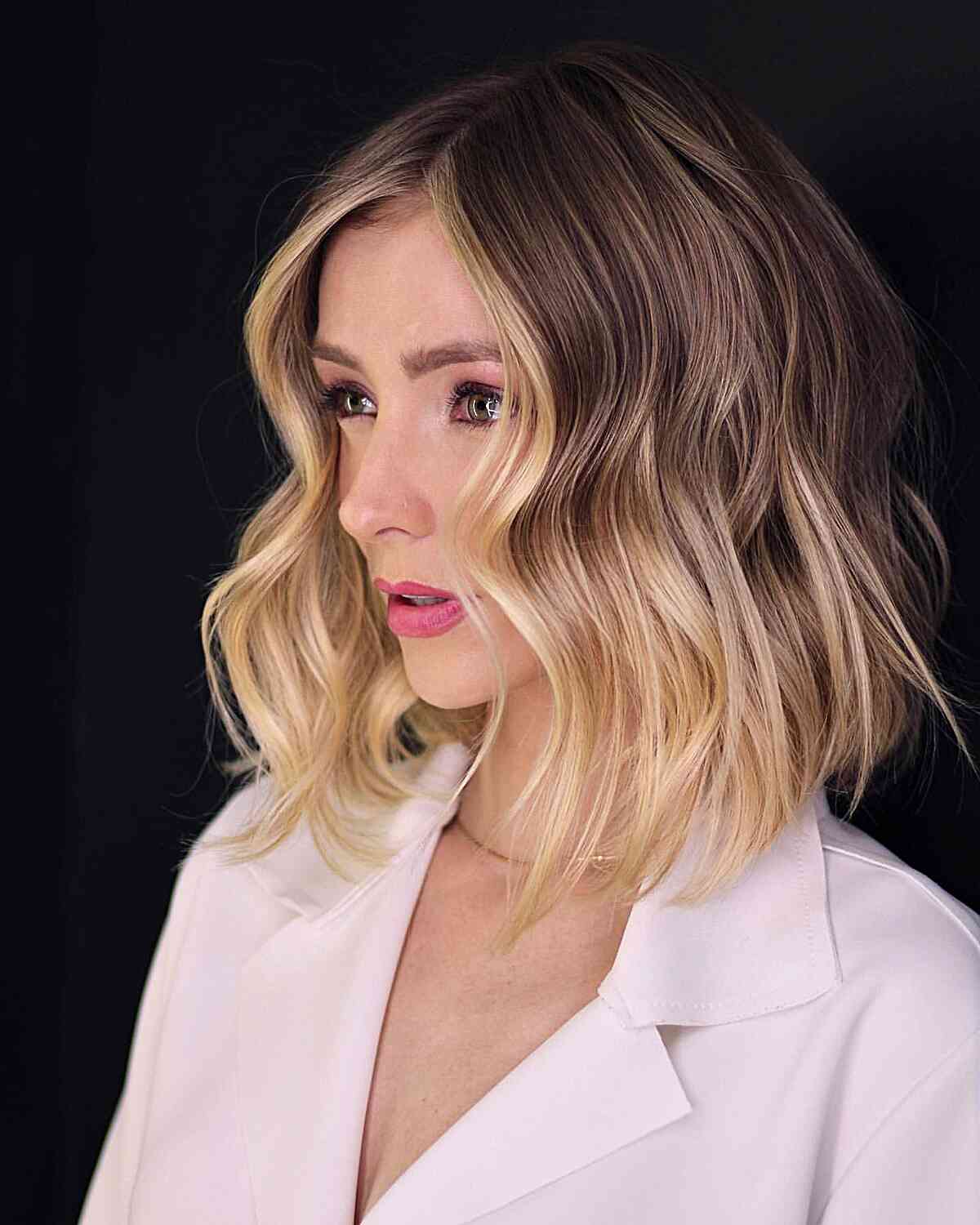
The angled bob works on shorter lengths because the graduated shape gives the ombré a place to land. The chin length cut is shorter in the back and slightly longer in the front, so the dark brown base at the roots contrasts with the blonde at the tips without the color feeling crowded. The fine, straight texture holds the line cleanly, which is exactly what this cut needs. Ask your stylist for: chin length angled bob, dark brown to blonde ombré. A middle parting keeps the symmetry. This shape suits fine hair because the angle adds the illusion of density at the ends. The slightly wavy ends add a lived in finish, and a trim every 6 to 8 weeks keeps the angle sharp.
Mid-Back Hair With Seamless Warm Blonde Ombré
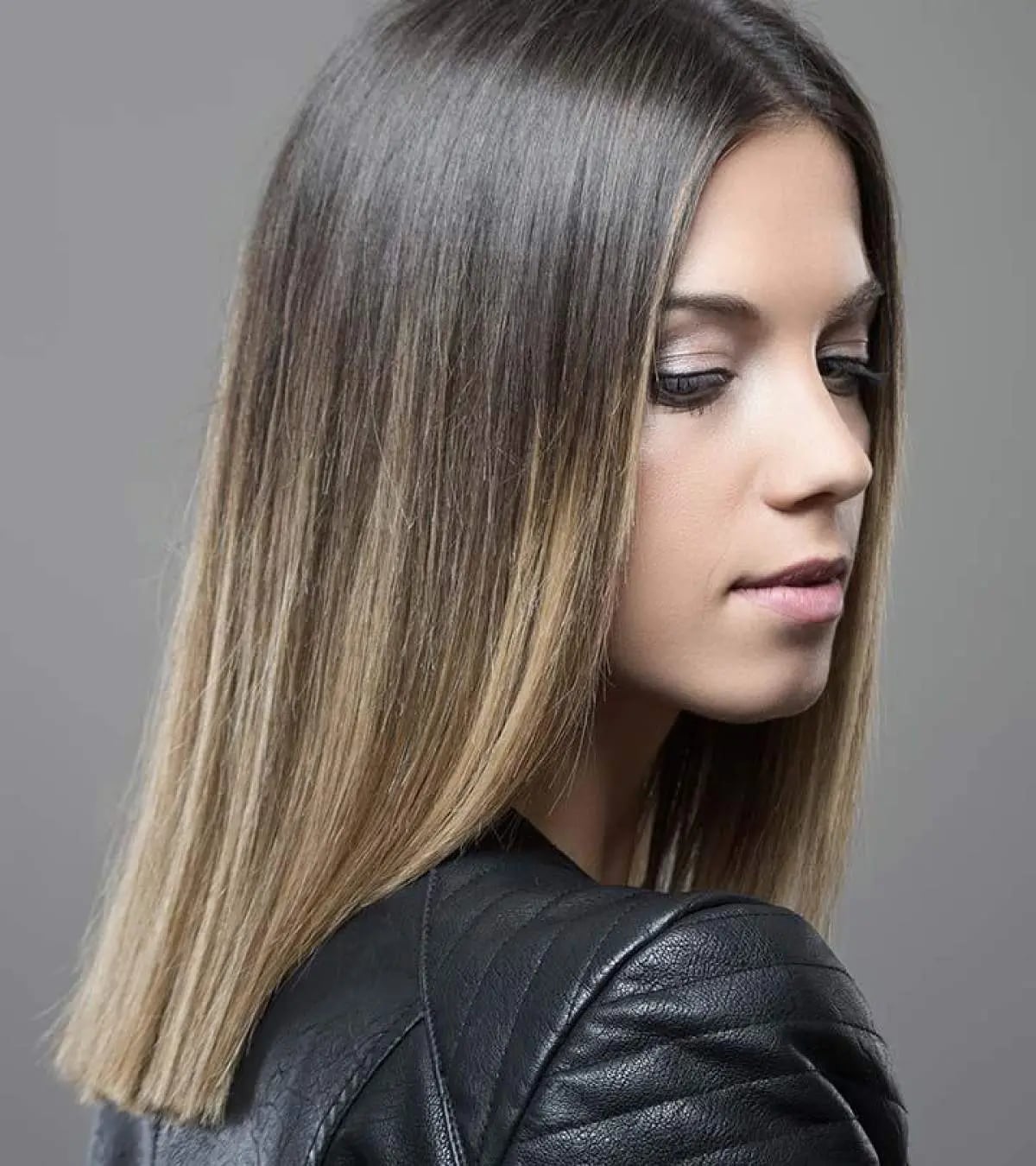
A seamless warm blonde ombré is built on a gradient that starts so subtly you barely notice the shift until the mid-lengths. The dark brown base at the roots holds its depth for the first several inches, then the warm blonde begins to appear in thin, vertical sections that gradually widen toward the ends. The medium-density, wavy texture helps the color blend because the waves catch the light at different angles, making the transition look continuous.
Ask your stylist for: mid-back length with long layers, dark brown to seamless warm blonde ombré. A middle part and the length below the chin elongate a round face. The low-maintenance reality: because the roots stay dark, you can go 10-12 weeks between color appointments. A shine serum on dry hair enhances the glossy finish, and a trim every 8-10 weeks keeps the long layers from looking straggly.
Collarbone Hair With Caramel Blonde Ombré
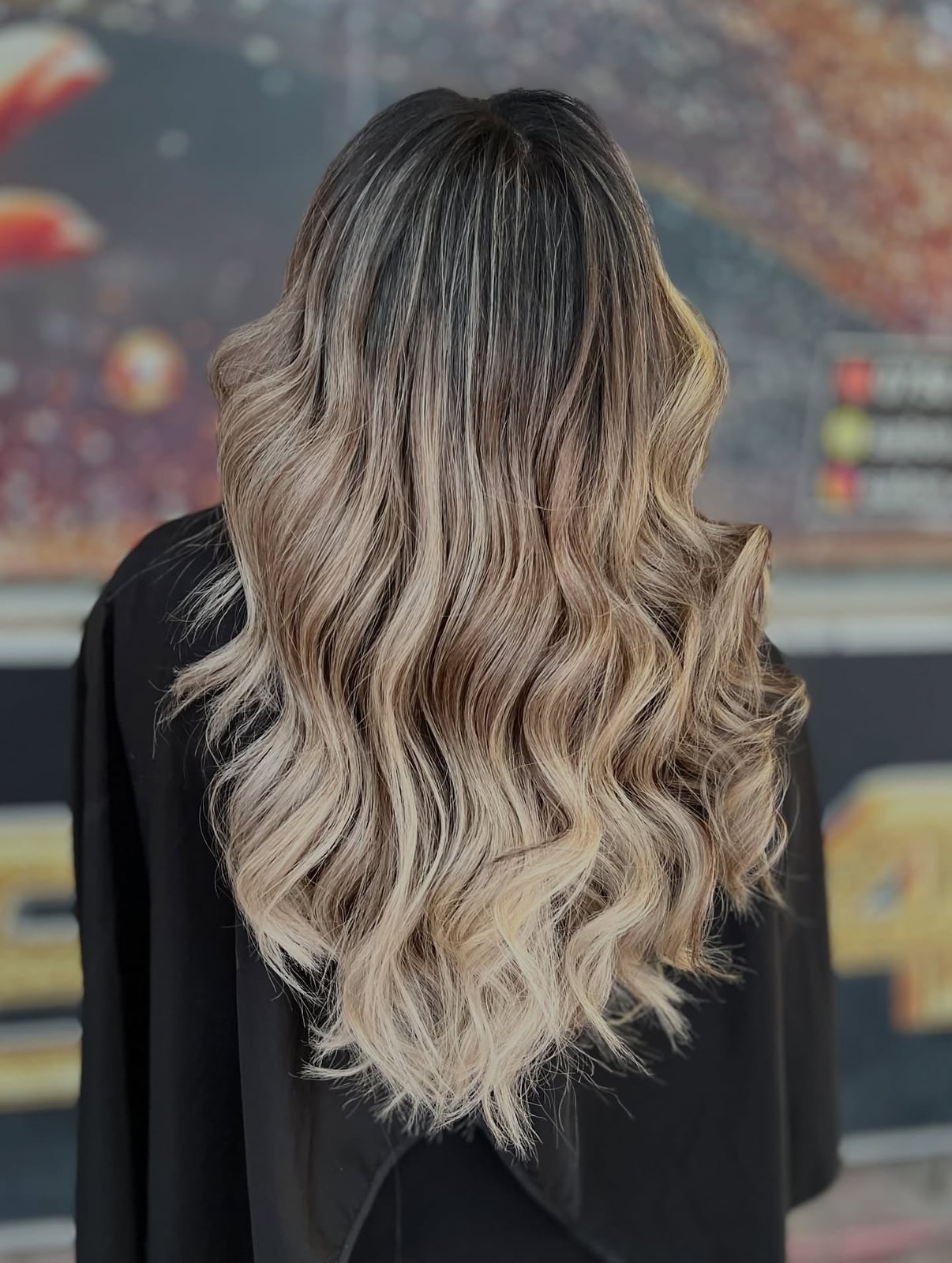
How do you describe a soft caramel blonde ombré to your colorist so you both end up on the same page? Start with the base: dark brown at the roots, then ask for a warm caramel blonde that starts around the cheekbones and deepens toward the ends. The long layers in this collarbone cut help the color distribute evenly because the shorter pieces around the face pick up more of the lighter shade. The medium-density, wavy texture gives the caramel a glossy, dimensional look. Ask your colorist for: collarbone length with long layers, dark brown to caramel blonde ombré, side parting. A side parting adds volume at the crown and softens the line of the jaw. This is a color that grows out gracefully, so you can stretch salon visits to 10-12 weeks.
Collarbone Textured Lob With Soft Pink Ombré Ends
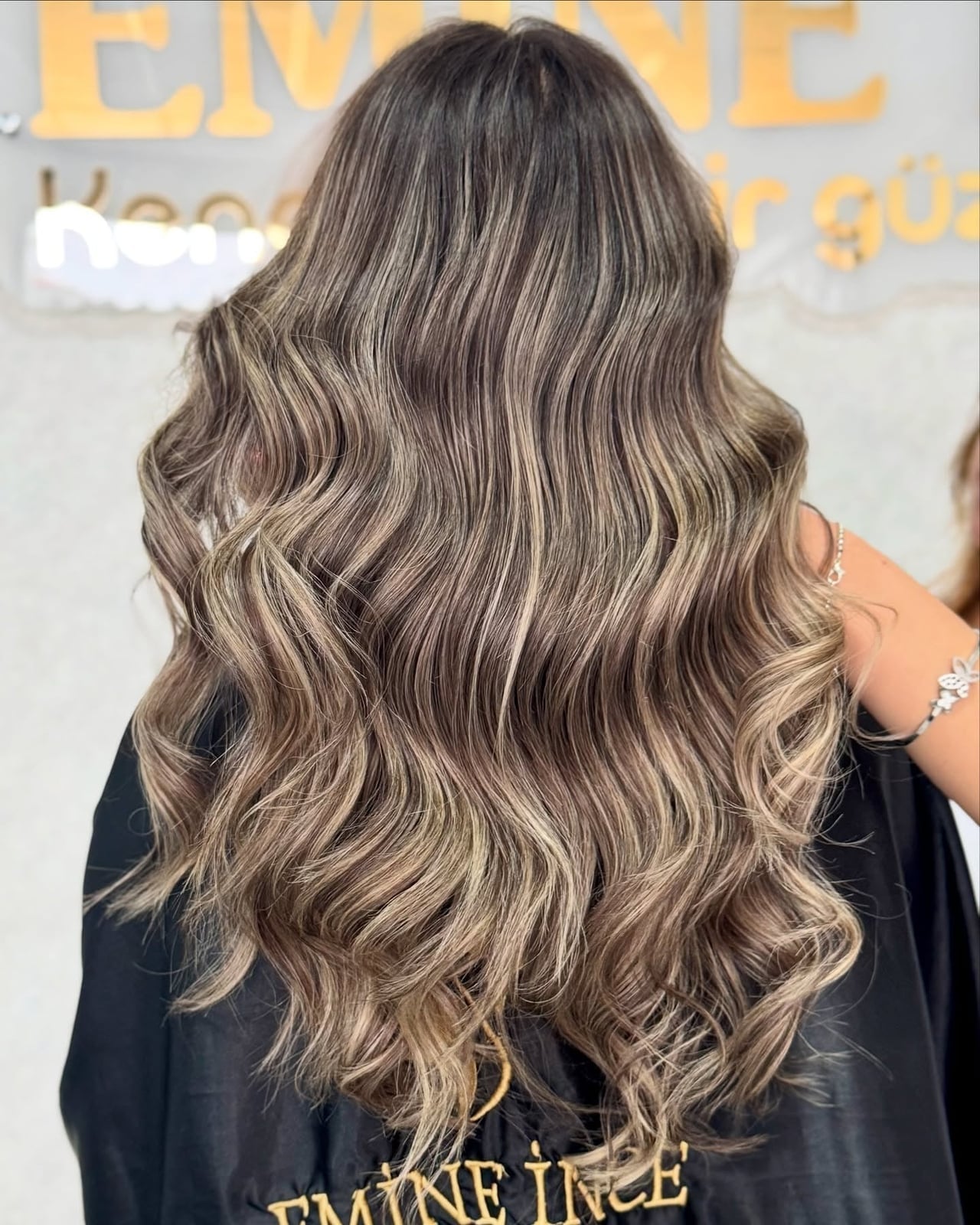
A textured lob with curtain bangs and an ash blonde base that shifts into soft pink ombré ends is a playful idea that lands or flops on execution. The fine, wavy texture at collarbone length needs the curtain bangs and those loose waves to fake volume, because too much color processing can leave wavy hair looking limp. Ask your colorist for: collarbone textured lob, ash blonde with pink undertones, soft pink ombré ends, curtain bangs. This is a salon-only job: getting that pink to land evenly on fine hair without it reading as a mistake requires a pro. The honest trade-off is that pink tones need a color-depositing conditioner every few washes, and a trim every six to eight weeks to keep the lob shape clean.
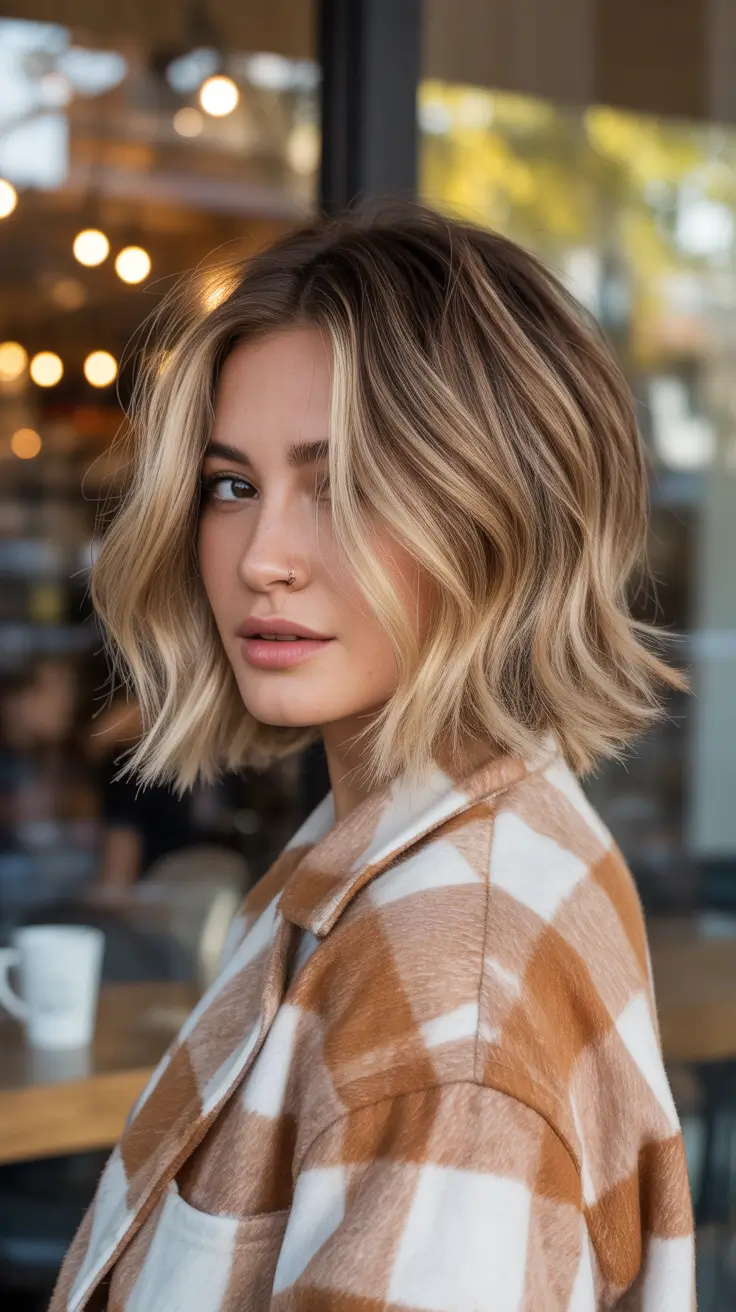
Chin Length Short Bob With Loose Waves And Ombré
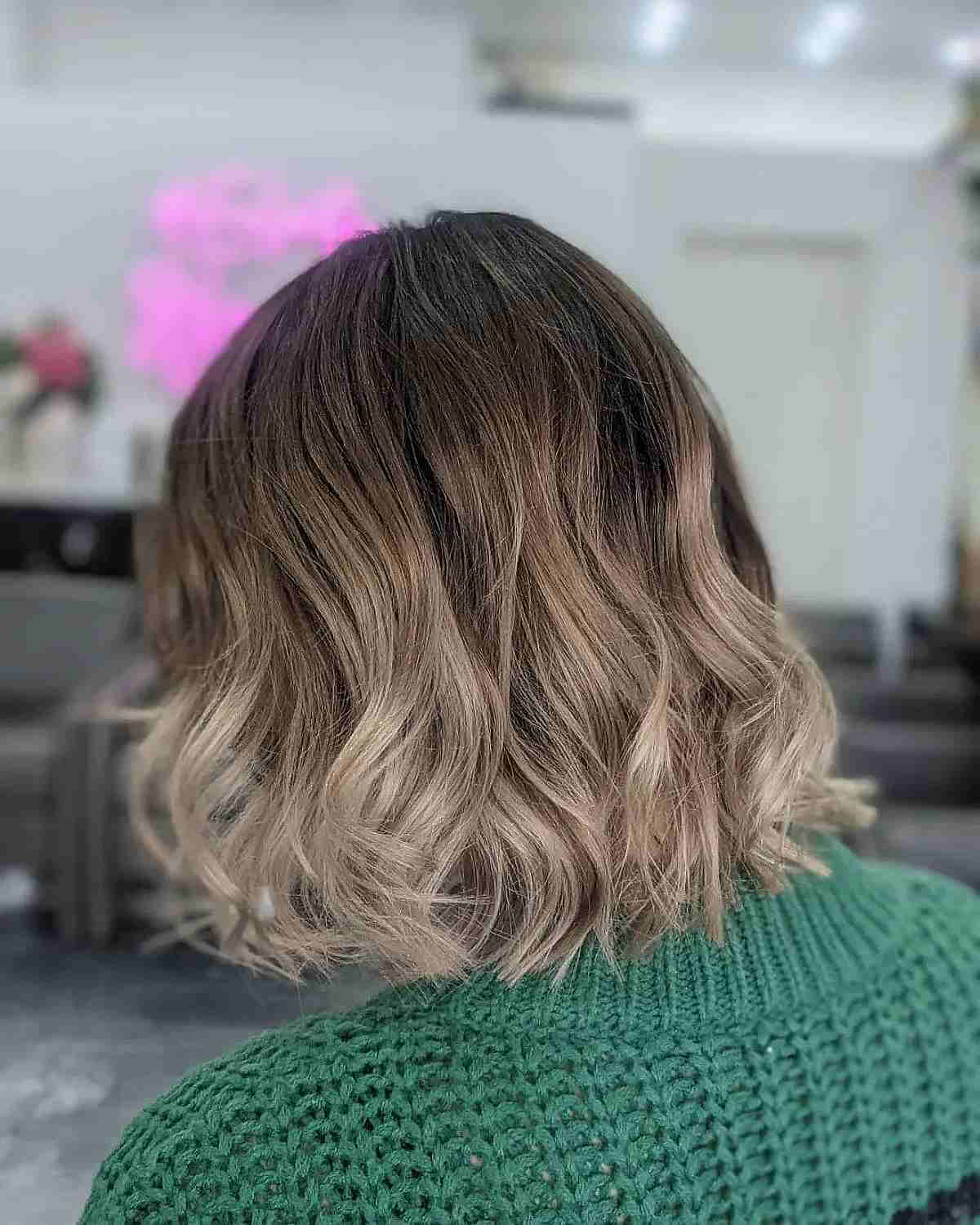
A chin-length short bob with layers and a dark brown to blonde ombré works because the technique respects the cut’s geometry. The colorist applies the lightener only from mid-shaft to the ends, keeping the dark root dense so the bob’s blunt shape stays clear. Medium density, wavy hair at chin length handles this well, and the layers keep the ombré looking polished. Ask your stylist for: chin length short bob with layers, dark brown to blonde ombré, loose waves. The middle parting keeps the weight balanced, and the waves are a deliberate part of the design.
Collarbone Lob With Soft Pink Highlights And Blowout
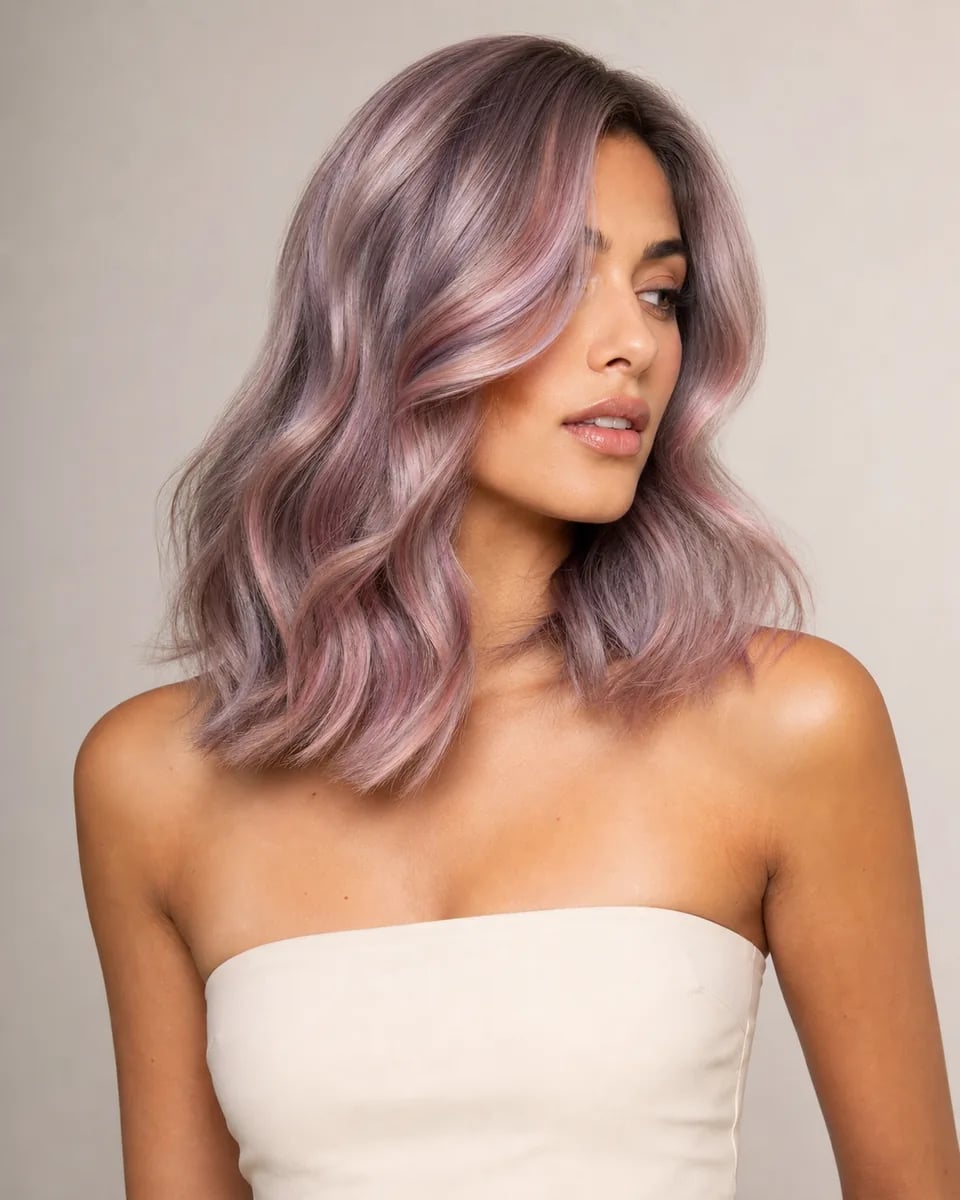
This is not a pastel fantasy that washes out fine hair by lunch. A collarbone lob with soft layers and curtain bangs gets subtle pink highlights over an ash blonde base, styled in a wavy blowout that lands somewhere between spring and summer. The side parting and curtain bangs add fullness where fine, wavy hair usually needs it, and the highlights stay low-contrast enough to avoid that streaky salon-fresh look. Ask your colorist for: collarbone length lob with layers, ash blonde with soft pink highlights, curtain bangs, wavy blowout. A volumizing mousse before blow-drying keeps the lift, and a trim every eight to ten weeks keeps the lob from turning shapeless.
Chin Length Bob With Copper To Blonde Ombré, Wavy
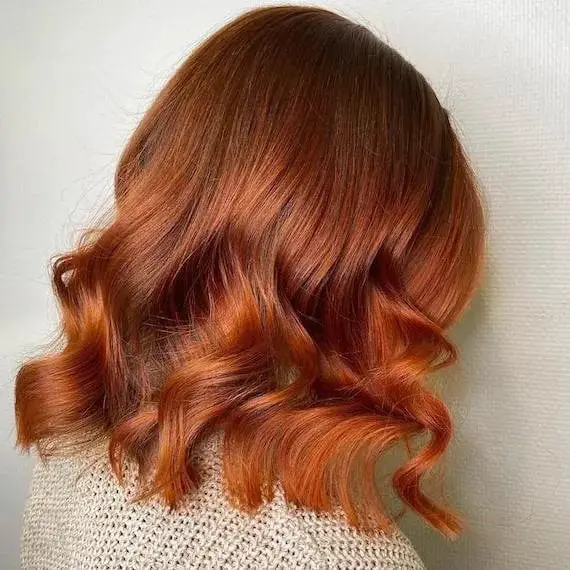
A chin-length bob with a copper to blonde ombré is a specific proposition: the warm copper root and cool blonde ends create a gradient that works best on fine, wavy hair that can show off the shift without getting weighed down. The side parting and soft waves give the bob movement, and the contrast is high enough that it looks deliberate rather than faded. Oval and heart face shapes get the most out of the chin-length line. Ask your colorist for: chin length bob, copper to blonde ombré, side parting. A texturizing spray on dry hair defines the wave pattern, and a trim every six to eight weeks keeps the bob crisp.
Shoulder Length Hair With Soft Lighter Brown Ombré
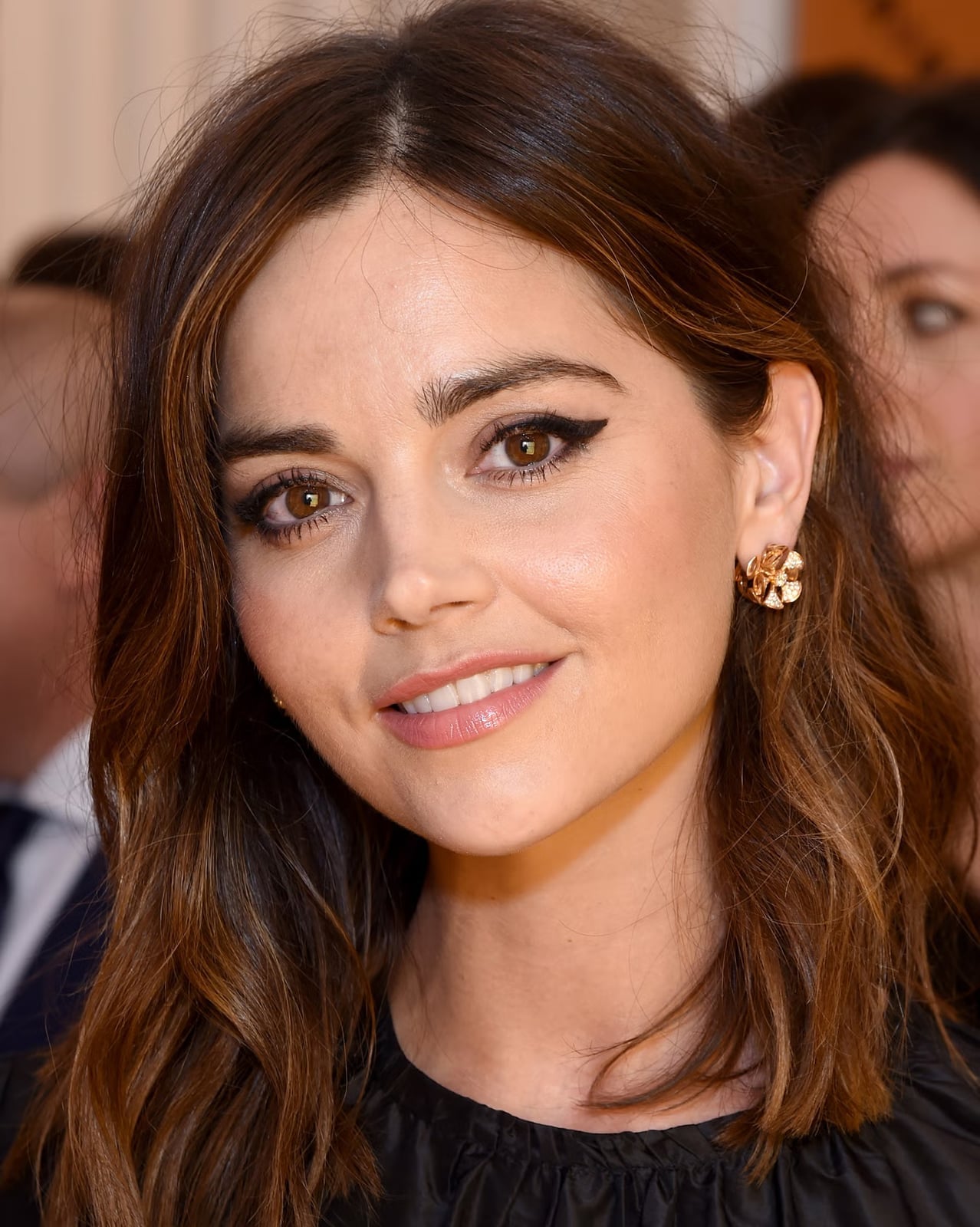
Shoulder-length hair with long layers and side-swept bangs gets a medium brown base that softens into a lighter brown ombré, and the whole thing is styled to look air-dried. This is the low-maintenance end of the ombré spectrum: the transition is subtle enough that grow-out is barely noticeable, and the side-swept bangs hide the root line for weeks. Medium density, wavy hair at shoulder length holds the shape without needing a round brush. Ask your colorist for: shoulder length with long layers, medium brown to lighter brown ombré, side-swept bangs. The side-swept bang needs a trim every four to six weeks to keep it out of your eyes; the overall length can go eight to ten weeks.
Collarbone Angled Bob With Blonde Ombré And Curtain Bangs
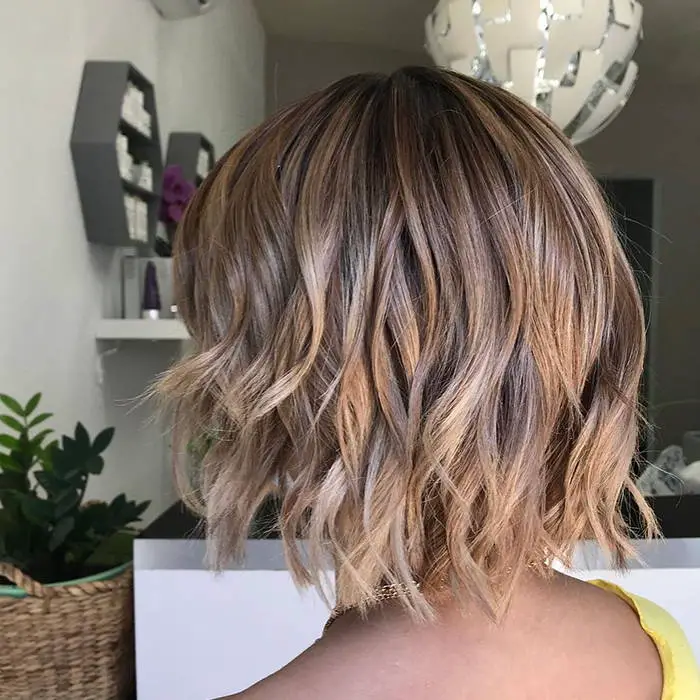
Wondering how to get that lived-in, slightly angled shape without looking like you tried too hard? Ask your stylist for: collarbone angled bob with layers, dark brown to blonde ombré, curtain bangs, side parting. The graduated cut keeps weight at the back while the front pieces graze the collarbone, and the curtain bangs sweep open to show off the ombré transition. A texturizing spray on damp waves, then a quick diffuser pass, and you are done. Trim every eight weeks to keep the angle sharp and the bangs from turning into a curtain you can close.
Mid-Back Hair With Auburn Ombré Effect
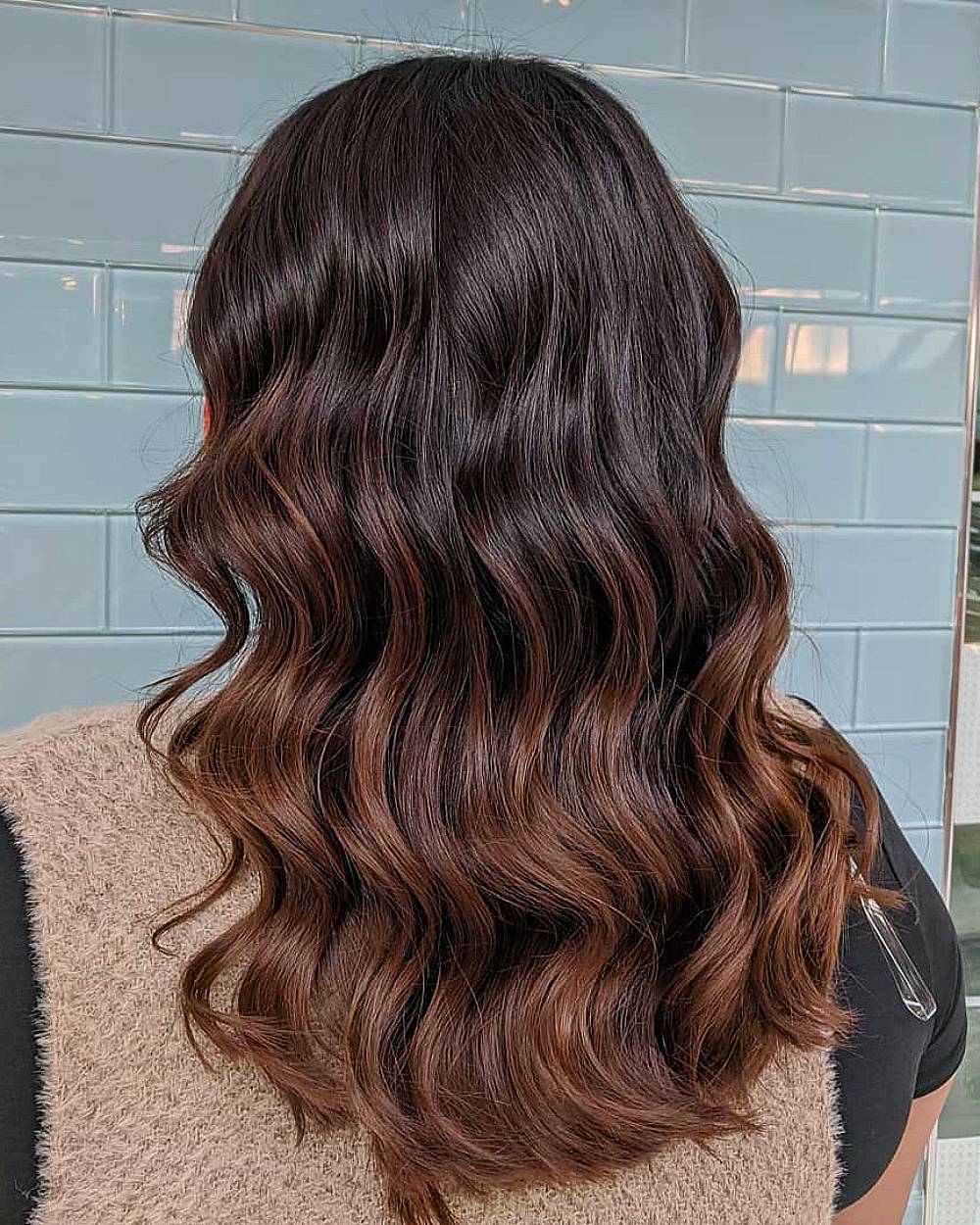
The auburn ombré on this mid-back length is not a dip-dye. It is a gradual fade that starts around the cheekbones and deepens to a warm copper at the ends. Your colorist will apply a lightener in vertical sections, then tone the mid-lengths with a copper-gold formula and the ends with a richer auburn. A middle part and length below the chin elongate a round face, and the long layers keep the thick wavy texture from looking heavy. This is a salon-only job: the bleach needs to be painted freehand for that seamless shift, and the toner has to be customized to your base brown. Expect about three hours in the chair.
Collarbone Lob With Natural Lighter Brown Ombré
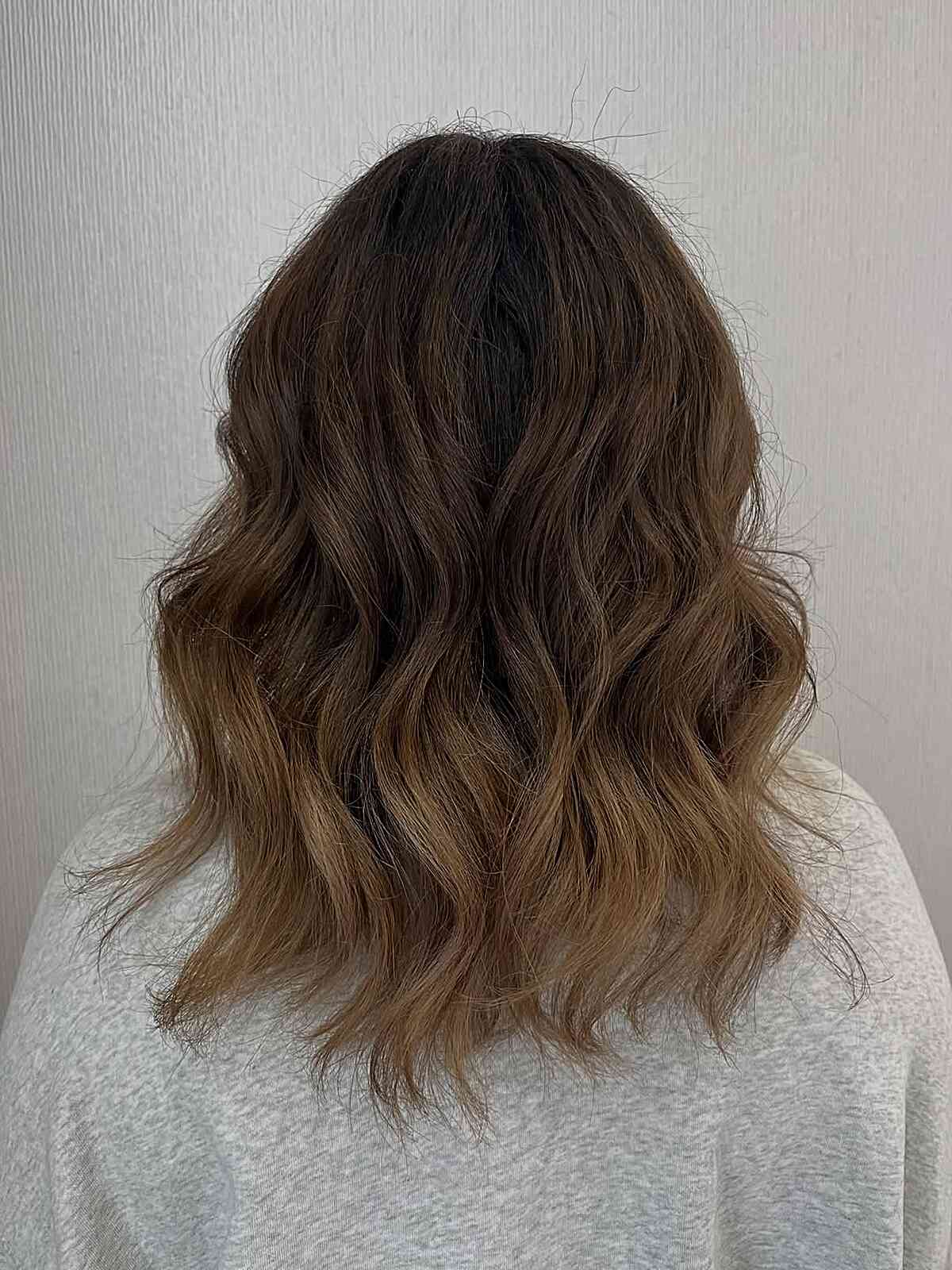
This is the ombré that does not shout. It just looks like your ends got a few weeks more sun than your roots. The collarbone lob with layers keeps the shape soft, and the dark brown to light brown transition is so subtle that you might be the only one who knows it is colored. A side parting adds volume on top, and the wavy medium-density texture holds the loose waves without product. Upkeep is minimal: a trim every ten weeks and a gloss every other salon visit to keep the brown from turning brassy. It grows out gracefully, so you can stretch the appointment gap to twelve weeks.
Mid-Back Hair With Seamless Blonde Ombré Blend, Wavy
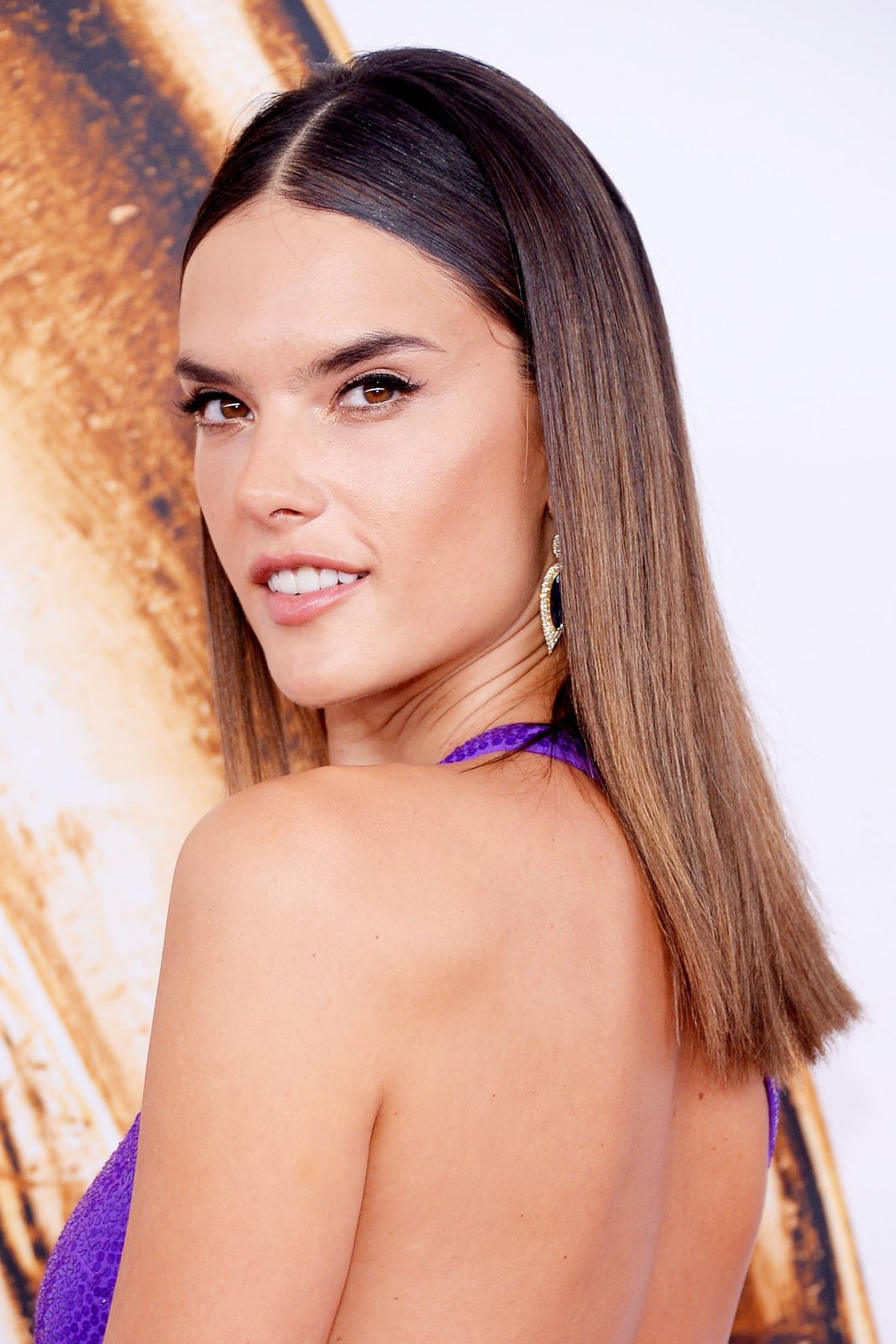
A seamless blonde ombré on thick wavy hair is a thing of beauty until it is not. The blend can look brassy if the toner fades unevenly. The long layers and middle parting allow the color to graduate from dark brown to a cool blonde without a harsh line. Thick wavy texture holds the shape well, but fine hair would struggle with the weight of the longer layers. The blonde section needs a toning appointment every six weeks to stay cool. A shine serum on dry hair helps the glossy finish last between washes.
Ombré Hair Color Ideas For A Subtle Transition
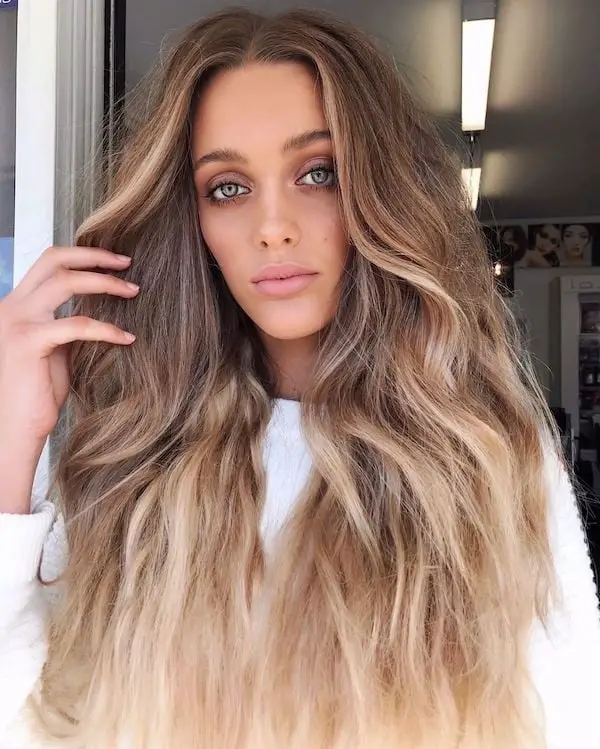
Can you get a subtle ombré at home without it looking like a DIY regret? Yes, but only if you keep the contrast minimal. A mid-back length with long layers and a middle parting gives you the most forgiving canvas: the dark brown roots blend into a light blonde that is only a few shades lighter. The technique involves applying a gentle lightener to the mid-lengths and ends, then pulling it upward through the midsection with a wide-tooth comb. A salon-leaning job is safer, the colorist can see the saturation in real time, but a box dye with a low-volume developer gets you close. Toning every eight weeks keeps the blonde from going brassy.
Popular Ombre Hair Color Ideas To Try Now
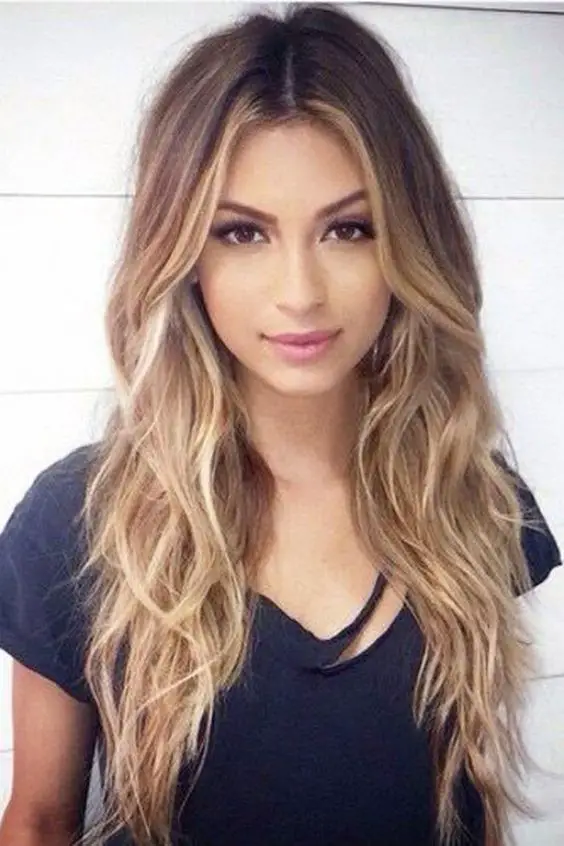
A dark brown base that melts into blonde at the ends is a popular ombré choice because it works. The mid-back length with long layers lets the color transition breathe and keeps everything symmetrical. The wavy texture from a blowout adds movement without fighting the gradient.
This approach works for thick hair, and the length below the shoulders gives the color room to travel. Ask your colorist for: dark brown to blonde ombré with a blended effect. A trim every eight to ten weeks keeps the ends healthy, and a purple shampoo once a week stops brassiness between appointments.
Final Thoughts
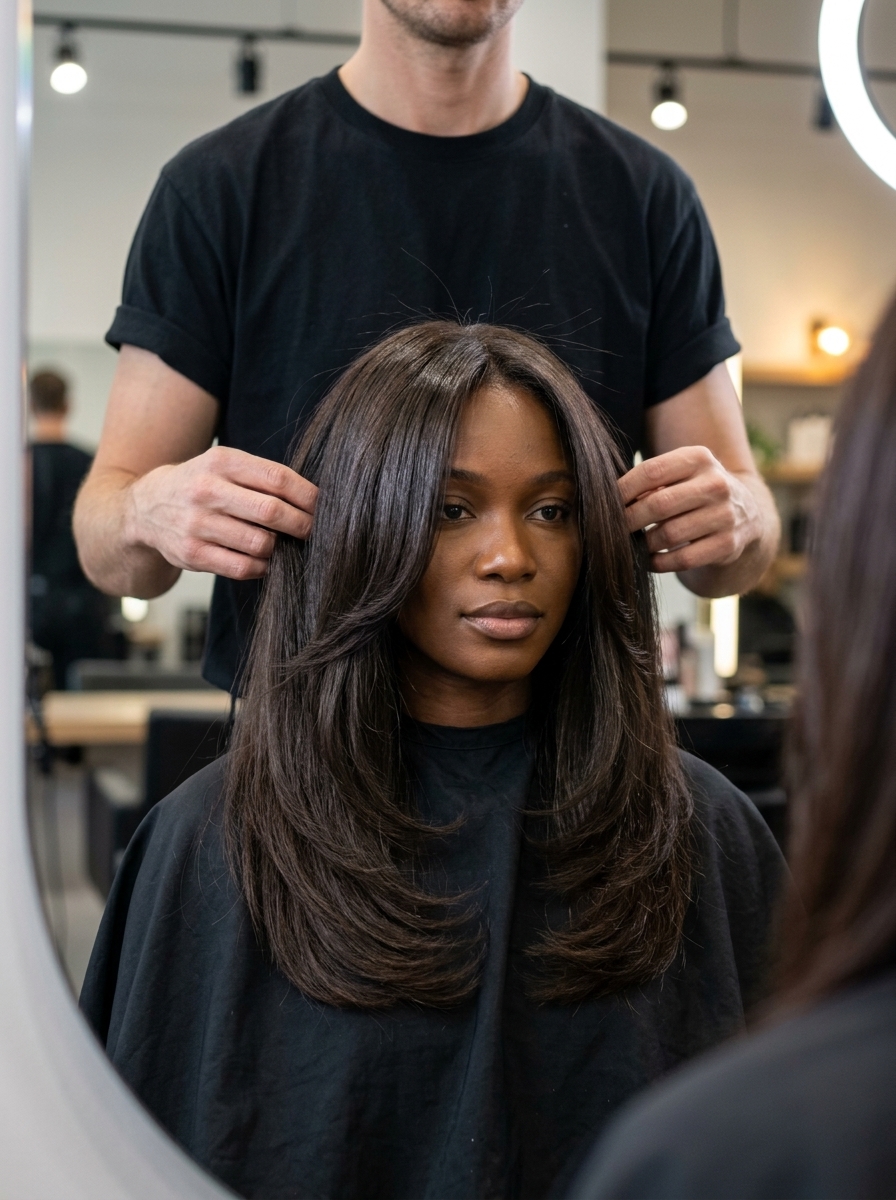
For fine hair, keep the ombré transition within one to two levels of your base to avoid a brassy or over-processed look. Face-framing layers add movement and draw attention to the color blend.
- Trim ombré every 10-12 weeks to maintain shape and blend.
- Tone the lighter ends every 6-8 weeks to preserve the desired shade.
- Use a sulfate-free shampoo and conditioner to protect color.
- Apply a heat protectant spray before styling to minimize damage.
Embrace the blend for a low-maintenance, high-impact look.