
Color can feel exciting in the mirror and still become tiring when it asks for more attention than you want to give it each morning. The best choice is rarely about picking the boldest or palest possible result. It is about deciding where you want the eye to pause, how much natural depth you want to keep, and whether the surface of your hair will make that contrast feel calm, crisp, or expressive. Those questions create a color direction that still feels like you.
A practical selection begins with the kind of maintenance you can actually enjoy. Think about how your part sits, where the ends look most textured, and whether you prefer a quiet shift or a visible accent that changes the whole mood. That process makes September hair color trends a source of ideas rather than a rulebook, while keeping the final decision rooted in your own routine and comfort.
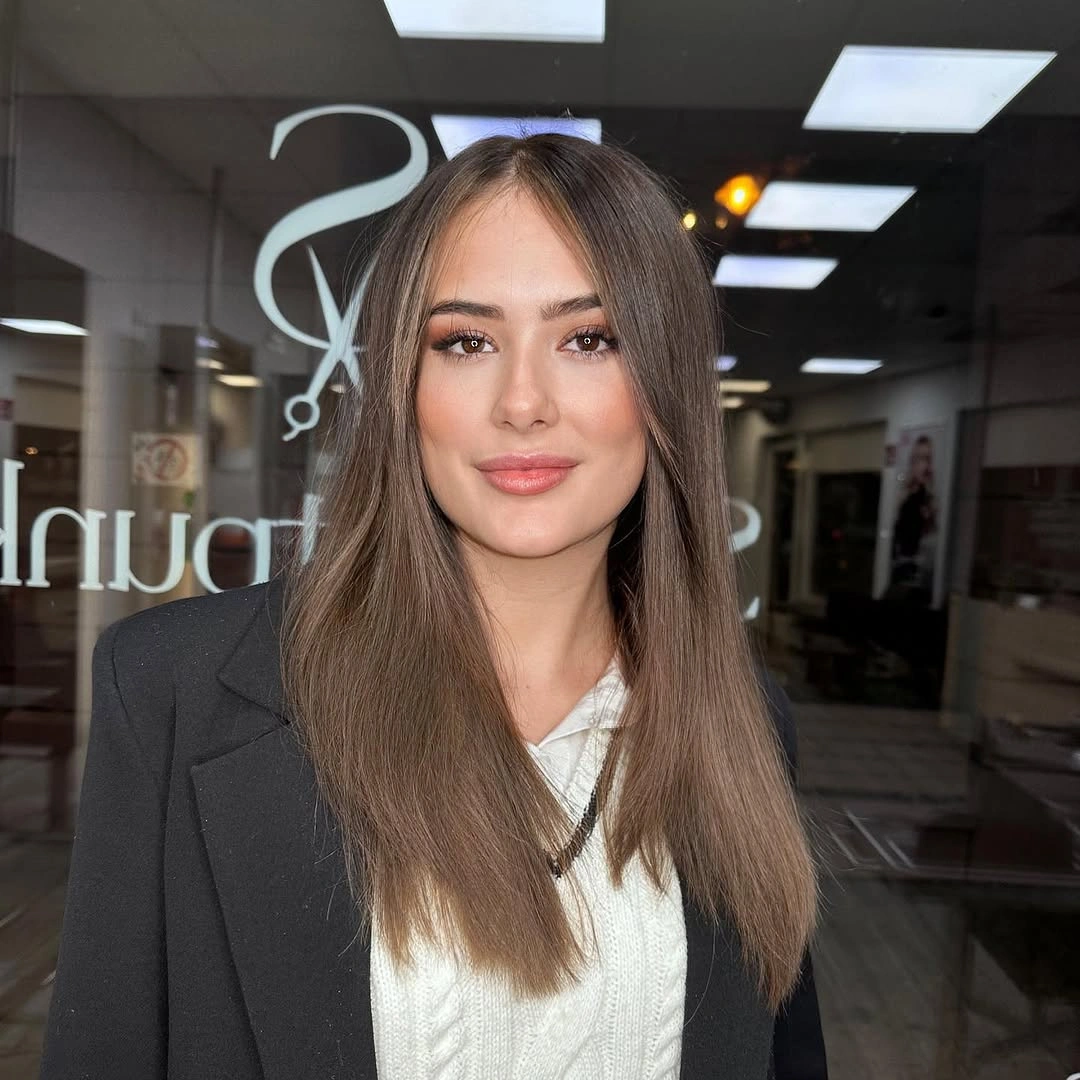
Beige Face Ribbons on a Smooth Brunette
The straight brown length stays calm through the center part, while pale beige pieces sit close to the face and create the main change in brightness. A darker-looking root area keeps the lightness from spreading across every strand, so the result still reads as brunette from a normal distance. The smooth finish makes the placement easy to see because there is no heavy wave pattern competing with those front ribbons.
For a lower-contrast version, keep the front pieces only a few steps lighter-looking than the surrounding brown and let them begin below the part. If you want the face frame to register more strongly, a simple blowout or straight finish will show it better than very textured styling. Bright pieces near the face can become the first thing people notice, so a softer root area is helpful when you prefer the overall color to remain grounded.
The appeal is not a dramatic transformation but a clean line of light against a darker, polished base. That kind of placement can make an otherwise simple mid-length cut feel considered without adding more layers or accessories. Keeping the ends close in depth to the rest of the hair helps the brightness stay focused exactly where it has the most visual impact.
Orange Panel Against a Rounded Red Bob
A saturated red bob already has a strong silhouette, and the bright orange panel at the front turns that compact shape into a graphic color statement. The orange appears in a concentrated area near the fringe instead of being scattered through the whole head, so the rounded nape and darker red side remain visible. This placement gives the short cut energy while preserving its neat, almost sculpted outline.
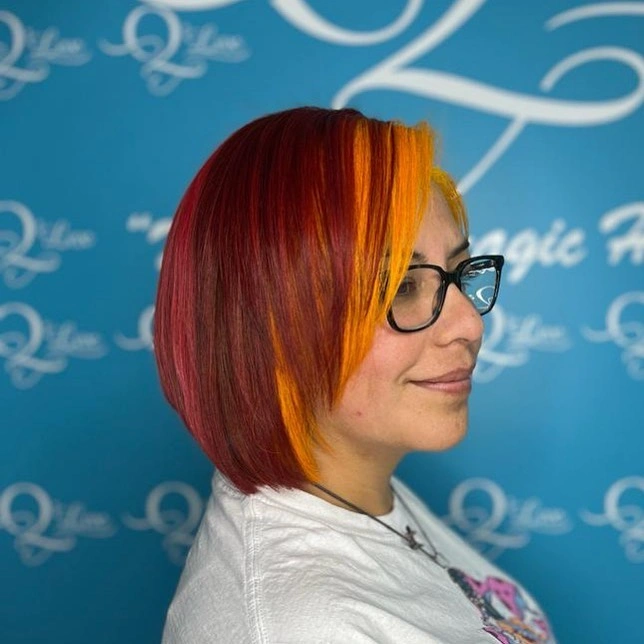
A single front panel is easier to live with visually than an all-over high-contrast shade because the strongest color has one clear job. You could reduce the effect by using a darker copper accent, or push it further by keeping the rest of the bob very smooth and simple. Short cuts show regrowth and perimeter changes quickly, so the crisp color split asks for more attention than a blended long style.
What works here is the contrast between the warm orange flash and the dense red shape surrounding it. The line of color brings the eye forward, then the rounded back keeps the overall result from feeling chaotic. If you enjoy vivid hair but prefer order, this is a useful reminder that one deliberate panel can deliver more impact than many scattered streaks.
Creamy Blonde Length With Curled Ends
The long blonde hair looks lightest through the middle and ends, while a darker root area creates depth near the crown. Large curled ends gather the pale length into visible sections, which makes the color read as layered rather than like one uninterrupted block. From the back, the soft curve at the bottom gives the entire style a polished, rounded finish without making the top look overly rigid.
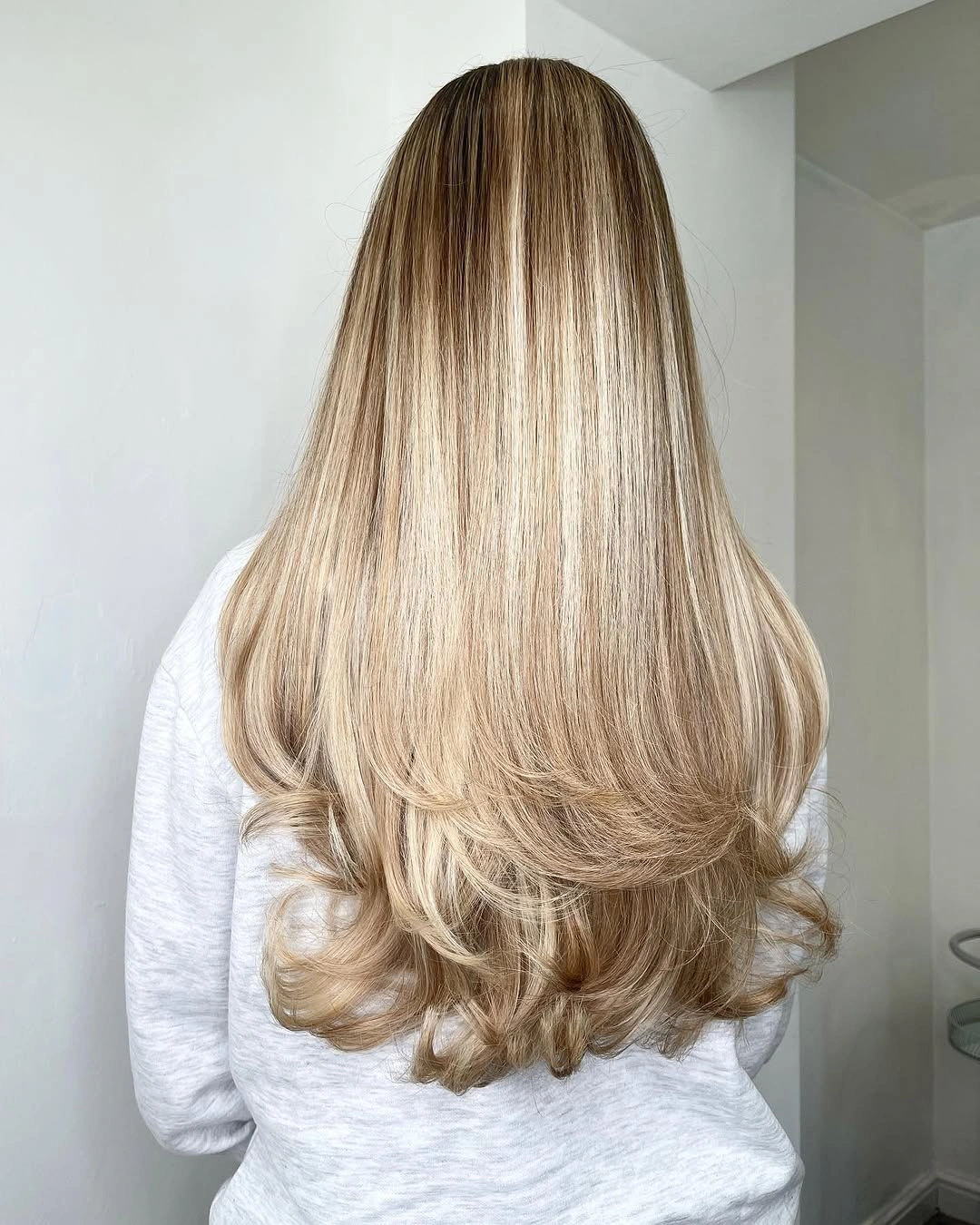
If you want the same sense of dimension with less contrast, keep the root shadow subtle and use a loose bend only at the lower third. More pronounced curls will show individual light and dark sections, while a straighter finish will make the blonde look cleaner and more uniform. Pale lengths tend to reveal dryness or uneven texture easily, so conditioning and gentle detangling matter as much as the visible shade itself.
The strongest detail is the way the ends turn outward into soft, separate pieces. That movement keeps the light color from flattening the long shape and gives the back view an intentional rhythm. A darker crown is especially useful here because it lets the bright lower lengths feel luminous without forcing the entire head to the same pale level. It is also a helpful lens for comparing other fall blonde hair color ideas before choosing a brighter result.
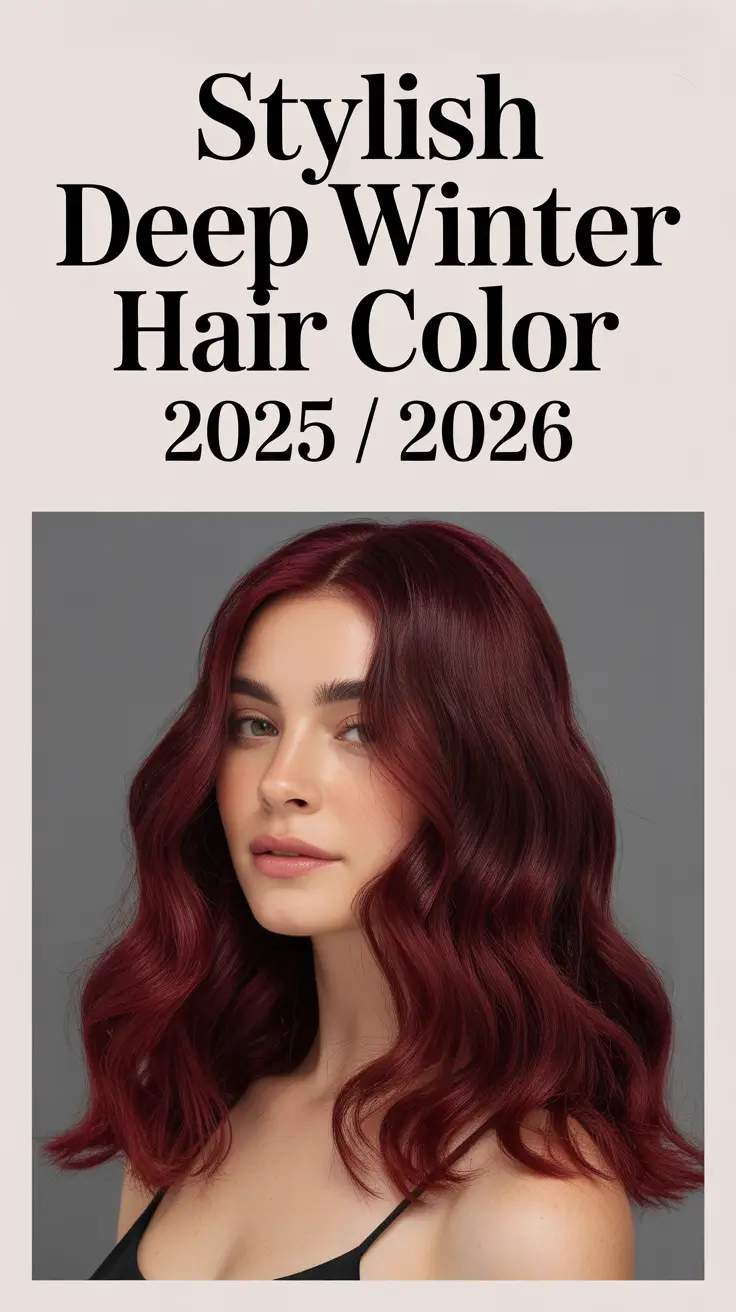
Berry Waves With a Full Fringe
Deep berry-red hair becomes softer through the long loose waves, while the full fringe creates a dark, expressive frame across the forehead. The color appears richer near the crown and through the middle, then the wave pattern keeps it from looking heavy all the way to the ends. Because the fringe is dense and straight-looking, it offers a clear contrast to the more relaxed movement below.
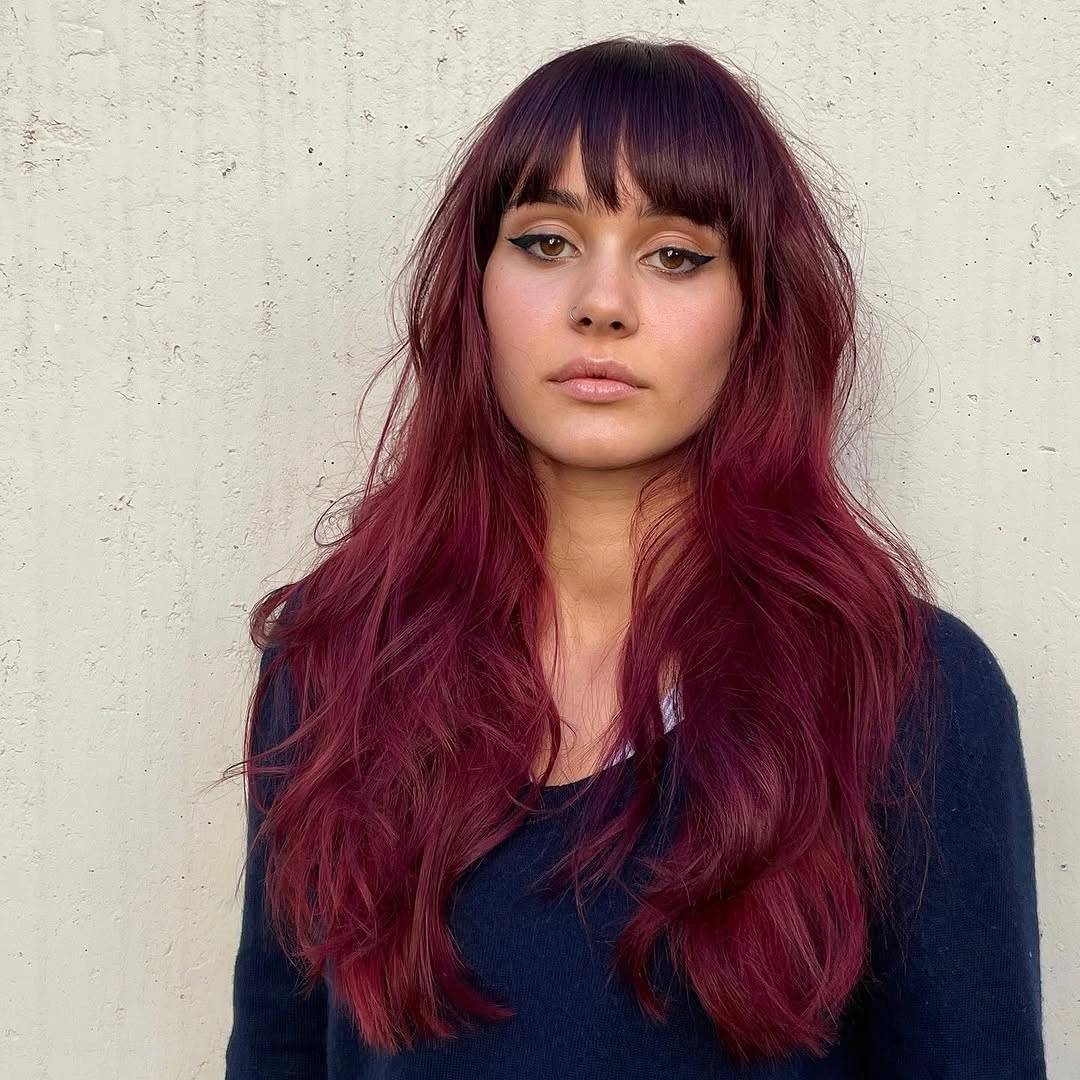
A full fringe can make a vivid shade feel more contained because it gives the front of the haircut a strong boundary. If that amount of coverage feels too bold, a lighter curtain fringe would keep some face framing while letting more of the wave pattern show. Red and berry tones are visually memorable even when the cut is simple, so choosing a softer wave prevents the overall result from becoming too severe.
Here, the color has depth because the loose lengths catch different red and wine-like notes as they bend. The fringe does not need extra highlights to matter; its clean edge already creates the focal contrast. Keep the styling around the face smooth enough for that line to read, then allow the rest of the hair to stay touchable and less controlled.
Soft Blonde Ribbons Through a Brown Lob
The shoulder-length brown lob has a rounded perimeter, and beige blonde ribbons appear most clearly through the ends and outer layers. The lighter pieces are blended into the brown rather than placed as broad stripes, so the short length keeps a soft, dimensional finish. From the back, the color change helps each bend at the bottom remain visible instead of letting the cut read as one dense brown mass.
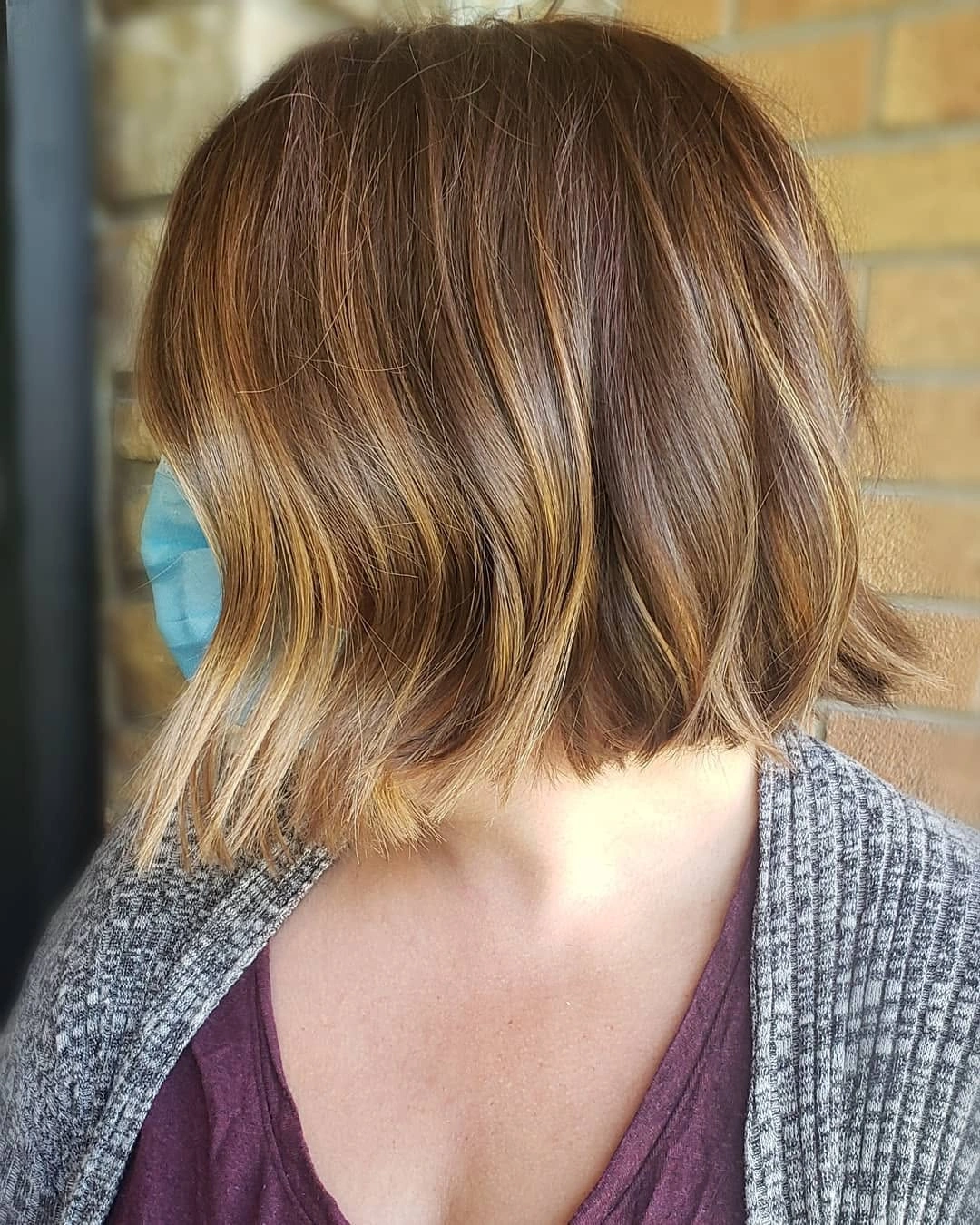
A lob is a good canvas for subtle contrast because there is enough length for movement but not so much that the lighter pieces disappear. Ask for softness around the lower half if you like the effect, or keep more brightness near the face when you want the color to feel more immediate. Shorter hair shows the line of the ends clearly, so trimming habits will affect the finished look as much as the color placement does.
The color works because the blonde does not interrupt the brown base with abrupt blocks. Instead, it gives the ends a little air and makes the rounded shape look less solid. That is a useful approach for anyone who wants visible change while keeping a low-key, natural-looking depth through the crown.
A Twisted Half-Up Blonde Finish
A small twist gathers the upper section of this long blonde style while leaving the lower length loose and softly curled. The detail sits at the center back, which makes the smooth crown look intentional without hiding the pale gradient through the ends. Because the lower hair remains open, the style keeps the movement and brightness that make long blonde lengths interesting from behind.
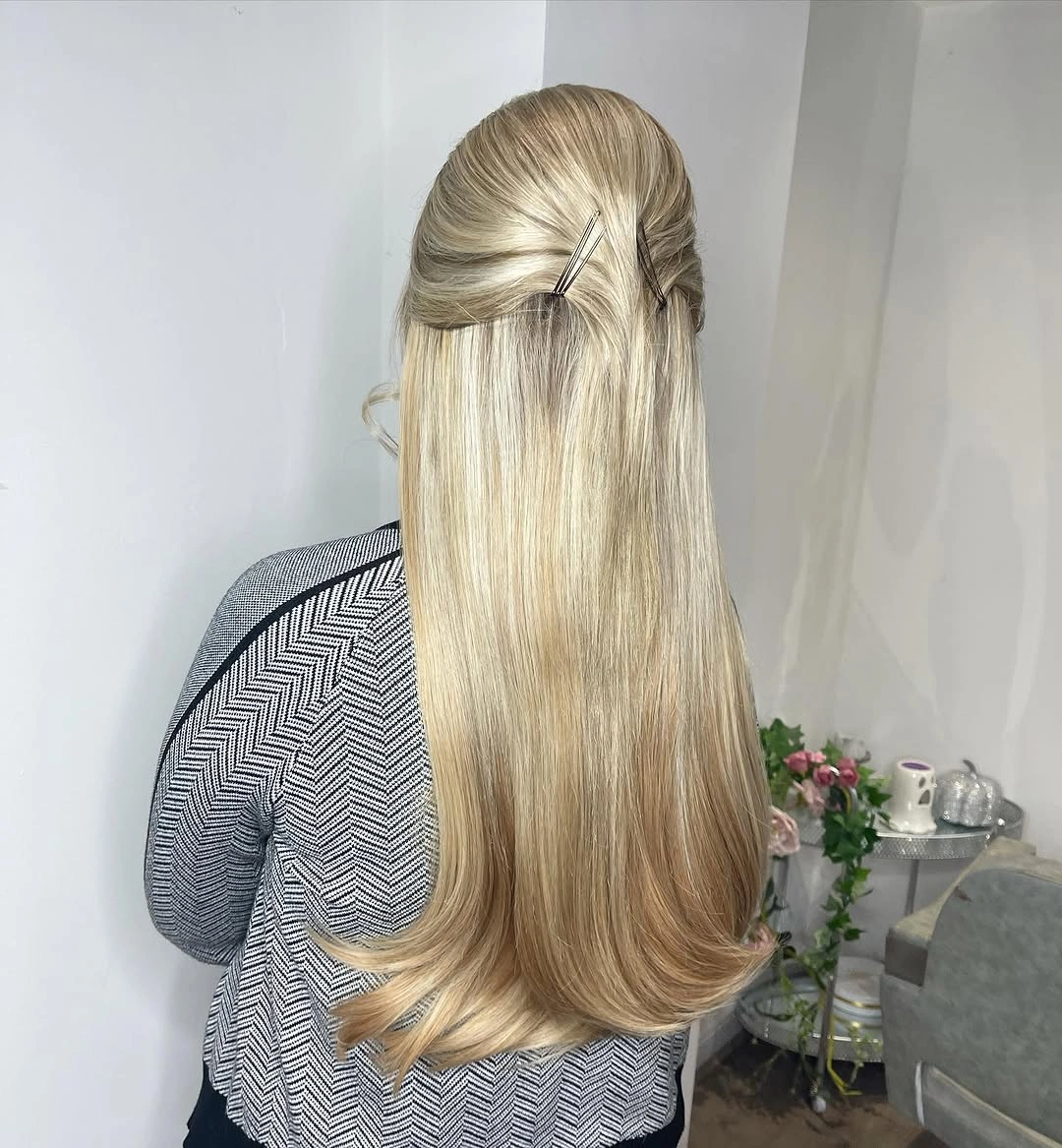
This is a useful option when you want the face area cleared without committing to a full updo. A smaller twist will keep the look casual, while a slightly wider section creates a more polished line across the back of the head. Long pale hair can tangle around clips or elastics, so choosing a gentle fastening method and not pulling the crown too tightly will keep the style easier to wear.
The half-up detail changes the silhouette more than it changes the color, which is why it lets the blended blonde remain the focus. The curl at the ends prevents the long length from hanging as a single sheet. When a color already has soft depth, one restrained styling point is enough to make it feel finished rather than overworked.
Golden Front Pieces Around Brown Waves
Medium brown waves gain their brightest moment at the front, where golden beige pieces frame the center part and soften the transition into the darker length. The remaining hair stays warm and muted, so the lightness feels like a face-focused accent rather than a full color change. Loose movement through the ends makes the brown and gold notes shift gently instead of reading as sharp bands.
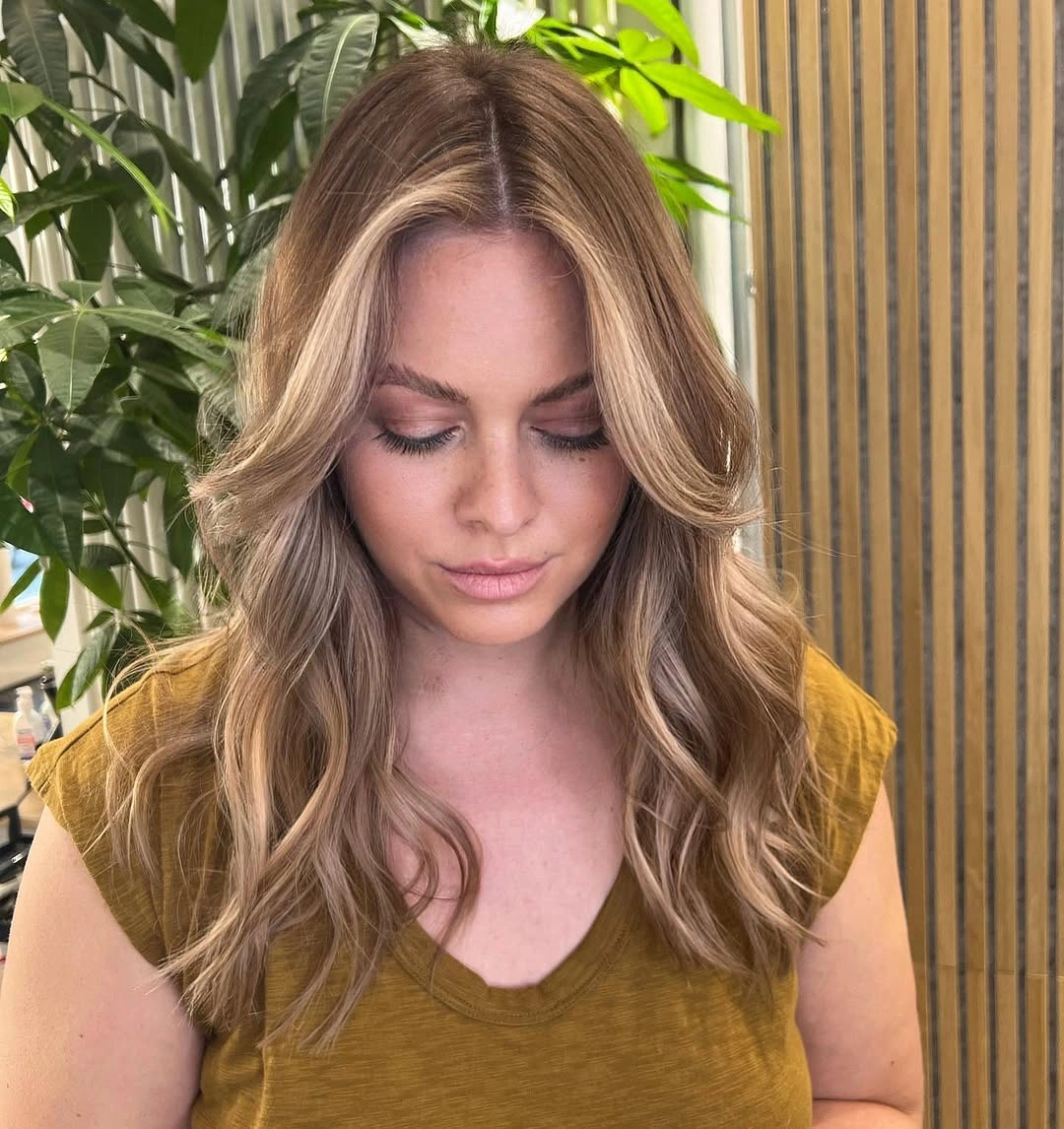
Keep the bright front pieces narrow if you want the overall brown tone to remain dominant, especially with a medium-length cut. A smoother blow-dry would show a cleaner line of contrast, while the waves here diffuse it into a softer effect. Warm highlights near the face can look more noticeable when hair is pulled back, so think about how often you wear your usual part and everyday styles.
The warmth is convincing because it appears where light naturally draws attention, then fades into the rest of the wave pattern. Nothing about the lower length has to compete with the front. That restraint makes the color feel friendly and wearable, while the loose bends ensure the face frame does not look overly precise or striped.
Deep Auburn Waves With Root Shadow
Long auburn waves carry a deep red-brown tone through the middle and ends, while the root area looks darker and adds a sense of depth at the crown. The S-shaped bends break up the color into reflective-looking sections, giving the length movement without requiring obvious light streaks. The darker top also makes the richer auburn lower down feel less flat and more dimensional from the back.
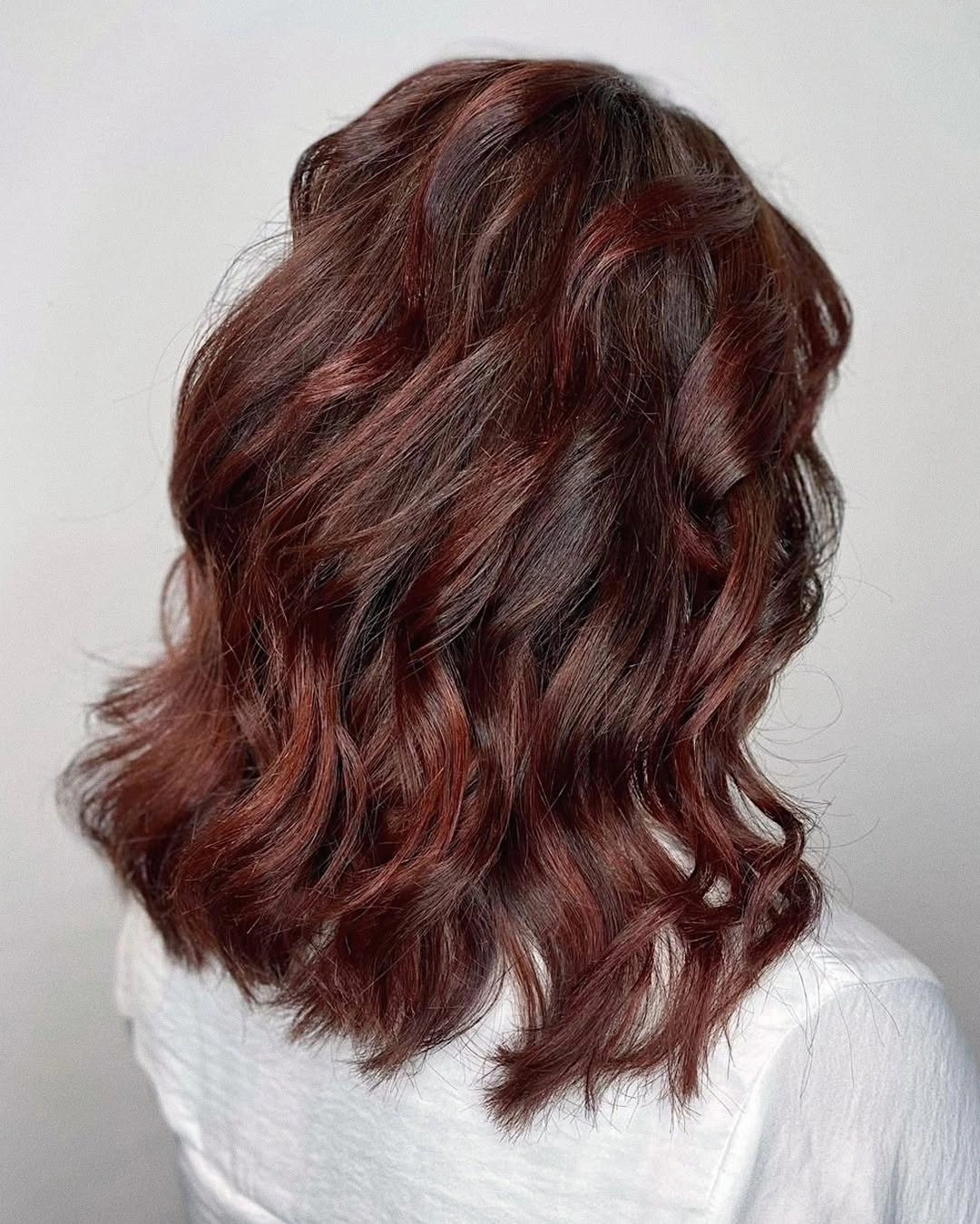
For a calmer version, keep the red-brown shade close to the root depth and rely on waves for visual variation instead of extra brightness. If you prefer more contrast, gentle lighter pieces around the face could echo the warmth without changing the back view too much. Red-toned hair can lose its fresh-looking depth when washed frequently, so a color-safe routine is a practical part of choosing a strong auburn shade.
The style has presence because the richness is distributed through long, loose movement rather than packed into a blunt silhouette. Each bend reveals a slightly different note of the color, which makes the length feel alive. A shadowed crown is the quiet detail that keeps the auburn from becoming visually one-note as the hair falls down the back.
Honey Ponytail With a Polished Crown
The smooth crown leads into a low ponytail where the honey blonde length opens into large curled sections near the bottom. A darker root area remains visible before the gathered hair begins, creating depth that keeps the pale tail from looking disconnected from the head. The contrast between the sleek top and the bouncy lower length gives this simple style a clear, refined structure.
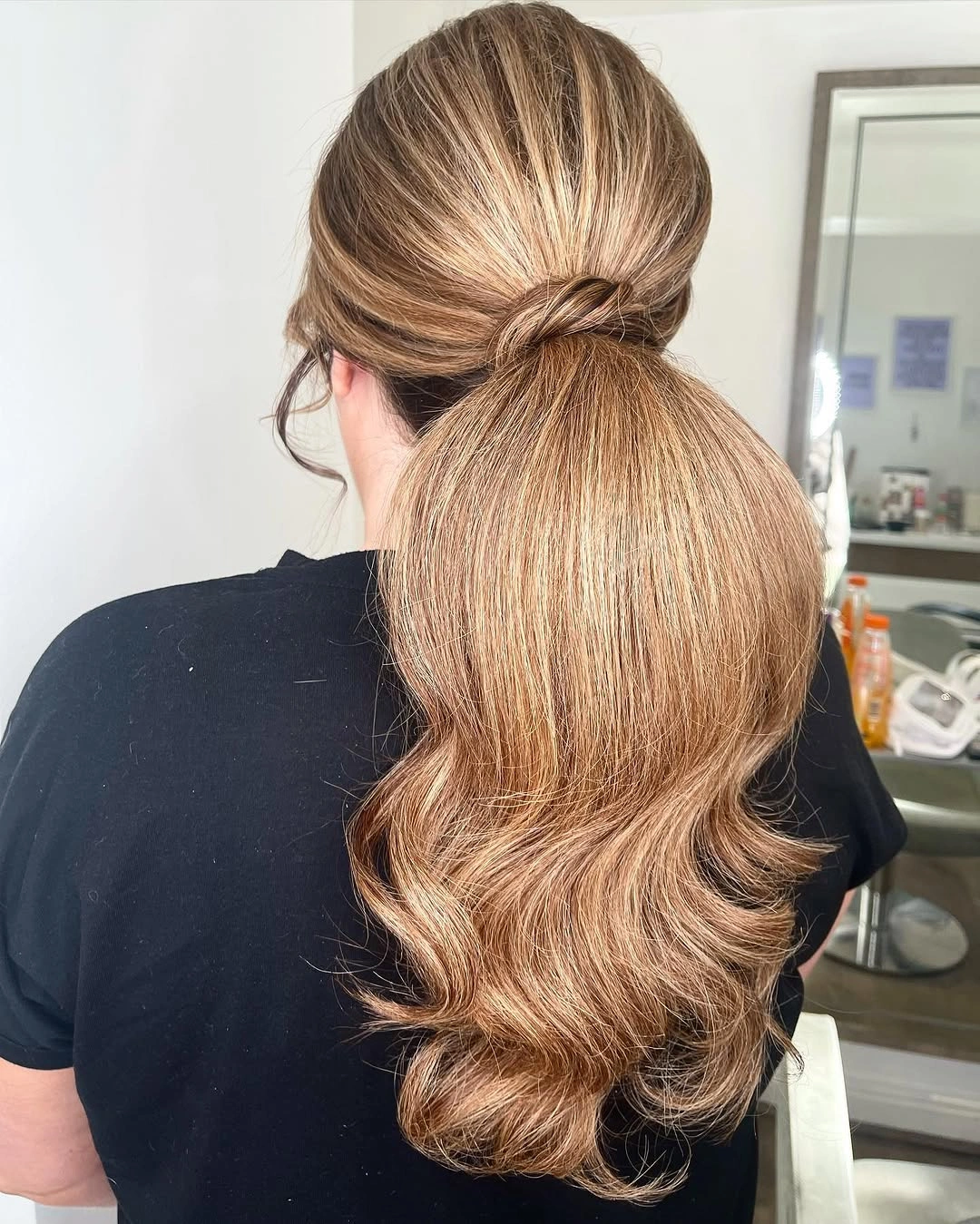
A low ponytail is especially helpful when you want the color to show as one long continuous line rather than a loose mass of hair around the shoulders. Keep the crown smooth for a more polished result, or leave a few soft pieces out for less formality. The tail’s curls need enough length to remain visible, so a very short cut would need a different finishing idea to create the same movement.
The color reads beautifully because the gathering point separates the dark-root depth from the lighter flowing tail. That creates a visual pause before the curls begin and makes the blonde appear more intentional through the lower half. One well-placed elastic or tie can do a lot when the color already has enough dimension to carry the rest of the style.
Warm Brown Bob With Side Fringe
This jaw-length brown bob keeps its shape close to the head, with a side-swept fringe that softens the front and reveals one ear. The warm brown tone looks even and smooth, so the main interest comes from the clean rounded perimeter and the direction of the fringe. That balance is effective because the color supports the cut instead of trying to create a separate statement through heavy contrast.
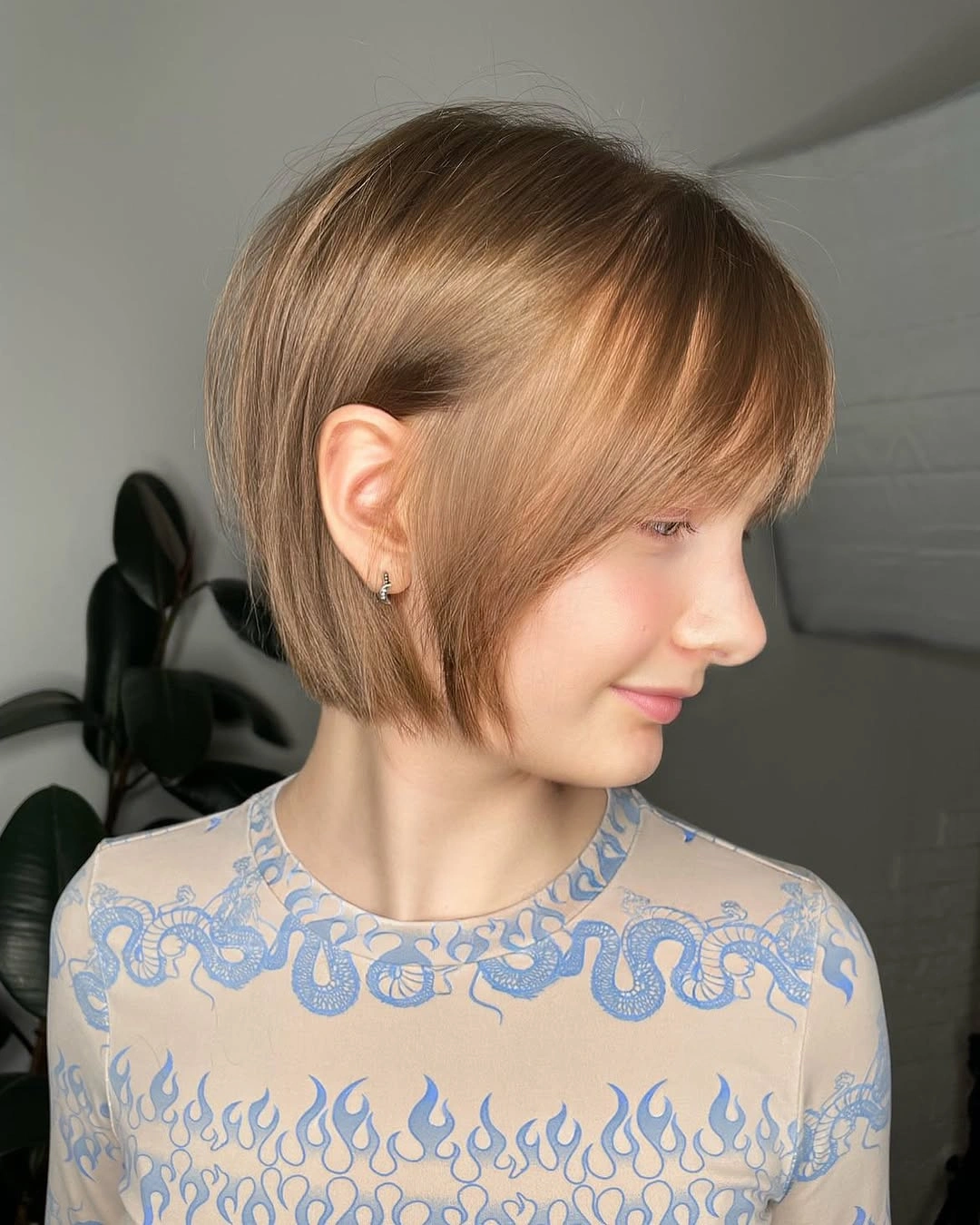
Side-swept fringe is a gentle way to change a bob’s front line without adding a full blunt bang. You can keep the ends smooth for the same tidy shape, or add a slight bend near the jaw for more softness and movement. Short cuts make the perimeter highly visible, so regular shaping becomes important if you want the rounded outline to stay crisp rather than looking uneven.
The warm brown color helps the style feel approachable because it lets the fringe and tucked side do the visible work. There is no need for a bright panel when the cut already has a strong profile. If you prefer color that feels subtle but not dull, a smooth medium brown can make a sharp short shape look quietly polished.
Plum Waves With Magenta Ribbons
Deep plum-red waves become more expressive where brighter magenta ribbons appear through the curved middle and lower sections. The vivid accents do not cover the whole head, which allows the darker base to keep its depth near the crown and underneath the waves. From the side, that contrast makes the long shape feel more animated without changing the soft, rounded movement of the style.
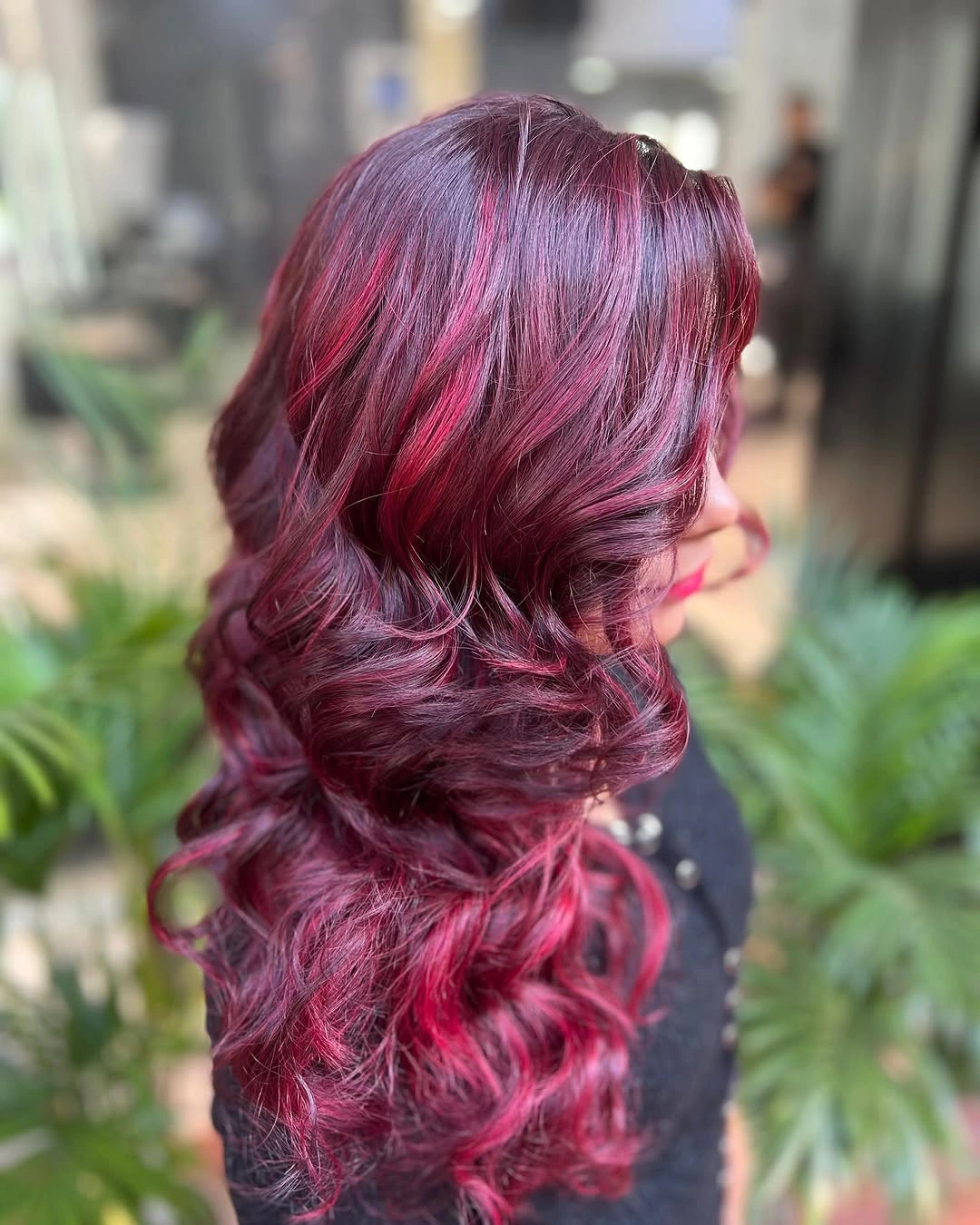
To tone this idea down, choose fewer bright ribbons and let them sit farther from the roots so the base color remains dominant. A smoother style would make the magenta read more graphic, while waves spread the brightness into softer flashes. High-contrast vivid color often looks different in every lighting situation, so it helps to choose placement you still enjoy when the accents appear quieter indoors.
The strength here comes from using two related red-purple tones rather than pairing the dark base with an unrelated bright color. The wave pattern reveals the magenta in intervals, then allows the plum to return between them. That rhythm keeps the hair from looking uniformly bright and gives the long length a full-impact detail without sacrificing dimension.
Copper Waves With a Wide Side Sweep
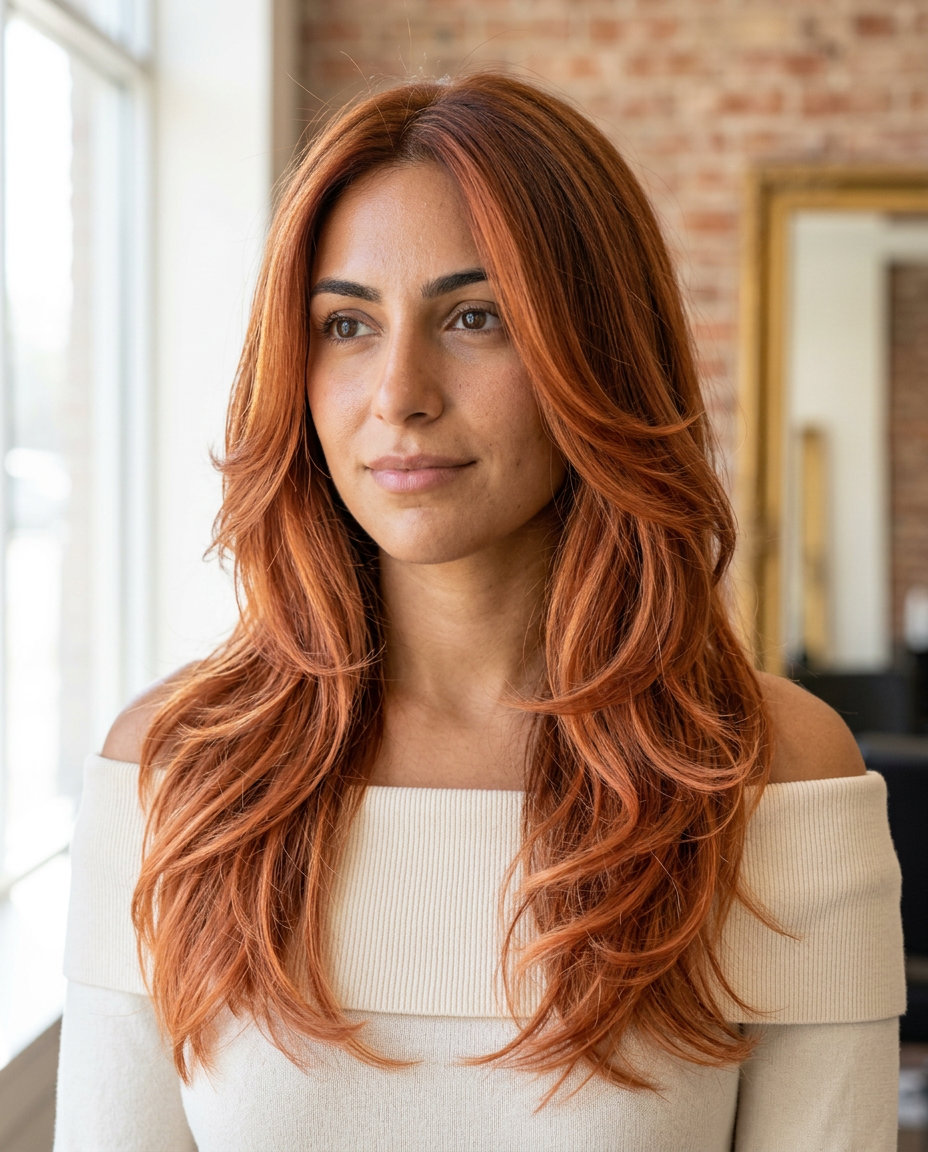
Long copper hair is arranged in broad waves with a sweeping side part that lifts the front away from the face. The warm tone catches most strongly through the larger bends, while the deeper areas between them make the length look more layered and full. The side direction adds a sense of softness at the front without relying on a fringe or sharply defined face-framing streak.
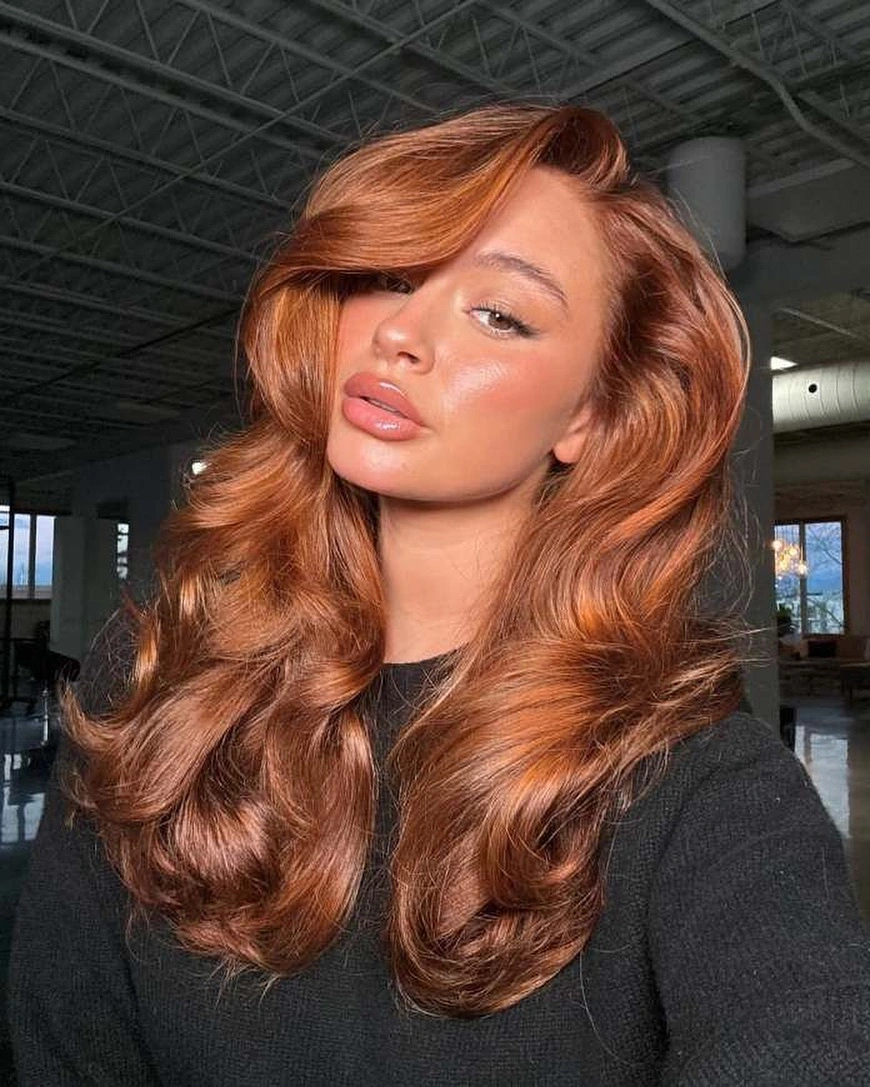
A wide side sweep is a simple styling adjustment if you want long warm-toned hair to feel more dramatic without adding another color. A center part would make the result more symmetrical and restrained, while this direction puts more volume on one side. Copper shades are visually rich even in a simple cut, so keeping the wave pattern loose helps the color stay flexible rather than looking overly formal.
What makes the shade engaging is the way the movement breaks it into lighter and deeper copper notes. The hair does not need obvious highlights to show variation because the bends already create it. If you like warm color but want a softer impression, a side-swept wave pattern can be the detail that makes the length feel luminous and intentional.
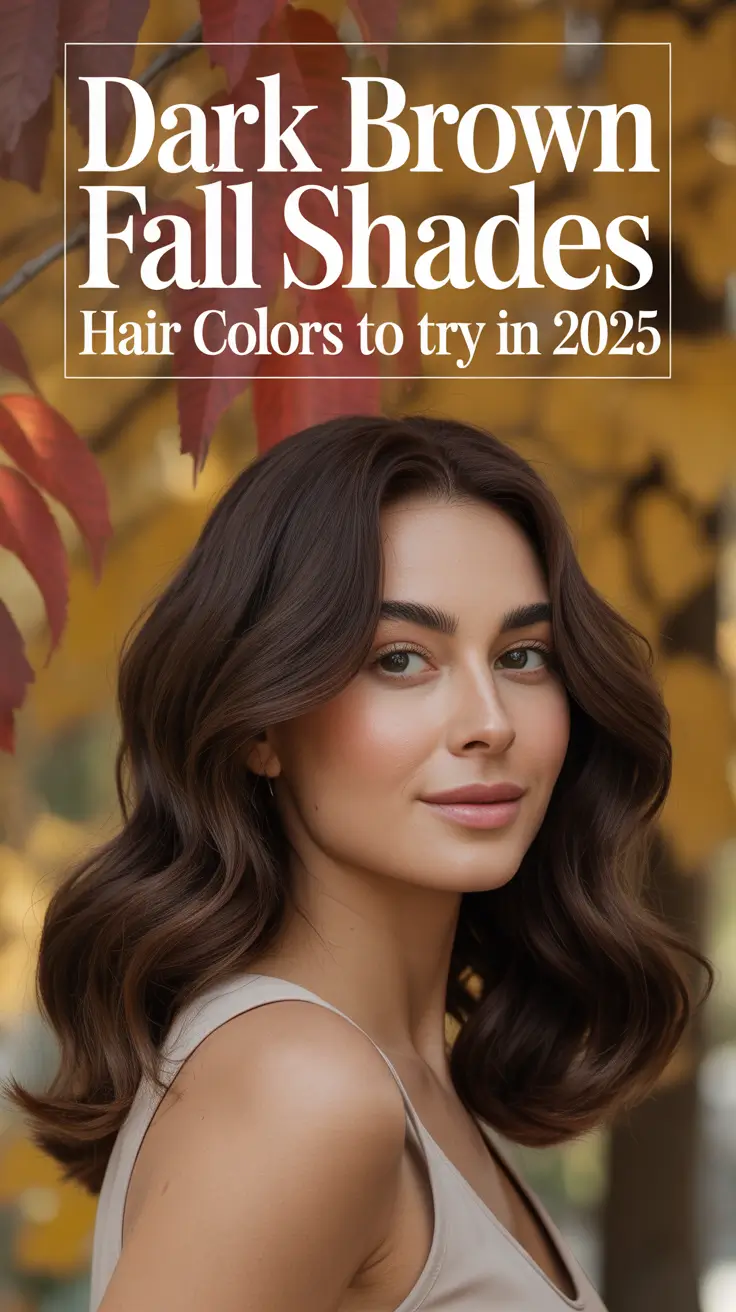
Chocolate Waves With Muted Warm Ends
A dark chocolate-brown crown flows into softly waved lengths where muted red-brown warmth appears toward the ends. The color shift is gentle enough that the back view remains mostly brunette, yet the lower bends have more depth than a single solid brown would show. The loose wave pattern makes the transition feel gradual and gives the long length a slightly lighter-looking finish near the perimeter.
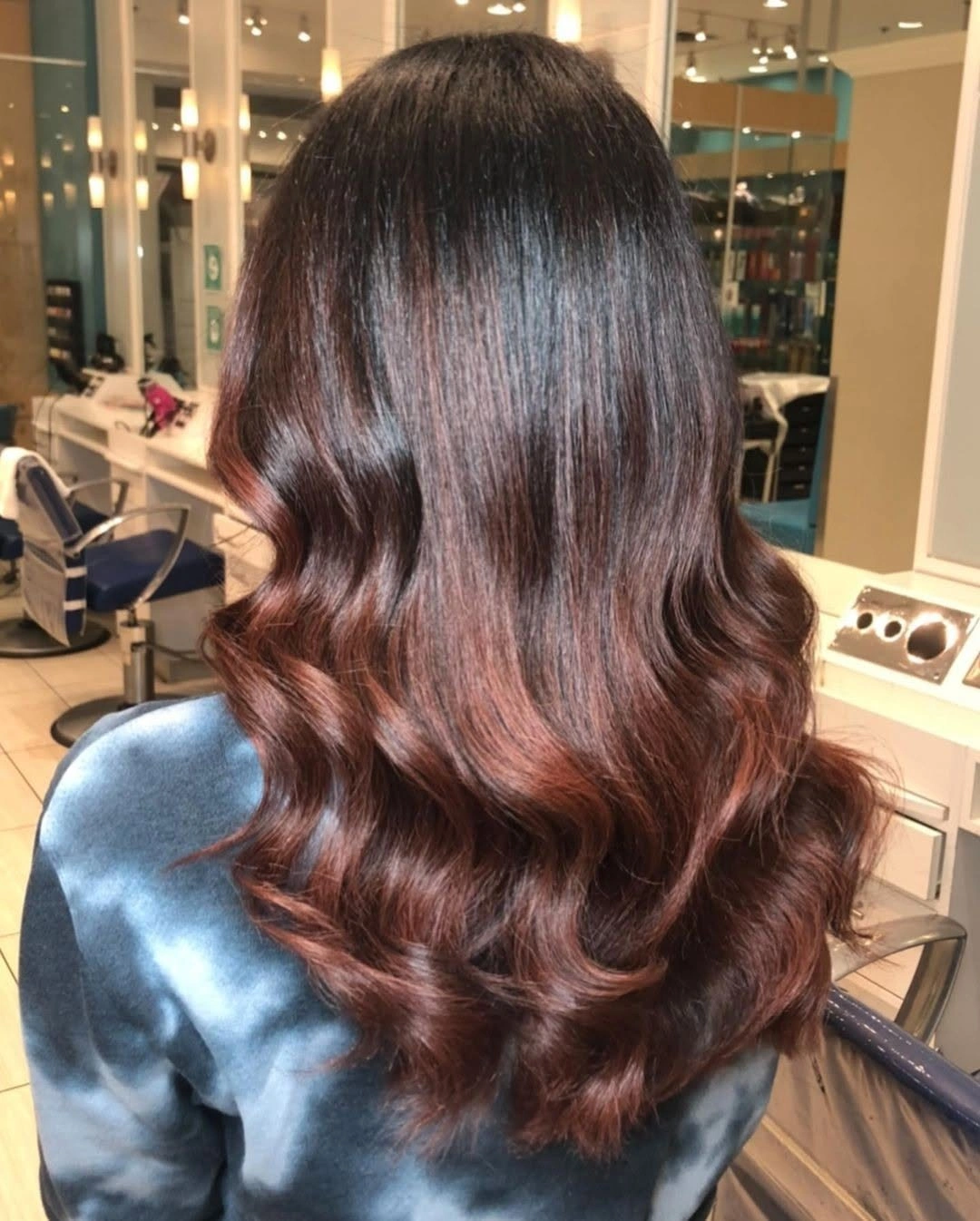
This kind of warmth works well when you want change without losing the depth of a dark base. Keep the brighter note low on the length for a more subtle result, or bring a few pieces upward if you want the movement to show near the shoulders. The tradeoff is that very soft contrast can disappear when hair is styled completely straight, so a bend or blowout helps it remain visible.
The look succeeds because the ends add interest but do not overpower the crown. That distribution gives the hairstyle a natural visual progression from deeper to warmer without an abrupt demarcation. For a brunette who prefers understated color, gentle warmth through the wave pattern can provide enough variation to make long hair feel newly considered. Related fall brown hair colour ideas are easiest to assess by watching where that warmth begins.
Smoky Gray Waves in a Shoulder-Length Lob
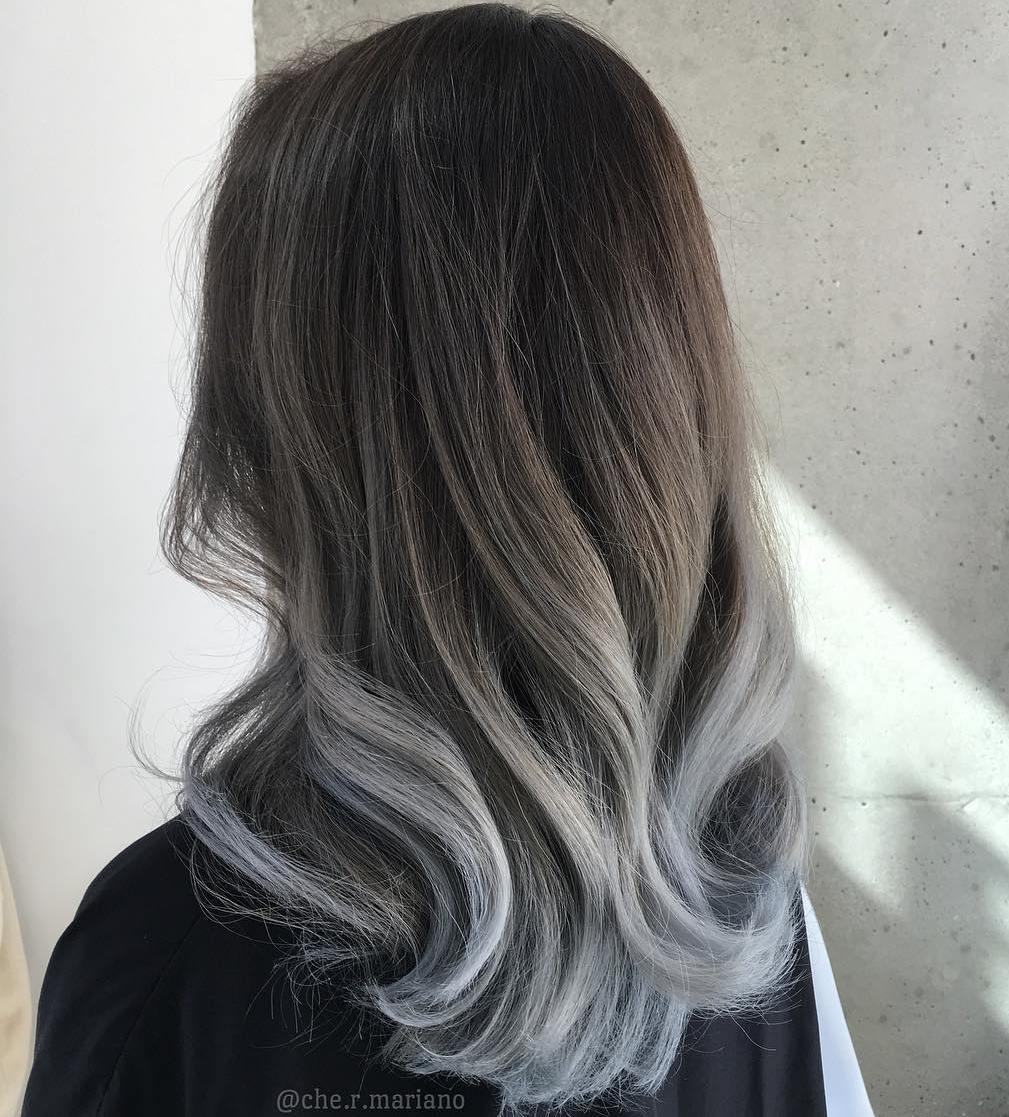
The shoulder-length lob has an airy wave pattern that keeps its smoky gray-beige color from appearing flat or severe. A darker root area gives the crown depth, then the cool-toned lengths soften through tousled bends and uneven-looking ends. The result is not glossy or rigid; it relies on movement and slightly undone texture to make the muted shade feel modern and light.
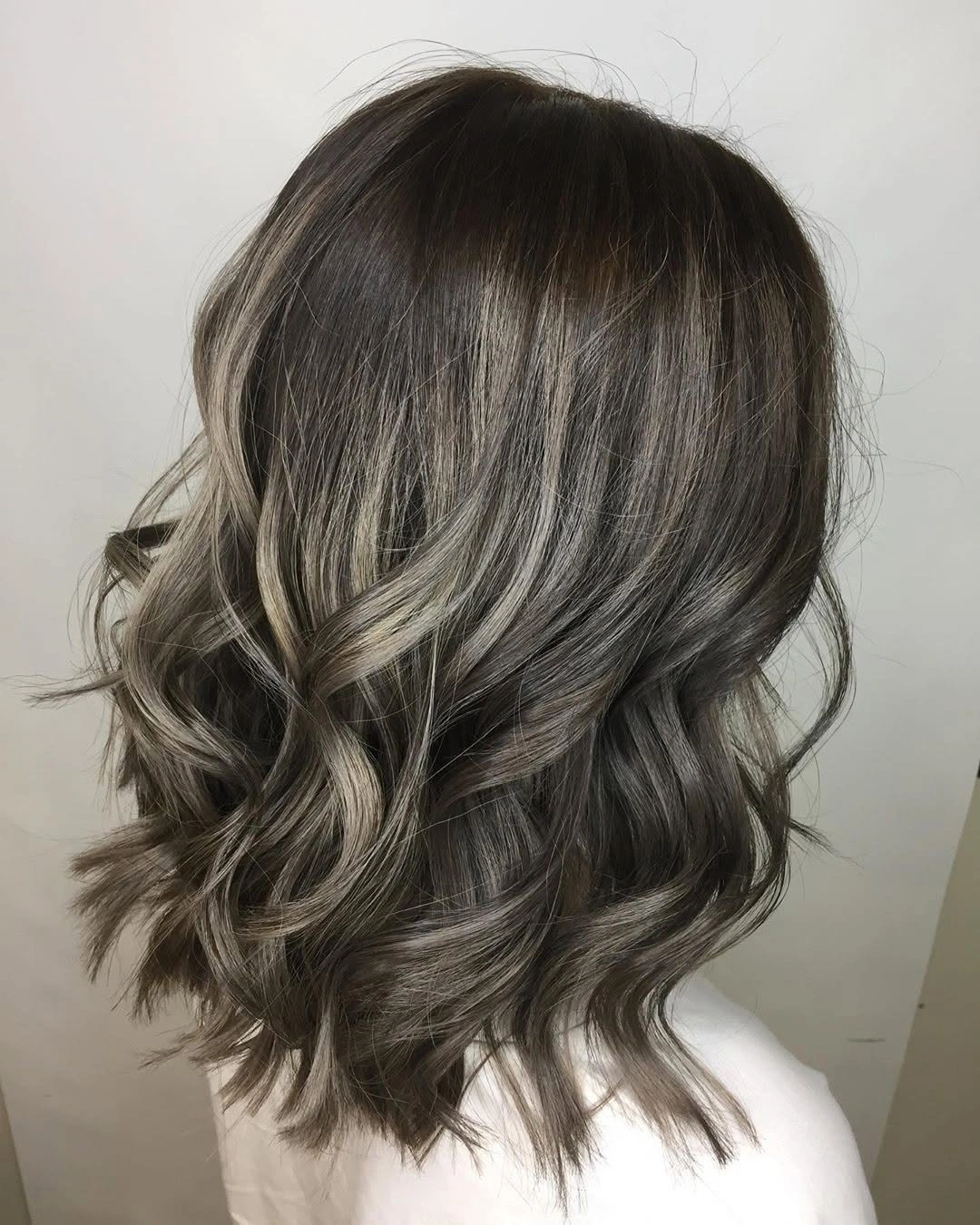
If you are drawn to cool gray tones but want less contrast, a darker taupe base can make the transition appear quieter near the part. A smoother finish would emphasize the bluntness of the lob, while these waves make the cut feel more relaxed and forgiving. Cool pale shades can show unwanted warmth as they change over time, so choosing a maintenance plan that fits your routine matters before committing to the look.
The hair has depth because the darker root and soft gray lengths are separated by movement rather than a hard line. Each loose bend gives the color a different edge, which keeps the medium length from feeling heavy. This is a thoughtful option when you want a muted statement with softness built into both the cut and the styling.
Black Bob With Orange Under-Panels
A short black bob creates a dense, dark crown and fringe, while vivid orange panels appear at the side and just beneath the front. The color surprise is concentrated low enough that the black shape remains the dominant outline from most angles. That placement gives the cut a graphic edge without turning every visible strand into a contrast statement.
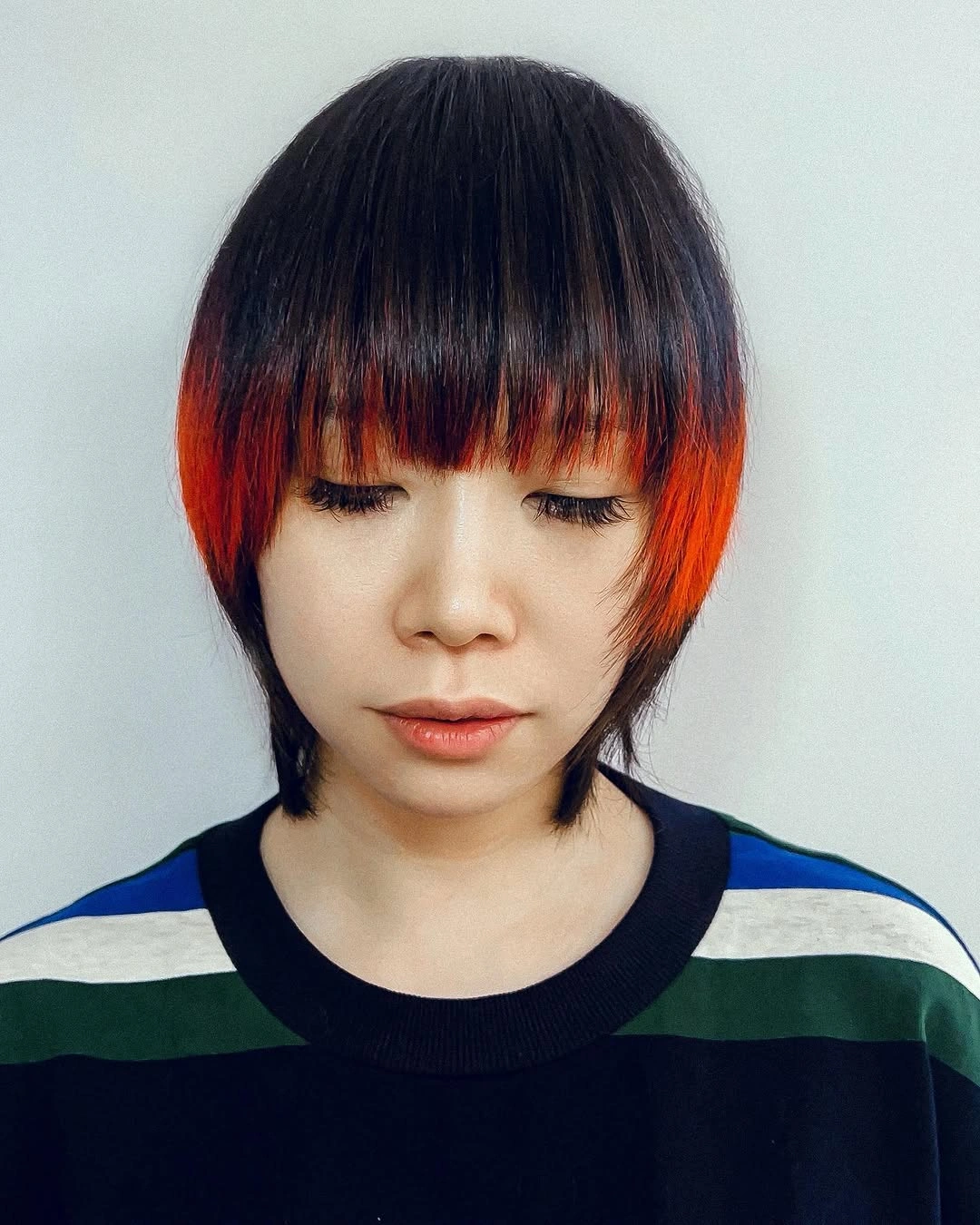
Under-panels are useful when you enjoy bold color but want a darker top layer to stay in control. You could reduce the intensity by choosing a burnt orange or make it more visible by styling the ends outward slightly. A sharp fringe and a bright panel both draw attention to the front, so keeping one of those elements softer is an option if you prefer less overall drama.
The deliberate part is the color’s location: it flashes below the black surface instead of replacing it. That creates depth even in a compact bob, where there is not much length for gradients to develop. A small high-contrast area can feel more confident than a full-head change when the haircut already has a clear silhouette.
Lavender Ribbons Through Plum Shoulder Waves
Soft shoulder-length waves carry a plum-red base, while pale lavender ribbons appear through the outer layers and bring a cooler note to the movement. The contrast is visible but not rigid because the waves scatter the lighter pieces into curved sections. A darker crown remains present, which keeps the color mix grounded and gives the purple family enough depth to feel layered.
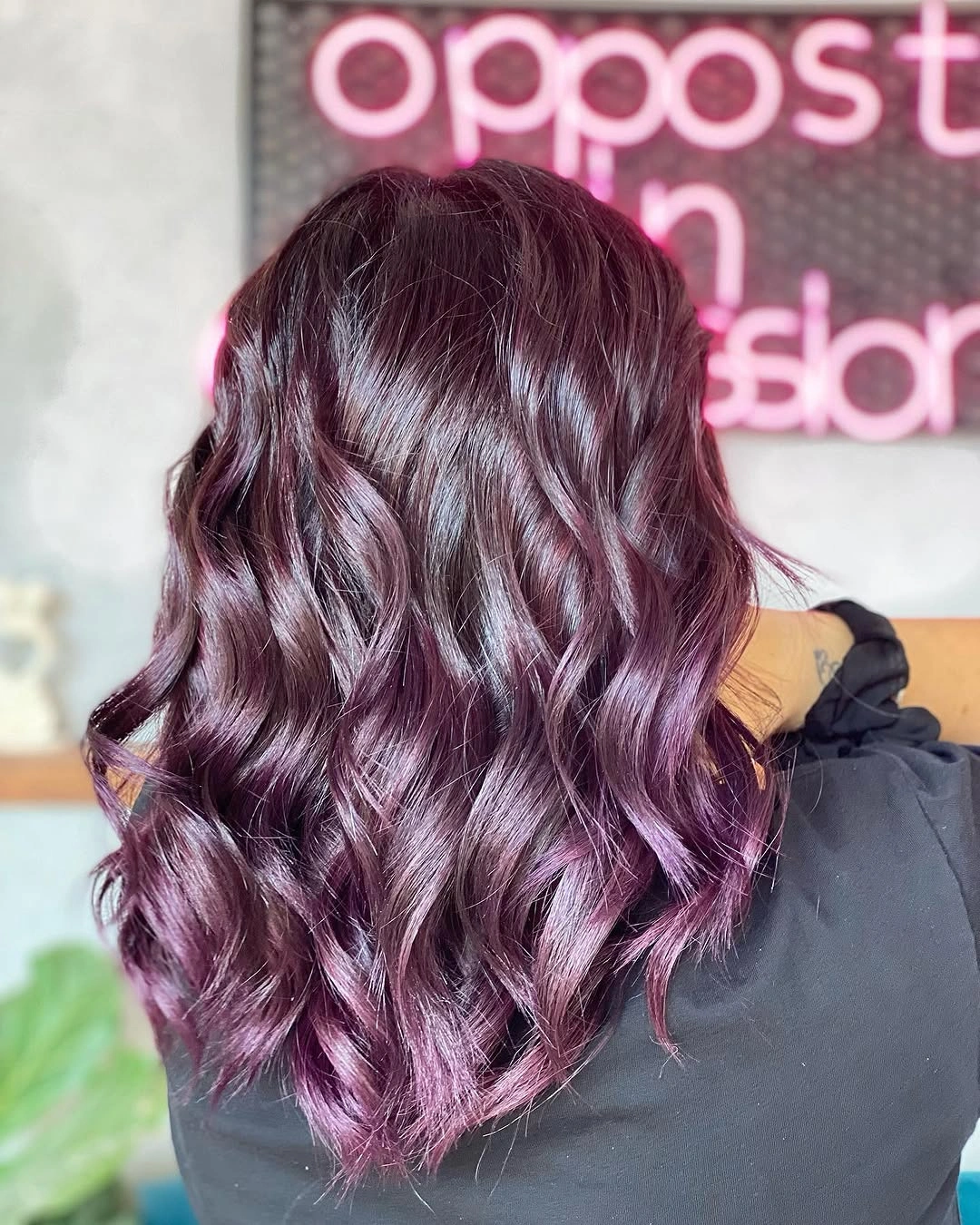
For a quieter version, limit the pale lavender to a few outer pieces where the bends can reveal it naturally. Straight styling would show a stronger striped effect, whereas soft waves blur the two tones into a more blended impression. Unusual cool accents can take more effort to keep clear as they fade, so the best placement is one you will still like when it becomes gentler between appointments.
The color combination works because the lavender is cool and light while the plum beneath it remains deep and warm-looking. That push and pull gives the bob-like length visual interest without relying on a dramatic cut. When you want a little extra color, keeping the silhouette soft is often the easiest way to stop the result from feeling too sharp.
Steel-Blue Texture in a Short Wavy Bob
Muted steel-blue lengths are paired with a darker root area and loose bends that keep this short bob from looking overly graphic. The color reads cool and smoky rather than bright, while the uneven wave pattern gives the ends a casual, airy outline. Because the hair is cut above the shoulders, the contrast at the root is immediately noticeable and becomes part of the silhouette.
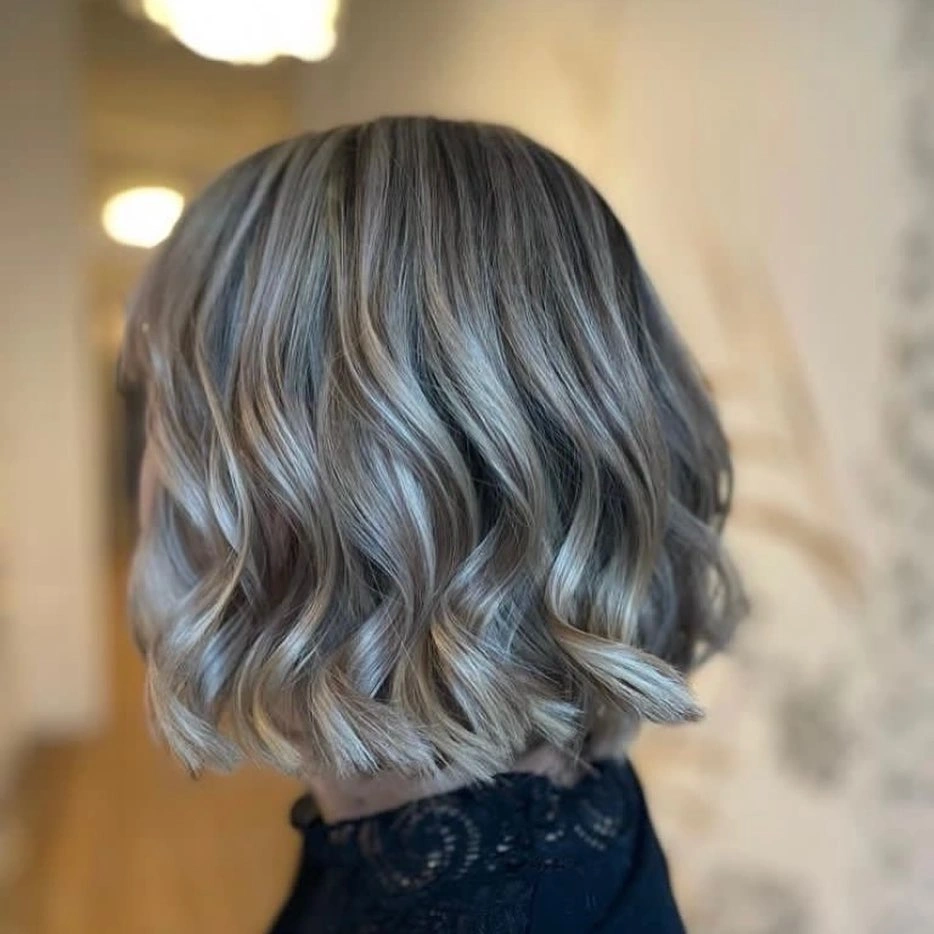
A short cool-toned bob benefits from texture because it lets the color shift across different pieces instead of sitting as one flat surface. You could make the style more polished with a soft bend at the ends or keep it more undone with finger-shaped separation. The darker root is practical visually, but a short length still makes changes at the crown easy to notice as the hair grows.
The appeal is its restraint: the blue-gray tone is interesting, yet it does not overpower the cut’s small scale. Loose movement keeps the color from becoming too literal or costume-like. If you enjoy a cool shade but want it to feel wearable, an airy bob gives you a controlled way to show it in motion.
Blonde Layers Framed by Curtain Fringe
Long pale blonde layers are softened by a darker-looking root and curtain fringe that opens around the center of the face. The fringe makes the large waves feel connected to the front rather than leaving all the movement at the ends. Because the lightest sections continue through the lower length, the style has brightness, while the shadowed crown keeps that brightness from appearing one-dimensional.
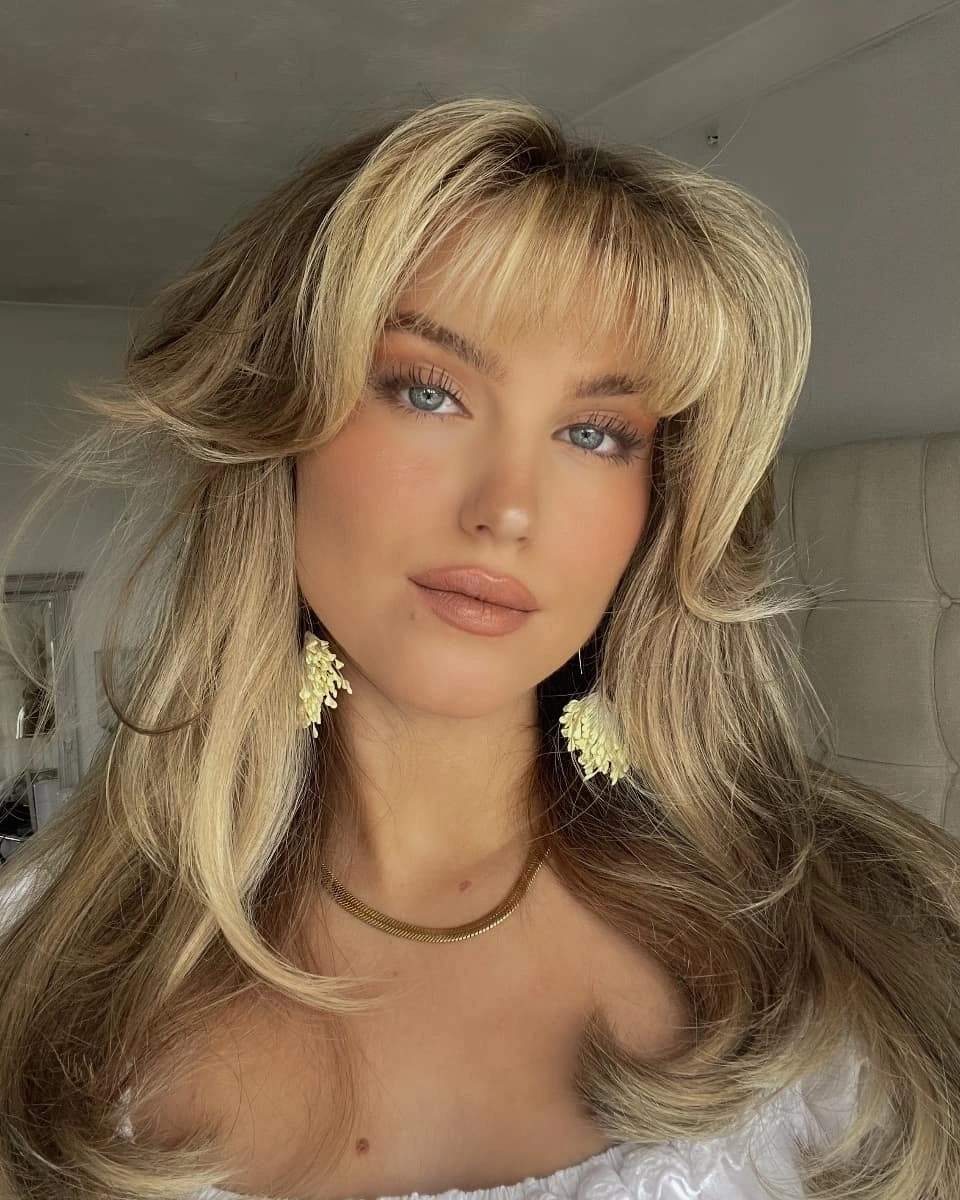
Curtain fringe is a flexible option when you want face framing but do not want a solid horizontal bang. A deeper part can make the front look more dramatic, while a center part keeps the frame balanced and open. Long pale layers need gentle styling to remain distinct, because a very tight curl pattern or a very flat finish can hide the soft changes in length.
The framing effect is what makes this blonde look intentional. The fringe introduces a gradual opening, then the waves carry that softness down through the rest of the hair. A darker root is the counterpoint that gives the light length a starting place, so the overall result feels luminous but still anchored.
Cool Taupe Waves for a Quiet Blonde Shift
Medium-length waves move through muted taupe blonde, with a darker root area and beige-gray brightness placed softly through the lower sections. The coolness is present without becoming icy, which gives the color a quieter character than a high-contrast blonde. Loose waves help the different beige and gray notes separate gently, so the overall tone remains blended and restrained.
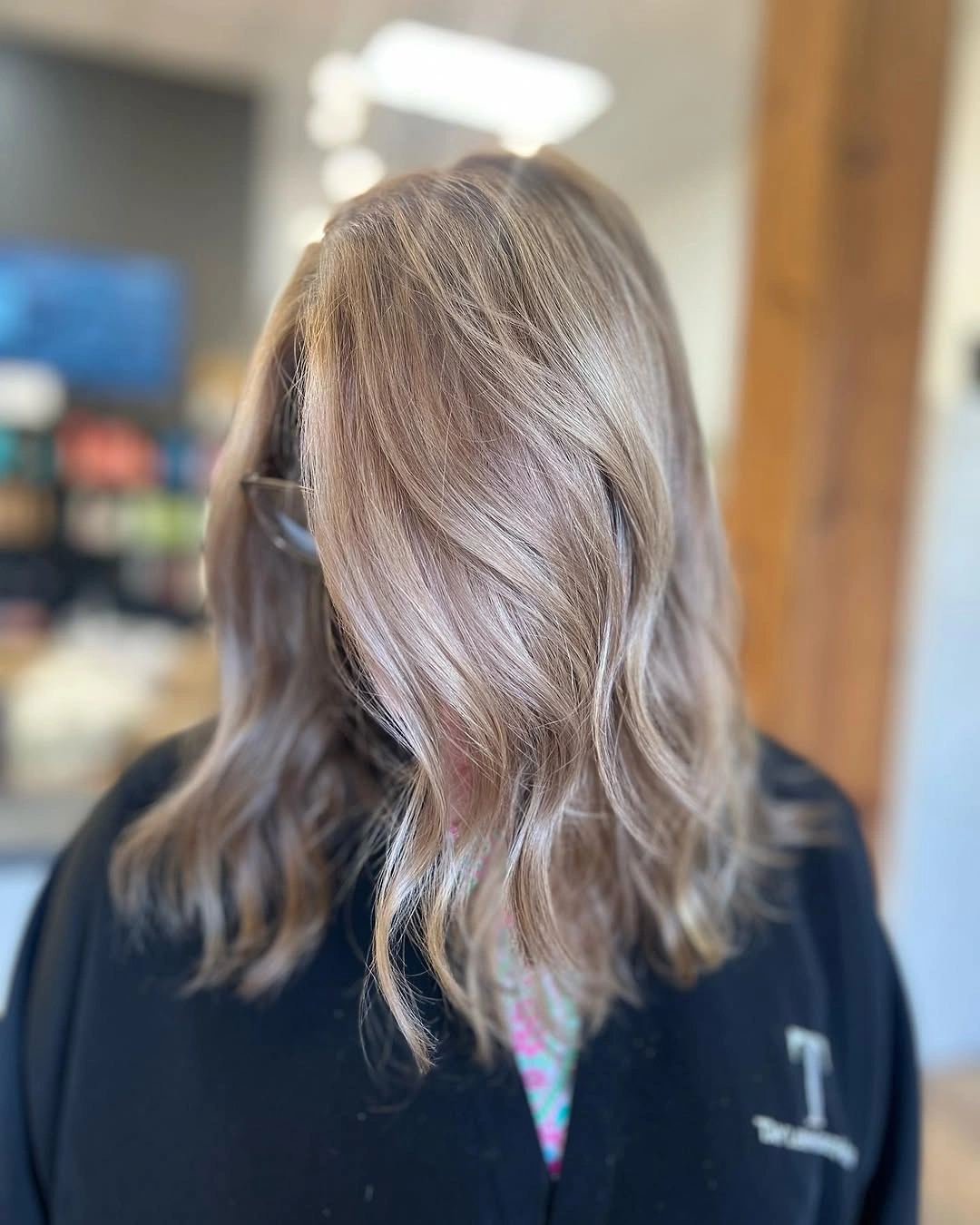
If bright blonde feels too strong, a taupe direction can keep the hair light-looking while leaving more depth near the root. A straight finish would make the coolness more obvious, while these bends make it read softer and less uniform. Muted color may look subtle in low light, so it suits someone who values a gentle shift over a dramatic before-and-after effect.
The style earns its interest from small changes in tone rather than one bright focal streak. That makes the waves feel calm and dimensional at the same time. For a medium length, this approach gives enough visible movement at the ends while preserving a darker-looking crown that helps the whole shape stay readable.
Dark Brown Blowout With Warm Movement
Dark brown hair is styled with a side part and long, smooth layers that bend softly away from the face and through the ends. The color remains mostly deep, but the curved sections show a faint warm-looking shine that gives the blowout more movement than a flat straight finish. The result relies on silhouette and polish rather than obvious highlights or a dramatic contrast at the roots.
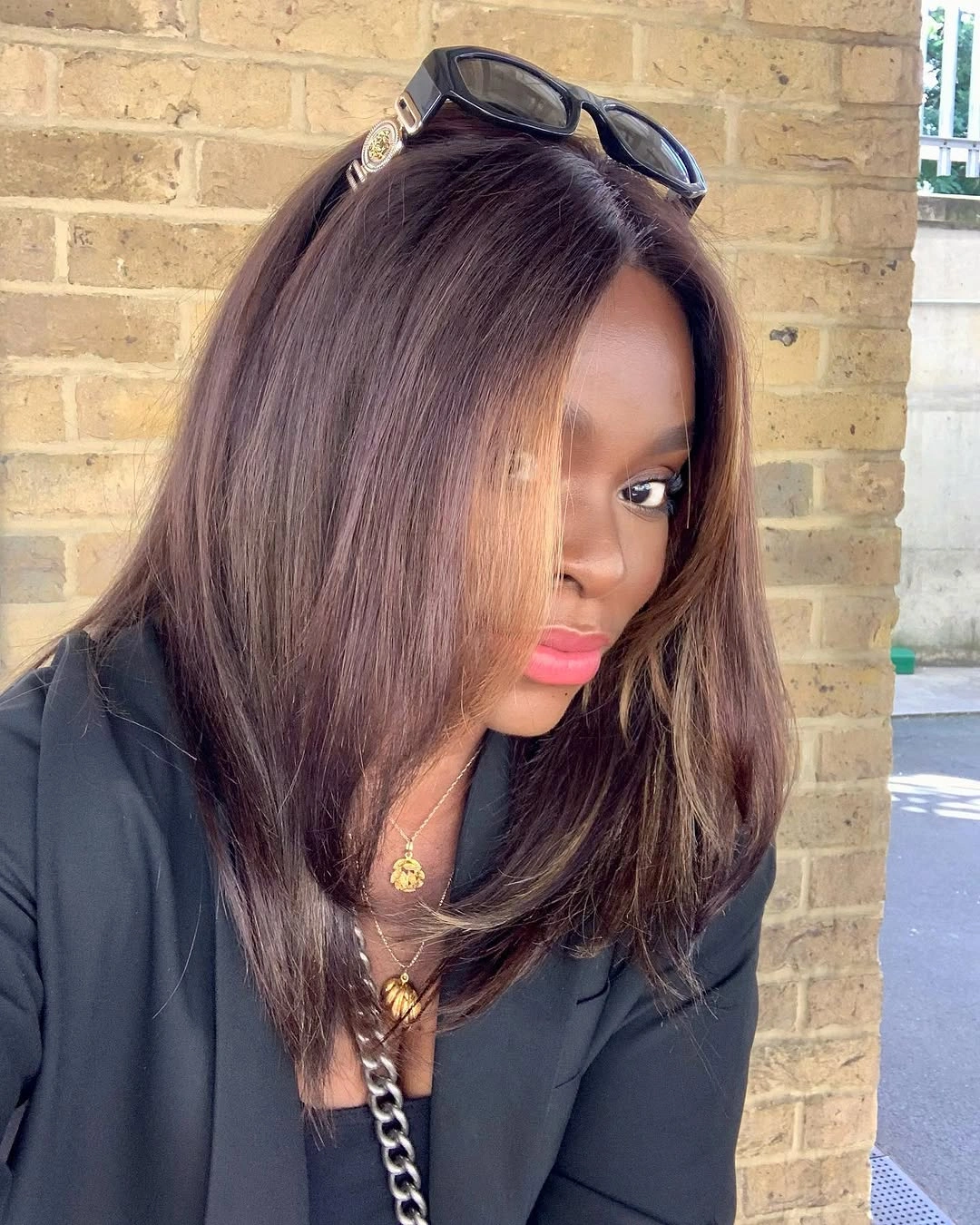
A blowout is a useful way to make a dark color show its own variation without adding lighter pieces. Keep the ends curved and the crown smooth if you want the layers to appear longer and more fluid, or add a little texture for a less polished finish. Dark hair can look dense when it is completely one length, so visible layers are the practical detail that keeps the movement from disappearing.
The beauty here is subtle: the depth of the brown stays intact, then the bends reveal a softer dimension through the lower half. That makes the color feel rich without claiming more than the eye can see. When you prefer brunette hair with minimal contrast, styling the surface well can be more effective than adding brightness everywhere.
Pale Blonde Waves With a Soft Root
Very light blonde waves fall in long broad sections, while a softer, darker root area creates enough depth to divide the pale length into visible layers. The ends curl gently, giving the back view a rounded finish and keeping the blonde from reading like one uninterrupted sheet. The overall impression is bright, but the root and wave pattern prevent it from becoming flat at the crown.
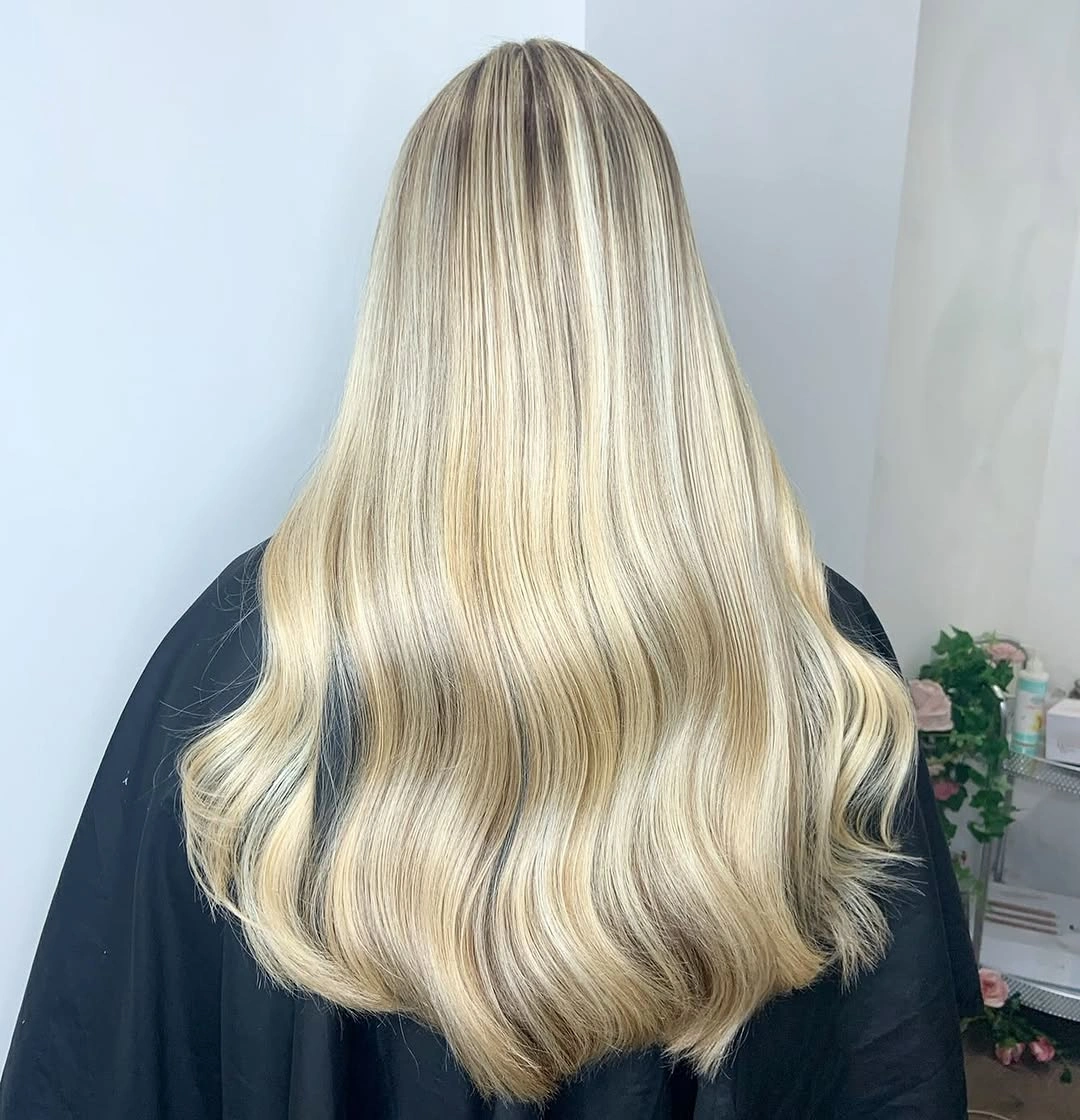
For long light hair, broad waves are helpful because they let the shade show in sections without creating a busy texture. A straighter finish would look cleaner but could make the crown-to-end transition more obvious. Pale lengths often demand attention to softness and condition, so choosing a shape with movement is useful when you want the hair to look lively even on an ordinary day.
The root is doing quiet but important work here. It gives the eye a darker point of reference before the very light waves begin, then the curls carry the color outward in a gradual rhythm. That balance allows a bright blonde to feel intentional, not simply pale from top to bottom, especially when the long ends are styled with enough separation to show their individual curves.
Icy Blunt Bob With Short Fringe
This short icy blonde bob has a dense, straight-looking perimeter and a compact fringe that keeps the pale shade sharply contained around the jaw and forehead. The color is bright from the crown through the ends, so the cut’s clean line is what provides most of the structure. Seen from the side and back, the even length makes the shade feel graphic, polished, and deliberately concise.
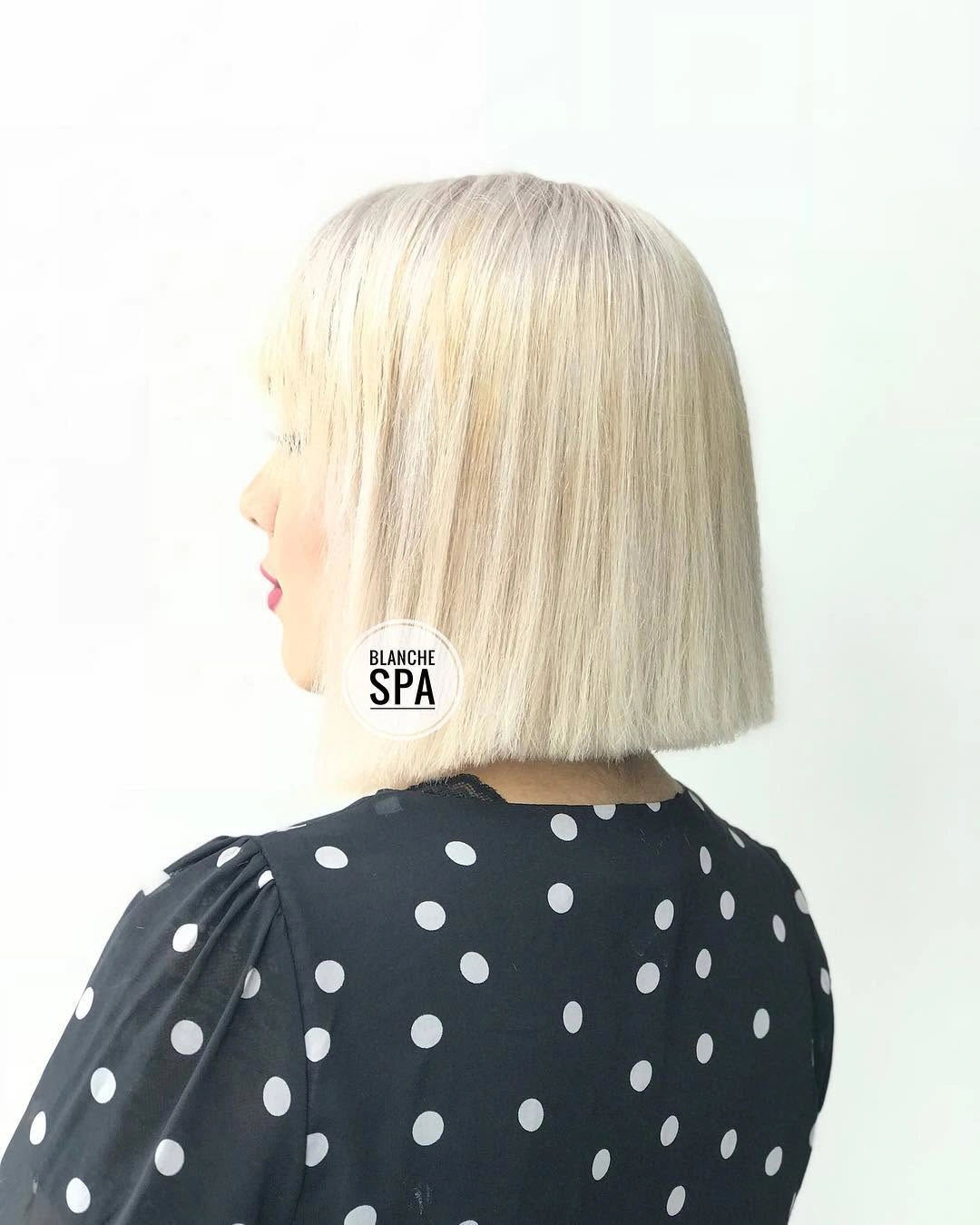
A blunt pale bob works best when you enjoy a clear perimeter and are comfortable with the haircut being noticed immediately. You can soften it by adding a slight bend at the ends, but keeping it straight preserves the strongest version of the shape. Very light short hair puts both root changes and the precision of the cut on display, so regular maintenance is part of the visual commitment.
The striking element is the agreement between color and outline: both are direct, bright, and compact. There is no need for a second accent because the fringe and perimeter already create the full design. If you prefer a short look that feels polished and unmistakable, a contained icy shade can make a simple bob read with real purpose.