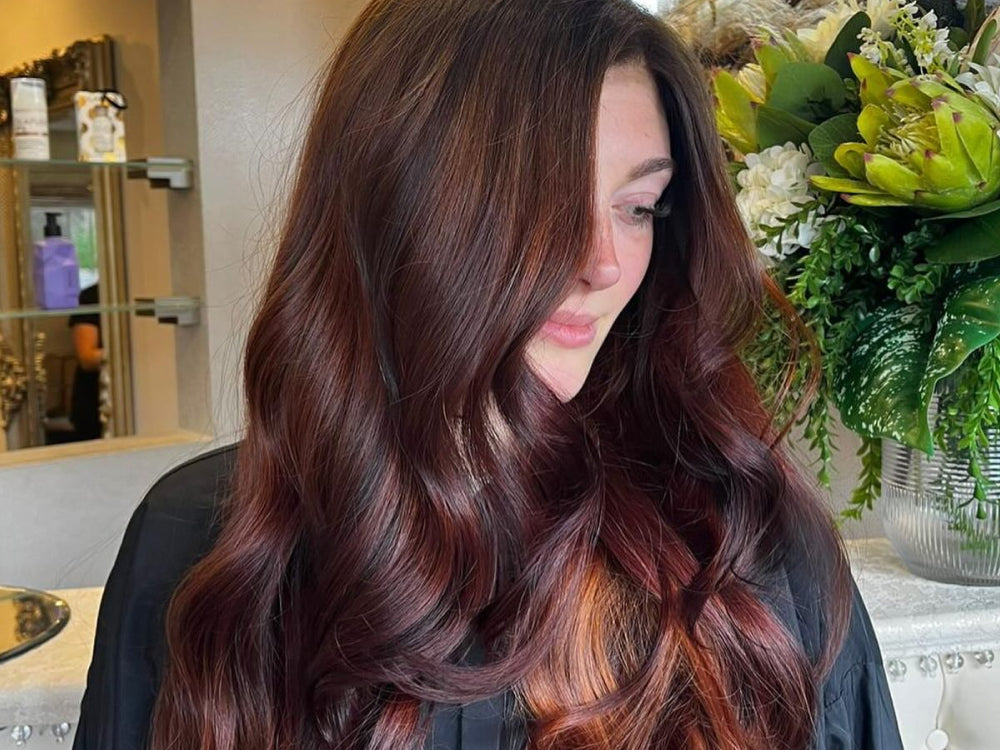

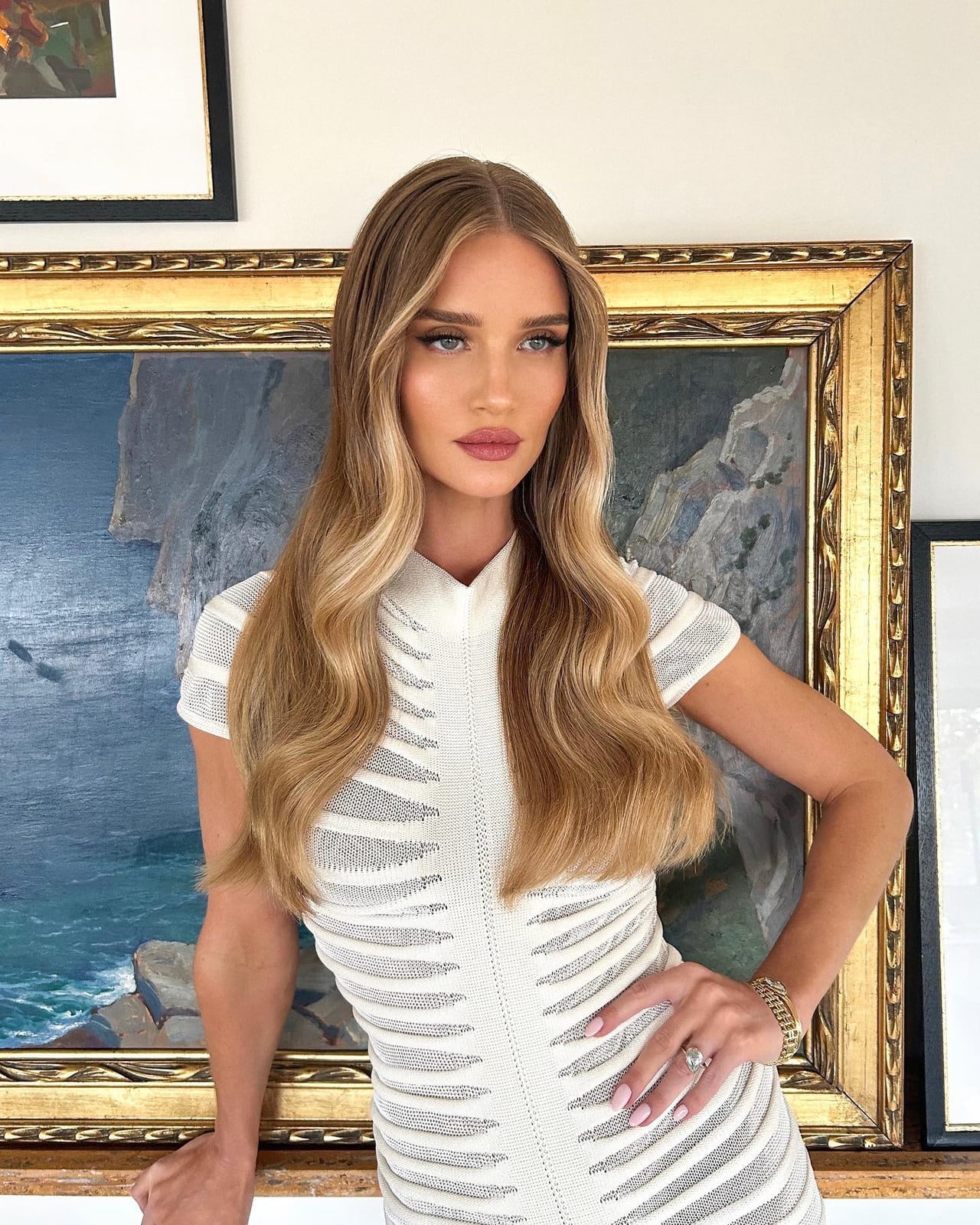
Blonde balayage has settled into a permanent spot in the color rotation, less about streaks and more about a soft, sunlit dimension that moves with the hair. This year, the technique leans into lived-in color with a glossy, natural texture, often paired with curtain bangs or face-framing layers for a modern finish.
These 24 ideas for Classy Balayage Hair Blonde cover the full spectrum, from platinum to dark brown bases and from long waves to blunt bobs. Whether you need a low-maintenance grow-out or a bright refresh that won’t flatten fine strands, there is a shade and technique here that keeps the grow-out line subtle and the tone intentional.
Platinum Blonde Balayage With Loose Waves
Notice how the lighter blonde balayage sits on top of a platinum base rather than replacing it. That layering of two blondes is what gives this mid-back length style its brightness without looking flat. The loose waves let the lighter pieces catch the eye at different angles, which is the whole point of a balayage that is not one solid color.
This works best on thick, wavy hair that already has some natural body to hold the wave pattern. Ask your colorist for: platinum blonde balayage with long layers. The upkeep is straightforward: a texturizing spray on dry hair adds separation, and you will want a trim every six to eight weeks to keep the ends healthy enough to reflect light.
Ash Blonde Balayage With Root Shadow
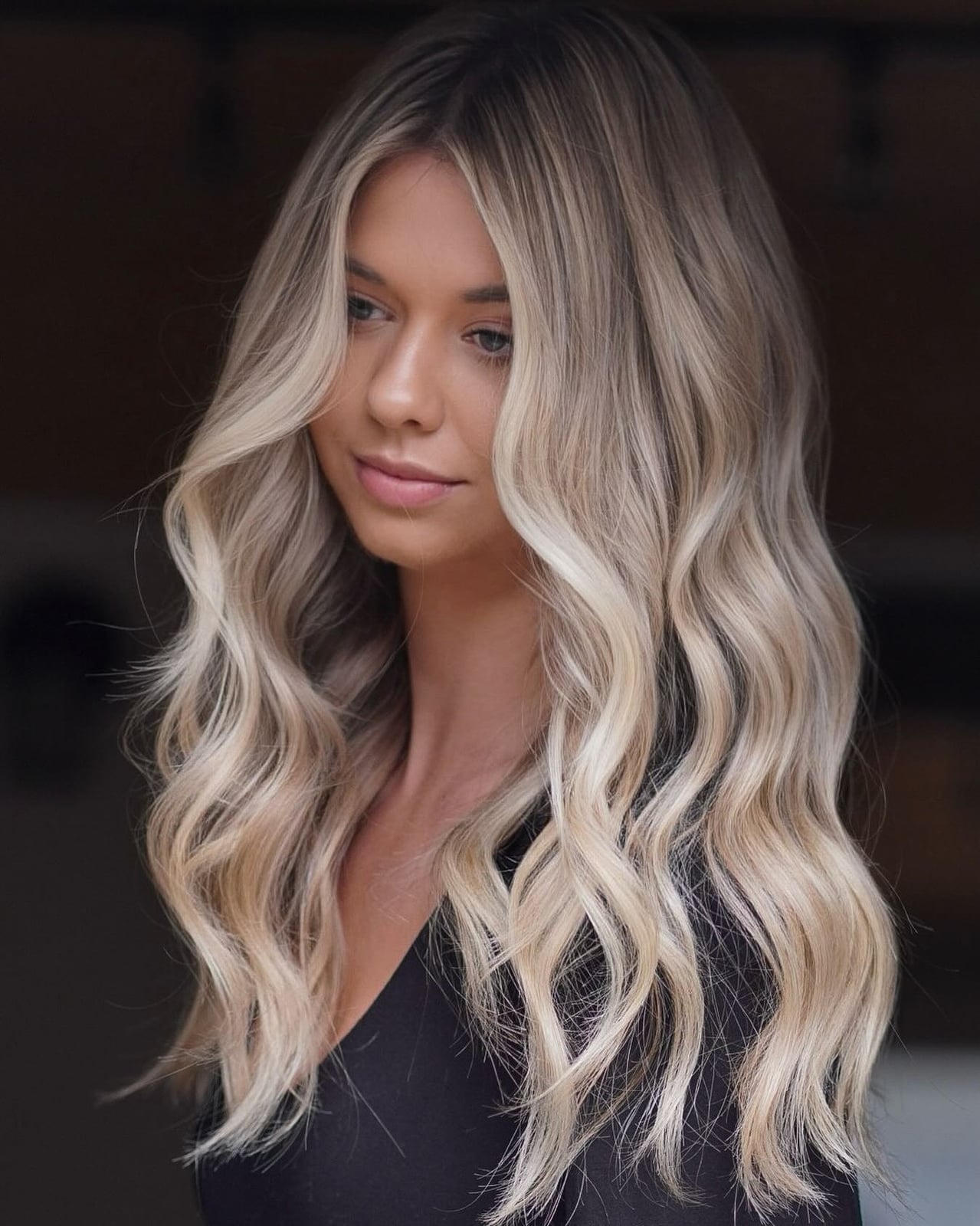
Ever wonder if ash blonde actually works on you? The root shadow here is the trick that makes it wearable for more people. Instead of a stark line where dark meets light, the shadow melts into the lighter blonde strands, so the cool tone does not sit directly against your natural color. The face-framing pieces add softness without needing a full head of highlights.
This is best for those with a natural darker base who want a cool-toned blonde without constant root touch-ups. Ask your colorist for: ash blonde balayage with root shadow and face-framing highlights. A toning appointment every six to eight weeks keeps the ash tone from drifting warm.
Seamless Ash Blonde Balayage With Dark Roots
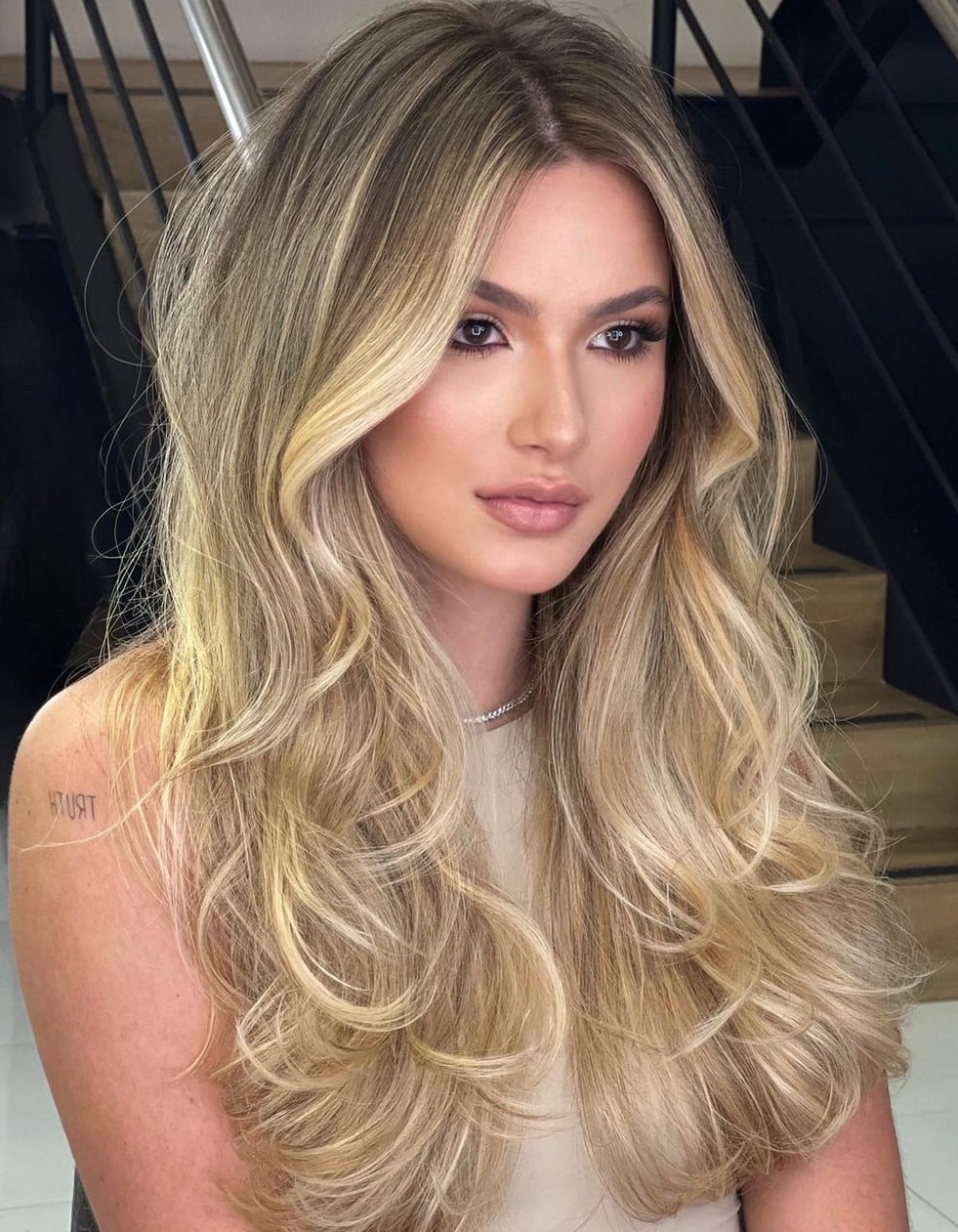
It is not a grow-out, it is a design. Unlike a root shadow that stays close to the scalp, this version lets the dark roots run deeper before the ash blonde balayage begins, creating a seamless transition that looks intentional for weeks. The soft curtain bangs keep the front from feeling too heavy. The result is a low-maintenance cool blonde that does not demand a salon visit every month. Ask your colorist for: ash blonde balayage with seamless dark roots to blonde ends. Refresh the toner every eight to ten weeks.
White Blonde Balayage In Loose Waves
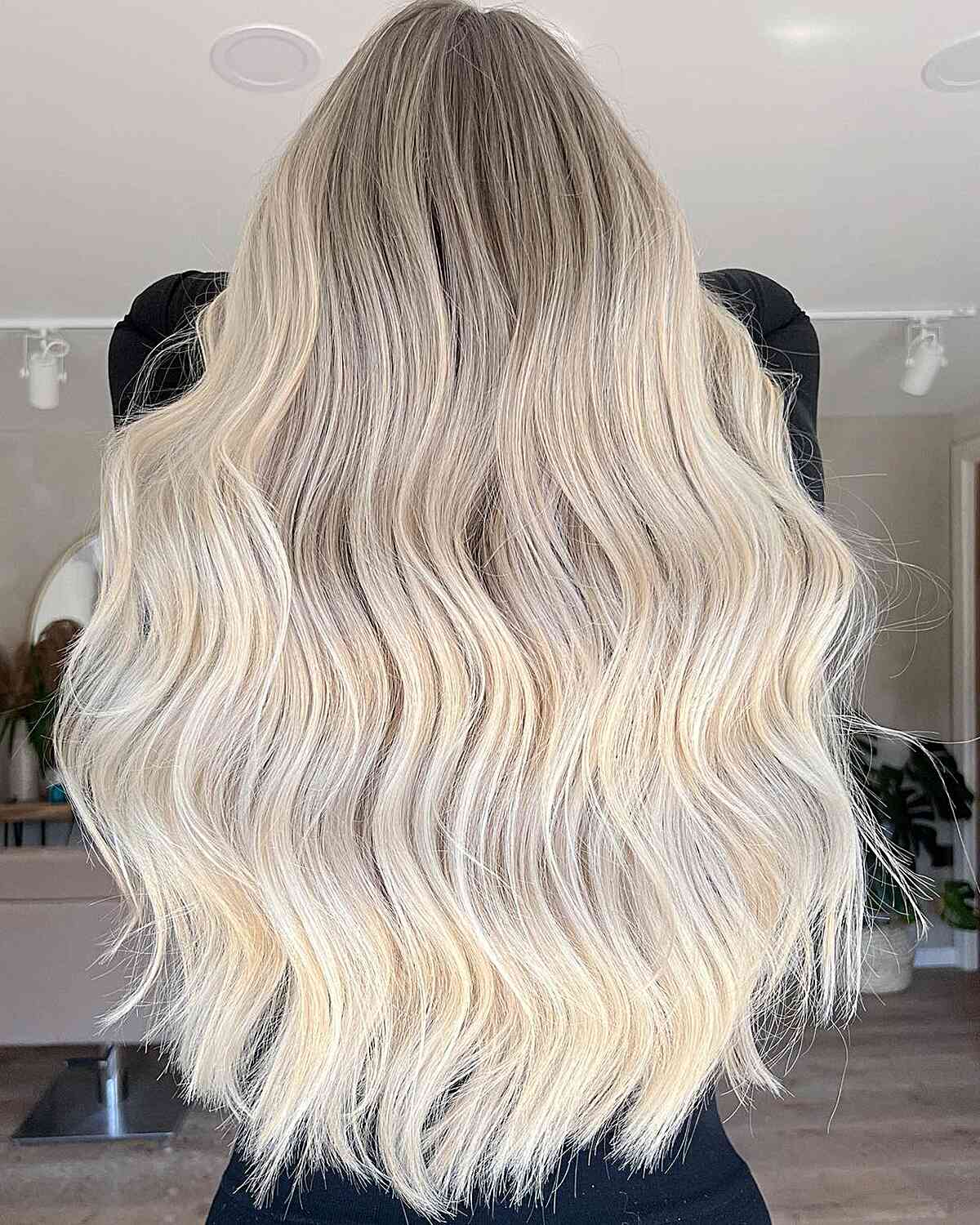
White blonde is the lightest stop on the balayage spectrum, and it comes with a trade-off. The back view here shows how the lighter tones dominate the length, which means every bit of warmth or brass shows up fast. The thick, wavy texture helps diffuse that, since the loose waves create shadows that soften the brightness.
This is for anyone who wants maximum lightness and is willing to maintain it. Ask your colorist for: white blonde balayage with maximum lightness. Upkeep requires regular toning and a trim every six to eight weeks to prevent the lightened ends from splitting. If you cannot commit to that schedule, skip this one.
Caramel Blonde Balayage With Wispy Bangs
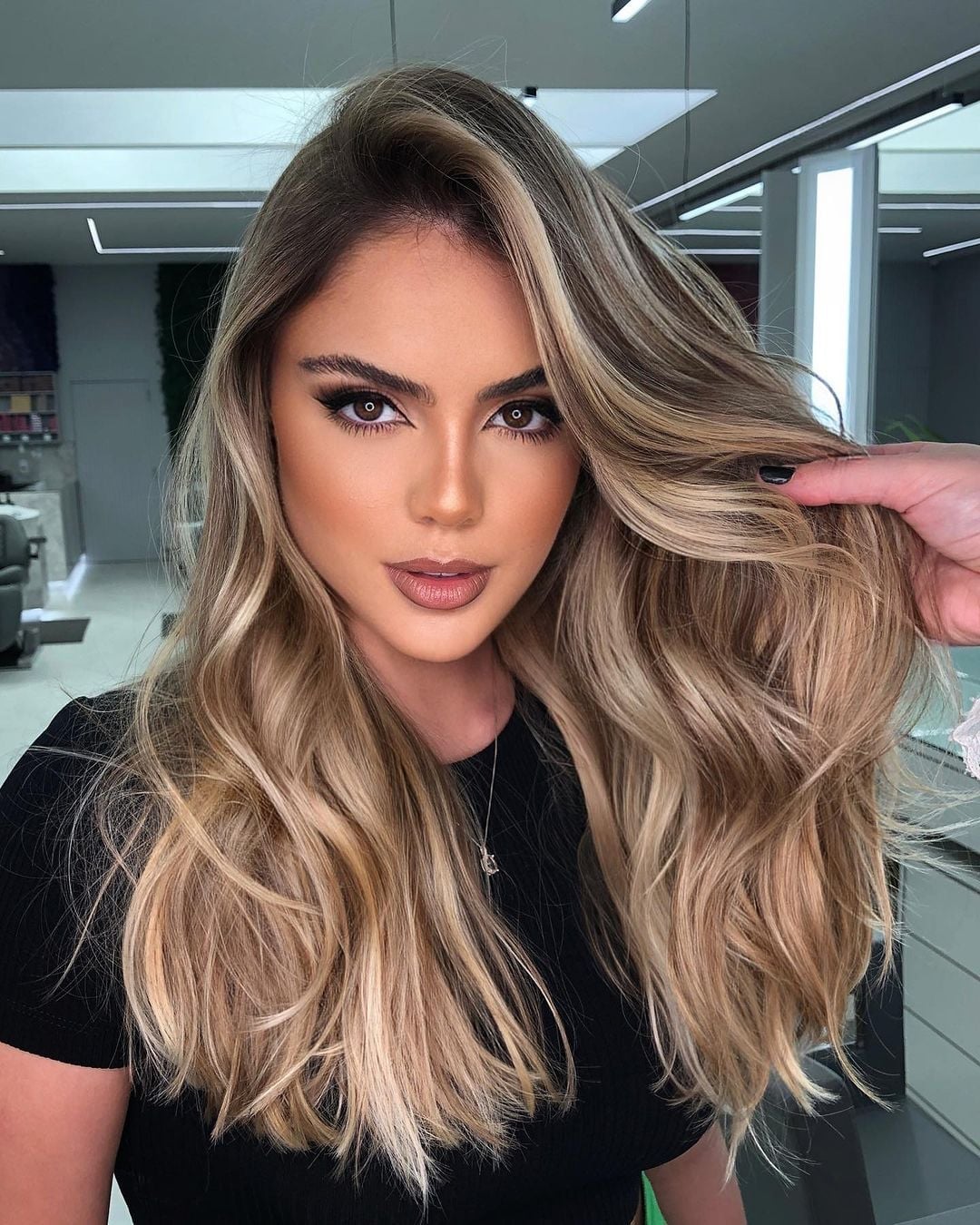
How do you ask for a warm blonde that does not look brassy? Start with the word caramel. The rich caramel blonde balayage here sits on a medium base, so the warmth reads as depth. The wispy bangs are key: they catch the lighter pieces and pull the warmth toward your face without requiring a full highlight section up front.
Thick, wavy hair can hold the voluminous wave pattern. Ask your colorist for: caramel blonde balayage with wispy bangs. For the styling, a large barrel curling iron gives the loose waves their shape. Trim the bangs as needed to keep them wispy.
Golden Blonde Balayage In Loose Waves
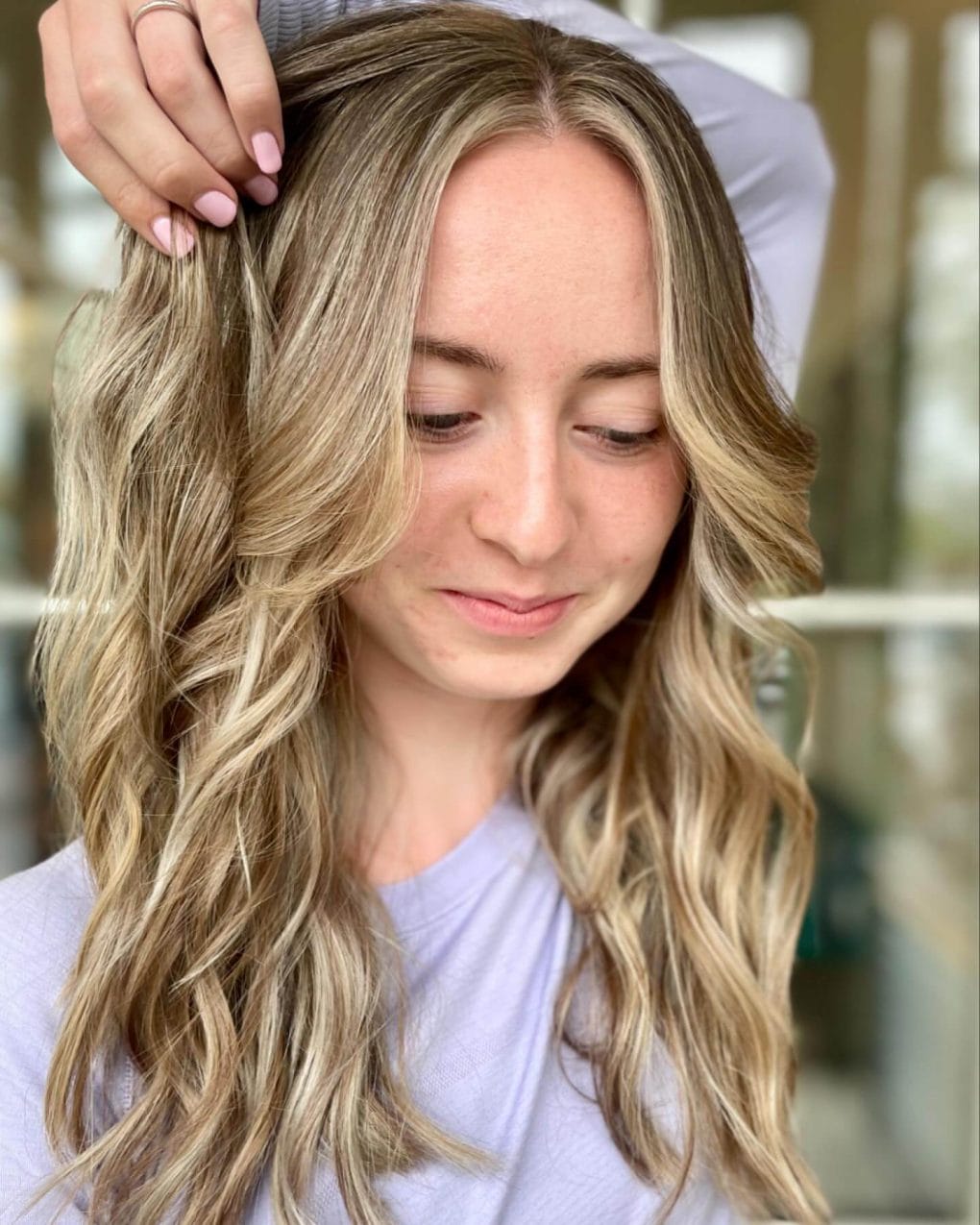
If cool blonde feels a little severe for your taste, golden blonde balayage offers a warmer alternative. Mid-back length layers with a middle part reflect light in a way that reads as sun, not salon. Thick, wavy texture helps the warm tones blend naturally without sitting in stripes. Ask your colorist for: golden blonde balayage, warm tones, loose waves. It suits anyone who wants dimension without the chill of ash or platinum, and the grow-out is forgiving enough that you can stretch a few extra weeks between appointments.
Honey Blonde Balayage With Face-Framing Pieces
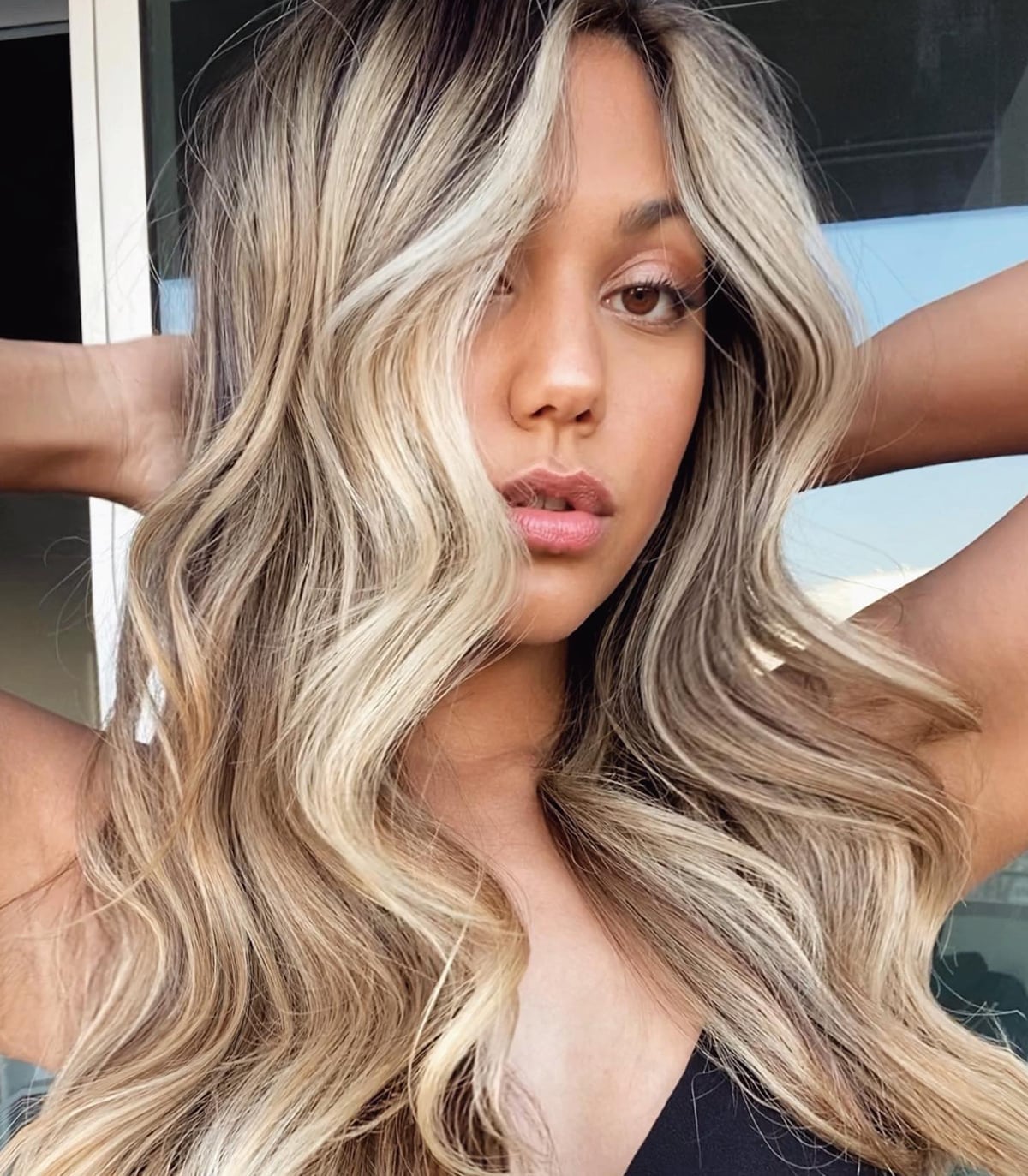
The design here is deceptively simple: a honey blonde balayage on mid-back length hair, with face-framing pieces. The side part and smooth blowout give it a polished finish that works for both the office and dinner out. Thick, wavy hair starting at mid-back length is the ideal canvas, since the texture helps the warm highlights look dimensional. Ask your colorist for: honey blonde balayage, face-framing pieces, side part.
Who should consider this? Anyone who wants a warm blonde that does not lean brassy or overly golden. The honey tone sits in a middle ground that looks natural on a wide range of base colors, from light brown to natural blonde. Those with very dark or very cool-toned natural hair might need a pre-lightener to get the warmth to register, so expect a longer first session if you are starting from a deep base.
Blonde Balayage With Curtain Bangs
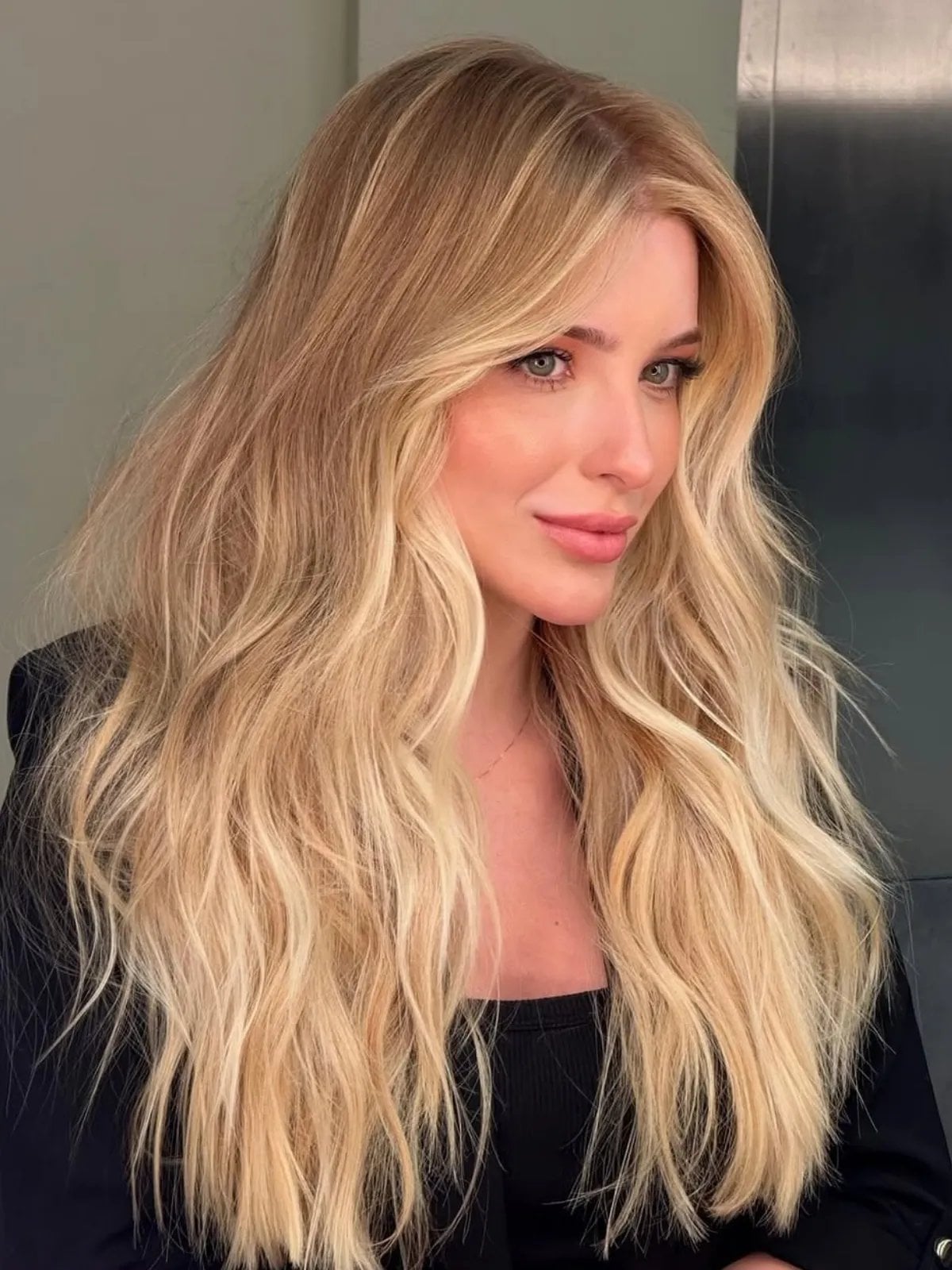
Technically, this is a balayage on a warmer blonde base, with lighter highlights painted freehand onto mid-back length hair. The curtain bangs are cut to blend into the layers, so the face-framing effect looks integrated. Thick, wavy texture completes the structure. Ask your colorist for: blonde balayage, warm blonde base, curtain bangs.
The balayage technique matters here because the curtain bangs need soft, diffused color at the ends. Your colorist will paint the lighter pieces slightly heavier around the face, then feather them out toward the back. The result is a lived-in look that grows out gracefully, since the warmer base at the roots does not create a stark contrast as new growth appears.
Ghost Balayage Blonde With Soft Waves
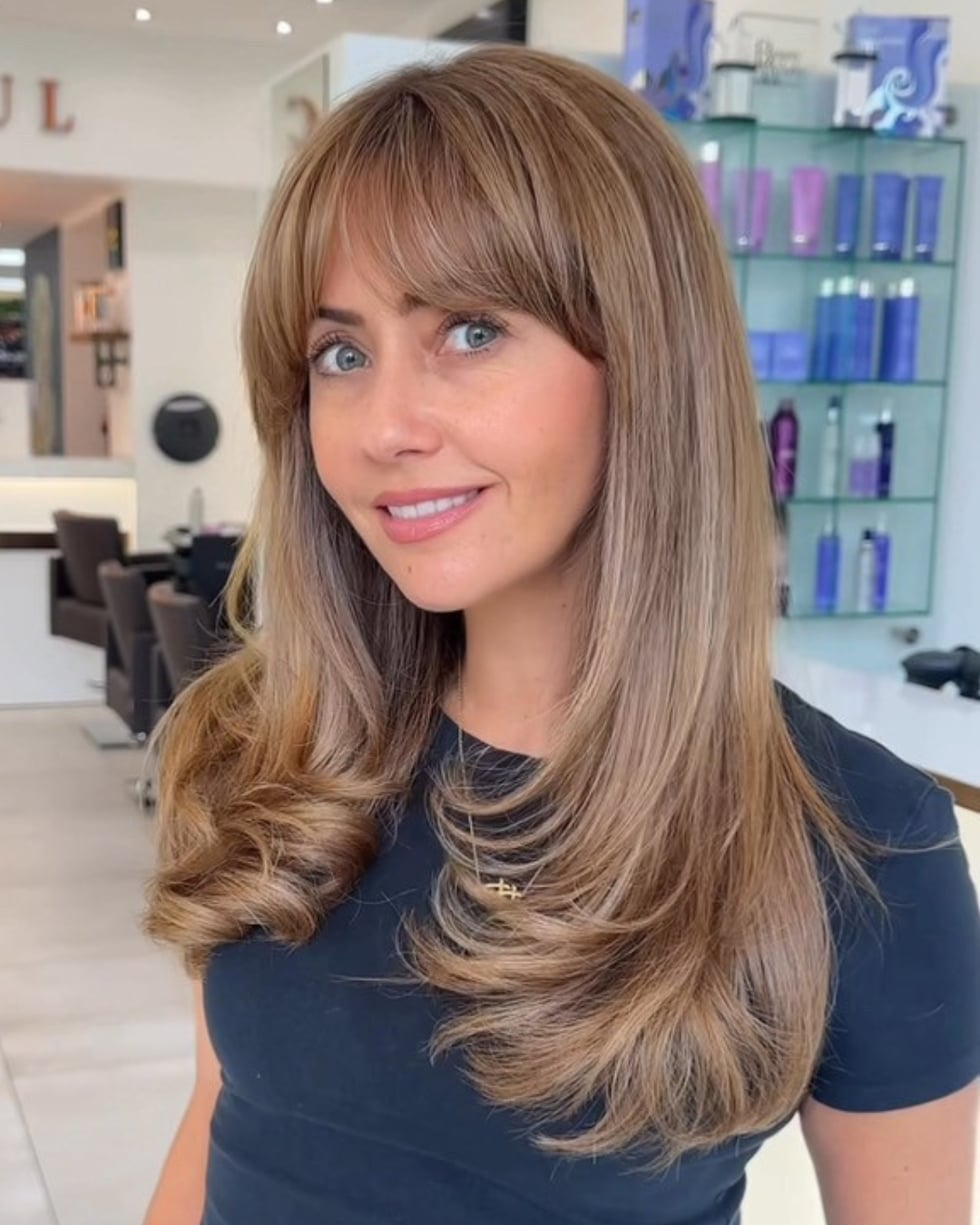
Does a blonde balayage exist if you can barely see it? With ghost balayage, that is the whole point. Mid-back length hair with curtain bangs and a middle parting gets soft, diffused highlights that add a whisper of lightness rather than a shout. Thick, wavy texture and a voluminous blowout help the subtle color catch the light in motion. Ask your colorist for: ghost balayage blonde, curtain bangs, soft waves. The upkeep is minimal: occasional toning every eight to ten weeks keeps the blonde from turning murky, and a trim at the same interval maintains the shape.
Medium Blonde Balayage With Face-Framing Bangs and Loose Waves
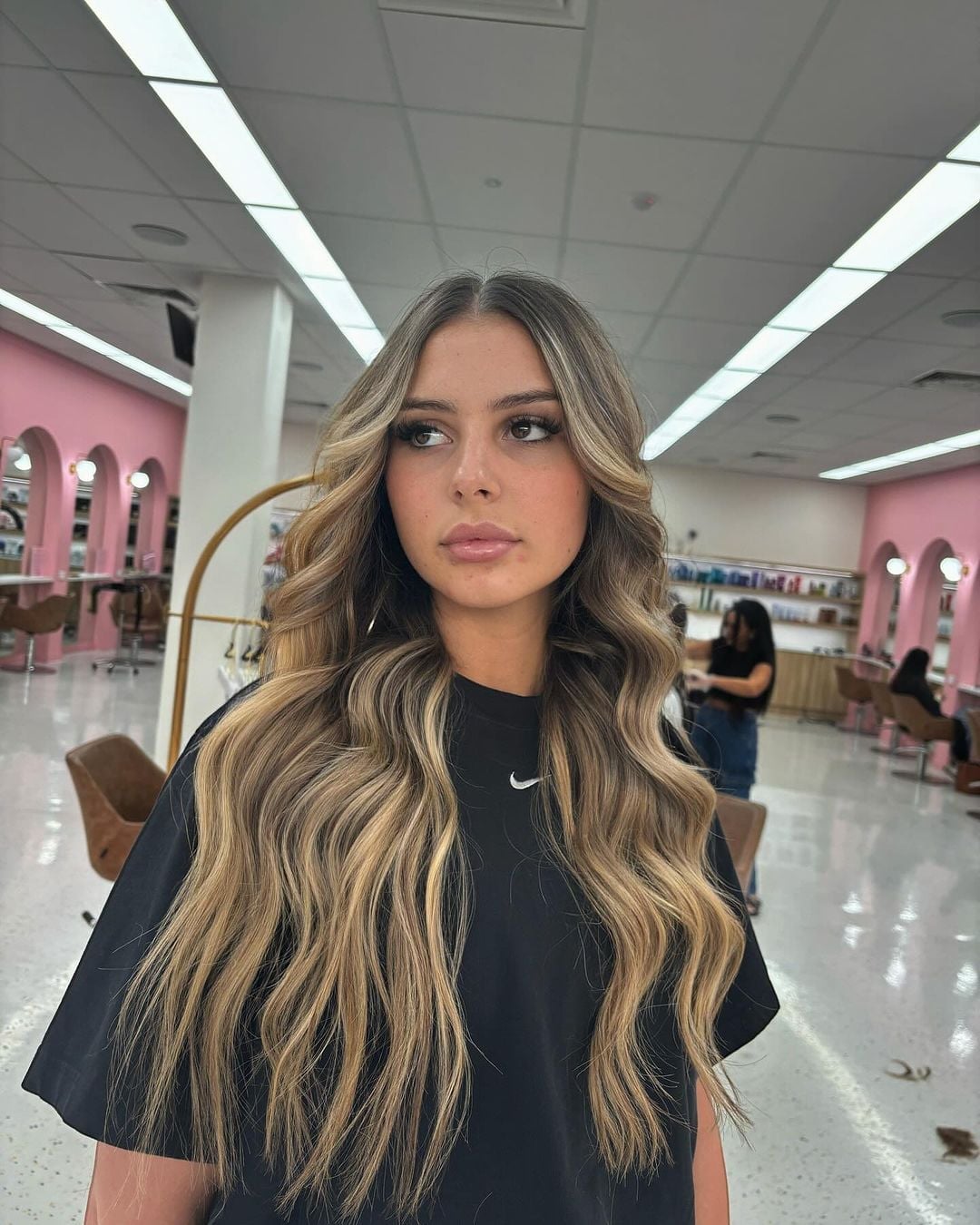
The curtain bangs here are doing double duty: they soften the collarbone length and pull the lighter balayage strands forward so the color looks planned. A medium blonde base keeps the overall tone grounded while the lighter pieces add movement through the thick, wavy texture. This style suits hair that starts at collarbone length or longer. Ask your colorist for: medium blonde balayage, curtain bangs, face-framing layers.
Beige Blonde Balayage With Soft Highlights
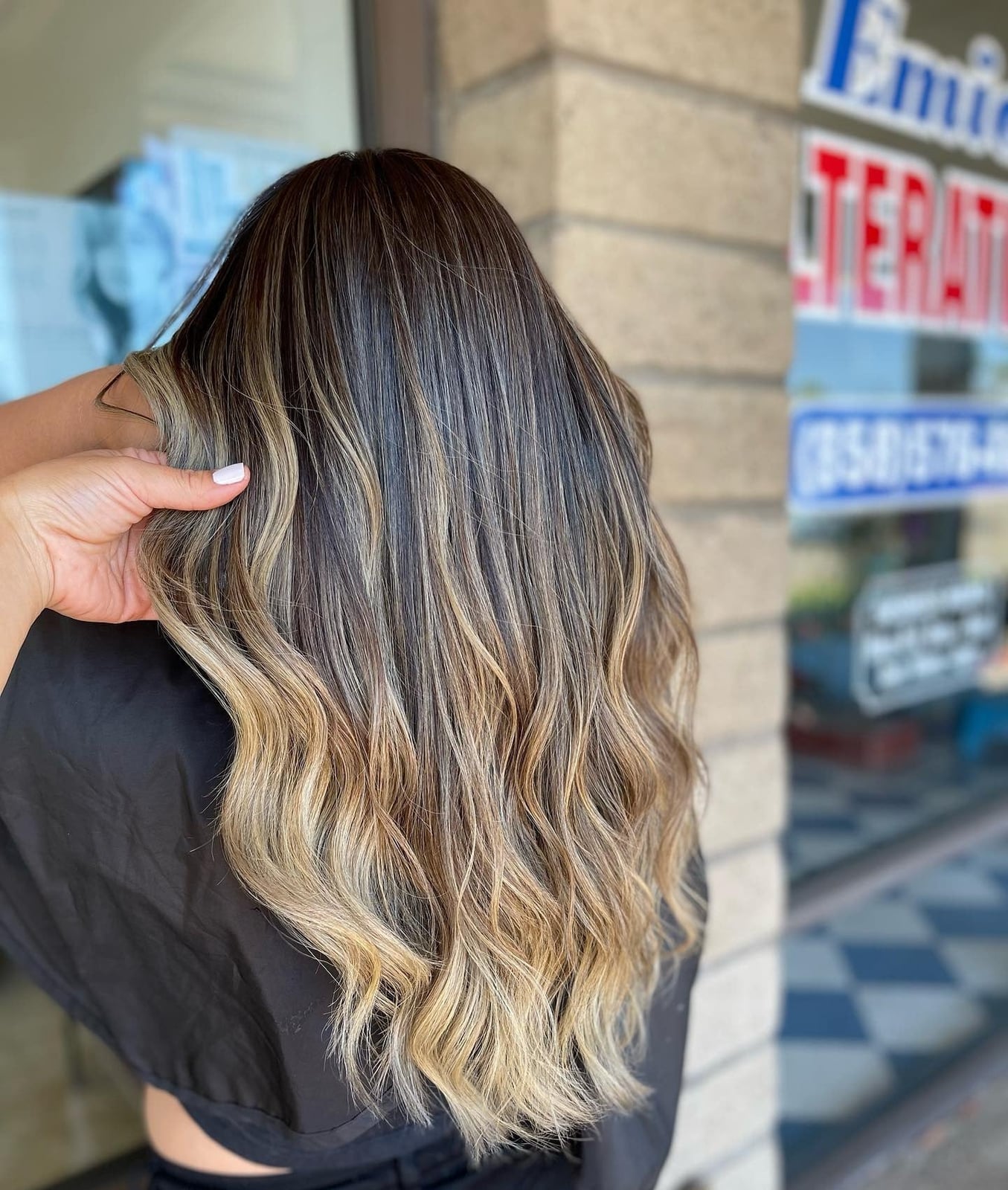
Beige blonde sits between warm and cool, a neutral territory that is soft without being brassy or ashy. The collarbone-length layers here use a balayage technique to place lighter blonde pieces mostly through the ends, with face-framing strands that draw the eye. Thick, wavy hair starting at collarbone length is the ideal canvas; the texture helps the soft highlights blend naturally. Ask your colorist for: beige blonde balayage, soft face-framing pieces.
This blonde works for anyone who wants dimension without a strong warm or cool statement. A sulfate-free shampoo helps the beige tone stay clean and avoid brassiness, and a trim every six to eight weeks keeps the layers from looking stringy. It is not a golden blonde or an ash blonde. It is the middle ground that works for anyone who does not want to pick a side.
Cool Blonde Balayage With Soft Waves
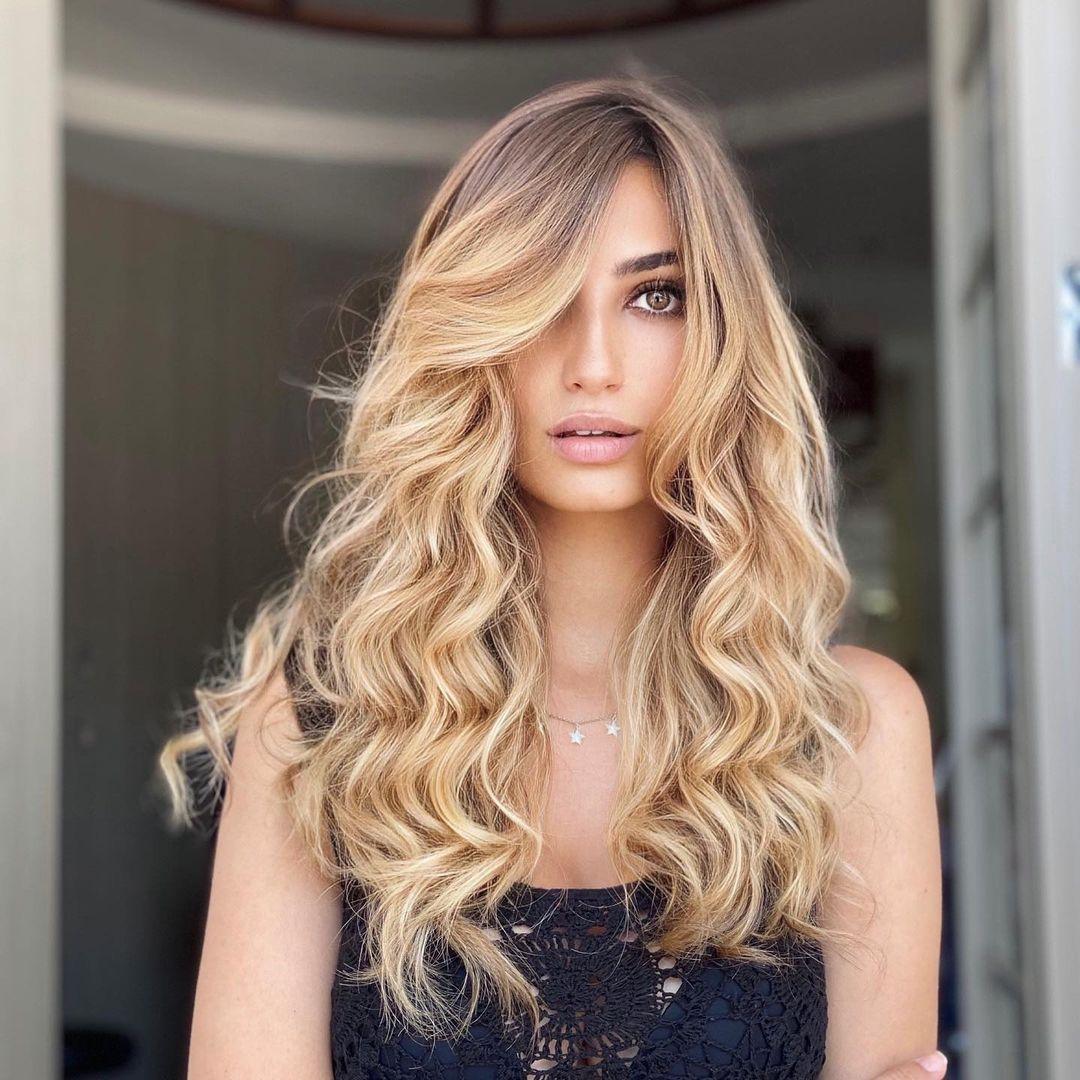
Can a cool blonde balayage look sophisticated rather than severe? Yes, when the base stays a soft cool blonde and the lighter highlights are painted in subtle ribbons rather than heavy chunks. This collarbone-length cut with a middle part and soft waves lets the color do the work without competing with a complicated shape. Medium, wavy hair starting at collarbone length is the sweet spot, too fine and the cool tones can wash out, too coarse and the wave pattern might hide the dimension. Ask your colorist for: cool blonde balayage, soft waves, collarbone length. If your skin reads naturally cool, this is the blonde that looks like it was made for you. If you lean warm, you can still wear it, but a root shadow helps bridge the gap.
Champagne Blonde Balayage Lob
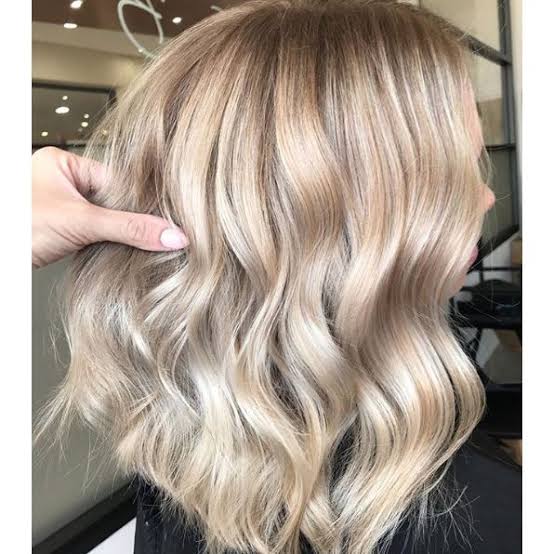
The lob here hits collarbone length with a middle part and loose waves, but the real engineering is in the color. Champagne blonde balayage is built by painting creamy, slightly warm blonde tones onto a lighter base, then blending them so thoroughly that the transition is invisible. The result reads as bubbly and bright without the flatness of a single-process blonde. Medium density, wavy hair starting at collarbone length holds the shape well; the lob’s blunt edge gives the waves somewhere to land. Ask your colorist for: champagne blonde balayage, loose waves, lob cut. A toner refresh every eight to ten weeks keeps the champagne hue from drifting into yellow, and a trim every six to eight weeks preserves the lob’s clean line.
Honey Blonde Balayage On Shoulder Length Lob
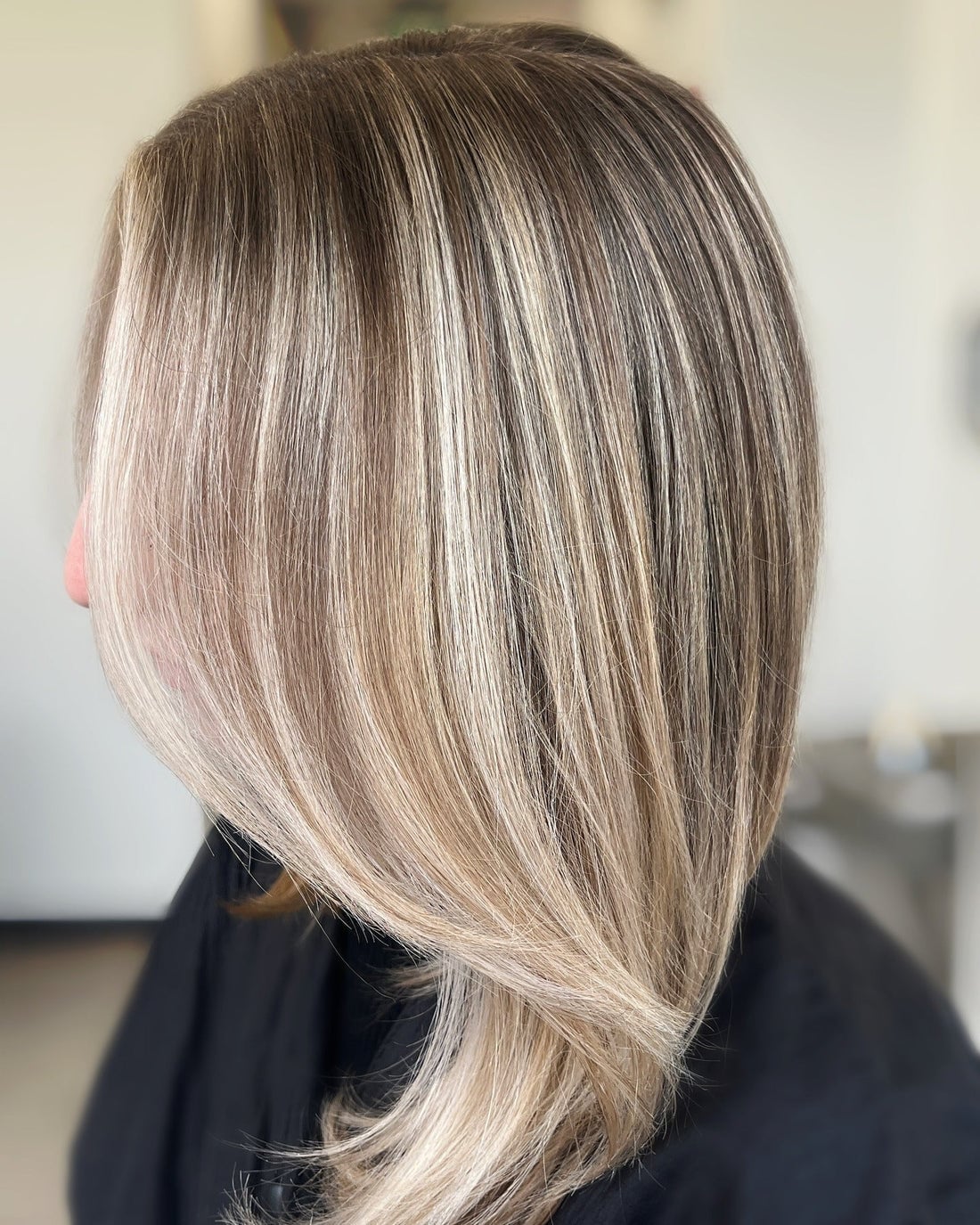
A blunt lob at shoulder length is a test of color placement. There’s no wave pattern to hide mistakes. Here, the honey blonde balayage weaves lighter tones through a darker base, with the balayage strokes concentrated from the mid-lengths to the ends. The side parting adds asymmetry to an otherwise straightforward shape. Fine, straight hair starting at shoulder length is the ideal candidate; the blunt cut provides a solid foundation for the color to sit on, and the straight texture shows every blend line. Ask your colorist for: honey blonde balayage, blunt lob, subtle waves at ends.
The wear reality is that this cut demands precision. A flat iron at the ends creates the subtle wave shown here, but the real work is in the color maintenance. The honey tone needs a gloss every six to eight weeks to stay warm rather than brassy, and the blunt lob requires a trim on the same schedule. Skip the trim and the line goes soft; skip the gloss and the honey turns orange. Worth it for the payoff of a clean, dimensional blonde that looks polished with minimal daily effort.
Warm Blonde Balayage Lob With Curtain Bangs
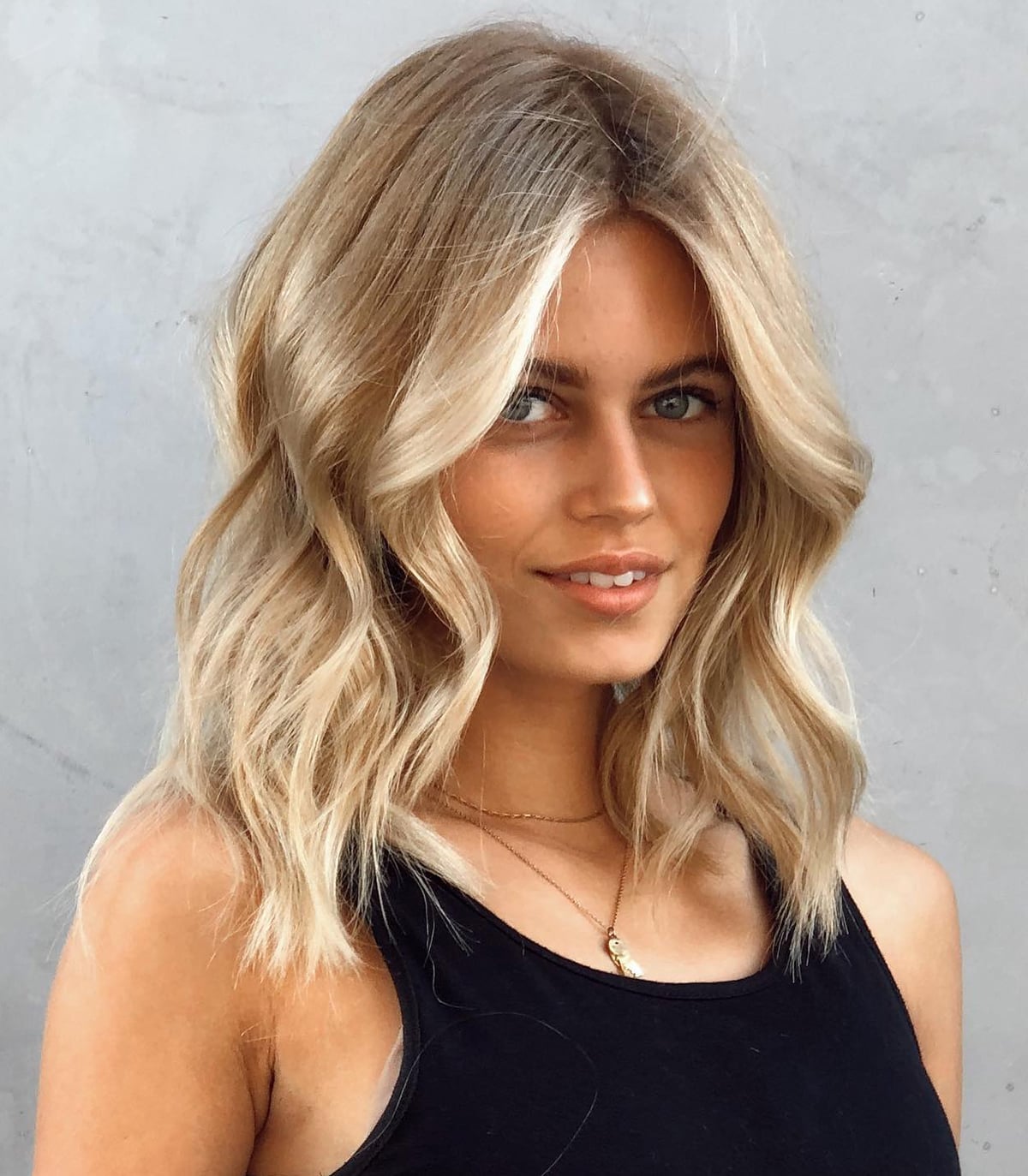
What exactly do you say to get this exact result? Start with the cut: a collarbone-length lob with layers and curtain bangs, parted in the middle. Then the color: a warm blonde base with lighter blonde balayage highlights painted freehand through the mid-lengths and ends, avoiding the roots entirely. The curtain bangs are cut to graze the cheekbones and blend into the layers, softening the whole shape. Thick, wavy hair starting at collarbone length holds the wave pattern and gives the bangs something to frame. Ask your colorist for: blonde balayage, warm blonde base, curtain bangs, collarbone length. For the bangs, specify that they should be cut dry and styled with a round brush to see exactly how they’ll fall. The balayage technique means the grow-out is gradual, so you can push the toning appointment to ten or twelve weeks if the warm base is doing its job.
Blonde Balayage With Warm Tones And Waves
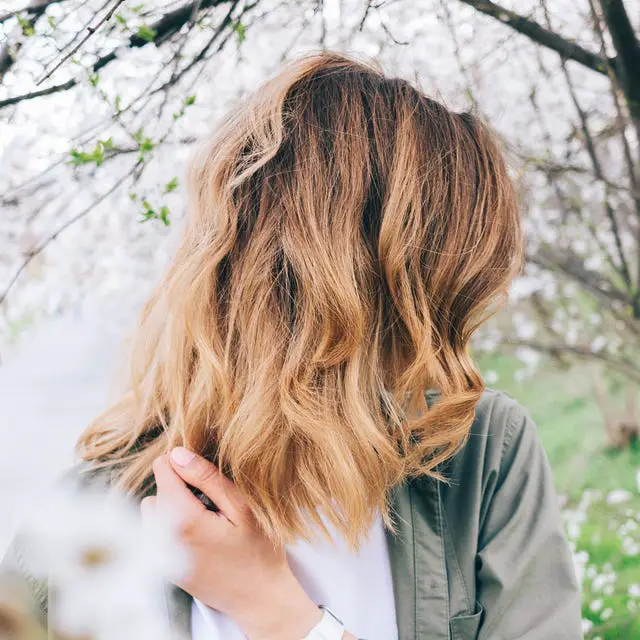
Blonde balayage with warm tones is a commitment to the brassiness conversation. The darker base melting into lighter blonde ends looks sun-kissed, but those warm tones will lean gold before your next appointment. Ask your colorist for a blonde balayage with a dark to light transition, collarbone length. This is a salon-only job, about three hours in the chair, and the payoff is a natural blend that moves with medium-density wavy hair. A gloss every six to eight weeks keeps the warmth from crossing into orange territory.
Dark Brown Base With Blonde Balayage Blowout
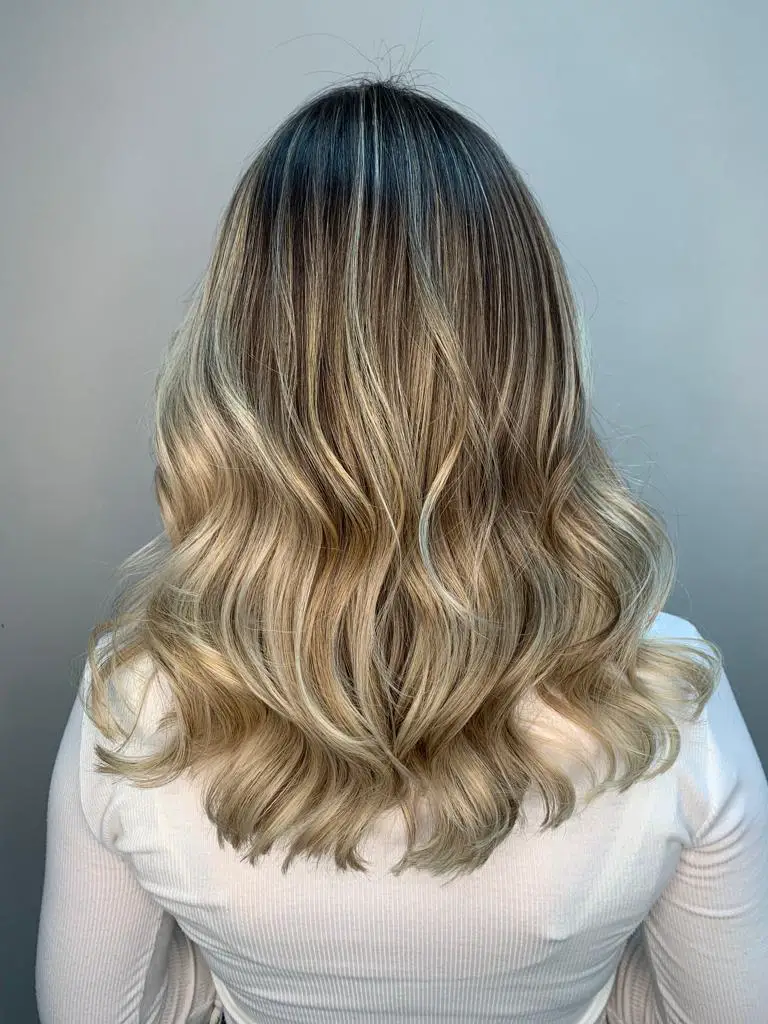
Solid color is fine, but it’s flat. A dark brown base with blonde balayage gives the same richness with dimension, the blonde strands catching light where a single shade can’t. The wavy blowout on thick, collarbone-length hair shows off the contrast, the dark roots anchoring the brighter ends.
Ask your colorist for a dark brown base with blonde balayage, wavy blowout, collarbone length. This works best if your hair has natural wave or you’re willing to add it with a round brush. Highlights need touching up every ten to twelve weeks, but the dark base means the grow-out line stays forgiving.
Dark Brown Base Blonde Balayage With Face-Framing
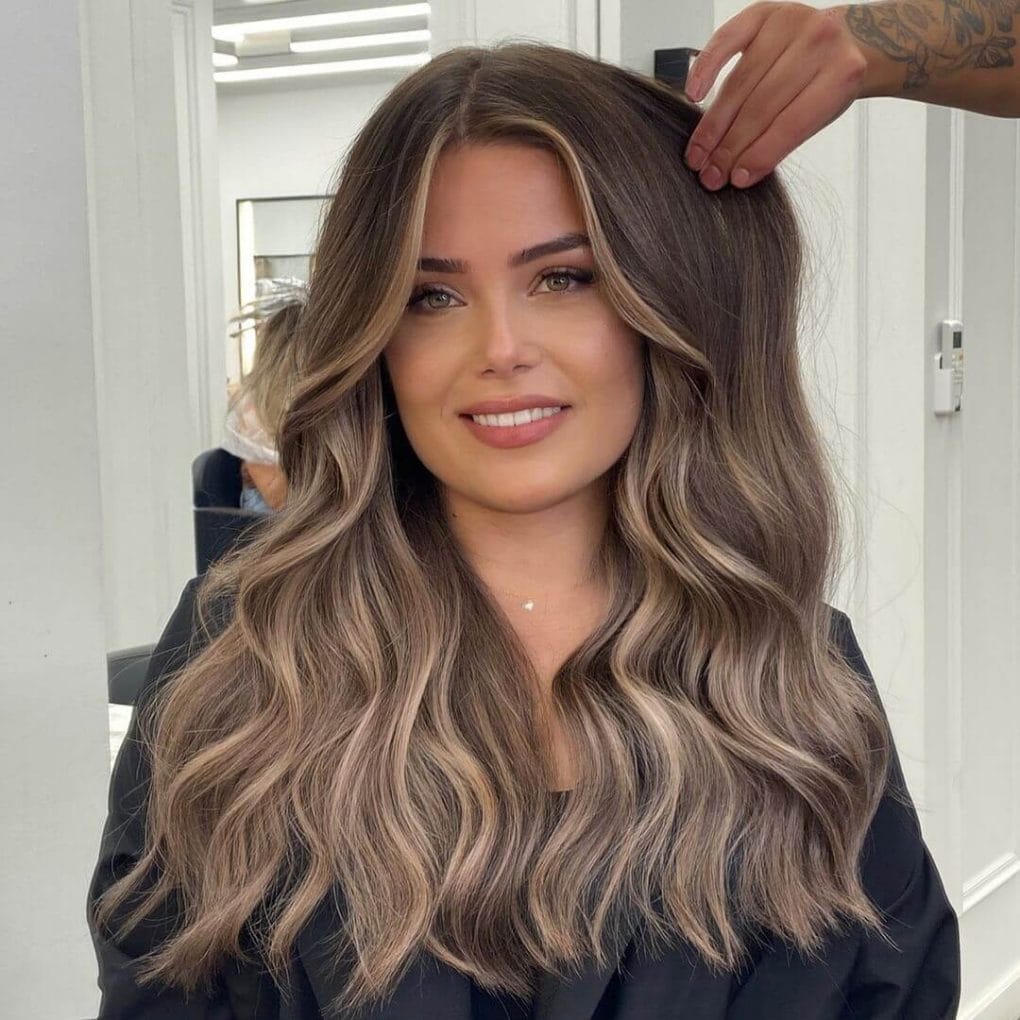
Face-framing blonde pieces define this look. On mid-back length, thick wavy hair, the dark brown base keeps the overall look grounded while the lighter strands around the face draw attention upward. The middle part lets those pieces fall symmetrically, softening the jawline for square or round face shapes.
Ask your colorist for a dark brown base with blonde balayage, prominent face-framing blonde pieces. The contrast is more dramatic than a full balayage, so it suits those who want definition without going all-over blonde. Keep the face-framing pieces trimmed every six to eight weeks, or they will lose their shape and start looking messy.
Shoulder Length Balayage With Dark Brown Base
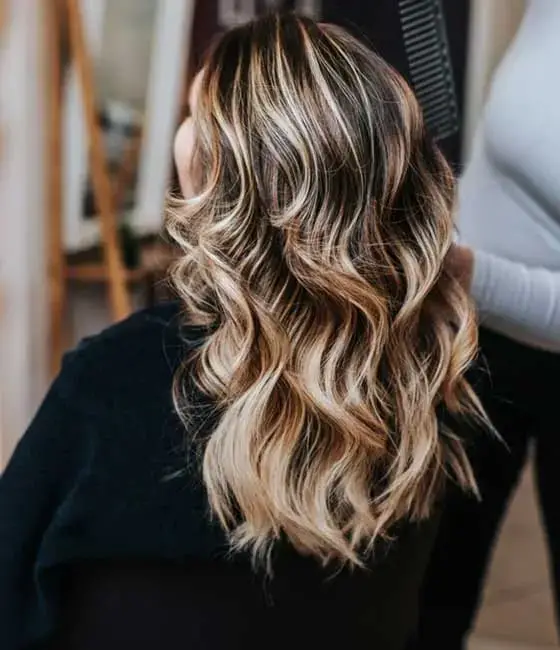
The genius of this shoulder-length balayage is how it wears. A dark brown base with blonde balayage blended throughout means no harsh line when your roots grow in, just a soft, lived-in transition. On thick wavy hair, the soft waves catch the lighter pieces and the whole thing looks like it happened naturally.
Ask your colorist for a dark brown base with blonde balayage, soft waves, shoulder length. A texturizing spray at the roots gives the waves grip without weighing them down. Trims every six to eight weeks keep the shape from drifting into triangle territory.
Ash Blonde Balayage Lob With Root Shadow, Collarbone
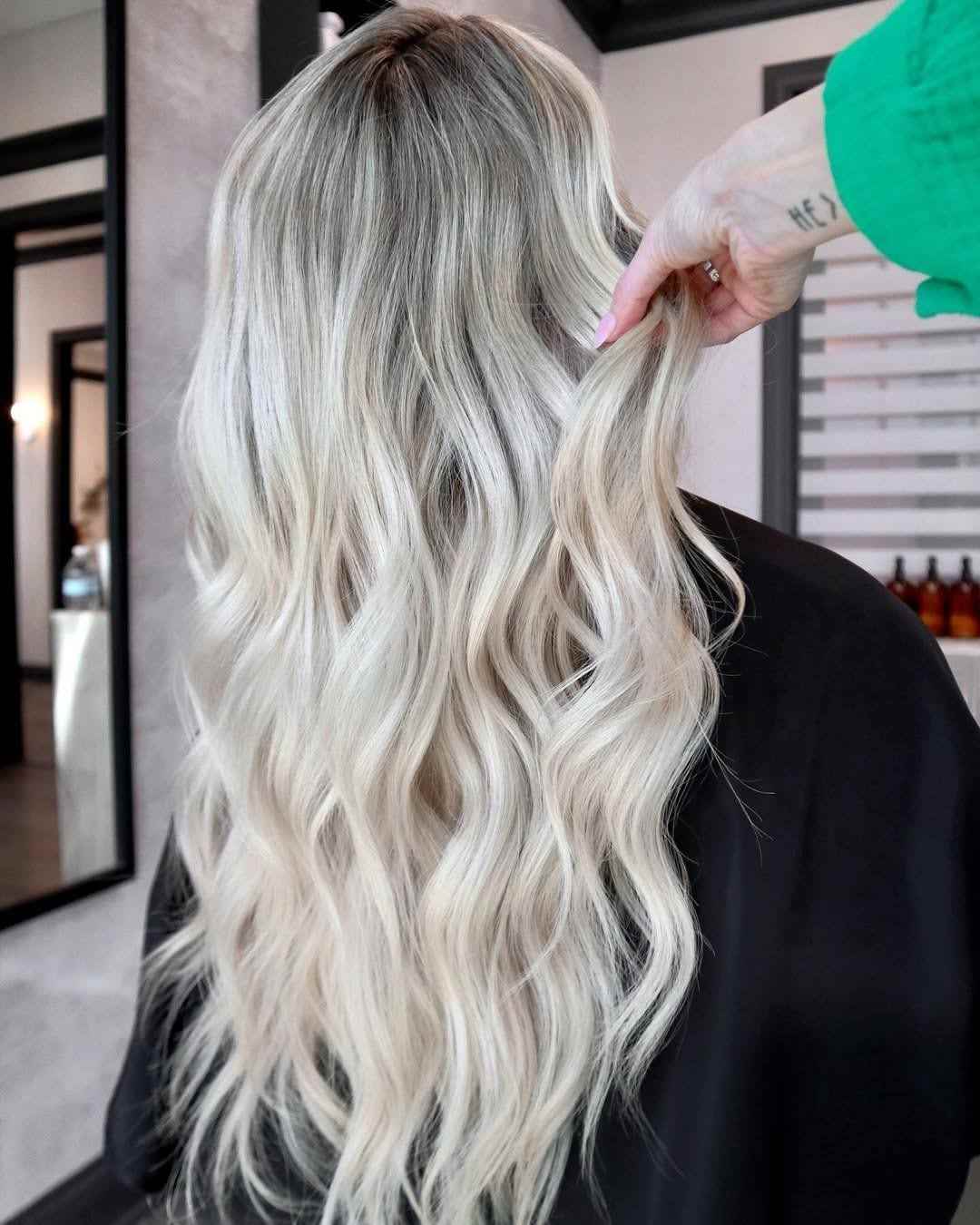
An ash blonde balayage with root shadow avoids harsh grow-out. This collarbone-length lob layers ash blonde over a darker base, so lighter strands start a few inches down and roots stay soft. Curtain bangs frame the face without a full fringe, and fine wavy texture keeps the style from feeling heavy.
Ask your colorist for: an ash blonde balayage with root shadow, collarbone length lob. The ash tone needs a purple shampoo once a week to stay cool, and a toner refresh every eight to ten weeks keeps the gray-green at bay.
Sand Blonde Balayage Lob With Side Swept Bangs
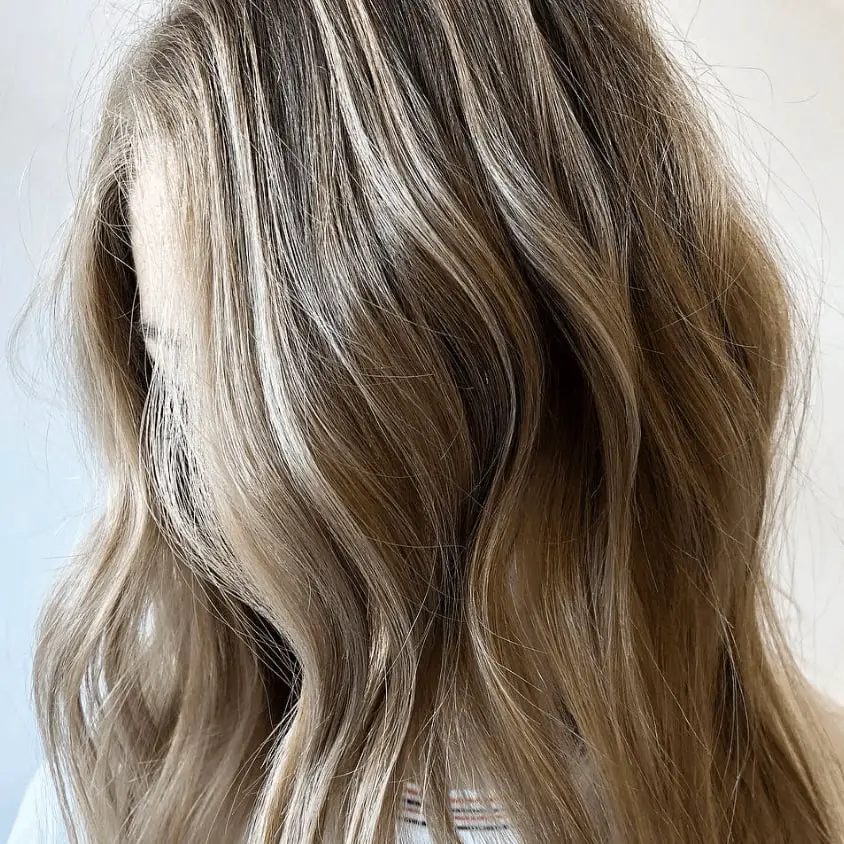
A collarbone-length lob in a sand blonde base gets dimension from lighter balayage highlights that blend seamlessly through the lengths. The side-swept bangs and soft waves give it a lived-in feel, and the fine texture keeps the whole thing from looking heavy. Ask your colorist for: sand blonde balayage, side-swept bangs, collarbone length lob. The side-swept bangs need a small round brush to direct them, and a trim every six to eight weeks keeps the shape clean.
Ash Blonde Balayage With Root Shadow and Loose Waves
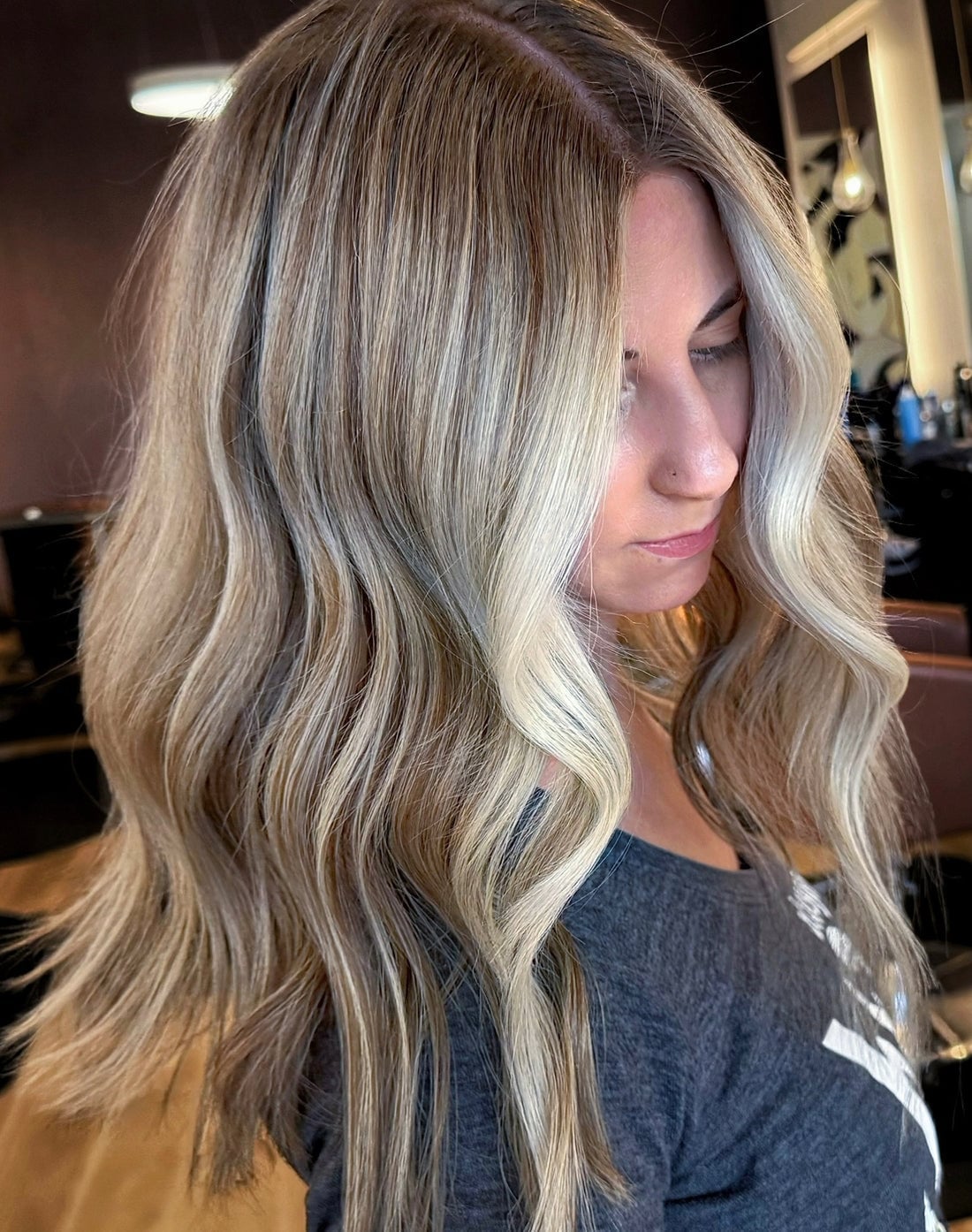
Shoulder-length hair with thick, wavy texture gets an ash blonde balayage anchored by a visible root shadow that melts into lighter strands. The root shadow buys you time between appointments, but the ash tone can pull brassy after a few washes. A toning appointment every eight to ten weeks keeps it from going warm, and if you hate scheduling salon visits, a solid single-process blonde might be a better bet. The loose waves show off the depth of the balayage without much effort.
Ash Blonde Base With Lighter Balayage
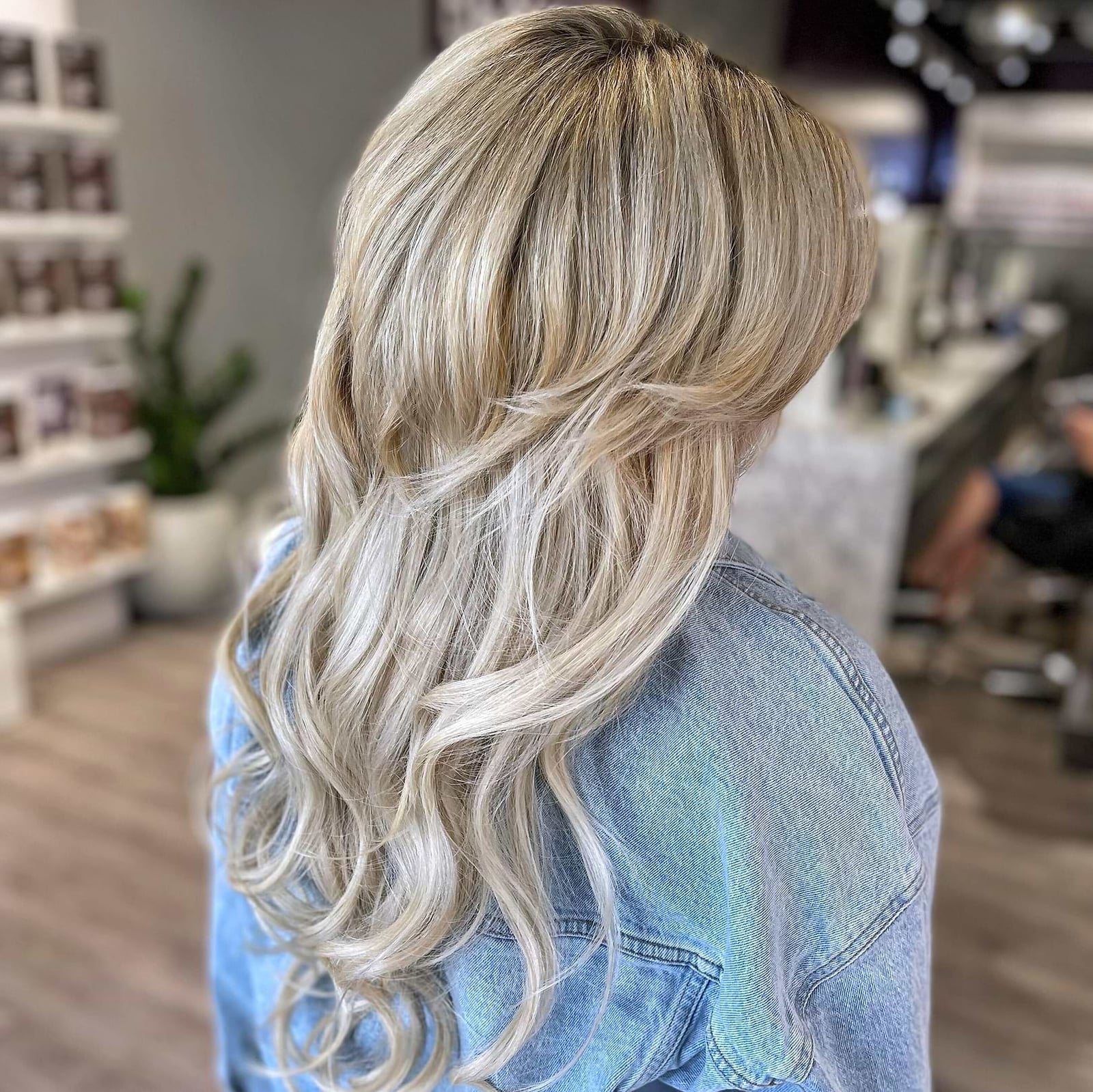
Wondering if dimensional ash blonde is worth the extra time compared to a solid ash shade? The difference is in the layers. A mid-back length cut with loose waves and a thick, wavy texture carries an ash blonde base with lighter balayage woven through, so the color has movement rather than sitting flat.
Ask your colorist for: ash blonde base with lighter blonde balayage, loose waves. The layered cut helps the balayage read as natural instead of striped. A purple shampoo once a week keeps the cool tone from fading, and a trim every six to eight weeks preserves the shape.
Chin Length Ash Blonde Blunt Bob
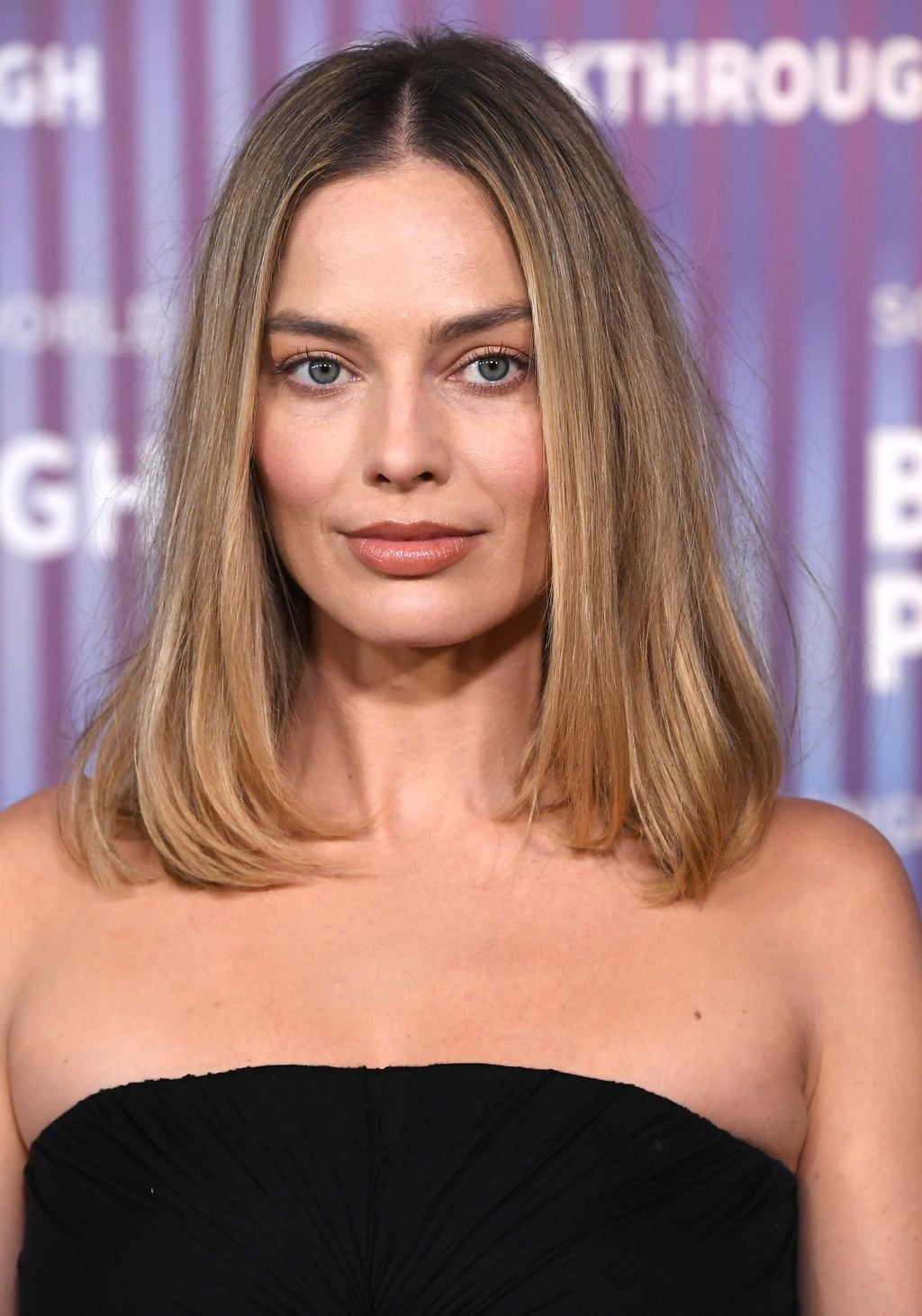
A chin-length blunt bob in cool ash blonde with subtle balayage highlights keeps the line clean and the color from going flat. The fine, straight texture and middle parting make the blunt cut look sharp rather than heavy. Ask your colorist for: chin length ash blonde blunt bob, subtle balayage. A blunt bob needs a trim every four to six weeks to hold its edge, so this is a salon-only commitment. The straight blowout takes about ten minutes with a paddle brush and a heat protectant.
Final Thoughts
For a low-maintenance blonde balayage, opt for a root shadow and choose warmer tones that grow out softer. Fine hair benefits from a blunt baseline and lighter face-framing pieces, while thicker textures can handle more contrast and longer blending. Classy blonde balayage is about refined blending and tone.
- Maintain blonde balayage with purple shampoo once a week to prevent brassiness.
- Toning touch-ups are typically needed every 8-12 weeks, depending on maintenance.
- Use heat protectant spray before styling to preserve color and hair health.
- Wash hair with cool water to help retain color vibrancy and prevent stripping.
Classy blonde balayage is about refined blending and tone.